Transcripts
1. Conditionals introduction: Hello on Welcome to the short course on condition ALS sometimes called if sentences another five in total, the so called zero first, 2nd 3rd and mixed. If you want to know why it makes and not fourth, there's more information in the lesson on the mixed conditional. Basically, we just mix the second and the third together. That's why it's called Mixed, that they all have the same format. If condition comma result on the condition and the result can be swapped around. But we have to pay attention to punctuation and pronouns and again will go into a lot this in detail during the lessons. The format and structure of each lesson is the same. So initially will look at the conditional. We look at what it means and we look when we use it. Then look at the format and look at which tenses and aspect so used in the if on the result clause on with, then show you plenty of examples. I should point out that during the course of these lessons, you might hear terms like present perfect and past perfect continuous and so one used in connection with the formats off the individual conditions. And if you're confused by this or you're not sure what's meant, I do have another course on tenses and aspect which show exactly what this means. And it goes into a lot more detail on what this is. So if you find yourself thinking, what's he on about? I don't understand this. Please go check out the other course on tenses and aspects and all will be clear. I hope you enjoy the course. If have any questions or anything is unclear, please use the message section below and I will answer your questions, whatever they are by phone. Oh!
2. Zero conditionals: we look now at the zero conditional look when to use it, how to use it and plenty of examples. So we used zero conditional to make true factual statements about the real world. The time frame is now always valid on the situation is possible. And riel. We also used the zero conditional to give simple instructions for the format. Of the zero conditional is an if clause followed by a main clause. So if plus simple present, then simple present. In other words, if this happens, this happens on because we're using true factual statements. We can replace if with win, as with all conditional Z orders not fixed so we can swap the condition and the result. However, when we do this, we may have to pay attention to pronounce and punctuation. But we'll see those in the examples to make factual statements if or when you heat ice, it's melts well. If we swap the clauses around, I smells if or when you heat it. Andi. This is what we meant by paying attention to punctuation and pronouns. Firstly, there's no comma If the result is first, as in the second sentence Onda, we haven't just swap them around. We've said in the first case, if you heat ice comma, it's melts. If we just swapped them around, we with it would read. It melts if you heat ice. And, of course, we can't use it without having first specified what it refers to. So we have. Ice melts when you heat it. I won't labour this on all the examples. I just mentioned it here for the 1st 1 If people eat too much, they get fat with all the way around. People get fat air for it when they eat too much. And lastly, if or when you mix blue and yellow, you get green or you get green if you mix blue and yellow on the other, examples for zero conditional is full giving instructions. If Bob calls, tell him I'll call him back later or tell Bob I'll call him later. If he calls. Lots of pronoun changes there to note. Ask John if you're not sure what to do. If you're not sure what to do, ask John. If you want to drive with us, get here before seven or the other way round. Get here before seven. If you want to drive with us
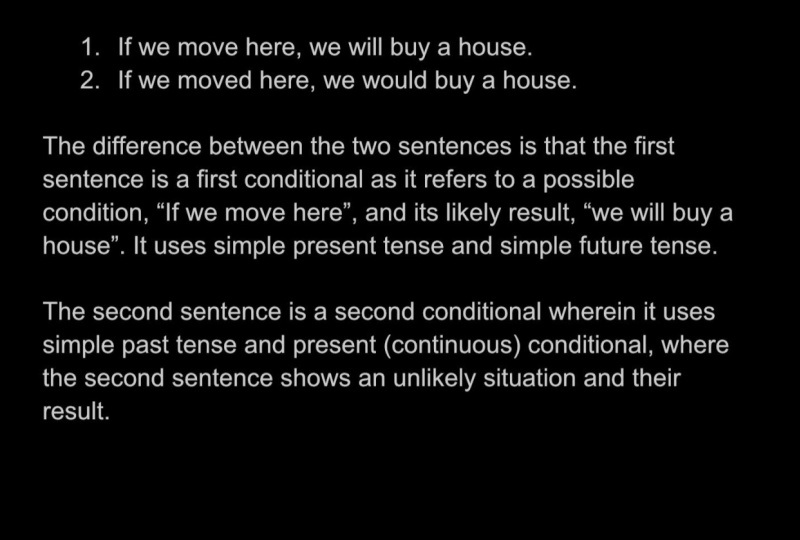
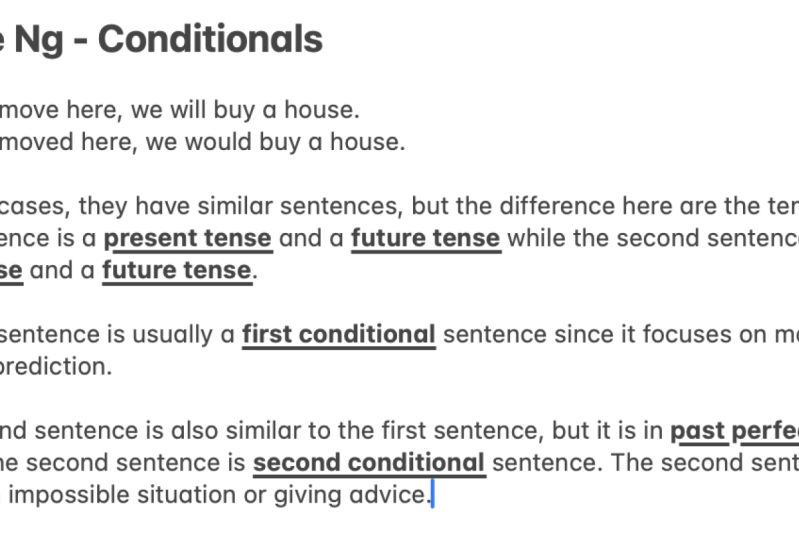
3. First conditionals: we're now look at the first conditional. I'll look at when to use it, how to use it on. Give plenty of examples to use, the first conditional to refer to possible conditions, and they're likely results. I often used them to give promises or warnings. The time frame is the present, or the future on the situation is possible. And riel if clothes condition followed by the main close. The result on in the first condition cases if plus present simple, then simple future. In other words, if this happens, this will happen as a little conditional. Is the orders not fixed so we can swap the condition and the result? But we do have to make sure we pay attention to pro nails and punctuation because I'm examples about making really stick predictions. If you drop the glass, it will break or the other way around the glass will break. If you drop it, we notice when the result is first. There's no comma on. We have to make sure that the it is always at the end. We don't say it will break if you drop the glass we have to make for that. The glass comes first, because that's what we're referencing when refer to it. Or I will be angry if my team loses. If my team loses, I will be angry. What if it rains tomorrow? I will take an umbrella while I take an umbrella. If it greens tomorrow and in all of these cases, there's no guarantee that this will happen. That's thes. Zero conditional is for things at 100% the case. These are sort of like probable. I don't know. We want to give it 70 80% probability. It doesn't really make sense to do this, but if it helps and that's okay, if it rains tomorrow, I will take an umbrella so we think it will rain. Tomorrow is a good chance it will rain tomorrow. If that is the case, then I'll take an umbrella. Or if you drop a glass, it will break. It's what you sort of expect, but maybe if you drop it from a small height onto a soft surface, it might not. But he kind of expected to break. We'll see, is the first conditional to give promises or warnings. If you cook the meal, I'll wash the dishes or I'll wash the dishes. If you cook the meal, that's a promise. I will take you to court if you don't pay the invoice well, if you don't pay the invoice, I'll take you to court. That's more of a warning. Or if you reduce the price by 10% I will buy the kitchen today. What? We're by the kitchen today. He would use surprise by 10% Paul examples off promises or warnings using the first conditional.
4. Second conditionals: we now look at the second conditional Will who, when to use it, how to use it on, give examples that the second conditional is used for unlikely or impossible situations and their results. So we use is also to wish or imagine for a different present on a different future. We also use it to give advice. So the time frame is any time past, present. Future on the situation is impossible or very unlikely. As with all conditions, we have an if clause followed by a main clause which can be swapped. In this case. The second conditional former is if plus simple past, then present conditional or present continuous conditional. So if this happened, this would happen or this would be happening the happening being the continuous part. As we said, the orders not fixed so you can swap them around paying attention to pro nails and punctuation. So it was the second condition for unlikely or impossible situations. For instance, if someone stole my car, I would be very sad. Well, I would be very sad if someone stole my car. We don't expect the car to be stolen. It's not something likely it's something more unlikely I would give everyone t if I was the president or if I was the president, I would give everyone tea. So the chance of me being a president are very, very remote. And in countries where no, actually a citizen, the chances of kind of zero. So we're now talking about impossible situations or at best, very unlikely. And if I Woz Woz, the president, then I would give everyone tea. If I had more time, I would do more sport. Why would do more sport ever had more time and again? We using this Just say it's unlikely that Aiken do the sport due to my time problems. I think most people might use this more of a as a lazy excuse. We'll see. Is the second conditional to give advice. If I were you, I would leave your job. I would leave your job if I were you. Now, please know here it's if I were you on not if I waas you as the former would seem toe want . This is a special case where we use if I were you. I suppose if I wants you again, is it's unlikely or impossible because I can't be you. Despite all these bad films in the eighties, I would lose some weight if I were you. If I were you, I would lose some weight. Probably you would change your hair dresser. I would change your headdress if I were you on all of these air giving advice. Probably advice you don't want to hear, but it's advice nonetheless.
5. Third conditionals: We now look at
third conditionals. We look at when to use them, how to use them
and give examples. The third conditional
is used for unlikely or impossible
situations and their results. We use it for referring to past events that
can't be changed. We often use the
third conditional to show advice or
give criticism. The time frame is
definitely in the past. The situation is impossible or hypothetical. Look
at the format. The F clause takes the past perfect and the results clause takes the perfect conditional, or perfect continuous
conditional. If this had happened, this would have happened or this would have been
happening happening, being the continuous part. As with all conditionals, the order is not fixed. So we can swap the condition
and result clauses as usual, paying attention to pronouns and punctuation to express regret
using a third conditional. If I had worked harder, I would have passed the exam, or I would have passed the exam. If I had worked harder and
note in the second one, No, here's where it
gets impossible. I can't go back in time and work harder and
then pass the exam. I didn't pass the exam because
I didn't work hard enough. We can only wish
it was different. A less drastic example, I would have baked a cake. If I had known you
were visiting, or if I had known
you were visiting, I would have baked a cake. Well, I didn't know
you were visiting. That's why there isn't any cake. And I can't go back in
time and change that. If I had prepared better, I would have gotten the job. I would have gotten the job. If I had prepared better, again, I didn't get the job because I
was poorly prepared. And I can't go back
in time and prepare better or use it
to show criticism. If you had remembered
to get petrol, we wouldn't have been late. Obviously, we're
driving somewhere. I didn't remember to
get petrol earlier. We then had to stop for
petrol and that made us late. The impossible bit
is going back in time and getting petrol earlier. If we put this the
other way round, we wouldn't have been late. If you had remembered
to get petrol. If you had played better, we
would have won the match. Or we would have won the match
if you had played better. Well, I didn't play better. I played badly, which
is maybe why we lost. And I can't change that. I can't go back in
time and play better. If you hadn't eaten so much, you wouldn't have felt sick, or you wouldn't have felt sick if you hadn't eaten so much. The thing here, again,
is you can't go back in time and eat less
and then feel better. That's not the way it works. These are all examples
showing criticism.
6. Mixed conditionals: you know, look at mixed condition. ALS look at when to use them, how to use them and give plenty of examples. So use the mix conditional for unreal past conditions on their probable results in the present, or for unreal present conditions and their probable results in the past. So both past and present situations are absolutely impossible on country to reality. We really now in the realms of pure fantasy and totally impossible situations. The time frame is passed in the if clause and present in the main clause or the other way around present in the if clause and passed in the main clause. And as we said, the situation is absolutely impossible. Onda has nothing to do with the reality of the situation. The reason they're called mixed condition ALS is if we look at the tense is used. We have, if plus past perfect, then present conditional or continuous conditional. Now those. If this had happened, this would happen or be happening or we have, if, plus simple past, then present conditional or continuous conditional. If this happened, this would have happened or would have bean happening on you. Remember, from the second and third conditional lessons. It's either that if clause from the second conditional on the main clothes from the third conditional, as in the last example, or if the if clause from the third conditional with the main close a result clause from the second conditional, as in the first example on this is wise, according mixed conditional XYZ, because it mixes the if and then from two and three, as with all conditional is the order is not fixed so we can swap conditions and results, paying attention to pro nails on punctuation. Let's look at some examples to have an unreal past, and it's probable result in the present. If I had learned to ski, I could be on the slopes now or I could be on the slopes now if I had learned to ski. So the unreal past is the fact that I didn't learn to ski. I never did. But if I did, if I could go back and change that, then I could be on the slopes now. So this past affects the present. I didn't learn to ski, so I'm not on the slopes now. I would be reached if I had won the lottery or if I had won the lottery with a comma, I would be rich. Well, the unreal past is I haven't won the lottery, so I'm not rich. If I had learned a foreign language, I would have better job prospects. Well, I would have better job prospects if I had learned a foreign language and again similar to the other examples. The past can't be changed, so I didn't learn a foreign language, which is why don't have better job prospects if I had learned them. If I could change the past, then the present would be different on this is the first part off mixed condition. ALS the other way around is having an unreal present, and it's probable result in the past. That sounds a bit string, but we'll see the examples. If I spoke German, I could have translated that letter for you. But I could have translated that letter for you if I spoke German. Well, the present thing that's different is I don't speak German, so that's the UN really prison. But if I could change that, then I could have translated that letter for you previously. So in this way, we show you how a nun really present has a result. In the past, we look at some more. I would be happy to help if I wasn't busy. If I wasn't busy, I would be happy to help. Well, I am busy so I can't help. This is the impossible. Present is my schedule. If I could speak a foreign language, I would have had better job prospects or I would have had better job prospects if I could speak a foreign language. Now, this is similar to the example we had earlier. Except we're having the If I could speak a foreign language in the present, then my previous job prospects would have been better, which is not the same as we had before. Before it was. If I learned a foreign language in the past, I would now have better job prospects. But this example is the other way around. Is if I could speak a foreign language now? Then in the past I would have had better job prospects. I hope the difference is clear
 Derek Smith, Experienced and qualified English coach