Transcripts
1. Welcome to the Course: What to Expect: Becom. Welcome to this complete
Egyptian Arabic course. Through More hundred Lesson, we will learn how to speak Egyptian Arabic in
various situations. Through this announced
subscription, you will not only
get our course, but also you will have
access to all the courses, thousands of courses that are
available in Skill share. So take the chance and start
your learning journey now.
2. Lesson 1 "Pronouns “: Amico. Welcome to
this new lesson. Today we will learn
the Arabic pronoun. Today we will study
three pronouns. Ana, which means I N Ana
Ita which means for male. Ita, Ita Inti, which
means for female. Inti Inti one more time. Anna, which means I or I am whatever the speaker
is male or female. Inta which means for male, Ita Inti, which means
you for female. Inti. So Anna means I Anna
Mohammed, I am Mohammed. Also, I can say
Anasara I'm Sarah. IntaJon you are John. EntaJon. Intisara you are
Sarah. So one more time. Anna MhamdO AnasaraEnta John, which means you are John. Anti Sarah, which
means you are Sarah. Also today, we will
learn how to say yes in Arabic, which is Awa. So yes, in Egyptian
Arabic is Awa. One more time, AUA. So now I'm going to ask you, Are you John, IntaJon. The same sentence IntaJon,
it can be a question. Are you John,
IntaJonEa Anna John. Yes, I'm John. So first of all,
we say yes or no. Today we will learn
how to say yes. So yes is Iowa. Then I'll
say Anna John. I'm John. So one more time, I'll ask you, InteJon Iowa Anna Joan. For female, anti Sara. Are you Sara? She can say Aoa
Anna Sara. Yes, I'm Sara.
3. Lesson 2 "How to negate nouns": Alan Beacom. Welcome
to this new lesson. Today, we will learn
how to say not or no. To say not in
Arabic, we say Mish. Mish means not. And to say no, we say. Now let's see what's the
difference between Mish and. Now I will ask you again, IntaJon Iowa Anna Joan. Yes, I'm John. Now,
how we can say? No, I'm not John. Anna ish Joan. So Mish is negate. Negate verb negate
noun, negating by Mish. So AnmsJn. No, I'm not John. Then you can tell me your name. Anna Ahmad or Anna Omer,
or whatever the name. The same for female Inti Sara, Ao Anasara Annas Sara. No, I'm not Sara, Anamssar. Now we will learn how to say good morning in Egyptian Arabic. To say good morning
in Egyptian Arabic, we say Saba hl here
or Saba hen Nour. Sabah means morning,
and here is good. So morning of good or good
morning, Sabahl here. Nor is light, so Saba Heen
or is morning of light, which is good morning
also. Sabah Nour. So one more time,
Sabahl here, Sabanur. If the first person
saying Sabal here, you can respond by
Sabahl here or Sabahnur. If the first person
start with Saba Heenur, you can respond by
Sabahir or Saba henur. Both is correct.
4. Lesson 3 "How to say “This is”: Alan Beacom. Welcome
to this new lesson. Today we will learn how to say this is an Egyptian Arabic. But before this, let's start
with the new vocabulary. We have the word Mtbach which
means kitchen, Mt Bach, Bt house, Corsi Corsi Kitab. Book, Sigda Telephone. One more time. Mat Bach. Bt House, Corsi Chair. Ki tab, book Sigeda
rug or carpet, telephone, which is fun. Now, how we can say this
is an Egyptian Arabic? To say this is an Egyptian
Arabic, depend on the noun. If the noun is
masculine, we use the. If the noun is feminine, we use D. For example, Mtbach is masculine noun. I will say dam Mtbach.This is
a kitchen, Damatbach Debt. Still masculine the house. Debt. De Corsi. This is
a chair, DeCourc. Deck tab. This is
a book, Deck tab. D Sigda Sega is femine word. I will use D Sigda
and do something called Taarbota make sound
at the end of the noun. Sigda. So it's feminine word. I will use D, which means this is
for feminine. D Sigda. One more time, Dsigda Diphon. This is a phone.
Phone is masculine, so I will use the Diiphon.
So one more time. Data Debt Dec C. Dec tab. Diga D telephone. Also, I can use the
Andy to mention a man. I can say that
John, This is John. So I can mention John
and say this is John. Da John or the Sara. This is Sara, Disara. So one more time, Dajon Dsara
5. Lesson 4"What is this? ": Alan Becom. Welcome
to this new lesson. Today, we will learn how to say what is this in Egyptian Arabic. Now let's start with
the new vocabulary. The first word that
we have it today is kitchen and kitchen in Arabic is Mt Bach Mat Bach
again, Mt Bach. House is beat, beat. Chair, Corsi Corsi Book Kitab, Kitab carpet or rug, Sigda Sigda. Phone, telephone. Telephone. So one more time. Mtbach Bt. Corsi Kitab Sigda. Telephone. Now we will learn how
to ask what is this. Previously, we studied
how to say this is This is Ida or D,
Egyptian Arabic. So we will say Ad A means what? What is this? Ada One more time? Ed. The answer the Mtbach.
This is a kitchen. One more time. A, the W is this? The Mtbach. This is a kitchen. Ida. Debt. What is this? This is a house, that seems
structure like in English. Ida decors. Ida Dec tab, the Ki tab. One more time, Dec tab, Ed, Y ED, not da because
Sigda is feminine word. So I will use D, which
means this is for feminine. So AD what is this? DsigtaEda the telephone. Now we will learn how to say, this is not plus object. For example, this is not a
house. This is a kitchen. The mesh beat. Da
MtbachO more time. Then mesh beat this
is not a house. Da Mtbach So Mish means not. D mish Bt This is not a house. Damshbt D Mtbach.
This is a kitchen. Again, it's very similar
to the English structure. Da Ms Mtbach Debt. This is not a kitchen.
This is a house. Damis telephone, Decorz
damise beat the tap. This is not a house.
This is a book. Damshmtbag DCI ga. So Dash ModbugT
is not a kitchen. Then I said DCG, Y D because Sigea
is femine word. So I will mention the
word Sigda by D, not the. One more time, Damhmtbag DCI ga. Dams Corsi, the telephone. Now we will learn how
to see good evening. So evening is evening here, good evening. So
here means good. Ms here, good evening. Also, I can say mese nor
like evening of light. Nor literally means light. It means also good
evening, Messe nor. One more time, Ms here. Messe INR. So I can tell you, Mysel here, and you reply, mesel here or you
reply, messa in Nore. Both is correct. Also, I can
start with messa in nor, and you can reply with one
of those two sentences. You can say messa in
nor or messeL here.
6. Lesson 5 "Who is this?": Helen Becom. Welcome
to this new lesson. Today we will learn how
to see who is this. Previously, we learned
how to say, what is this. Ad or AD. Today we will learn how
to see who is this. Who means mean? In Egyptian Arabic.
Man. One more time. Man, the, who is this for male, mean D W is this for female. For example, mean the Who is
this the John. This is John. Mindi hoses for female. The answer D, Sara. This is Sara. So one more time. Minda Djan Mindi. Da Now, how we can say, this is not Ahmed. This is John. The Mish Ahmed. Again, I will negate by Mish. I will negate the noun. By Mish. The Mish Ahmed.
This is not Ahmed. The John, this is John. Again, Dems Ahmed. The John. DemshFatmaT
Sarah. This is not Fatma. This is Sara. So one more time. Demish Ahmed. The
joan dims Fatma. These are now we will
learn something new. We will learn how to
say, how are you. To say, how are you
in Egyptian Arabic, we say I Zayek for male
and I Zak for female. Let's practice first
in the male form. Now I'll ask you
as male, I Zayek? How are you? You can reply by saying
KuamdKuas means good KuamdTksGod Ilham D. It's expression means good. I'm good. Is Zek Kua yz Hamd For female, I will ask you, is Zaik. You can reply, KuaisaElhamdil. One more time. Is Zak,
KuaisaEhamdurilla.
7. Lesson 6 "Who is this & What is this": Am Becom. Welcome
to this new lesson. In this lesson, we will focus on the two things that we studied in the last couple of lessons, which is who is this
and what is this, and what difference
between two of them. So we will start with hoses. How do you say hoses? To say hoses, we say mean, d. So mean means who. Man. Even when someone
knock the door, we say mean, mean,
which means who. Who knocks the door? I can't say nam Hamed or Anna
Ahmed or Anna Sara. So mean means who
Manda hoses, D John. This is John. And for female, mean D. How is this? D Sara. This is Sara. To
ask what is this? We say AD or AD. So here, Ada Datbah. This is a kitchen. Ada Debt. Ada decors. If there is a carpet or rug, I can ask AD. What is this? D Sigda. Now we will learn another
way to say, how are you. Previously, we study the form I Zak or Zak, which
means how are you? Today we have another
way to say, how are you, which is IMLA. How's it going? IMLA, or for female AME. So first, let's
practice in male form. IMLA, how are you? IMLA. The answer, Qua
good or Quad I'm good. Thanks, God. One more time, IMLA. Ka is Hamdurle. And for you female, I will ask you, I'm
le E. One more time. I'm E. The answer Caza
HamdleO just Caza, but it's better to
make it a little bit longer sentence by saying, Caza, el HamdleO ana Quasa I'm good. Naquasahamdla.
8. Lesson 7 "Where are you from?": Anna Becom. Welcome
to this new lesson. Today, we will learn three
pronouns from Egyptian Arabic, and also we will learn how
to ask where are you from. Let's start first
with the pronouns. The first pronoun that
we have today is Anna, which means I am Wever the
speaker is male or female, one more time, Anna. Anna. Ita, which means
you for male, inte. When I speak to male. Int which means you for female. When I speak to you,
female. One more time. Anna, Int Int. Now we'll study some names
of countries in Arabic. The first country
that we have today is Musser, which means Egypt, Musser us Almania Germany. Amrica USA, Canada,
which is Canada, Saudia Saudi Arabia, Franza
France. One more time. Moser Almania, Amrica Canada. Sadia. Franza. Pakistan,
which is Pakistan, Turkey, as seen China, Tunisia, Il hind, India. In Giltra England. One more time, Pakistan, Turkea scene Tunis IlhndEGltra. Now I will ask you
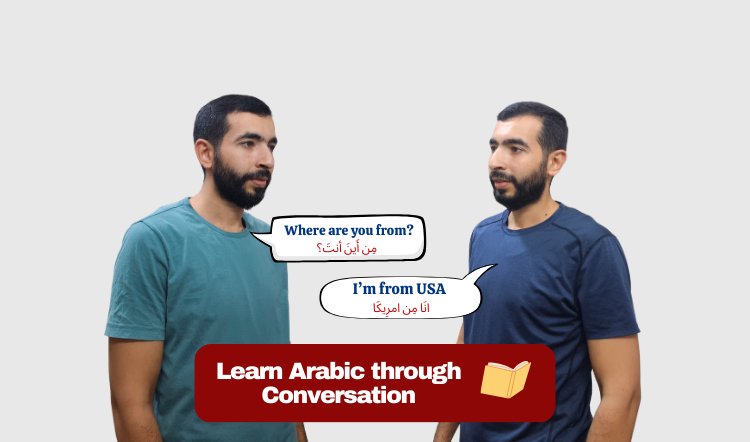
where are you from. So on the right side, we have question for male, and on the left side, we have questions for female. So first, let's start
with male question. So now I will ask you as male. For example, I will ask John, or I will ask Ahmed. So I will ask you inte Minin. Minine means from where. So inte U, male, meaning from where.
This is literally. Which means where are you from? Int Minin. So one more time.
To ask someone, Where are you from,
we say Item nine. Again, Item nine. The answer AnmNlhind
I am from India. Anna Mini hind. Anna, I am Min from then
the name of the country, which is Ihnd India. Anim Nil hind, I am from India. Similar question. Item
in. Where are you from? An I'm in Masur. An I'm
in Masur I am from Egypt. Entamin and I'm in Pakistan. I am from Pakistan. Item nin, where are you
from? And I'm in Amrika. Now I will ask you as a female. So now I'm speaking
to you, Sarah, for example, and I'm
asking you, Itinin. So instead of Ita U male, it will be Inti Yu female. Intimin I'm in Tunis.
I'm from Tunisia. Intimin Am in Canada. I'm from Canada. So namin plus the country. Itemin and I'm in Fenza Itemin and I'm in America. Timin I'm in Sadia. So again, today we study
the three pronouns, Anna, which means I, whatever the
speaker is male or female, ta which means male. Inti, which means you female. Also, we learned how to
ask, where are you from. To ask male, where are you from, we ask him inte menin. He can reply, Anna
Min plus the country. A I'm in America.
I'm from America. And to ask a lady,
where are you from, we say Inti Minin. Again, timin and she can reply, Ana mean plus the country. For example, A Iman
Almania. I'm from Germany.
9. Lesson 8 "Pronouns “He & She”: Almbicum. Welcome
to this new lesson. We still practicing in the
pronouns in Egyptian Arabic. Today we have two new pronouns, the pronoun he and she. Also, we will learn how to ask, where is he from?
Where is she from. So let's start first
with the pronouns. Previously, we study I
and in Egyptian Arabic. To see I, we see Anna. And there is two
pronouns as male, which is Ita as
female, which is Inti. Today, we will learn
how to say he and she. To say he, we say Ha Ha, and she is Heya. Heya. So Ha means
he Heya means she. So here, Ha Ahmed, he is Ahmad. Heya Iman, she is Iman. So Ha plus his name. He plus her name. Now we will learn how to ask where is he from?
Where is she from. On the right side,
we will ask a male. Where are you from?
On the right side, we will ask about
third person male. For example, Ahmad,
where is he from? And on the left side, we will ask about third person female. Sarah, where is she from? So let's start with
third person male. Hoa Minin where is he from? Ha Min. The answer Ham Nil hind. He is from India. Ha Menil hind. Similar question, Ham Nin. Where is he from? Hoa Min Master.
He is from Egypt. How am nin. Ham in America. He Nin. He Saudea. He is from Saudi Arabia. Now we will ask about
third person female Heya, which means she. Heyam Nin. Heym in Tunis. Hey em Nin? Where is she from? Hey I'm in Canada. Hey am Nin. Hey I'm in Turkea. Hey am Nin. Hey, I'm in Enriqa. Hey I'm Nin? Where is she from? Hey I'm in Farnsa, she is from France. So today we learned
two new pronouns, Ha which means he, Ha, and Heya which means she. Also, we learned how to ask, where is he from or
where is she from. To ask where is he from, we say Ham Nin. And the answer, Haman
plus the country. Ham Pakistan. He
is from Pakistan. And to ask, where is she from, we say, He nin. Heenin. The answer, Heye
Min, that's the country. Hein Ms she is from Egypt.
10. Lesson 9 "Preposition “in": Am Beacom. Welcome
to this new lesson. Today, we'll learn how to use
the proposition in Arabic. For example, how to say
the bag is in the kitchen. But first, let's start
with a new vocabulary. We have AM. Am means pen
or pencil, general type. Am Mac tab means desk, Mac tab. Mac tab. Mandal. Tissues Mandal. Telepsion Cheese TV, Shanta bag, Sire bed, Sir. So one more time. Am McTab Madil Del fision Shanta Sir. Now we will learn how to say the proposition in in Arabic. For example, how to say
the pen is in the house. IEP Ilbt. So Proposition N in
English is P in Arabic. P P. So if something in
something, we called it P. For example, if the Ben
is inside the house, we use proposition P.
If Ahmed is in Egypt, we use proposition P. So I Philbt. The pen or pencil
is in the house. Instead of saying Phil bet, we merge it. We merge it. We say fill Bt fill bet. I fill Bt. Mac tab, F London. The desk is in London. Again, Mac tab, feel London. Ill Mana Deal, fill bet. Again, Hellman a Deal, fill bet. It tells you on fill bet. A telepsion fill bit. The TV is in the house. Is Shanta Phil Mdbach.
Matbahs kitchen. We studied kitchen
before, which is Mdbach. So Ishanta the bag, Phil Mdbach is in the kitchen. Is Sir Fibers. One more time. Is Sir Fibers.
11. Lesson 10 "Where?" + Furniture: Allen Becom welcome
to this scene. Listen. Allen Becom,
welcome to this new lesson. Today, we will learn
how to ask where, for example, where
is the pathroom? Where is the curtain or where
is the washing machine. But first, let's start
with the new vocabulary. The first word that we
have today is path room, which is in Arabic, Hamm, Hamm. Sitara is curtain, citara etaraTlega
fridge, Telega Telega. To see room in Arabic, we see da. Oda. Shah is apartment, Sha Sha. And washing machine is a sea. So one more time.
Hamm, citaraTgaOda, Shah sea Il ham, feel beat. So Hamm is bathroom. IlhammFelbt means the
bathroom is in the house. Ilham feel beat. I'll Oda feel beat. One more time. Ill
Oda, feel beat. TelegeFelmtbag. So Mtbach is kitchen. E TelegFElmtbach means the
fridge is on the kitchen. E telege we merge it together. Instead of saying F Il Mtbach, we say Phil ModbagFlmtbag,
tegFlmtbag SitoraFelbt. E SitaraFelbt. Ease fill Modbag the washing
machine is on the kitchen. ElasFelmtbag. A Philandon The
apartment is in London. Philandon. Now let's learn
how to ask where is, for example, where
is the bathroom? Fine Il hamm. Fine means where?
FinFinFinEl hmm. Where is the
bathroom? Final Hamm. The answer Ilham feel beat. The bathroom is in
the house. Final Oda. Where is the room? One more time. Final Oda. I Oda feel beat. Again,
I Oda, feel beat. The room is in the house. PhiniTega Finitega. The answer I tegaFlmtbag. The fridge is on the kitchen. Pin Sitara curtain. Fine uttora. Where
is the curtain? EtaroFilbt. The curtain is on the house. Final Lasela Again, Final Lasela where is
the washing machine? Il gaslaFilmbach. Pinhaa Where is the flat
or where is the apartment? Penhaa Isha Philandon. Again, ha Philandon.
12. Conversation video for lessons 1 to 10: L here. Sabah No Ana
Mahmud. Wa Hammad. Inanin. AnaminFarnza.
Winanin. Andaman Mouser. Maser fin. Maser Pi Africa. Inter PE Bt. Iowa. Anna Phil Bit. Inter P E Odo Iowa
Anna Phil Odo. Ada. Dad delephone. Okay. We Ada. Daddy shirt. AD, the camera. Fain Sigda Sega full
odor. We final odor. El odor, fill bait. Mm. We faint
fisiontilfsion full odor. In El Corsi. El Corsi
fainqitbElkteb, pE Odor. Fain El Shanto. IshantoEsonta Fain
El McTebFllbt. We feign El Shanto
Shanta and Madbag. El MtbachF Elbt Iowa E
MtbaFilbt McDonald P London, Iowa, McDonald's Phil London. London Phi Britannia, Iowa, London F Britannia.
Mm hmm Mahmud. OasaElaHamm vete Llega. El telegePElmtba, Fin El CitoroEtora Phil Odor. Mahmud Minda. Michael. O Mindi D Sero
Mahmud, Ida. The telephone. AhmudEd Disga Mahmud.
How are Joan Minin? Joan Min America. Sarah
Marin. Sara Mistra. Tamm. Sukar. E. Mema. Mas lemma.
13. Lesson 11 "Where?" + person: Ella Micom. Welcome
to this new lesson. We still practice in Fin, which means where in Arabic. Okay, let's start.
Now I will ask you, where is plus person. For example, where
is Ahmed Fin Ahmed. Yes, that's it. Fin Ahmed. Where is Ahmed? The
answer Ahmed Philhmm. Ahmed is in the bathroom. Ahmed Philhm. Next question, Fin,
Sarah, where is Sarah? How do you say Sarah
is in the room? Yes, Sara fel Oda. Again, Sara, fill Oda. Finn, Joan, where is John? How to say John is
in the apartment? Jean Fisha Again,
Joan FishaaFin Lala. How to say Lala is in the house? Layla feel beat. Again, Layla, feel beat. Now, I'll ask you
again, where is Ahmed? And the answer,
Ahmed is in India. Finn Ahmed Ahmed Philhnd. Ahmed Philhnd means
Ahmed is in India. Fein Sarah Saar of Masur
Sarah is in Egypt. Again, Saar of Masur. Sara phi Maser, but we merge
it and say Saar of Masur. Fain John John America Fin Leila Leyla of Pakistan.
14. Lesson 12 "Where?" + Pronouns : Allen com. Welcome
to this new lesson. We still practice in
fine, which means where. Now we will use third
person Pun to ask where, for example, we need to
ask where is he Ha, fine. So the pronoun Ha, which means he plus fin, which means where Ha fin. The answer Ha Phil ham
He is in the bathroom. One more time, the
question, Ha fin. The answer Ha Pelham. Hey, fin, where is
she? One more time. Hey fin. HeFLOda. She is
in the room. Hey FL Oda. Ha fin. Hah. He is in the apartment. Hey a fin, where is she? Hey Philbt, she is in the house. Now I will ask you, where is he and the answer
he is in Plus country. For example, Hafen.
How of Canada. He is in Canada. Heya
fin. Hey of Turka. She's in Turkey. Hoa fin. Of dea. Heya fin. Heya Franza.
15. Lesson 13 "I want" + Surrounding things: Ellen Beacom, welcome
to this new lesson. Today, we will learn how to
say I want Egyptian Arabic. If the speaker is male, he can say Anna Aws Anna As. If the speaker is a female, she can say Anna House
Anna house. One more time. An As Anahusa. Again, an Is Anhusa. So for example, here, an I was Mandl I want tissues. I was Mandl. I was M. Again, an I was Am I
want pen or pencil. An I was the legga. An I was the legga. And I was Shanta. And I was Shanta. And I was Delfzun. I was television. An I was Ras. Again, an I was Racela
I want washing machine. So this is the male form
that says Anna I or Anais. Now let's move to
the female form. Anausa manadl. So how I know that the speaker is a female from
the structure of the verb aza Anna Aza manadl. An AzaElm I want pen or pencil. An Azalega I want a
fridge and house Shanta. I want a bag. Anza TelfsYun, the speaker is
still a female. How I know? Because the structure
of the verb ause. Anna Az aaa, I want
washing machine. So one more time.
There is two forms in Egyptian Arabic to say I
want depend on the speaker. If he's a male, he can say Anas. If the speaker is a female, she can say Ana husa. For example, Anas
Shanta, I want a bag. Now the speaker is male
or Ana Az a Shanta. I want a bag. Now the
speaker is a female.
16. Lesson 14 "I want" + fruit: Allen Vicom will come
to this new listen. We still practice
in the verb Aws or ause which means I won. So Aws means I won if
the speaker is male. And if the speaker is
a female, he can say, and if the speaker is a female, she can say Anausa Ana house. So now let's start with
the new vocabulary. Today we have some fruit. Tuff is apple, Tufa
Tufa AinapGrapes, Ainap, Ainap, manga manga farlaFarla. Toot toot Gaea, GefaO more time TF Ainab manga faroulTotGoefa. So in this slide, we will
practice in the male form. So if the speaker is
male, he can say, Na Is plus what he wants. So here, for example, Ios to fair I want apples, Ios to fare. And I was nab. And I was mango. I want mango. And I was farolo. And I was tout Ana was Gaefa. Now, what if the
speaker is a female? She can say AnausaPlus
what she want. So here, Anas at f. Anna's inap. Anna's a manga. Anna was a forlo. Ana was a toot. Anna's a Gaefa.
17. Lesson 15 "I want" + ask a question: Alan Beacom, welcome
to this new lesson. We still practice in
the verb Airws or Asa, which means I want
an Egyptian Arabic. Now let's ask a question
using this verb. We simply say Aws to Fair. Do you want Apple? Aws to fa. The answer, Iowa, and I was
too fair. Iowa means yes. And I was too fair, I want
apples or Misha was too fair. No, I don't want apples. La Misha was too fair. Another example, I was Nap. Do you want grapes? Iowa Ana inab. Yes, I want grapes
or Mishi was ainab. No, I don't want grapes. So the question now is for male. How I know from the structure
of the verb, Is Is manga. Do you want mango? Iowa Ani was manga. If the answer is yes. And if I want to say no, I don't want mango I can
say Misha was mango. I was farola. Do you want strawberry? Iowa. And I was farola. Yes, I want strawberry
or Misha was farola. No, I don't want a strawberry. I always toot. Do
you want berry? Iowa and I always toot. Amish was toot. I don't want berry. I was Gaea. Iowa
and I was Goefa. A Amisha was Gueva. Now we will ask a female
the same questions. Instead of Ios, it
will be Hauser. Asa to fair Iowa Asa to fair. Yes, I want apples. Nam ish Hauser to fare. No, I don't want apples. Asa Iowa Ana as a hinab. Yes, I want grapes. Anna Misha how's a hinap. No, I don't want grapes. How's a manga. Do
you want mango? Iowa Ana's a manga. Anamsasa manga. How's a farola. Iowa as a farola. AnasazaFarola. How is a toot. Do you want Bri? The
question now for female? How I know, from the
structure of the verb Asa. So the answer, Iowa, A as a toot or Animas a tot. How's a Geeha? Do
you want Guapa? Iowa as a Gaefa. La Anamas a Gueha.
18. Lesson 16 "I want" + Drinks: Alan Becom. Welcome
to this new lesson. We still practice in
the verb As or Isa, which means want in
Egyptian Arabic. But today, we have
a new vocabulary. The first word
that we have today is She, which means tea. She she Asir is jus Asir Maya, water, Ma. Aha is coffee. Aha. Leben, which means milk, even acl means food, Aki. So one more time. Listen and
repeat after me, please. She Asir Maya. Iowa Leben Aki. So now I will ask a
male person a question. Do you want Tea? And
he would reply, Yes, I want T or no, I don't want T. So I was She. Do you
want T? One more time? I was She. Aa and I was She. Yes, I want T or Mish I was She. So a means no Mish, I I don't want, then She. One more time, Misha was She. I was AserEoa and I was Asiir La Misha was Air. No, I don't want juice. I was Maya. Do you want water? Iowa. And I was Maya. Yes, I want water. La Anna Misha was Maya. No, I don't want water. I was AA. AA is Cafe.
Do you want coffee? Aa, and I was AA. Anna Ms was AA. I was Leban Iowa and I was
even Anamsa was Levin. I was Ek Do you want food? Iowa and I was a Anna Mh was ak. Now we will ask a female the same question using the
female form from this verb. Which is Asa. I was a Sha Iowa as a sha. Which means, yes, I
want tea or Anassa sha. As Azir Iowa and As
Azira Anasaz Azir. How's Ava. Iowa Anna's Amoya. Anass Amoya. I was 11. Do you want milk? Iowa A Is 11. Anasaselebn. I was Ek Do you want food? Iowa and I was El Anasa was ack.
19. Lesson 17 "I want" + vegetable: Ella Micom. Welcome
to this new lesson. We still practice
in verb As or Asa, which means won in
Egyptian Arabic. Why? Because it's
very important verb. But as usual, we have
a new vocabulary. So today, we have
some vegetables. The first one is tomato, which is an Egyptian
Arabic, TomotimTmotim, RorRor Biting Gen Biting Gen Gazar Gazar Bats Batts Phil hil Fulfill. So one more time. Listen and
repeat after me, please. Tomatom or BitingenGazar, Bots, Fulfilled. So now I will ask a
question for male, and he will answer,
I want or no. Then he will tell me,
I want another thing. For example, Do you want apple? Yes, I want apple or
no, I want tomato. Okay, let's start.
I was to fare. We studied this form before, which means do you want apple? I was to fare Iowa
A I was to fair. Yes, I want apples or
Anna I was tomatim. No, I want tomato. So negating my question. I was to fare. He said, No. Then he explained to me
what he exactly want. Anna I was tomatim
I want tomato. So one more time, the
question and answer. I was to fare, Iowa and I
was Duff and I was tomato. I was inab. Iowa and I was inab. Yes, I want grapes. Now, how to say
no, I want potato. Anna was botots. Again, no. Anna was botots I want potato. I was farolo do you
want strawberry? Iowa, and I was fla. Yes, I want strawberry. Or I was or. No, I want a cucumber. I was too Iowa I was
toot and I was Guzzar. Now we will ask a female
similar question. So instead of Is, I will use the form Asa. As a manga. Iowa.
A H is a manga. Yes, I want mango. An Is at the motto.
No, I want to meto. Azaa Iowa nusaapO An aza Ting in. Of course, in real life, you can choose one
of those two answer. If you want this thing, you can say, I want it. If you don't want it and
you want another thing, you can mention
it by saying, no, I want plus the new thing
like here, an Ausa biting. Next question, how's a fla? So we have two options. First one, to say,
I want strawberry, Iowa, and how's a fola. The second option
that you say, no, I want plus something new, like here, and
how's a fill fill. How's a Gaefa Iowa
and how's a Gaefa. An As a gazar No, I want cart.
20. Lesson 18 "Numbers from 0 to 10": Alan Beco. Welcome
to this new listen. Today we have numbers 0-10. Okay, let's start.
The first one is SFR. So SFR means zero, Siper Siper Warhead Warhead. Wrehad is one. So one more time. Suffer warhead. It nine. It nine. So again, SFR. Whad It Nan. TetaTeleta is three, teta. Teleta one more time. Suffer warhead. It nine Teta rb r Ba. Again, suffer Whad. It nine Teleta rb msaHmsa Remsa. One more time, suffer, warhead. It nine. Teleta ba, Remsa Sita, six Sita, Sita. So again, suffer, warhead. It nan. Teleta ba Hamsa Sita, Saba Saba, seven, Saba. So one more time, suffer, Whedenin Teleta ArbaHsa Sita, Saba Tamania Tamania TamaniaO more time, Suffer warhead. It in Teleta ba Hamsa Sita, Saba Tamania. This, which is nine. This one more time. Super warhead. Ian, Teleta ba Hamsa Sita, Saba, TamanaTsa Ashara, which is ten, Azhara Ashara. So again, one more time. Listen and read
after me, please, numbers 0-10. Suffer way ahead. It Nin Teleta ArbaHmsa Sita. Sabaha TamanaTsa Ashar.
21. Lesson 19 "Numbers from 11 to 19": Allen Beacom. Welcome
to this new lesson. This is new part from numbers. Today we will learn
something new in numbers. We will learn numbers
11-19. So let's start. Head osher headosherEt
nachher Enser. Tala Tsher Tala Tsher. So one more time.
Hedoser 11, et nosher. Tala Tsher ArbaTsher. Arbat oserFourteen. 15 Hamas Tsher. Hamas Tsher. So one more time
from the beginning from 11. Head osheretnsher. Da Tsher Arbatosher Hamas Tsher. Ether. Tsher Saba
her. Saba osher. One more time. Head osher It noser
Tala Tsher batosher, Hamas Tsher, it
Tsher, Saba toser. TamanTsher, TamanTsher
Tisa sherTsatsher. This a Tosher. So one more time. Listen and repeat
after me, please. Numbers 11-19. HedosherEt nosher. Tala toser. Arbatoser.
Hamas toser. Sitser, Sabatoser. TamanTsher. Tisa osher.
22. Lesson 20 "Where" + Things in the house: Al Ambcom. Welcome
to this new lesson. Today we will practice in where, how to say where and how to answer this question
Egyptian Arabic. But first, we have
some new vocabulary. Let's start with key. Key is Mf Mf Door is Bb, Bb. TabuTarabza Tarabza
Bed, sear. Sar. Wend She beg. She beg. Washing machine. Re sea. So one more time. Listen and repeat after me, please. Move. Bb Tarabiza Sir, Shebek Ras. Now we will learn
how to say K and the key or bid and the
bid Egyptian Arabic. How to use the article
the in Egyptian Arabic. To say then in Egyptian Arabic, we add Alive and lamb at
the beginning of the noun. For example, Move is key, I Move the k. Bb means door. Il Bb, the door. Trabeza is tib tabizaElTrabeza, the tipo E trabza Sir means bed. Sir the bed. We omit the lab and the
pronunciation in some nouns. We say sir. Shibek means window, Shibg
Is Shebec the window. Res washing machine, Elsa
the washing machine. So now I will ask you,
where is the key? And the answer, the key
is in the apartment. Final Mf. Where is the key? Penile. Il Mufasa. So l move the key Pisa
means in the apartment. Il Mf ficha Penal Bb,
where is the door? Pinel Bb. Il Bab Philbt. The door is in the house. Fine Trabza Where is the table? Erabzalmbach. The table is on the kitchen. Finisar. Where is the bed? Car fill odor. The bed is in the room. Finish hibac Where
is the window? Is hibacFll odor. Finasla where is the
washing machine? El gasa fill hame. El gasa fill ham. The washing machine
is in the bathroom.
23. Lesson 21 "Use pronouns in questions": Alan Beacon, welcome
to this new lesson. Today we will learn
something new. We will learn how
to ask questions using the pronoun Ha and Ha, which means he and she in
Egyptian Arabic. Let's start. Dam off the means
this is a key demote. I can add the pronoun ha
before this sentence. Ha dam of the is this a key. So Ha here means is, Ha here is questioning, not He one more time. Hoa data, is this a key? So now I'm asking a
question using the pronoun hoaHoa Damo the Is this a key? Aa Dam. Yes, this is a key. Ha Dabit, is this a house? Ha, the beat? The answer Debb. No, this is a door, la Debb. Heya Di Torabza. Now I'm asking with
the pronoun hea, which means she literally. Why he Because Tabeza
is feminine word? So Heya D Tarabeza
Is this a table? Aa di arabiza. Yes, this is
a table. So one more time. We use the pronoun Ha or
a, which is in English, he or she to ask a
question similar to the auxiliary verb in
English, I R does. So we use this pronoun as if it's auxiliary
verb in English. So one more time. He
diabiza is this a table? Awa diorabiza. Hoa the Srir Is this a bed? Awa the SR, Hoda Am. Am means pen or
pencil. Is this a pen? Hoda llama Bec. No, this is a window. He as is this washing
machine? Awa Dra. Yes, this is washing machine. The Ahmad means this is Ahmed. We studied this form
before the Ahmad. So now I want to
ask, is this Ahmad. So I'll add Hoa at the
beginning of the sentence. Hua Da Ahmad, is this Ahmad? The answer, Aa the Ahmad. Yes, this is Ahmad. Next one, Ha Daomer
Is this Omer? David. No, this is David. Ha Di Sara. Why Heya? Because Sara is female. So I will use the pronoun
Heya to ask a question. Had Sara, is this Sara? Awa disara. Yes, this is Sara.
24. Lesson 22 "Verb “ love/like” + Person or Country: Alan Becom Welcome
to this new lesson. Today, we have a new verb, which is love or like in
Egyptian Arabic, which is Hib. So now we have the structure of the verb with the pronoun Anna, which means I for
both male and female, and the pronoun Ita
which means for male. So Anna Behib means
I love or I like. Inte Bthib means you love
or you like as male. And in the future,
we will learn how to say you as female love or like. So one more time. Ana
Behib Ita Bit hip. Again, Ana Bahib inte Bit hip. Before we practice
in the verb Bahib, let's learn how to
use the article they in Arabic, which is Il. For example, manga is mango. I manga, the mango. Batotis is Peto, I
Batots the Butitu. Same here, Tufa ETF. TomotimETmotum, tomato
and the tomato. So Anabahbms means I love Egypt. Anabahbms So Anna Bah
Ms, I love Egypt. Anabahbilmnga. I like mango. Anabahbil manga. Anna Bahbbotis again,
Ana Baha Bilbototis. So remember, the structure of the verb referred to the Punoun. So here, Bhab referred
to the pronoun Anna. Because when I change
the pronoun Anna to Ita, the structure of the
verb also will change to bitap instead of Bhab.
So one more time. Anabahblbotis. Anabahb America, I love America
AnabahbTf Ana Hbtomotim. Now we will practice
in the same verb, but with different pronoun. The pronoun now is Ita male, Ita Ita, bit heb, Muser. So now I add ta after the Bar. So the first B referred
to the present, and the second letter, which is ta referred
to the pronoun Ita. So Ita bit heb. Again, inte bit heb
Musser you love Egypt. Inta bit heb Il manga. ItebidhbEbtots, you like
potato or you love potato. Itabit heb Amriqa. Inabithbtf you love apples
or you like apples. Intebidhbtmotum.
25. Lesson 23 "Verb “ love/like” + Question : Alan Becom. Welcome
to this new lesson. We still practice
in the verb B hip, which means love
or like in Arabic. So let's do quick revision on the structure of the
verb in the present. AnabaHib I love or I like inte, bit hip, Esmail, love or like. One more time Anabahib
inte, bit hip. Now before we practice
in the ba heb, let's study together
the new vocabulary. The first word is Muba
which means jam, Muba Muba. Cheese is GibnaGibna Butter is Zibda Zibda Bread, Aish Aish. Oil is Zt Zt and
sugar is sucker. Soccer, one more time. Maba Gibn Zibda Ash, Zeit Socher. In this slide, we will learn
how to use the article, which equal the article
teach E in English. So this article we added at the beginning of the
noun, similar to English. So for example, Moba
is Jam, Mabe the Jam. Cheese is GibnEGbn the cheese. The same here, Zibda is
Zibda butter the butter. As I as ZT is ZT
Soccer is soccer. AnabaHbil Muraba
means I love jam. An Aba BilGibna. An Aba **** Zibda
Anabab I love bread. Anaba heb zit.
AnabaHbisuker. I love sugar or I like sugar. Intapit Hebenaba
as mil love jam. Intapit HebenabaEtibit
hebilGibn ItabitHbizibda. ItabitH IntapitHbiz
IntapitHbsuker. You like sugar. Now we will ask a question using
the verb Behib. So the same sentence
ItebitHb and Maba you love jam
or you like jam. It can be a question. There is no difference on the
structure of the sentence. The only difference
is the intuition. Instead of saying Interbit
hebenaba, you liked Jam. I'll say Interpet hebmaba. So the intuition
plus the context. So there is no difference
in the sentence. So this question, intpt
heb Maba do you like jam? The answer, Are you
Ana Behbil Mab. Yes, I like jam. So again, Aoa Anna Behab in Mob. I like jam or Ana
Mish Behab in Moba. So Mish Behab means don't
like or don't love. Anamhbhab in Muraba.
I don't like jam. Intapit Hebsh Aoa Anabhbs
Yes, I like bread. Anna Mish BhabEs. No, I don't like bread. IntapitHb Zibda AA AnabahbZibda. Anamshbhbzibda. Intapit hebigibn.
Do you like cheese? Iowa AnabhblGibn. Yes, I like cheese. Animish Babel Gibn No,
I don't like cheese. AntibitHbzt. Do you like oil, Iowa, AnabaHbz Animisbhab zit. IntapitHbs Iowa Anabahb soccer. An Amish Behibi soker. Antebit he Sara,
do you love Sarah? Iowa Anabehebsara. Anmhbehbsara. No, I don't love Sarah. Intebit Hebmas Do
you love Egypt? Iowa Anabahbm
Anamsbehb Master Alan
26. Lesson 24 "Verb “ love/like” + more Questions: Come to this new lesson. We still practice in the verb Bhib which means love or like. Today we have new structure, which comes with the
pronoun Inti female, Inti bit Hibi as a
female, love or like, Inti, bit hip B. So one more time. Anabahb
means I love or I like. Inti Bit heb means you
as male, love or like. Inti bit hip B means you
as a female love or like. So one more time. Anabahb ntibth anti Bit Hebb. So now we will practice
in the female form. Anti bit Hebb mass
means you love Egypt. So now I'm speaking to Sarah or Stephanie or a
female, anti biitHbm. Anti biitHbi manga,
you like mango. Anti bit heben manga. AntibtHbil Bots. Anti biitb America. Anti biitHb America,
you love America. Anti biithbtTF tib
heebitamotum, you like tomato. So now we will ask a
female similar question. Do you love cheese? So nothing changed on the
structure of the sentence. Antibit He Bilgibn it can be, you like cheese or
do you like cheese? So how I know if it's a
sentence or a question? Two things tell me that
this is a question. The first thing
is the intuition, the way of telling the question. Instead of saying tibbn it
will be tibit hebilGibn. Do you like cheese? The second thing is the context. The context, tell me if it's
a question or a sentence. Antibt Heblgvn. Do you like cheese? Aoa An Abaiblgvna? Yes, I like cheese. Anambhblgvn. No, I don't like cheese. AntibitHbi Zibda? Do you love butter? Aa and Ava
HeebiZibdaO AnamsbhbiZibd. Antibit Hebe sucker. So the question is still
for female, how I know? There's two things
in the question, tell me this question
for a female. The first one is the pronoun
inti which means you female. The second thing is the
structure of the verb, bit Hibi, that's referred
to the pronoun inti. So again, antibitHbi sucker. Do you love or do you
like sugar, Iowa, Anabehbsucer, or
Animishbhb soucer. The next question,
still for female, I will ask her Antibit ****
Ahmed, Do you love Ahmed? She can say, A Anna Baheb Ahmed. Yes, I love Ahmed
or Anamsbhb Ahmed. Anna Mish Beheb Adon love Ahmad. AntibitHbil Felfll
Iowa AnabahFelfll. Or nam be heb fulfilled. Intibid Hebe Faranza
Do you love France? Iowa Annabe Hebe farenza. An Amish Bahbfanza. No, I don't love France.
27. Lesson 25 Possessive pronoun “My”: Alan ecom. Welcome
to this new lesson. Today, we will learn how to
see M in Egyptian Arabic. For example, how to see
my kitchen or my house. Okay, let's start. We
studied before Mat Bach, which means kitchen, Mt Bach. We say Mt Bahi my kitchen. One more time, Mt
Bahi my kitchen. So instead of Mat Bach and
doce ha without vowel, we make it, then we
stretch the sound. We see Mt Bahi Mt Bahi. Bet is house. Bet I
will be Betty my house. Betty Corsi Corsi. Telephone. Telephone.
Phone, my phone. Kitab Kitab Am Ami Mactab McTebi Mail Mendil. So this is for masculine noun. What about the feminine noun? The feminine nouns, we replace the tamarbtaTT Kesra T sound. For example, Shanta, Induce tamarba induce
has sound, Shanta. We make it Shanti
T. So we replace this has sound to T
sound one more time. Shanta hantti my bag, Sigda Sigeti citara curtain, citar T, my curtain. So we add T sound at the end of the noun for the feminine nouns. The Llega, the lectiodaOt ha hai, sel, asalti Awa. Ahti Caffe, my Cafe. Betty finork. So bet is house, Betty my house. Finiork is inork. One more time, Betty finork. Telephone fill bet. My phone is in the house. Telephone fill bet. LMI fill da. My pen or pencil is in the room. LMI fill Oda. Kitebs apartment. So KitebFsha means my
puck is in the apartment. Quite Bi isha Shan
titi, fill odor. My bag is in the room. One more time, ShontetiFll odor. S Salty fill bat. My washing machine
is in the house. Again, s Salty fill bait. Sara fi Oti. Sarah is in my
room. Sarah, Foti. A witty, Phil Modbag. Eh, witty my coffee. Phil Mtbach is in the kitchen. A white fill Mtbach.
28. Lesson 26 Possessive pronoun “Your”: Envicum. Welcome to
this new lesson. Today we will learn how to
say your in Egyptian Arabic. Previously, we
learned how to say M. For example,
Mat Bahs kitchen. To say my kitchen is
Mat Bahi Mat Bahi. Now, how we say your kitchen? To see your kitchen or
your book or your house, we have two forms. The first one for male, the second one for female. And when I say male here and female, it doesn't
mean the speaker. No, it means the second person. For example, when I'm
talking to you, Ahmad, this is the male form, and
when I'm talking to you, Sarah, this is the female form. Whatever the speaker
is male or female. So let's take the first example. Mat Bach is kitchen,
Mat Bahak your kitchen, when I'm speaking to a male, Mt Bahiq your kitchen, when I'm speaking to a female. So what's happening here is this ha the last letter in
the root of the noun, we make it h sound with male form and sound
with female form. Another example, Bet is house, Btk your house for male and beti your
house for you female. Mofte is key. Mf te ha, your key
for you as male, and Mufteh your key
for you as a female. Telephone Telephonic telephonic, Kitab Kitab Kitabk Am Alma Alamic Mactab desk, Mac Tabak, your desk
for you as male, McTabi your desk for
you as a female. Mandyl Mandlc Mandlc what about the feminine nouns
that induce Tamar Buta, as you can see here
with blue color, like Shanta, Tisha sound
called Tamar Buta. So in this case, we
relist to ta sound with male form and T sound
with female form. For example, Shanta
is bag, Shan te tak, your bag for male, Shun Tetik your
bag for a female. Sigda Sigete Sigeti
Sitara curtain, Sitara tuck your curtain
when I'm speaking to John, Star tick your curtain, when I'm speaking to Stephanie. TelegaTlecta. TectiOda room. Otocoti Sha apartment, Shatak Shai, your
apartment for a female. Rasa, asltaRaslti. Ahwa Caffe. A tak, your coffee when
I'm speaking to David, A huii when I'm
speaking to Emmy. I'll bet Pine York. The house is in New York. One more time. I'll
bet Pine York. Now, how we can say, Your
house is in New York, for male version, and
for female version. For male version, it's B tech, Pinwork Your house
is in New York. I'm speaking now to Ale. B tick Fork. Now I'm speaking to a female. Again, whatever the
speaker is male or female. I'm talking now about
the second person, not the first person,
not the speaker. E telephone Filbet. The phone is in the house. So now I am Mohammed. I'm speaking to you, Ahmad. I will tell you
telephone fill Bate. What if I am Mohammed, speak to you, Sarah. I'll say telephonic, Phil Bt. Shanta fill da. The
bag is in the room. ShantitakFll odor. ShantitikFll odor. Your bag is in the room. A telegasha the fridge
is on the apartment. TectaFshaTeecti, Fisha
29. Lesson 27 What’s your name?: Hellen Micom. Welcome
to this new lesson. Today we will learn how
to ask what's your name. So may someone ask
why we study it now after more than 25 lesson. Why we study this, listen
now? What's your name? Because it's depend on
the passive pronoun that we just studied in
the last couple of lesson, how to say my and
how to say your. Okay, so to ask
what's your name, we say Ismec A. Again, Ismec means your name. So Im is a name, Ismec your name for
male, and A means what? So Ismec A, what's your name? One more time. Ismec A. To say my name is plus the name, we say I me plus my name. Isme Ahmed. My name is Ahmed.
So one more time. Ismec A. Is me Ahmed. Now it's your turn, IsmacA. Tell me, I me plus your name. Another example, the
question still for male. How I know? Because
it's Ismec not Ismec. IsmacA Ismhld. My name is held. IsmacA ImOmar. My name is Omer, which is an English Omer. IsmacA Is me John.
My name is John. Now with a question
for you female. Is Mick A. The answer I me
Roan. My name is Rohan. Is Mik A. IsmEmen. My name is Iman Ismk
A. IsmkA Ismesmaya. My name is Sumaya Ismk A. So now I will ask you
as a female Ismk A. Tell me, Is me plus your name.
30. Lesson 28 "10 and its multiples" : Helen Becom welcome
to this new lesson. Today we will learn numbers. Today we will learn
how to say ten and it's multiple.
This is part one. Let's start. But before we start to in ten
and it's multiple, let's do quick revision
in the previous numbers. Before we study numbers 0-19. So listen and repeat after me, please. Suffer way ahead. I Nan teleta ArbaKamsa sette Saba. TemniaTsa Ashora,
Hedosher, etoser, Talaser Arbatosher, hamas toser. Itoser SabatoserTamansher,
Tisa toser. Now we will study ten
and its multiple. So ten is Ashara Ashara 20, AshrinEhrin Tetin TetinErbein. RbenHmsinHasin. So one more time
from the beginning. Ashar Ashrin TetnEbnHasin. Sten ten Sabin. Bain. TamaninTamanin. T saying the saying, Ma Ma, 100. One more time. Listen and
repeat after me, please. Ashar, A Shri Tlaten
ArabinHamsin, tin Sabin TamaninTsin My
31. Lesson 29 "10 to 100" : Alan Beacom, welcome
to this new lesson. Today we will learn
10-100 and between. This is Part two from
ten and its multiple. Let's start. Will
learn, for example, how to say 21 or 35 or 49. Let's start with 21. To say 21 in Arabic, we say whead we shrine. We see whead first,
which is one plus 20. This is how we say it in Arabic. One more time, Whad we shrine. So Whad is one. We means
and a Shrine is 21 and 20. So we pot the smallest
number first, which is one. Then a shrine comes at the
end, Whead were shrine. I mean we shrine Teete
with Shrine, 23. Arb with a Latin. R Ba comes first, which is four, then Teatin which is 30, r Ba with Alatin. Hemsw teatin, Sita telatin. Saba Bin 47. So we say the seven
first, then 40. Saba arbin Saba Bin TamaniaVbin.Turbne
where head ham seen. So where head comes first,
which is one, one and 50. This is how we say it in
Arabic. Where head Wham seen. Et Nin ohamsn Tet hamsin. Bostin arbositinRzacitin,
etastin. So the small number comes first. So one more time. We didn't read numbers from right to left. No, we did it from
left to right. But only couples, we read
it from right to lift. Which means if we have 166, I'll say Ma, then 66. So we read numbers from lift, but couples of numbers, we read it right to lift. 77 is Saba sa vein, Saba, a vein, Tamana a
vein, Tsa a vein. 81 to 83. We head with amine, et Nine with amine, Teletotmnin 94-96 are bow the sin rams out the
sin, set out the sin.
32. Lesson 30 "Is this...?": Allen Beacom. Welcome
to this new lesson. Today we will practice
and how to ask with Pun, how to ask with Pun Ha, and he and Shin Arabic. But before we start, we
have some new vocabulary. The first one is Ota,
which means cat, Ota Ota FerkaFerha chicken, Gemel which is camel, GemelGemel kelb Kelp Han, Han. Homer, Homar. One more time. Listen and repeat
after me, please. Ota Farha. Gamel Kelp. Hasan Homar. Now we will ask questions using
the third person pronoun, which is Ha and Heya. So here, heat Ota is this a cat. So Heya here is questioning. Is this a cat? So in Egyptian Arabic, we ask with third person
pronoun, Heya or Ha. If it feminine object, I will ask with Heya. Like here, Ota is feminine, so I will ask with Heya. And if it masculine like Homer, I will ask with H. So let's back to the first
question. He Di Otta? Is this a cat? Awa Dota. Yes, this is a cat. He Di Farca is this a chicken? Iowa Di Farca. Yes,
this is a chicken. Had kelp. Which
means, is this a dog? D gamel. No, this is a camel. How da Homer, Homar is donkey. Is this a donkey? One more time, Hoa da Hummer, a de kelp. No, this is a dog. Here the Otto is this a cat? The horse on. No,
this is a horse. Ha da Homar. Is this a donkey? Iowa the Hummer. Yes, this is a donkey.
33. Lesson 31 "Verb “eat” : Allen Beacom. Welcome
to this new lesson. We still practice in verb
Bcul which means eat. But today we have
a new structure. It's a structure referred to the pronoun Indi which
means you female. Okay, let's start and I'll explain everything
about this verb. Anabecul means I eat wherever the speaker
is male or female. One more time, Anabecul. Anabecl intptecl means
you eat as male. Inte Bitecul so now I'm
speaking to you male. Inti Bitacl means you as
a female eat or eating. Inti Bitacl. So one more time. Anabacl Itaptecl Ittekl AnabecuFarul, I eat strawberry. AnabeculFul. IntaptecuFul.
You male eat strawberry, or you are eating strawberry. IntaptecuFul. Inti BeclFula. So with the pronoun inti, the verb start with B and
ta and end with yeah, bitale bite, ti tec foul. Anabacul manga, I eat mango. Intaptecul manga. Tip teclmnga you as a
female eating mango. An abcletotEtap tackle toot, as male, eat perry. Tip tackle toot,
you as a female, eat Perry or eating Perry. Anabcgaefa IntutecuGaefa. Tclgaefa and abcultamotum. I eat tomato or
I'm eating tomato. Intaptecul tomatom
tip tcl tomatom abc chiar I eat cucumber. Inter teculhiar you as
male, eat cucumber. Antiptclar you as a
female eat cucumber. Aabacgazar IntaptecGazar. Inti tecla neb cbatotisEnt cbatots
anti tclibtotis.
34. Lesson 32 "Verb “eat” + Three meals: Becom. Welcome to
this new lesson. We still practice the verb
bekle, which means eat. Today we will study
the three meals, which is breakfast, lunch, and dinner. Let's start. The first meal
that we have today is futur, which is breakfast. Fetar is breakfast, I Fetar
the breakfast. One more time. Put I ft. Reda is lunch, red reda Il Reda the lunch. Ida Ida. One more time. Red Ida. Asha is dinner. Asha Asha Asha Ilsha the dinner. Isha. One more time, Asha Ilsha. AnabaculFarul, flfetar. Anabcle means I eat Anabacul
we studied this form before. Farola strawberry. I eat strawberry, nabaculFarla. Felfetar means for
the breakfast. One more time, AabacFarul
then proposition P, then elfetar which is breakfast. So fill fetar for the breakfast. Tap tec farulFlftor, as male eat strawberry
for the breakfast. Again, intpteculful, flfetor
Inti BiteclFulFlftor, as a female int then betakl which is the
structure of the verb with the pronoun in ti faroul strawberry Flfetor
for the breakfast. Again, tip tech foul Flftor. Anna becu manga falsa. Ana Becumnga I eat mango, falsa for dinner, AabcumngaFsa. The same sentence,
it will be for you, male, then for you female. Teptecu manga falsa,
tip teclmngaFala. AnabcututFelda, I
eat berry for lunch. It tec tut elgada
eat Bri for lunch. The sentence for
male how I know? Because the pronoun
ne means male. Then the structure
of the verb Bitec referred to the pronoun na. Inti teclTutFelgada. You as a female
eat Bri for lunch. AnabequGaa flftor I eat
Guafa for the breakfast. The same sentence, it
would be for you male, then for you female. In tap te Gaea fftor
tip tegaaFlftor. Anabeqtamot and flftor, which means I eat tomato
for the breakfast. Innatecultamot and flfetor
ti teclmotumFlftor. You as a female eat
tomato for the breakfast. Another example,
Anabequlhor flaca. An Abeculhior means
I eat cucumber. Falca means for dinner. So one more time, abculhorFlaca. The same sentence
will be for you male, then for you female. It tecujorFlaca. Inti tcl yorFaca. Abacu Gasarfelda I
eat carrot for lunch. IntaptecuGasar fera,
It Becki guar felda. Inti means female. Bitac the structure of
the verb referred to female Gasar carrot
felleda for lunch. An IbecubotsFlftor. I eat potato for the breakfast. The same sentence
will be for you male, then for you female. Itatecuats flfetor
ti teclbotsFlfetor.
35. Lesson 33 "Where” + Three meals: Ellen Beacom, welcome
to this new lesson. Today we will learn how to
ask win in Egyptian Arabic. But before we continue,
I have to tell you that this lesson depend on
the last two lessons. So if you didn't watch last
two lessons, these back. Watch it first, then continue
watching this video. So win in Egyptian
Arabic is Imte. Imta. So here is
the first question. InepTeuFul Eta. Inte Btk, you eat Farula strawberry. Emta W. Instead of saying, when do you eat strawberry? You eat strawberry,
when? This is the Egyptian Arabic structure. Inte, BacelFulEte. So we start the question
by the pronoun as usual, which is Ita here, male. So Ita then the verb betakul. Then what I'm asking
about, which is fraula, strawberry, then Emte
which means when. So one more time.
Inte BtkleFulEta. The answer abc farulFlftor. A, eat strawberry
for the breakfast, and this structure
is very similar to English structure.
I mean the answer. Next question, interp
tec manga Eta. So again, ta betak you eat
manga, which is mango. Then empte which means when. When do you eat mango
Iteptec manga Emta. An IbecumngaFlasa. I eat mango for dinner. Intaptequl tut Imta. An becultutFelada. I eat berry for lunch. IntaptecGaEmta. When do you eat Guafa? AbacuGefaFlftor. I eat Guapa for the breakfast. Now with a question
for you, female. Inti tech tomatemEta. So instead of ta, it will be inti,
which means female. Instead of the
structure of the verb, Bitec it will be bitcli which
referred to you female. So again, titeclmoEta. When do you eat tomato? Or what time do you eat tomato? And I bag cul tamatuFlfutor. I eat tomato for the breakfast. AntipaclGaar Empta. Anabculgazar flaca, I
eat carrot for dinner. Inti tcl butts empte
When do you eat potato? The question is
still for female. How I know from the pronoun ti, which means female and
also from the structure of the verb betakl
that end with E sound, which refer to female. So again, titclbotsEmta. When do you eat potato? An Ibecul batts errata. I eat potato for lunch. Inti tcl or Eta. When do you eat cucumber? Abaco or flfutor. I eat cucumber for breakfast.
36. Lesson 34 "When?” + Some foods: Ellen com. Welcome
to this new lesson. Today, we will learn how to say win in Egyptian
Arabic. Let's start. Win in Egyptian Arabic is
EmteO more time, Imte. So let's start first
with the new vocabulary. The first word is
Solata which is solid, Solta Lahma meat, Lahma Semc which
is fish, SMC, Bd, eggs, bad, Rose, which is rice, Rose, and Ferre
which is chicken. Ferre so one more time. Salta. Lachma SMC. Bad, Rose. Ferrer. Now I will ask you, when do
you eat a specific food? So in this slide, we
have a question for male Intaptec bed Eta. One more time, tp tacul bed Eta. When do you eat eggs? So we start the question by the pronoun Ita,
which means male. Then the structure
of the verb with the pronoun Ita
which is betakul. Inte Bitecl BdeEte is W. We put it at the
end of the question. The answer A Ibecul bed Flfetor. I eat eggs for the breakfast. Again, an Ibecul bed, Flfetor. Here we have a similar
question in taptacle aha Eta. When do you eat meat?
Intaptacle ahmEmta. So again, ne pronoun Eta, which means male, betakul the structure of the
verb with the pronoun na, then hm, then Eta, which means when intptecul ahma The answer Anna
Bcl Lama flasha. I eat meat for dinner. In the question, the structure
of the verb is betakl. Why? Because it's
referred to the pronoun Eta in the answer, the structure is bec. Why? Because it's referred
to the pronoun Anna. Another example, tetecul
SolataEta An abacu sotaFelta. I eat salad for lunch. ItatecuosEna. When
do you eat rice? The question still
for you, meal. How I know from the pronoun Enta and the
structure of the verb Bitecu The answer AnabcosFela. I eat rice for lunch. Now the question for you
female Inti tcl bed Emta. How I know that this
question for you female? Two things tell me that this
question for you female. The first one is the
pronoun inti not Eta. Second is the
structure of the verb, which refer to the
female pronoun, which is bitchy, not betakl. So one more time, the question titeci bedeta
Anabecul bed filfotor I eat eggs for the breakfast. Inti tech sema Eta. Abecul SamakFlaca
Inti tcl fre Eta. AnabculFelda. I eat chicken for lunch. Anti Taclosemta when
do you eat rice? An AbculosFelda. I eat rice for lunch.
37. Lesson 35 "When?” + some fruits: Ella Beacom. Welcome
to this new lesson. Today we will learn how
to ask what do you eat. But first, we have
a new vocabulary. Hoch Hoch, Ms which is Banana, Ms, Burton, the orange, Boro on. So again, Hoch, Ms Burt on. It betak A, A means what? Like Ada or ED. What is this? So A means what? It Bitac
A means what do you eat? One more time, inte Bitac
A. What do you eat? Then I will add specific meal, fil fetar for breakfast. So the question will
be inte tacuEFlfetar. What do you eat
for the breakfast? The answer Anabecu sataFlfetor. We studied this form before. I eat salad for the breakfast. IntapTaculE, fill ada. So interp tacul A
means what do you eat. Again, in betakulEFll
rata for lunch. Fill ada. So again, the question,
ItapteculE fill ada. The answer A Ibecul
mose fill rata. I eat banana for lunch. ItteceFlaca. What do you eat for dinner? An AbculjFlaca. I eat peach for dinner. Ita tec ef fetor. What do you eat for breakfast? The question still for you male. How I know? From the pronoun
Ita which referred to you, male and also from the
structure of the verb, betakul which refer
to you male also. The answer Anabec
button fiel fetor. I eat orange for breakfast. Now we will ask you female. Inti techie fil fetor what
do you eat for breakfast. An abacul mouse fil fetor. I eat banana for the breakfast. Anti tackle fel ada. The question still
for you female. What do you eat for lunch? Anna Bcf felda Anna bekleFer I eat it
chicken, FeldaF lunch. Anti tackle fill Asha. What do you eat for dinner? An AbeculjFca. I eat peach for dinner. In type E fil fetor the
question still for you female. What do you eat for breakfast? An AbacubtonFl fetor. I eat orange for breakfast.
38. Lesson 36 "What do you eat?": Ellen Become. Welcome
to this new listen. In this liston, we still practice in Imta
which means win. But first, we have
a new vocabulary. The first one is
macarona, which is pasta, macarona Macarona Best cat, which is biscuit,
Bescat Bla Bla Mel, which is salt, Mel. And Yogurt is Zebede Zebedi. Watermelon is buttr But ir. So one more time,
the new vocabulary. Listen and repeat
after me, please. Macarona Bescawt Ba Mel, which is salt Zebedi yogurt. But now in this slide, I will ask you mel When
do you eat yogurt? So the question is
intptcu ZebediEmta. Again, inte betak
eat Zebedi yogurt, then Eta at the end, which is win in English. So one more time, the
question, Intaptcu ZebiEmta. The answer A abcuZabiFlfutor. I eat yogurt for the breakfast. Itptec Balla Emta When
do you eat dates? An Abacu Bella Fela? I eat dates for lunch. Intptecu BescavitEta. Anabecubscat flaca for dinner. Itecemte When do
you eat watermelon, An Ibacul but tirFlfetar. I eat watermelon
for the breakfast. Now I will ask you female
different question. Anti tecl but ir Freda? Do you eat watermelon for lunch? So again, anti tack
but tir do you eat watermelon,
Freda, for lunch? So now the answer is
supposed to be yes or no. So here, an Abecul
butt fiel fetor. No, I eat watermelon for
breakfast, not for lunch. Similar question,
titecl bella felta Do you eat dates for lunch? AUA Abecul Blaela. Yes, I eat dates for lunch. AntiteciVscat, fiel fetor
An Abaco BiscawtFlaa. No, I eat biscuits for lunch. An titeci macarona feta. Do you eat pasta for lunch? Aa, Aabaco macarona felta? Yes, I eat pasta for lunch.
39. Lesson 37 The clock: Ellen Beacom. Welcome
to this new lesson. Today, we learn how
to ask about time. So this is the clock,
part one. Let's start. To ask what's the time now, we say Isa Kem samat. Again, Sarah, am, What's
the time? Isa Kem. Lo samat means please, samat. So again, Isa Kem, low samat. To say it's 1:00, we see Sarah Wada. It's 1:00. I Sarah Wada. I Sarah Cam Losamat? What's the time, please? The answer is Satnin. It's 2:00. Is Sat Nin. Is Sam Losamat. Is Sat letter. Again, I Sara talea. Issa kem LosamatZba Sakam Losamat Issa Kamsaak Losamat. A Isa Saba means it's 7:00. Isa Saba, Issa Tamana
Issa Tamania Issa Tesas 9:00. Issa Tesa. Now I will ask Login,
what's the time? Issa Losamat Isa
Ashar, it's 10:00. Isa Ashar Isa osamat doser. A La Samad. I Seat nosher it's 12. So one more time
from 1:00 to 12:00, Saada IAT nin Iatletaarba Issachaaazaba, Samana Isa I Asha DaratNser
40. Lesson 38 Verb “drink”: Alan Beacom. Welcome
to this new lesson. Today, we have a new
verb. It's drink. How to say I drink or
you drink in Arabic. Let's start. Anna Bas
shrub means I drink, whatever the speaker, male
or female. Anna Ba shrub. Anaboshrub. IntapTshrub,
as male drink IntapTshrub. IntapTshrub. Tip shrubby, as
female drink. Tip tshrubby. In tip ti shrubby, one
more time. Anna Ba shrub. Intap the shrub tip D shrubby. Maya is water. Maya. Maya, Joe, as here
Ashe Milk, even, even, Tea, S, S, coffee, Ahua Ahwa. So one more time.
Maya, Ase Leven. She Ahwa Anna Boshrub
aha, flfetor. So Anna Bashab means
I drink, Anna bashrb. Aha is coffee. So Anna
bashrb aha, I drink coffee. Fil fetor for breakfast. So one more time.
Anabhrb aha, fiel fetor. The same sentence for you male, then for you female. In tap dish shrub Aho, flfetor In tip shrubby
aha, fiel fetor. Anna Bash Moya, flaca. Anna Basha Mya, I drink water. Flasha for dinner. So again, Anna Basha of Mya, flaca. I drink water for dinner. The same sentence for you
male, then for your female. ItepTishamya, flasha
tip israbmyaFlaa. Anna BarabaseFlata. I drink juice for lunch. IntepTishabase, filla tip D shrub
azirFlada Anna Bohrub even, fil fetor. Anabhrup I drink even milk. So nabhrub even, I drink milk. Fil futur for breakfast. So again, abashrub ven, Flftor, I drink
milk for breakfast. The same sentence for you male, then for you female. Tip D shrub lavenFlftor, tip D shrubby lavenFlfetor. Anna Bo ShropchFlFetor. I drink tea for breakfast. Intap Di ShrophFlFtor. U, for example, you, John, drink tea for breakfast. In tip D ShrubicheFl futur, U as Stephanie drink
tea for breakfast. Anna Borp Ahab even fielda. Ahua is coffee, B
Leben with milk. Coffee with milk, AnaborbEua
B Leben, fileta for lunch. I drink coffee with milk. For lunch. The same sentence for you male then
for your female. Intapp isup Ahab even Freda, tip Thrubi Ahab lavenFelrea. Anabohrabse to fair flaca. So again, nabshrub I'll
drink, Azir to fair. Azure is juice and to is apple. So Asire to fare apple juice. I'll drink apple juice,
flasha for dinner. So one more time, Anabohrub
Azure to fair flaca. Intaptihrub azire to fair flaca, In tip D shrubby, asi to fair facia. An abo shrub Ms BleibnFlftor. I drink banana with
milk for breakfast. Again, an abo shrub, I drink Ms BlebPnana with
milk, Flftor for breakfast. In tip the shrub,
moss BlabnFlftor. In tip the shrubby,
Ms Bbnflftor.
41. Lesson 39 Verb “drink” after and before: Ella Micom. Welcome
to this new lesson. Today, we will learn
how to see after and before in Egyptian Arabic.
Okay, let's start. To see after in Egyptian Arabic, we see bad, bad, again, bad. And before is Ab
Abl one more time. Bad Abl. Now I will ask you, do you
drink coffee after breakfast? Intatsrpua Bdl fator. So inte bet Shrop Agua
means you drink coffee. Bdl fator is after breakfast. The same sentence
it can be question Do you drink coffee?
After breakfast. How I know it's a sentence. You drink coffee after
breakfast or it's a question. Do you drink coffee
after breakfast? From the context
and my intuition, my way of saying the question. In tap Tisha aha bad
futor the answer, AUA, Aabahu a hua bad futor. Yes, I drink coffee
after breakfast. Intapishup Maya Badri futor do you drink water
after breakfast? Again, Iteptabm Bad del fitor. Answer, no. A AbaabmyEblftor. Ablftor is before breakfast. No, I drink water
before breakfast. In tephrabs here, Bdl
fitor Do you drink juice? Bad del fitor after breakfast? A, which means no or no, and Abashrbase I drink juice, Abl fetor which means
before breakfast. In tapishub even, Bdlsha Bad
lasha means after dinner. Do you drink milk after dinner? Awa and Abashub even, Bdlsha. Yes, I drink milk after dinner. Now I will ask a lady
similar question. In kitshabiEhua, Badlfetor do you drink
coffee after breakfast? The answer, and a
bashrp Aha, abl futor. No, I drink coffee
before breakfast. In tiptisrbi Moya badlFutor
Aa and absub Moya, badlFutor. Yes, I drink water
after breakfast. Intiptihrba Azir bad Lsha. Do you drink juice after dinner? A abashrbair Ba de la grata. No, I drink juice after lunch. And iphrub Abilsa. So Ablata means before dinner. Do you drink milk before dinner? Aa andaba shrub even Ablata. Which means, yes, I drink
milk before dinner.
42. Lesson 40 After and Before, "Museum and Hospital": Helen Becom. Welcome
to this new lesson. We still practice in after and
before in Egyptian Arabic. But before we start the lesson, we have a new vocabulary. The first word is Mz gid, which means mosque,
Mzgid Mz gid. Mustachhfa is
hospital, Mustachfa. Mustache. Mat half is Museum, Mat half Mat half
Mac Taba Library. Mac Taba, it can
be also bookshelf. Mac Taba Mac Teva one more time. Masgit. Mustache.
Mat haf Mac Taba. Now I will ask you, where is the house? Finn, I'll beat. Again, Finn I'll beat. How do you say the house
is after the mosque? I'll beat bad Ill Masgut. Again, I'll beat Baden Musgt. The house is after the mosque. Final beat. I'll beat Baden
Mustachhfa. Final beat. I'll beat Bdl Mata. The house is after the
museum. Final beat. I'll beat Baden McTava. The house is after the library. Now I will ask you, where
is the mosque final Musgt. How do you say the mosque
is before the house? Il MasgidEblbt. Again, Ilmsgid Abl Beat. Phil Mustashfa Where
is the hospital? Il Mustashfa Ablilbt. Penilmataf which means
where is the museum. Il Mata Abl Beat. The museum is before the house. PenilMacTaba. Il McTaba Ablilbt. The library is before the house. Il McTaba Abl Beat.
43. Lesson 41 After & Before, Store, pharmacy, police station, church: Ellen Vicom welcome
to this new lesson. We still practice in after and
before in Egyptian Arabic. But before we start, we
have a new vocabulary. The first word is pharmacy. Pharmacy means Sai Daleya Again, Saidaya Mehel is shop, Mhel Im Shorta Police Station. Im Shorta Kinsa Church, Kinsa, one more time. Say Dalia. Mh Imeshorta Kinsa, now I will ask you
where is the pharmacy? Penis Sdalya. Is Sdalya Badil Masgit. So Idalia Badil Mzgit means the pharmacy
is after the mosque. I Sadalya Baden Mzgit. Fenlmhl where is
the shop or store? Again, Fenl Mehl
Elm heel Badlmtaf. So I heel Baden Mataf means the store or the shop
is after the museum. Again, Elm heel
Badlmata Fain Im Sorta. Which means, where is
the police station. Again, fain Imeshurta. So Im is department, and Shorta is police. So police department
or police station. The answer Im Shurta
Baden Mustashva. The police station is
after the hospital. Fenkinsa Where is the
church Fen Elkinsa. Elkinsa Baden McTava, which means the church
is after the library. Now I will ask you, where
is the mosque? Fine Masgd. How do you say the mosque
is before the pharmacy? Il Masgd Ablsdalya Fin Mataf. Where is the museum? How do you say the museum is
before the shop? El Mata Abl Mhel. So Abl means before
Elatav Abl Mihel, the museum is before
the shop or the store. Feni MustasvaEl
Mustasha Ab Imeshurta. The hospital is before
the police station. FenKensaEl kinsa Abel Mateba the church is
before the library.
44. Lesson 42 Verb “going” : Alan Beacom. Welcome
to this new lesson. Today we have a new verb. It's continuous verb,
which means going. How do you say I'm
going or you are going? To say I'm going, if
the speaker is male, so narroya An arroya. So now in this continuous verb, we have difference
between I as male or I, or I am as a female. There is difference. So if
the speaker is male aro, if the speaker is a female, narroyha, I'm going
as a female. Ha. If I'm speaking to you Milo if I'm speaking to you female, interoa. So one more time. Anoro, I'm going as male. Intero you are going as male. Anoroiha, I'm going as a female. Intoha, you are
going as a female. Duet means now Duet. Again, DuetiKanuaa
in a little while or after a while, Kamuy. Again, Kaman Shua. So here an roy Hel
Mac Taba del ueti which means I'm going to
the library right now. So Baro is to go
Barua Brisen symbol, but Roya is going,
Brizen continuous. So some verbs has two version, one for prison symbol, and other for Bizing continuous. But most of time there is
just one version or one verb, one form for both
prison symbol and Brazen continuous.
So let's back here. An Aarramba D Lueti means I'm going to the
library right now. The same sentence for mil. Into Hel Mac taba Dueti. Now the speaker is a female. Ann arroyHlmtava Dueti, I'm going to the
library right now. Now, this sentence
for you female, Anti Roy Hal McTava Delati. Another example, Ann
arroy Helmata Dueti. I'm going to the
museum right now. The speaker is male, how I know, from the structure
of the verb Roya, Interoy HelmatHdruat. You as male, going to
the museum right now. AnoroiHlmat adwati. I am as a female going
to the museum right now. AntoiHlmatH Druati, you as a female going to
the museum right now. AnoroyHlmhl Kamen Shae I'm going to the shop or
store in a little while. The speaker is male, how I know from the structure of the verba ItaoyHlmhel Dat. You as male, going to
the shop after while. How I know? Because
Ita referring to you, male and the
structure of the verb oia referring to you male also. Ana HelmhelKensu. I am as a female going to the shop or the
store after a while, or in a little while. Into HelmehelKenu. You as a female going to the
store in a little while. Anor Hel MasgiKensua. I'm going to the
mosque after a while. Entero HelmazgidKenua,
is for you male. Now the speaker is a female, Anoro Hal MasgdKenua Now the
sentence for you female. Into Heal MasgdKenu
45. Lesson 43 Verb “going” Theater, work, park, zoo: Alan bicom welcome
to this new lesson. We still practice in the verb
Roya, which means going. So this is the continuous verb from Baruah, which means go. So let's do quick revision on
the structure of the verb, and the breathing continuous. Anoroya means I'm going. The speaker now is male. In taroya you are going. I'm speaking to male. Anaoya I'm going. The speaker is a female. Anti Royha you are going. I'm speaking to a
female. So more time. Ananya AnaihaEtoiha. But first, we have a new vocabulary. The first word is Theater, which is in Arabic Masra Masa, and work is shoul shoul. Park or garden is Hyka Haka. And ZuhaHenHdik hen
is Zu. One more time. Mara, which is theater, shoul which is whaka
Park, Haiku hen, Zoo. So now I will ask you as Mil, what time you are
going to the library? Inter Royal Mac Teva
Eta. One more time. Intero I Mateta. So inter oye, you are going Il
Mac Taba library, and Eta means when or what time? So one more time. In Rotate. What time you are
going to the library? The answer narroHlmTeba, Duetti. I'm going to the
library right now. So Anna oye, I'm going
ElmcTba Library DuetiR now. Another question I
taroe is SadalyaEta. Sidalea is pharmacy. So when you are going to the pharmacy or what time you
are going to the pharmacy, the answer AnaoyaHsda
Kamen Shue. I'm going to the pharmacy Anar HesdalaKenhua,
in a little while. Intero Hel MasraEte
when you are going to the theater, InteroaraEmta. The answer Anaoya hel Masra Shu. Enter hecho Eta when
you are going to work. An oye Jehol Duet, which means I'm going
to work right now. In this slide, I will ask
a female similar question. Into AlmelEta When you are
going to the store or shop, how I know this
question for female? Because the pronoun ti not Enta and the structure of the
verb Roya not troya. So the question one more
time, ni HelmhelEt. Answer, Arai Helmehl Date. I'm going to the store
right now Ai Helmhel Dat. Inti Riha I sorta empte When you are going to
the police station, again, inti RihartaEmt Anya Im Sorta Kamenua I'm going to the police station
in a little while. It ohaHykaEmta. What time you're going to the park or when you
are going to the park? Anna oyhaHadkaK and Shua. So AnaoihalHuka, I'm
going to the park. Keen Shuaia after a while
or in a little while. AntihhaHdko til haw Emta. So HadklHwen is Zoo. Anti RayhaHdkotil HawenEmta when you are going to the zoo. Anar royhaHdiku til Hiawen Duati I'm going to the zoo right now.
46. Lesson 44 Verb “going” Hotel, station, mall, bakery: Anna Becom welcome
to this new lesson. We still practice
in the verb aye or Rayha which means
going in Egyptian Arabic. Before we start, let's tuquo revision on the
structure of the verb, Anaroa means I'm going as male. In Taroya you are going as male. Anoroiha I'm going as a female. Anti Raja, you are
going as a female. Now let's start with
the new vocabulary. First word is Fondo
which means hotel, fondo fondo Mahata is
station, Mahat Mahata. Mul is the English word, Mul and Fna is Bakery, Fna, Fn or Fna is Bakery.
So one more time. Mahata Mul Forna. So now I will ask you what time you are
going to the hotel. In Toroa Helfondo is Sachem. Again, Entero
Helfondo is Sachem. So Sake means what time? In taroy Helfondo, you
are going to the hotel. So what time you're
going to the hotel? In Torre Helfondo Sachem. The answer, Ann
Arroyo Helfondo'm going to the hotel
is Carba at 4:00. Again, An arroyo
Helfondo is Sarba. Similar question, no Mahatam What time you are
going to the station? This question for
male, how I know? Because the pronoun Ita not inti and the verb Roy not Riha. So the pronoun and
the structure of the verb refer to mail. So one more time, the
question Intro Helmhaa and ohhaeEtroEl M Sachem. What time you're going to the M? Anna helm Sasaba at 7:00. What time you are
going to the bakery? AnaohelFnasaa. I'm going to the
bakery at 10:00. Now I will ask the same
question for you female. Inti jal fondo Sam. What time you are
going to the hotel? How I know that this
question for you female? Because the pronoun
Inti not Enta means you female and the structure
of the verb Raya, not Roya refer to you female. So one more time, the question. Inti Hal fondo sake. Ano Hl fondo Satlea. I'm going to the hotel at 3:00. Ni HelmahaaaM When
you are going, what time you are
going to the station? Anna Helmahataa I'm going
to the station at 9:00. AnjooiHlmul Sakm
ojalml Casta at 6:00. And thal furna Sakm What time you are
going to the Bakery? Anar hal fororna Satnin. I'm going to the Bakery at 2:00.
47. Arabic Egyptian Lesson 45 Week days: Alan Beacom. Welcome
to this new lesson. Today, we will learn
days of the week in Egyptian Arabic. Let's start. Yom ilitnin is Monday. Literally, Yom is day. Illitin is Monday. But usually, we say it together. We say Yom Illitnin
the day of Monday, which is in English Monday. So one more time, Yom litnin. My tell it Tuesday. My tell it Yomil Arba Wednesday, Yomil Arba Swan more time Yumiltin Yumi tell it
Yumlrb uml Jameis Thursday, YomilHamsYuml Guma Friday,
YomilGuma Yom Set Saturday, YomilHd Sunday, Swan more time. Yomtnin Yumi Tet, Yum Larba YumlHams Yum Goma, Yumi Sept Yumilhad we still practice in the verb Roy
or Riha which means going. So noroya means I'm going. The speaker now is male because the verb Roya has to form for
the first person structure. I can't say Anaoya
which means I'm going or narroyha which means
I'm going but a female. So here Anaoya Helmctba umltin, which means I'm going to
the library on Monday. Antar Roya Hel Matebayumltin, you as male, going to
the library on Monday. Anna Roy Hal Mac Teba
umltin. Anna Royha. So the speaker now is a female. How I know, from
the structure of the verb, Roiha not Roya. So Anna roi Hal Mac Teva, umltin I'm going to the library on Monday.
The speaker is a female. Inti Roy heal Mac Teba umlitne. Now I may speak to you female, how I know, from
the pronoun Inti, which means you female
and from the structure of the verb Roiha which means
you are going as a female. So one more time, Inti
Roy Hal McTeba Yumlitn. The next example means you are going to the
museum on Tuesday. I'll say it first, as
the speaker is male, Annaoy Helmet ha Yumi Tet. Now I'm speaking to you, male. Inter roy helmet ha Yumi Tet. Now the speaker is a female. Anna Roy HelmatH Yumi Tet. Now I will speak to you female. AntoiHlmatH Yumi Tet. You are going to the
museum on Tuesday. Anna Roy Helm heel, I'm going to the store or shop, YomilRba which means Wednesday. One more time. Annaoi
Helm heel Yum Lar Ba. Now I will speak to you
male ItaoyHlmhl Yom Larba. Now this first
person is a female, the speaker, Anna Roy
Helmehl Yumelrba. I'm going to the
shop on Wednesday. Anti Roy Helmehl Yum
arba you as a female, go into the shop or
store on Wednesday. Another example, Anna
Roy Helmusg Yum hams. I'm going to the
mosque on Thursday. Antaoyhlmus g YmlJaz. Anna Roihal Musgd YumerHamis.
Speaker is a female. Anti Royhal Masgid Yum hams
and speak to you female. Anna Roehl Masra Yumilgma I'm going to the
theater on Friday. Again, Anna Roehl Masra yumilgomaEta
Roehl Masrayumil goma. Anna Royal MasraYumil goma Inti Royal Masra Yumelgma
Anna Roehe Shogo Yumspt, which means I'm going
to work on Saturday. Enter oy he Shoel mispt
Now I'm speaking to mil. You are going to the
work on Saturday. An oia Shogel umsept. Now the speaker is a female, how I know from the structure
Rayha Anaya Shoel mispt. Anti Roy has shoul
misspt you as a female, going to the work on Saturday. Annaoy Hel hadika mel hat, which means I'm going to the
park or garden on Sunday. In oi Hel hdkaYumlhd
Ana Royal HaukayumlHt. Anti Royal Hauka umlhad. Anno HktlHawen umltin. Which means I'm going to
the zoo on Monday Yumlitin. One more time,
AnaroHikotl HiaenYumltin. Tao Haikutlawen
umlitnin you as male, going to the zoo on Monday. AnaoyhaHkotil Hauen umlitin. I'm going to the zoo on Monday. The speaker now is a female. How I know, from the
structure Royha not Roya. Anti Roya Hotel Hauen Yomlitn. You are going to
the zoo on Monday. I'm speaking to you female. How I know, from the
pronoun It which means you female and Royha the
structure of the verb, which refer to you female.
48. Arabic Egyptian Lesson 46 The Clock: All Becom welcome
to this new lesson. Today we will know the
clock with details. This is part one. Let's start. Previously, we studied how to
say 1:00 wader I sea Wada. Now, how we can say it's one and 5 minutes I
Sea wada we Hamsa. So we means end. It's 1:00 plus 5 minutes. I Sea Wada Whamsa. Sarah Wada Wojansa To see one and 10 minutes
is Sea Wada Washer. So if it's two and 10 minutes is Sea Nin Washer three and 10
minutes is Sea Teleta Washer. Now, how we can say 115? 15 minutes is quarter of hour. We use the expression
quarter in Egyptian Arabic, which is oba oba, a, B, an Roba Roba. So we say I Sea Waas 1:00, we and Roba quarter. Isa WaaurobaO more time. I Sea Wada oba. To say 120, we use
also expression, which is third hour. The 20 minutes equal third hour. So we say tilt. Tilt is third, tilt, tilt, T, lamb, te, tilt. So we say Sea, Wada, we tilt. One more time, I
Sea, Wada we tilt. So again, 115 is Sea Wada roba. 120 is Sea Wada Wilt. Now we will do one 31st, then we will back to 125
because it's related to 130, so we have to do one 31st. 30 is nos. Nos means half nos, which means half an hour. So we say Sea Was one more time. Isa Wada it's 1:00. We nos and have I Sea wads. So quarter is Raba Third
is tilt and half is nos. Again, 115 Wada Raba. 120 Wadau tilt. 130 a Danos. Now, how we can say it's 125? Actually, we see it like this. It's 130 -5 minutes
or two 5 minutes. So we say Sea a dons, it's 130, a a Dons Ihamsa, which means I here is exception, except 5 minutes or -5 minutes. So again, is Sea Wan lahasa. So Wah Dnos is 130. I Hamsa is -5 minutes.
One more time. Is Sea Waha Don Ill Hamsa. So now, I'll start over
from the beginning. Isa Wada Hamsa Isa Wada Ashora Isa Wada
Roba Isa Wada tilt. Isa Wadons Ill Hamza. Isa Wadons
49. Arabic Egyptian Lesson 47 The Clock 2: Ellen Beacon, welcome
to this new lesson. We still practice in the clock. This is part two. Let's start. To see 130, we say
Wada Sea Wada. So Wada is 130. 135 is Wada Wuhamsa which means 130 plus
5 minutes, 135. Again, Wada Wahasa. Starting from 140, we use the next hour, which means here it's 1:00, I will say at nine. It's 2:00. Sat nine tilt. Tilt is third, as we learned in the
previous lesson. Tilt Tilt. Sat nine tilt, which means it's 2:00two 20 minutes
or -20 minutes. Again, sat nine Ella tilt. Seat Nin Ia Roba. Again, I will use the next hour. Here, the hour is 1:00. I will say seat Nin. It's 2:00. I Roba -15 minutes minus
quarter Robaatnin I Roba. Sat Nin lahar. Sat Nin means 2:00 Elsa means -10 minutes
or two 10 minutes. Is sat Nin shara. Again, I sat Nin lash. Is sat nin Ela hams. Is Sat Nin Il Hamza, which means it's 2:00 -5
minutes or 5 minutes. I sat nin Ella Hamza. Now I will ask you,
what's the time? Is Sara kem a Sama? How do you say 130? Is Sarah Wadonos Is
Sarah Kamlosamat? Is Sarah Wadonshamsa? Is Sarah Kemlo Samat? Is Sat Nin Le tilt. Is Sarah Kmlosamat. Is Sarah Nin I Loba. Issa Kelo Samat. I erat Nin hara? Is Sara Kem la Samad. Is SaratNn Hamza?
50. Lesson 48 Verb “go” : Alan Beacom. Welcome
to this new lesson. Today, we have a new verb which
is go in Egyptian Arabic, which is Baruah Anna
BaruEG Anna Bar. We use this form just
in present symbol because we have another form
for the present continuous. Anna Baro means IG Anna
Baru te Bitrua as male go. Tibtrui as a female go. One more time. Anna Baro. Evite ivetri Anna BaruElfondo
Yumlitnin is Carba. So Anna BaruHlfondo
means I go to the hotel. We study before the word
Fondo, which means hotel. So Anna BaruHlfondo, I go
to the hotel Humilitin. Yum ilitin is Monday. Humiliin is Carba at 4:00. So I go to the hotel
on Monday at 4:00. Tab tru Helfondo
Humilitin Sarba. It's the same sentence
for you male. You as male, go to the
hotel on Monday at 4:00. Nib tro Helfondo umlin Sarba. The same sentence
for you female. Another example, Anna Baruhl
Macbe um tejamO more time. Anna Baro Hel McTava, what does it mean Anna
Baro Hel Mac tab? Yes, I go to the library
Anna Vauhmtb Then Yumi Tet. Yumi tet is Tuesday. Yes, we studied
before the week days. So Yumi tet is Tuesday. Sera Hamsuns at 5:30. Sera Hamsuns. So Hasans is 530. Tabituhl Mac Teba Yumi
tet is Sa hasnus. Same sentence for you male. You go to the library
on Tuesday at 5:30. In Tibi tru hl Mac
TebaYumTet is Sahamsnus. Same sentence for you female. You go to the library
on Tuesday at 5:30. Anna Baruhlmul Yum Larbataaser. So again, Anna
Baruhlmul what does it mean Anna Baruhlmul yes, I go to the Mul Anna BaruHlmul Yum Larba Yum Larba
is Wednesday. Yum larva. Then the
time is Saitavra. What does this mean Sastavra? Site is six, we Asher
and 10 minutes. Sit Waha 610 Sastara Ita
BitrHlm Yum arbaataara. NTB helmul Yum Larba is seas Tawhra Anna Bhlforna
umeljams Saaba not so has. One more time. Anna Barro
Heel Fna Fna is big. So I go to the Big
Anna Bohl Fna. Yum jams, which
means on Thursday, um jams. Then the time. Once there is word Sea, so I will mention the time. I Sea Sabahaa step by step. Saba ins means 7.5 or 730, Saba Nos means half. So again, Saban 730, which means half an hour, seven, 30. Plus 5 minutes. So Saban Ohamsa 735. Again, Saban Wuhasa. So again, Anavhlforna,
umelhams says about Os hazel. It vitrhlforna umelhams
says about Os hazel. It vitro Helforna
umelHas SaaS abouts hsa. Anna varuhlmsraumelgoma,
about it. What does it mean
Anna varuhl Masra? Yes, Masra theater. We studied Masra before. So Anna Baro Heel Masra
I go to the theater. Anabohasra then the
day Yo Mel goma. Once I said Yum Day, I will mention the
day of the week. So Yumilgoma is Friday. Is Sarbo tilt. Arb is four, we tilt and 20. Tilt is third hour, which is 20 minutes. So arb Tilt means 420. It btrelmsra Yumilgma
is sar Butt. You go to the theater
on Friday at 4:20. Then the same example
for you female, Nt Vdrhelmsra Yumelgma
is Saar But it. Anna BarojhogKlum sept
Sea tamano sella Hamsa. So one more time. Anna Barujhogl
means I go to work Aabarojhog then um
set on Saturday. A Abujhog mist. I go to work here
in the Middle East. Sometimes we work on Saturday. So I go to work on
Saturday and Abujhog Yumi set Sea Tamana nos Ihaza. So Isa Tamana means
8:00, Samana. Then I said ins
and half an hour. So it's 830, Sea, Tamana nos. Then Illamsa -5
minutes Ill hamsa. Which means it's 825. This is how we say it
in Egyptian Arabic. Sea TamananiaHamsa. If you start confusing a time, back to the previous lesson to watch the clock with details. In tb truje Shogel um septa
has the same sentence. You go to work as male. You go to work on
Saturday at 8:25. Then the same example
for you female. It truje Shug mi septa aaa.
51. Lesson 49 Verb “go” school, company, factory: Anna Beacom, welcome
to this new lesson. Today, we will
learn how to say I go or you go in Egyptian
Arabic. Let's start. To say I go, we say Anna
Baruah Anna Baruah. In te Betrua means
you go for male, te BetruNti true means
you go as a female. Inti true. So one more time. Anna Baruah epitbtu. Now let's start with
the new vocabulary. Bank is Bank, the English
word, Bank, Mdresa school, Maddrea Madrea Shirke
means company, Shirke Shirka MsnaFactory,
Msna Msna so one more time. Bank Madresa Shirka Masna. Now, I'll ask you when
you go to specific place? In Tebtruran We studied before the word Masra
which means theater. I teeturaEta. Anna BaruHlmsra I
go to the theater Anna Baruhlmsraum
Elguma on Friday. Basra at 4:10. I Saba Want E W do you
go to the library? Again, ebb Em. Anna Baro Heel Mac
TebYumTeta Sabal ova. So Anna Baro Hel Mac Teba
means I go to the library. So it's referred to
habit or routine. Something I do it
usually in that time. AnabHlmacTeba, I go to
the library. Yumi Tet. Yumi Tet is Tuesday Yumi
teta Sabal roba at 6:45. We see it is Sea Saba Ela
oba 72 quarter or 215. Et what time do you
go to the company? Anna Bo jerked Tamaoopa. I go to the company
on Sunday at 8:15. When do you go to the factory? Anna Baro HelmasnaYum
Septa Sabouhamsa. So Anna Baro Masna means
I go to the factory. Yum Sept on Saturday I Sea SabouHamsa at
seven and 5 minutes. Now I will ask you female. Inti Vitro Hel Bank Eta. When do you go to the bank? Anna Baruhlbnk I go
to the bank umltin on Monday Saad Ella Hamsa at 1:25. So one more time. Anna
Brohelbnk so I go to the bank umltin on Monday. Sera Waha Dos Elahemsa. Was Ihamsa means 125, Wada ens 130, Illams two
5 minutes or -5 minutes. This is how Satan
Egyptian Arabic. Wada Ella hams. And Tibi tru He Madrasa
Ema when you go to school? Anna Baro Hel Madrasa Yuel
Jameis is Sea Teleta noshasa. So Anna Baro He Madrasa
umlhamz I go to school on Thursday Sea Teleta
Nosohamsa at 3:35. Anti vitro Helm Eme when
do you go to the Mul? Anna Bar Heel Mul Yomelgma
is Sea r Bal Asha. So Anabolmul means
I go to the Mul. Then Yomelgma Friday is
R Bal Ashera at 3:50. It Eta. When do you
go to the work? The question for
female. How I know? Because ti the pronoun t which
means you female and true, the structure of the
verb, which refer to you female. So one more
time, the question. Inttro AnabYomlarba, Sava. I go to the work on Wednesday
Yom Larvae Savo at 7:30.
52. Lesson 50 Verb “go” Airport, clinic, grocery: Alan Beco. Welcome
to this new lesson. We still practice
in the verb Baru which means go in the
prison semble tins. So Anna Baruah means I go, te Bitra you go for male, tibtru you go for a female. So now let's start with
the new vocabulary. The word matar means airport, matar matur Ada
Clinic, Ada, Ada. Supermarket is the
market, supermarket. Cinema is the cinema. So now I will ask you what time do you go to
a specific place? In TebtrujeJadka is
Sachem Adika is park. So what time do you
go to the park? In TebtrueJadka, is Siakim. AnnabarujJadka is
Sa DesauosEaHemsa. So Anna BarulHka means
I go to the park, Anna Baruka then the
time ITs Ella hsa. This is how we say it
in Egyptian Arabic. Ta nine, we nos and half, then I Hamsa except or -5
minutes, which is 925. This Illahmsa. If you still struggling
in the time, please back to the lessons
that discuss the clock. Now I will ask you, what
time do you go to the zoo? In TevituHklHoen, Isak. The answer, Anna Baro
Akil Heena Arbus Johamsa. So Anabar AkulHen
means I go to the zoo. Again, Anna Bara AdcotHen? Is Sea Arbaohams at 4:35. Sea Arbus Wohamsa. In tapetu has supermarket SACEM. What time do you
go to the market? Anna BaruH supermarket,
I Sat Nin U Ropa. I go to the market at 2:15. Is Sat Nin at 2:00, We Roba and quarter, which is 15 minutes. In tapetuH cinema SACEM. What time do you
go to the cinema? Anna Baruje cinema is Sea Stelt. I go to the cinema at 5:40. Now I will ask similar
question for you female. Intrumator Sakm
Mator is airport. So what time do you
go to the airport? Anna Baru Hematur is Saar Azra. I go to the airport
at ten and ten. Intrjda sac. What time do you
go to the clinic? Anna aro Heeda is Sea Teletatlt. So Anna Varro Heaeda
means I go to the clinic. I Sea Telettlt at 3:20. Again, SateletaOtlt. ITV tr Heel Mezgd Sa, which means what time do
you go to the mosque? Anna Baro Helmezgid
is a Sabala oba. So Anavaru Helmezgid I go to the mosque Sea
Sabala oba at 6:45. Sea Saba at seven, I Roba minus quarter or -15. Which means 645. In TV tru Hidala Sachem. What time do you go
to the pharmacy? Anna BaruHdalaa TzalaHmsa. I go to the pharmacy at 8:55.
53. Lesson 51 Are you from + Country?: Helen Beacon, welcome
to this new lesson. Today, we will learn how to ask, Are you from specific country? Are you from Egypt or
are you from America? First, let's start
with some countries. Countries Arabic
is balled and blur is Bulden Bald Bulden. Qatar is Qatar Qatar. El Miksiq which is Mexico. Il Mcique Australia, Australia, lima ot, which is Emirates, lima ot, Philistine, which is Palestine, Philistine,
Holanda, Holanda. So now I will ask you, te Min Ms It Min Are you from Ita Min Masri is
Egypt. Are you from Egypt? Entam& Master? The
answer Anamen Mike. No, I'm from Mexico.
One more time. Entamen Moser Anamene Mixiq. Item in Canada. Are
you from Canada? So in Egyptian Arabic, we can ask with pronoun Ina
Ina Inte means for meal. But in the question, it can be, are you from Ita Min. Are you from Canada, Int Min Canada, Iowa,
Anna Min Canada? Yes, I'm from Canada. IntermalEmot. Are
you from Emirates? IntermalEmod, Iowa naminalEmod. Yes, I'm from Emirates. Entamin Amrika Are
you from America? Remember, the question
here for male. How I know? Because the pronoun
ta referred to you male. So entamin Amrika,
are you from America? La Anamin Kotar. No, I'm from Qatar. Now the question for you female. IntimFnza Are you from France? AntimFanza Annam in Philistine. No, I'm from Palestine. AntimNsdya The question
is still for you female. Are you from Saudi Arabia,
Iowa, and Amesodya. Yes, I'm from Saudi Arabia. Intim Australia. Are you from Australia, Iowa, and I'm Australia. Intim in Pakistan. Are you from Pakistan? And I'm in Hollanda?
No, I'm from Holland.
54. Lesson 52 Nationalities: Alan Beco. Welcome
to this new lesson. Today we will learn
the nationalities. We will learn how to ask, Are you Mexican or are you
American? Let's start. El Mixiqe is name of the country El Mixiqu
which is Mexico. Mixiqi male nationality,
which is Mexican, Mexican, Mxicea female
nationality, Mexican for female. El hind, which is
India, El hind, Hindi, Indian for male, inde
Indian for female. Engiltra is name of the country. In giltra which is England, the nationality is Inglese, which is English man, Inglese, Anglesea English
woman, Anglesea. Philistine is
Palestine, Philistine. Philistine, the
male nationality, Philistina the
female nationality. Amrika is the name
of the country, Amrike Amriqe is
American for male, Amriqea American for a female. Now I will ask you as male, Are you Mexican?Ente Miiki. So here I will not
say Minte Min Miki. Why? Because after Min, there is name of the country. But here's nationality
like English structure. Are you Mexican? Ante Mixiki A namxiki
which means yes Mexican. IntaKatari Are you Katie? An Hindi. No, I'm Indian. IntaFustini. Are you Palestine, Iowa, Anna Fustini. Anti frenzy. Are you French Antifrenz
La Anna Hollande. No, I'm Dutch. Now the
question for you female. Anti Mxicea, how I know that this question
for you female? Because the pronoun anti
refer to you female, and mexicaa the nationality refer also to a
female. One more time. Anti Mexicaa, Are you Mexican? Anamasea No, I'm Egyptian. Anti Amriqa Are you American? Question still for you female. Iowa? Anna Amriqa?
Yes, I'm American. Anti Anglesea Are
you English woman? Iowa Anna Inglesea. Yes, I'm an English woman. Anti Hollandea are you Dutch? La Anasdea? No, I'm di. Nasdea. Helen Beacom. Welcome to this new lesson. Today, we will learn how to ask, Are you from specific country? Are you from Egypt or
are you from America? First, let's start
with some countries. Countries Arabic is
balled and the blur is Bulden Bald, Bulden. Kotter is Qatar Kotter. El Misiqe which is Mexico. Il Miksiq Australia, Australia, lima ot, which is Emirates, lima ot, Philistine, which is Palestine, Philistine,
Holanda, Hollander. So now I will ask you, inte Men Ms Int Min Are you from
Ita Min Masri is Egypt. Are you from Egypt?
Entam& Master? The answer Anna Min in Mexic. No, I'm from Mexico. One more time. Entamen Moser Anamene
Mexic. Item in Canada. Are you from Canada? So in Egyptian Arabic, we can ask with pronoun Inter
Ina Inte means for meal. But in the question, it can be, are you from Ita Min. Are you from Canada
Itemin Canada, Iowa, Anna Min Canada. Yes, I'm from Canada. IntermalEmrd. Are
you from Emirates? IntermalEmraod.
Iowa naminlEmrod. Yes, I'm from Emirates. Entamin Amrika Are
you from America? Remember, the question
here for male. How I know? Because the pronoun Ita
referred to you male. So Entamin Amriqa,
are you from America? La AnaminKoar. No, I'm from Qatar. Now the question for you female. IntiminFanza. Are
you from France? AntimFnza? La Annam
in Philistine. No, I'm from Palestine. Anti Mesodia. The question is still
for you female. Are you from Saudi Arabia,
Iowa, and Amnesodia. Yes, I'm from Saudi Arabia. Anti Australia? Are you from Australia, Iowa, and Am Australia. Intim in Pakistan. Are you from Pakistan?
And I'm in Hollanda. No, I'm from Holland. Alan Beco. Welcome to this new lesson. Today we will learn
the nationalities. We will learn how to ask, are you Mexican or
are you American? Let's start. El Mixiqe is name of the country El
Mixiqe, which is Mexico. Mixiqi male nationality,
which is Mexican, Mexican, MxqeaFemale
nationality, Mexican for female. Il hind, which is
India, Il hind, Hindi, Indian for male, Hindea
Indian for female. Ingltra is name of the country. In giltra which is England, the nationality is Inglese, which is Englishman, AnglesiEnglsa, English
woman, Anglesea. Philistine is
Palestine, Philistine. Philistine, the
male nationality, Philistina the
female nationality. Amrika is the name of
the country. Amrika. Amriqe is American for male, Amriqa American for a female. Now I will ask you as male, Are you Mexican?Ente Miiki. So here I will not
say Minte Min Miki. Why? Because after Min, there
is name of the country. But here's nationality
like English structure. Are you Mexican? Ante Mixiki Aa emisiki which
means yes I'm Mexican. IntaKatari Are you
Katie? An Hindi. No, I'm Indian. Inteflustini. Are you
Palestine, Aa, Aa Fustini. Antifrenzi Are you French Antifrenzi La Anna
Holandi. No, I'm Dutch. Now the question for you female. Anti Mxicea, how I know that this question
for you female? Because the pronoun anti
refer to you female, and Mexica, the nationality
refer also to a female. One more time, Antimxicaa,
Are you Mexican? Anamasea No, I'm Egyptian. Anti Amrika Are you American? Question still for you female. Iowa? Anna Amrika?
Yes, I'm American. Anti Inglesea Are
you English woman? Iowa Anna Anglesea. Yes, I'm an English woman. Anti Hollandea Are you
Dutch? Anna Sadea? No, I'm Saudi. Ana sada.
55. Lesson 53 Family Part 1: Ella Miku. Welcome
to this new lesson. Today we will talk about family. This part one. Let's start. The first word
that we have today in our new vocabulary is Baba, which is father Baba. Ibn means son, Ibn. And ah means brother. Ah, so one more time. Baba Ibn. Oh. Today, we will practice
in the passive form. How to say my father, your father for you mail, your father for you female. So Baba means father. Baboya is my father, Baboa and Babak,
your father for mil. Babaki your father
for you female. Next one is Ibn,
which means son. Ibni is my son. Ibnk your Son for Mil, and Ibnik your son for you
female. A means brother. A huia is my brother. A hook, your brother. A hooki your brother
for you female. So Baba is father. D Baba means this is my father, Daba Boya. Again, Daba Boya. Da Babak, this is your father, if I'm speaking to you male. Da BabakiT is your father, if I'm speaking to you female. Ibn means son. De
Ibn, this is my son. The EbikT is your
son for you as male. The IbnikT is your son, for you as a female. Ah means brother. That Ahuja, which means this is my brother. The AhokTh is your brother
when I'm speaking to you Mil and that AhokiT is your brother when I'm
speaking to you, female.
56. Lesson 54 Is this your son?: Hello, hello. Welcome
to this new lesson. Today we have today we'll
still practicing in father, which is Baba, Ibn, which is Son, Ah,
which is Prada. Now, it's similar
question for you female. How a daba booki Is
this your father? So how I know this question for you female Baba Ki
referring to you female. If it's Babak, it's
referring for you me. So, again, the question, Ha
daba booki Awa daba Boya, which means, yes,
this is my father. Or damage Baboa, which means
no, this is not my father. Next question, how
are the Ibnik? The question is still for
you female. How I know? Because IbnikRferring to
female, this knee sound. If it referring to
male, it will be Ebnek. So again, the question,
how Ebnik Awa Dibn Ava? Yes, the ibn, this is my son. Or a No. DamseibnT is not my son. Houde Ahuki Is
this your brother? Audaahua, which means,
yes, this is my brother. Or Dam Ahua No, this
is not my brother.
57. Lesson 55 Weather: Ellen Beacom. Welcome
to this new lesson. Today we will talk about
with her. Let's start. Today we will learn
how to say it's hot, cold, moderate, or rainy.
To say hot, we see. We see Ilga Go is
withtherHr is hot. So h is hot. Bird is cold, Bird. We see Ilga Bard. The weather is
cold or it's cold, Ilga Bed. Matadl means moderate. Mata Dl Mata Dl Ilga
mata Dl, it's moderate. Be matter means
rainy, Bmtter Bmtter. Also, if I want to say
it's sunny, I can say, I'll go, ushmis Ilga ushmis. And overcast is
Pisa heb, fill go. Fis a heb means there
is a cloud Phi sa heb, cloud, fill goo in the Wither. There is no specific
words for overcast or we don't use it in Egyptian Arabic because usually we don't
have this weather. Usually here it's sunny
in the Middle East. So there is no specific words or we don't use it
in Egyptian Arabic. So we can describe it by saying, is a heb, fill go. There is a cloud in the weather, is a heb, filgo which
means overcast. So one more time. Har means hot. Bird is called M tal, moderate, B Matar is rainy. Also, Mhms means sunny. Visa heb ligao means overcast. Now I will ask about whither
in a specific place. For example, here,
Ilga Phila Amil. We stut before IML E, which means, how's it going? IML E, I can ask you, Amil E, which means
for you, how are you? Amil E. But when I
ask about whither, it means, how is the whither? Illam E, IlgauPre Amil. Ilga fire, the whither in Iraq, IML E, how is it. So again, IlgauFa Amil. The answer, I'll go here. I'll go h, it's hot in Iraq. Next question, IlgoEspania Amil. Aspania means Spain, Espania. IlgofEspania, Amil E. How
is the weather in Spain? The answer, Ilgo
Mota Dili Aspana. It's moderate in Spain. Next question, IlgFRussia Mile. How's the weather in Russia? Ilga bed Feria. It's cold in Russia. Ilga BerdFrusia. Next question. Ilga Holanda Amil E. How's
the weather in Holland? Ilga Holanda Amil E. The answer. Il goo B Matter Fjolanda. It's raining in Holland. Ill go better ijolanda. Let's move to the next slide. It's similar question.
Il go for Sadia Amil E. How is the weather
in Saudi Arabia? Ilga har soda. It's hot in Ssudiba. Again, Ilga har, it's hot or the weather is hot,
soda in Csudariba. Next question, Ilga
of Kenya IMLA. How is the weather in Kenya? Ilga Motakena. It's moderate in Kenya. Ilga of Almania IML E.
Almania means Germany. How is the weather in Germany? Ilga Verdi Almana. It's cold in Germany. Ilgo BanamaHl. How is the weather in Banama? Ilga motor Banama. It's raining in Banama.
58. Lesson 56 What is the temperature?: A abcum, we come to
this new lesson. Today we will learn
about temperature. How to ask, what's
the temperature now or what's the temperature
in a specific place. In this lesson, it's practicing also in shape of Arabic numbers. Let's start with the question, Dara gutter hora Cam filcos. So Darraga is degree, daga degree, hara
is temperature. So Dague hora,
temperature, degree. Cam Cam is how much or how many. Like here in English,
how is the temperature? Dragit El hora, Cam. How's the temperature?
Fill coats in Jerusalem. Any specific clays. So one more time,
DragEHaKam, fill coats. What's the temperature
in Jerusalem? The answer Dara GeelaFlcots
plus the temperature. Dara gel hora, Filkots
Tamania shrine, 28. Again, Dara get hora, filcots, the temperature in
Jerusalem, Tamania Washrin. This is eight Damania, then Ashrin which
is 20, DamaniaVsri. Next question, Dara
GuthaKamFmarokish. It's Moroccan city,
called Morocis. So the question says, what's the temperature
in Moroci? Dagaemmarokish. The answer DaguurHaP
MorocishHms with Latin, 35. Again, Dara gualha the
temperature degree, fema okish in Morocish city, Hamsa with latin, 35. So this is Hamsa, which is five. Then teatin which is 30, Hamsa with telatin 35. Dara GielHa Finork. What's the temperature? A Nork. Dara gutalPinor Tala toser. Again, Dara guitelPnork,
the temperature, A Nork Tala toser, which is 13. This is Talatser. This is teleta which is three, then one, three plus one
is 13, which is Talatha. Dora gut hora Amsterdam. What's the temperature
in Amsterdam? Dora Gul horror Amsterdam Sita. Sita means six. Dora gutter horror
of Amsterdam, eta. The temperature in
Amsterdam is six. Next slide, we have
different cities. Darragh Kemp Istanbul. What's the temperature
in Istanbul? Dara GiilHarra
Istanbul, Arbaosher. Arbaosha is 14. This is Arba which is four, then Whad which is one. So Abatosha is 14. The temperature in
Istanbul is 14. Again, the answer Dara
guilHara Istanbul Arbatoser. Dagi hara Cam for Moscow. What's the temperature
in Moscow? The answer Dara
guitarra of Moscow sf. Sufri means zero, sufferer. The temperature in
Moscow is zero. To say minus, we say ellip. For example, lib
whead is minus one, libiten minus two,
litreta minus three. Dara gutta harraaKamFlchera. How is the temperature in Cairo? Dora gutalhFlchera, it
ta, with the latin. Eta is six, the Latin is 30, so eta with the Latin 36. The temperature in Cairo is 36. Dara gitleharra filchera
eta with a latin. Dora get Harr a
cam, feed the mush. How is the temperature in masks? Again, Dague
hareraKamFeed the mush. The answer Data fide Musk. Whead we shrine. The Musk is Damaskes which
is the capital of Syria. The temperature in
the masks is 21. Way ahead, Wearhrn 21. Again, the answer, Dara Guha
fide Musk, weheadVhrin.
59. Lesson 57 The four Seasons: Alan Beco, welcome
to this new lesson. Today we will study
four seasons, starting from winter
spring, summer, autumn. Also today we will focus
on numbers. Let's start. To say winter in Arabic is Shita ShitaO Ishta the winter
IshtaEba spring Arabia. Rabia. Sif is summer, Asif, Asif, lharif
Autumn, IlharifElharif. So one more time.
IshtaEabia Sif lharif. We stud before DogtHoraKam, which means what's
the temperature. Now we will ask what's the temperature in a specific
place in a specific season. For example, what's
the temperature in Istanbul in the winter? Elam Istanbul fishta Again, DogaKm means what's the
temperature, DrogthaK. Fe tambulN Istabul. Fish chita in the winter. What's the temperature? In Istanbul in the winter? The answer DagelHora Istabul. Fish chita r baat osher. Arbatosha means 14, bat Osher. The temperature in Istanbul
in the winter is about 14. So one more time to answer. Da giilhaFtambul,
fish chita bat osha. Doge hora am, filchaFoba. So Dag hara Cem, what's
the temperature? Felcaha in CaiuFoba
in the spring. What's the temperature
in Cairo in the spring? Dora gut hora alcheraFoba
site te Latin. Set Latin means 36. Sita, this is Sita, and Teatin is 30. Teatin. Set the Latin, 36. So again, Da Guth Felchera
the temperature in Cairo, Feroba in the spring,
set out the Latin. DogeelHaKFibrilin, Fusif. What's the temperature
in Berlin in the summer? SF is summer. The answer, Dagi hara
fibrillin, Tamana Ashrin. Tamana Ashrin means
28, tamano Ashrin. 20 is Ashrin and eight is
TamanaTamana Ashrin 28. Dagi Fibrilin
temperature in Berlin, sf in the summer
Tamana Ashrin 28. DogtHarroa Cam fidubiFlharif.
Harif is autumn. So what's the temperature
in Dubai in the autumn? Again, Dogtdharroa
cam, Fidubai in Dubai, Pel harif in the autumn. The answer Da guitar of Dubai Pl harif Min Damana
Ashrin Hamsa teatin. So this is the average. The
temperature in Dubai in the autumn from 28
Damana Ashrin L two, Hemsa telatin which
is 35 Hemsa tetine. So again, the answer in Arabic, Dagi Harr of Dubai, Pl harif Min tamano
Ashrin Hamsa eaten. Dagitdubai the
temperature in Dubai, Phil Jarif in the autumn. Min Tamana A Shrine, starting from 28,
Lhasa Tlaten to 35. DoragiHam Maro fish
hita Chita is winter. What's the temperature in
Morocih in the winter? DagutelhaFe ma rockies,
fishita head osher. Headsha is 11, head Osher. The temperature in Mochis
and the winter is 11. Again, the answer, DaguurhaFem
rockieshFshta, head Osher. Next question, DaguturhaKam,
fill coots ferobia. Data Kem flu. Cuts is Jerusalem. What's the temperature
in Jerusalem? Feroba in the spring. Again, the question, DaguFeroba. Dog HarcoFobaTH shrine. This hour Shri means 29. The temperature in Jerusalem
and the spring is 29. DagkemFork for Civ. CIF is summer. What's the temperature in
New York and the summer? Dora Guitar Hora PN York, fif Min, this hour Shrine
way ahead with the latin. So Mint this our Shrine
starting from 29. This ho is nine, a shrine is 20. This hour shrine 29, L two, we ahead with a Latin, 31 way ahead with the Latin. So again, the answer, Dora
Gutter hora, New York, fsf Mint this hour Shrine Le
whead with a Latin, 29-31. DogtKf Doha el harif. Again, DogatorHaKf duh. What's the temperature in Doha? Pelharif in the autumn. The answer,
DrogtorHrror of Doha, Velharif whead web 41. The temperature in Doha
in the autumn is 41. DrogutHror of Doha, the
temperature in Doha, lharif in the autumn way ahead webin which is 41, whead web.
60. Lesson 58 One hundred and its multiples, Part 1: Allen Beacom, welcome to this new lesson in
Egyptian Arabic. Today we will learn
numbers 100-900. So 100 is Mya, Ma. 200 meten meten, 300 Tol tome, Toltmea Robo Omea 400. RobaOmea RobaomeaHm sumea 500. Hm Sumea. So one more time. Mea meten Tol tumeaRoboOmea, Hom sumea Su tomea 600 Stumea. Sbamea 700, SbameaTumnumea, 800, TumomeaTomea is 900
Tsomea one more time. Mia, meten TultomeaRobome. Hum sumea stomea
SubomeaTumumea. Tsomea.
61. Lesson 59 One hundred and its multiples, Part 2: Alan Becom. Welcome to this new lesson in
Egyptian Arabic. We still practice
in numbers 100-900. So how do you say 121? In the last lesson, we
learn how to say 100, which is Mya Maya plus 21, which is way ahead, Washrin. So Mya wahead Wa Shrine. Again, Mya whead Washri
Meninashrin 122. Maya Teleta Washrin 123. Mine, metan is 200 metan, metan. Here, metan, b with tetin. Metane is 200, b telatin 34. Metan bo telatin. Metan Hamsa teatin. Metan sit tau telatin. TulTumea is 300
TulTmea Tultumea. So Tultumea suburban. Sabourvein is 47 347. Tultumea subourbin. TulTumea tamaniabin
tulTumeaTsau in. 400 is obameRobamea. Here, obamea where
had ohamsin 451. Obomeeninhamsin. Oboomea teletohain. Homsumea is 500 HomsomeaHmsomea. 64 is balustin, so
Homsomea bustin. Again, Homsomea bustin. HomsomeaHmsztin. Homsomea cetactin. Utumea is 600, sutumea etumea etumeaZaboabin. Etumea tamano saben. E tumea Tsao sa bin. Subomea is 700 subomea. Sobomea wehad shrine, 21, 721, Subomea wehead shrine. Subomea et ninhrine. Subomea teletawhrin. Tumnumea is 800
tumnomea tumnomea Tumnumea are about an Tum
Noma hems out the main. Tom Noma, sit Totemanin. The Soma is 900 to
Smyer, the Soumya. To Somaya sub out the sine. To Somaya the mano sine. To Somaya, the Autisin 999.
62. Lesson 60 Mother, daughter, sister, Part 1: Alan Beacom, welcome to this new lesson from
Egyptian Arabic. Today we will talk about
part of the family. Also, we will
practice and passive through nouns. Let's start. The first word that we
have today is mama, which means mother, Mama. Mama. Oht, which is sister. Oucht. Oht Bint which means daughter or girl Bint
bint. So one more time. Mama Oht Bint. So mama is mother to say my
mother is Mum ti, Mum ti. Your mother is Mum tak. This is your mother
for you mail. And Mum Tik your mother for
you female. So one more time. Mum ti, which is my mother. Mum, tuck your mother for you, male, Mum, tik your
mother for you female. Ot, which is sister ot. OT. Oh tie my sister. Oh, Tek Your sister
for you Mil Oh tik. Your sister for you female. Bint which is
daughter Bind Bind. Bin ti, my daughter. Ben Tek. Your daughter for you male. Ben tik Your daughter
for you female. So mamas mother. Demonte means this is
my mother, Demonte. D MutakT is your
mother for you male, DimmtiT is your mother
for you female. Oct is sister. Docti, this is my sister. De OctekT is your sister, if I'm speaking to a male, DoctiT is your sister, if I'm speaking to a female. Bent is daughter. D Benti which means this is my daughter. D Bentek which means
this is your daughter, if I'm speaking to you male, D Bente, this is your daughter, if I'm speaking to you female.
63. Lesson 61 "Mother, daughter, sister" Part 2: Ella Beacom. Welcome to this new lesson from
Egyptian Arabic. We still practice in
part of our family. We still practice in
mama, which is mother, Oht which Oct, which is sister and Bind,
which is daughter. So now we will ask question and answer depend on what
we studied before. So the first question here, Heya Dimm tak Heya Dimm
tak. Is this your mother? So Heya here is questioning. Heya is questioning. D, this is Mm tack your mother. Is this your mother? The
answer Heiwa Di Mumti, which means, this is my
mother or dims Mumti. No, this is not my mother. Next one, Head Octa. Again, Heya is questioning. Why Heya not Hua? Because oct is feminine word, so I will use Heya for questioning. So one more
time, the question. Hey Doctak Is this your sister? Aya Docti Which means, yes, this is my sister or Dist. No, this is not my sister. Hyad Bentek is this your
daughter, Hiya Di Bentek? Iowa Di Benti. Yes, this is my daughter or a Dish Benti No, this is not my daughter. Now we will ask the same
question for you female. Instead of Mum tak,
it will be Mum tik. This is the only difference, and the answer remain the same. So the first question, Heya D Mum tick, is
this your mother? Now I'm speaking to you,
female. How I know? Because I said Mum
tik not Mum tak. The answer remain the same. Awa D Mumti a Dish Mumti. Next question, a Doctic. Again, the question still
for you female. How I know? Because Octic not octeic. The tae has astra. The answer remain the same. Aa Docti Dimiti. Third question, Heya D Bentik
Is this your daughter? The question is still for
you female. How I know? Because I said
Bentik not Bentek. The answer Iowa Debenti. Yes, this is my daughter or Dish Benti No, this
is not my daughter.
64. Lesson 62 Man, boy, doctor, engineer, teacher, student: Alan Becom work up
to this new lesson. Today, we'll learn how to ask, Are you engineer or
are you student. But first, let's start
with the new vocabulary. The first word is oglogl
which means man, oglogl. Mohans is engineer, Mohans
Mohans Modes is teacher, Moders there is
Doctor is doctor. Doctor, Doctor.
Welled means boy, Weed WelldTalb is
student, Talib Talib. Now in this slide, we
will ask who is Minda. So I'm talking to you about
third person, we can see. So I'm talking to you about
someone, both we can see. I can ask you Minda Ws Minda the answer the Mohands.
This is engineer. Next one, Minda. The ModersT is a teacher, the Mudas Minda,
which means who is. Dog, this is a
man, Darogl Minda. The doctor. This is a doctor. Minda, Datalp. This is student. Minda. Dt, this is a poi. Now in this slide, we will ask, Are you an engineer
or are you a teacher? Hoa is questioning. Ente is you and
Mohans is engineer. So are you an engineer? Huente Mohans? The answer, Awa Ana Mohans Yes,
I am engineer. Huenta Moders Are you a teacher? Awa Ana Moders, I am a teacher. Huenta Mohans Are
you an engineer? Nadctor. Which means
no, I'm a doctor. Huanta Tip. Are you a student? A Anatop which means, yes, I am a student.
65. Lesson 63 Woman, girl, doctor, engineer, teacher, student: Alan Beacom. Welcome
to this new lesson. They will learn how to ask, is she a doctor or
is she an engineer. But first, let's start
with the new vocabulary. First word is sit or Madame, which means lady, sit Madame. Doctora is female doctor,
Doctora. Doctora. Moder Risa, female teacher. Moderisa Moderisa Bind is
girl, bind, MohansaEngineer. Taiba is student,
female student. So one more time. Sit or Madame Doctora Moder
Risa Bind MohansaTba. Now I will ask you who's Mindi. Min means who D is this. So Mindy is hoses. The answer D set or D Madam, which means this is a lady. Mindi D doctora,
this is a doctor. Mindi Dimodasa.
This is a teacher. Mindy. Who is this? The answer D bent,
this is a girl. Mindy. Di Mohanda.
This is engineer. Man D, D Toeba, this is student. Now let's ask, are you a doctor? Hanti doctora. Ha here is
questioning Hua Ti, female, Doctora, which referring
to female also, the tamarbta at the end of
Doctora means female doctor. Are you a doctor? The question for female. Again, the question
Huente doctora. A ana doctora, which means, yes, I am a doctor. HoantiTeba W is questioning. Anti means you female. Taiba is a student.
Are you a student? The answer Anamma or Anamudaia. No, I'm a teacher. Hanti Mohanda Are
you an engineer? A Anna Mohanda? Yes, I am an engineer. Hoenti Tabiba or Huente Doctora, which means are you a doctor? So Tabiba is synonym to Doctora. So both means female
doctor. Are you a doctor? The answer Ana toba
which means no, I am a student.
66. Lesson 64 In front: Alan Becom welcome
to this new lesson. Today, we will learn how to say in front of Egyptian Arabic. But first, let's start
with the new vocabulary. First word is Matam which
means restaurant, mata, mata Ahamot is pyramids,
Aramat A ramat. Meb ne is building Mb ne Mb N. Ahu or cafe is Cafe
shop, AhuaO cafe. So one more time. Mata
Aramat Mb N A ha A cafe. Now let's ask where is the
restaurant Fin Mata Fin Mata. The answer El Mata
Ade is cinema. So ode means in
front of Dem dem. The restaurant is in
front of the cinema. El Mata dem is cinema. Finl Aramat where
is the permits? El AromatElmt the permits
in front of the museum. Again, I AramatdmtFenl Mabna
where is the building? El MbnUdemlmzgid. The building is in
front of the mosque. FinlaOFl cafe. El Aha UdefondoOEl
Cafe Odlfondo, which means the coffee shop
is in front of the hotel. Now, I will ask you, is the restaurant in
front of the cinema? Han Mata U Demi cinema. So Hoa is questioning
Mata restaurant, is the restaurant Udem in
front of cinema, the cinema. Ha Mata U Demi cinema is the restaurant in
front of the cinema? The answer Awa, I
Mata Udem cinema. Yes, the restaurant is
in front of the cinema. Heel ramat Udemil Msna. Why? The questioning here is Heya howa Because ramat
is feminine word, so I will use the pronoun
Heya for questioning. Eyal mat is the pyramids. Udem Masna in front
of Msna which is factory actually here, no, the pyramids in
front of the museum. So I'll say no, El
AromatUdemil Mata. The permits is in
front of the museum. Howel MbnaOdemil Kinsa is the
building in front of Kinsa, which is church E
MbnaUdemil Masgut No, the building is in
front of the mosque. Heel Aha O DemelFundu is the coffee shop in
front of the hotel, Iowa I Aha Dem
fondo, which means, yes, the coffee shop is
in front of the hotel. Again, Iowa, I Aha O Demfundo.
67. Lesson 65 Behind: Is the Yuko? Is the Yocum means, how are you for
you or the Yocum. Today, we will learn
how to say behind. But first, let's start
with the new vocabulary. First one is Ndy. Ndy means sporting club or club NdiNdiHmm Sibeha
swimming pool, Hamm Sibeha. Istead is Stadium, instead, Allah is castle
Allah one more time. Ndy. Jamemsebeha Istead Aah. Now let's ask the question,
which is FenyNedi. Fain means where? Ndy is club. So Fani Ndy, where is the club? Fine Ndy. The answer
I Nedi worl Mac Taba. In Ndy worl Mac Teva means the club is
behind the library. In Nedi worl Mac tab. Fenl Allah, which is
where is the castle, Fenil Allah I Allah worl Aromot. So I Alla worl Aromat means the castle is
behind the pyramids. Again, I Ala worl Aramot. Fin ham Sibeha Where
is the swimming pool? Fin ham Sibeha. The answer Jame Ciba Waralmsra The swimming pool is behind
the theater. Fine Listed. Where is the stadium? Again,
FinstdElstd worl Motor, which means the stadium
is behind the airport. Now let's move to
yes or no question. How and Ndi Worral Mac
tavaH& Nedi is the club. He means literally he, but here is questioning. How Nedi is the club, Warl Mactaba behind the library. Again, H and Nedi Worlmateb
Awa and Ned worl Mac taba, which means, yes, the club
is behind the library. Heel Allah, worl M. Heel Allah. Why the question here by Heya Notoa Because
Alla is feminine word. So I will ask with Heya
Heal Allah is the castle, worl Mul behind the Mul. Answer El Allah Worral Aramat. So a Wal Aramat means the
castle is behind the pyramids. Haha SbehaOalmsra. Is the swimming pool
behind the theater? Aaba Waralmsa is yes. The swimming pool is
behind the theater. How Elstad Worralmtan Is the stdium behind Matan
Mata means restaurant? Is the stdium behind
the restaurant? Elstad Waralmtor?
Which means no. The stdium is
behind the airport.
68. Lesson 66 Do you have? Part 1: Yocum. Today, we learn how to say I have
in Egyptian Arabic. To say I have, we see Anna
Andy Anna Andy, I have. You as male, have ta andak
and you as a female have tiiOne more time Ananita tiny. Now let's move to
the new vocabulary. The first one is Kubea
which is ubeaKubea Isa, which is bottle, Isa, IEsaKomodino, which
is bit side table. Again, Komodin. Am gif, which is pen. Am gif. Am rosas, the pencil. Am Rosas, Duleb which is the closet
where we put the close. Duleb Duleb. So one more time. Cube IzaKmodino Am Gef Alam rosas, Dulep. Now in this slide,
we will practice in Ana Andy, which means I have. An Andy Alam rosas fill Oda. An Andy Alam rosas
means I have a pencil. An Andy Alam rosas, fill Oda in the room. So I have a pencil in the room. An Andy Ella rosas. Fill odor. An Andy
CommodinoFll oder, which is, I have a bit
side table in the room. Again, an Andy
CommodinoFll odor. Y DulepFhe I have a
closet in the apartment, so is apartment, and y DulepF I have a closet
in the apartment. A dykb fiel beat. I have a dog at home, again, an handy kelp fiel beat. Andy MG Hal Mactab Again, Andy, I have MGF, which is pen Al
Mactab on the disk, Andy Iz Hal Mactap, which is I have a
bootle on the disk. Again, an Andy Isa L Mac. Anna and Cuba a Taviza. I have a cup on the table. Torabza is table. So Anna and cuba, I have cup, Taviza on the table. And I handy to f a trabza. I have an apple on the table, and hand it to fare laa travisa.
69. Lesson 67 Do you have? Part 2: Alan Beco is a Yocum. Today, we still
practice in I have, which is Anna Andy. Anani means I have. Intaanek means you as male half. Antiek means you
as a female have. But first let's start
with the new vocabulary. The first word is ki sucker, which is bag of sugar. Kiss sucker Ki
sucker is est Maya. Isa is bottle, Maya is water, so Ist Maya, pal of
water, I Est Maya. Cartooned bed is carton
of eggs, cartooned bead, cartooned bead, Beco Zibda which is pack of
butter, Beco Zebda. Taman Mabba jar
jam, Bertaman Maba, Kismeel which is bag of salt, Kismel is zdz, which is
bottle of oil, is Ezidzt. Kiss macarona, which is bag
of pasta, kis macarona, AlbdGbn which is cheese, Albi gibna, AlbdGibn
one more time. Kiss sucker is zit
Mya, cartooned bid, Baku Zibda Bertamon Muba Kismel is E Zt Kism corona, Albi gibna. Now, let's ask you, do you have a pal hotter on the fridge? Int andek is Et Myo Fitega. So It andek means do you have? I will use the pronoun Ita
which means a questioning. So in tec, do you have? Is it Moya PotlPoaFtega,
on the fridge. Do you have Potter
foa on the fridge? Tande Moya, Fite Llega, Iowa, and Andy is E Moya Fit. Which is, yes, I have a
patolPhoto on the fridge. Again, the answer, Hua A and
is Eze Moya, fit the Llega. In Tande Bartomo Mbatega
In Tandek again, do you have Bertamon
Moba jar jam? Fite Llega on the fridge? Iowa and Andy Bartomon
Mabo Fite Llega. Yes, I have a jar of
jam on the fridge. In Tande Albi gvnFlmtbag In Tandek do you have
Helbigvn cheese pack, fill Mtbach in the kitchen? A ImanisElbgira Felmbo No, I don't have a cheese
pack in the kitchen. In Tande scurelmbag do you have a bag of
sugar in the kitchen? A Ana man dish.
No, I don't have. Kiss sucker, bag of sugar, fill Mtbag which
is in the kitchen. Again, the answer
a Ana man dish, kiss sucker, fill Mtbagh. Now let's ask you as a female. Inti andy is a Z fill bit. So how I know this
question for you female? Because the pronoun Inti,
referring to you female, tandy instead of ande This passive pronoun
referring also to you female. So again, Itiany is
a ZZ, pale of oil. Do you have a pale of
oil fill bet at home? Again, Itiany is a Z filbet. La animan dish is a ZZ filbet. No, I don't have a
patle of oil at home. Itiani kiss Mel fill bit. So kismel bag of salt. Do you have a bag
of salt at home? The answer, Iowa, yes, Any kiss Mel fill bit. I have a bag of salt at home. Antiani kiss macaronaFhea. Do you have a bag of
pasta in the apartment? Am Dish kis macaronaVca. No, I don't have a pack of
pasta in the apartment. In tiani Beco zip Davis, do you have a pack of
butter in the apartment? AUA, and ahi Beco zip Dacia, which is, yes, I have a pack
of butter in the apartment.
70. Lesson 68 Months of the year, Part 1: Alan Beacom. Today we will learn months from
January to John. And in the next lesson, we will learn from
July to December. So let's start here
from January to John. So Yaneer, Yaneer, FebrFeb Ms Ms, Ibriil bril Mu. Mayu. You knew. You knew one more time. JenayerFbroer, Mars Ibriil Mayu. You knew. Now we will ask you as male. When do you go to
a specific place? In TebetrulKot
EmtKots is Jerusalem. So the question, when
do you go to Jerusalem? In te Betruh you go kotz
which is Jerusalem, and EmTe is W. When do
you go to Jerusalem? In Tebetulktz Eta. The answer, Anna Baro Heel coots FisharNir. So Anna Barrow Heel coots
means I go to Jerusalem. Again, Anna Baru Hel coots. Fishar Yaneer means in January. FisharYNr Shah is Math
and Yaneer is January. So Shari and Air together the month of January,
which means January. So again, Anabaruhlcts, FisharYen next one,
Tebtru Berlin Eta. When you go to Berlin? Anna Baro Berlin Febru, which means I go to
Berlin in February. Neb Mosco Emt. When do you go to Moscow? Again, Tabitru you
go Moscow to Moscow, EmTe is when Entebtr Moscow Emt, when you go to Moscow? Annabar Moscow Merz, I
go to Moscow in March. In Tebtru New York Eta. Anna Baru New York Fish Ibriil. I go to New York in April. In Tebru Amsterdam Emta. Anna Baru Amsterdam shar Mayo. I go to Amsterdam in May. In Tebru D mosque Emte. The mosque is the capital
of Syria. The mosques. When do you go to the mosques, Anna Baru D mask arou. I go to the masks in John. Now let's ask you female, when do you go to
specific place? It be true he London Eta. Which is, when do
you go to London? This question, how I know
this is for you female? Because I'm asking using the pronoun int, which
means you female. Also the structure
of the word betruh not betruRferring to you female. So when do you go to London? The answer, Anna Baru
London ihaianair which means I go to
London in January. NT vitro Hi Beirut Emta. Beirut is the
capital of Lebanon. When do you go to Beirut? Anna Bar Beirut, har, February. So Anna Baru Birout
means I go to Beirut. Fishar February and February. NT Vitro he Dubai Emta. When do you go to Dubai?
Anna Bar Dubai mes, which means I go
to Dubai in March. Antibtrhlchia Eta. When
do you go to Cairo? Anna Barro Hel Cha Ibriil. So Shah Ibri means month
of April, which is April. I go to Cairo in April. Antibtrbers Eta When
you go to Paris? Anna Barro Bersih Mo
in Tibtuhi Maka Eta. When do you go to Maka? Anna Baraka Fisher on you. I go to Maka in John.
71. Lesson 69 Months of the year, Part 2: Alan Beacom, welcome
to this new lesson. Today, we still practice
in month of the year. Let's do some revision
from January to June, which is anaerFebrer Mars Ibriil May u Yunu. Now let's move to
the new months, which is from July to December. July is Yulu Yulu Aosts
is August, Aosts Aosts. Last four months is
similar to English. So September, October, November, December, one more time. Yulu Aosts September. October, November,
December. So one more time, starting from January
to December, Yaneer, February, Mars Ibriil Mayu, YunuYu Aosts September, October, November December. Now, let's ask when do
you go to specific place? InteroyHcts Eta when you
are going to Jerusalem? Again, Toya, you are going, Ictes which is Jerusalem, Eta is when when you
are going to Jerusalem? The answer Anno Helcots
we shall real you. I'm going to Jerusalem in July. Inter Berlin Eta. Anna oy Berlin
Fischer Agostos Anna roi Berlin Fischer Agostos, which means I'm going
to Berlin in August. Enteroy Moscow Emta when
you are going to Moscow. Anno Moscow Far in September, which means I'm going
to Moscow in September. Entero New York Eta. When you are going
to New York Anoroi New York Fischer, October. I'm going to New
York in October. Entoy Amster Dam Eta. Anoroy Amsterdam
Fisher in November. Enter Eta the Musk is the
capital of Syria, the mosques. When you are going to the masks, Anoroy DemskFha December, I'm going to the
masks in December. Now let's ask similar
questions for you female. Instead of Entero,
it'll be ti Roi ha. Anti Roya London empte
When you are going to London Anor HallandonFshar, You, I'm going to
London in July. Intra Habi Rot Emt
When you are going to Birut Anar habiotFhar Augustus. I'm going to But in August. EtioHdubiEta, which means
when you are going to Dubai An HadubiFsha September, I'm going to Dubai in September. Inti jal Khera EmtKoha is Cairo. When you are going to Cairo? AnjalKhera fishar October. Inti HabersEmta
AniHabarzFsha in November. OhmakaEt Ano Hamakev
shot in December.
72. Lesson 70 Car, watch, charger, wallet, passport, earphone: Is the Yocum, they will
practice impasses for now, which is, whatever, for you, male or you female. But first, we have
new vocabulary. First word is Arabea
which means car, Arab Sama, any kind of speaker or headphone
called Sama, Sama, Shehen is Charger Shehen
Shehin Sea is watch or clock Sea Sea Mahfoa is wallet Mahfoa Mah faaGewe
suffer is passport. Gee suffer. Gawes suffer. So one more time, Arabia. Sama She hin. Sea M fosa Ga wees safer. Okay, Fin Arabitak means
where is your car? This question for you Mil. How I know? Because it's
Arabitak not Arabik. So this question for you Mil, where is your car? Fin Arabtak. ArabtifulGarage. My car is in the garage. Finn Samattak where
is your headphone? SamatFlkomodino. Komodino is the bedside table. SamatFilkomodinu. My headphone is in
the bedside table. Finn Ma fastak Where
is your wallet? Ma fastiflbt. My wallet is at home. Ma fastiflbt. Fine Gas Safarak Where
is your passport? Gees Safari. My passport is in the apartment. Now let's ask you
female. Fin Satik. So how I know this
question for you female Because it's
Satik not Satak. So fin Sati means
where is your Watch. Sati f Arabia, my watch is
in the car. Fin Shaniq. Where is your charger?
Shahani Shoal. My charger is at work. Fin Kubati. Where is your cup? Fin kubeti. Obetiflmtbach. My cup is in the kitchen. Fin aclic acl is food. So fin aclic means
where is your food. AclFet the lega. My food is in the fridge. Acl feed the Llega.
73. Lesson 71 Mine: Alan Beco. Welcome to this new
lesson in Egyptian Arabic. Today, people learn how
to say belongs to me. But first, we have
new vocabulary. First word is Mea, which is Mr Mea, Ma. Wa which is paper, Wa Wa Kurosa is
notebook, KurosaKorosa. So one more time. Mere. Ara Kurosa Bite
means plunk to me. So Ba is planks. Be belongs to me. Beta T belongs to me if I'm
referring to feminine object. We will explain this
through the lesson. So here, for
example, lk tab DTI, tab is masculine object. So I will use the first form, which is BTI, BTI. Kitab the Biti,
this book is mine, which is this is my book.
Or this book is mine. Both are correct. So one
more time, Kitab da BTI. Corsi DTI Corsi is chair. This chair is mine
or this is my chair, l Corsi da bit I bet Dati again, I bet DTI, which means
this house is mine. A telephone DTI. Telephone is masculine object, so I will use the
form BTI not betti. So again, telephone DTI. This phone is mine. I EMTiTPen is mine. T phconT TV is mine. Now, next slide, we
have feminine object. Shanta Dip tat. Shanta is feminine word, dus tamarbuta most of femine
words, dus tamarbuta Shanta. This has sound at the end. That's why I describe it by D, this bag, not that. Shanta D, this bag, Beta which means mine, beta So I used this form beta T that has T sound referring
to the feminine object. So this T sound referring to the femine object,
not the speaker. Wherever the speaker is male or female, it
doesn't matter. Now we are talking
about the object, what I'm talking about. I'm talking about bag
Shanta, so it's feminine. So that's why I
will use the form Bitati Shanta Di
bitatEtea Diptati. This is my fridge or
this fridge is mine. A tabiza dip tatty. Again, a tabiza dip tat. In manadl dip Tati, the tissues are mine. A Menadil dip tat Dip tatty. This is my apartment.
I Sega dip Tati. This is my rug or carpet. Elma dip tat. Mirror is femine word. That's why I will
describe it by Bitati. El Ma dip Tati, this mirror is mine. El Wara Wara is peppers,
it's masculine. That's why we describe it by
Biti not betatEwara Diptee. Elkosa dip tat. Coroa is notebook. It's a femine word.
So cosa dip tat, this notebook is mine.
74. Lesson 72 "Yours" Part 1: Alan Becom. Welcome
to this new lesson. Previously, we studied
betai or Bett, which means planks to Biti means belongs to me if I'm referring
to masculine object. Bett means belongs to me if I'm referring
to feminine object. In this lesson, we
will study yours, which is Bitac or betta. In this lesson, we
will learn how to say it belongs to you, male. Now let's start with
the new vocabulary. First word is plus, which means money, flus, flus. Bita is ID, Bita BitaKart
is card, cart. Cart. Kashev Searchlight, Kashev Df is synonym
also to Notebook. It's synonym to carosa. It's D Dvor. Hab is account, Hap, sap. So one more time. Plus, BitoaKartKashef, HespTo say belongs
to you as male, we see Bitac or Beta tech. So what are the difference
between Bitac and Bitata Bitac is belongs to you. If I'm talking about
masculine object, Betta belongs to you, male if I'm talking about
female object or female object. So let's explain.
In the first slide, we have masculine object. So here, Elktbda betak means this book is yours,
lktebda betak. I used the first
form, which is Bitac. Why? Because I'm talking about Kitab and Kitab is masculine. IlkorsdpTc again,
Corsi is masculine. That's why I'm saying
Icorsdptac not betta. Elkhart Dab tak. This card is yours. Ilkahev DPTakEdcor Daptak. This notebook is yours. Ilhseb Dab tag, T
account is yours. Now let's move to
the femine object. In this slide, we have
only feminine object. I'm still to you male, but I'm talking
about femine object. For example, Mandyl is
tissues. It's feminine. So I'm talking
about the tissues, but I'm saying that the
tissues are belongs to you. So Emend D BittEmnd D betta. Another example is Shanta
Dip tatkhanta D betta. So this bag belongs to you. You here referring to male. So I'm talking to you,
John, Ahmad or whatever. Shanta Dip tatkTh
bag belongs to you. A telega diptata
tegas femine word. That's why we use the
form betta, not Bitac. So a telega dip tata. This fridge is yours or
this is your fridge. She Dip tatak the same
form as feminine. That's why we use
the second form, which is betta Betta referring to this ten referring
to the female object, which is h in our example. Sha Ed Betta, this
apartment is yours. Lplus Dip tata. This money is, or
this is your money. Beta DiptatT ID is
or this is your ID.
75. Lesson 73 "Yours" Part 2: Alan Vico. Welcome to this new lesson from
Egyptian Arabic. We still practice in belongs to me or belongs to you
in Egyptian Arabic. So first, let's start
with the new vocabulary. T shirt, T shirt, GezmGzmFsten, which is dress, Fusten Ban talon, trouser, or pants, Ban talon, KohiKohiHgeb, which is
Hijab, hegeb or Tarha. Hi, the bell. Hm, Bedla suit, bedla Abea the Arabic
dress for woman, Abela. One more time. T shirt. GuzmFsten B talon, Cochi. Geb TarhaHs BedlaHb. Bite means belongs to me. If I'm talking about
something masculine. Beta, T belongs to me, if I'm talking about
feminine object. Btk belongs to you, male. Beta, tack belongs to you, male, if I'm talking
about femine object. Beta k means belongs
to you, female. Beta, Tik belongs to you female, if I'm talking about
feminine object. So here, for example, a t shirt date at shirt that
means this t shirt. Bite I means belongs
to me or mine. So this t shirt is mine. I shirt Biti. Y Bite, not beta, B Tishut is masculine. So this T in Bai, related to the object,
not the speaker. Whatever the speaker
is male or female, he will start saying betai Bai, not beta, So this T
sound at the end of Ba, related to the object,
not the speaker. So, again, it tis shirt to the
Tai. This t shirt is mine. I tshired the beta. This T shirt is your for
male, a Tshirt date. This t shirt is
yours for female. Ftan dep ti. This dress is mine. One more time. Fusten
date. So why beti? Because Fusten is Muscarine, so it's not betati. So again, this T sound
at the end of Bt, read it to the object, Fustan not read to
me, the speaker. So again, Alften dept, this dress is mine,
or this is my dress. If youtan that tag
this dress is yours. If you stand up take, this dress is used for female. Elbantalon the beti.
The same rule. Why bite, not betati
baton is masculine. That's why there is no T
sound at the end of Bt. So this T sound at the
end of Bit belongs, related to the object,
not the speaker. So bantalon Bite, this
pant or trouser is mine. Elbantalon data. This pant or trouser is yours. Now I'm speaking to
you male. How I know? Because Bahai sound. If it beta i sound, so I'm speaking to you female. Like here, third example, El Ban talon, Data. This trouser is yours. Now I'm speaking to you female. El Kuchi DatiKuji is shoe, but like sporting one, we call it KuchiKuchi. The other one for suits,
it's called GesMa. But here, like this picture,
like the sporting one, we call it KochiElkuci Da Bitei. This shoe is mine. El ko hi, deep tack. This shows yours. Now I'm speaking to you, Mel. Il coche de tag. This shows yours. Now I'm
speaking to you, female. Now let's move to the next slide that has feminine object. Like here, Bedla
Beedle means suit. It's femine object.
So I Bd lady, beta Now we have T sound at the end of
Ba. So one more time. This T sound at the end of Bit, related to the object,
not the speaker. Again, the T sound
at the end of Ba, related to the object,
not the speaker. So here, Ibdady beta ti. This suit is mine. So
why beta, not bite? Because Bla is feminine word. Ilbdady beta tak. Again, we have Ta
sound referred to Bdl. So now I'm speaking to you male, Bla dtataT suit is
yours or lbdady Bitati. This suit is yours
for you female. Elba D Bitati. This Arabic dress is mine. Il Bead bitti. Elba, D Bitata. This Arabic dress is yours. Bead betati. This dress is yours
for you female. Flus is money, flus. Il flus dip tat means this money is mine
or this is my money. El flus dip tat. Ifilus dip tata This
money is yours. Pilus D B ta ti. This money is yours for you
female. So one more time. This in sound related
to the feminine object, which is flus, money. So once here it's mask and
object, there is no T sound. It will be PA next
example, Gazma dip Tati. So Guzma is shoe also,
but official one. The one that we wear it
with suits or the ladies wear it in official places,
it's called GazmGzm. So Elgesm Di B tat. This shows mine.
Elgesma Di betata. This shoes is yours. Elgesm D betati. This shoes is yours
for you female.
76. Lesson 74 "Colors" Part 1: Is a Yucum. Today we will learn colors
in Egyptian Arabic. This part one. Let's start. The first color is Abiod
or Beda which means white. Abad to describe masculine
and Beda describe feminine. So one more time, Abiod Bedo. Ezra or er means blue. A Z is sweet. Soda means black, and
ahmerHama is red. So one more time. Abud Bedo. A sweet. Soda a hammer, Hammer. Now I will ask you, what's the color of the book? Iki tab, no A. Kitab is book. L is color. No, it's color. It's here or this hair
refer to the book. Lk tab, uno A. What's the color of the book? Iki tab uno E. The
answer, lkitebObud. The book is white, Ilkitb Abud. Next one, doctor uno E. Westell before doctor,
which means notebook. What's the color
of the notebook? Doctor uno A. I doctor ahmer which means the notebook
is red, doctor Ahmer. It tot Luno I tot L uno
A. Tot is berry, toot. So a toot uno A. What's the color of the berry? A toot uno A. I toot Ezra, which means the berry is blue. I toot Ezra. Il uno A. What's the color of the pen? I uno A. Il Em is sweet, which means the pen is black. Il Em is sweet. So all of these
masculine objects. These feminine objects, we will describe it by feminine color. So here is Sigda unh. So instead of low,
no, I said Luna. Why? Because here, literally, it means hair color, Luna this at the end, referring to the word siga,
which is femine word. So that's why I have to say unha because Sigda is feminine. Is Sigda unh, what's the
color of the carpet or rug? Siga vedo. The carpet
or the rug is white. Sigda vedo rabia un. ArabeaHamra. The color is red. El Mfaa unh, M father is wallet. Lmfasa Lun he. I Mfaa era. The wallet is blue.
I Shanta Lun hee. What's the color of the
bag? Shanta Lun hi. Ishanta Soda. The bag is black, Shanta Suda. HoelKtebObad, which
means is the book white. So this is yes or no question. In Egyptian Arabic,
we use the pronoun Ha and Hey to ask
yes or no questions. So here, Hel Kitab Obad
is the book white. The answer Awa IkebObod
Yes, the book is white. How a doctor is with
is the notebook black, or a doctor Iwddctor Ahmer, which means no, the
notebook is red. So the question is why we
asking with Ha No Heya? Because Doctor is masculine. That's why we have to
ask with the pronoun Ha. How a doctor Iwid doctor He tooth Ezra? Is
the berry black? Aa, tooth Ezra? Yes, the bery is black. Howell mobiud? Is the pen white? Helm obod? Yeah, I Am ist, which means no,
the pen is black. Now we have the feminine object. We will ask with
Heya instead of Ha. Aigeda soda, is the rug Black? Why we have to ask with Heya? No Ha Because Sigeda
is feminine object. That's why we have
to ask with Heya. Aigeda soda, Siga Bido, which means no,
the rug is white. Hearabeado do is white.
Is the car white? HaabaVdaEabea Hamra. Helm fosa era, is the wolletblue
Awa Elma fosa Zara. Here is Shanta soda. Is the bag, Black
Iowa Shanta soda? Yes, the bag is black.
77. Lesson 75 "Colors" Part 2: Is the YucumEabcum. We still practice in
colors in Egyptian Arabic. This is part two. Let's
start with the new colors. First one is Aspar or Safra. Aspar or Safra means yellow. As far for masculine objects, and Safra for feminine objects. So Aspar Safra,
ahdarHdra Ahar is green, ahdarHdraPorto Coli Bertoca,
which means orange, then Bunea which is brown. So one more time, Aspar Safra. AhdrHadra Bertoc
Bertuca Bun Bun. Elinap uno A. What color are grapes? Lineb uno A. The answer linup Aspar, which means the grapes
are yellow. Elena Aspar. Adopter uno E. What
color is the notebook? Adopter uno E. The answer
adopter Bertoclli. The notebook is orange,
adopter Berto colli. A Corsi uno E, course is chair. Lcorsi uno E. What
color is the chair? Lcorsi uno E. The
answer lkorsi ardor. The chair is green. Again, lkorsi ardor. Telephone, uno E. What
color is the phone? A telephone, uno E. The answer, telephone Buni. The phone is brown.
I telephone, Buni. Now let's move to
the femineobject. Let's start with the bottle, which is IzaEyza unhaE. What color is the bottle? I esa Luna, E. The
answer, I esa sufra. Is bottle, and sufra is the feminine form
from the color yellow. Sama unh. Samea is speaker or headphone. Any device make
sound called Samera. So one more time, Samealunh. What color is the speaker? Is Samra Bortocalea, which
means the speaker is orange. I etaralun he, Sara is curtain. What color is the curtain? Sara Lun hey. Is SitaraHodra, the curtain is green. Il kubea un he i. What color is the cup? Ikubeabea, the cup is brown. Now let's ask
different questions. He lineup aspar are
the grapes yellow? Again, He lineup Asper. So why we ask with a? Because ina is masculine? That's why we ask
with the pronoun Ha. The answer Iowa lina Asper, which means yes, the
grapes are yellow. How about doctor Abad? Is the notebook white? Doctor Bertocoli? No,
the notebook is orange. Hal course ardor. Is the chair green? Again, how course ardor,
Iowa, curse ardor. What telephone Amer Amar
is red. Is the phone red? What telephone Ahmera
Telefon Bundy, which means no, the
phone is brown. Hail esa soda. Iza is bottle, and
it's feminine. That's why we ask with hea. Heel Iza is the bottle, soda black. So one more time. Heil esa soda, He esa sufra. Which means no, the
bottle is yellow. He Samea boto Cola, is the speaker, orange. Iowa is Sam abortocalea. Yes, the speaker is orange. Here citara Bida Bida is white. He is the curtain white.
Here Citora Bida Storajdra. No, the curtain is green. Here Cubeabneas the cub brown. Again, here CubeabneaEa,
I cubeabnea. Yes, the cub is brown.
78. Lesson 76 "big and small" Part 1: Is the Yuko burkuE Is the Yuko means how are you
for you all. Is the Yuko. So Zak, how are you for you Min is the Yuko? How
are you for you all. AbercuE AborakE means how
are you for singular, AbercuE, how are you for plural. Today we will learn
about two adjectives, which is small and big. Small is Soraya or Saia. Big is Kiber or Kibera. So one more time. Soraya Soaara. Kibir Kiba. Now, let's start with
a new vocabulary. The first word is Nah, which means river, Nar Nah. Tayora means plain TyoraTyora. Shagara is tree, Sagara
ShagaraO more time. Nar Tayora. Shagara. Now let's practice
in Kiber and Sayer, which means big and small. So Kiber is big
and sore is small. It Telfis unkiber means
the television is big. It tlfis unkiber. Again, it tilefisyon Kiber. It telefson Sayer,
the TV is small. It telefiYonsyer. All at Kibir. The boy is big. So usually we say it with the
boy that has 7-years-old, 9-years-old, we call it well
at Kibir well at Kibir. Well at Sooer is like
2-years-old or 3-years-old. We call it well at Sohaer well at Sorair. The same with girl. Il Bent KibraElbentiba. Il Bent Sayara small girl
or the girl is small. Il Bent Sayara one more time. Il Bentibra Il Bent Sayia. In Nar KibirNar is River. So in Nar Kibir, the river is big in Nar kebirO in Nar ayer,
the river is small. Also, I can name the river. I can say NhINil Kibir.
My river is big. No Nil KivirO any
river like X River, NX Soyer NX Soya the
river X is small. E tajoraga which
means the airplane is big, TyorabaOtajaras Raja. The airplane is small. Again, et TaarasRaahaga
Bra, the tree is big, Shagara QuiviaOagaz roa which means the tree is
small, hagas Ra. So now let's ask,
is the river big? Hwan Kyber? So because Nahar is masculine, we will ask with the pronoun Ha. So Ha here means is,
is the river big? Wahik beer, Iowa and Nok beer, which means yes,
the river is big. Next one, Huanrk Beer.
The same question. Is the river big, Naar Royer, which means no, the
river is small. Here at Toyura'sRoa, is
the airplane, small. Why we ask with a not Her? Because Toya is femine word. That's why we ask with Heya. Is the airplane small Tyorabra, which means no, the
airplane is big. Heat Toyoraira Tara's rara. No, the airplane is small. Hey Shagragra Shagra is
feminine word also, Shagra. So that's why we ask with Heya. Heya shag agra is the tree big. Iowa is Shug Agra. Yes, the tree is big. Ha shag agra is hagas Raia, which means no,
the tree is small.
79. Lesson 77 "big and small" Part 2: Is the yoku barco E. Today, we still practice in Kibir
and Kivira Sorair Soraya, which is big and
small in Arabic. So Soyer or Soraya means small. KibirO Kibra means big. Let's start with
the new vocabulary. First word is bah,
which means sea, bah bah, for example, El Bahl Amar, red sea, El Bar El Motawsut
Mediterranean Sea. Ballad is country, ballad, Ballad, Safina is ship, Safina, Safina, Medina
means city, Medina, Medina. So one more time. Bah Ballad, Safina, Medina. Let's start. El Bark Bir means
the sea is big, El Bahar Kiber In N Sayer, previously, we studied
N which means river. So in Nzoer means
the river is small. I Safina Bra. The ship is big. Is Safina Ba. At Tajorasraa, the
airplane is small. Again, at Tajorasaa. It's Safin Ag Bira. The ship is big.
Again, is Safinagbra. El Barber, the sea is big. One more time, El Bar Kiber. Il Beat Kibira Ballet
is feminine word, so we can describe it
by Kibira not Kibir. Elbat Kibira, the
country is big. Il Medina Soaora. Mina also is femine word. So to say the city is small, we say Il Medina, Soraya. Il Medina Raja
80. Lesson 78 Verb “live” Part 1: Ella become, today
we have a new verb, which is Sekin which means live. I can say AnisekinO insecin. For female, she can say Ana segnaO ti segna
you as female live. Like here, for example,
I can say AnsekonFibet, which means I live in a house. Int second fibet you
live in a house. Anna segnevbt Anaseknev beat. Now the speaker is female. She's saying I live in a house. Itisecv beat you as
female live in house. Aecinh I live in apartment. It secon you as male
live in apartment. AnaecNhaa I live in
apartment as a female. Ink seconda Shea, you as
female live in apartment. An AsekinFmni Dubai. I live in Dubai city. It second Fmdine Dubai. Now this is for you male. An AseknaFimdin Dubai. Now the speaker is female. Inti secnaFmdine Dubai, you
as female live in Dubai City. An Aseconhmdini, Beirut. Beirut is the
capital of Lebanon. Beirut, I live in Beirut City. IntSecon Fimdini Beirut. Anna SeknaFmadini Beirut. Now, the speaker is a female. She's saying, I live
in Beirut City. Anti SeknaFmdin Beirut. You as female live
in Beirut City. Anisekinemadnital Khera. So medinilKha means icity. I live in Kariusity
the capital of Egypt. NtsecinFmadnital Chera. Same sentence for you, male. AnasecnaFmadnital Chera. Now the speaker is a female. How I know, Because
it's Secna not secon. If it's Sekin so the
speaker is male. If it's Secna, the
speaker is a female. It's similar to the verbs or
Roya, the continuous one. Antisecnahmadntal chha you
as a female live in Kaicty. Anasekin Pimadint New York, which means I live
in New York City. IntSekin Femadin New
York, you as male, live in New York City.
AnaseknaFmadint, New York. Now, the speaker is a female. I live in New York City. AntiseknaFima Die New York, you as a female live
in New York City.
81. Lesson 79 Verb “live” Part 2: Nabcum. We still practice in the verb secin
which means live. I can see nascen
intersecin and for female anasecna or intersecna
you as a female live. Mantea means area, Mantea Mantea and Shea
is street, Shea, Shea. Second fin means
where do you live? SekinFin Seki means live,
and fin means where? So SekinFin where do you live? SekinFin. AnaseconFm Dine
Dubai, FmonteEdborg Khalifa. So AnasconFmdine Dubai
means I live in Dubai city. Anscon I live Fem Dine
Dubai in the Bay city. FMN tut Borg Khalifa. Phi Mantut means in area, Phi Mantut Burg Kalifa
is HalifaTower, Borg HalifaN Kalifa Tower area. So again, I live in Kalifa
Tower area in Dubai city. And I Skin Fema D Dubai,
Fmontt Borg Khalifa. SekinFin where do you live? This question for you
male. How I know? Because Sekin referring to you, male and Secna referring
to you female. So SekinFin where do you live? An AsakinFmdnital
Cha FmontEEmdi. Ansekin means I live. Fema DinitalKher in Caius City. FmonteEEMdi in Emidi area. One more time. An AakinFemadnital
Cha, Fmonte Elmidi. I live in Caru City
in El Midi area. SekinFin Where do you live? An AsakiFmdnit
London, Fimont Brent. I live in London
City and Brent area. Second Fin. And a
second Fimdin New York, Fmontoet Manhattan. And a second Fema De et New York means I live in New York City. Fimontoet Manhattan
in Manhattan area. Again, in a second, Fema Dine at New York Fimontoet Manhattan. Now let's ask you
female SekNFinH I know this question for
you female Because it's Secna not second. So the structure
referring to you female. And a Sec fimdin Dubai,
Fisher El Makeb. And a Sec fmdini Dubai
means I live in Dubai City. Fischeri El Mukib
Shera I Street, in El Maukeb Street. So one more time. I live in Dubai City in
El Mukeb Street. An AsacNpmd Dubai
FisheriElmakib. Secepn Where do you live? AnasekPmdil
KohiaFshera Sola Sem. So Anasakfmdintl Cohera
means I live in Kaiu City. Ishera sola Selim in
Sala Selim Street. Sec Nefin Aaacefmdint
London, Fisheria Baker. I live in London City and
Baker Street. SakNefin. Where do you live?
Anasacafdin, New York, Fisheria Central Park. AaacNpmd New York means
I live in New York City. Fishera Central Park and
Central Park Street.
82. Lesson 80 Verb “live” Part 3: Alan Becom. Welcome to this new lesson from
Egyptian Arabic. We still practice and verb
second, which means live. Today, we have some new cities. First one is Morocish
which is city in Morocco, Morocis Amsterdam. Amsterdam, IskandreaE
Iskandaa city in Egypt. Then Al hortum which is the
capital of Sudan, Al hortum. So more time Marokish Amsterdam. Al Iskandaa Al hortum. Now I will ask you, do
you live in Beirut City? In the second, Fimdin Beirut. Again, in the second, do you live him Dini
Beirut in Beirut City? Anechmdn Marakish. No, I live in Maraksh City. ItseconFmdn Amsterdam. Itsecen means, do you live Femdint Amsterdam
in Amsterdam City. So do you live in
Amsterdam City? IntsecenFmdint, Amsterdam, Iowa, and
AecenFemdine, Amsterdam. Yes, I live in Amsterdam City. InsecinFemadenitl cheraT
question for UmelH I know cause the pronoun Ita
referring to Uml and the structure Sekin referring
also to Uml not Secna. So one more time, the question. IntsecenFem Dinelcha
you live in Karuity? AnsekenFmdne lcozElkoz
is Jerusalem. I live in Jerusalem city. ItsekiFmdini, New York. Do you live in New York City? Iowa AsekinPmdin New York, which means yes, I
live in New York City. IntseknaPmdinial Khera. So Inti referring
to you female and Sekna the structure of the verb referring
also to you female. Intseknahmdnital Khera,
do you live in Kaiu City? AnasekaFmdini, London. No. I live in London City. Anti SeknaFmdini Berlin. Do you live in Berlin? Iowa? Yes. NasaknaFmdin
in Berlin, which means I live
in Berlin City. Anti SeknaFmdinel Chiro?
Do you live in Cairo? La AnaekaImdinit
Escandrea which means no, I live in Alexandra. It SegnFemdinital Hortum the question still
for you female. Do you live in El hortum Iowa and a SecnaFmedinitor Hortom? Yes, I live in El hortum city.
83. Lesson 81 One thousand and its multiples Part 1: Alembicu. Welcome to this new
lesson in Egyptian Arabic. Today we will
practice in numbers. They will study 1000-9
thousand. Let's start. To see 1,000 Egyptian Arabic, we see Elf Elf. 2000 Alfin Alfin. 3,000 Tele Tf. Again, tele Ti, 4,000 or Oba TelfOble 5,000 He TelfTle 6,000, it Telefle 7,000 Saba Tf Sabatf 8,000 temen Telef temen Tf, 9,000 Tisa Tf Tisa Telef
one more time. Elf. Alfin. Tele TalifbtfHmef, Sabatv TemenevTsa tf.
84. Lesson 82 One thousand and its multiples Part 2: A yoku. We still practice in
numbers 1000-10 thousand. How do you say 1150? 1,000 is Elf. Elf. 100 is Ma Ma. So Elf, Ma, and 50 is
HamsinEf Ma ohamsin. Again, Alf Mohamin. 2830. 2000 is Alfin Alfin, 800 Tmnomea so Alfin
Tumnomea 30 is telatin. So Alfin Tumnomea telatin 3,240. Tettef is 3,000 Tet
telef 200 is metan. So tele tf, metan, and 40 is rbin. So again, tele metan Warbin. 4,970. 4,000 is
RBRbtF 900 to some. So ArbaFTsm 70 is
Sabine, rbtFTsmabin. 5,600, 5,000 is Hames
teles tele, 600 suttme. So again, Hames Sutmea 6,000 326,000 is ettttleF 300 Tl tome. So sittFTltmeT is a Shrine. Leftltmea were a Shrine. 7,788 7,000 is Saba
Sabat 700 Subome. So Sabate Sobome 88 tamanotamin. Again, Sabate Sobomea
tamanotamin, 8,700, 8,000 is TT 700
SobomeT Subome 9,999. 9,000 is Tsat Title 900 to Soma. So again, TsatFT Soma, 99 is TSA with SAN. So again, Tsat AFT Soma the AN.
85. Lesson 83 How much is this?: Helen Vico, welcome
to this new lesson. Today, we will learn how to say how much in Egyptian Arabic. Let's start with
some currencies. First one is Dular,
which means Dar, Dular Ru Ru, Guinea
which is pound, Guinea, Dir ham,
which is Dir ham. So one more time.
Dular Ru Guinea. Durham. Iki tb de Behem. Iki tb de BKM means
how much is this book? So Iki tab is book D
is this, Iki tab da. This book Became is
how much Became. IkiTeb BetamanoTGine. The book cost 98 pound. A telephone that Cam
how much is this phone? A telephone, Verbom
tamano Hamsin Ru. This phone cost Robomea
400 Tamia Hamsin 58 Euro. I Am Dab kem, how much is this pen? Illam Bizatadlar. This pen costs $19. As Dp Cam. How much is this bread? Aish means bread. Es Barba Durham. This bread costs four
Durham. Sigea deep em. Sigeda is carbetO rug. How much is this carbet? This rug or carbet
cost 985 pound. El Aha deep Cam. I Awa D means this Caffe. BikeM is how much?
I Awa Deep Kem, how much is this Cuffee? Il Ahwa bit NN uruTkffe
cost two Euro. I Rabe kem. How much is this car? I Rabelaisabt Moe Min Dolor. Sabatv is 7,000. Meet ME 180. So Sabatv Moe Mendol $7,180. I elega Dip kem. How much is this fridge? I elega stele Rome Durham. So I elegaT fridge, B proposition comes
before the price. Then iteleome 6,400 diham.
86. Lesson 84 Cheap/expensive Part 1: Alan Become, welcome to this new lesson in
Egyptian Arabic. Today we will learn how to
say expensive and cheap. To say expensive, we
say Reali or Ria. Reali, alia heap is his or RhizaRhisRhisa.
So one more time. Reali Ria, Regis Rhiza. Now let's move to
the new vocabulary. The first word is Taskara, which means take
it, TascaraTaskara. Keble is cable, cable, able. No Dora, glasses,
not Dora, not Dora. Sesha is screen, Sesha. Chesha. So one more
time, Taskara. Keble. Nodora ChesaEtmote ia, the tomato are expensive. Again, tomatemRa. Elkitebrell, the book is
expensive, Elkitebrell. I Nodoraa why alia Norell
Because Nadora is femine word. I NodoraRagoR, the
cucumber is expensive. El MfazaRhisa Rhiza means cheap. Vasa is feminine. That's why it's
Rhiza not trajis. So again, El MahfosaRhisa. Elgar his, the
cucumber is cheap, Shanta Rhiza, which
means the bag is cheap. ElgazaRjis, the carrot is cheap. El Madil manadil is
blurr and it's feminine. That's why it's ia, not really. Il manadil Ria, the
tissues are expensive. ElgasaRll the carrot expensive. I Schar Giza. The screen is cheap. I SeginRjiz the
charger is cheap. It Tascaralla, the
ticket is expensive. Again, a TascarllaElm R
the pen is expensive. El cabRiz the cable is cheap. I tomatim Rhiza, the
tomatoes are cheap.
87. Lesson 85 Cheap/expensive Part 2: Alan Becom welcome to this new
lesson in Egyptian Arabic. We still practice in
expensive and cheap. Expensive is Reali or Ria. Chip is his Rhiza. Let's start with
a new vocabulary. The first one is Hala yet, which means sweets or dessert. Hala yet, Halo yet. Bernam is Bgram
Burnam, BurnamgFhar, popcorn, Fisher, fishar
Buttuguz Bugues. Lab, which is toy or game, Lab, Laba So one more time. HalloweYet BernmgFchur Buttuguz Laba Efe jis, the apple is cheap,
FejerzElfaul Hissa. The strawberry is
cheap, IlforulRhisa. Why do fajrjz and Frau Lar
Hissa ustfas masculine. That's why I will describe it by his and Fraules feminine word, that's why I will
describe it by hia. Hellfisor Ri, the
popcorn is expensive. Alaba realia. The toy
or game is expensive. So Laba means toy or game. Shiz the tea is cheap. Risa, the coffee is cheap. ElbogesRli the
stuff is expensive. El manga a, the
mango is expensive. El hale ia, the
sweets are expensive. IlbernmRi the program
is expensive. LbtotsRjsa, which means
the potatoes are cheap. IlbingenRjs, the eggplant
is cheap, lbtinganRjis.
88. Lesson 86 Next to: Alan com. Welcome to this new
lesson in Egyptian Arabic. Today, we will learn how to say next to an Egyptian Arabic. Let's start with
a new vocabulary. First one is Hale, which means parper
or Purper shop. Hale Hale. Gamma is university,
Gamma, Gamma, Gazor is butcher
GasorGazor Kinsa is church, Kinsa, Kinsa. So one more time. Hale Gamma. Gosar Kinsa. Now, let's ask you,
where are you? Intefin Ita means Humil. Then Fin means where?
Where are you? Intefin Ana gablal I'm
next to barbershop. And A gablhal Intefin Anna
Gmbeda I'm next to the clinic. Again, Anna gabeda
Intefin where are you? Anna Gemba, I'm
next to pharmacy. Intefin and a Gamblkinsa, I'm next to the church,
again, Ana Gamblkinsa. Now let's ask you
female, where are you? Inti fine. Instead of
ta, it will be ti. Intifin answer Ana Gambilmbna, which means I'm next
to the building. Again, a Gambilmbna.
 Muhammad Magdy, null