Transcripts
1. Introduction: It is possible to create some absolutely stunning
drawings with graphite pencils, but it can feel a
bit overwhelming, particularly when
you're trying to draw a huge amount of
detail, like with fair. I want to show you
today that actually, if you follow a certain
series of steps, drawing fur and drawing animals isn't as hard as
you might expect. My name's Gemma Chambers, and I've been making online
art tutorials since 2020. I've helped tens of thousands of people improve their art. But today I want to focus on
a very specific technique. I want to have a look at drawing fur with
graphite pencils. Now, I will talk you through all of the materials
that you'll need, as well as the key
core techniques. I'll also show you the
process that I use for every single fur
and animal drawing. We can then work through that process by drawing
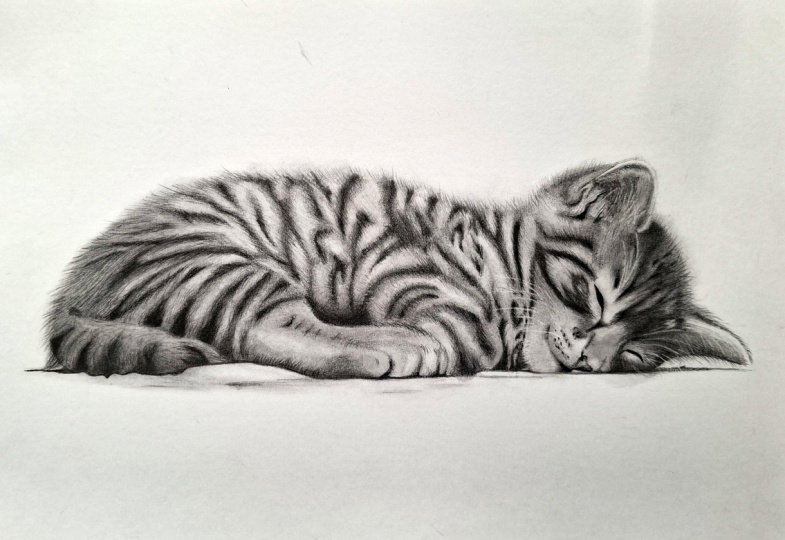
this very sweet, sleepy kitten.
Let's get started.
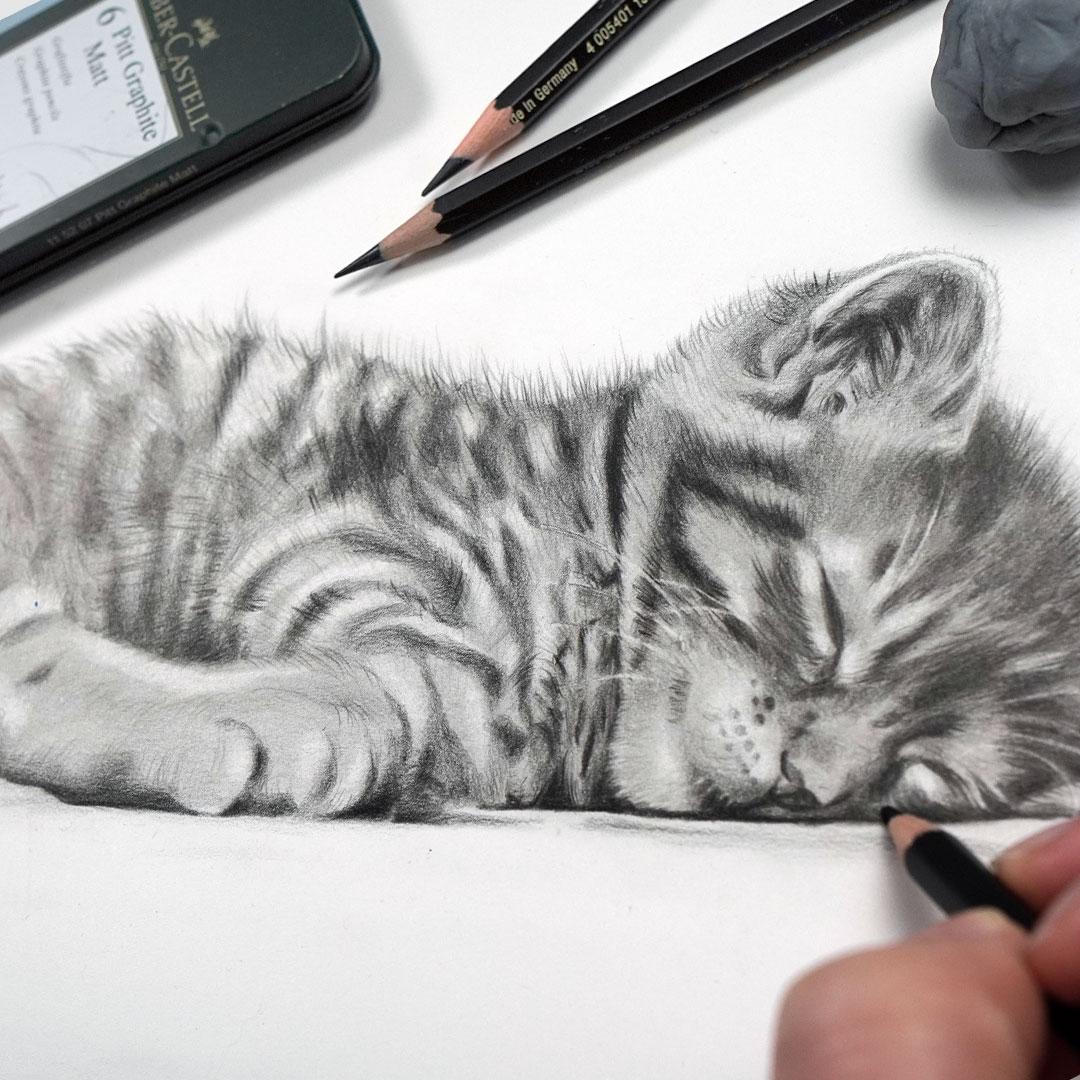
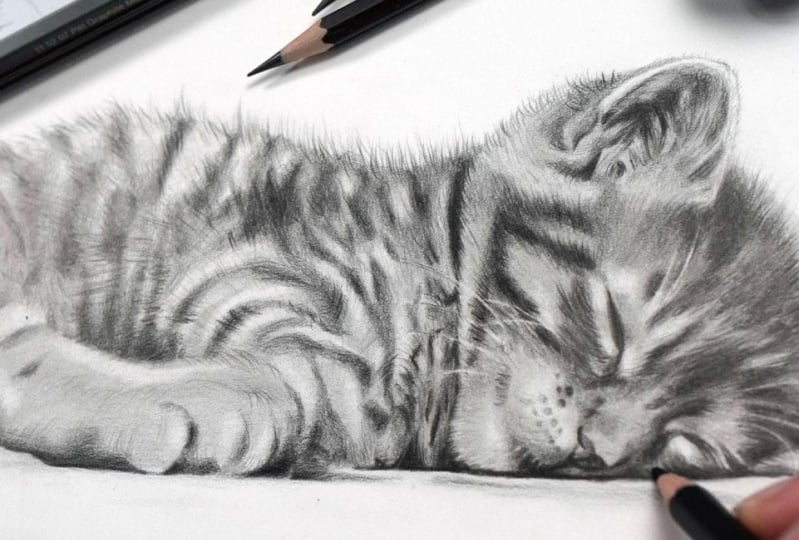
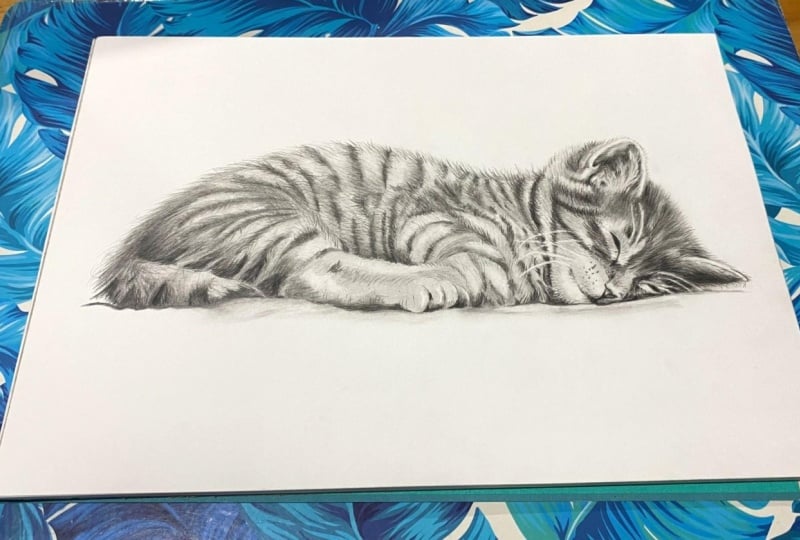
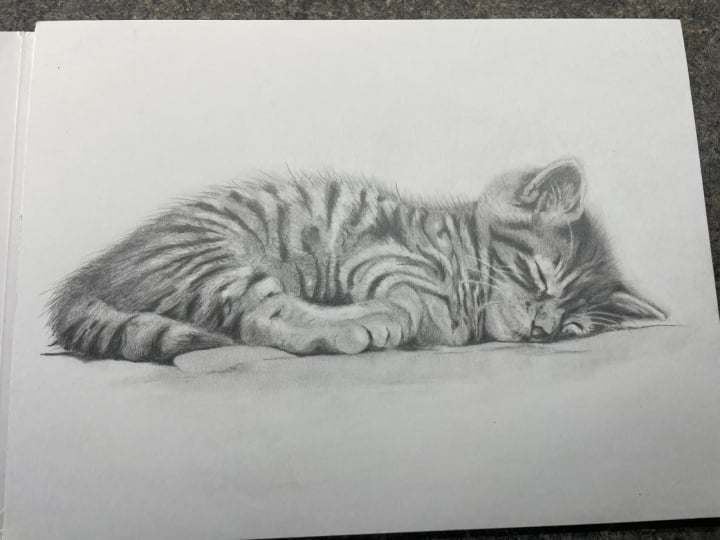
2. Class Project - Drawing a Kitten: For the class project,
we will be drawing this very sweet, sleepy kitten. And I've picked this drawing
for a couple of reasons. First off, it is
absolutely adorable. But also, this is a really
lovely, detailed picture, and I think the cat is in
a very pleasing position. It looks nice and in proportion. Now, we will show you
everything that you'll need to create this
little kitten, including how to
make this sketch. But if you don't want to
create your own sketch, if you want to use mine, it is available in the
class resources. You finish your
drawing, please do upload it into the
class projects. I would love to see
what you've done. Let's talk about the
materials that you'll need to draw this kitten and
to generally draw a fair.
3. Materials You'll Need to Draw Fur with Graphite Pencils: Let's talk about the
materials that you'll need to draw fair with
graphite pencils. And the most obvious material you'll need is some pencils. Note that you'll need
more than just the one. You'll need a few
different graphite pencils of a few different hardnesses. As a general rule, I like to
use three, a hard pencil, something like an
HB pencil or if you're using Mac graphite
pencils, a four B pencil. This is a pencil
that's going to look quite light, a medium pencil, so a three B pencil in standard graphite or an
eight B in mac graphite, and a very soft pencil. So this is a pencil that's going to look very dark on the paper. I think a six B
for graphite works really well or a 12
B for Mac graphite. And these pencils combined
together are going to create much richer shading than
with just one pencil. Now, another material that is just as important
as the pencils, in my opinion, is the paper. Because we're going
to need to build these pencils up one
on top of another, we need a paper that's going
to be able to handle that. So I don't want to draw on
printer paper or sketch paper. We're not going to
be able to build up the pencil correctly on
those types of paper. Like drawing on something
called Bristol board. This is a nice and smooth paper that's quite thick like a card. Next up, you'll need
a pencil sharpener. It doesn't need to
be anything fancy, just something
that's going to make a really nice and sharp point. And if you're creating
your own sketch, you will also need a ruler. Now, in order to blend
the pencils together, you will also need some tissue. Again, nothing fancy here. Now, let's think
about some erasers. So you'll actually
need for this drawing two different types of eraser. Like using a putty eraser. This is a moldable eraser. You can mold it into
different shapes and be more specific about
the areas you erase. And I like using an
electric eraser. This is amazing for adding in fine details that we'll need
to add in with the fur. The final thing you'll need is some way of looking
at a reference photo. Now, for every drawing
that I create, I always work from a reference. Because I focus on
drawing realistically, I find that working
from a reference is the best way to create as
realistic drawings as possible. I like looking at the
reference photo on my iPad. I particularly like that I can zoom in to see all
of the details. But you don't have to
work from an iPad. You can always print out
the reference photo. So those are the main
materials that you'll need. Let's talk about selecting
the reference photo.
4. Selecting a Reference Photo: Let's talk about selecting a reference photo
because honestly, I think it's one of the most important parts of the drawing. If you try and draw from the wrong kind of
reference photo, you're never going to
get as good a drawing as the right kind
of reference photo. So there's a few things I'm looking for within a reference. First up, I want
a reference photo that has really good contrast. I want to have a good
amount of lights, darks, and midtones within the photo, rather than trying to draw from something that's only midtones. That's going to create
a much flatter drawing. I also want to have
a reference photo with really good
amounts of detail. If I can't see the detail
on a reference photo, I'm not going to be
able to draw it. So I don't want to be trying
to work from a blurry photo. I also want a
reference photo that is from a sensible angle. So I find that some
photos that are of obscure angles of
pets look okay, but it doesn't tend to translate
very well to a drawing. As a general rule, I find
that it looks best if the eyeline of the pet
is at camera level. So something like this is always going to look better than
something like this. Honestly, well worth
taking the time to get the right kind
of reference photo. If you're taking your own reference photo
of your own pets, getting down to their
level works really well. As well as putting
them next to a window often I find creates
really nice lighting. Let's now think
about the key skills you'll need to create fa.
5. Key Skills to Create Fur: Let's talk about
the key skills that are needed to draw
fur with graphite. And the main skill to understand is something
called layering. This is the whole basis for every fur and animal
drawing that I create. So rather than just pressing really hard with the
pencil and blocking in an area or adding in the fur texture at the
very beginning, instead, I build up the pencil in
a series of light layers, one on top of another, blending that
shading in between, and we end up with a
much richer drawing. You'll see as we go here how that applies with this kitten. Now, in terms of the
main pencil motions that are used
throughout the drawing, there's two main ones to know. There's something
called circular motions and flicking motions. So circular motions is
where I'm trying to put down the pencil as
smoothly as possible. Rather than just scribbling back and forth with the pencil, if I work in circle
or oval motions, the pencil goes down much more
smoothly and consistently. This isn't something
that you'd necessarily imagine we would need
for drawing fur, but it is absolutely
crucial to practice. Pencil will also go
down much better with these circular motions if you're pressing really
nice and lightly. And I generally find
holding the pencil further back helps stop you
from pressing too hard. Now, the pencil will also
go down much smoother and more consistently with
these circular motions if you're pressing
really lightly. So I hold the pencil further
back than you might expect that literally stops me from being able to
press too hard. It's also absolutely
crucial that I always work with
a sharp pencil. Now, for flicking motions, I still need to work
with a sharp pencil, but now I'm trying to make
some more fur like texture. So what I want to
do is just gently brush my pencil
against the paper, creating a series of
nice and light flicks. I will be able to
create longer flicks for longer fur strands and shorter flicks
for shorter fair. And I need to practice all of these different
flicking motions, which we will use a
lot in the drawing. Those are the main core
techniques that you need to know. Let's have a quick look at the overall process
of drawing fat.
6. The Process: So let's look at the whole
process that I use for every fur and animal
drawing that I create. I always start in the same way by selecting
the reference photo. I'm not going to
cover this. We talked about this earlier how important it is and how to select the right kind
of reference photo. Once I've got that reference, what I then want to do is take a minute to study
that reference photo. So what I want to
be doing here is looking at the main shapes, textures, just anything
that I'm going to need to bear in mind when
creating the drawing. I think it helps to
just take a minute to get your bearings with
the reference photo, know what we're trying
to achieve before we start putting any
pencil down on the paper. You'll see in a short
while what I mean by this. From there, I want to
create my sketch outlines. It is so important to have the right proportions of
the animal I'm drawing, or it's never going
to look amazing. Now, I'll talk in a second, as well, about how
I create my sketch. But the most important
thing about the sketch is that the lines are
really nice and light. We don't want to have
really hard sketch outlines because that will end up
showing through at the. So I've got my reference photo and I've sketched
out my drawing. I can then start building
up some of the pencil. I always want to start
with the hardest pencil. So this is either
the HB pencil on standard graphite or the four
B pencil on Mac graphite. And what I'm doing here is just blocking in all of the shapes. So I'm not worrying about
any sort of fair texture. I just want to get
the lights, darks, midtones, and shapes all
mapped out in the rough area. Goal here is to kind of end
up with something that's looking roughly like a kitten. But obviously, it hasn't got all of that detail we're
going to want to add in. Once I've blocked in
all of those shapes, what I then want to do is use my tissue to blend
everything out. So it looks quite
scratchy to begin with. What I do is wrap the
tissue around my finger and work in circular motions to just smooth everything out. And I've got a really
lovely template that I can then work from. From here, I can move on to
the next darkest pencils, the next softest pencil. This would be the three B in standard graphite or the
eight B on mat graphite. And I can once again block
in those same darker areas. Still using those
circular motions and still working
nice and smoothly, I'm not adding any of the
fur texture at this point. And then I can once again
blend this with the tissue. From here, I can move on to adding in some of
the fur texture. So I'm going to use
that same pencil, but now I'm using
those flicking motions to build up some of
the first amounts of. Particularly focusing on
creating flicking motions going in the right direction
and with the right length. So it's worth noting
that the fur doesn't all just travel
in one direction. It goes in all sorts
of different ways, and I want to make sure that I'm following those directions. And then once I've built
up all of that fur, I can once again blend
with the tissue. I can then do exactly
the same process, but now with the darkest
or the softest pencil, this is the six B on the standard graphite and
the 12 B on the Mc graphite. So this is the pencil
that's going to look the darkest on the page. And once again, fill
in all of these. Flicking motions build up all of that fur texture before
giving it a final blend. At this point, what
I want to do is add all of the lighter
areas back in. So where I have blended
this a few times, a lot of the very
light areas look a little bit kind of
muddy. They're too dark. I can use a mixture of
the putty eraser and electric eraser to add those areas back in as
well as any light details. So with the putty eraser, I can use this to just
gently press against the paper and lift a little
bit of that graphite. And I can use the
electric eraser to add in details like the
whiskers, for example. This point, I now don't want
to blend it again because I'll end up losing all
of those white areas. I now want to go back to that darkest and softest pencil to smooth everything out and
add in any final details. So for most of this section, I'm going back to
circular motions and smoothing out all of that fur texture
that I've built up, which is going to end up
creating some really lovely, soft and fluffy fur. So that is the
general process that I use for all fur drawings. Let's start working
through that process. And we want to start off by looking at the reference photo.
7. Studying the Reference Photo: So let's take a look at the
reference photo and look for the main things that are standing out to me that we're going to need to bear in mind. Now, the most obvious thing
about this little kitten, I would say is the fur. It's a very fluffy kitten with an awful lot of fluffy fur. But I would say
that fur isn't the same over the whole
of the kitten. On the body around here, for example, it's very
long, quite wispy fur. It looks extremely soft. In fact, you can see the
length of the fur by how far out the fur is coming
from the edge of the body. It is very long. You can
see it around here as well. But if we compare that to the fur on the head on
the top of the head here, it is much shorter than
the fur on the body, and around the chins
even shorter than that. And around the eye, this is the shortest
fur, I would say. So we can't draw the fur all the same length that
won't make sense. We're going to need to really
focus on what we can see within the drawing to try and make that as
close as possible. Also noticing that the fur isn't all going in
the same direction. On the head, it's generally traveling upwards on
the head or around to the side and
towards the ear here or generally down on
this part of the face. Whereas on the body, I was generally traveling
down this way, but kind of sticking out
from the body a little bit. So it's very
important that I get that direction of fur
right when we're drawing. Moving on from the fur,
I'm also looking at all of the underlying shapes of
the markings of the cat. So this is, I think
it's a tabby cat. We've got all of these
darker stripes and lines on here that we're going
to need to mark in as we build up all
of this fur texture. Now, there are some areas
that are a little bit out of focus on this
reference photo, like the feet at the front here. I probably won't draw
this out of focus. We can add a tiny
bit more detail, but I do want it to be a
little bit out of focus. The face needs to
be the main focus. As with all graphite drawings, the most important thing about the whole drawing is that
we get the contrast, right. So we want to make sure that we're filling in the lightest, darkest, and the
mid tone colors. And there's a good range
in this reference photo. We've got a lot of dark shadows, particularly along the bottom, as well as on the eyes in the ears and on some
patches of the fur. And then within the fur, we've
also got a lot of lighter, so clearly white patches of fur. And adding these in
is really going to give the drawing
a lot more life. So those are the
main things that I'm going to need
to bear in mind, and let's create our sketch.
8. Creating the Sketch Outlines: So let's create the sketch
for this little kitten. And to do this, I like using something called
the grid method. This is where I add a grid to my reference photo and I put
a grid on my drawing paper, and I just draw what's in
each individual square. While I do is look
at where the lines, the edges of the
kitten or the edges of shapes on the kitten
crosses the grid lines. I can use that as markers, and then I can connect
the two lines. I kind of want to look
at each square and just draw the series of shapes
that are within that square. What this does is stops me
from trying to draw a kitten and makes me look at this like it's just
a series of shapes. It stops your brain from making various assumptions than
it otherwise would. Once I've drawn in
all of the lines, I can then use an eraser
to erase the grid lines. Now, it's worth noting
that on this recording, I've pressed quite hard to
create these sketch lines, that's simply so you can
see it on the camera. When you're doing
it, you want to press really nice and lightly. By the time that you've
created your sketch, you want to barely
be able to see it. So now that we've
got our sketch, let's start adding
in some shade.
9. Build up the Underlying Shapes: I want to start off
this first chapter by just blocking in the key shapes and the key lights and
darks of this kitten. I don't want to add in
any sort of texture. I don't want to make
this look perfect. What I do want to do is get a good bearing on what's
going to go where. So I'm starting with the
hardest pencil for this. This is the pencil
that's going to look the lightest on the page. This is the four B pencil because I'm drawing
this with Mac graphite. If you're drawing this
with normal graphite, I would recommend
using an HB pencil. Can see my sketch lines here. I'm going over these
and just blocking in all of the main shapes. So I always like to start
off by blocking in the eyes. This is reasonably simple because we're not
drawing proper eyes. This kittens asleep. Then I can start
filling in all of the dark patches
around the eyes, following what I've
got on my sketch. So there's a very dark kind
of Y shape, I guess here. There's also a very dark
patch under the eye here and a dark zig zag around
this lighter white here. So I find it easiest to map out the outlines
of these shapes. First, go over the sketch
lines with these shapes. And then I can start
blocking in in the middle. So just shading lightly
within these lines. Now, you do want to
make sure that you're pressing really nice and
lightly when doing this. I don't want to be pressing hard or full force
when filling in these shapes because
we're going to build so many layers of pencil
on top of each other, all we're wanting to do
is put down a light layer with this color that we
can then build off of. Now, in terms of how
I'm pressing lightly. Note that I'm not holding the pencil really
close to the tip. I'm holding it a little
bit further back, and that stops me from being
able to press too hard. Also, because at this point, we're not worrying about
building up any texture, I'm just wanting to get
those key shapes marked in. I want to be focusing on pressing nice and
lightly with the pencil. I want to be focusing
on working in secular or oval motions with the pencil rather than just
scribbling back and forth. I want to be making this pencil
as smooth as possible and giving us a really
good smooth base that I can then build
all of the texture. There are some areas
that are much darker. So within this dark
patch here, for example, you'll notice that it's darker down here and lighter up here. I'm not going to worry too
much about that at this point. Simply because this is the lightest pencil that I'm going to be using on this cat. So building up those
really dark values with this pencil isn't really going to be too
possible and better off just blocking in the whole
area when it's mid tone, and I can then build on it
and refine it as we go. Can work around the
outside of the eye. I generally like working around the eyes and
working on the face first, and then we're going to
work our way down the body. You can see above the eye here, we've got a dark patch here, a dark patch here, and here. Then there's some
lighter kind of zigzags in between these lines. So it's marking where those
darker areas are going to go, and then I can lightly shade around them to fill in
those more midtones. See as we work through
the drawing here, how we're just filling in
some rough shapes and getting those lights and darks roughly marked in and how quite quickly, actually, it will start
looking like a kitten. I feel like right now it's
not looking like a kitten. It looks like a series of
random shapes, but that's okay. I think it's easiest if you
approach this as drawing, basically a series
of random shapes. Try and draw this like
drawing a kitten, I think it is much harder. We just want to get those
lights and darks in pretty much the right place using the sketch lines that
we've already got, and then eventually we'll
be able to build up all of the shading from there to make it a lot more detailed
and look more accurate. So notice that in some
areas I'm needing to press extremely
lightly, even lighter, like on this patch
above the nose, where I just want to build
up a very small amount of the pencil because it does
need to be white fat. I can start working
on the mouth. So again, you can see me going
over my sketch lines here. And on the mouth,
I'm noticing that it's very dark in
this little gap. It's also quite dark just above. And there's a really dark
line going down the middle. But then it's also got
some little shading underneath the mouth
here and around here, but it's a bit lighter
this kind of a gap here. So I can draw in that line and then use circular
motions to shade in underneath that line and add in that little darker
area under the mouth. Say, it doesn't
need to be perfect. We're going to be building
so much on top of this. And in fact, towards the
end of this chapter, we will be blending this anyway, so we don't need
to be adding loads of details because
it'll all get lost. Let's just mark
in where the dots on the cheeks here
are going to go. So all of these little
darker dots here. I'm just roughly trying to mark them in where I think
they need to go. They all look a little
bit harsh at the moment, but they will tone down a
lot when we blend this. And then I'll add some light shading over the top because I actually don't want this area of the mouth to just
be bright white. There are some subtle
shadows on here. That will be adjusted
and added too as we go, but I want to get something let's start building
up on the ears. Now I can move on to
the top of the head. And again, I'm just going
for the general shapes here. There's this very light strip
running through the middle. This is the edge of the ears. It's very dark down the
bottom all along here. There are some lighter
hairs going through here, but I'm not going to worry
about that right now. We can add those in later. Then got a darker triangle
just behind the ear here. Generally quite dark,
I would say along the top in kind of
this band along here. And then it's similar on the
other ear with a line around the outside edge and some darker patches where there's
the actual ear hole. So over the top of the head, I think it's easiest to mark
in, according to my sketch, the edge of the head
here and the edge of the lighter area
of the left hand ear. And then again, use
circular motions to just start blocking
in this area. You'll note that around the
edge of the kitten's head, I'm just making a
solid block line. We will smooth that out
later with some fur texture. But for now, I just want to have a nice crisp edge
that I'm working too. I think that's the easiest. And I think reasonably quickly, you can see that we've
got something that does look like a kitten. But obviously, it's
got no detail, and all of the
shapes, they look a bit weird because
they're blocked in. But as we build more shapes
and textures on here, it will make a lot more sense. Start filling in
and going over all of the shapes I can
see on the ear here. So I've marked in where the
lightest area is going to go, marked an outline
around that first. Now I'm marking in where the
darker areas need to go. Once again, marking
the outlines of shapes and then shading
towards the middle. And then once I've marked
the main darker shapes, I can start thinking
about adding some of the midtones here. So I'm noting that it's
darker around here, but lighter around here. There's all of these hairs
going over the dark patch. Don't worry about that, either. We'll add these in a bit later. Can keep working my
way around the head, just blocking in where these lighter and
darker areas are. Actually, most of the
rest of the head, I think is reasonably
simple here. Throughout all of this, though, the most important thing
beyond trying to get the rough lights and
darks mapped in in the right place is
to press lightly. Sometimes it can be tempting, particularly if
you're filling in a really dark area to press really hard, but you
don't want to do that. All of this works by
building up these layers. Also take note that
I am frequently sharpening my pencil
throughout all of this. Don't forget to
keep it sharpened. Again, the pencil goes down in a smoother and more consistent
way if it is sharp. You'll also find it's much easier to control
with a sharp pencil. If your pencil gets blunt, it just gets harder
to control where on the page it's going and specifically the shapes
that you're making. Throughout this
first whole section, almost half of this has been taken up
getting the face right, drawing this reasonably
small part of the kitten. And for the rest of
this first section, we can focus on
drawing the body. But just to give you an idea, spend so much more time on
the face than on the body, because you want
to make sure that the face is really
well in proportion. See, we also want to make sure
the body's in proportion, but the body isn't perfect. It's not going to show
as much as the face. Also, the face has a
lot more detail on it. Obviously, we've got
eyes and nose and mouth, whereas we don't have those
levels of detail on the body. So you do expect the face to take longer than the
rest of the drawing. Let's now start
focusing on the body, and I'm generally
going to start from the neck and work my
way down the body. I'm starting here by once again mapping in the
stripes, the shapes here. So you'll notice when you
look at the neck I guess because of the way
the cat's lying or maybe because
of the markings, all of the lines here
are very close together, all of the stripes,
whereas they're a lot more spread
out on the body. And then they get much closer
together down this back. There are a lot of stripes that we need to be building up here, and once I'm happy
with those stripes, I can then just add some light shading over the top to make the lighter areas surrounding those stripes look a little
bit less bright and harsh. I think for every
area that I build up, it sometimes makes me need to add a bit more
to a previous area. So I'm going to keep building up the stripes on the body here, working my way down that body. Then actually makes me
realize that I want to add a little bit of
light shading onto the floor here and maybe a
little bit of shading onto the nose before I can then carry on working my
way down the body. Now, because I spent such a long time creating
my sketch lines, this is much easier than
it otherwise would be. You can see I just
have to go over the stripes of the cat using my sketch lines as a
guide and then fill them in with these secular motions to just block in that shape. I'm just looking at anywhere that needs to be a dark shape, marking that in first,
and then we can always adjust and add to some
of the lighter areas. Me frequently still taking away my pencil and sharpening it, as I say, that is
extremely important. And I'm going to keep going over these stripes on the back. So I can't stress enough how this is just the same process. I'm going over it,
filling in those stripes, and then adding
some shading onto the body in an area that I think needs to be a
little bit darker. You'll see all around here, this is slightly
darker fur here, particularly when you
compare it to the leg here. Can add that nice light
shading over the top here. And then once I'm happy
with this section, I'll be able to move on. You'll see, again, I'm using some large circular
motions to do this. And I can even go back to
more of the top of the body. As I say, I will go back and add to an area if I
think it needs it. So as I move down, the legs still adding in all
of the stripes. Honestly, I think it's quite
time consuming doing this, but it's well worth it. Because it gives
us that template that we can then be
building off of, we kind of get the rough shape of the cat that we can add to. Making sure that I do follow
on my reference photo where all of these stripes are that I can see
from my sketch. I do want to make sure
that I'm following the shapes just so I understand where these
stripes are going, where they're built
up, and it will make my life a lot easier
a bit later on. Looking at the tail now, we've got a lot of dark zig
zags all along here that I'm going to want
to build up and a dark line going all
along the bottom, particularly where the
tail is meeting the floor. I'm going to draw in
all of those zig zags, and then I can shade over the top of them to
block in these areas. So, honestly, I think
it's important to see exactly how simple and basic all of the shapes are
within the cap by just looking at the sketch and
working one section at a time. We can reasonably quickly create a very basic
looking kitten. And it is just because I spent the time to create a
good accurate sketch. Let's fill in the shapes
on the back leg here now. This, as I mentioned,
when we were looking at the reference photo,
is pretty blurry. But I'm going to try
and draw it a little bit clearer in the picture here. So it will still
be out of focus, but maybe not as out of focus as what it
is at the moment. I'm just trying to make the edges a bit less
fuzzy, I guess. So let's add some
final little bits of shading where I think, generally speaking,
the light areas are looking too light. You'll see that even though
I am trying to make this as smooth as possible,
it's not perfect. Things are a little bit
scratchy, but that's okay. We can smooth it all
out a lot in a second. Add a few details on the floor. I don't want the details
to come too far out, but I do want to look like the
cat is lying on something. So I'm just going
to add a few of the dark lines along here and add a general light layer of graphite over pretty
much all of the cats. I don't want to leave any
areas as just bare paper. We have quite a lot of areas
like that at the moment. And then once I'm happy
with this kitten, I'm happy with those
main first shapes, what I now want to do is blend all of this
with the tissue. Just going to wrap
this tissue around my finger and then work
in circular motions, pressing still nice and lightly to smooth
all of this out. I want to keep all
of the shapes that I've been building up but
make a much smoother, softer version of a kitten. And you can see that I have
to go over this a number of times until it's as soft
as I need it to be. So I'm just going with circular motions over
the whole of the cat. You can see I've
smudged a little bit of the pencil around the
edge, but that's okay. We can tidy that up in a second. Can go over a few
areas if I think it looks a little bit
scratchy, around the edge. Generally, end up with this
really lovely template that we're going to be able to build off of in the next chapter. Now, I'm just going to tidy
up the edge by going over this with this putty
eraser a little bit here. And then that is the end
of this first section.
10. Add in the Midtones and Build up the Fur: Now we've got a rough template
of the kitten drawn in. Let's do the same thing again, but with a slightly
softer pencil. So this is a pencil
that's going to look darker on the paper. This is the eight B pencil. And I want to go back over
everything to make it darker or all of the areas that are kind of mid tone or darker. But I can also
refine the shapes. So you can see here I'm
going back around the eye. I'm just slightly
adjusting the shape of the eye because I don't
think it's quite right. And then once I've
gone around the edge, refined that shape, I can then shade in
towards the middle. Going to go through
this in a very similar way to
what I did before. I want to go over
the face first, and then I'm going to
move down the body. Now, I don't want to be using this pencil to go
over the very light, white areas of fur. I want to keep those very light. But I do want to go over
any of the darker areas. Either areas that, as I said, are very dark or are mid tone, just to make it all
stand out a little bit. In terms of how I'm
putting the pencil down, I'm doing this in the same way as I did in the last section. I am still working
in circular motions. I'm not at this point worrying about any
sort of fair texture. I find it easiest to
mark in the outline of the shape and then shade
in from that point with, as I say, those
circular motions. And you can see I've
gone over a lot of the patterns
under the eye here, and then I can start moving down and moving
around other areas. This is much easier than it
was on the last chapter, simply because we've got so much now of the
shapes marked in. We've got a very rough
template of the kitten, and all I need to do is refine those shapes
at this point. So I want to look at all of the different stripes
on the cat's face, mark them in more prominently. So there's this dark
stripe along here, this dark stripe
along here I need to be marking in and this one here, and then along the
top of the eye, there's a few dark
stripes along the top, and then the lighter fur is kind of in a zig zag along here. All exactly the same as
what I marked in before. I'm just doing more. You can see it looks a little
bit peculiar in some ways, adding in these darker areas, but we'll shade over some
of the midtones as we go, and it will start making
a lot more sense. Now, this kitchen does also have some white whiskers,
both on the face, around the top of the eyes, and a little bit of some lighter hairs
around the ears here. I'm not worrying about any
of that at this point. I'm going to add those
in the next chapter, and you'll see a bit later
how we're going to do. Now I just want to focus on the overall shapes
and just getting these lights and
darks all mapped in nice and clearly, and
then we can go from there. So you can see, now I'm starting to move
down the cat's body. I haven't added a huge
amount of this pencil. I've added onto those darker areas and the
darker midtones, but on the most
part, the cat's face is still pretty light. There are actually so many
areas of light fur on this cat that we'll have to
add a lot of that in later. I don't want to
build up too much of this shading over the top, because we are going
to end up making it darker when we add in the
fur texture in a second. So I'm just going to go over all of the stripes of the body. Again, this is made
far easier because I've already mapped in a
lot of the shapes here. I just need to go
back over it and maybe adjust anything again, I think it's slightly
in the wrong place. Throughout all of
this, do remember that you need to be working with a really nice
and sharp pencil. It's going to go down much
more smoothly, consistently, and you'll have a
lot more control over it with a sharp pencil. As I always say, I am
frequently sharpening. You may think it's less
important when we're doing the circular motions in
comparison to the fur texture, but I do think both
are really important. Going to fill in this
little shadow along here. Just build up a little bit of
extra shading in this area, and then I'm going to
carry on going over. Really, it's the darkest
areas of all of the stripes. So you'll see some
stripes are lighter. This stripe here, for example, is pretty faded and this little
bit here and along here. But some of them are
really very dark like this stripe here. Some of these along here and along the back
leg and on the tail. So I need to build
up a lot more of this pencil on
those darker areas. I'm just trying to get
the contrast roughly right before we build up
the can't stress enough. I think most of the work
really on mapping out the main shapes on the kitten was done in the last section. Now we've got so much of
this already marked in. I just want to make the areas
here a little bit darker. So once I'm happy that the
contrast is looking better, it's not looking perfect,
but that's okay. I want something like this. What I want to do is once again blend with the tissue
just very lightly to smooth this out before I move on to building up
the fur texture. See that I have folded this over on a fresh bit of tissue, and then I can once again work in circular motions just like I did before until I'm left with a nice
and smooth kitten. I don't want to do it too much, so it's too smudged, though. And then from here, I'm going to keep going with
that same pencil, with the same eight
B for mat graphite. Or if you're using
normal graphite, I would say the three B pencil. Now want to start filling
in the fur texture. Now, as I mentioned, I
want to really focus on both the length and the direction of the
hair more than anything. So the length of the hair, I need to be making
shorter flicks when it's shorter fur and longer flicks
when it's longer fair. So looking around the eye here, the fur here is very short. So I want to be making very
short flicks around here. As we particularly
get onto the body, it's going to have to
be much longer flicks because that's where
I would say most of the longer hair is I also really focusing on
the direction of the fur. So let's have a look at
the reference photo, have a look at the face and see where all of
this fur is going. So the fur around the eye, here it's going upwards
on the cat's face. And then it starts
going around and in this direction towards the
ear as we get around the end, and then here it's going down. On the top of the head, it's going this way in this section, so towards that ear, but it kind of turns
around and starts going up on the head
around this section. As when we get over here,
it's going towards the ear and then starting to go
down the face around here. And if we look for a minute
at the nose, as well, it's kind of curving
around a little bit. It looks here before then
heading up on the nose. So you can see all of these different directions of the fur, and it's so important
that we try and copy those directions so that the fur ends up looking
as realistic as possible. You can also see here how nice and lightly I am
pressing with the pencil. I'm just creating some nice
little feathered areas at the edge of this
very dark strip here. At the moment where
I've just blocked in that stripe with the
circular motions, it looks a bit harsh, and I just want to smooth
out the edges. And I'll do that for the
other dark stripes, as well. On the cheeks and
the top of the head, the fur gets a
little bit longer. It's worth noting
that the fur is much shorter on both the mouth
and around the eye. And then on this
patch, here I can make some much lighter flicks. I don't want to add
too many little flicks to very light areas of fur because I
think it can make it look too dark if
you do too much. So let's build up
some of these very small flicks on the nose, going with that slightly
more curved fur direction. I can start focusing
on the mouth. And then I can start
building up some of the fur around
the mouth area. I just want to again be adding some very small little
flicks around here, following the direction
of that fur once again. I also want to make flicks going down from the mouth
just to smooth out. Again, some of the
more harsh lines I've made when building up
all of those base layers. Now, I do think that
it looks a little bit scratchy at the
moment, and that's okay. I just want to add some
sort of texture on here, and then I can
build up a lot as I go as I move on to
darker shading. Already, I do think that the
face is looking much better. It looks a little bit
more detailed and a little bit less
kind of just plain. So building up all
of this fur texture is gradually working. It just doesn't look
very deep at the moment. It just needs a lot
more adding as we go. Now, probably one of the
most important areas, I would say, when adding in fur is going around the edges. So around the edge
of the kitten, it doesn't have a
very sharp edge like what we have at the moment. See all of these little
hairs all around the edge, and it's a very soft
and feathered line around the edge of the fur, even more so on the body. But you can see a lot
of this soft kind of f strokes around the edge, all around the whole kitten. So I want to be adding
flicks coming over that line to create that
nice and soft edge. This is still a
reasonably light pencil. It's not a very dark color, particularly when I'm
making soft flicks. So it looks very
light at the moment, but it will look much
better as we go. Let's add some little flicks all down this edge of the ear, and then I can start
building up some of the fair texture
up here as well. As I move on to some of
the fur in the ear here, let's take a minute to
have a look at this area. So here we have
some longer hair in this section that's kind of feathering over this
darker area here, but it's much, much
shorter fur in this area, and it blends very nicely into the fur just in front
of the ear here. To focus on adding flicks
from the dark area to the lighter area
to try and create the look of those
longer lighter heads. And as I say, we can add
to these more later. And then once I've got the
longer hairs added in, I can then start thinking about adding some of the
very small hairs. So you can see me making
much smaller flicks as I start working away
from those longer hairs. I generally just want to blend
the ear into the rest of the adding in all of the fair texture is quite
a time consuming process, but it is probably the most important
part of the drawing. It's not going to look
like a realistic cat if we don't have all of this
fair texture marked in. So it's well worth
taking the time. Let's once again have
a little reminder that the pencil needs to be really
nice and sharp for this, or you're going to end up making really thick, scratchy marks. So don't forget that, as well. I think at this point, I'm
generally happy with the head. Let's now start
working down the body. And as I mentioned, on the body, the fur is generally
much, much longer. So you can see I'm making longer flicks now
with the pencil. I'm going to start off by adding these flicks all around
the edge of the body. Or do you want to be thinking about the direction
of the fur here? You'll see here the fur is
kind of pointing straight up, and here it's always sorted into some little clumps where the fur is kind
of crossing over. But there are some areas where the fur is pointing backwards. It's kind of pointing up here, starting to go
backwards along here. And as we get towards the tail, it's going in this
kind of direction. So I'm just making
sure to look at the reference photo as
I'm building up all of these nice and soft
flick to try and get that fur texture pointing
in the right way. Already, this kitten looks so
much better for just having a softer outline
for not being able to see such a harsh
edge to this section. And now I can start building
up this fur texture. So I'm once again, focusing
on the direction of that fur. But I can be a little bit faster on the body
section, I would say. There are so many
different lengths and directions of fur on the kitten's face
that you have to spend quite a long time
mapping in all of the areas. I think the body is much simpler in the
direction of its fur, and there's just generally
a lot less detail. I can work a little
bit faster now with these flicking
motions to just get a bit of an idea on the
fur that's on the body. So let's have a look at
the reference again and see the direction on
the middle of the body. So you can see the fur is on the most part going in the
directions I would expect. This fur is going a little bit more
randomly kind of down, but then from here, the fur is going up in this direction. Here it's going up
in this direction. This is because it's the
edge of the paw here. It's going in this direction and then turning around to come
down here and along here. Fur on the leg is
going downward, so the fur is coming
along here and then down. And then towards the back legs, it's going a little bit
all over the place, you can see that the fur is
going along here and round. But this fur is
going along here, and then the fur on
the leg is generally, so it's coming around
and then round. Before on the tail here, it's going in this direction. It's not really possible
to see the fur on the foot here because
this is so out of focus. I am going to add a
little bit of detail onto the fur that I can't
see very subtle detail. I don't want the foot to look as blurred in my drawing as what it does on
the reference photo. So we'll see when
we get there how to just add a little bit
of detail to that area. So you can see me adding flicks
coming down the leg here. It doesn't need to be perfect. We don't need to spend
ages making this perfect. I just want to get
a bit of an idea on the drawing for the fur and
the direction of the fur, and then we'll be able to tweak and adjust all of this later. So I'm keeping going with the flicking motions here
where it's going a little bit all over the place in this area because of
where that leg is. If there's an area where
I'm not completely sure what direction
the fair is going, it's just because it's not
clear on the reference photo, so I'll just make it a
little bit blurrier as I work through the drawing and
we blend in a short while. So if I'm not completely
sure on a direction, I'll add in what I
think it will be, but then we'll be blending
it with the tissue, and it won't be
as obvious later. Now, again, as I mentioned
before, it looks very, very scratchy at this point, but we will be blending
this in a short while. Keep adding some flicks
on the tail here. The fur does go a little bit all over the place on the tail, and there's also some
lighter hairs in this area. But again, we can always
add these in a bit later with the erasers. Let's just add a
very small amount of detail on the cat's foot here. So you'll see that
I've really only added a few little bits of hair, and I'm just going to
add a few little flicks around the edge
of the foot here. Anywhere on the
reference that I can see a little hint of this
kind of texture. So just particularly
around the edge, you can see I've just added
a little bit of fur in the hope that it will
look less out of focus. Once I'm happy with
all the fur texture, I think the kitten is
generally looking much better. I now once again want to use my tissue to just smooth
this out a little bit. So you'll see that I'm not now doing this with
circular motions. What I'm doing is brushing
my finger against the paper in similar sort of flicks to what I've
been building up. I don't need to do a huge
amount quite quickly. I end up with something
that looks a lot less scratchy and much smoother. Which is the whole key of what we're trying to create here is a nice soft and
fluffy kitten. That's everything
I'm going to do for now with the eight B pencil. Let's just go around the
edge a little bit more, and in the next section, we can start moving
on to adding in the darkest and the
lightest areas. But that is it for this section.
11. Add in the Lightest and Darkest Areas: Now that we've got the fair
texture initially marked in, I want to do exactly
the same thing with the softest pencil I'll
be using in this drawing. So now that I've got the
fair texture marked in, I want to do exactly
the same thing. But now with the softest pencil I'll be using in this drawing. So this is the 12 B
pencil in Mt graphite. Or if I was using
normal graphite, I'd be using the six B pencil. Going to start off
exactly the same as I did before by
going over the eyes. And you can see I've once again slightly
refined their shape. I can now work in
flicking motions. Once again, I want to go
over just the darkest areas now and build up more fur
texture in those areas. So I'm generally
quite happy with the fur texture on the
lighter areas of fur. But I think the darker areas, it just looks a little bit too
harsh still at the moment. I need to be adding more flicks, particularly around the
edges of these areas. Because this is a softer pencil that's going to look
darker on the paper, I do find with this pencil, I need to sharpen
it considerably more often than I did
with the previous pencil. Just because it's softer,
it wears down faster. So it's worth bearing
that in mind. Now, generally speaking,
I'm not going to use this pencil over
the very light areas. I'm only going to go
over the dark areas. But you can see that
there are some parts where I need to be using it
on the midtones as well. And I'm just going
to lightly add flicking motions over all
of these darker areas. Now, this is so much
easier than it was in the last chapter because the general direction of all of the fur has already
been marked in. So really, I only need to follow the same directions
that I marked in with that slightly
lighter pencil, just softening the edges of these stripes and building up
that texture a bit further. Now, once again, I feel like as I'm adding in all
of these flicks, the cat is looking
quite scratchy, it's looking quite harsh, and it's not looking
very realistic. But it will all come
together a bit later. Once we've blended this again, it will look much softer. Flicking motions on the top
of the head here as well. And then I'm going to work
my way along the top of the head and a little
bit around the ear. And you can see it's just
giving it that little bit of extra detail and that
little bit of contrast. I'm going to add a few flicking motions along the ear here. I don't really
feel like I've got a huge amount here
at the moment. So I want to build this up. And I'm once again
just looking at the direction of the
fair here and making some reasonably long
flicks because it's the inner ear here tends
to be a bit longer. I'm going to keep
working along the face. So I don't need to go on that very light area
around the eye. If anything, I think
that area is looking a bit too dark as it
is at the moment. I do want to build up some of this fur texture on the
top of the head here. So where I've added
in that shading, it's not very obvious where the fur texture is on
top of this section, so let's build up
some more of this. Over the whole of
this section up here, and I once again
want to be making some little flicks around the edge of their head just to add to what we've
already got here, kind of further make that
edge quite nice and soft. Already, I think the head
is looking much better. You can see how building up some extra fur texture is just making all the difference
onto the cat's face. So in this section, what we're particularly focusing
on is adding in the darker areas with this pencil and building up the texture of
those darker areas. And towards the end
of this section, I will also be adding in the lightest areas
with the erasers. So I'm really
wanting to focus in this section on building
up the contrast, as well as building
up this texture. See me still working
my way around here, I'm going over the
stripes on the cat's face in this area and just
making this a bit darker. I've already built up some of the flicking motions with
that last pencil here. Again, I just need to go over
it with this darker pencil, make it stand out
a little bit more. And then I also want to go over the dark area of the
ear along here as well. Let's add flicks
all along the ear, some nice long flicks
for that longer fur. As I mentioned,
there are some areas here with lighter fur. But we can always
add that lighter fur in with the erasers
in a short while. Now, I want to make sure
that in building up, there's this very dark stripe along the edge of the face here. So let's add flicking motions
to build this up, as well. Just take a minute to
fill in the nose as well. Obviously, I'm
primarily focusing at this point on adding
in the fair texture, but there is the odd area that I generally think
needs to be darker. So I will in some areas go back to circular
motions just to try and block the
area in a bit darker before then switching back
to these flicking motion. I think that the cat's
face looks much better. Let's start working
down the body. I'm still working with
flicks along here, but I can start working with slightly longer flicks as I move on to areas
with longer fur. I'm just going to add
some general light flicks over the f here where it's
more of a midtone area. I'm going to need to
add more flicks over areas where there's
a darker strip. So I don't need to press harder. If I want an area to be
darker on the cat's fur, what I need to do is build
more flicks over that area, build more pencil lightly, rather than sometimes it's
tempting to press harder, but that tends to
create a very harsh, scratchy, wiry looking fur. So even if I want an
area to be darker, I literally just
need to go over it more times rather
than pressing fair. Again, I'm going
along the edges of these very dark strips along
here just to smooth these out and create more
feathered edges to these darker stripes. And let's add some flicks
along the back of the body. Where there's all these zigzags, I need to smooth these out. They're going to end up looking very harsh if I keep
them as they are. But you'll see that
I'm not adding anywhere near as much of this vertexture onto the
body as I did on the head. I think it's generally a lot softer and it doesn't
need as much. I am going to add a
reasonable amount of the fur texture on the tail and on the shadow along the
bottom of this poor hair. So now I'm generally
happy with all of the darker areas on the kitten. Let's once again, use
this tissue to just smooth out some of these
areas just a little bit. I don't need to
add a huge amount, but I do want to just
soften this fur. But you can see, we still keep all of that
soft fur texture. It's just not looking as harsh. But that's all I need
to do with the tissue. I really don't need to do a lot. That is the end of
using the tissue. What I am going to do from now
is start using the erasers and all of the light that has been lost by blending
with the tissue, we need to add back in with both the putty eraser
and the electric eraser. So starting off here
with the putty eraser, just tidying up roughly
around the edges, I'm not going near all
of the fur texture, but I am just clearing
up anywhere where I have smudged with my hand. I'm just lifting so that
it looks a bit less dirty, really, it looks quite
grubby at the moment. Once I'm left with a
much tidier kitten, let's think about any areas that I think should be lighter. So if I compare my drawing
to the reference photo now, some of the white fur,
actually, I think, needs to be a lot
lighter than what it looks on the
drawing at the moment. Where we blended
with that tissue, it smudged a lot of areas onto the lighter fur and has made it more like a darker midtone. What I'm doing with
this eraser is molding it into a shape
and then just dabbing it on the paper anywhere
where I think I need some of the white showing
through a bit brighter, where I think I have lost
the brightness that we need. So I don't want to do it
on every light bit of fur. Some of the light bits of fur actually do need to be
a little bit darker. If we look at this light
area around the eye, you'll see it's much
lighter here, also here, here, and at the end, and here and here, but it is a little bit darker towards the
middle and around here. It's not dark, but it is
darker than what we have. It's also much lighter at the
bottom under this eye here, but darker up the top. And there's a very
light patch around this section and between some of these dots and around here. And particularly along
the edge of this ear So hopefully you
can start to see some of these light areas
that I'm seeing and that we just need to brighten
on the cat's fur. Now, we're going to use two different erasers,
as I mentioned, we're using this putty
eraser, and we will, in a short while be using the
electric eraser, as well. This eraser is not for adding in any fine detail.
It can't do that. It literally can
nice and softly lift a small amount of the pencil and make an
area a little bit lighter. So it's great for making these lighter areas of
fur look a bit brighter, but it won't be able
to add in things like the whisker detail. Some areas, I can make
the eraser into kind of a flat shape so that I'm able to take the pencil off
in a thinner strip, which is particularly
good if I need to lighten between some of the darker
stripes on the cat's body. So now I'm genuinely
happy with the face, I'm going to go over the
body and lighten any of the fur that I think needs it So actually, a
lot of the fur, particularly up near
the cat's face, does need to generally
be quite light, and I can work out where
these lighter areas need to go by looking at the
stripes that I've marked in. So you can see that
we've got a lighter band of fur along here. It's lighter along here and around these little sections
and along here, for example. You'll notice that I do tend to remold the eraser between every little section
that I'm taking off. I just find that the eraser
gets a bit dirty quite quickly and doesn't remove the pencil as well if I
don't frequently remold it. Now, something to
think about is that we are losing a little bit of the fur texture where I am lightening some
of this pencil. So if I'm adding a light
area back in, obviously, as well as generally
lifting some of the pencil, I am removing that fur texture. Actually, when you really
look at these areas, there doesn't tend to
be any fur texture on these areas anyway because
they are so light. So I wouldn't say that I
am concerned about that. It's just something to
bear in mind that it will remove some of the fur texture. That said, you can see here
it's not completely removing the fur texture if I just
gently use the eraser. It's only if I keep going over the area multiple times that we start to then lose that texture. I'm still working through this in the same way as I did before. I'm working down the
body of the kitten. So I've started at the top,
and I'm working my way down and just looking
for any area, as I say, that needs
to be a bit lighter. This is going to
make the rest of the drawing so much
easier from here because we're going to have
all of these lights and darks marked in so, so clearly. It's going to be
much easier to see any final details that
we're going to need to add. So let's just go over this
slightly blurry foot here. I can still see a few areas that need to be made a
little bit lighter, particularly along the top
of the along the toes. If anything, it's a bit easier
to see the lighter areas on part of the drawing
that is out of focus. Just because you're only
looking at shading, you're only looking at
light and dark areas. It's a bit easier to see. You can't see any of the detail. So now I'm happy with the putty eraser areas
at this point. Now let's use the
electric eraser. So as I mentioned, the
electric eraser is really good for adding
in fine details. But I do find it tends
to look quite harsh, so it doesn't look as nice and soft as the putty
eraser can look. But it is possible to
add in lots of details. So let's go over some of the lighter hairs around
the ears along here, making these white hairs go nicely up into that
darker section. But I don't need to
add a huge amount, and then I want to
be adding some of the very light whiskers
that I can see on the face. So there's light whiskers
above both of the eyes, but only a couple of
light strands on these. We're also going
to need to add in, I guess, the main
whiskers on the face. I just add a few
little light flicks along the edge of the mouth. There's some light hairs that are slightly going
over the mouth, and then I want to add
these light whiskers. Now I am trying to look at
the shape of the whiskers, look at the direction
it's going, and trying to follow that
along with the spacing. But I don't feel like I
need to get it perfect. As long as it looks roughly in the same direction,
that's okay. I'm just going to add
some little flicks going along the
edge of the chin, just to create a
nice soft edge here. And anywhere else where
I think we just need to add a few other
very light details. But honestly, I don't need
to be adding a huge amount. So let's go along the body
of the kitten, as well. But once again, I
don't feel like I'm needing to add
a huge amount here. I only want to add a little
bit if there's just a lot of white hairs in and
amongst a very dark area. I think it benefits adding
those light hairs in, particularly along the back of the cat here and
generally along the tail. Before I move on, I'm just going to very
lightly use a tissue to smooth out the whiskers just because they are
looking so harsh, but only a tiny amount. Then that is the end
of this section.
12. Build up the Contrast and Add Final Details: Now that we've added all of
the light areas back in, let's now start smoothing everything out and generally
finishing off this drawing. Now, in this last chapter here, I now want to focus on
smoothing out all of the fair. I spent a long time building
up all of the fur texture, but it looks a little
bit scratchy to me. So we're actually, on the
most part in this chapter, going to focus on using those small circular motions rather than more
flicking motions. There are times when
I will still need to build up some details, but on the most part, I'm just wanting to smooth
out what I've already got. Particularly focusing on
trying to get that contrast looking completely right and
generally tidying this up. So I tend to like starting
around the eye section. This is where I usually start. And you can see that I'm
going over this area here. I want to both smooth it out and make this area a
little bit darker. So you can see I'm going
over the top of some of these darker areas
with circular motions. And it's important
to note that putting more pencil over
the top of where I've built up a lot
of fur texture, not removing that fur texture. It is just smoothing it out and making it a
little bit darker. But you can still see
that f. So I'm going to work reasonably slowly
starting on the face. I'm looking for
any area as I say, that needs to be darker or generally needs to be smoother. I'm comparing my drawing to my reference photo and
seeing this area up here, for example, to be quite a bit darker than what
I've got at the moment. The same just above
the eye on the kitten. It just needs to be a little
bit darker in this area, and then I can keep building up in some of the other areas. So that is literally
all there is to it. I am looking at the
difference between my drawing and my
reference photo and seeing where there's
a difference and if I need to make an area
darker to adjust that. Now I'm being very careful here going around these whiskers. I don't want to go over where the eraser added those whiskers, and then I can keep
working my way around. And it really look like I'm doing a huge
amount, I wouldn't say. But just adding a small
amount of this shading is going to make a massive
difference to the drawing, and you'll see that
quite quickly. So I'm really building up
a lot of extra shading on this area above the middle of
the nose, all around here. And then I'm once
again going to go around these very
light whiskers. I can kind of tidy up the
shape of the whiskers. Here. I I think maybe the
white lines look too large or it doesn't look quite the
same as the reference photo, I can just slightly adjust this and fill in around those
very light whiskers. I generally need to be
adding quite a lot of shading down this bottom edge. Now, I'm feeling
generally happy with the area immediately
above the eyes. Let's go back over
some of the details above the nose that
are currently missing. We did add them in before, but where they were blended, I think it's got a
little bit lost. Some pretty prominent
dots here and here that I think
they have been a bit lost and generally
look at how dark this whole nose area here is. In comparison to my drawing, I need to be building up a lot more shading on this nose area. In fact, on the main nose here, I'm going to make this
quite a bit darker. It again, needs a
lot more shading than what we've
got at the moment. And I think it just
really helps to go through here one area at a time, looking for where my drawing is different to that
reference photo. I want all along the bottom of the face to be really quite dark because the
kitten is lying on the floor and I want to have
a really good shadow there. I also want to make sure that
I'm going around some of these lighter areas at
the bottom of the mouth. And then I want to fade that out into the area underneath. And I think for every
area that I add, it makes the next area more obvious where I need to
add more of this shading. But the most important
thing to note is that I am using these very small secular motions for
the whole thing. Build up all of these spots from the whiskers
all around here. We added them in right
at the very beginning, but again, they've all
got a little bit lost. I can still see where
these little spots are. They're just not looking
prominent enough, in my opinion. So let's go over these. And then I can really
start building up the shading in this area, just adding some nice
and light pressure, adding a little bit of shading, and we're going to
build it up gradually. So as I mentioned, this
area above the nose needs to be a lot darker than
what it is at the moment. Now that I've added in a lot of the details around the mouth, adding in all of
those little spots, for example, and made the
shading on the mouth darker, I can start focusing
on this area. Start building up a lot more of the shading on the
stripes around here. These areas were pretty dark, but I just don't think
that they're dark enough. Particularly, it looks a lot
lighter where you can see the lighter color through
all of the texture, and shading over the top of that makes the whole stripe
look much darker. I'm just going to
keep building up these stripes with
more circular motions. So once again, do
remember that you want to keep a really nice
and sharp pencil. It's going to go down
so much smoother, it's going to be much
easier to control where the pencils going if
it is a sharp pencil. And again, I do find that I have to sharpen this pencil quite often because it is the softest pencil that I'm
working on in this drawing. It wears down quite quickly. Also worth noting that I do repeatedly keep going
back to the same areas. I think it's helpful sometimes to move on from an area and then shade in a different area around there and come back
and it makes it again, easier to see what is missing. So you can see that
I've gone back to the top of the head now, even though I did add some of
this in a bit earlier on in the chapter because now I can see that I need to add a
lot more shading up here. I can just be going over
the area more times. I find it's easier to keep
working around and coming back rather than trying to
completely finish one area. Go over the whole of this
top of head section. I am hip going over some
areas more than others. The fur on the top of the
head isn't perfectly smooth. It's got this kind of
patchy look to it. So I've gone over
the top of the head, some areas more than others to try and create that
slightly patchy look. And then now I'm going
to go back over the ear. So once again, you can
see I'm going back to this area where I now think it needs to be quite a bit darker than what
I have right now. I am literally just continually
going over these areas. So the more that I
build up, hopefully, the more you can see
that even though we're adding these circular
motions over the top, we can still see all
of that fair texture. It still looks like
a fairy kitten. It just looks like a
softer fairy kitten. The head looks so different to the rest
of the body now just because it has a
lot richer color and generally feels fluffier. Build up over the ear, now I want to be really making that dark section on the ear, this area here a lot darker. And I'm going over all of the different kind of curves
that I added in before, but just tweaking maybe tweaking the shape
slightly if I need to, but more than anything, I'm just focusing on increasing
that contrast. So I can build up more of
the shading along here. I hope this gives an idea of how much time I'm spending on, particularly the
head to start with. I think if you get the
head looking right, the rest of the drawing is
also going to look right. So once again, I'm going
back to the top of the head. You can see how many times I flip back to these same areas. So it's really start
focusing on the body now, and I want to be
building up a lot of the darker shapes
in this area, but generally making this
whole section darker. Once again, I want
to be careful when going near these light whiskers. And I'm pretty much along here, just going to be
going over all of the stripes that are
already added in with circular motions to make these
look a lot more obvious. Now, to begin with, I think it's not going to look quite right, but we're just going
to focus to begin with on building up the
main stripe shapes. And then I want to smooth out the edges of those stripes so
they look a bit less harsh. So many light and dark patches
on this kitten because of all the stripes that
there is a lot of extra shading and smoothing out that it wants to be
doing in this chapter. And the whole thing really
is quite time consuming. So I want to be focusing
a lot on this area, for example, which does
need to be extremely dark. And you'll see that I'm
working through this in exactly the same way
as I did before. I'm working from the top of the kitten
around to its body, and then we're going to
work around to that foot. I think the easiest thing to do is to go over the whole body, so I'm working from the top
to the bottom of the body. And then once I've worked
the whole way round, I'm then going to go back
round and add to it further. Now, there are a few
places where I need to add some more
flicking motions. So particularly in
this area here, I just don't think
there's enough. So I'll add a few
flicking motions and then go back to the
circular motion. It's very much a case of
just continually going over these areas and gradually
building up that contrast. The contrast on this
drawing is so much more important really than any of the details
that we could add. If we can get that
contrast right, the whole drawing is
going to look right. So actually, this area down the bottom does need quite a bit more of the flicking motions than a lot of the
rest of the kitten. On the bulk of the body of the kitten, we
don't need too much. I think because the fair
is so much shorter, but down here, the
fair is longer, and I do really want to
build up that contrast, but also keep the look
of that longer fair. See, I am building this up in the same way
that I did before, so adding in some
flicking motions, and then I'm going back to these circular motions
to just build up, as I say, all of that contrast. And then I'm going
to continue working my way around to the
foot and along the tail. So we're getting to the
point where I've gone over the whole of the kitten
with this pencil, with this very dark
pencil and really built up a lot of
extra shading it looks so much richer and more interesting than the drawing did at the beginning
of this chapter. I want to particularly go
along the edge of this foot where I do need it to be very dark because it's
next to the floor. Generally make the
foot a bit darker. As I've said before, the
foot is quite out of focus. I don't want it
to look as out of focus as it does in
the reference photo. So I'm just trying to add some slightly crisper
edges to the foot. And then once I've worked
the whole way round here, I'm just going to
spend the rest of the drawing looking
at the drawing as a whole and thinking about any final areas that
I want to be darker. So I'm starting off by focusing on the tail end of the kitten, building up more
circular motions, more shading along here. And generally, I think making
the back a bit darker. Some areas at the back
are looking too light, and I generally want to slightly smooth out some
of those stripes again. But you'll see that
nothing I'm doing here is at all out
of the ordinary. It's all the exact same process as what I have already done. I'm just going between
multiple areas looking at if there is an
area that doesn't look quite right
and then adjusting. Let's just have a quick tidy
up with the putty eraser. Just like before, I've
got some areas that are smudged around the
edge of this kitten, and I just want to
tidy that up before going back and building
up some more shading. You'll see that as we
get towards the end, it's just a case of
looking at drawing, looking at the reference photo, and thinking about any
area that needs adjusting. Adding a little bit more with some flicking
motions along here, if I think I just want to add a little bit more fair detail. But I don't need to
add a huge amount. I just want to add a
little bit of a hint, just in a few different
places and also adding a little bit of extra just
darkness around here, smoothing out a few
of these stripes, particularly towards
the middle of the body. I'll add a few other little
flicks on the top of the head here and just tidy up the whiskers
one final time, and then that is the
end of this drawing.
13. Summary: Alright, and that is
the end of the drawing. Now, I hope that
that makes creating fur and drawing animals
seem a lot simpler. By following those
series of steps, you can gradually build
up that texture to create some really
lovely soft, fluffy fur. Now, if you found
this class helpful, please do review it. And don't forget to upload your drawings into
the class projects. I'd love to see
what you've done. Happy drawing, guys, and
I'll see you in the next.
 Gemma Chambers, Pencil Artist