Transcripts
1. Gravestones to internet - my ancestry story: Hi, I'm Jay, and welcome to this course on discovering the story of your ancestors. There's a natural desire to understand who we are, where we came from, and how this made us what we are today. For me, my interest in family history started in places like this. Here in England. We're lucky to have churches that go back a thousand years. As you wander through old church yards like these, you can't help but wonder about the people. Who were they? How did they live? What would their stories, and how did they contribute to what I, myself became. Old gravestones drove my fascination with history. And this led on to me wanting to learn more about my family, where my family came from. Ancestry is not just about exploring remote country church shots. This 18th century chapel on Manhattan Island is now surrounded by skyscrapers. Imagine how much the world has changed in the last 250 years. What would this have looked like? Two people going about their lives a 100 years ago or 200 years ago. What would those lives have been like? The people commemorated by these grapes stems can feel very distant from the present day. Exploring our ancestors. Let's us build stories about the past and understand how those stories contribute to who we are today. Ancestry research allows us to rediscover the past, but we're fortunate. We don't have to come to every churchyard and read every grapes than today. The data is much more available. It's a great time to be understanding your ancestry and building your family tree. Data is available online, through the internet. We can search and find out who our ancestors were without having to spend a lot of time in dusty libraries or all churches. In this course, we're going to look at what Modern Family Research looks like. What are the best techniques for using modern technology? I'll offer advice from my own experience of researching my own family tree. I found this picture among my grandmother's possessions when she died. It's a young man in army uniform, about age 18, maybe, probably taken when he just signed up. Who was he? How does he related to me? What was his story? As part of my ancestry research, I've learned his story and those of many other of my ancestors. In this course. I'll be sharing with you some of those stories and my own experiences in finding them out. But this course isn't about me and about my ancestors. It's about you and how I can help you to build your family tree. I'd like to share my knowledge to help you to research faster and more effectively and to build a strong picture of where you come from. So please join me and together we can explore your ancestry and where you came from.
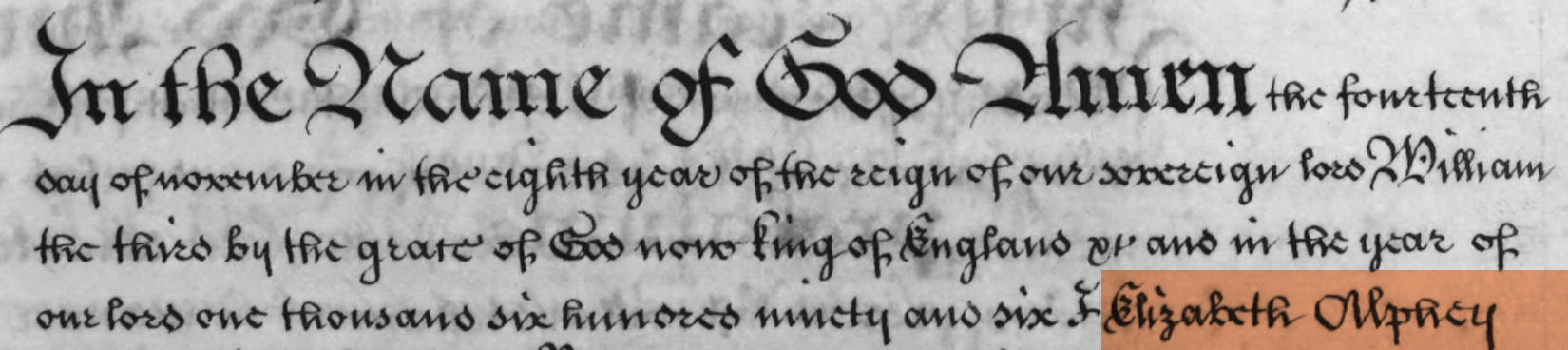
2. Trees, stories and setting your goals: Let's start our journey of looking at our ancestors and discovering who they are by looking at the idea of crease and family trees. The question we're trying to on so when we do any work of looking at ancestors, understanding family trees is drawn to the question of where do I come from? Who is it that's behind me in the history of my ancestry. Looking back in time, the khomeini, as I am now, we have my parents, my grandparents, stretching off back into the distant past. And we refer to this as a family trade because it looks like a tree. It's got that branching structure. But the problem with the family tray is the further you look back in the past, the more distant and mistake it becomes, the harder it is to actually see things clearly. Every generation that we look back in a family tree is perhaps 30 years. That means if I look back into my family, I was born in the 19 sixties. Now, if I go back generation by generation, I'm getting back into the 19th century and maybe back into them eighteenth-century. How could I possibly find out information about people that feel so distant? People from a hundred, two hundred, three hundred years ago. That's really the challenge there in front of Build Your family training. If you're looking at understanding your ancestors and building a family tree, it's important to first think about why it is you want to do this, what you're trying to get out of your family tree. One of the key outcomes is to look at the family tree as a pedigree. It's to look at where you came from, trend to trace lines back into the past and work out how far back you can undestand who own ancestry. Lets look at me. This is my family tree. And if we take one brown trim that family tree and I go back in time, I'll find individuals on that ground. Rolling my thoughts. Edna Herbert, John, VB by two John born in 1778. And just follow that one line backwards. As far as I can go. The other view on family trees is to understand more about the individuals. It's less about the picture of where am I come from. And it's more about the people that I made on the way. What are their stories? If I focus in on one person here, John Scott. Now I know that John. So 12 years in the King's own Yorkshire light infantry, he reached the rank of sergeant major, which for somebody from a fairly humble background, was quite an achievement. In the end, ill-health forced him to retire, and he returned to the city of York, settling down with his family and returning to the family trade of carpentry. I can find the stories dotted about all of my tree. But before you start researching and ancestry, think about which one of these is what you're really trying to achieve. Are you trying to understand the overall picture and build his complete a tree you can to see where you come from. Or you try to find those individual fascinating stories about people in the past that are related to. One question that people often ask when they start trying to build family trees and understand about that family is how far back can you go? And most people start with the idea that they'll be able to build a family tree that goes back hundreds of years. And we'll be able to see all of their ancestors back to maybe win, the Normans came to England. That's probably going to be unrealistic. And it's important to be a realistic understanding of what we can actually achieve with building family trees. Now in the UK, probably the key factor here is the good, solid, accurate registers perished by parish started being kept in 1538 when there was a regulation that everybody would have to keep records. So before that point, recordkeeping was a lot more informal. Finding data before that is going to be a lot harder. Even tracing back to that point is still going to be pretty challenging. Let's have a look at what they've managed to achieve over some years of genealogy and building my own family. So here's my family tree. How far back have I managed to progress in throwing different branches of my family? Well, the first thing is that there isn't a single answer. I can't push my family tree uniformly back to 1500. Some branches might have been able to follow back and others, I haven't. Looking across the list here. I have a branch that I've only managed to get back to 1880. I have an ancestor there who I can't find out much about because he came into the country from another country whose record keeping is not as good. This is also true, we might to ancestors from 18601862. Again, the immigrants and the record keeping in their own country wasn't who's good. And I certainly haven't been able to access it. Of the branches that are much more UK based. And I'm a UK based researcher. I've mostly managed to get back to the early eighteenth-century. Joining records together beyond that point can be difficult, particularly where people have fairly common names. I have a single branch in my family that I've managed to get back to something near that limit of the mid 16th century with an ancestry and 15-16. So even after some years of researching my family tree, this is the sort of pattern that we can expect. Reaching some way back with some branches to the tree, but other ones being stalled by difficulties and finding the records. However, when you do find a record that goes back a long way, it really feels like a major achievement. So my earliest traced ancestor so far, margarita man swears, died in 1595. And she would be my tenth great grandmother. And it's an amazing part of ancestry research to be able to look at documents like this one. It's hard to read. But the ICS at the start of the text here, margarita man's width. And you can see the date 1585. This is actually her death record. And it's the yes. Ancestor that I've managed to trace in my own tree. Part of the challenge is just the scale of doing this. If we're going back 1012 generations, I have perhaps 4 thousand ancestors at this date. Trying to trace all of them back this far would be an immense job to try and undertake. Here's my family tree again, going off into the past. Let's pick out a single individual hair. This is Diana Jane Martin. Now, I picked goinna because when I was young, there was a picture of how this picture in Dade, which was up in my grandmother's house. I never knew anything about Dinah and never knew who she was. And I remember seeing the picture through this course. We'll use Diner is an example of how we can use research to find out more about ancestors and how our ancestors fit together. So part of this story is about how I unlocked who Dinah is and how diana fits into my tree. Through this course, I'll be giving examples of my own search, my ancestors and particularly stories around finding out more about diner Jane Martin, who I'm using as an example. But of course, the point of the course is for you to be able to understand about your family tree and your ancestors. So through this course we're going to build up your own project, your own family tree. So when we have the your project sections in each session of this course, we're looking at what I would suggest. You try and build your own family tree as we explore each part of looking for your ancestors. What can you do for your own project at this stage? Well, I think the place to start is to decide on your goals. Why is it that you want to research your ancestors? What is it that you're trying to get as an outcome? The key question, as we've seen, is, is your main focus pedigree? Is it tracing a tree backwards to find out who your ancestors were and where you come from? Or is it stories? Is it trying to learn more depth about individuals in that family tree? Or maybe it's both. These will help you steer how you do your research. Are you looking at particular branches of your family? Do you want to trace the family name, for example? Does where I started. I wanted to find out more about whether name Alfie came from. And actually my research led me into other directions. Or are there particular people that are your starting point? As with me, I had diner Jane Martin, the mysterious picture on the wall to think about. And finally, what is success for you? What is it that you're really trying to do? Do you want to get a certain distance back in time? Do you want to find out about a particular part of your family? Do you want to join something up or do you want to solve some family mystery? Think about this before you start. So what have we learned about trees? The idea of a family tree is, do research and document where we each individually come from. And the challenge involved is that the visibility decreases the further back in time that we go. There's perhaps 30 years a generation on a family tree. So the question for us to look at on this course is, how can we see the past? How can we see that data about people? And we have two choices really about how we'll approach. It will be focused on pedigree, on looking at the patterns, tracing the lines of ancestry back as far as we can go. Or we'll be looking at stories. Well, can we find out about individuals and how they live their lives?
3. Record keeping to build your story: Welcome back. We're looking at how we keep records associated with tracing ancestors. What does an ancestry record look like? One of my ancestors. What data do I have to keep about that ancestor in order for me to be able to trace them. And the basics of an ancestry record of what I've shown here, what is my ancestor's name and three key pieces of data about them. When were they born? When they married, if they were married, and when did they die. And associated with these, not just the date, but also the location. Now if I can keep that level of record for each ancestor, it's going to really help me in building my tree and joining people together in a link back to the past. The locations are very important because at earlier dates people didn't move around that much. So tracing within a region is very important. So for every ancestor, I want to keep at least this data, I may have more information. This particular ancestor was clearly in the military, and there may be military record associated with it. There may also be stories about their life, what was their occupation, for example. But the basic records for being able to trace people are birth, marriage, and death of each individual. And we capture this data by building something called a pedigree chart. We could do this on a piece of paper easily enough. There's an individual down at the bottom with their name. And that basic data of when and where they were born, married and died. And then working back from that individual, who were their parents, who were their grandparents, who their great grandparents. Typically on a single sheet of paper. We can get about this amount of data. It's about three generations, maybe about 90 years of ancestry onto a single piece of paper. And it's a really good starting point when we're starting to build our family tree. However, it can become a lot of data if we're trying to build a tree that goes back a long way, have a look at this graph. If I'm just capturing my direct ancestors, then. The further back in time I go, the more of them that I have. A single sheet of paper will be fine for perhaps a century. But if I am collecting my ancestors all the way back to, let's say 1660. I might have 2 thousand ancestors over that time. If I put those on paper, pedigree charts, that might be a 150 pages of documents. All linked together. Move from one document to another. Because I can only put three generations of people on each document. That's going to be really, really difficult to manage in a paper form. And unfortunately, it never really as simple as a neat, tidy pedigree chart where you only ever have to write down a person and their two parents. Let's look at an example. From my own ancestry. Joseph is my grandfather. And Joseph's parents. With Charles and bear truss. I have pictures of them here. It all looks very straightforward in terms of a family tree. But it really isn't that simple. Of course is not just Joseph. Joseph had three siblings as well. So I might want to put those into my records. And then it becomes more complicated. Charles and Beatrice separated. Beatrice remarried. She remembered John. They had seven children. Charles also remarried. He remarried Lillian, and they had eight children. So just in one generation of my family tree, we suddenly have an explosion of extra people. Capturing this sort of data on pieces of paper is always going to be a big challenge. And it's also important to capture not only the data, but where the data comes from. Sources really matter. It's important to know where a Date of Birth came from. Did it come from a census or a birth record or informally talking to somebody? We often find as we build family trees that records conflict. We might find that we have a birth record, but that that suggests that somebody's child was born when the parent was aged eight. The two don't match up. And if you can't trace back to wail information came from, it will be very difficult. So you want to make sure that you can go back and check your data. And that of course, means keeping even more records, which means even more paper. In my own tray, I have 500 or more definite records which are linked together in a tree structure. Back as we've seen to maybe 15-16. I also have about 1300 or so other records which are probably part of my tree, but I haven't worked out exactly where they fit in yet. That's a lot of data to be keeping. And paper files really aren't enough once you build your tree up to this level. Fortunately, nowadays there's a pretty good answer, which is that software-based trees are very widely available. And for anybody starting out on a journey of exploring their ancestors, I'd really recommend you dive straight in with keeping all your data on a software tree. There are quite a few of these available. We'll look later in the course about what would be a good place to start. What's great about them? The three, they're really quick. Editable is really important. It's very hard to change your mind on a piece of paper. When you've written a record down, you start crossing things out. It becomes very untidy. And their sex. It's quite hard to lose the data when it's all been stored away. It's much easier to lose individual paper records by mistake. So today I'd recommend anyone who starts investigating their ancestry to be doing that using one of the modern software approaches. And as I say, we'll look in the course about how to set this up and how to run it. So let's bring this back to your project. Well, can we try and do to move your project on as part of the keeping records part of the course. We'll first try and create a pedigree chart. Just to pay per chart will do to start with showing a tree with some ancestors on it that you can fill in as you gain data. Think about what records you already have. If you've already written things down, assess what you've got and what you can learn from them. So what have we learned about keeping records? The basics of records for building a family tree, a pedigree charts, key records about individuals related to birth, marriage, and death. And how did those individuals fit together into a tree? Doing this on paper documents is fine initially, but really doesn't scale. Paper documents also can't really support storing all the data about full families. So all of the relations who aren't in your direct ancestry. Software will make it much easier to store more information as you collect it. And three online trees are available now and would be a great place to start. These online resources also allow you to link the storing of the tray with searching for data. And we'll look later at how you can search for data and find new information to add into a tree.
4. Your own tree - a first step: Welcome back. In this session, we're going to look at starting a new tray. There was several sites that allow you to start at three and develop a tree on a website. And as we've discussed earlier, that's an easier thing to do in many ways than starting on pieces of paper. In this course, I'm going to focus on a site called ancestry. It's often referred to as Ancestry.com, which is a US version. Now I'm personally a UK based researcher. So I use the equivalent Ancestry dot co dot UK site. They're all equivalent, although the data in each one prioritizes the relevant country. So I have my ancestry site set up to focus on UK inflammation. Although I do sometimes pull in information from other countries as well. Ancestry makes it free to build a family tree. So like many sites, building a family tree using their software on their website, it's free. But of course, there are paid for service, so they make money out of people paying to do research. So the tree is free, but researching on the site can cost money and be more of that later. Where do we start? Well, if we go to the ancestry website and the family tree area, then it will let you create a new family tree. And you do that by putting in who you are, the starting point for the tree. And just clicking this data tree button. It's as simple as time. Now as I've said, you can build a tree for free. But ancestry is primarily a paid for surface. So you do have to be careful that there will be links suggesting that you pay for things or asking you to have a trial subscription. You don't need to do this in order to build a tree. But that isn't always obvious. The basic rule is. Unless you want to use the paved surfaces. And as we'll see later, a researcher may well want to do this once they've started developing that tree. If you don't want to do this, don't give your credit card details anywhere and then he won't be charged. So let's have a look at the basics of the Ancestry.com website and how we use it to build a family tree. Ancestry supports a pedigree few. As we've discussed in a previous part of the course, the pedigree view is about showing yourself and your ancestors and removing the complexity around brothers and sisters at any level in that ancestry tree. So here's a little section of my own tray how it shows on the Ancestry feeler. The pedigree view is shown horizontally. So at the root here, I have diner Jane Martin. Diner, as you may recall from earlier, is going to be my example on this course. It was Diner who was the mysterious photograph that always hung in my grandmother's womb and has been one of the drivers in myself trying to find out about my ancestry. Here we can see dynasts, parents, happy Martin, analyzer shares, and their parents. So this view is showing me three generations of the family. It also shows the dates for individuals. Of course, these are things that I've had to research for myself in order to put them into my tree. There are some little markers on here. The blue marker, that little blue circle shows that these are all direct ancestors of mine. The little leaf is something which indicates that ancestry thinks they were more records for me to research that it would suggest for these ancestors. So this is the pedigree view, access through the middle button shown here at the top left. The other view is a family view. And the family view is more complex, showing the brothers and sisters of people who are on the pedigree view. The pedigree view remember, focuses just on my direct ancestors. So in this view I have diner down at the bottom left. And this is a vertical view where ancestors of above rather than to the right of people. It shows all of diners, brothers and sisters, Sarah, Harry, and Charles. It shows. Who they've married. So Harry's wife, Eliza and bent gets onto this view. As you can see, this is much more complex, but also much more complete. You have a choice which way to represent things. And partly that depends on how much data you're adding into a tree around your direct line. Central to the Ancestry.com approach is that each individual has a record which shows all the information that you've gathered about that individual. So if I were to click on any one on the tree, I would get this little screen and popping up his Diana Jen Martin, It shows a date and place of birth and a date and place of death. And then the buttons underneath allow me to access more information about Dinah. So if I click on the Quick Edit button that allows me to put in the basic information about somebody on my tree. It's a name, gender, date, and place of birth, date and place of death. This is really the very basic information for ancestry.com. Of course, we also want to be able to link diner into the rest of the tree. And we can do this from the same screen by adding a relative. So off the little Tools dropdown, we pick at a relative. And it'll ask what sort of relative we want to add. Is it a brother or sister, spouse, child? This is how we can quickly build up our tray. Now, actually, the Orpheus people on the tree can be built directly from the tray. We know that every individual has a father and a mother. And if those haven't been filled in and they'll be shown as blank boxes that you can click on to directly add in that family member. Finally, underneath this, there's a full profile for every individual. And this is where a software-based system really shows its value over trying to keep this level of record on paper. So here's my record for Dinah. And it breaks down into three columns. What facts have I learned about diner on a timeline? So for example, birth when her relations, who born records. So I have sensors, we are code here Xiang within an 1871, she was living near the wall up. The next column is sources. And as I mentioned in an earlier part of the course, it's very important to understand where your data comes from. So this shows all of the records that I've looked at and extracted data that relates to Dinah. Finally, on the right. I have a family view. How does GYN a fit into my tree? Who have parents, a spouse and children? And a button there to add more relations. So this is where the real value of an online software based system comes in to be able to collect and collate data for every individual on the tree. Let's look at your project. Now will look at starting your tree. So the first step is get a location where you're going to store your tree. And I'd recommend a free account on Ancestry.com or Ancestry dot co dot uk, depending on your location. Go through the steps I've suggested to create a blank tree centered on yourself. And start to add in some of your close relatives, the people that you know about and you know how they join in to you on your train and play around with a toll on it'll play around with data entry in ancestry. So they get used to the views and you get used to putting in data. After all, you are going to be putting in quite a lot of it. So we've had a look at how to start building your own tree. Now it's important to remember that this doesn't cost any money. You don't have to spend money on ancestry research, particularly at an early stage. Tools to do this a free and online. For this course, I'm going to focus on the Ancestry.com website or other websites. It's similar functionality are available. You can start by working in a simple pedigree view that focuses on following your line of ancestry backwards. Or you can look at more complex family-based views which bringing in all of your relations and side branches of the family. The key point is the tools allow you to capture data as you learn. As you learn each piece of information, you can enter it into the tools. And you can build up a more and more detailed picture about your family tree.
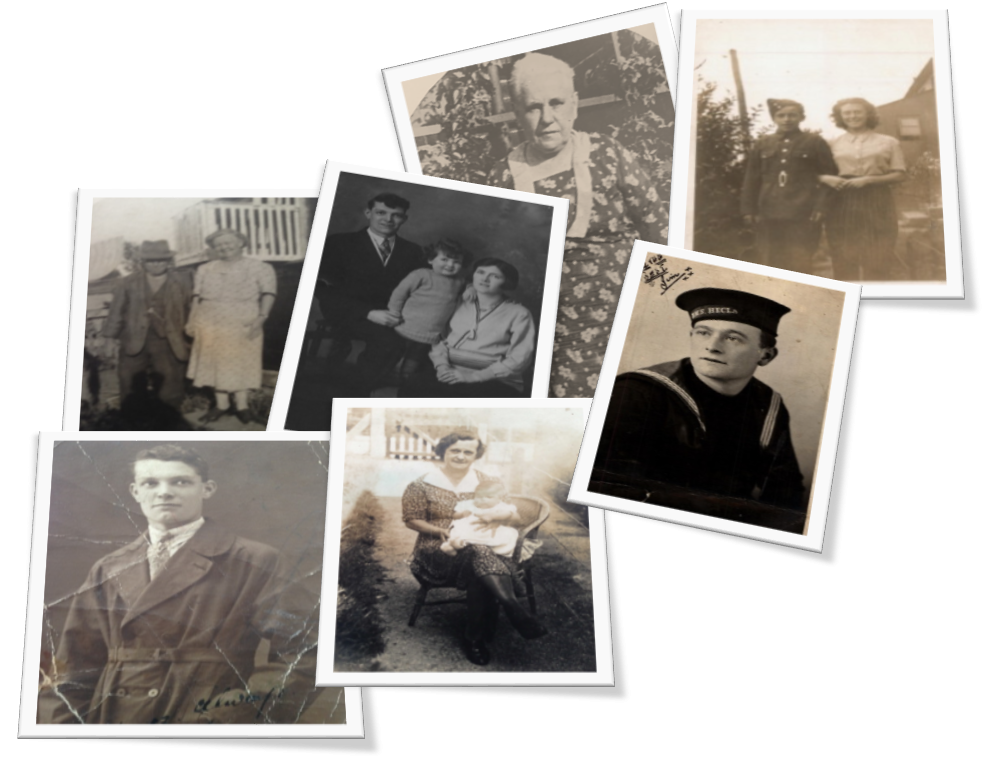
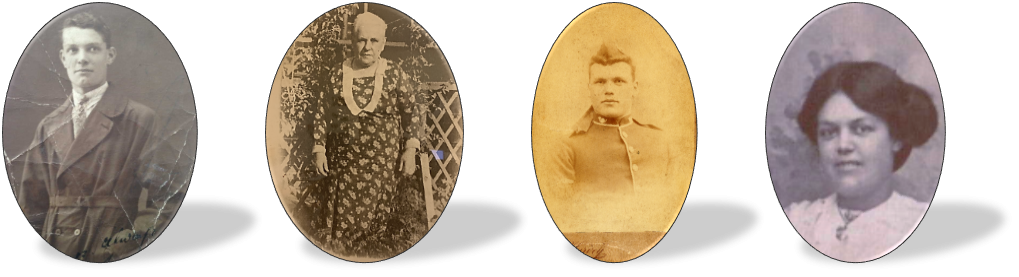
5. Family facts, stories and legends: The first place to start looking when building your own family tree is your own family. There's plenty of knowledge in your family. Back typically a few generations. There'll be first-hand knowledge. People that you can talk to about one or two generations. For most families. You can find out about people who you're related to and talk to them directly about their experiences. Back another generation. You're really looking at stories. You can't meet the people, but you can find out about them. And you can find stories about them from the people that you can talk to. Often time is limited and people often start ancestry research when they have relations who are quite elderly. And it's important to talk to them and find out what you can while they're available as a source of information. The starting point is just to start to draw a tree. What do you already know about your family and your family tree? As myself, there's siblings, parents. Most of us can push our family tree is out to some uncles and aunts and start building a generation or two with ancestry. Quite possibly, we can push a generation further out to grandparents. Starting to get this down on a piece of paper is the starting point for recording information about the family and information generated by the family. So the starting point is to capture people's memories. While people who are available to give you these stories. And you do this by just asking questions and listening to people's responses. You can't remember all of this, so make sure that you take notes as you're talking to people. But the secret is to listen to the stories that they tell. Often the stories will start to reveal new characters or new places, relations that you haven't heard about before, or places that people have lived that you haven't heard about before. So here's an example from my own family tree. My great-grandfather Charles. He died well before I was born. But stories from the family tell me that he served in the Royal Marines. They tell me that he was born in Canada and that his father was in the colonial Police. Probably a mounting. Now these give me a lot of starting points which I could use to do more research about this individual. There might be military records. There might be records in another country. There might be records about his father. But of course we have to be careful because we're relying here on memories are not undoing records. So always remember that the stories may be misremembered. People who were remembering something from their youth, particularly remembering what they heard about people who were older, even when they were young. They may not have had a lot of information on a lot of interaction with those people. So we have to be careful to remember that these are stories, are not records and that they may give us guidance, but they can't always be seen as facts. Not everything in those stories about Charles turned out to be true. Photographs are a very powerful way to build discussions. We can look at photographs and we can ask questions about who people were. Who are the people in the photographs? How are they related to me? We remember in an earlier part of the course, we discussed diner Jane Martin, who's picture was hanging in my grandmother's house. Who watching? How did diner fit into the picture? Into my ancestry? Photographs are great starting point for conversation. As part of looking at photographs, family groups are a great way to understand more about the family from photographs. Often pictures have several family members on them. If you understand the picture and discussed the picture, you can understand the relationships and build a tree out of them. The picture links people together. It can link people, you know, to new people. How did the people on this picture relate to each other? And there's a lot of opportunity to research older pictures. And look at this picture. This is clearly quite an old photograph. Nineteenth-century, showing a young man in uniform. Now I may have relatives who would recognize this young man. If I don't, this is going to be difficult to identify. I have a few details from the bottom about the photographer who took it. It's probably no longer even in business. One thing to remember with pictures is always to check the back. Very frequently. The older pictures, there's information written on the back of a paycheck that lets you learn something about who the picture was about. So let's turn this picture. As we can see, that some writing on the back. And that writing can give us a lot of clues about the person for whom the picture was taken. And there's a name. Now it's not that easy to read, but it says H J Scott. We can work out is to Scott's date of birth because this says when the picture was taken and it says how old he was. We can also work out about his military record because the record here shows which regimen he was signed up to the king zone Yorkshire light infantry. So from an anonymous picture, we've now moved to the fact that this is a photograph of H. Scott. He's born in 1870. His age on the picture is 17. He's probably just signed up to join the king's own Yorkshire light infantry. So I probably have a service date which I might be able to find more out about from military records. Suddenly this becomes quite a valuable record for me to find out more about the family. Herbert Scott incidentally was diners husband. This ties in and closely to the research around diner, which is central to this course. So how can you move your project on using family knowledge? A starting point is take the close relatives that you know about and add them into your tree, which you're probably storing on Ancestry.com. Or you may initially be doing on paper. Talk to at least one of your relatives, talk about their youth. Then growing up. Try and learn what you can about that background. See if as a result of those conversations you can add one new relative into your family tree. And then see if you can find some old family pictures. Doesn't matter how far back they go. Ideally, as we've seen, pictures that have several people on and identify at least one picture who is on it and how are they related to? So what have we learned in this session about family welcomes. This is a great place to start building your tree. Talking to family about what we already know. In fact, in many ways this is the best source for recent data. That's partly because it's likely to be quite accurate and detailed, but also because some of the documentary data is not available for people that are still alive. It's deliberately not released until somewhat later. So family information is often the best place to be looking for, the more recent information about your family tree. You want to ask your relatives for stories. Listen to what they're saying and try and pull out a key information and take notes. You can't keep all of this in your head. Take notes about what you've learned and then go back and ask more questions to follow up on the details. Photographs in very powerful ways to start discussions among the family. And particularly look at family groups. Look at photographs that have multiple people on them. And ask who those people are, how they related to each other. And so start to build up your tree that way.
6. Researching on the internet: Your key source of information when building a family tree is always going to be the historical records which have been kept centrally about people in an area. And there's a whole range of different types of historical records which might be used. Here's a couple of examples. Marriage records, census records. And of course, historically they've always been handwritten and usually kept locally, usually created by and maintained by the local church and actually stored at the local church. It's only very recently that these had been centralized and become more available to people across the whole country. This day, terms now become available online and searchable through a range of different search sites. And these really fall into three categories. There are paid sites. The one that I'm going to be focusing on for this course is ancestry. But probably the other two leading sites, moment of my heritage and find my past. They're slightly different from each other, but broadly operating in the same space. There's official government data. In the UK, for example, the national archives. This is usually where all of the original source data is stored. Mostly however, the government agencies don't publish that data online. They rely on the page search sites to manage the online data. Often, you can access the government data by traveling to specific locations and reading it. And then there's some non-profit sites. There are certain sites which had been set up to make some subset of the relevant information available to you for free. They're a good starting point. They're often a bit less complete than the page sites, but they often give you a large amount of information. And some of the key ones here are family search, which was a leading three and research site hasn't really been maintained quite as well as something like ancestry.com, but has a lot of free data. And particular projects to transcribe data. That is freely available on paper to make it searchable. So free BMD, for example, which is UK birth, marriage and death records, and free sand, which is census records. Obviously they rely on people transcribing the records and may well not be complete. One question people ask is, why do people charge? Why isn't this information on available for free? Why do you have to pay a subscription to Ancestry.com to access data, which is free if you actually went to read it at a government location. Now the main reason for this is that there is a lot of work involved in taking the paper documents and putting them online. We're taking something like the document on the left, which is a bit of census information. And we're taking that data and we're turning it into a searchable record, like the data on the right. For a start, it's much more readable. But also it's just the fact that you can access it online and you can search the data. So here our senses reco, clearly shows us a family. It shows us the age is due dates, the locations of that family in a way that I can easily search for. On the left, I can just about weed that document. But I could never read through all the census is to find the page that interested me. That's the value that they're adding. So it's worth a specific mention of Family Search. And I think it's worth mentioning Family Search because they've always been probably the leading, most complete free site. You use to be able to search Family Search without any accounts or logins. Relatively recently they've insisted on new setting up an account, but it is free. The sort of information that they'll give you. You can put in the name of the person you're searching foreign key information that you're interested in. So let's have a look at diner, diner Martin won't another wall up in 1868. What'll it? Tell me about it. And it will come up with a record. So here's a census record about Dinah living in 1881 in another wall up. And it'll give me that census data. Father, mother, other people living there. Now what it won't do is give you direct access to the images of the actual census. That's not something that is available for free. And it's only really available through the page sites. But it will give you a breakdown of what the key information is. And you can go a long way on following your ancestry using just this free information. For this course, I'm going to be focusing specifically on the Ancestry tool. So ancestry.com or for me as we search from in the UK, Ancestry dot co dot uk. So this site, it's free to build a tree. And some data is freely available depending on the agreements under which they got the data. Broadly though it's a page site that's based on a subscription payment. Now one of the things that you're paying for with ancestry.com is the sheer scale of the information that they are supplying. So let's look at some of these numbers off their websites. Family tree records. So these are the information that people have themselves captured in their own family tree is online. And there's about 2 billion different records in ancestry.com that people have built their own trees with. If I look at birth, marriage, and death information, in the UK, there's a 192 million different records of people. And if I look at a particular point in time, let's pick a, a Census, 1911 for example. Most recently available census. There's 34 million different records of people in the Census. This is a vast amount of searchable information and the great value of a site bug ancestry.com. And this is what people will pay for, is the ability to rapidly search that data and build trees using his complete a set of data as possible. Now I can't advise about whether you should be paying a subscription and diving in. I think to start with, if you're new in ancestry research, that there's a lot of value in using the free data sources to start with. But I do feel that it's likely there'll be a point where you feel it to progress your tree. You probably have to join something like ancestry.com, at least on a temporary subscription to search their data. So what about my ancestors? What does all of this huge set of data tell me about my ancestors? And of course, this was the first thing I thought when I started doing my own research. Given things millions of records, surely it's so easy for me to find out about my ancestors. So let's try search. What does it tell me? Here is the Ancestry.com complete search screen. I can put a name in. I can put information about my ancestor. I can go in and add whatever I know, birth, marriage, death. I can add what I know about relations. And all of this will help me narrow down people that I'm looking for. So let's look at diner Jane, Diana Jane Martin, born in 1868. Now, there's another way of looking at this in Ancestry.com. I've already collected data on my tree. Then you may recall from a previous part of the course that I'll have a diner Jane Martin record, ready? I can click on the search button. And what's great about this is all of the data I already have is pre-populated into this search screen. So here I have diner Jane Martin, or alternatively her married name of Scott. I have the date of birth. I have where she was born. And I have had known relatives all put into the screen. Now I can do a search and find out more. So what pops up about Dinah Jane martin? Well, the first thing is on the list are census information here pairs and the 1881 census and the 891 census. But let's have a look at the information with showing here 1881. There's quite a lot of data about her. 1891 needs very little as a date, and it says city. So why are these different? That's because I've logged in here, nor does myself with an ancestry subscription. But what this looks like to somebody who isn't a member of ancestry.com and hasn't paid. The 1881 census is in that category of free data. And the 1980-81 census is not. So you'll see that the first set of data is a lot more complete. Ancestry.com supply some data for three and some data only if you have a subscription. If you haven't paid, you still get some information. You still find out that diner Jen Martin was around in 1891, was living in Hampshire and were when she was born 1868. But you don't get all of the detailed information for that sensors. So how can you move forward your project? Let's look at finding data. First step, decide on what CRT tool you're going to use for searching for data. I would recommend ancestry.com or Ancestry dot co dot UK. And I'd recommend that you use the same tool for search in as you do for storing your tray. Used a tool to search for an ancestor. Have a look at what it comes up with. Review the data on that ancestor. Link this into a tree. If you search for somebody that you already know about this early on in your tree, try and add in at least one new fact into your tree. Maybe it's a date of birth or the date of marriage or new name if we relation. So in this part of the course, we've been looking at finding data and accessing data. All the key data that we need for ancestry research is now digital and online. Some of this data, as we've seen, is available for free. In general, most of the tools, the major research tools are paid for. So in general, if we reach a certain point in our research needs, a need a subscription to a tool to get the more detailed information. These painful tools offer big datasets with a lot of information that you can search for. You can search the records and pull up a wide range of information, as we'll see later in the course. And then you can capture this directly in your tree. And this is particularly true if you use the same tool for building your query as you do the search in your data.
7. Getting the most from internet data: In this course so far we've looked at how you can find data that could go on to your family CRI. But how do we use that data? We can pull out data from Ancestry.com who have millions of records. But how can we use that to build a tree effectively? Okay, so let's look at information that we get from Ancestry.com. If you remember, this is the Ancestry.com search screen. So let's fill something in. Let's just put in my setting. Now. My surname, Alfie is fairly distinctive. It's an unusual surname. And when I started looking at ancestry and about trying to trace my family tree, I thought all I need to do is find everybody who had that surveying and join them up. So what happens if I do a search for all the alphas in the UK and try and work out how they fit together. Well, if I put that search into Ancestry.com, I get 1.5 million responses. Well, wow, that's great. Isn't that party tone? Doesn't that mean that there's a load of alphas that I can join up. Unfortunately, it's not that simple when you're building a tray as just getting a huge list, that of a search side and fitting them all together. You'll see that ancestry.com searching has a filter which includes this slider that goes between abroad fit for my name, Alfie, and an exact fit. Now why do we need that? Why do we need to be able to match a name exactly where only approximately? Well, what I've learned as I've looked with my family tree, is that names on fixed. They vary over time, but also even an EEG one particular time. The spelling that people use is very variable. And there's all sorts of reasons for this. One of them is that names might just be miss copied. If someone's filling in a census, then you tell them your name, they write it down. Maybe then spell it the same way, one year to another year. Another point is that names simply weren't as fixed. They weren't as standardized. In a time when people were doing a lot less writing. So at one particular branch of my family, the alpha name might be spelt any of these different ways within a few generations. It might be spelt with the note E AL ph, why? It might be spelled with a starting E instead of starting a ELP THY, the pH in the middle might be a v, a LV, EY. There could be any combination of these. Elp h e is quite common. And even an ALF H E. Now you've got to try and find those and fit them altogether. But only some of them really relate to your family. And some of them might be similar names that are being used in the same region. So according to how exact search I ask ancestry to do, a broad search for names that are something like healthy, gives me 1.5 million searches. A more exact search narrows down to 417 records, which use exactly the same spelling as ID. So, who are these people? Come I take these 400 people and put them on a tray, them altogether. Okay, so once the first one that comes up on the list, here it is. It comes from an index of wells and administrations from Canterbury around 1640 to 1650. Now That sounds great. I've talked earlier about how hard it can be to get your family tree back to quite early dates. And here we are with an Alfie somewhere in the 16 forties. Let's look at the record. Here. It is Daniel Alfie. He's a husband, one in ten to them in 1640. And he's in this probate registry because his well is logged in Canterbury. Tendon is down here in the UK, it's done in the southeast corner of the UK. What does this actually tell me? Well, it does tell me that there was someone with my surname living in this region for a 100 years ago. What it doesn't tell me is that they're my ancestor, or even that there any relative. The name might just be a coincidence. It's a really interesting record, but it really doesn't help me build my tree. The important thing is to focus on the tree, focus on what you know already, and build outward from what you know. It's so easy to skip between interesting looking records. Jump off and look at Daniel Alfie in the 16 forties. Because let's be honest, it's an interesting story. But we don't know that it's my story. The way you have to work when you're building up a family tree is to work with connections. If I've got somebody new that I found out about, how do they fit into my tree? And usually those connection to either they're married to somebody in my tree, although the parent of somebody in my tree or the child. So if I'm pushing my tree back in time, I'm looking to find parents and marriages. This is why birth, marriage, and death records are so critical. It's so easy to get distracted. You want to avoid the really tempting records which you've got no evidence that they related to recovery, but they sure are interesting. And actually I've had some great times reading up on some amazing stories of people who may or may not be related to me that I found during my searches. It's the classic question of, are you related to royalty? As somebody out there who looks really interesting and you'd love to join them up. But realistically, you have to find the link before you can do that. Here's an example. There's a Charles Alfie who was born in 1838. He lived in Brooklyn, New York. He has quite a detailed service in the Navy and the US civil war. And it's been years living in New York as a pensioner after the war, paid for by the Navy is a really interesting guy. He's pretty well-documented and I have absolutely no evidence that I'm related to him. I spent far too long reading up about him, and I can't link him into my tree anyway. So he goes onto my research careers and interesting person that at some point I may be able to link to. But here's a distraction in trying to build my full tree looking back in time. So when we're using an online tool like ancestry.com, the key part is to be building up the record of each individual. So here as a reminder, is the record that I have for diner Jane Martin. I can build more information about Diner by pulling in more sources and finding out more day to about her. And I can build outwards by using that data to find out more about her family. By finding out about a family, I can extend my tree. And this is the process that we want to follow. Take an individual who is on your tree. We search all the sources you can about the individual and as a result, find more about the family to the process that you're going through it. Let's look at your project and see how in this session we can move things forward. So first thing to do, search for an ancestor. Somebody thoughts in your tree early on. Find some data about them. Ideally, birth data or marriage data that relates to that ancestor. Try and use this to identify a new person, a parent, or a spouse. Just a minimal amount of information about them to start with. And add that new person into a tree. It's a great achievement to feel that you've grown your tree with some entirely new that maybe you didn't know anything about previously. So in this session, we've looked at how we use data that we get from one of the ancestry sites or from elsewhere. The huge amounts of data available. But it's important to focus down and use the best data in the best way. Just looking for matching names, the particularly matching your own surname is not going to be enough to get your meaningful data. It's important not to be distracted. Don't just chase people because they look interesting. By all means. Spend some time reading the stories, stories of great about people in the past. But you can't put people on your tree just because they look interesting. You have to build outwards from the tree that you already have. So always work with links. Always work with how can they link a new person into my tree. And capture all the data that you can in your tree. Capture all the information, all the sources of data that you can for people to on your tray. And these will start to reveal new links going outwards and new information that let you extend your tree.
8. Visiting your ancestors - census data: When Let's have a look in this session AT census data. So the census is probably the best data source that we've got available, certainly here in the UK. So what is a census? Census is really a snapshot in time. It's a moment where the government take a record of every household, who they were, who was in the house at the time. And key information. How would those people related to each other? When were they born? What work do they do? So it gives you that window into what was happening at a particular moment in time. And a lot of the data about relatedness that you need in order to build a tree. Census data to me is the most important and valuable data that we have available for building your tree. The idea of a census isn't new. The idea of capturing information about who is living in a region or when a country has been around for thousands of years. So this example comes from the doomsday book, which was created in the UK in 1086 after the Norman conquest. When William, who had just conquered England, wanted to understand what he had in his land and how much revenue he could rely on as a result. So in this example, there's a region the king holds for himself. The village of early Alamo held at three hold from King Edward. It was assessed five hides. Now as for hides, this is saying that there's a region of village. It's saying who owns that village, and it's saying how much revenue comes in. It might go on to say, how many people are living there, probably not the names of all of them. So this isn't a new idea. But historically, this has been done with very variable data and at a very infrequent time because it's quite an expensive thing to do. So the modern idea of the census in the UK, the full censuses started in 1841. The idea is these would be taken every ten years. There were some limited regional censuses for some years before that, from about 1801. And this is also limited by the fact that the data hasn't all been released. As a matter of policy in the UK, censuses are considered sensitive data. So the only released a 100 years after they've been taken. So we only have released data up to 1911. There's also a single-point item, the 1939 register, which I'll talk about later, but is effectively Another available sensors. Other countries will have different census data. It's worth mentioning the United States. In the United States, full sentences started about the same kind of date, 150. There were regional censuses from about the same kind of date, 1790, some limited censuses were happening, and again, taken every ten years. The US censuses are available to a slightly more recent date. Thetas released up to 1940. But given the availability of the 1939 register in the UK, it means the US and the UK have census data over quite a similar timescale. So how do we use this census data? As I've said before, you should always start from someone who's already on your tree. And you should look at extending your own tree. So let's start with an ancestor whose already on my tree. Then we searched the census data and you can filter down the data that you're looking at on the Ancestry.com site. Under the search menu, you have a choice of which we are called to kind of search. So let's search census and electoral wells. And we fill in the data that we know. Not surprisingly, in this example, I'm going to be using diner Jen Martin, who is my test example in my own family tree. So diner Jane was born in 1868 in netherworld up in Hampshire in England. So I fill that data in. Let's see, one information about her is available in the UK census. Well, I've got a number of census records that come up, 188118911871. In ancestry.com. There are two links available. The first one of these gives you the data. That's a summary of the information out of the census. The second one, view image, gives you an actual reproduction of the sensors that you can read yourself. So let's have a look at these. Okay, we'll go and look at the original. So this is a scanned inversion of the actual document that was created in 1881. And lets step back a moment and think, that's pretty amazing. The idea that I can sit here at my desk and using a tool like ancestry.com, I can look at effectively the actual document that were being written about an early ancestor of mine. So here we are. We have diner Martin, she's down here on the list. It gives a set of day to about her what's her relationship with the family, what's their age, what she doing well, was she born? So what does this tell us? It gives us a story about diner. In 1881, diner was living with her parents in netherworld. So Harry, her father, was the first one listed here. He was born in 1839 in the same village. And I can say that because it has its age and it has his place of birth. Eliza, her mother, was born in 1839 in Brighton. And if I look them up on a map, I find that's a village about three miles away from near the wall up. So what was done to doing, even at the age of 13? Dinah was already working as a domestic servant and not only that, but unemployed. So we imagine that she had been working as a domestic servant and she's already been to one job and then lost a job. It's a tough life for this edge. We also have the Age of all of her siblings. And a reference to a stepson, George Fletcher, which suggests that eliza was previously married. So for building a family tree, this is an amazing set of information. The other view shows the same data in a much more summary form. Who were the members of the household? Water, their ages and key information about Dinah. And it's much easier to copy out, particularly because in some cases the handwriting is very difficult to read in an old sentences. So both formats are available to you. There's diner on the list. Now it's worth looking at both of the formats. It's always worth checking over the original. The nice thing about the data is it's clear. It's something you can cut and paste from. It's easy to read. But there's always the risk that it's been Miss copied. And it's always worth going back and checking, particularly if your key individuals that you're following, that the information that's on the original of the census really matches what's been copied out here. So always check both. Now we can take that data and we can update our family tree. So here's diner. You've got diner on our tree already. What can we add in? Well, we've got a parent's Harry and Eliza. We don't have an original name for laser because obviously she's in the census under her married name. But we have dates of birth or at least to the year, and we have the locations that they were born. And we also have a whole family. We have all of dynasts, siblings, sarah, hurry, Charles, Berry, and Emily. And if you remember, we have the stepson. Gd future, which implies another marriage earlier, Bioanalyzer to somebody called Fletcher. This sentence has allowed us to add a large amount per family tree. And this is why censuses are so powerful as a tool to be able to extend your tree. Now I've mentioned about the 1939 register. Now this is a specific document in the UK, and it's probably my favorite document for ancestry research. Now the 1939 register was created for wartime planning. And it was effectively a census, but it was done separately. Specifically around understanding who's in the country in order to support things like the creation of ration books. So it works mostly like a census. But it is available even though the normal series of senators have only been released up to 1911. So why do I say this is my favorite document? Well, let's look at it first. Here we are. Here's Dinah, first-line here, dynasts Scott, by 1939, she's married, so she's in under a married name, Scott living in Bernie cottage, millivolt. And the rest of the day to about a giga Scott, Date of Birth. Now a normal census only gets age. The United 39 register actually gives the full date of birth, day, month, year. Now that's really useful when you're tracking people down in terms of finding their birth records. And it gives a lot of data about what their role is, what they're working on. So in the case of the dynasty Scott, Dana Scott was in service, we're tired. The 1939 register is a key point in history. What I like about it is that it's such a pivotal time. Somebody who was born in 1939 would be about 80 in 2020. So there's a really good chance that somebody who is very young in 1939 is still alive today. So it ties in the people who are alive today with 1940 date and then back to somebody born in 1860 might still have been alive in 1939. So it's a great point that tying in several generations of people and working your way back really from the present day, all the way back to possibly the mid 19th century. It's got those full birthdays, not just people's ages, which really helps and tracking people down and making sure that you've got exactly the right person in your records. It gives the details of employment, which gives a much stronger story about who people are. And fascinatingly. It continued to be used where most censuses are single-point, they're written and they're filed, and they're not used again, the 1939 register was actually updated. The idea was it would continue to be a record and continue to be a record of people within the UK. So in particular, if people got married and change their names, the 1939 register is updated with a note that they changed their name. And those updates lasted till at least 1952. Some updates was being done for decades after that. So it's quite a dynamic register which allows us to find later data, particularly dealing with a difficult situation that people's names do change. Can see why I think it's great. Let's look at how you can move your project forward. Now using census data. Take a look at one of the censuses in the UK. I'd suggest the 1911 sensors, which is the most recent one that's been published. But depending on how far back your tree goes, you might choose to look at one of the other sentences is instead find one of your ancestors that you know about and find them on the census. Take a look at the information. Have a look at both the data and the original copy of the record. Where were they at this date? What were they doing? What was their trade or profession? What was their relationship with other people in the household? Try and add a new person onto your tree using the Census and using the relationships between them. That's all not always possible and sometimes can be quite difficult. It's really a stretch goal for this part of the project. So in this session, we've looked at census data and what it can tell us. I really do feel that Census data is probably the best dataset that we have available. It covers roughly the period 1850 to 1940. Now, slightly different between the UK and the US, but broadly similar timeframes. And then there's some local data before that. So if you have relatives in particular areas, there's a good chance you'll find some, some related data. A column. It shunts family links. It shows how the family fits together, how family members are related to each other that really helps you to build your tree. It gives names and it gives ages. And watch out for the fact that sometimes it has been missed copied. I have come across cases in my own research where the name that goes into the dataset isn't really right. And when you go back and look at the written document, the original document, you'll see that it's not fully well written and it's actually fairly unclear what the name is. So possibly you have difficulty mapping some of these Sensors names to people who you've discovered elsewhere in your tree. The firstName is sometimes misspelt or assumed to be something different. Or as we've discussed before, surname spellings may have been copied down incorrectly by the person writing the sensors. So print the data with care. But it is probably the best way for building your tree.
9. Family milestones - birth, marriage and death: In the last session, we looked at census data, which I feel is the most powerful data for building your tray. The other main dataset that you'll be working with is what's called vital data. And this is really the three key dates of birth, marriage, and death information. These are the key things you want to capture for your tree. And to some degree, these are available directly. But vital data can be harder to work with them census data. So let's have a look at what we've got. In the United Kingdom, there was central registration of birth, marriage, and death data from 1837. Before that, data was stored locally as parish records. So each church would keep a record about births, marriages, and deaths, the region of their own church. Those records go back to the 16th century, but they tend to be partial and they tend to be harder to track before 1837. Now this is a much longer time span and the sensors, the sensors, as we can see, was quite a small timeframe. And birth, marriage and death records much longer than this. So this is why they're both important. The United States has slightly different timeframes for vital data. From the early 19 hundreds. So that's a little later than the UK. There was some centralized registration of births management desk, but only at the state level. Before that date. The quality of previous were cooled to very valuable. So it can be find by using birth, marriage, and death data. Let's go back to my relative, dynam Martin, born in 1868. Now, we've seen that we've identified a parents, heavy Martin and Eliza. Can we find out any more by using the vital records, birth, marriage, and death? Death. Well, let's try search. Let's start by going into the Ancestry.com tool and choosing a search based on birth, marriage, and death. Let's give that a go and see what comes up. So I'm going to put in Diana's fathers details how he, Martin, we know he lived another ball up and we know he was born in 1839. As data, we've previously gone from a census. So when we run the search, what do we see coming up? Where we see these three records or relating to heavy Martin. But let's be a little careful him how in Martin is quite a common name. So we need to be very sure that we are talking about a right, how he, martin, Let's look at the first one on the list. Birth in 1839. Well, we thought 1838 from the census, but it might be close enough. But what about this location? Baptized in Sussex? Well, we know our Harry Martin was born in Hampshire in on in Sussex. So always check the records against facts that you know. It's fairly easy to pick up a record that belongs to somebody else in the same name. And this first item is not actually are correct how he, Martin. Down here at the bottom, we have the actual birth registration record for our hobby mountain. Now, born 1838 as we expected and enhance share. But it's their stock bridge. We have to be careful here that the registration data may not exactly match what we know. We know that he was born in near the wall up stock, which is actually the nearest town of any size. It's about 4.5 miles away. So the registration is actually shown as being in stoppage. But this is our record very Martin. And above we have a death record also for how many mountain the AAA is. This isn't giving us a huge amount of data. It gives a birth date as July 1838. And that's not an exact date. And that's because the Civil records don't have an exact date. They were collation of dates that were collected in a particular quarter. So July 1838 means born in May, June, or July, 1838. So we've got Harry Martin's birth record there, but we have quite a limited amount of data to work with out of this birth record. It's not great. And it's especially not great when you've got a fairly common name like Harry Martin. Okay, let's try again. We'll try another search. What are we going to look at this time? We know a little bit about Harry Martin's wife. We know that our firstName is Eliza. And from the census, we know that she was born in 1839 in broken. Most importantly, we know that she was at some point married to somebody whose last name is foot shock. Now this is great. If you've got an unusual name, always try and use it in the searches. So it's much less common than Martin. So if we put in alliances first marriage data. Let's see what this gives us in terms of research. And here we are, topic list. We come up with some marriage data. Eliza and Lutetia shares, married George Fletcher in Groton, Hampshire. So we can be pretty certain this is the right one. It's an unusual name and a specific location. So now we've got alliances, fullName, and we have her previous marriage. We are told we have an approximate birthdate as well. Now there's more data in this particular record because sometimes more data's been transcribed. This is the set of records that are called england select managers. Because some of the data has been transcribed for some managers rather than just basic data. Of which quarter did it happen and what location, which we saw previously in the birth records. It's pretty much chance whether your data has that extra detail. But if it does, it's really useful because this is telling us full name or full spouse's name. It allows his father's name, year of birth, and exact date of the marriage. So this is a really great record, two are found. So now we can transcribe this back and update the tree. You have diner here at the bottom. And we knew about Harry and Eliza. But now we can add into more data. Eliza as full name at birth, allies are and litigious shares the full name of the person that she married George Fletcher and the marriage date. And we also get a lies as fathers named Thomas shares. So we've been able to extend our tree substantially using these vital records. Which records are the best ones to use? There's no obvious answer for that. But there were times when some records are better than others. If we're looking at very recent data, Family knowledge is always the best place to start. We have to be careful because it's not definitive. People's memories can be wrong. People could be misled. But for the most recent dataset, the last 50 years, that's really the best place to be finding the data. Then we have census data. Census data roughly runs from 1840 to 1940. Where we can, we should use census data because it gives the family relationships and it gives a lot more detail. So this is always my starting point for this time span to go to the census better. Then of course, looking for a wider timeframe. We have the vital data, births, marriages and deaths. Now the basic centralized vital data coming from the 18 seventies to the present day does cover all of these but gives very limited information. You may get more data than that transcribed from the Select Data. Really, the Select Data is most useful in the slightly earlier timeframe. The 17 hundreds to 18 hundreds, when the centralized data isn't available. More recent Ethan That the Select Data which tends to come from churches and parishes may not be available because people's weddings may not have been in those locations. And earlier, ramp the 16 hundreds and 650s, the, the data starts to fade out and become less available. But broadly, this is the sequence according to the data that we're looking at, family knowledge for the most recent census data for the timespan that census is available. And then beyond that, get what you can out of the birth, marriage, and death data. So in summary, the vital data is there as a definitive evidence of an event. Its real value is to tell you that something has actually happened. It won't give you so much detail about it, but it's a formal record. And the basic record has very little useful data and approximate date and a name. There might be more data in there, but there's no real guarantees. And the only way to find out is to search in log. Now you can find more data by looking at full certificates. So having track down the details of somebody's birth, you can request a full birth certificate for them. Now that will give all of the extra detail. It will give the parent's name and the exact date and the location. But it is expensive. You have to pay individually for every certificate that you request. It takes some time to arrive and it costs a fair amount of money per certificate. So really only do this for key pieces of data that you need to fill in or individuals in your family tree that you feel particularly passionate about the details. Let us look at your project and look at how we can use the vital records, birth, marriage, and death to move your project forward. Try and find the birth record for one of the ancestors that you know about. Have a look at that record, checks the search data carefully. Make sure that the birth record you've got really matches the facts you already know about that person. So the location, right. Does it match the expected birth date based on what a into they were later? Have a look at the record, see how much data's there. As we've seen, most of the records acquire minimal, but some may have a greater amount of data. And as a bit of a stretch goal here, see if you can find any records which are in that better Category, a bit more extensive. So if you can find something about one of your ancestors that gives it a little more detail and the very basic birth, marriage and death records. So in this session, we've looked at vital data. Vital data is covering births, marriages, and deaths. The key pieces of information that we need to obtain to build our tree. This data is available reliably from 1837 in the UK and from about 1900 in the US, with some data available before that. That data might be local, it might be partial. But you can push a fair bit earlier. In some cases. Sometimes the records will be completely transcribed. So we'll have all the details from the event. But in many cases will only have summary data. Often that will only be the name. And the quarter of the year when the event happened. Individual records with more detail can be obtained. But that's expensive, isn't really a place that I recommend that you start only do this for key events. So if you're really having trouble tracking something down.
10. A key link to the past - the 1939 register: Welcome back. Let's take an
in-depth look at what is one of my favorite
genealogy documents, the 900s 39 register. And have a look at why this
document excites me so much more than any of the other genealogy
documents that I use. The 19th 39 registered was
created at the dark days, start with the Second World War. And at this point,
britain needed to plan. And part of this planning was to bring in a rationing system. Now, that's not a
trivial exercise to understand the needs. And this is the purpose
of the 19th 39 register. The 19th 39 registries
about identification. Identification meant the
introduction of identity cards. That is, we understood who
everyone in the country was, and they all carried an identity card which uniquely
identify who they were. So to do this, the
government needed a means to identify everybody
in the country, understand who they were. So the 19th 39 register was a tool to do
the identification. And it happened on the
29th of September 1939. So why do I care about this? Why is this an
exciting document? Why is it so valuable
to genealogists? Well, census documents are
available after 100 years, 100 years after the census, they become widely available. So that means that we've had the 1911 census available
for some time now. The 1920s one census has
very recently been released, but currently has
relatively limited access on paid for sites. Only. Then there was no census in 1941 because
of the Second World War. There was a census in 1931. But not only would that not
have been released yet, it was actually destroyed
in wartime bombing. So there's a huge gap in data, or even potential data
that might be available to future genealogists with no
1931 census or 1941 census. The 1930s nine
register represents a unique point in time from the viewpoint
of the genealogists. If we look at a timeline, genealogists focus a lot on
the 1,800 to the present day. Of course, we try and
look earlier than that. I've pushed some
of my own parts of the family tree back
to the 16th century, but records a much patch
here and harder to obtain. I would never expect to get the whole tree back
to that distance. Then the 130s nine register
then sits at a unique point, roughly in the mid point
of this time span. So if I look to the
right on the scale, somebody who was born in 1939. And so appearing on the 1930s nine register would be
in their 80s today. So many of these people
are still alive. At the other end
of the timescale. Somebody who is
in their '80s and 1939 would have been
alive in the 1850s. So the data that we see on the nine-hundredths 39 register includes people who join the present day right
back to the 1850s. I could take people from
my own family tree, some of whom you've
seen on this course. And build a chain from myself
there in the present day. Right back to some of
my early ancestors, certainly the
earliest that I have photographs of and represent many of these people
on the 1890s register. Now if we calling it
the 19th 39 register, is it just a census or is
it something different? Well, clearly it's not just a census because
as we've said, senses occur every ten years and the latest one
released is 1921. The 1930s nine register roughly
replaces the 1941 census, which because of
this never occurred. There had been planned as for 1941 census and much of the infrastructure
that have been put in place for the 1941 census was used for the 1830s
nine register. But it does differ in some ways. One of them is its
legal position. Censuses are set up under
specific legislation. And technically, this
is not a census because its purpose and the legislation which ran it is different. The main difference is
the nine-hundredths, 39 registries about individuals. A census is much more
about statistics. Census tries to find a broad picture of what the distribution of people
through the country is. The purpose of the 1930s nine
register was far more to understand each individual so that identity card
could be issued. However, it is true that it
mostly has the same data. For most purposes, the 19th, 39 register could be used in a very similar way to a census. That data is much of what you'd expect to
have on any census. Name, gender, address,
date of birth, marital status, occupation,
family members, other members of the household. One difference really between the 1930s nine register and a typical census is
around data quality. The data quality of the 1890s register is
generally very good. Census data is often
unreliable because the people collecting the data will go to a house and we'll
ask for answers. They may not understand
all of those answers. They may not even understand the accents of the
people speaking. The transcription is
often quite poor. And looking at censuses, you often see errors get made. Family names, e.g. might be written
down in correctly, or first names
might be misheard, particularly if
they're unusual names. It's different in this case
because of self-interest. If there's no registration, there's no ration book issued, and then there's no rations. So in a wartime situation, everybody has an interest to
make sure that the data that gets onto the
nine-hundredths 39 register is correct and accurate. And that really makes
a difference to the quality of this data
source for genealogists. It's also unique compared with normal sentences
and having the date of birth, normal censuses. There's a question about how
old each individually is. And if that's accurately transcribed and
errors often made, that will tell you
approximately which year they're born
within a year of error. However, in this case we
have an exact date of birth. And that's very valuable
when you're trying to differentiate two
people with the same name. There are, however,
some limitations to the 900s 39 register
and how we can use it. The first one is the
area that's covered. This is a registry of
England and Wales. Appreciate the complexities of the United Kingdom can be difficult for anybody who's listening from outside the UK. But this means that it
does not include Scotland, Northern Ireland, the Channel Islands, or the Isle of Man. I'm fortunate that I have no relatively close
relatives in those regions. So those limitations don't
affect me significantly. But if you're trying
to track down, let's say ancestors in Scotland, then this document
will be much less use. It also interestingly, does not include service personnel. Remember that this is about cataloging the
civilian population. So it does not
actually reference service personnel at all. It doesn't include them
when they want their basis. And technically it doesn't include them even if
they're visiting. Their families but
are still on service. If they're on leave,
it will include them. Now you might think in
a wartime situation, that's quite a limitation. And certainly many of my
ancestors a missing off the 1930s nine registry because they're in
the Royal Navy. However, this register was taken before conscription
was in place for the war. So the majority of people
were still civilians. The 1930s register is something that we as
genealogists have access to. It became available
relatively recently in 2015. And it's included in ancestry.com and other
sites for this course. As you know, I'm
focusing primarily on ancestry.com and it's
other regional variance. So if you're an ancestry user, you do have access to
this particular record. However, redaction is an issue. The individual records within the 1930s nine register a closed for 100 years from the date of birth
of an individual, unless proof of death has been supplied to the owners
of the document. So this means that the more recent people on this document unlikely
to be available. So e.g. as we'll see, my father is redacted off this. Although my father
died recently. The records haven't
been updated recently. So he isn't visible on this. And it's less than 100
years since he was born. There's a rolling
update in ancestry.com. So as the hundred-year
data's hit for each individual people, records will start
to become visible. So let's look at an example
of the 1930s nine register. Of course, as anyone is familiar
with this course knows, my starting point
is always going to be diner Jane Martin,
my great grandmother. So here's diner. Where's Diana on this register? Well, we have the address
which is living at here. We have Diana Jay Scott
under her married name. We have her date of birth
23rd, February 18, 68. Remember, as with
all UK records, it's always day and
then month format, unlike the US and
marital status. So at this point,
she's widowed. Okay. So that's my great grandmother. Who else do we have living
at the same address? Well, we have my
grandmother my grandmother, Edna, and of course we have
the same details about her. You have a date of birth and we have her marital status.
So she's married. We don't have is any record of her husband who may or
may not have been there. But he's in the Royal Navy. And as we may recall, people on military
service and not included. Probably. He wasn't
at this address. He was probably on a
naval base or ship, but he won't be recorded in the database in either
of those places. We have my father my
father is also at the address, but he's redacted. So that record isn't available because 100 years have not yet passed since his date of birth. And of course, as I said, that is a limitation when you're trying to use this
particular record. Remember the hundred year rule? So let's look at
another example from the 1930s nine register for different one
of my ancestors. And it's a good example about how this can
be difficult to read some times between
having numbers, bleeding through from other
pages and poor handwriting. Sometimes there can be a lot of work trying to decipher this. Anyway, the two names
that I have here, George and Florence West. George is a petty
officer pensioner. So on the right-hand side here, this furthest right column is the current occupation
of each person. Fascinating information
which is also very useful for tracking back
to their earlier careers. So petty officer is in
naval rank and a pensioner. So this suggests that earlier in his life he was a serving
member of the Royal Navy. Well, that's information
that I can track down later if I'm trying to
find out more about him. What about this part? Written on top of
Florence West record is this strange piece of
text, Dow's MX 131153. So what does this
green annotation mean? If you look at records in
the 1930s nine register, you'll see quite a lot of these annotations
added in later. So what are they about? The key point here is the register was maintained
and this is one of the key differences between the 1930s nine
register and a census. A census is a point in time, whereas the register
was intended as an ongoing document that will be used to keep a record
of the population. And it was actively
updated until 1952. And then continued to be
maintained as part of the National Health
Service until 1991. So this is great because
this means the register. It's going to tell us not only information about
a point in time, but also information about change and development
in individual's. Name changes in
particular were added. So name changes relate
mostly to marriages. So in this case, fonts west
changed her name to douse. Now, that implies
a later marriage after George West died. Now this kind of information is priceless for genealogists. Rather than just being
a point in time, I can now see lot more information about what happened to Florence
later in her life. So we have Florence we
have this piece of data, 131153, which represents a date, the 13th of November 1953. Remember, UK format dates? Mx clearly represents
some record of a marriage and douse represents
the name change to douse. This is an area in the 1930s nine register
which is called annotations. It's where the document has been maintained over many years. People have annotated
it with information about changes in the lives of the individuals we recommend. Where there's text added. This is showing
typically named changes. So e.g. showing the change of surname
where dates so included. This is when the
document was updated. Now we have to be careful
here because this is not when the event happened. It's not the date
of the marriage. What it is is the date of
the update to the document, or we can say as the marriage must have been
earlier than that. Sometimes you'll see
three character codes. And those refer to
location changes. Location changes with people moving around the country were important and
particularly important in the early days of the
National Health Service. Where health care was
localized and changes in location meant
changes in doctors. So where you see three
character codes, these changes of location or events that have happened
in a particular location. You can look up those
location codes online. They generally aren't the most useful part
of the register, but in some cases they can add some extra information about
where people have moved to. So let's look at what some
of the annotations may be. One of the big problems
with annotations is it doesn't appear that there was any real
common language of codes that were being used. And there's certainly
nothing being published on this to give you a dictionary
of what the codes mean. However, there are
a few which are worth understanding
and can be useful. M is the most common one. M represents a marriage, and marriage is the most
common reason for the document to be updated to show
a change in surname? Most of the other codes refer to the records
that have been shown to the person updating the document in order to validate the reason
for the update. So you'll see codes like MMC, BC or IC representing changes related to medical cards,
birth certificates, identity cards,
generally implying these documents we used to prove that a
change was needed. There are also some
specific forms that we used and you'll see these
referenced as well. E.g. CR2 83, a
very cryptic code, if you don't know what it means, means that somebody
has submitted a change of surname form. Cr2. A2 means someone has submitted a form to change
their firstname. Now this doesn't
say what the reason for the form being submitted Is. It only says that the
person who updated the document did it because
they receive to CR2 834. It doesn't mean that a
marriage did not occur. It's quite common to see CR2, 83 and M on the same
record suggesting that the marriage
occurred and someone filled in the relevant form in order to notify the authorities. There is, however,
also the NR 23o code, which represents a change
of name without marriage. This could be a formal
process such as a deed poll, but it could represent
other changes, have name with a
certain amount of formality behind them being
published in some location. And finally, k slash a seems to be used quite widely as an
abbreviation for known as, meaning that a name has changed, but there's been no
formal process around it. So what's the best way
to use the register? In most cases, we use
the register a lot like we would use a census only. It's a rather more
powerful tool. So you start as always with a relative that was
old alive in 1939. Using the search capabilities in a tool such as ancestry.com, you can find that
individual on the register. You can then look at what are the relations
were living with them. Now the great thing
about the registry, remember, is for all of those, the relative you know about and anyone else at the same address, you're given their
date of birth. That's a really
powerful key because now you can find
their birth records. Birth records, as
we've seen before, a valuable because they can tell you who their parents are. Using the birth records
and the parents and the information about who's
living together in 1939, we can start to build a tree
out of these individuals. We have the further bonus that
we can use annotations to find where people have subsequently got married
and change their name. So a single record in
the register can lead to a whole section of your tree
being built or enhanced. Of course, you also have the opportunity to
learn more about them. You can find out what
they were doing, who they were living with,
what their addresses. Overall. The 900s 39 register can
be a confusing document, but always I find it
fascinating and powerful one. Here's an example
of record that I've pulled out from the
1930s nine register. And it's a good example because it shows not only some names, but also some of
the annotations. We could see what
people are doing, what are their occupations. And some of those can
be really unusual. This one's a variety artist. On the right-hand side, we sometimes see some
information about what they were doing
in the war effort. What are their wartime roles? Sometimes we'll see information about other names that they use, which can be helpful
if you're trying to find out more about the
more cross-referenced them. So here we have this person is otherwise known by a
completely different name. We have marriage records and
the associated name change. Lillian here has changed to surname to Parker
due to a marriage. Hence the M. We have a CR2 83 record which if you
recall me saying earlier, represents submitting a
document for a name change. This doesn't directly tell
you the reason for the name, although I've looked
elsewhere and there is a marriage record
associated with this. So the form was sent in because brand who
had got married. And of course, this
information here, which is cryptic and
hard to decipher. A y w. What is a YW code mean? That's not something I know. I'm not yet managed to decipher that piece of information. Sometimes the 1930s
nine register can be a little
confusing and a little annoying and trying to
pull out its secrets. But it's inevitably a
very powerful tool. Let's look at what we've learned about the nine-hundredths
39 register. Firstly, it's
powerfully placed in history to give us
a link from today, right back as far as the 1850s. Unlike a normal sensors, one of the reasons it's
powerful is that it includes the full date of birth, which is a very powerful
cross-referencing tool. It also includes
occupation data, which could be really helpful in understanding your ancestors, what they're doing
and how they lived. The 19th 39 register is
for England and Wales, only, not other parts
of the United Kingdom. And it's also limited
to civilians. In some cases that may
mean people don't pair. That. You know, we're in 1939
in the United Kingdom. Unlike a normal sensors to
1939 register is maintained, in particular with reference
to name changes on marriage. This makes it a hugely
powerful tool for getting information about later
marriages in your family tree. And finally, it could
take a little work. Working on the 1930s
nine register can sometimes be challenging
to decipher, as well as the usual handwriting
problems with censuses. There can be cryptic
codes in there, which can make it difficult to understand exactly what the
meaning of the data is. But it's a very powerful tool and it's well-worth persisting.
11. Learning from other researchers: In this session, we're going to have a look at how you can use other PER family trees that have been created by other people to help you to build your own family tree. On a total like ancestry, you have an option whether to keep your tree fully private or to make her tree visible to other people. And those public trays are a real asset for anybody trying to build their own tree. Because you can use the research that other people have done in building their trees to help you to build an overlapping tree. There's a lot of data there. Family tree records on Ancestry.com, They say there were nearly 2 billion records. So that's 2 billion of those individual records such as the one that we looked at for diner. So maybe somebody who's done the research for the family that you're looking at. Remember that trees are not individual to you. They'll overlap. Different descendants of people who are related to you may have done their own research to their own trees. Using public family trees is the fastest way to build a tree. Because the trees already being created and the research has already been done. But it is important to watch for errors. This is not definitive data in the same way that a census or a birth certificate is someone who's manually stick the people together to form a tree and mistakes can be made. And indeed often are. Some trees are more enthusiastic than others, where people have fitted people together in order to get further back in history. And mistakes are quite often made. So using the Ancestry.com site as we're doing throughout this course, How would I use data from public member trees? Or go into the search area of ancestry, and I select public member trees as my source of data. And as always, I fill up a search screen for what I'm looking for. Okay, let's fill this one up. And as usual, from my example that we've used throughout this course, I'm going to be looking at dynam Martin, born 1868 in there, the wall up. Let's see what people have done to investigate and research diner Martin. Well, this is quite interesting dialogue, Jane Martin, It says, has been found in 17 trays. So there are 17 people on Ancestry.com who are actively doing research in building trees that include my ancestor diner Jane martin. Well that's quite a surprise. It's a fair number of people. Now top of the list that I've got here is from my own tree. And this gives a set of key data about diner wherever she born, she married. Something about where she lived, some information about her death and her relatives, father, mother, and spouse. Now that's only one of those 17 trees. And I can use this view all link to see all of the people who have supplied information in their trees relating to Dinah. So let's click on the view will. And I get a list of different trees. And I can compare the information that they have. So my tree is at the top. There's another tree next down. And too much bigotry than mine. It's got 9 thousand people and it gives much of the same information with some slight differences. Now, in building my own tree, I can use the data that's already been collected in another tree and bring it into my own tree. There's Dinah. Let's look at the record set about Dinah. So if I click on that link, I can go and see what the record card for diner is in somebody else's public tree. And here is the record. So here's all the information that they've collected and the sources that they've used, and the tree that they've built as a result. Now, clearly, if this was somebody that was new for my tray that I hadn't already researched. This is an absolute goldmine of inflammation. All the sources that are relevant how they fit into the tree. This is exactly what I want to know. So what could I do with it? Actually, I can copy that data straight into my own tree. And the Tools menu, there's a function called save to tree. It's not an obvious name, but what this does is it takes the record that I'm looking at from somebody else's tree and it copies it to my own tree. Here we are, save it to my tree. And I enter the name of the person that I want to save it to. So what I'm looking at in another tree is dyna, I wanna make sure that it's copied to Diner in my own tree. So I fill that in. And the first thing you'll see is a comparison between the data in the new tree that you're looking at and the data that's already there and you'll pray. So let's have a look what it says for diner Jen Martin. The left-hand side is the data in the new tree that I'm importing. And the right-hand side is the data I already have. As you can see. Cause I've already populated my tree. The two align fairly closely, who both have the same data for name and birth. We both have a record for the marriage to her, but James Scott Now the deep, so different. I have a marriage in April 1895. The tree that I've been looking at here just as 1895, the death date. The tree I'm looking at says March 1955, my own treatise, eighth of January 1955. Now, don't assume that the new tree you're looking at is necessarily better. In Dana's case, my records are more accurate and I wouldn't want to import the new data and overwrite my more accurate data. That's the reason for all of these little check boxes. You can take what you want to copy across. You don't have to copy anything. You can tick for individuals and you can take for each record for that individual about whether you want to copy it across two and trade. And it's also true for new people. So part of Diner James record in the tree and I've been looking at is the parents down here at the bottom, I've got a record for Harry Martin. Now if I didn't have hairy already in my tree, I could take that little ad check box and it would add him in as Diana's parent. We can use this mechanism to add entirely new people from other trees into our own tree, as well as to import individual data items and update records with more accurate records. Now you can't copy a whole tree. Would be incredibly hard to manage even if you were trying to. But ancestry.com doesn't let you copy an entire tree. It's focused around copying a person. But copying one person from a public tree into your own tree doesn't include all of the facts about them. All of the supporting records that explain those facts. So the links to the census data or the vital records data and all of their relations. So that's quite a bit of data that you can pull em. So if I'm looking at one person in another public tree, I could also pull in all of these other people, creating them or updating them as necessarily in my own tree. You can see how powerful this is and how fast this means. You could build a tree. Of course, there's loads of places this could go wrong. Don't rush it. Make sure you're checking your facts. In particular, makes sure that the information you're pulling in does actually relate to the same person that you're copying it to. So one of the people that came up in those tree searches that I was looking at. Is this one. Many Jane Martin. Now, Mary Jane Martin is not the same person. And if we look at the records, we can see the name is different. The date of birth is slightly different, although the general area is the same. And she married somebody completely different, alphabet, ADNI. So be careful about this because I don't want to pull that information into my tree and overwrite the correct information in my tree. So always be really careful when you're pulling data from other public trees to really check it over. Also be very careful to check how Ancestry.com is managing the relations. How he Martin is Diana's father. Now, if we are putting in a record about how he Martin, we need to know whether it's replacing, updating, or adding to a record that we already have. And this isn't always obvious, so it's good to check what is actually being said on the screen. In this top example, we have Harry Martin and we have a little piece of text saying not a match question mark. So this means it's assumed that it's matched the hairy Martin in your tree and it will be updating your heavy Martin record with this new data. If that is not correct, you click on the not a match link. Now in the bottom example, you've got a little new person label. And this means it would be adding Harry Martin as a new person in your tree with a little link to say, Click on this. If you don't think it's a new person, you think it maps to somebody we already have in the tree. These ONE that obviously highlighted that when you're importing from another public tree, be very careful to know whether you're updating one of your existing records or you're adding a new record into your tree. Let's have a look at your project and how you can use other trees to move forward your project to develop your own family tree. The first step is to search for one of your ancestors in a public tree. So somebody that you already have on your tree, crime, find them in other trees using the search capabilities on Ancestry.com. Compare what's in the other tree with your own record. Remember that ancestry will do this for you and show a screen that compares them side by side. Then copy an ancestor into your tree. Copy all the new data or the better data in the other tree into your tray and pull in any other relatives that you're not aware of. So in this session, we've looked at how you can use other public trees to help build your own tree. And how you can use the research that other people have done to help you with your own research. So this is Sharing Research. And I'd encourage everybody to make their trees public so that we can share the research that we've done. It's the fastest way to grow a tree. Because we can rapidly import all of the data that relates to somebody and all of their relationships. But of course, we have to be very careful to match correctly between our tree and the tree that we're importing from. We also need to make sure that the tree that we're copying from is actually correct. It's easy to do and it's fast. And it's one of the benefits of ancestry.com. And the benefits of the fact that people are keeping their public trees on the same platform as where they're doing, they're searching. But it's often also valuable when you've imported something to go back and check the records for the person that you've imported, looked through them, get familiar with them, and check that you're happy that they really do show that this person who links into your tree.
12. Surnames - traps and challenges: When hi there, I'm Jay and welcome back to this course on discovering your ancestors. In this session, we're going to be looking particularly at surnames and tracing surnames. And some of the reasons that this can be more difficult than you might expect. So if we look back in our family tree, we have family name. And we expect this family name to flow through from history through the male line. And at any stage, the mother's maiden name will get replaced by the family name. Now if we look at the birth index for England and Wales, we'll have a record that looks like this. It shows the parents names and the location where the child is born. So if we look at the first case, Jane, the child has a surname of Allison and a mother's maiden name of bricks. And this tells us both of the parents original names so that we can trace back on our ancestors in their family tree. Is it always that simple? So what this session is about is to look at when it might be a little harder to work out who the parents are and to trace the family tree backwards. Of course, the first challenge is just getting to this point, getting this particular record, a birth record that shows the family name and the mother's maiden name. Now though that data is always been on birth certificates, on Ancestry dot code dot UK. It's only in the records from 1916. If you look at ancestry records before 1916, you'll see they just give the child's name, the family name, but no mother's maiden name. To find those extra details, you need to look at the select records that we discussed before, or you need to go and look directly at the birth certificate. One of the challenges that we face is that surnames are not constant. Early in the course, I mentioned about my own surname alpha1, and my initial belief that I could simply find. All the people that were called alpha1 and somehow joined them up in a big tray. Unfortunately, surnames don't remain consistent from generation to generation. So this is a genuine tree of alphas generation by generation. And you'll see that the surname changes in many of the generations. It's broadly the same, Alfie LP, but spelled differently. The E in the end will be dropped or the a at the beginning will turn into an a. Each generation uses a slightly different spelling. So we can expect to surname to remain completely constant over time. Now one of the reasons for this is the surname probably wasn't written down very often. In fact, it's quite possible that your ancestor couldn't read or write, particularly if they had an agricultural Well. We're building this family tree typically out of three or four records for each individual. And the spelling will depend on how those records happened to be written down. So one of our big challenges here is around transcription. It's about what was actually written in the record. And then how was that copied into a tool like Ancestry.com? Let's work an example. The 850 one sensors has a Thomas healthy and his wife. Now, these have been transcribed into Ancestry.com as Thomas healthy and Maria LP, and that looks as though it matches what's being written here. Let's look at the same couple in 1881. Thomas Maria, again. We'll now this is being transcribed into Ancestry.com as Thomas, Alfie and merrier. Hey, I'm guessing her name probably was Maria with an a it may have been missed Witton in the 151 sensors. The 881 sensors, maybe that is the expected PNF. Maybe it was a pay through two stages here. The person writing the sensors may well have used a different spelling. And the person reading the census to generate the ancestry.com data may well be reading it incorrectly. It's very easy to build variation, inconsistency into the surnames. And this will be a challenge as you're trying to trace your ancestry and trace a particular name backwards in time. Some records become even more surprising. Let's look at these two records from Ancestry.com to people called Percy. This is a marriage record. Now you'll see that the date is the same, the location is the same, and the spouses the same. But the two men involved have different surnames. How does this happen? Well, this is usually generated by a record having alternative name specified. There's a marriage records that says Proceed dolphin ski, also known as delve in and this was generated two different records on Ancestry.com. So you need to be careful to watch out for this situation. If you have two very similar records, it's quite possible that this is because the clock has noted down two different names by which that person is known. Alternative names generally create two records. In Ancestry.com. Really is only one person. So how does this happen? Why is there one person with two different surnames? In this case, it's because of a formal name change. In fact, this is the only case I've found in my own family tree of a formal name change by what in the UK is known as deed pole. Here's the record of that from 1930 in the London Gazette. Percy delve in is stating that by deed poll, he's formally changed his name from dove in risky to delve in. And that name is one that his family will continue with in the future. This is an official declaration of a name change. Now in most cases, people won't have an official declaration of a name change. Certainly it earlier dates. It's not uncommon for people to just change their name. Why is Percy officially changing his neck? Well, the reason for this seems to be the perceived took on the Greyhound pub. Now, pubs in the UK are managed by licenses. And so there's a certain amount of formality about who owns the pub. And so as the owner of the pub, when person who wanted to change his name, he did this in a more formal way. There's a whole story about why he would have wanted to change his name. That is based around immigrants from Eastern Europe moving into the UK. And through the generations. Evolving their names into more English phonemes. In this case, moving from dolphins to delve in the London Gazette, which we saw there is quite a useful record in the UK. All formal name changes in the UK by deed PO, from 1913 are all broadcast in the London because which is an official publication of official records. And this can be freely searched. So you can use the online search, put in a surname, this case dolphin escape, and find all associated records of legal cases or name changes that are associated with that person. There's some fascinating data in there, although it's very easy as always to get sidelined. There's an LP there that may be one of my relatives who at some point it reports was a prisoner in loved gate. And he was a professional maker because I believe a wig makeup, probably a fascinating guy. Although in terms of joining him up to my family tree, it might be something of a challenge. Let's look at another example of when tracing family trees might be a challenge. Here's an example of a child using the mother's surname. So William day is a child of Elizabeth day. So why is the mother's surname the same as the child surname? Well, in this particular case, we have a birth record for William day. And this says William, son of Joseph and Elizabeth day. Okay. But I know that Elizabeth day is her maiden name. So why is the record in this form? Well, actually, the explanation is very simple. If I go and look at the marriage record between Joseph and Elizabeth, I find Joseph day married. Elizabeth day. We mustn't forget the possibility that they both had the same surname. This is actually quite common. If people live in a small area, the number of surnames is relatively limited, and in fact, they're often related to each other. Joseph and Elizabeth were cousins. They shared the same grandparents. So it's quite a common event that the maiden name of the mother is the same as the family name of the Father. So don't get confused by that one. There is another reason for child taking on the mother's maiden name. And this generally happens in the case of illegitimate children. Generally speaking, if the child has the mother's surname. It will usually indicate an illegitimate child whose father is typically unknown. And because we're tracing records, this is quite a challenge in building a family tree. The rules in the UK were that an unmarried father had to be physically present at the registration to have their name added. The husband's name, in the case of a married couple, would always be added. But for an unmarried father, this will be left blank and less the unmarried father came along to register the birth along with the mother. So in many cases, the father's name is left blank when the parents who are married and the child's surname is the mother's maiden name. If we look at figures for the UK, illegitimacy, you'll find they're running at about 2% in the 17th century. And then by about 1800, they reach a figure of about 5%, which remains fairly stable after that. 5% is about one child in 20. So in researching urine trees, you show to come across situations of illegitimacy, which are usually recognized by the child having the same surname as the mother's maiden name. What happens though if the unmarried father is put down on the birth certificate? If the unmarried father does turn up to the registration of the birth and have their name added to the birth certificate. Well, generally, both names will be recorded. Both the mother's maiden name and the father's name. And as we've seen before, this will generally lead to two records on Ancestry. So I pick this example from 1923 from my own family tree. It's a single birth record, the same date, the same location. Ronald is registered under two surnames, one beginning with a, one beginning with k. I've left the full surnames off so that the people on traceable. Let's look at this example in a little bit more detail. This goes back to my ancestors, Charles and Beatrice, whom I introduced in an earlier part of the course. Charles married Beatrice and they had four children. But then at a later point, they separated. Joel's married Lillian, Beatrice married John. K chose a. Lillian had AIG more children. Beatrice and John Kay had seven more children. What would this look like in the records? If we're trying to trace this family tree. Okay, So let's look at the Charles and Beatrice stories with aware codes. Chosen Patriots have a marriage record from 1900 to one other records do we have? Charles dies in 1939? At the same point, Beatrice now remarries to John Kay. Remember in these days, divorce was at least difficult, if not impossible. So Beatrice was only able to remarry on Charles's death. So these are the marriage records that we have. Let's see how they show up. In some of the other records related to the family. Is Charles and Beatrice again. Well, in 1911, we have a census record which shows Beatrice and her family with John Kay jumps not there at the time of the sensors. But it's clear that Beatrice is listed with his surname and is listed wife. And he showed his married. Although remember that they didn't actually marry until 1939. Censuses are based on talking to the people concerned and writing down what they say. So remember that the census does not always represent the legal documentation. Let's move on to 1939. What was the status here? Well, in the a family, we have Charles and Lillian. In the K family, we have John and Beatrice. So John and Beatrice, as shown in the 1939 record as married. Charles and linear know also shown as married. But of course, as we know, chose, Linnaean never married, and Beatrice and John married only after Charles's death. So both of these are based on what the individuals concerned told the person writing down the census, which brings us on to the birth records. So the birth records with Ronald, who is here on the right-hand side, are entered once and the surname a and 1, some of the surname K. A because Petrus is still legally married to Charles. And k. Because John had his name added to the birth record. And that generates the two birth records for Ronald, 100 a month, the name K. We have to be careful here because of course, this is only one individual. When you're building the family tree, there is only one ronald to put on that tray. So let's summarize one of the challenges here that we've seen when we're looking at tracing surnames. The first one is a possible drift in surnames spelling over the generations. Surnames may be spelled differently, or they may jump from generation to generation with slight differences in spelling. Remembering that a low level of literacy means that how a surname is spelled was perhaps not important to the individuals. Related to this, there may be transcribing errors in records. The person taking a census may miss here a name or write it down in correctly. They're writing may be difficult to read. And so what they wrote maybe miss transcribed when copied into the ancestry.com records. We also have the possibility that an individual may formally or informally change their name during their own life. Sometimes this will generate to Ancestry.com records where they referred to by both names in a particular legal document. There can be challenges if both parents have the same surname because this can lead us to believe that some of the records that are incorrect. Whereas in fact, this is quite a common situation. Not infrequently. The father is missing from a birth certificate because of a question of legitimacy of the child. This can make it very hard to identify the father and trace further back on that side of the family tree. And where fathers are put on birth certificates, it can generate duplicate records for illegitimate children. Because they may be entered into records both under their mother's maiden name and their father's name. So January two records on Ancestry.com for a single individual.
13. For king and country - military records: In this session,
we're going to be looking at military records. And military records
were a little different from some of the records
we've looked at so far. Vital records such as births, marriages and deaths,
or census records. The main and most
obvious difference is not everybody has
and military record. In fact, few of
your ancestors are likely to have been in
the Army or the Navy. The other key difference is
that this will not tell you much about people's
home life, family life. And therefore, it's
not that useful for building and
extending a tree. When military records
really excel, however, is in building some color
and some background. To understand more
about individuals who have been in
the armed forces. In this session, we're going
to look at military records. We're going to look at what
we might learn from them, particularly the records that
are available in the UK, although similar records are
available in many countries. And in this session, we're going to be using
some case studies. We're going to look at
real individuals from my family tree and what we might learn about them by using
the military records. So to start with, Let's start by looking at Navy records and where we can find these and what
we can learn from them. So here's my case study. My grandfather,
Joseph, Stephen Alfie. Now, Joseph was born in 1902. And I know that he
was in the Navy. More than that though. I know that he traveled
somewhere in the far East. He's brought back some pictures. This is one of them, the
very oriental in style. And supposedly he was around the area of
Shanghai in the 1920s. So can I find the
records to prove this? What can I find
about naval career? And can I tie it into him being
in Shanghai in the 1920s? Well, when I look
on Ancestry.com, the first record
that I can get to C is around the naval
metal and awards wells. So these were very long
running set of records for in the 18th century up to
nearly the present day. And this is a good check of whether people have
been in the Navy because long service records and good conduct metals are being awarded on a
fairly regular basis. So I can check whether Jason Stephen Althea peers in the medals and awards dwells. And indeed he does. So there is, There's my ancestor getting along
service and good conduct medal. In this case it says what
ship he was on at the time. The Coursera. Okay. What else can I find out? It's nice to see him
getting this metal. But can I find out
a little bit more about him and about
his life in the Navy. To do this, really
the best record is the Royal Navy registers
of semen services. In the Royal Navy. There's a record of
the complete service of anyone in the Navy
or the ship so on, where they've been, what
they've been doing. And this is really useful to understand where people
were at different dates, even what dates they work. Let's see what dates they were, perhaps back shore side. So if I look up the
register for Joseph Alfie. Well, let's look at the top of the register
to start with. Here is this is Joseph Stephen Alfie signing
on for the world Navy. And up at the top right, we can see a bit of background. Now this is really helpful. It starts to tie in with the other records that we may
have abounded individual, which is data birth. Where was he born? These are useful
records themselves, records that otherwise
might be difficult to obtain from births, marriages and deaths
records or a census. So he signed up and the time it was coming
straight out of school and going into the Navy
signed up in 1920. It says for 12 years time
he was five at 1.5 tall. You start getting a
picture of somebody. By looking at this, you
start understanding a little bit more about what
they were like, what they looked like,
how big they were. Some cases for ancestors, I've seen what tattoos they had. It gives you a little bit more of a feeling of who they were. Looking at more of the WACC 4D, we can start to see
what ships he was on. So the way that the world
Navy registers work is every row on the
left-hand side is a ship. So the ship, what their role was and when
they were on the ship. So Joseph started
on Indus and at the time he was boy, boy art. Well, let's have a look a little later at what that means. And he was there from
the beginning of 1918 to January 1920. He worked his way up to ERA. And again, we'll look at this Royal Navy records and most military records to
use acronyms really freely. So you often have to look up elsewhere to understand
what some of the meat. And then on the right here
it says, Sure, unsuitable. And this is how
Royal Navy records often end discharged
to show unsuitable, meaning that there
wasn't a place for him doing the well that he
was doing at the moment. So ERA is engine room artificer. And he started as
a bully artificer. So that's a mechanic. So this is working in
the engines to the ship. And he was discharged because this wasn't
really the job for him. He didn't really
excel as a mechanic. Actually, if you look
further down the page, you find out a little
bit more about him about why he was discharged. You'll see that
he was warned for an adequate progress in technical study a
couple of times. So his mind wasn't on it or it just wasn't
the thing for him. So he left the Navy in 1920. Okay. So having left the Navy, was that the end of his career? Note, this is one
of the things to really watch for when
looking at well, Navy registers, they only record one continual
period of service. Down at the bottom it says
You re-entered again. 1923. So there'll be another record
for his service from 1923. So here's a later record
for Joseph Alfie. This is a later
part of his career, by which time they will Navy moved onto this
card index format. So it feels a little
bit less romantic being typed, Better laid out. I prefer the earlier ones. They really give you
more of a feel of somebody scrolling the
things down on a ship. But this runs from about
1920, nine to 1937. And at this point he's
a stoke and he's slowly working his way up
the ranks is Stokoe. And here towards the
end of his career, UH, is a petty officer rank. So petty officer is a non-commissioned officer about equivalent to an army sergeant and probably about
as far up the ranks as he'd ever really have
had an opportunity to get. So does this help us understand something about
my grandfather's career? The great thing about
these naval records is that they rarely show you
ship by ship, rank, by rank, how his progressing in the
naval service, starting, remember coming in straight
out of school as a boy, working his way up to becoming
a store's petty officer. Because it doesn't
really immediately answer the other question of, was he ever really in
Shanghai in the 1920s? So let's go and have a look
at another one of his. So this one runs from
when he re-entered the service after being
discharged as an artificer, he comes back in a
stalker in 1923. And he's working fairly
consistently for some years. There's a stroke. Now it says all of the ships
that he's worked on here. Let's zoom in on this particular
one, the HMS conquered. Now he was on the
HMS Concord for them may 1924 to June 1926. This doesn't directly tell us where he was or
what he was doing. But you could do
further research on any of these ships to understand what the ship was
and where it was traveling. If I look at the HMS con, quarter, here's a picture
of the conquered. The HMS Concorde
was indeed based in China in the years 1925 to 1926. So this really fits with
the family story that Joseph Althea was out in
China in HMS Concord. There's records of agents
Concord helping with the high level of unrest
that was happening in China around 1925, 1926. Very likely he was indeed
out there in Shanghai, as the family story suggests. So that was a look at
the Royal Navy records. Let's have a look now at
Army records in the UK. What can we learn from these? And for case study
for army records. Let's go back a few
years and look at her. But James Scott, Herbert
Scott was born in 1871. And it's my great grandfather. Those of you who've been following your way
through this course, might remember Herbert Scott from the picture and the fact that herbert was married
to dine at Jane. Jane is one of the examples I've used a lot through this course. Here they are on
the census habits gone and Diana Jane Scott. So this isn't a 1911 status. And by the 1911 census, Herbert Scott is a
labor and storekeeper, is left the army. But the family stories are that he was in the
army and his earlier days, and this is a picture of him
clearly in an army uniform. So what can we find out about somebody like Herbert Scott
about his army record? Well, when I search
on Ancestry.com, com, I can find Herbert James Scott. Army records on Ancestry.com are relatively few in number
and relatively limited. The recordkeeping is a little less consistent
than the Navy. And the one record that
I've got here comes from the Royal Hospital Chelsea
pension or records. So these pension
records from when Herbert Scott left the army and was awarded an army pension. And it says a little bit
about the background. When it was to the
left, the army, what regiment he was in. And very importantly,
the regimental number. The regimental number is really important to keep track of because there could be many
people called Herbert Scott. And as we found throughout
looking at ancestry records, it's easy to confuse
people at the same day. By checking the
regimental number. We can be sure that
we're looking at the same person when we
look at different records. So that's going to be
a key record for us. But this is the only
record on Ancestry.com. And unlike the Navy records, ancestry.com does
not allow us to look at the actual documents or pictures, the
actual documents. It'll send you to
external painful sites. And although that can produce some really
interesting data, It's worth bearing in mind that you'll be
paying extra money, typically for military records
that are army records, even though the Navy records
are the ones you can get directly from Ancestry.com. If you're really interested in military records,
particularly military records, the last 100 years or so, then it's worth remembering that other sites and ancestry.com probably have the best records. So Herbert Scott leaves the Army and gets
his army pension. So the first record that
we can see associated with this is the records of his
discharged from the Army. And originally, when I was
looking these chords up, this is all I really expected to see. What does it tell us? Well, habits got the date
that he left the army, the the regimen that he was
in basic sort of information. And similarly to
the Navy records, it'll tell you a
little bit about him. How old would see a tall was
he What did he look like? Quite helpfully, it actually says intended place
of residence. So where was he going
to go off the leaves? So this is where he's living. That's quite a handy piece
of sensors like information. And then further down the page, it gives some other
really good stuff. So next of kin, for example, his father and his mother, his brother also, where
his parents county live. Given the sparseness
of census data, this is really useful stuff. And the details about who
he's married to, Jane Martin. And again, where it
is that they live. So the military
records where they were available can
tell you a lot of information which does add onto census information and birth, marriage, and death records. So let's look on what else
do we see apart from this, this is the documentation
about him leaving the army, but packaged in with that. Our other key Records which was stored with those
discharge records. So they're all being held as
part of his pension records. Now this starts getting
really interesting because it's not just about
when he left the army. These are the documents
about when he joined the army as well. So. This is the document that
he signed when he joined. So attestation, it says up
at the top is about taking the oath of allegiance to
the British army regiment. He was in. The date when he joined. And place of birth. Again, all really
useful information. Now, if you remember what was
on the previous document, you'll notice something
a bit odd here. In the attestation
document here. It says that he joined to
the West Yorkshire regiment. Now that makes sense
because actually his father was quite
a successful soldier in the West Yorkshire
but regiment. But in the discharge papers, it said it was discharged from the Gloucestershire
regiment. Wonder if we can find out
why it was to be moved. Let's look on and
see if there's any other documents about him. Well, really handily,
and I haven't seen this for everybody. But in his case, it does have the complete list. Well, dissimilar to
the Naval Records of where he was posted, at what dates, what
ranks, how he got on. So this is really the record of is held
military service and gives us some real color
about who Herbert was, information that I really
knew nothing about. So let's start from
the beginning. Habits signs up, and fairly
early on, he gets promoted, gets appointed as
a Lance Corporal in 1889, gets pay increase. But then by May 1890, he's reverted back to private. Why is this well, a misconduct event F fact. It exactly what it is
happened isn't clear, but there was some sort
of misconduct involved. Well, what happened to him next? Well, he was posted
as a private in 1890. And in this case it seems
he has posted out to India. And then again within six months he's been
promoted again, backup to Lance Corporal. So stars in the ascendant and he's looking
a bit happier again. But what happens when
he gets there to India? Suddenly it all
goes wrong again. In April 1891, month after
its appointed a large colorful he's convicted and imprisoned on to
charges of theft. And that's pretty extreme. And indeed, he spent
three months in prison in India. What happened
next to him? Well, this is the point at which he clearly makes a clean start. He transfers to the
Gloucestershire regiment to give him an opportunity
to put all that behind him. So he's now in Bombay, some September 1890, one
after it comes out of prison. And he starts to actually
make a better deal out of it. So he gets good conduct
badges, these GCS, he starts getting some
good conduct recognition, although he loses
one of them as well. He gets another one. So is starting to conform to the
expectations to the Army. And finally, he finishes
his planned Army service. He transfers to the Army Reserve in 1895 and goes
back home to Diana. And this we might expect, would be the end of the story. But it isn't. Because in 1899 is actually
recall two army service. So he's still on color up. He's left the regular army, but he can still be called
back in, in an emergency. 1899, It's the start of the
bowel wall in South Africa. And army reservists were getting cold up and sent out
to South Africa. So presumably to his surprise, in 1890 died when he'd been settled as a shopkeeper
for some years. He's now called up, sent out to fight
in South Africa. Now we don't know
exactly what happened, but within a year, he's declared medically unfit for service in South Africa. And returns home, returns
back to his wife and family, and then actually dies
shortly afterwards. These records give
a great picture of what was really happening
to real individual. It tells you so much more color about somebody that I'd
already met in my tree. I already knew how I
was related to them. But none of this history was anything that I'd
ever known about. As we've seen, military
records can add a lot of color to understanding
details of your ancestors. They're not like the
birth, marriage, and death vital
records or the census records because they're not
available for everybody. They probably won't help
you build your family tree. And they may not always be available because they may simply not have
survived the years. However, it can give a really valuable picture
into who your ancestor was. If you've got an
ancestor in the Navy, the Royal Navy records are
available on Ancestry.com. These are relatively
easy to work with because a single record or a set of records shows you the whole military
history of an individual. The ship's though in the ranks, the dates all on one page in a relatively
convenient layout. The Royal Navy records, uh, certainly my favorite
military records to work with, army records. So I've always found a
little more complex. Although you can get pointers
to them from Ancestry.com. Most of the army
records themselves, or at least the scans of documents are spread
across other sites. And you may need to get trial memberships or pay further subscriptions
to access them. The starting point is
often pension records. These are the easiest
ones to find and give you the end point
of a military career, which you can work
backwards from. If you find the pension
records, then they're often, but not always, packaged with document images
from other parts. The army service record, which can give you further
valuable information about an individual's
military career and possibly information about their life
outside the military.
14. Introducing DNA data and investigating ethnicity: In this section of the course, we're going to look at DNA data and how we can use DNA data to help us build better Cree and understand our ancestors better. So what is DNA data? Dna is what defines the shape and the parents of every person. It's inherited from your parents. It's within the cells of your body. And it's used to define different parts of how we develop. Let's take an example. So I have brown eyes. Now. My parents have different colored eyes. One has brown eyes, and one has blue eyes. Now, I inherited the genetic material that keeps me brown eyes from one of my parents. Roughly half of the genetic data comes from my father, and roughly half of the genetic data comes from my mother. So it's random, which why things will turn out. But what I have can be traced back to my parents, and that could be traced back further to grandparents. So I'm inheriting genetic material through my line of ancestry. Now, if we could analyze the DNA power for a body that carries that information, then we could look at how different parts of our ancestry contribute to that genetic information. And we do this by looking at particular markers, particular items on the DNA like the color of eyes. And we look at how they're passed down through our ancestral line. So this blue line, for example, might refer to one particular piece of genetic information, which is inherited from my mother and her father. The orange line would be a different piece of information. And because information is randomly inherited from your two parents, that will come down a different lie is third one, the purple line might be related to my brown brown eyes, and it's inherited from my father and from my father's father. Genetic information in DNA comes down the family tree from different sources. And you've inherited roughly half of that DNA from each of your parents, and they inherited roughly half of that from each if their parents. Now, we have to be a little careful about using DNA data. Family trays, traditionally fallen documents. That based on understanding documents and certificates. As I've been saying all the way through this course, we build a tray by finding certificate that proves certain events happened. And the key ones here, a marriage certificates and birth certificates, which show to people get married and they're associated with a particular child. The difficulty is that DNA data is based on real parentage. It's not based on certificates. Sometimes the two pieces of data don't manage, don't match. If you're gonna go down the route of looking at DNA data, then it's worth thinking in advance what will happen if something unexpected appears? What will happen if some branch of your family is not related to another branch of your family, as you'd thought they were. So remember that your DNA data and you normal family tree may diverge in some areas. And if a starting to use DNA data, you may get some unexpected results. And these may be things that people could be sensitive to. So how does DNA analysis work? You have your own DNA analyzed, typically by a company like ancestry.com that you're using for your ancestry research. It's easy to do. They'll simply send your HomeKit where you take a sample by typically rubbing something in the inside of your mouth to collect middle pieces of your cheek and put it in a bottle and send it back to them. They'll be able to look at this, look at the DNA inside the cells in your body. From there still be able to find markers like the colored lines that I showed earlier, which they can use to start tying together who's related to whom. It's an easy and painless process, but it is a paid service. It's expensive for organizations to do this and every organization will charge you for it. There's no one that I'm aware of that would do free DNA analysis. We then do with the data. Mostly DNA analysis is used for ethnicity studies. Let's go back to my family tree here. Imagine that I've analyzed my DNA. It's me down at the bottom. And we've identified some particular markers in that DNA, which I've shown by these colored lines. And I've inherited different ones from different parents and grandparents. Now what we might find is that a particular marker, the one in purple hair, is something which occurs mostly in a particular region of the world. So let's say the purple marker is quite common in people in Germany, and it's less common in the rest of the world. Now this suggests that I have some German ancestry. And particularly I have German ancestry through this particular ancestor, my grandfather here, who has this particular marker in his DNA. It doesn't tell you anything about dates. It gives you a broad pattern of what regions your ancestors might come from. And at present, it's probably the main usage area of DNA in genealogy. I've had my DNA analyzed with ancestry.com. So what sort of information do they give me about my ethnicity? So this is the rough distribution of regions that they believed that my DNA might possibly have come from Southeast England, T0 to 40%, a little bit of Wales, Scotland, Germanic Europe isn't too surprising. There's always been a lot of interchange between the eastern part of Britain and German regions and then twenty-seven percent Eastern Europe. Well, that's maybe a little bit more of a surprise. So this gives a broad brush of perhaps where my ancestors may have come from. What are these proportions? Me, let's look at that Eastern Europe at one. The data suggests that about a quarter of the markers and Mike DNA match with people from an Eastern European region. Now, each grandparent contributes about 25% of your DNA. There are four grandparents and you inherit equally from each one. So about a quarter of your DNA comes from the grandparent. Now actually, when I had this analysis done, I hadn't known that one of my grandparents came from an Eastern European family. Since then I've traced their part of the tree. They emigrated to the UK in about 1900. So there is a match here between the data that comes from the DNA and a broad outline of where my family may have come from. One grandparent, that's a quarter of my family tree, came from Eastern Europe. And that's reflected in what we see in the patterns in the DNA. So what ancestry is doing is looking at different regions in the world which might have separate identifiable markers in their DNA and looking at which ones turn up in your own DNA record. So here's a part of their map showing different regions that are somewhat genetically distinct and shading in the ones which it looks as though I have some ancestral linkage to these regions. And it's quite useful for giving an overall view of where some of my ancestors may have come from. It doesn't tell me much about dates, and it doesn't tell me that much about proportions. It's quite a nice plot and it's something that you can get out of the ancestry tools once you've had your DNA analyzed, it shows the regions that I mentioned, Scotland, England, Wales, germany generally, and then a broad spread around Eastern Europe. That's my DNA data. Your picture would look very different, but may show where in the world your ancestors come from. Now if I compare this with my tree data, again, I can get ancestry to plot out where a number of my recent relations come from. You'll see that my Cree data is very focused on the UK. That's because those are the records that I'm able to access and the parts of my trades that are UK based to the ones that I've pushed further back in time. There is a little mention of a couple of records out in Poland which match up with that Eastern European connection. But you won't see exactly the same data from your tree data as you see from your DNA data. So how can we use DNA data to move forward your project to build your own tree? Now this is a choice whether you want to go as far as using DNA data. You're in DNA analysis is another paid for feature. You may or may not choose to go down this route. But if you do the first step, have your DNA analyzed, this will take some time and you'll need to wait until the results come back before you can do it any more on this. Have a look at the data. How many regions does this suggest that your ancestors come from? How widespread our ancestors across the world? Which of these regions who over about 20%? Those are the really interesting ones because remember that you get about 25% of your DNA from a single grandparent. So if a region has more than about 20% of your DNA, then it's quite likely that a major branch of your family comes from that region. And are there any surprises? Is the ethnicity represented by our DNA? And the regions that they suggest your ancestors may have come from. Is that really what you expected? So what if we looked at, in this session, we've looked at how DNA data could be used to get approximate infinite information about your ethnicity. Step one of course is to get analyzed. So get an organisation like ancestry.com to send out a ket and analyze your DNA. Ancestry.com is then comparing markers in that DNA with typical data for populations in different parts of the world. And from this, they can find approximate regions where some of your ancestors may have come from. It's still an imprecise science. Large components are likely to be more recent. So the twenty-five percent that I have from Eastern Europe does suggest that I have a reasonably recent Eastern European ancestor. But the numbers of thought from exact, what do you do with the data is quite a different question. This can't be directly built in portray. The DNA data may give you an indication of places that you might want to look. It may give you some clues of way of ancestors may come from. But the meaning of this in terms of your personal ethnicity and your personal feeling of belonging to different countries is entirely down to you.
15. How DNA data can help with building trees: In our last session looking at DNA data, we looked at Ethnicity, and we looked at how getting DNA analyzed can tell me broadly what regions My ancestors might have come from. But can we do more than that? Can we use DNA data to actually helped me to build my family tree? Let's have a look at that in this session. So here's my family tree. And as we said in the last session, the little colored bands suggest different markers in the DNA, different pieces of information which I've inherited from different ancestors. I inherit half of my DNA from each parent. They inherit half of their DNA from each of their parents. Let's imagine I have a relative Jane. Now, Jane also has all of her genetic information encoded in her DNA. And let's imagine that she also has this particular purple Marco and had DNA. So what can this tell me? Well, it might tell me that she and I are related. But if so, it might tell me more than that. It might tell me that she and I are related down a particular line of my tree because that's the line that has this purple marker in the DNA. And that would suggest that Jane and I share an ancestor on that line of my family tree. Now, it's a very exciting area to be trying to use DNA information to help us build trees, but it is very new. And it is something that ancestry.com can help you with doing. Now there is a problem. The problem is with the complexity of the data that we're trying to solve. Now normally when we draw a family tree, you say it the other way up, you see yourself that the bottom with two parents and four grandparents and eight great, great grandparents and so on. But let's look at the, the problem of one individual back in perhaps the eighteenth-century and all of their descendants. So each individual will have several children. And each of their children will also have several children. Now some of the families are quite large. It's not unusual when he was researching of ancestors to find families that have ten or 15 children. So over a number of generations that one individual is going to have a huge number of descendants. Now when we build our family tree, we're looking backwards back in time. And we're building the tree to find out each of our ancestors. So going back in time, I found my father, my grandfather, my great grandfather, all the way back to one particular ancestor in, let's say, the 18th century. Now what about somebody who's related to me in the present day? If they're a first cousin, that means that they share the same grandparent. If there was a second cousin, they share the same great-grandparent. And if there are third cousin, they share the same great, great grandparent. Now if I'm going to work out how I am related to that person, I have to go back for a first cousin. I have to go back to my grandparent and then trace all of their ancestors forwards until I find my relative were first cousin. That's not too bad for second cousin. I have to go back to my great-grandparent and then follow all of the children and that great-grandparent forward until I find my relative. For third cousin, it's even harder. So if you have a relation whose quite a distant relation that you know it's related to genetically, but you don't know where they sit on your tree. It can be a lot of work to try and fit them into your tray. So the way DNA can work with trees is you find other people who have related to you. And you know they're related to you because both of you have had your DNA tested. They might be a fairly distant relative, but there were relative. Now if they also have a tree, then, you know, they're related to you. And if a tree is a complete enough, they'll start sharing people. There'll be people on both trays and you can join those trees together and align them. And that's the idea of using DNA width the trees to extend your tree. So how does Ancestry.com helped me by this? Once I've had my DNA tested, will answer if you don't come, I can get a list of relatives who have also had their ancestry tested. A DNA test too with ancestry.com. And here's part of my list. I have 1 first cousin, I have a few second calciums. I have quite a long list of third customs. Now, actually only one of these people that I know. The first one on the list was my cousin. Because these people are using Ancestry.com. Many of them will have family trace. So let's look at Charles down here at the bottom. He's my third cousin. So we share a great, great grandparent. He has a tree on Ancestry.com with four or 5 thousand people. It's quite possible when I look at that tree that I'll find some people who were also on my tray. And then maybe I'll be able to join the two together. So the idea of using DNA with ancestry trees is you look for close relative that has a tree. His Magda. Magda as my second cousin. Mamta, has a trainee with a 120 people on better still. Ancestry.com is flagging lists as saying max1, I have a common ancestor. We have somebody who is on both trays. So let's look into that. There's the 320 people and someone on it is on Mac to stray and on my own tree. So this is a join between her tree and mine. And ancestry.com will suggest mantle could be my second cousin to Sarah, who's my great grandmother. Let's look at the relationship. We can look at what's the suggested link between the two trees. Now, you can plot out for any of the relatives, how we relate to each other. If we've got somebody on both about trees. So here's an example using Dinah, his diner Jane Martin down at the bottom. Die anyways, my example all the way through this course. So I'm descended from Dinah. There were two people who are genetically related to me and the closely related to Diner. They both have trays which both reference one of my ancestors. So on the right where we have someone who is descended from dinosaurs sister. And on the left we have somebody who's descended from dinosaurs, great grandmother. So ancestry.com helpfully puts all of this together into a tree for me to evaluate. So I can see that if I look at the the public tree of my relative on the right where I might find some information about the Martens and the shares. And I'll be able to see how she fits in as a descendant of Emily Martin dynasts system. If I look at this person on the left, I'll see that they're descended from further back ancestor, Lydia candy. Through George, who I had on my tray, and through a chain of people that I've not got on my tree, they're shown as dotted because they're on the other person's tree but not on mine. And also on one of these other trees. There's somebody even further back in the chain. Lydia, can these Mother, please give me some great pointers of where I can go to extend my own tree. These are genetic relatives of mine who built their own trees and whose trees interact with mine, and whose data I can use to give me pointers about extending my own tree. So I might want to extend by adding in some of the people on this side branch. And it's very likely that I'll want to extend by putting another generation back on my main branch of ancestors. Of course, my tree and the other person's tree may not link directly. So if my tree goes back to dynam Martin and my relatives tree goes back to Emily Martin. These aren't a direct match. But by looking at the trees, I might be able to see, well, they have the same surname. They have the same location. They're there at the same time. Maybe they related. And this will give me a great pointer to be looking at how the microarray might relate to the tree descended from Emily Martin. Because remember, we know that the person who's Trier's on the right is related to me and we know that from the DNA data. So if you've decided to use DNA data, then how can you move your project forward and build your tree further using this DNA data? So the first step here is to look at your DNA relations in the Ancestry.com tool. An interesting check is whether you know any of them. If you have very close relatives, you may actually know who they are. But in general, your DNA relations will not be people that you know. Does Ancestry.com suggest any of them have common ancestors with you? That's a great start because it means you've both built a tree that includes the same person. That's gonna really help when you're building a shared tree or using their tree to extend your tree. So if you found any common ancestors, review those trees, have a look and see how you might be related to each other. And then update your own tree to pull in some of that new information from the person you've just discovered is a relative. So in this session, we've looked at the more complicated question of how you could use DNA data to help you build crease. Now this is less widely used than DNA data to get gored ideas about ethnicity, about what country they come from. But we can combine the DNA data and tree data. You start by using the DNA data to find relatives and relatives who have the Cree. Ideally in the same tools that you're using. We can then use their tree to extend yours. You know that they're related to you because of the DNA data. So you spend time comparing the trees and looking for joins and matches. The tools will help you to find matches between the trees. If there's an individual who's on both. Or you can work at manually finding ways to link the two trees together and then use the relatives tree to extend her own.
16. Case Study - building a DNA tree: You see it really possible to build a family tree using DNA data. Well, to show that it is possible, I'm going to use a real example here for my own family tree using data that's available to me from Ancestry.com to show how I can build the basic structure of a family tree using DNA data rather than using ancestry records. And that it matches the data that I've found elsewhere using records. So this is what my family tree would look like. Here's myself, my parents and my grandparents and my great grandparents. Now, imagine a present-day relative, Jane. Jane is descended from one of my great grandparents. So Jane that's descended from one of the brothers or sisters of a grandparent. Jane and I share a pair of great grandparents. Now this means that we have both inherited DNA from these great grandparents. So Jane and I share a certain amount of DNA. Now let's look separately at John. John is descended from a different pair of great-grandparents up here on the tree. So again, John and I are related because we share some DNA from these great grandparents. However, and this is the reason that we can build a tree. John and Jane are not related. They don't share any DNA because they have no common ancestors. They're descended from different people at different points in my tree. Now how can we use this information? So let's look at real data about my family tree. And I've obscured some of the names because they are real people. So Jenny here is my first cousin, and Jenny is on Ancestry.com and she's had DNA tested, so I can see her as one of my DNA relatives. Jenny has a score on Ancestry.com of 836, and that's a score in centimorgans. This is a measure of how closely related Jenny and I are. Now, obviously as a first cousin, she is very closely related to me, so she gets a high score. So the score indicates how closely related we are and how much DNA was share. Now, if I go onto ancestry.com, I can look at all the people who have had their DNA tested, who are related to both myself and Jenny. So I do this by going onto the DNA page and selecting Jenny. An LC are shared matches. So these are the people who are related to me and also related to Jenny. I'll get a list of these. So here are the top ones in the less than for each one, I can see how closely related they are. I can see their centimorgan score. So this is how closely related they are to me. And I can see if they have a tree that I can look at. Okay. So I have that list of people who are related to Jenny, unrelated to me. How could I use this? Now? I know that Jenny is my cousin, so she's descended from my father's sister. We share a pair of grandparents. Are going to use this information to understand more about my father's side of the family. Let's look at all of the people who are listed as shared matches with both Jenny and myself. So I have these people listed at 12 people listed, and they have a range of levels of relatedness to me, ranging from Joyce who has a score of a 157, down to David, and that's a score of 22. Remember, these are all related to both Jenny and myself, and therefore, they must all be descended from shared ancestors somewhere on my father's side of the family tree because it's on my father's side that they share DNA with Jenny. So let's look at the first person on the list, the one that had the highest DNA relatedness to me after Jenny, that was Joyce with a score of a 157. Now, I could do exactly the same thing with joy threaded with Jenny. I can go on to the page on Ancestry.com which shows who is related to Joyce and also related to me. And from my list, I now have a smaller list. These are the ones that share matches with Joyce. And on the right are the ones in green that do not share matches with joy, so they share matches with Jenny, but not rejoice. Now that means that the names in blue must be people who share an ancestry with Joyce. So this is a part of my family tree where all of these are descended from a common ancestor, but a different ancestor from the ones in green. And then I can repeat the exercise. I take the next highest person on the list of green list. So that will be beat up. Now if I look at BW and I go and look on BW is page I find all the people who have shared matches with BW and myself. That's Sarah and CC. Now, actually, when I look at this list, another name pops up, Judith, who wasn't on my list before. And we find this happens quite a lot when we're playing with the DNA data. Judith is listed as related to b w, and therefore must be related to me, but wasn't on the original list as being related to Jenny. That's because the DNA data has quite a high level of uncertainty. And so you will find some new names popping up. But now I've split all of my relatives up. So I have three people, Denise, gym and Bev, who are all related to Joyce. I have CC, Sarah, and Judith who were all related to B. W. And then I have some more people who they're all related to Jenny. But we don't know quite where in the tree. So let's do the exercise again. Let's pull out the person who's got the highest score remaining on the list. Eh, find out who's got shared matches with EH, Aha. I've got two of the people are be Antony and one new one that hadn't come up before, Gwen. And then I've got my remaining people, parents and David who shares matches with talents. So what have I done here? I've taken all of my DNA relations who share DNA with Jenny, and therefore on my father's side of my family tree. And I've split them into four separate groups, which have shown with different colors. Within the groups. People are all related to each other, but then not related to the people in the other groups. That means they must sit on different parts of my family tree. So let's draw this out. To draw it out. I've drawn the four sets of people in different columns. And the distance up the page reflect the score that they've gone in centimorgans to show how related to me they are. And the lines I've drawn here represent approximately one generation back in terms of shared ancestors. So Jenny, down here at the bottom with a score of 836. She's a first cousin, and we share a pair of grandparents. The next line would represent people. We share great-grandparents. The next line, another generation back, the next line, yet another generation back. And I can put the people that are related to me into these four groupings. And they must represent different branches of my father's family tree. One set of ancestors have descendants in blue, Denise, Jim, Bev, and Joyce. One set of ancestors have to sentence in green, David and Terence 1.5, the, the standards in yellow and one, the descendants in orange. Now it doesn't directly tell me who those ancestors were. But let's remember this is Ancestry.com. Many of the people who are DNA relatives of mine also have family trees. So I can look at those people and I can start trying to find matches from those different groups to people that I know about it in my own family tree. And from doing that, I've managed put names on all of those four groups. Group on the left is the alphas, the one that my own name comes from. The second group is the days. The third one, the Scots and the fourth, the Martins. Those of you who've been watching your way through this course, may recognize some of those names that have cropped up before. And indeed, some of the characters with those names that have turned up with them in by family tree. So I can link these groups of people into different branches of my family tree and different ancestors of my father. So the alphas and the days are gone. My father's father's side, the Scots and the Martins, or my father's mother's side. So this structure has built a family tree and its belt, a basic family tree without using any records at all until the point where I wanted to put names on those different branches. And this is really showing how we can use DNA data to structure a basic tree and with enough names that enough people are more advanced tree and work out something about our ancestry do actually from the DNA data. So let's just summarize what the world will to build a DNA tree. Remember that relatives with shared matches share ancestors and relatives that don't have shared matches on different parts of the tree and don't share ancestors. To start with a close relative, use Ancestry.com to look at their list of shared matches. Remember all of their shared matches come from the same part of your tree is that relative you started with. And so you can split your DNA relatives into the ones that for that part of the tree and your other relative that must be from a different part of your tree. You can keep doing this to break those groups down by looking at which ones are related to each other, which ones are not related to each other? Once you've broken these down into groups, that's when you can use records to find out what those branches are. You can look at the trees that some of the people who are related to you by DNA relatives, the trees that they've built. You can match them to your own trees and you can work out where they fit in. That's where you can add the names in and really understand how these people fit into your tree. But the amazing thing about DNA data is that even without any of those records, you can start building a tree just by looking at who is related to whom. Good.
17. Case study - DNA Only: Working with no Documents: Everyone has a history. If one comes from somewhere. But of course, not everybody
knows their origins. Not everyone knows who
their ancestors were. And that probably why you've been working
through this course to learn more about how
to find out about your ancestors and
your own family tree. In this course, I've been looking at how you
build your tree, where you get
information from to allow you to trace
your ancestors. And built a tree to understand where it is that your
family comes from. You start with memories, things that people already know, names, photographs, information that people
have in their heads. You work backwards using
information like the census, information about where people were and what they were doing. You might use vital records, birth, marriage and
death information. And typically you can take
your tree back some way, possibly a long way. In my case, I have parts of my tree going back
to the 16th century. You could pick up other
documents along the way. That's the basic
path that we've been looking at in this course about how you can
build your tree. But what if you don't have
those things to start with? What if you don't
have the memories, you don't have the
information that can get you onto a
path of a tree at all. That's what I want to
cover in this session. How do you start? If you have no information? If you've worked your
way through this course, you'll note that I've
used a number of examples from my
own family tree. Characters, from my ancestors
and for my family's past, I've used them as examples
throughout the course. But these individuals
all live on one side of my family tree. They are all on my paternal
my father's side of the tree. And that's because initially, before I did my
ancestry research, I knew almost nothing about
my mother's side of the tree. My mother was adopted and
that means that I have no information about
her side of the family. There was a little documentary
research that I could do. I had a little information
around the adoption. And as I learned more
about ancestry research, I was able to use those
documents and build up a tree on my
mother's mother's side. Going back to my family coming from Eastern Europe
in the 19th century. But what about my
mother's father? Here? I have no information tool. There was no
documentary information about my mother's father. How can I possibly build a tree? If I have no starting point? I have no memories. I have no family that knows the individual and
I have no documents. Is it even possible to progress? So up to now in some of
these earlier sections, when we've looked at use of
DNA as an ancestry tool, we've been looking at DNA
to fit it to a known tree, to extend the tree. And learn about where your
relatives that you've discovered through DNA
analysis fit into that tree. And we gave an example of
how on my father's side we could split down different
branches to the family. And we could fit the people that we find on ancestry.com in the DNA related area into those different
parts of the tree. But can we go further than that? So to challenge,
I set myself was knowing nothing whatsoever
about my mother's father. Could I build a
tree starting from no documents using DNA data? I want to use this
as a case study because I want to
use this to show you how even when it looks incredibly difficult
to build a tree, even when it looks like, you know so little
about your ancestors, it could still be possible. So this is my story in this case study about how I
built stepping stones to the past using
DNA analysis and how I managed to work out
quarter of my family tree. One grandfather, starting
from absolutely no data.
18. Case study - DNA Only: Candidate DNA relations: Let's look at the
basic approach for building a tree from DNA data. We start with you, and you have no tree at
all to start with. We do have is access
to your list of DNA relatives on ancestry.com
or any similar system. So let's say Jane
is a DNA relative. John is another DNA relative. And let's say that Jane and John also shared DNA
with each other, which is something
that you can see on ancestry.com in the
records of shared matches. Now, Jane, let's say
has an ancestry tree. So she's developed her own tree. Log that data publically
on ancestry.com. Similarly, John has his
tree of his ancestors. Now let's imagine that
somewhere on those two trees, there was a common ancestor. So there's an individual
who appears on both Jane's tree
and John's train. That means that
that individual is an ancestor for
both Jane and John. Now, if Jane and John unrelated, it will be because of
that common ancestor. Now that also means that
if they're related to you, it's almost certain that, that common ancestor
is also your ancestor, or potentially a descendant of somebody who
is your ancestor. So by knowing that these two people are
DNA relatives of yours, and by looking at their trees, you've now found somebody
who is on your family tree. Starting from no tree, you've now got one data
point on your family tree. Basic principle that we're
going to be working with about using DNA relatives
and their trees. So what sort of
candidate people are you looking for in order
to get the right data? Well, you want people obviously
who are related to you. And you can find these on ancestry.com on the DNA section. The more closely related to you, the better you need them
to have a published tree. Because it's only
by using the data about who are their ancestors that you can build
up a packed pattern. If you're looking at a
particular branch of your tree, then you don't want them to be related to people who
are on another branch. So e.g. here, I'm
going to be looking at one of my grandparents, my mother's father's tree. So if there are people
who are DNA relate to me. And I know that there
were my father's side. They're not gonna be
relevant for this search. So I'm going to try and find people who fit all
of those categories. And from those built
them up into a tree. You can find this
data on ancestry.com. And if you recall, this is the tool that
I'm focusing on, but there are other tools that produce similar
information. So if I look at the list of my shared matches
on ancestry.com, you'll see that I have
a selection of people who have relation to me. And this shows the data about how closely
related to me they are, and also what trees they have. So in this case, how closely related they are. Estimation that there may be
a second or third cousin. And to score, we now will have a look at this
score in a few minutes. And also whether
they have a tree. Now for you to be
able to look at it, it's going to have to be a
public tree unless you get in touch with them and ask them
for access to the tree. But these are the two pieces
of data you're looking for. You're looking for how
closely related they are and how big the tree that
they have logged is. Close relatives means that
you're gonna be looking back less generations
to find a match. And the more generations
back you have to look, the more work you're
going to have to do. So starting with
close relatives is always the best starting point
in this kind of exercise. Let's have a quick look at this idea of measuring
relatedness. The data I have here comes from the shared centimorgan project, which is looking at how we can measure
relatedness between people. We use this scale of
centimorgans or CRM. And this large and
rather complex chart which you can get
off their website, tells you for any relationship between yourself
and another person. What score do you expect to see? So let's take this example. Is my self in the middle. If I look at the ringing
square of my sibling, I would expect on average
to see a score of 2,600 or so centimorgans. And I expect to see a
range of anything between 1,600 and maybe
3,500 centimorgans. Those are typical
values that LC. If I were to look
at a different, more distant relationship,
I'd see lower values. This chart looks both at how far they are away from you and
also in the vertical axis. Generations of difference. That's probably more
data than people need. So I'm going to do a
simplified version of this to make it a little
easier to explain. Look at a simplified
view of that diagram. I've cut out a single slice
for just my own generation, showing first cousins,
second cousins, third cousins, and seller. In each case, the first number is a typical centimorgans score. So a second cousin that's shared great-grandparent will have
a typical score of 229. The second number down here
is the range of scores. Because we inherit DNA
randomly from our ancestors. There's gonna be a
range of values about the centimorgan score for two people if a
particular relatedness. So for third cousin
here that shared great, great grandparents, the
score could vary 0-234. Now there's an implication
because the further back it is before you
have a shared ancestor, the larger the size of tree
that you have to study. For first cousin,
it's relatively easy. You have to look at
parents and grandparents. So that's six people. But by the time you get down
to a sixth cousin, then the tree is 250 people. That's gotta be a lot of
research and study to get the tree to find out which
person might be overlapping. So generally you're
going to want to focus on close relatives
and close relatives. That means people with a high centimorgans score for relatedness on the DNA
data that you're given. But there's a problem. Of course, there's a
lot more people who are distantly related to you than there are people who are
closely related to you. Numbers will vary. But for me, on ancestry.com, the chart
looks something like this. If I want people to
centimorgan score of 200 or 500 is only going
to be one or two people. If I'm looking at a
centimorgan score of below 25 down maybe 22. Then I have 400 relatives with that sort of
relatedness who have, of course tested their DNA and they are available
on ancestry.com. But a score of 22 represents people who are going
back many generations. Tracking down who
they are and building their family trees
will be very complex. So although I have a large number of relatives
who have tested their DNA, I only have a small
number who are really usable in this
kind of analysis. The best bet really
is to be looking for DNA relatives who
have a score of at least about 30 centimorgans. And ideally ones that
also have a tree that is public and has at least maybe
100 people in that tree. Those are really good
starting point for working with on this project. So let's look at the
examples we're going to run through on this case study. Looking at me, trying to track down my maternal
grandfather's family. Well, I've got ten
candidates here. And there. Centimorgan scores range
from a fairly respectable 192 down to a really
quite low 27. So why did I include the
last one with the 27 score? Well, that particular one
has a very extensive tree, 10,000 plus people in it. So I felt that was a good chance that I might
be able to get a match. So let's look at
these ten candidates and see how I can go from just these names and
scores to trying to build up a picture
of my own ancestry.
19. Case study - DNA Only: Rooting the tree: To recap, in the last session, I developed a set of candidates who were all
DNA relatives of mine on ancestry.com with a reasonably high
relatedness that I could use to help explore the family tree of
my mother's father. Let's now look at how we
can use those individuals, use that data to try
and build up a tree. What we're going to
be doing is taking the ancestry trees for
each of those individuals. Here's one on ancestry.com, which I've blurred out
for confidentiality. And we're going to
use those trees, combine them, and try and
look for shared ancestors. The starting point here, as we look back in the
trees of those individuals, is to be looking
for shared surnames and places where
ancestors came from. If you're trying to find two matching people on
two different trees, it can be quite a long task. There's no alternative to
hard work here. I'm afraid. I've spent a lot of
time trawling through those trees, looking
for matches. Best starting point is
looking for regions. People didn't move around very much back in the 19th century. So if you start finding names in one tree that come from a particular region and another tree coming
from the same region. Especially when you start
seeing matching surnames. Then you've got a
strong suspicion that somewhere with that
name in that region, you're going to be able to find a matching person who is an ancestor to both
of those people. This bit can take
quite a long time. As you look through the various family trees
of your candidates. Eventually you start
to find some patterns of names and places
which is similar. So in the case of
these candidates, I worked through over a
period of time and managed to find that there was some
shared names and locations. What I particularly
found is that many of these trees had an ancestor
in the West family. And that these were living in Sussex in the United Kingdom, somewhere around 1,900, late
19th, early 20th century. This starts to look
really promising. It's quite likely
that somewhere in that West family
There's some links that join all of these
individuals together. Remember the theory? If I can find an ancestor
in the West family that is an ancestor of all of these people and
their related to me, then that is probably
also an ancestor of mine. Now we have to try and
build this into a tree. We have a number
of people living in a similar area
in a similar time. Some of those may already
be represented in trees from some of the
candidates that I'm looking at. In some cases, I may need to do some more research myself using the classic tools of census or vital records that we met
much earlier in the course. So using these, I
can build all of these different lines
together into a single tree. This was the next
stage in my research. So now I have this
set of candidates, people who are DNA
related to me, all linked back to a single common ancestor
which had West. Here's an ancestor of
all of these people. And so he is probably
an ancestor of mine. Possibly. The ancestor is
his father or grandfather. But the most likely with all of these
people coming together at this point is that Richard West is an
ancestor of mine. Now this is a big step
because I've gone from knowing nothing
about this line too. Now I have a clear
defined ancestor. I can find something out about. So let's look at Richard West, born 17, 95 in sorry, in the United Kingdom. Rather well document but you
could just read Richard of James and Jane West the 22nd. He worked as a laborer. So he spent all his life
as an agricultural labor. And he married and
maillard in 18, 24. We've looked earlier
in the course how to access this kind of documents. Once we know the person, it's fairly easy to
find the documents. But suddenly I have
this information about where my family
may have come from.
20. Case study - DNA Only: Walking the tree: Let's recap on this case study. Starting from a set
of DNA relatives, present day people
who are related to me and have shown
this by DNA tests. I've managed to build a
tree backwards to find a common ancestor of all of these people who is there for probably a common
ancestry of mine, Richard West, and agricultural
labor born in 17, 95. But of course, I'm interested
in more than this, whether I fit into this tree. It's great. We've produced a tree and it's great that we've produced an ancestor
in the 1800s century. But where do I fit in? Well, bringing in the centimorgan
scores gives us a clue. I've added in the
scores of all of the individuals who
we've been looking at. We can see there's a bit of a heat map around
the center of this. Generally the numbers in the middle are higher than
the numbers further out. It's likely that I fit in somewhere in the
middle of this tree. But we know that centimorgan
scores are very variable. And we can see that
looking at this chart, if I do sit somewhere near
the middle of the tree, My relationship to Colin at
the top is relatively weak, but he has quite a high score. That's because the variability inherent in what we inherit. So I'm going to need more
than just a few hints from the centimorgan score to be able to narrow down where
I sit on this tree. This brings us on to the
next part of the exercise. We've built this basic tree
back to a common ancestor. Now we want to look at people
who are related to me, but not related to some of
the people on that tree. And we'll see why this
is really important. So I'll plot out who
is related to whom on these DNA relatives that
I'm using as candidates. And all of this
information I can get the shared
matches section of ancestry.com where I've
put an x in the box. Someone is shown as being
related to someone else. They are all of
course, related to me. Now, many of these we've
already placed in our tree, but there's a few
that we haven't off my original set
of ten candidates. There's two left that we
haven't yet put in the tree. We have lids p is related to
Charles and Colin, and JB. We have Jonathan W,
who's related to Charles and Rebecca.
And Kevin, why? Now it's interesting, they're related to different people. And that's because they descend from a different
point in the tree. And it's actually these
people who are related to few of the other people that are going to give us some
really valuable information. Let's start by looking at Liz P. So let's look at Liz P. Here's my tree of my
candidate DNA relatives. When I look at the shared
matches on ancestry.com, lives is related to Colin and JB and Rebecca, not related. Nina, Michael, and Marilyn. Now if Liz was a descendant of the ancestral Richard West, at the top of the tree, you'd expect it to be
related to all of them. There seems to be a divide here with Liz being related
to the top half, but not the bottom half. The top half goes back to
the second Richard West. Of course, she can't be a descendant of the
second Richard West because if she were, she'd be descend into
the first Richard West. There must be a
different line involved. So Richard West,
wife, of course, will also contribute DNA to all of the people
in the top half. So if we know that Liz p is related to people in the top half and not
in the bottom half. It can only be through a
different line through being related to Richard West
wife Harriet Fountain. So now we can build
a separate tree for Liz that goes back
to an ancestor, George fountain, showing that
she's related to Harriet. Her relationship, colin, JB, and Rebecca is to
Harriet, not to Richard. And that's why she's
not related to the people in the bottom
half of the tree. Every one of these people
who are related to some, but not all, of our tree. Tell us something about a separate line through a
spouse or husband or wife. Now this is great.
Because this tells us that if Liz is related
to how yet fountain, and she's also related to me, then my relationship to this family tree must be
that I'm a descendant of Richard Western Harryette
fountain must be in that top half of the tree and not in the bottom
half of the tree. By finding somebody who extends the tree through a side line. I've now narrowed
down where I say, if I'm related to Liz pay, then I must be
descended from Harriet. And I must sit in the
top part of the tree. That means that Richard
West is by ancestor, the younger Richard West. And I'm in this top
part of the tree. That's great. So I've
looked at Liz pay. Let's find somebody else on
the tree that I could do the same exercise with somebody
who is related to some, but not all of the other
people on the tree. Well, I've got one
left. Jonathan w. Let's see what he can teach me. So let's look at who
Jonathan is related to. Again, I go back to my same tree and I look at
where Jonathan is related. Jonathan is related to Charles
and Rebecca and Kevin. Jonathan isn't
related to call it JB or Nina or
Michael or Maryland. So we start to see the pattern. There must be a different line. Jonathan must be related
to George West wife. Because George West
wife contributes DNA to these three highlighted people that
Jonathan is related to. But she doesn't contribute DNA to anyone else in the tree. We can build a tree for this. Jonathan w is descended
from George mayors, who is the father of estimators, who was George West wife. So what does this told us? If I'm related to Jonathan? That must mean I'm
descended from Esther. I'm descended from Asda. Then I fall somewhere in
this part of the tree. That means that George
is my ancestor. So by using the DNA data, I've now demonstrated that
not just the ancestral 17, 95 Richard West is my ancestor. But I've moved this onto George
West being my ad system. Now about George West, well, I can go to the documents and
find out about my ancestor. George was born in 18, 55, still in sorry. George worked as a policeman. So the families moved
up a little bit agricultural labor to
being a police officer. And he married
estimators in 18 82.
21. Case study - DNA Only: rewards and challenges: Let's look at the overall
process that we're using here. Firstly, we build the tree. To do this, you find
your DNA candidates. The people who have
DNA matches with, ideally who have good trees
themselves and who are not sitting on a different part of your tree that you're
not investigate. Next, you have to root the tree. That means spending a lot of time going through the trees
that the candidates have, looking for shared
names and places, and eventually building
up a pattern that gives you a single
common ancestor, two or more of your
DNA candidates. And that single common ancestor is going to be your ancestor. So at that point, you've really found out
something about your, your ancestry and
where you came from. Now you need to narrow things down with what I call
walking the tree. Find people who are
related to you, but aren't related to all the people that
you've got on that tree. Work out what your shared
relative with them is. The main tree will give you
one side of the family. Let's say the husband. The new person that
you've introduced, will give you the
other side, the wife. If you're descended from both
the husband and the wife, then you've moved on
another generation, say towards narrowing
down the tree, towards where you sit in
that tree moving forward from your original
shared common ancestor. It does all sound
easy, but it's not. It took me about a year of
research to narrow things down around my
maternal grandfather, starting, of course, from
absolutely no data at all. So I think it's good
to talk through where the problems are that you'll encounter if you
follow this approach. Firstly, we've got to find a set of candidates or set
of people who have had DNA tests and who are
in the right place for your tree related to the right people to allow you to build a
tree in the first place. If we remember the centimorgans
scores, first cousins, typically 862nd
cousins, 230 and so on. If I look at all of the
people that have records on ancestry.com for
their relatedness to me. I have one first cousin, three-second cousin's, 22 third cousins,
59 fourth cousins. It's not that many. But that's all of them. Remember that I'm interested
in my maternal grandfather. I'd expect that to be
about a quarter of these because there'll be a quarter on each
grandparents line. In fact, for this line, I'm lucky it's more
than a quarter. But even then, I have one at
about second cousin level. I have 15 at about third cousin level
of score of 73 or so, and 23 that have a
score of 35 or more. That's really not very
many to work with. You're not going
to have much data. You're not going to have very
many people to work with. So you may get lucky. You may have a lot of
people with good trees. But odds are. Finding good people with good trees is gonna
be a challenge. Let's look at the next problem. The sheer complexity of what it is you're
trying to solve. You're going to have to
look at a lot of trees. So each person has a
tree going back in time. What you're trying to do is
find the overlap where you've got a shared area in the
tree, siblings, single, identical individuals on
the tree, whatever it is, you're looking for,
spot those overlaps, and then be able to work
back to a single ancestor. We're relying heavily
on ancestry.com reporting of shared matches
who is related to whom. But as with all DNA data, because of the
randomness involved, that's not completely reliable. So e.g. you might
get a report that says and shared matches
a bill, Kathy and Dawn. Whereas if I go and
look at dawns record, it says His shed matches
a Bill and Kathy. Now clearly if an
age-related dawn, dawn is also related to app. But you'll find that those
results aren't perfect. So places where people
are related to each other don't necessarily show up as shared matches on ancestry.com. We've said a little bit before about how difficult
relatedness can be. The centimorgans score attempts
to measure relatedness. But because of the
randomness of inheritance, the numbers are
very unpredictable. Centimorgans scores
simply aren't perfect. If you had a score of 50, it could mean any of these
levels of relatedness. Second cousin, third
cousin, or fourth cousin, because of the large ranges of the values that might occur. And of course, we're
relying on the trees that other people have built because we don't
have one of our own. Trees aren't perfect either. Trees typically
won't be complete. They'll all these gaps where people haven't
found relations. They may have errors. People building trees can easily put in the wrong records. So you're trying to match
individuals who may even be missing from trees or may have
been incorrectly entered. You may need to do quite
a bit of work tidying up other people's trees in order to find where
those matches are. Not obviously on their sites, but keeping your own
copy of their tree. We also have a problem
around legitimacy. Fundamentally,
people's family trees that based on documents, they use, the approach we talked about early in the course. Looking at census
or vital records. Dna data is different. It's based on who's people's
parents actually are. And those may not be
who the documents say. This leads to dead
ends and mismatches. The fact that we
have a census that says some parents
and some children exist doesn't necessarily mean those are the parents
of those children. That can be very
hard to work out. But what I will say
is don't be put off. I started on this exercise
because I wanted to learn something about my
maternal grandfather. I started with no
information at all. Absolutely nothing, not
even a single document. I wanted to know if it was possible to start using
the DNA data to piece together a family
tree for that side of my family and understand
where it is that I came from. Which is the
fundamental question for all ancestry research. I went from having zero
data to this tree. Richard western, 17, 95. His children, Richard Western, James West, younger,
richer West children. I demonstrated that my ancestors here were the older
Richard West, younger Richard West,
and George West. George West had three children. I've not shown in these
slides that I can prove which of those three
children is my ancestor. I've done further
research based on some other people relate to
me and the dates involved. I'm pretty confident it's the first one of these,
Leonard West. I can add my mother and
myself onto the tree. Though. I haven't yet completely
managed to prove it. I'm pretty confident
that I've now built a family tree for myself going back
to the 18th century. And I've done it starting
with no data whatsoever. Building it based on
the DNA information. It is possible.
 Jay Alphey, Genealogist (and Technologist)