Transcripts
1. Let's Go!: My artwork has sold on over 1
million products worldwide. And today, you're going to
learn my exact strategy to create your own best
selling artwork. Hey, there. I'm Cat Cocoet and I'm a professional artist with over a decade of
commercial art experience. I've licensed and sold my
art with brands like Target, Urban Outfitters, Crayola,
Barnes and Noble. Anthropology and more. And I've built a
business that allows me to work from
anywhere in the world. I work in a mix of analog
and digital mediums, everything from watercolor and acrylic to Procreate
and Adobe Illustrator. And this class is designed
for artists just like that. Whether you paint, draw, or work digitally, all of
these strategies apply to you. This class is for
artists who want to create art that
earns you income. If you want your art to sell, whether that's through
art licensing, print on demand, your Etsy shop or at local markets,
you're in the right place. Today, you're going to learn the strategies that
work. No more guessing. You'll learn my
proven formula to turn your artwork
into best sellers. The exact strategies
that I've used for over ten years in the commercial art world
packed into one class. By the end, you'll create a
market-ready portfolio piece, something that you can actually sell to customers
or pitch to buyers. This matters because
most artists who want to sell their
artwork are guessing. They're creating in the dark, hoping their artwork will
resonate with buyers. This class changes that. You're going to start designing with purpose, with strategy. So your art doesn't just
look good, it sells. You'll understand every piece of the puzzle that goes into
creating a strong seller, your artistic style,
your audience. Thinking about where
your art will live. And trend awareness. So you can start building
artwork with intention instead of just
throwing stuff at the wall and hoping
something sticks. Before we jump in,
two quick things. Hit that follow button
here on Skillshare, so you're the first to know as soon as I launch a new class, or I'm giving away
exclusive freebies. And come find me on
Instagram at Cat Coke. I share work in progress art, behind the scenes of
my licensing deals, and a lot of stuff that
doesn't make it into class. I'd love to see you there. Alright, your art career
starts right now. Let's go.
2. What Makes Art a Best Seller?: Mm. Come to class. To kick things off,
I want to talk about the biggest frustration that I had at the beginning
of my art career. I was creating tons of art, but only about 10% of what I was creating was
actually selling. The other 90% was
just collecting dust. And here's the thing.
The art wasn't bad. It just wasn't
connecting with buyers. There wasn't a market fit, and I didn't know who
I was making it for. I had no direction, no strategy, and no idea why some pieces sold while others
went completely ignored. Sound familiar because I want you to know if that's
where you are right now, you are not and
more importantly, it's not a talent problem
and it wasn't for me either. So let me take you
back to where this all started because I think you're going to recognize
yourself in this story. Back in 2014, I was making
a massive amount of art. I drew or painted just whatever I felt
like doing that day. I wasn't thinking about
who might buy it, what products it might live on, or why someone would choose one design over something else. I loved creating, but the majority of my
work just didn't sell. I was putting in real
time and real energy, but I wasn't getting
enough back for it. Maybe that's exactly
where you are right now. You're creating, you're putting
yourself into your work, but it's not selling the way you hoped and you don't
know why. I get it. I've lived it, and that's when I realized that something
needed to change. If only a small percentage of what I was making was
actually selling, it wasn't my creativity,
it was my approach. I needed to understand what made that top 10% perform well while the rest
just stayed invisible. I started paying attention. Analyzed what was
selling and what wasn't I noticed patterns. I figured out that best
selling artwork wasn't random. There were four key
components that consistently showed up in designs that were
performing really well, my artistic style, the
audience I was designing for, the products my
art would live on. And the trends that were shaping what buyers
were responding to. Once I started designing, with these four things in mind, everything clicked into place
and my art sales exploded. Everything I'm teaching in this class comes from
that exact evolution, and I'm still using
these strategies today to turn my creativity
into a viable income. I don't want you wasting time creating art that doesn't
land the way I did. This class is my proven formula for creating art
that actually sells. I've tested this across every corner of the
commercial art world. Print on demand like
Society six and Redbubble, Etsy shop, a Shop offi site, wholesaling art fairs
and holiday markets, pop ups in stores like
Madwell and West Elm, consignment in local
shops, custom commissions. Plus, I license and sell my work to Urban
Outfitters, Target, Crayola, HomeGoods, Anthropology, Nordstrom,
and many more. My arts been on Netflix shows, celebrity phone cases, and
on big brand packaging. You name it, I have
probably done it. Every single one of
those experiences gave me data on what sells why it sells and how to keep creating artwork
that earns me money. That's how I was able to quit my job as an art
director in Kansas City, start my own art business, and travel the world full time. Since I left the US, I've traveled through
about 40 countries and I've created artwork
all around the world, and here is what I really,
really want you to hear. You can have your
cake and eat it too. You can create artwork
that flies off the shelves without selling out or losing your
artistic integrity. Your style, your voice, your personality, that
is the foundation. This class is about helping
you dial those things up strategically so that your
art still feels like you, but now it has the commercial
appeal that helps it sell. You don't have to choose between art you love and
art that pays you. You can have both. Your
artwork has value. You deserve to be paid for. And I'm here to give you the
tools to make that happen. Whether that means going full time or just building up a
little income on the side. Whatever your version
of success looks like, this formula will get you there. Let's talk about what actually
makes art a best seller. We're going to
break it down into four components,
your artistic style, understanding your audience,
designing with intention about where your art will
live and trend awareness. Each one gets its own dedicated lesson
where we'll go deep. Then in the final lesson,
When I all clicks, you'll see how all
four work together to create your own
market-ready piece. I'm pouring everything I've got into this class, so
let's get into it.
3. Style that Sells: Here's a question I want you
to sit with for a second. If someone saw your artwork
with the signature removed, would they still
know it was yours? That is the bar we're going
for a style so distinct, so unmistakably you that your audience recognizes it before they even see your name. Let's talk about
how to get there. By the end of this lesson, you're going to know exactly
what makes your style yours and how to use it to
attract the right buyers. Your style is essentially
your artistic fingerprint. It's not what you draw, it's how you draw it. The way you use shape, line, color, texture,
and expression. Those decisions you make every time you sit
down to create, that is your style
revealing itself. And honestly, you probably already know what this feels
like from the other side. Think about an artist
that you follow and love. Chances are, you'll
probably recognize their artwork anywhere
even without a signature. That is not an accident. That is a strong
style doing its job. And that is exactly what we're going to build for your artwork. Oh. And before we
go any further, I've got to bust this myth. You don't have to
pick just one style. I have multiple, and honestly, it's one of the best decisions
I've made for my career. Different styles, open doors
to different audiences, different products,
different markets. It's kind of like having more than one income stream built right into your portfolio. And on a purely personal level, I think I would get a
little bit bored if I created in the same
style every single day. Having range for me
keeps the work exciting. So, let's chat about
style choices. Here are three flamingos
I've illustrated. One, I drew on my
iPad in Procreate. One, I painted with thick
body acrylic paint, and one is watercolor. And all of these perform
really well for me. They get picked up for
different products, different audiences,
and different stores. I'm going to walk you through the specific stylistic choices
I made for each version. As you're watching,
I want you to notice the traits that define each
style and ask yourself. Do any of these show up
in your own artwork? Like, what choices are
you making as you draw, even if you haven't
labeled them yet? This whole breakdown
is meant to help you start identifying the building
blocks of your own style. If you love drawing something, try exploring it in a few
different styles like this. This is a great exercise
for identifying the hallmarks of your
own style or styles. Example, for my
Procreate flamingo, it's part of my larger
African Safari collection. The whole collection is built on these flat graphic shapes, tapered linework to create
highlights and depth, boutique dotted texture, demure expressions on
the animals faces, and an earthy and
vibrant color palette. This flamingo feels
whimsical and polished, just like the rest
of the artwork in the collection
that it's part of. Now, let's take a look at the
acrylic flamingo I painted. It's much looser and simpler. The brush strokes are imperfect, and you're seeing
some of that thick paint texture come through. The color palette
is super simple, and the way I painted the face looks a bit more
playful and friendly. No surprise this one has
performed really well for me. It's been licensed
on tons of products. Here it is with some juicy metallic foil accents
on stationary, and here it is on a totally separate product,
this beaded purse. It is so cool to see
how this manufacturer interpreted my acrylic painting into a totally
different substrate. Beads, by the way, I originally painted
this flamingo ten years ago, and
it's still earning. That is one of my favorite
things about this career. Your artwork doesn't
have an expiration date. Every piece you finish adds
to a growing collection of artwork that can earn
for you for years to come. Okay, now let's take a look
at this third flamingo. This one I painted
with watercolor, and this has one of my
signature watercolor traits, which is a lot of intentional negative space between shapes. I also love when that pigment blooms together
within each segment, and I leaned into
that effect here. I'm keeping the color
palette pretty minimal, pink with some undertones
of orangy yellow. One thing that I've genuinely discovered about
myself by exploring different artistic
mediums is that each one just naturally pulls different stylistic
choices out of me. Watercolor pulls me
towards softness, negative space, and letting the pigment really do its thing. Acrylic gets really
expressive and I love getting that thick paint texture coming through with
the brush strokes. And Procreate lets me go
more clean and graphic. Each medium has its
own personality, and that helps me
shape my style. Now, I want you to turn that
lens on your own artwork. Pull up a few
pieces you've made. Doesn't matter if they're final or in progress and
start looking. What choices are you making over and over without
even realizing it? Are you drawn to clean
shapes or loose brushwork, bold color or muted palettes? Lots of detail or lots
of breathing room, graphic outlines or soft edges. Those patterns you
keep coming back to that is your style
revealing itself. Okay. Here's the question
that I get asked constantly. How do I find my style? And I wish someone would
have told me this earlier because it would have saved
me years of overthinking. You find your style
by making art. Not by looking at art, not by pinning inspo
boards on Pinterest, not by planning to make art, but by actually sitting down and doing it. And
here's the thing. Your style isn't
something that you figure out once and then
just lock in forever. Your style is going to evolve. It's going to shift and
grow and surprise you. And that is a beautiful thing, not something to stress about. I first started out with art, I gave myself full permission to try everything, and
I mean everything. Different techniques, different
mediums, different vibes. Some of it worked, some
of it didn't all of it taught me something about
what felt authentically mine. So if you're in that
place right now where you feel like you
haven't found your style yet, that is completely normal.
You're not behind. You're just in the
exploration phase, which is one of
the most exciting parts about being an artist. Give yourself
permission to play, but play with intention. Make deliberate
choices as you create. Maybe you want to try
a really graphic, bold outline style or try
something loose and expressive. Try limiting yourself,
maybe just three colors. Each experiment is a clue. You're collecting data about
yourself as an artist, and slowly, beautifully, your voice starts to emerge
from all those clues. And here's what that looked
like for me practically. I paid attention to two things. One, what was I genuinely
enjoying making? And two, what was actually resonating with my audience
and earning me money. Were those two things overlap? That is where my
strongest styles live, and that is the sweet spot
that you're looking for, too. So as you experiment, just keep checking
in on yourself. Not just does this feel like me, but also is this
connecting with people? Both questions matter,
and over time, your answers will point you
exactly where you need to go. Your style is the
DNA of your artwork, and now you've got the tools
to start identifying it. So here's your homework. Pull up a few designs
you've made and ask yourself what
keeps showing up? What decisions do you make every single time almost
without thinking? Start naming those things, maybe write them
down if that helps. And if you work in
multiple styles, that's worth exploring too. Which audiences does each
one naturally appeal to? Because different styles open up doors to different markets, and that is a really
powerful thing. Your style is already in there. You've just got to start
paying attention to it.
4. Audience that Buys: Mmm. Here's something that took me way too long to figure
out early on in my career. It doesn't matter how beautiful your artwork is if it's not
speaking to the right person. If you want to create
artwork that people buy, you need to think about
who is buying it. It's pretty straightforward. When I'm presenting my
artwork to companies, I ask myself, what do they want? This is why I get
licensing deals, and this is why
my artwork sells. That's what this
lesson is about. Not just making
art that you love, but making art that the
right people can't resist. And by the way, if you have no idea who your audience
is, don't worry. We're going to be covering that later on in this video, too. Hang tight. Now, before
we go any further, I want to make something clear. It is totally fine to
have multiple audiences. I definitely do, and it's
a pretty solid strategy. Broadening your audiences means more opportunities
for your artwork. Here's what that
means in practice. Depending on your audience, you'll be using different
design strategies. The way you approach color, the subject matter you
choose, your style. All of these will shift based
on who you're creating for. I'm going to walk you through a few audiences I've
created for and break down the
intentional choices I made for each example. And as I go through
these examples, start thinking about
your own artwork. What audiences could your
style naturally connect with? Audience one tween
girls ages ten to 13. This is one of my best
selling collections. It's my house sweet collection with my licensing
partners at Skyes. It's a series of hand
painted watercolor desserts, doughnuts, ice cream,
cupcakes, rainbow sprinkles. These are things that kids love. Collection is printed on stationary products and
locker accessories. You can tell that this art is perfect for this
audience of tween girls. It's got a vibrant and
feminine color palette with lots of pinks and purples, plus tons of glitter. My younger self would have absolutely lost it
over this stuff. You don't literally need to be a kid to create
artwork for kids. I'm 38, but I love making art that my little
niece would be obsessed with. You just have to be willing
to think like your audience. Pro tip. Bright,
saturated color palettes, read as young and playful. If you're creating for
kids, lean into that. And on the flip side, if your artwork is
feeling a little too childish for the audience
that you're designing for, try pulling back on
your color counts. Limited color palettes tend to read as more sophisticated. Let's look at another
example a regional audience. These two screen prints
were my top sellers when I was doing art fairs and craft shows in Kansas City. And the reason is dead simple. I made them specifically for the people walking
through my booth. First one is built around
the Kansas state motto, Ad Astra per Aspera surrounded
by Kansas symbolism. We've got our state flower, state mammal, bird, insect, and even our state tree. It's basically my love letter
to Kansas in print form. And shoppers connected with it immediately because
it's celebrating the place that they call home. Once that took off,
I doubled down. I created a companion print of the American Bison
or state mammal. I kept both designs
gender neutral, and I offered a bundle discount when people bought
them both together. Two designs, one
cohesive strategy, and they flew out of my booth. These pieces sold so
well because they were designed specifically
for the people who came to shop at my booth. Pro tip, regional artwork does have a smaller audience
pool by definition, but the people that connect
with that region are some of the most motivated buyers
you will ever find. Local pride is a powerful thing. When your art reflects
someone's home, that connection is
immediate and powerful. So think about if there's a regional audience that
you could tap into. Maybe it's where you live.
Maybe it's a place you love. New York, Paris, Bali, wherever. What symbols, landmarks, foods or colors are
attached to that place? What would make someone
from that community pick up your art and think, Yes, this is for me. That is what you're going for. Okay, so what if you genuinely have no idea
who your audience is? Here's the good news.
For most artists, your audience is actually
closer than you think. In a lot of cases, your core audience is basically just you. That's true for me. My core audience is essentially just an
extension of myself. I'm a millennial woman who loves products that
feel well designed, a little playful,
a little quirky. I gravitate towards brands with a creative, modern sensibility. So when I sit down to
draw, I ask myself, what notebook cover
would make me stop dead in my tracks at
Paper Source and buy it, even though I absolutely do
not need another notebook? That's the cover
I want to design. I also pay close attention
to where I shop, because if I'm essentially
my own core audience, the brands I love
are a great roadmap. I browse anthropology and study the designs,
color palettes, and motifs that they
put on their products, I'm essentially studying
what resonates with my own audience because there's already a clear
overlap in taste. And that is exactly how I got my artwork into anthropology. It wasn't a lucky break. It was intentional. You can do the exact same thing.
Where do you shop? What brands feel like they were specifically made for
you? Start there. Browse their products in person, if you can, online if you can't. What styles keep showing up? What color palettes
are they leaning into? What subject matter is
performing really well? You are not copying. You're doing market research. And that research
is going to feed directly into the
art that you create. Pro tip, ask yourself not
just what would you buy, but what would you buy as a
gift for someone you love? Picture a real person. Maybe it's your friend, your mom, your college
roommate, your kid. And think about what you'd make that would
light up their face. That kind of specificity
gets you out of your own head and straight
into the mind of your buyer. It's one of the most useful creative exercises that I know. Okay. Here's your homework. Think about where
your audience shops. This whole class is about
creating artwork that sells. So let's be thinking in
a commercial landscape. Do some research. Go visit the stores that your
audience shops at. I live here in Thailand,
not in the US, where most of my audience lives, so I look online instead. As you browse these stores, take note of what you're seeing. You're going to notice
things like maybe it's certain color palettes
that are really popular, or maybe there's certain
types of motifs. Maybe there's a big preference
for botanicals or animals, or maybe they like having
really bold cheeky quotes. Look at the patterns
they're using. Look at the styles that
keep getting repeated. Then look around your own home, the art on your walls, the coffee mug that
you always reach for, the stationery you bought, especially if you
didn't even need it. Why did you choose those things? What pulled you in?
These little clues are gold because it helps you understand what makes
people purchase. Reverse engineering,
your own buying habits is one of the most underrated research tools that you have. And it costs nothing. Then ask yourself
the big question. Does any of this overlap with
what you like to create? Do you already have artwork in your portfolio that
speaks to this audience? And if not, what
would you make if you were designing
specifically for them? That shift from making art
and hoping someone buys it to making art with a
specific person in mind from the
very first mark. That is what changes everything.
5. Designing with a Destination: M. Here's something I've noticed after a decade
in the industry. The artists who earn the most, who get their artwork chosen, who land the deals and
build loyal customer bases, they all have one
thing in common. They don't just create
whatever inspires them that day and hope
it lands somewhere. They design with a
destination in mind. They have an idea of where
their artwork is going to live before they even pick up a paint brush or
start a new canvas. That one shift is one of the
biggest differences I see between artists who
struggle to sell and artists who cannot
keep up with demand. And it's exactly what
this lesson is about. Strategy applies
whether you're selling original paintings,
running a print shop, building an Etsy store, or pitching to major brands to license your
artwork on products. When you know where your art is going before you
even start creating, you make smarter decisions. You stand out to buyers, and your work becomes genuinely easier for
people to say yes to. And I can back this up. Over the years, my art has lived on wall art, beach towels, coasters, passport holders,
purses, lunch bags, pens, duvet covers, water bottles, lampshades, aprons, salt and
pepper shakers, napkins, coloring books, yoga
mats, credenzas, pajamas, wallpaper, glucose monitors, bicycle bells, and
bomber jackets. I could genuinely keep going,
but I'm going to spare you. Designing with a
destination in mind is a huge reason why my artwork got selected
for all of these products. So wherever you are right now, maybe it's selling your
first print or building up an online shop or dreaming about seeing your art
in a major retailer. This lesson is going
to change how you approach every
design you create. First things first, pick a product category that
genuinely excites you. Not what you think
you should make, but what you actually want
to see your artwork on. Maybe it's something
you already sell, or maybe it's a new category
that you want to break into. Maybe you manufacture
your own products. I used to print my own
art prints at home and then outsource tote
bags to a local print. Or maybe you're dreaming
of licensing your art to brands and product
categories like stationary, apparel, gifting, home decor. There's no wrong answer here. The point is to pick
something real and specific because that specificity is what gives your
artwork direction. Pro tip, pause for a second
right now and ask yourself. If your art could land on just one product this
year, what would it be? Hold that answer in your mind as we go through the
rest of this lesson. Some of the biggest
product categories in art licensing are wall art, home decor, stationary fabrics, gifting, apparel and tabletop. Let me show you how this
plays out in real practice. This is my sweet tooth
birthday collection. And here's a little Easter egg. Some of the watercolor desserts
in this collection are the exact same
illustrations from my house sweet tween
collection that we talked about earlier
in the audience lesson. Pro tip, reusing
your artwork across multiple collections is a
genuinely smart strategy. You're not being lazy, you're maximizing the reach of the designs you've
already created. More mileage, same artwork. I create a lot of
birthday content because it's one of the most profitable occasions in my portfolio. Birthdays happen literally
every single day of the year, which means the
companies I work with need fresh birthday
artwork year round. It's an evergreen occasion. So when I sit down to create
a birthday collection, I think about where that artwork is actually gonna wind up. What products live in
the birthday space? Cards, gift wrap, gift bags, party decorations, paper
plates, and napkins. And that product list immediately starts informing
my design decisions. For birthday specifically,
here's what I consider. Product. Cards are the
number one product in the birthday category, so that's going to
be my priority. This leads me to format. Most birthday cards are
designed in a vertical layout, so I design my illustration
in portrait and messaging. Cards need words. So I'll factor some hand
lettering into my design. Even a simple, happy
birthday will do the trick. Those three factors product
format and messaging shape every strategic
decision I make as I create before I even
draw a single line. Alright, your turn. Think about that
product that you chose. What's the most common format? Vertical, horizontal,
square, repeating pattern. Does it usually need copy, or is it purely visual? Is it occasion based or more
of an everyday purchase? Those answers are your
creative brief. Use them. And here's a way to
take it even further. Think about the
supporting elements around your hero piece. Your hero piece is
your primary design. So if I'm designing
a birthday card, I might also create a
coordinating pattern, maybe for the envelope liner, or maybe I'll pull a small
spot illustration from the main artwork to use as a sticker or an accent
on the back of the card. That level of intention
makes your artwork feel complete and cohesive and
buyers absolutely notice it. It also means more designs get selected because
your artwork fits naturally into a full product offering rather than just
being a standalone image. Let's look at a completely
different product, wallpaper. It's a popular category, and I know a lot of artists who really want to break into
it, so let's die then. The moment that I decide wallpaper is the product
I'm designing for, my creative direction becomes crystal clear, starting format. Wallpaper has one non
negotiable requirement. The design must tile seamlessly, so the pattern can repeat across an entire wall without
any visible breaks. So if wallpaper is your goal, seamless patterns need to
be your starting point. Then I think about audience. What do wallpaper buyers
actually want on their walls? Most people want something
polished and livable, a design that enhances a space
without overwhelming it. So for my own wallpaper
line with wallpops, I leaned into
watercolor botanicals in soft cool tone palettes, calming colors, something that feels like it belongs
in a real home. See how the product told me almost everything I needed to know before I started painting? That's the power
of this approach. And speaking of clarity, let's talk about mockups, because they might be one of the most underutilized tools in a professional
artist toolkit. Mockus are digital
templates that let you visualize your artwork on a product without
printing anything. Want to see how your
illustration looks on a mug, a throw pillow, or
a grading card. Drop it into a mockup, and you'll know in 30
seconds if it works. I'm not going to go too
deep here because I already have an entire
class on mockups. But let me give you
the basics of why they matter when it comes to earning
income with your artwork. As you apply your
artwork to mockups, you'll instantly see whether your design actually
works for that product. Here's a real world example. I had a champagne illustration that wasn't really
landing on phone cases. The composition just wasn't
working for that shape. But the second I rearranged the elements into
a repeat pattern. It looked incredible,
and it went on to launch as part of a capsule
collection earlier last year. Mockus showed me
what the problem was and pointed me
towards the fix. This is also why I create most of my artwork in three formats. A standalone hero version,
great for wall art, prints, and stationery, a
transparent background version, perfect for anything
that needs to not have a background
like apparel, stickers or tote bags, and a pattern version, which is honestly a catch all that works for pretty
much everything else. Your turn. Look at one of your
designs and ask yourself. You create all three versions
from this one piece? Which products would each
version be best suited for? This is one of the
fastest ways to multiply the commercial appeal of the artwork that
you've already made. Mockus also help you spot
gaps in your artwork. When I mocked up my gilded coastal collection on tableware, I realized I needed more
standalone spot illustrations, specifically for the plates. So I pulled elements from the larger pattern
in the collection, and I turned them into
individual motifs. In this example,
the mockup process literally guided me towards the artwork that I
needed to create next. And beyond your whole
creative process, mockup also make your pitches
significantly stronger. When you present artwork on the actual product that
a company manufactures, it creates an immediate,
undeniable connection. You're not asking
them to imagine it. You're showing them exactly
how it fits into their world. Art directors love this. It signals that your
artwork is polished, intentional, and
ready to license. Case in point, I put together this kitchen and
tabletop deck to show exactly how my designs work in this product
category. It worked. A new client selected my
blooms and Troms collection, and it launched at
Atlanta Market last year, and now it's being
pitched to retailers. Designing with
product categories in mind and showing your
art that way does work. Pro tip, stock up on mockups. I get most of mine from Kris. They have a freebies page
that they refresh regularly. Download everything
you can and then set a recurring calendar reminder to check back every quarter. Here's the big thing I want
you to walk away with. When you decide where your
artwork is going to live before you start creating,
everything gets easier. Your design decisions
get clearer. Your portfolio
gets more focused, and your work becomes genuinely easier for
buyers to say yes to. This is what transforms a piece from pretty art to sellable art. It stops being
hypothetical and becomes real usable and ready
for this world. So your homework is this. Pick one product, just
one, research it. Look at what's currently
selling in that category. Notice the formats, the color palettes,
the subject matter. Then sit down and
create something specifically for that product
from the very first mark. That's the mindset shift. And once it clicks,
you will never approach a blank canvas
the same way again.
6. Trends that Matter: Let me ask you
something. Have you ever created a piece of art
that you absolutely love, put it out into the world, and then just watch
it sit there. Meanwhile, you're scrolling
through someone else's shop, and their artwork is just
flying off the shelves. And you can't quite
figure out why. A lot of the time,
the answer is trends. Trends are one of the most powerful forces
shaping what sells. And they are a massive
reason why I've been able to build a sustainable income
with my art for over a decade. And I know the word trend
can be a hot button topic. I've heard it 100 times. I don't want to chase trends. I don't want my art
to feel disposable. I don't want to sell out. I hear you and I want
to put that fear to rest right now because
that's not what this is. Following trends doesn't mean abandoning your artistic voice. It means creating art
that's relevant to what your audience is
already excited about. And then making it completely
unmistakably yours. When you understand how trends work and how to filter them
through your own style, you're getting the
best of both worlds. Artwork that feels authentic
and artwork that sells. That's the goal, and that is exactly what this
lesson is about. Here's the thing about trends that most people don't realize. Your buyers are already paying attention to them
whether you are or not. If you're licensing
your artwork, the art directors that
you're pitching to are tracking trends constantly, color palettes, motifs, themes, because their job
depends on knowing what their customers are going to want like six months from now. Your artwork isn't
speaking to that, it's going to get passed over by someone
else's that does. And even if you're
selling directly to your own customers through
your own shop or markets, your buyers are
influenced by trends, too, even if they can't
name a single one. Most people might not be able to tell you why they're drawn to a particular style or
motif or color palette. They just know they love it. That's trends working on
a subconscious level. They shape what feels fresh, what feels current, what feels like something
worth buying. And when your art taps into
that feeling, it resonates. Let me give you an example. Mushrooms have been a
pretty big booming trend, which is great because I love mushrooms and I love
illustrating mushrooms. Actually, one of my top
classes is called blooms and Shrooms Draw Fun and funky art in Procreate.
And, guess what? The class project that I
drew in that class has actually been selected for
multiple licensing deals. Here it is on notebook covers, and here it is again
on dish towels. I actually use these in my
kitchen here in Thailand, but they're two totally separate product
categories and clients. And both of these were launched within the last year or so. I have a lot of mushroom
art in my portfolio, and it consistently
gets licensed because mushrooms are a popular trend
with lots of longevity. My audience loves buying
mushroom designs, and I love illustrating them. So I create a lot of
mushroom art work. So in terms of income, I have benefited massively by jumping on the
mushroom trend. And here's the other thing that I really want you to hear. Trends aren't all fleeting. There are different
types of trend cycles, and once you understand
how they work, you can make really
smart creative decisions about which ones you want
to invest your energy in. So let's break that down. I think about trends in two categories,
timely and evergreen. Timely trends are hot right now, but they eventually
shift or evolve. They might last a
year, sometimes a few. A perfect example is
the Coquette aesthetic. Especially bows and ribbons. I started seeing this pop up on trend boards in late 2023, early 2024, and it grew fast. By the next year, 2025, if you scrolled through
products at, say, Nordstrom, it feels like every other thing has
a bow or ribbon on it. That is a timely
trend at its peak. It's huge for a moment, but it'll eventually, you know, mellow out or morph
into something new. My prediction ruffles and pleats are the next evolution
of the coquet trend, so I'm calling that now. And on the flip
side of the coin, evergreen trends are trends that never really
go out of style. Classic geometric
patterns, for example, you'll find those on products any month of the year
year after year. Some evergreen trends are
seasonal but totally reliable. Candy canes at Christmas,
citrus in the summer. They cycle back every
year like clockwork, which makes them incredibly valuable to have
in your portfolio. Florals are probably the strongest evergreen
trend in existence. Flowers have never
gone out of style. You'll find them on
ancient artifacts and on the runway this season. That is stain power. But here's what makes
florals really interesting. In that massive
evergreen category, there are micro timely trends
happening all the time. The style of floral design
selling right now looks very different from the types of florals that were selling
well ten years ago. When I was first getting
started in the early 2010s, delicate watercolor
floral wreaths with bounce calligraphy
were everywhere. That combination was
selling incredibly well. And it was actually one
of the first designs that got me off the
ground in art licensing. I saw what was resonating, I made it my own, and it became my best
seller at the time. Fast forward to the early 2020s, groovy retro florals
started having a major moment Throwback
1960s vibes, funky shapes, bold color. I was genuinely thrilled
about that one because that aesthetic deeply
resonates with my own style. I leaned into it hard
and created a lot of work that sold really well
during that first wave. And in the mid 2020s, we saw ditzy florals
and more ornate, graceful floral patterns
rise to the top. I've got designs in this
style in multiple color ways, and one of them got licensed
on pocket planners in 2025. Same evergreen
category, florals, totally different micro
trends within it. This is the kind of
pattern recognition where once you start seeing
it, you can't unsee. Here's something that
fascinates me about trends. Sometimes a single
cultural moment can take an existing design and make it suddenly wildly
relevant overnight. When the Queen's Gambit came
out on Netflix in 2020, checkered patterns
absolutely surged in popularity almost overnight. Chess, chessboard,
checkered print. People made that
connection fast. And I actually already had a checkered pattern sitting
in my portfolio at the time. I painted it after
a birthday trip to Azerbaijan back in 2019. It has this geometric
chessboard like quality with chess
piece motifs woven in. I put it in my portfolio, and it went completely unnoticed for about a
year. Total silence. Then the Queen's Gambit dropped. And suddenly that same
pattern that had just been collecting dust started getting selected for licensing deals. I hadn't changed a
single thing about it. The world had just
caught up to it, or rather a massive
cultural moment made it relevant in a way
that I hadn't planned for. Also used that
momentum to create new checkered patterns that
performed really well, writing that same wave. The lesson there,
your back catalog is absolutely worth revisiting. You might already have
work that's just one cultural moment away from
becoming a best seller. Animals are another
powerhouse evergreen trend, and they're special because of the emotional connection
that people have with them. People love animals,
and they buy art featuring animals without
needing much convincing. And the category animals is broad enough to keep
creating endlessly. Cats and dogs in particular. Almost anytime I put a cat
or a dog in my portfolio, it gets picked up fast. The demand is just always there. But within the animal category, just like with florals, there are cyclical micro trends. Remember when owls were
absolutely everywhere in the early 2010s or when sloths had their massive
moment around 2017, these peaks come and go, and if you're paying attention, you can ride them
at the right time. Here's one of my favorite
examples of in 2015, I hiked the Inca trail
to Machu Picchu, and I came back
completely inspired. One of the first things
I painted when I got home were these
watercolor alpacas, something I genuinely
wanted to make based on what I'd seen and
experienced on my trip. A few months later,
the alpaca Lama trend absolutely exploded. I don't think you could
walk into a HomeGoods in 2016 without seeing an
alpaca on something. And my watercolor alpacas
were right there, selling alongside all of
it as framed wall art. I also want to show you this wall mural that I
created for a client, a massive thing
designed entirely in Adobe Illustrator and
printed at enormous scale. This wall mural
was intended to be something that people can
take pictures in front of. Maybe they want to pick
their own favorite animal and stand in front
of it for a photo. So I started including trendy
animals like a monkey, a zebra, bunny, deer, a sloth, a leopard. Really just keying in to what's popular but illustrating
it in my own style. I also added my personal
favorite animal the Otter, front and center, and I filled out the rest
of the animal lineup with animals that I knew
had broad current appeal. Personal passion, plus
strategic thinking. That combination is always going to produce
your strongest work. All of this brings me back
to the most important point. Your style is the filter that you run every trend through. There are 1 million mushroom illustrations
in the world right now, and mine keep getting licensed because they
carry my artistic voice, my color choices, my
linework, my way of seeing. Two artists can work from the exact same trend and produce completely different
artwork because each artist is bringing their own visual
language into it. The question that
I ask myself every time I consider a
trend is simply this. How can I make this mine?
That's the balance. Trends give you
commercial relevance, but your style gives
you authenticity. And together, they give you work that sells and that
you're proud of. And I'll be real with
you. I live this. My phone case, my
laptop stickers, my travel bag, the pillows in my a lot of these
are my own designs. They feel completely like me, and they also happen to tap into what's popular in the
market right now. That overlap is intentional, and it's available to you, too. So, if you're sitting
here thinking, this all genuinely sounds great, but I'm not sure what's
trending right now. That is completely normal,
especially early on. So here are a few ways that
you can get up to speed. I have a full class dedicated
to trend forecasting. It's called How to discover profitable design trends
before anyone else. And this will get you
tracking trends like a pro. I also publish a free trend
report every January. It's one of my passion projects. I basically spend an entire year researching and compiling what's coming down the pipeline. And then I give it away
completely for free, and I'm including the link
in the class description. Here's what I want you
to do after this lesson. Identify one evergreen trend that genuinely
excites you, animals, botanicals, geometric
patterns, food, travel, whatever lights you up. Then look for a
timely micro trend happening within that
category right now. That combination,
Evergreen foundation, timely angle is one of the most reliable formulas
for creating art that sells. Then ask yourself the question
that ties it all together. How do I make this mine? What does this trend look like filtered through
your color palette? Your line quality, your style. Trends are tools, not rules. The artists that use them
well don't chase every wave. They choose the ones that
align with their voice, their audience, and
they execute them in a way that is
completely their own. That's what builds a body of artwork with real
commercial stain power. And that is exactly what
you're building right now.
7. When It All Clicks: Okay, this is my favorite
part of the whole class. You just spent the
last several lessons building something
really powerful. And I don't know if you
fully realize it yet. You now understand your style and how to use it strategically. You know how to identify your audience and
think like a buyer. You know how to design with
a destination in mind, and you know how to read
trends and filter them through your own artistic
voice. Four pillars. And here's where it gets really good because
individually, each one is valuable, but
when you combine all four, that is when everything
clicks into place. That's when you stop creating in the dark and start creating with a kind of clarity and confidence that actually
leads to sales. Let me show you
exactly what I mean. Everything you have
learned in this class can be distilled into
one single sentence, one sentence that
gives you complete creative direction before you ever pick up a paintbrush
or start a new canvas. Here it is. I am creating artwork in a style
that feels like me for my audience designed for the destination
inspired by a trend. That's it. Fill in
those four blanks, and you've got a creative
direction that feels focused, intentional, and built to sell. It doesn't box you
in creatively. It actually frees you
up because now you're not just staring at a blank
page, wondering what to make. You already know let
me show you what this looks like with a real
example from my own career. I'm creating artwork
in a style that feels groovy and feminine
for Gen Z and millennial women designed for a full stationary line inspired by the retro revival
trend, one sentence. I brought that collection
to a potential client, and it got selected for a major licensing deal
on a stationary line. That one sentence basically
manifested the deal. I wasn't guessing. I wasn't crossing my fingers and
hoping something would land. I designed with intention, and it went exactly where
it's supposed to go. Here's the part I love
telling my students. What you just created with that one sentence,
it's a design brief. I know that phrase can
sound intimidating, like something that belongs
in a corporate agency, not an artist's studio, but strip away the jargon, and a design brief
is simply this. A clear, focused explanation
of what you're making, who it's for, and
how it should feel. That's all it is. And you now have everything you
need to write your own. This is what professional
commercial artists do every time we
sit down to create. We don't stare at
a blank canvas, just wondering what to draw. Already know what style
we're leaning into, who we're designing for,
what trend we're tapping, and where the work
is going to live. That clarity is what
separates artists who consistently sell from those
who consistently hope. And now you have it, too. I want you to really sit
with that for a second. You came into this class as someone who wanted
to sell more art, and you're leaving it with
the same framework that professional commercial
artists use every single day. This is the shift
that changes careers. It takes something that can
feel completely out of reach, building an income with
your art and makes it logical and repeatable.
It makes it yours. You're not guessing anymore. You're not hoping anymore. You're designing with intention, and that changes everything. So here's what I want you to do. Write your own one
sentence design brief using the four pillars. Take your time with it and
let it really guide you. Then use that one sentence to create a piece of
market-ready artwork. If you're feeling ambitious, build it out into
a full collection. When you're done, upload
your final artwork and include your one sentence brief to the project gallery. I genuinely love seeing the connection between
those two things. How four simple
components come together into something that is completely
unique to each artist. It never gets old. And please don't just
post and disappear. Scroll through and see what your classmates are
making. Leave a comment. Give somebody else
some encouragement. The project gallery is one
of my favorite places. It's full of artists who are all on the same
journey you're on, and there is so much
inspiration there. I'll be in there, too, looking
through your projects, and I cannot wait
to see what you ba. Now, go create
something incredible.
8. Next Steps: Before I let you go,
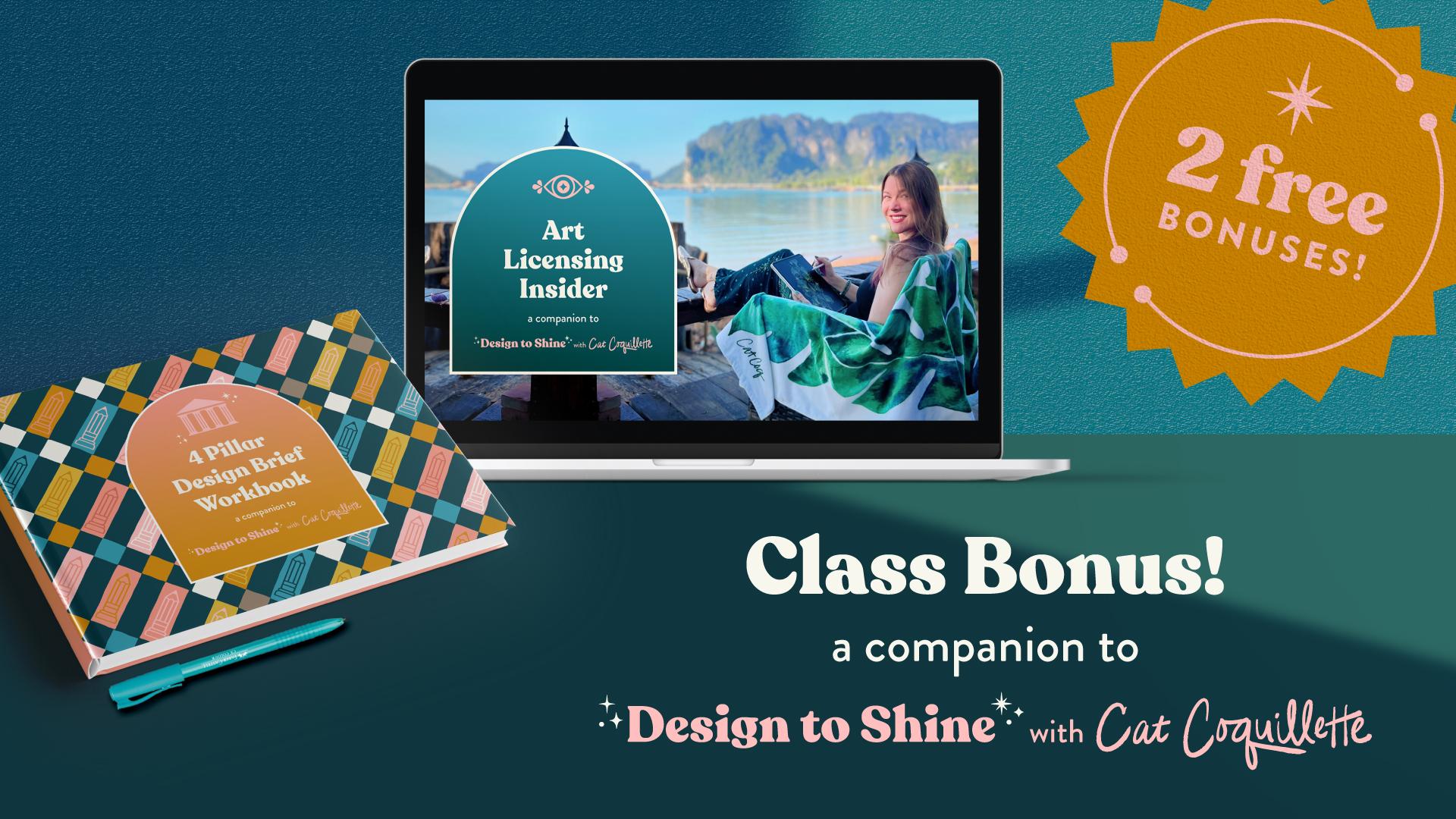
I made you something. Actually, I made you two things, and they're both waiting
for you right now at catcoq.com slash InsideR. The link is also in
the description below. First up, the four pillar
design brief Workbook. This is a free
companion workbook built around everything you
just learned in this class. It walks you through defining
your four pillar profile, writing your own design brief using the formula
from this class, and it includes a library of pre written briefs
organized by category. So if you ever sit down to create and your mind goes blank, you've got a starting
point right there. It's the thing I
want you to reach for every time you
start a new piece. Now, this class was designed for artists who want to
make money from their art, and there are a lot
of ways to do that. But my personal specialty
is art licensing. And I know that's
not every artist's but if licensing is something that you've
been curious about, if every time I've mentioned a royalty check or a deal
with a specific brand, if you found yourself
leaning in a little bit closer and thinking,
how do I get into that? Then the second bonus is
made specifically for you. It's called Art
Licensing Insider. It's a free video bonus module where I pull back the curtain completely on how art licensing actually works
behind the scenes. The real mechanics for how your artwork goes
from portfolio, onto products in
major retail stores, plus how royalty income
works and how it keeps you earning long after you've moved on
to your next design. And the specific themes and
subjects that have generated the highest sales for me in art licensing based off of the last decade
of my experience. This isn't a general overview. It's the actual
insider knowledge that took me a decade of real
deals to figure out. And I'm handing it to you
directly completely free. Both bonuses are yours at
catcoq.com slash InSDR. Stick with me for the
end of this lesson first and then go grab both. But before we get there, let's take a moment to
acknowledge something. You showed up, you did the work. And that puts you ahead of
most artists who are still creating without a strategy and wondering why
nothing is selling. So genuinely, congratulations. This was not a small thing. Look at what you now know. You understand your style at a deeper level than most artists ever take
the time to explore. You know how to identify your audience and
think like a buyer. You know how to design with
a destination in mind, so your artwork has
a real place to go. You know how to read trends and filter them through your
own artistic voice. So your work stays authentic
and commercially strong. Those four pillars
are the formula, the same formula that I've used for over a decade to build a business that lets me create artwork from anywhere
in the world. And now it's yours. If there's one thing I hope you walk away with from this
class, it's this. Your art has real value. You just needed the
strategy to match it. And now you've got
it. Alright, a couple more quick things
before I send you off. If this class gave you value, like, if something clicked,
if you're walking away, seeing your artwork differently
than when you started, it would mean so much to
me if you left a review. It takes about 30 seconds, and it helps other artists find this class and get the same
tools that you now have. I read every single one,
and so does my mom. And come find me on
Instagram at Cat Coke. I share work in progress, behind the scenes of
my licensing deals and a lot of stuff that
doesn't make it into class. Hit follow here on
Skillshare two, so you're the first to know as soon as I launch
my next class. Alright, one last thing, and this is going to keep paying off long after this class ends. I have a weekly newsletter,
and I want you in it. Every week I send out
art licensing tips, industry insights, and a drawing prompt through my Create with Cat
Coke challenge. And these prompts
are not random. Every single theme is
strategically chosen. It has strong commercial
selling potential, meaning that every
single time that you sit down to create around
one of these prompts, you are already building
towards work that sells. It's basically a weekly dose of everything this
class is about. Delivered straight
to your inbox. Sign up at catcoq.com slash SubscribE and I'll also put the link in the
class description. Alright, you came
into class today as an artist who wants
to sell more artwork. You are leaving it
with a real strategy, a real framework, and a real
shot at making that happen. Now, go grab your bonuses at
catcoq.com slash InsideR, Upload your project
to the gallery, and go create
something incredible. I can't wait to see where
your artwork winds up.
 Cat Coquillette, Artist + Entrepreneur + Educator