Transcripts
1. What Does Good Customer Service Really Mean 2504171169: What does good customer service really meeting? By the end of this lesson, you'll be able to list the key components of excellent customer service. How do you know if your company is offering the best customer service at possibly can. It's easy. Put yourself in your customers shoes. We've all been on the other side of the service counter before. You can probably think right now of businesses you've dealt with. They treated you like gold and you went away singing their praises. It's even easier to think of an experience where they were just dreadful. It varies from company to company. There are a few common things. All good customer service needs to have. As long as you ensure you have these, your customers are almost guaranteed to love you. Speedy response. Get back to all comments and questions immediately. When a customer is on the fence, they ask questions and if you're not there to answer them, they'll take their questions somewhere else. Speedy response creates trust. Obviously, you should make sure your delivery and refunds are also as quick as possible. Empathy and acknowledgment. Good customer service means that the company understands its customer situation. Companies with lousy service charge to get their customers off the customer service phone or desk as quickly as possible and care a little for their feelings. You can respond perfectly to your customers problems. If you can empathize with them, It's so much more effective than giving them the company policy, responsibility. Bad customer service passes the buck and places blame. Instead of a simple apology, customer service reps make excuses as to why they're not getting served properly. Good companies take responsibility for their problem, even if they're not the ones to blame. High-quality products. You'll rarely find a company with great customer service offering low quality products. This is because companies that care about their customers listen to their feedback and make improvements. They want to offer the best product or service possible. Support when problems arise, reputable companies bend over backwards when problems arise, they do this because complications should be a rare event. The companies have a streamline ordering process, a stellar product, and all the support the customer needs. When that system breaks down or has a glitch, the company goes the extra mile to fix whatever is necessary. If you offer good support, your customer's problem becomes your problem and you respond quickly to resolve it for both of you. Pleasant, friendly inpatient staff. The little p's and q's go a long way, especially when you're doing business in today's fast-paced world. For example, when communicating through email, you can't see each other's faces. So it's crucial to be as friendly and polite as possible. Patients is the key to dealing with customer-related issues in a pleasant way. It sounds like a lot to handle, but there's really one simple fundamental tone. All good customer service. Make it focused on the customer. It's all about them and their situations, and not about your companies policies or profit margin. If you keep this in mind, you'll always do the right thing. Activity, examined your own business and answer these questions to assess your current customer service. How many disgruntled customers have you had in the last month? How many problems have you had with your product in the last month? For example, delivery system or quality. What is your process for providing support?
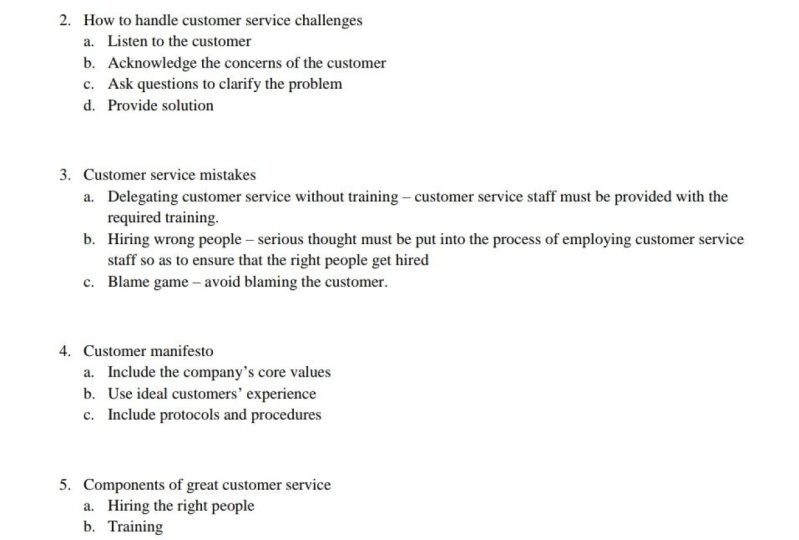
2. 5 components of great customer service: The top five components of great customer service. By the end of this lesson, you'll be able to identify what you need to have in place to provide the best customer service. There's good and they're so, so customer service, but there's also great customer service that's simply off the charts. This is what gets customers not only coming back for more time and time again, but also informing all of their friends about your company. Superior customer service is like a puzzle made of Five Easy Pieces. Put these together and people will be rating about your company. These five pieces are number 1. People. Hire the right people with the right mindset from the start. They have to be able to work as a team and also take responsibility individually, especially when problems arise. The right mindset means that the customer comes first. It's always about them, their satisfaction or their problem and not your company. It only takes one rude, arrogant, or uncaring staff member to ruin your company's image. Number two, training, make sure your people have the skills and knowledge they need. Competency of the job is a major part of customer service. If they're not ready to handle everything, keep them in training until they are. In addition to accompany policies and protocols, also need to be able to think outside of the box, troubleshoot, and deal with the unexpected. The ability to help angry customers is one of the skills all your people need to acquire. Number three, systems and protocols. Everyone in your company needs to be on the same page. There should be specific guidelines and systems in place for handling as many customer service situations as possible. It should never be guesswork. Create a complete and clear customer service policy and put it in writing. It should cover as many situations as you can imagine with a customer and have a protocol for dealing with each. At the same time, you need to lay out the principles to follow in the event that a situation comes up that isn't covered in your policy, by providing both guidelines and principles to follow your customer service staff is freed up to manage the majority of situations. While you can ensure that every customer is dealt with fairly number for communications, establish a reliable method and process of communication, not just between your staff and customers, but internally as well. This should be included in your system of protocols. Focus on making communication as quick and efficient as possible. An internal communication breakdown can turn a small customer service problem into a total disaster. Number five, product. No matter how good your customer service, the product itself has to meet or exceed customer expectations. Part of good customer service is listening to customer feedback and making improvements to both your products and services. Customers suggestions and complaints are a prime opportunity to help you make a better product. And when customers see that you've responded to their suggestions, they become all the more impressed with your brand and remain loyal to your company when creating these five essential piece.
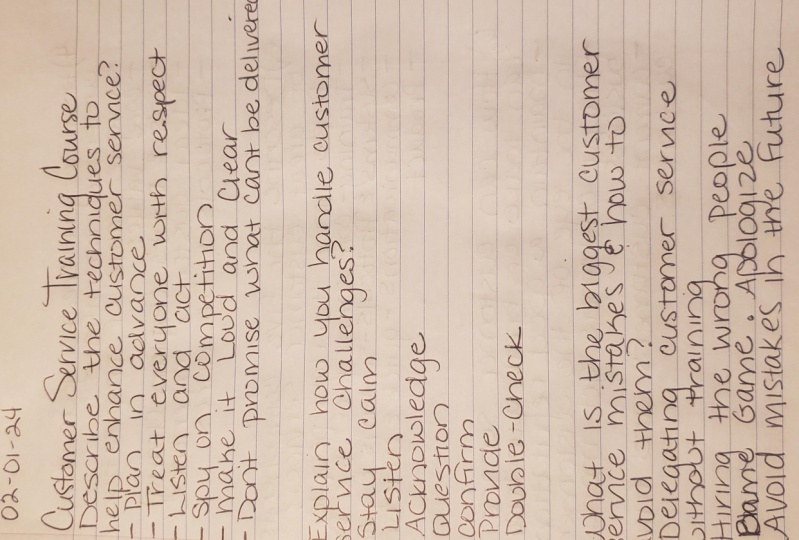
3. How to handle customer service issues: How to handle customer service challenges. By the end of this lesson, you'll be able to describe the steps for handling a challenging customer service situation and resolve a hypothetical one for your business. No matter how great your customer services, there will always be challenging situations that arise. It's just part of running any kind of business. You need to be prepared so that you know how to deal with these situations before they occur. They should never be dealt with on the fly. Challenging situations could involve a problem with your product. Maybe the customer believes it's not what they ordered. The speed of delivery may have been too slow for them. They may not have understood your service or read your policies beforehand. Maybe they are referred from one person to another and they feel like you don't care. All kinds of things can cause challenging situations with customers. But the fundamental steps in handling them are basically the same. The six steps are number 1, listen. Start by hearing them out. Take note of important details. This is important not only for getting this situation resolved, and also for making the customer calm down and feel better. At the beginning of the interaction, the customer wants know that someone from the company is listening to them. If they feel that your responsive, this will often take away their initial anger and frustration. Number to acknowledge. Let them know that you empathize with their situation. You've been there before, so put yourself in their shoes. Tell them something like, I can tell that you're frustrated. Let's work this out. Shows that you understand their feelings. Apologize, but don't become defensive or overly apologetic. Number three, questions, never assume. Always ask the questions you need to clarify the situation. What do you need to know in order to resolve the problem at hand? Again, this also shows that you've been listening and you're concerned enough to learn more as well as create a solution for the customer. Number 4, confirm. Take notes during your interaction and read back over the important details to the customer to make sure that you have everything correct. There could be an important detail that you've missed. You also need to confirm the customer side of things. Say to them, let me see if I understand everything clearly. Number 5, provide now's the time to fix the customer's problem. Hopefully, you already have a clearly outlined protocol for dealing with it. If there isn't improvise a solution to the problem based on your principles of customer service. If the order didn't come, get it to them, If the customer got the wrong item, give them instructions and details regarding the refund, see it through to the end until your customer is satisfied. Number 6, double-check. Confirm that you've solved the problem for the customer. Ask them something like, did that do the trick? Or how does that sound? You need to ask this because some people won't tell you if they're still not happy and you don't want them to go away, disgruntled with the interaction. African also, can I help you with anything else? All of this type of customer service can be done via email as well as over the phone or in person, but it's a much harder to do so electronically with email. It's easier for the customer to get frustrated. For this reason, you should be especially polite and friendly in your e-mail correspondences. Let customers know you'll be replying and what you're doing in-between E-mail interactions. Make your customer management as personal as possible activity. Think of a challenging customer service situation that you faced, whether as a customer or as a person handling the situation from the customer service reps position, what would you say or do to handle it? Practice the situation with a friend and get their feedback on how you handled it and how they would like to see it handled if they were the customer.
4. Creating your on manisfesto: Creating your own customer service Manifesto. By the end of the lesson, you will be able to draft your customer service manifesto, including values, principles, and guidelines for behavior. Every business needs its own customer service manifesto. This document describes the company's philosophy and guiding principles of customer service. Good customer service isn't something you come up with on the spot. It needs to be clearly planned and organized. Your manifesto makes it obvious and easier to guarantee the best service possible. Why you need a manifesto? The main purpose of a manifesto is to keep everyone on your company on the same page. They all understand the company's vision. It also sets out specific guidelines on how to handle customers with specific systems and practices. This includes both how to deal with customers in regular day-to-day operation and what to do when they're unusual problems, complaints, or situations. Of course, not all situations are cut and dried. Your manifesto isn't something you simply plug and play. It always requires personal judgment on the part of your staff. However, a set of guidelines is still essential. Here are the basic things your customer service manifesto needs to cover. Number 1, your company's unique value proposition. Your customer service manifesto is a good place to spell out your company's unique value proposition. In other words, state clearly what your company offers its customers and what makes it stand out from other similar companies. This philosophy should be in harmony with the way you treat your customers and serve as the guiding principle in all interactions with them. Number 2, your core values. What does your company consider to be good customer service status as clearly as possible? You might include things like the response to customers, the competencies your employees must show. Good communication both internally and with customers. And putting the customer first. Number 3, do then don't include a simple list of do's and don'ts. These are simple rules that apply to any dealings with customers. For example, you may state here that employees are to never blame the customer for conflicts. Your list might include things like do apologize, but don't emit to wrongdoing saying it's the company's fault. Number four, the ideal customer experience. Imagine an ideal experience for our customer with your company. Create a flowchart that walks your employees through the entire transaction from start to finish. Show it all from the customer's point of view and what they are seeing and feeling at each step. It's easy to do this because we've all been the customer before. Just put yourself in their shoes. Number 5, protocols and procedures. Your customer service manifesto should cover the basics and give you general guidelines. However, it's good to also create other flowcharts are systems for dealing with each situation that might arise with customers. All the possible interactions you can have in create a process for handling each. Remember, it doesn't matter whether you're a solo entrepreneur running your own business or a large company with a number of employees, you still need a customer service manifesto. If you deal with customers in any capacity whatsoever, whether business to business or business to consumer, you need a document that sets your standards and expectations activity. Create a customer service manifesto for your business using what we have just learned.
5. The great mindset of a customer service expert: The mindset of a customer service expert. By the end of this lesson, you will be able to identify the specific characteristics of the best customer service representatives and how you want to implement them in your business. Customer service is more than just a procedure or philosophy to follow. A true customer service expert is excellent at what they do because they have a certain mindset in dealing with customers. If you want your company to offer a service that allows your customers and makes them sing your praises. Your staff needs to have this mindset from the moment they are hired. Here are the essentials. Customer complaints are opportunities. Most employees see customer complaints as threats to their company, their competence, their position, or their reputation. But the right mindset sees complaints as the greatest feedback you could hope for. They expose the weaknesses in your business that you wouldn't have otherwise seen. You can learn which areas need improvement and you learn it from your customer's point of view. Keep in mind also that disgruntled customers who get excellent service from you often turn out to be your biggest fans. There is always a solution to every problem with a customer. There's a solution. That solution is the customer getting a satisfactory outcome in order to solve their problem, you have to make it your own problem. Rather than representing the company in an adversarial or defensive position with the customer. Work together with them in partnership to reach that goal. Of course, if what they want goes against your company policies or is impossible, you can't get it for them, but you can find other ways to make them satisfied. Always aim for a positive outcome for the customer. Customer service doesn't end at closing time. In the international business and the Internet, customer service is an ongoing concern. Even when you clock out for the day. You need to respond quickly to customer concerns, questions, and comments. This is one of the surest, easiest ways to impress people with excellent service in order to stay available, create a system whereby customers can access some sort of customer support at all hours. This doesn't always have to be a live person depending on your nature of business. It could be a knowledge base or contact form. Just make sure your customers know when you'll respond. If you can't do so, immediately, stay with them until they're satisfied. Good customer service sees it through to the end. Try to avoid shuffling people off to another department, another person, or online resources like a website. Referring customers to online resources is common practice today, but it's not convenient for the customer. When you do that, you take a big risk. What if their question isn't answered? They're likely to call you back and not be so patient this time. Stay with them and at the end of the interaction, ask them if they got everything they needed. For that. Technology offers multiple ways to make tasks easier and more streamlined. Things like apps and automated programs make transactions quicker and easier for your customers. After you've helped a customer, let them know that there's a way they can do it faster on their own. Walks them through the process if necessary. They'll appreciate the ability to get immediate answers when they need them. A customer service expert walks in two pairs of shoes at the same time, their customers and their businesses. Your goal is to reach a solution that makes both parties happy and satisfied. Strive to always create a win-win situation. Activity. Think about your current customer service mindset and that of your teams. Do you agree with the guidelines in this lesson? Note anything you would add or change.
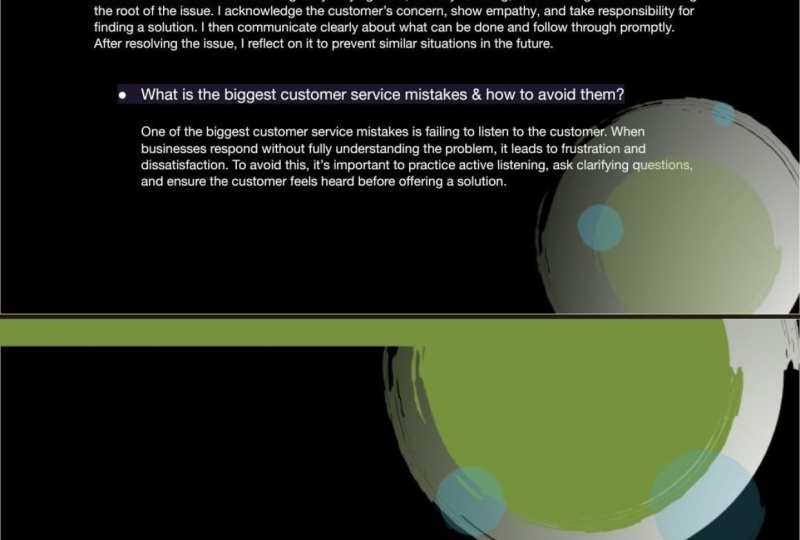
6. The Biggest Customer Service Mistakes and How to Avoid Them 2504171165: The four biggest customer service mistakes and how to avoid them. By the end of this lesson, you'll be able to identify certain commonly made mistakes when it comes to customer service. And what you can do differently. Although your customer service can either boost your company's image way ahead of the competition or utterly destroy your business. Most companies don't spend nearly enough time focusing on how to improve their service. If you give your customers a terrible experience, they'll never come back. Even worse. They'll tell everybody they know, especially now that we all have a voice on the Internet, It's actually not as challenging as you might think to provide excellent customer service that will make your customers love you. Just avoid making these for huge mistakes. Number one, delegating customer service without training, treating customers with empathy, patience, and respect may come easily for you, but it isn't necessarily the case for your new employees. Without clear guidelines on how to treat customers, you're leaving it up to the person's judgment, which may or may not be in line with your standards, provide clear guidelines and processes for your employees. Train each staff member to deal with any real or hypothetical situation that could arise beyond procedures, give them tools and principles for making their own decisions. They have to temper their knowledge of procedure with your customer service principles and make their own judgments. Number 2, hiring the wrong people. There's some people who just aren't built to provide customer service. But anyone that you hire who has any contact whatsoever with the public, needs to be able to interact with respect and concern for the customer's needs. This ability should be just as important in your hiring decisions as any hard skills or experience you want them to have. Paint a picture of the type of person you want working with your customers, right? Questions that will test those qualities. Don't hire someone because they seemed nice or they're probably okay with customers. Number three, no human connection. Nothing makes customers angrier and calling a business and having to deal with navigating a robotic, automated menu while they're waiting for the canned yet pleasant female voice to read their options, they might just hang up and call somebody else. It's the best way to make sure that when they do eventually reach a human being, they're already angry. There should always be a human being at the other end of the line as quickly as possible. Make sure your service reps are there to answer questions and deal with problems, and set a time limit for answering calls. People will be surprised and pleased to hear a live human voice when they call number for the blame game. Even if there's been a disaster and it's not your fault, you need to take charge of fixing it. Blaming other shows a lack of responsibility. For example, don't blame another department within your company or some third party. Even though it may be tempting because it takes the pressure off, you. Instead, take the initiative. Don't be afraid to apologize for any inconveniences. When an angry customer calls, it's your duty to send them away happy and satisfied with their needs met. Too many companies only worry about customer service as damage control. The only thing about it when there are problems. Instead, you should be proactive in making every transaction with a customer as positive as possible. Make it a point also to celebrate your successes. Whether through identifying employees who have achieved a level of excellence or by posting customer testimonials. Activity. Look back through the mistakes listed in this chapter. Have you or your team members ever committed any of them? Make notes on the specifics of these situations. Now, outline how you would handle these situations differently next time. What do you need to change in your systems and processes to avoid these mistakes in the future.
7. Your Customer Service With An FAQ 2504171164 Streamline: Streamline your customer service with an FAQ. By the end of this lesson, you'll be able to identify the steps you need to take to create an effective set of frequently asked questions that will help save you time and serve your customers more quickly. Faq stands for frequently asked questions. These are the most common questions your customers ask When they get a hold of one of your customer service reps. Creating a strong FAQ that answers these questions has a huge benefit for both you and the customer. For the customer at answers their question at a glance without having to make a call. For you. It saves time dealing with the most common customer issues. So your employees are free to focus on other value-added tasks. How to create a good FAQ? Start by brainstorming a huge list. Take all of the questions you can remember customers asking and start with those. Ask all of your employees to write down each new question as it arrives so that you can add them to the list. Other questions customers might ask that you haven't heard yet. Take your company policies and turn the statements into questions. Try to imagine how your customer would ask each one. Usually the most common questions customers have are related to money matters. They want to know about fees, charges, refund policies, and similar things. You can also get great ideas from your competitors. Say what they have, and if there are questions apply to your company, copy and reward them. It may be helpful to look at the FAQs of totally unrelated businesses as well. You may find something your customers might ask, also, editing and organizing. After you've compiled a list, go through and edit it. When you're editing, look for questions that are too basic. You should remove these because they'll just clutter up your list. Look also for redundant questions that essentially ask the same thing. Organize your FAQ into subtopics to make it easier for your customers to find the questions they're looking for. Group items into categories like payments, ordering, refunds, and other major issues. Tried to anticipate how your customers would search for the information they need to know. But each item into the appropriate category seek customer feedback. One of the biggest complaints companies get about their FAQs is that the information there isn't useful. What this usually means is that their question wasn't answered. Put a form somewhere on your FAQ page asking for feedback. Ask them, Was it helpful when it wasn't? They'll tell you and you'll know what needs to be improved. And FAQ is a work in progress. You're never really done writing an FAQ. It needs constant improvement to fulfill its purpose and stay relevant. Keep it updated whenever policies or prices change. Make sure you update it regularly to avoid confusion. You will also need to keep updating your list of FAQs as new questions are asked. Activity, start work on your own FAQ. If you already have one, add to it based on previous customer questions. If you're just starting out, think about the questions you would ask and then answer them in writing.
8. Is the customer really right: Is the customer really always right? By the end of this lesson, you will be able to identify the ways in which keeping a customer satisfied can help your business. The guiding principle behind good customer service is usually summed up in this phrase. The customer is always right. But if you've ever handled customer service issues before, you know, this isn't exactly true. Statement, isn't meant to be taken literally. What it really means is that the customer is always right in their mind. Making them happy and satisfied is the key to having good customer service, right? Even when they're wrong. Many businesses don't do customer service well because they fail to understand that the customer is always right in their own mind. Put yourself in their position. They have a problem with your company. They come to you expressing this problem. They may have misunderstood company policy or made a mistake when ordering, but they still feel frustrated or angry. Your first responsibility is to listen to them and empathy guys, when you show that you trust them, you validate their feelings. In other words, there right now they're ready to cooperate with you to reach a viable solution. The customer is always wrong. It might be easier to understand this by taking an example of the opposite attitude, that customer is always wrong. There are certain businesses that have an adversarial attitude toward their customers. This can be common among government agencies and other organizations that don't depend on the support of the people they serve. Take for instance, any busy government service agency. Often the person helping you as overworked and only concerned with one thing. Getting rid of. Whether you walk out of the office smiling or angry doesn't matter to them. Your problem is not their problem. You've probably done something wrong and anyway, you're keeping them from getting their other work done when the customer is clearly wrong. The main argument against the eternal rightness of the customer is the fact that sometimes they are just plain wrong. They make outrageous demands that are impossible or against company policy. They want you to make it stop raining or deliver the holy grail to their house. When this happens, you're obviously not going to be able to give them what you want. The first step is to empathize with them no matter how ridiculous the demand, show them that you recognize their feelings. Next, offer an alternative that your company is capable of giving them. If they press them, honor, remind them that what they want is impossible, but stay humble and poised and not defensive. The customer is always right, doesn't mean literally what it says. What it means is that you're on their side, you're going to work together to get the situation resolved. Create a company policy that starts with the customer's needs and develop a system for serving them from their activity. Have you ever had a situation where the customer is clearly in the wrong? Note the details of that situation. Now, step into the customer's shoes. Why did they think they're right? What would be going through your mind if you are that customer? Finally, make notes on how you can handle the situation better in the future. What could you do to make the customer satisfied without going against your own policies? What changes might you need to make in your policies?
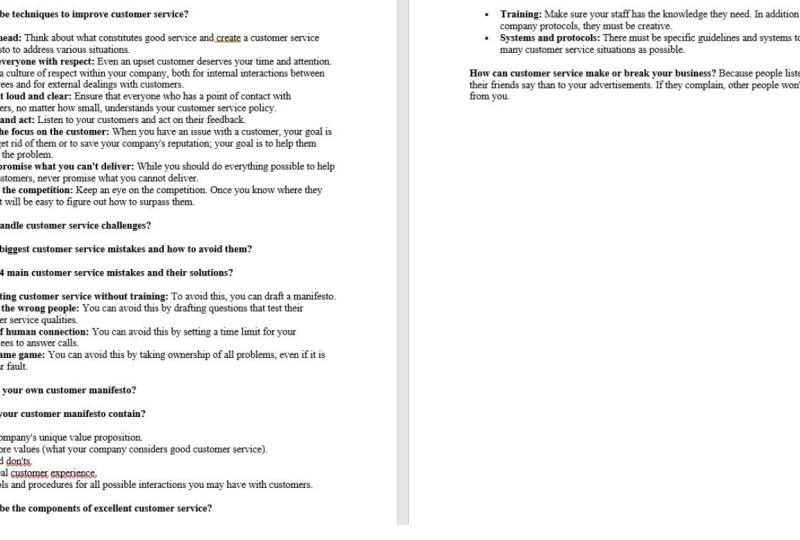
9. Conclusion building World class customer service: Conclusion, tips for delivering world-class customer service. By the end of this lesson, you will be able to start working on the next steps. You end your business need to create and implement a customer service manifesto. World-class customer service is nowhere near as challenging as people think. But an alarming number of companies don't bother worrying about it. They either don't understand how greatly it affects their profits, or they just don't know how to go about it to make customer service a little easier. Here are seven tips for ensuring your company is top of the class when it comes to serving your customers. Number 1, plan in advance. Don't wait until you have a customer service breakdown to start thinking about how to handle difficult situations. Think about what constitutes good service and create a customer service manifesto. Establish a system for dealing with all sorts of customer-related issues. Service should never be improvised. Number to treat everyone with respect as the old cliche goes, the customer is always right. Of course, they aren't always right for what this really means is that no matter how wrong a customer might be, treat them with the utmost respect, even an angry customer is worthy of your focus and times. Create a culture of respect within your company, both for internal interactions among employees and externally when dealing with customers. Number 3, make it loud and clear. Broadcast your philosophy and standards loudly and clearly. Make sure that everyone who has a touch point with customers, no matter how small, understands your customer service policy, all of your employees by their full-time, part-time, or consultants, should be on the same page. Number 4, listen and act. Listen to your customers and act on all feedback. Seek ways to get their opinions and have them share their experiences with you. A good company uses this feedback to improve its operations and products. And customers can see the difference. Always be attentive and responsive. Number five, stay customer-focused. When you have a problem with a customer, your goal isn't to get rid of them or to save your company's reputation. Your goal is to help them solve the problem. This is what it means to be customer focused. Take on their problem as if it were your own and reach a solution that makes both parties satisfied. Number 6, don't promise what you can't deliver while you should bend over backwards to help your customers don't promise what you can't deliver. If you make promises you can't keep in hopes of pleasing a customer, you'll end up doing more damage than good when you break that promise. Explain these limitations in your customer service training manuals. Number 7, spy on the competition. If your customer service beats that of the competition, you'll quickly gain a reputation for it. To know where you stand, keep an eye on your competition. When you know where they stand, it's easy to figure out how to top them. And finally, remember that customer service is something that takes constant attention and improvement. You don't just create a set of standards.
10. Customer Service Training Introduction (2): Did you know that over 89%
of customers will stop doing business with a company after experiencing poor
customer service. And customers are twice
as likely to talk about a bad customer service
experience than a good one. Appreciating and meeting
the expectations of your customers is at the heart of providing a high-quality customer
service experience. And employees who understand
what customers want. Organizations biggest asset,
good customer service, inspires customer loyalty and enhances the reputation
of the business. Fewer complaints me less stress, and more profitable business. This course will provide
you with an introduction to essential customer service
skills and a range of techniques to help enhance
your customer service. In this course, we will cover why customer service can make or break your business. What does good customer
service really me? The top five components of
great customer service. How to handle customer
service challenges. Creating your own customer service manifesto, the mindset, Customer Service expert, the biggest customer service and stakes and how to avoid them. Streamline your customer
service with an FAQ. Is the customer always right? Tips for delivering
world-class customer service. Improve yourself and
your organization today with professional
customer service skills, provide great customer
service training with ease, learned to provide first-class
customer service for your customers to improve
yourself and your business.
11. Why Customer Service Can Make or Break Your Business: Why customer service can
make or break your business. In this course, you will
learn to quickly identify the reasons customer service is so critical to your
business success. Few companies realized the importance of
customer service. It can literally make
or break your business. Even if you offer the best
products at the lowest price, unresponsive or
incompetent handling of customers can ruin you. Here are just a few
of the reasons. Excellent customer service is critical to your
business success, your current customers,
or your future customers. Japan is a country that's known for its great customer service. This is because of
a key principle in its business culture. Businesses see it this way. They're not selling
you their product. They're selling it to
your grandchildren. This applies to everything from the highest price luxury cars
to a cheap pair of shoes. Your current customers are
your best future customers. It's much easier to
sell to the same people repeatedly and to
constantly look for new. This is my companies invest so much in building brand loyalty. Your customer service is what
builds that relationship. They know they can
trust and rely on you. And they just plain like you won an angry
customer can do. Another important
reason to offer excellent customer service
is that if you don't, a disgruntled customer can do an exponential amount of damage. People talk and they listened
to what their friends say so much more closely than
what your advertisement say, especially today with
everyone reading online reviews and posting
on social networks, it's essential that
your customer service is the nothing to
complain about. Happy customers get you more business with a high
standard of customer service. You'll have lots of happy
customers and they'll talk to you quickly get a
reputation as a business. It goes the extra mile to
make your customers happy. When prospective customers are searching for
products or services, Those see or hear the many glowing reviews
of your company and know you're going
to be reliable even before their first
contact with you. In this course, we're gonna go through all the
different elements of great customer service and
what you need to do to make an h1 part of your business
and your reputation. You'll be walking in the
customer's shoes and creating your own customer service
policies and procedures. Each lesson has activities
and questions for you to consider to help you
implement what you learn. By the end of the course, you'll be ready to put in place a customer service strategy
that rivals the best. Let's get started with
the first activity. Think of a situation where you experienced terrible
customer service. How did you feel? What did you do? Would you return to buy more? Think of a situation where you received superior
customer service. How did you feel? What did you do? Would you return to buy more?
 My Pancho, Instructor at SkillShare