Transcripts
1. Introduction: Friends, my name
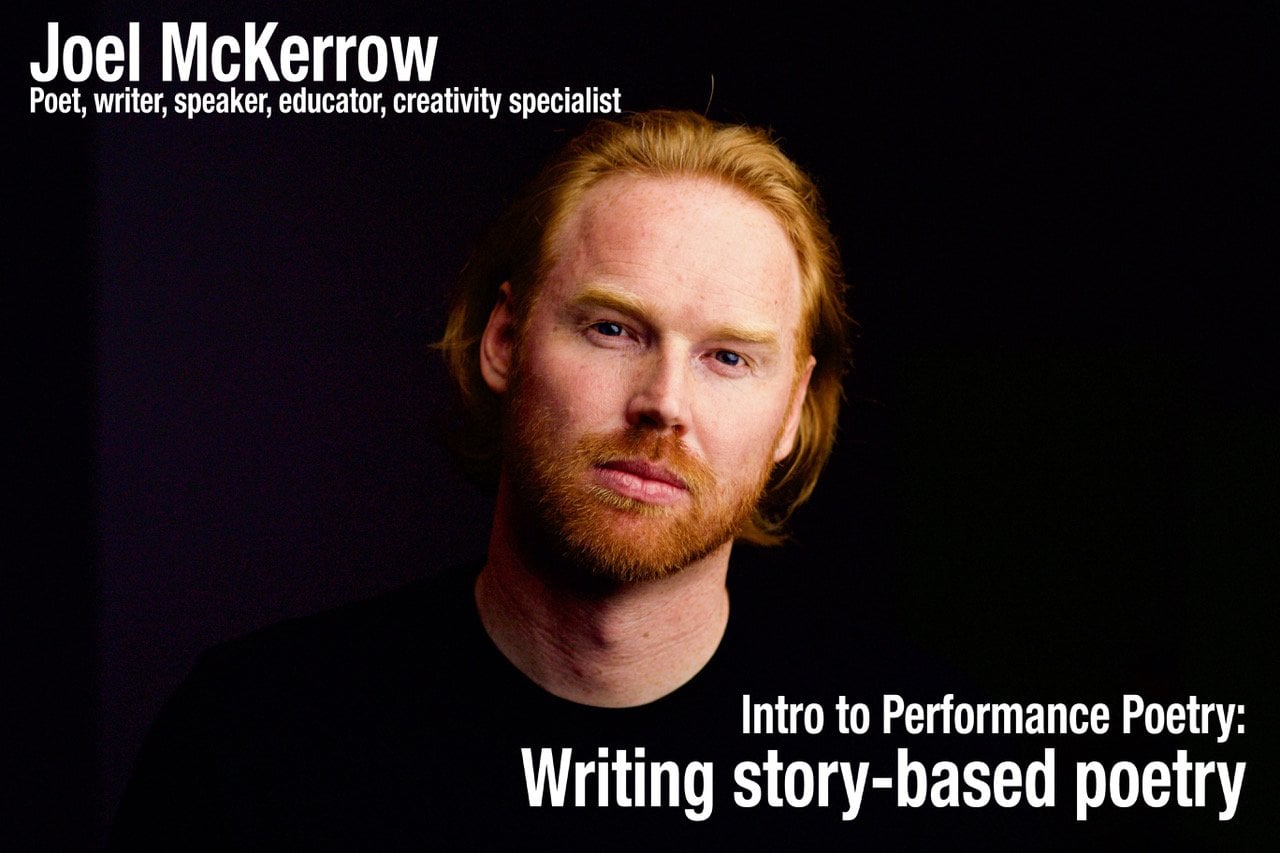
is Joel macabre. I am a performance poet, a writer, speaker, and educator. I've done lots and
lots of things within the creative industries
over the last 15 years, about 13 of those
years it's been my full-time occupation
to be writing, to be performing,
touring this world, sharing my words as a poet, building a community of people, working with people
journeying alongside people, going into schools to
teach people poetry, using creativity as
a way for people to discover their own story and then begin to live that out. And this is what I want
to invite you into today to create a vocation. Living your best creative lab. Overall this time
that I have been living out this
creative life within, within the creative industries. Not only am I doing
these things, but also unlike a
parent and a son and a friend and a husband and I
do all of these different, I'm juggling so many
different bowls and absolutely I drop a
few of them and I'm not here to say that this course is going to allow you
to never drop any of the bowls that you're
juggling in your life again. But I truly believe from the things that I've
learned that I can help you to discover what does
it look like to live a holistic, integrated,
creative life? How can you begin to find that center heartbeat of
your creative passion? Develop that, develop, that, develop that into
not just creativity as the side thing in your life. And I'm not even talking
about creativity necessarily having
to become Korea. But rather how can creativity sit at the heartbeat
of who you are? And then play out into all the different facets and all the different
areas of your life. So I want to invite you
in this course to go on that kind of
reflective journey, thinking about who you are, the life that you want
to live as listening to the questions that
are alive is all coming to the point
where we can own who we are and begin to leave that out. This course is
going to be part of a three-part creative vocations
series on Skillshare. We're gonna begin with
these vocational thoughts and ideas right now. I'm going to bring it down
into the next course, creative vocation,
sustaining your creativity. How to take these
initial beginnings of a creative life and to both build and form and sustain
your creative practice. The second course
in there's gonna be all about creative practice. And the third cause,
creative vocation, building, developing a creative
career is how to take, if we've gone from
creative vocation and calling into creative practice, how do we take that
practice and then start to earn money from
an workout our way, how we could be the best creative business
people that we can. I want to invite
you now to start this journey with me,
creative vocation, living the best creative
life that you can, holistic, integrated creative
life. Are you ready? Let's go.
2. The Holistic, Integrated Creative Life: I am super excited
about this course. I'm super excited for lots and lots and lots of
different reasons. And I want to just
spend a moment of welcoming you and
thanking you for coming. I'm super excited firstly, because you've chosen to spend some time on yourself
in the busy-ness, in the chaos, in the craziness of our world and of your life. You've said actually I
want to invest in myself. And for many of us, that is actually
a huge first step and a massive first step. I, originally, I was
going to actually call this course credit business. But it has, it's much, it's so much more than that. And for me really and y called the creative vocation
is because vocation is, is it involves Korea
and involves lifestyle. It's bigger than that. I'm going to talk a
lot about the idea of vocation next lesson. But for now, know that it's
that idea of calling and purpose in life is so
much bigger than Korea. It's your, it's the holistic
way that you live your life. Well, this isn't
about just having like a little creative career. This is about your life. This is about your life living
this holistic, creative, integrated, beautiful life, holistic integrated
creative life. Parker Palmer says, I pay a steep price when I
liver divided life, feeling fraudulent, anxious
about being found out and depressed by the fact that I'm denying my own self-hood. A fault line runs
down the middle of my life and when it cracks
open things around, they get shaky and
start to fall apart. We talk a lot in our lives about in terms of
Korea and business, in terms of having a
work-life balance. How can we balance up
Korea and home life? And we have it on this scale, but really doesn't like, it doesn't look like this. This balanced kind
of assumes that we can separate out our
work and our life. We can have our work-life here, in our personal life here. And thinking about it
as this balanced scale. If you look at this scale here, the relationship between
the sides is clear. It's one of separation of
comparison of opposition. Almost one side loses as the other side gains
family or Korea. Or then we add another one
on top called creativity. And now we're totally
out of whack. How the heck can
you balance life in this mode doesn't come when we have a home life where we're not thinking about
our work life, where we're
compartmentalizing lack this. This, this just leads to one person Being a person
at work, a person at home, and a wedge set between
them with a widening gap. But when we add
creativity in there, like the creative life, we know the creative life
you could just cannot compartmentalize and none
of these things you can. It's not as easy as balancing
up the scales and saying, I'll do this here, this
here, and this here. We have work, we have, we do have career, we have creativity,
we have home, we have time by ourselves,
we have relationships, we have all of these things
that make up our life. And they all intersect. They all, they all come together
and integrate together. And that's how
we're meant to be. We're not meant to
compartmentalize things out. This balanced system. It doesn't work,
it doesn't work. Having a healthy
work-life balance. I think there's a better
way to think about it and a better way that
I want to put to you is, is something that I would say synergistic
is collaborative. It's harmonious and it's
a moving from having a work-life balance
to an ecosystem. An ecosystem. This lesson is about the
ecosystem of creative vocation. An ecosystem is a biological
community of interacting and interconnected organisms and their physical environment. A biological community of interacting interconnected organisms and
their physical environment. You are a community, you are an ecosystem in who you are not
scales balancing up. You're an ecosystem that
works interconnected, joined, all of the
different parts of you harmoniously
working together. It's kinda how we'd
love it to be. Obviously, we don't
work harmoniously together all the time
within ourselves. I know that that's for certain. But let me tell you,
let me tell you a little bit about ecosystems.
3. Lessons from an Eco-System: An ecosystem to start with is not about the
individual part. Every factor in an ecosystem depends on every other factor. Each part of the ecosystem is connected with this harmonizing
with the other parts. Until some, there's an equilibrium that is found not in opposition to but integrated with kinda parsing
energy around between them. So in regards to you and
your creative vocation, your creativity is not separate from the other areas in
your life and it's not, it's not meant to be, um, nor is your creative practice separate from your
creative business. And it's not meant to be. They feed into and
out of each other. This means that if you
deplete one area of energy, you get more energy
into the area that you pour into the cost
to the other area. So you take time, energy focus away from
family and into creativity. There will be a loss of
energy in your family life. If you've given everything
to family life, then you might not have much to give to your
creative practice. If you give everything
to creative practice, you don't have much to
give to creative business. This is, this ecosystem is
the idea of how do these, how do these work
together synergistically? How does, how is the energy
kinda shared between them? What does that, what
does that look like? The ecosystems away? Is this harmonious sharing, this harmonious amount
of finite energy. None of it works on its own. That's what I'm saying. And all works together. Your role as a creative artist
in this world is to create an ecosystem that
harmonizes together for you and your people
and your clients, your role as a creative
artist in this world, you will create a vocation. It's to create an ecosystem that harmonizes
together for you, for your family, for your
clients, your audience, who are your
customers, your crew, whatever they look like,
I'm going to start talking about those people as your crew. Creating this ecosystem that
holds this energy that's shares energy
together that is not compartmentalized and
separate is really, really crucial when I look at lots of ways that you
can begin to do this. So an ecosystem is not
about the individual part, but he's also the thing
and ecosystem holds this equilibrium through
fluctuating seasons. It's dynamic. It changes, just
as we said before, it changes within itself
to bring more energy here, less energy here,
whatever it might be. But it's also consistent. It holds a consistency throughout whatever
season it is in winter, summer, spring,
autumn, wet season, the dry season, whatever
the seasons might be. The seasons when you got to put more energy into particular
areas in your life? Absolutely. And this is okay. You might feel a surge of energy and
your creative practice. But the same time your
creative connections, who you're connecting to, your audience, your people, your crew, that
you're making for, all your creative business
kinda takes a backseat. As you just create. That's great. Then the season might change. And for a while you
might be like you have this thing that you're bringing it out into the world. You're like, I'm not
bringing so much energy into this thing. I'm launching this thing. And so your creative
practice might actually take a back seat for a while as
you focus on this thing. And so this is all
about allowing. A really important thing
is about allowing, being part of this ecosystem is about allowing the seasons to change around you and adapting to that
holding a consistency, absolutely consistency, but
being dynamic and changing to the season that you're
a part of being a touring performance
artists around the world for many, many years. As I've been doing that. A few years at what, seven
years ago now we had a kid and we kinda kept on living at the same
energy in terms of ecosystems and kind
of energy with a kid, with one kid as we had before. No kids and we had
two kids and we kinda I still tried to live at that same space and
that same energy and 100% my life fracture
because of it and things, relationships, family
really struggled because I couldn't change in that moment
and adapt to the season. I couldn't keep that equilibrium
and work out how I need to be just really
focused on this thing, on family right now I need
to whatever that looks like. And so I really want
to encourage you as you're thinking about
your credit vacation, to think about what
season you are in. Let's season you're in
and how that affects you.
4. Lessons from an Eco-System (cont): Ecosystems need an energy
source, like the sun. This energy then flows through the various
components of the ecosystem. Ecosystems need
that energy source. Of course, for us in our credit
vocation remain the same. Where does your
energy come from? Where do you, where
are you filled with energy that comes into
your creative vocation? An ecosystem is most fertile
in the crossover areas, or what we call the ecotones, between one ecosystem
and another, between forest and field, between mountain and glade where the land
holds the tension, the transition space
and mangrove swamp, a barrier reef, a marsh land
of diversity, a grassland, an estuary there, crossover ecosystems where two different
ecosystems come together. That is where the most
life and energy happens. Isn't that fascinating? Not when things are separate, but when they're
integrating together, those crossover kind
of moments that mangrove swamp between
the ocean, the land, there is so much
energy in versus like live dynamic life pouring, flourishing, flourishing,
flourishing. And I would say we are the same. Actually when we stop
compartmentalizing, when we can bring our lives
together and have a think about where we are, who we are comes together. This is where we will
find the most energy, where my family has
come together with my creativity over the last 18 months,
things have flourished. I've got to paint, most days I get to
paint with my kids. And I learned from them beautiful things
about my creativity. When our creative business
not separate from but part but kinda coming together without, without
creative practice, beautiful things
begin to happen when all these parts of our life
that we could keep separate, when our physicality,
our body or our sexuality comes together
with our creativity. Beautiful flourishing
things can happen to you. What are those
things that might, you might want to
bring together, that might come together
to be flourishing, flourishing things for
you in your ecosystem. An ecosystem is generative. An ecosystem is Generative. The energy source comes
from outside, from the sun, but then the ecosystem
isn't static. It's dynamic. Energy is generated
within the ecosystem, by the ecosystem itself. The ecosystem changes because of the stuff within that ecosystem, the way the food chain works, the way that the plants grow, the way the reigns for
the precipitation. It's all working
harmoniously together. That energy source comes in and the energy is shared
around and shared around. And this generative, beautiful,
beautiful stuff happens. So this, what we're doing is all about generative creativity
in the same way, generative creativity,
this is really crucial. The reality is that
generate creativity means that in the
act of creating, in the act of creating, the energy comes to create. The doing of a thing
makes possible the desire for it
says Danish, April. So you've gotta be engaging in creativity for creative
energy to be there. Just the same as inspiration. Instead of waiting
for inspiration, we create and we get inspired by creating in your creative vocation
ecosystem in your life. If you are, if you are creating more and more energy is going to come
for you to create. If you are sitting
there waiting and wishing that you could be
creative and find that energy. It's not going to come. I mean, this is for some of you that just right there is enough. You're done, the course is done. You can leave, you've got what you came for
because this is like crucial, crucial, crucial. So often we get stuck. We get stuck and
we stop creating. Rather than actually
when we get stuck, create something
different paint like I carve woodblock
I did this year. Make furniture,
whatever it might be. Creative and generative
creativity energy will happen if you create the energy for creating,
we'll come back. That's how ecosystems work, that's, that's how we work. Things will begin
to flourish and it might look
something like this.
5. The Creative Vocation Eco-System: The creation vocation ecosystem. This is where we get
to play with one of Joel's wonderful Venn diagrams. This is like, this is a
full way Venn diagram. We're going hardcore
van right now. Accredited vocation
ecosystem has energy input. The things that inspire us, that move us to that fill us, that gives us the energy
to keep on going. Within your credit
vocation ecosystem. You have the past and
how the past influences our credit vacation
here in the present. Within our credit
vocation ecosystem, there is you, there is you
who you are in this life. I'm connected to who you are, is your creative practice. This is the actual creativity
in your creative business, but just you playing, doing your thing, writing, dancing, whatever,
singing, taking photos, painting, whatever it might be, is interconnected with you. Your creative practice and you are interconnected with them. Here's the them, The
them is your crew, like we can call them
customers and clients. It's very business terms. But they're them,
they're the people that you are giving your
creativity too. And you and your
creative practice, and they're all interconnected with your cranium business, the business side
of your creativity. They're making money, the marketing, the
things like that. What does that look like? All of those for
the interrelated, the harmonious, they're
part of that ecosystem. They come together, they, each one affects the other. They, they lead to the vision which is
where you are headed. This, this is this right here. What you say, This is
what we're going with. This is what we're
running query. This is the heart
of this course. Someone said that the artist
basically has two jobs. Does the sexy, creative side as the business
side of things. And both are as
important as the other. One I'm putting to you
is actually there's four beautiful integrated
things here. There's u. Let's creative business, there's creative practice,
and there's a VM. Each of these
things are separate and each of these things
overlap with the others. And it's the same
within our lives, of course, who I am. You may, at the heart of me, there is stuff that
is just for me that doesn't interact with
my creative business. Like my children,
you part of me, part of my me as my
family and my children. And they don't have
any interaction with my credit businesses at all
and I've chosen for that. So there's going to
be obviously parts, the different parts that are, that are separate but they are, they overlap as well. You'll see this
this kind of shape. Let me put it in
the midst of you. Mr. view, there's all
these different parts of your life, community,
family, spirituality, friendships, consumption,
whereas in shopping, getting food, getting
things to live by society. Korea, ecology, that connection to the
land, that is body, sexuality, rest and re-creation, creativity, politics,
cultural heritage. All of these are
little micro create, micro ecosystems
in the ecosystem. That is you, what is there? 123456. I don't know. Like 12 things, 14 things. Just obviously this is
way too massive to do. Just to do within
a little course, we're going to focus on
that one, creativity. But I want you to
recognize within all of these things your creativity. You put energy into each
of these different things. We're going to keep
on engaging with this idea and go into each
of those different parts of the creative vocation
ecosystem and see how we might be able to in our
lives have a holistic, integrated, flourishing way
of being without creativity, with all the different
areas of our life. As I said, in this course, we're not going to cover all
the different areas of life. We're going to focus
on creativity, but that's going to play out because it is an ecosystem that healthiness and your
creativity and your creative practice and your
credit vocation ecosystem. If you're healthy there, It's going to make
the other areas of your life more healthy as well, like your personal life, your family life, like
your relationships. The beautiful thing about an ecosystem when you bring
healthiness to one area, healthiness begins to spread because you work out in this
finite amount of energy. I can bring this here and
this here and this here. I can hold these things
together and there's this harmonious relationship
that happens here. This is what we're
doing and this is what we're going to get into. This might've been a
very theoretical start, I know that and we're
going to keep up at this kind of
big picture level. Next lesson we're
gonna talk about vocation and then slowly, slowly with kinda
starting out here, we're going to bring it down, bring it down, bring it
down, bring it down.
6. Reframing Vocation: We're talking creative vocation, we're talking
ecosystems, we're gonna be talking vocation today. Let me start off by
sharing a story with you. The story about my 25th
birthday when I was 25, I woke up early as about five AM in the morning
and I seriously feel like, I don't know if
you've ever had this. Like someone actually
said my name, yelled my name like and it was so like I remember
I physically like, sat up in bed and was like
it wasn't my partner. Next thing she's sound asleep. I was like, What the heck was that part of me
and my tradition, I would say was that
my faith tradition, like my spiritual, religious
through something like maybe God speaking to me. I don't know what the
heck is happening, but then I heard
this inner voice. It was like this
out of voice work me up and this
inner voice tense, but I know that
might sound really strange, doesn't love you. But resonance resistance,
let's run with it. I felt like I heard this inner voice
and let's go for a walk. So I went for a walk. Five AM in the morning. It was Misty was called
was freezing cold. I remember I stepped outside
my front door and it was magical lack beautiful, misty morning, the sun
glistening through over g. We lived in the
forest at this point, and so I went for a walk
through this forest, down this path to this river. I was like filled with
joy and life and beauty. It was one of those. It was one of those like
transcendent moments, spiritual moments are truly felt like I was walking with God. I don't know how
else to explain it. It was beautiful. It was so beautiful. I remember coming up in these, having this beautiful,
beautiful experience. And then, and I've been down
to the river and I started coming up and I can do
this fork in the road. And I was like, oh, maybe I should go down that way. No, I'm going to go down. Which way am I? Which way should I go down? Like I want this experience, beautiful, transcendent
experience to keep on happening. Which way should I go down? And I'm like maybe
I'll go down this way. So I start walking
down this way. And then and then I'm like, No, no, no, this is
not the right one. Maybe I'm going to
go the other way. And so I walked back and
I start walking down the other way and I'm not
stop panicking or not. This is what I'm losing
are losing his experience. I'm such an idiot. I know I'm losing
his experience. So I come back to the fulcrum like left or right,
what should I do? And I realized that lack
full of anxiety now, like in these beautiful morning, transcendent, wonderful
experience within a few moments because
of one choice, I'm filled with anxiety. And I stood there like,
I don't know what to do. Do I go left or do I go
rock as a toy gun left on? Do I go wrong? This is the words and I wrote them down and I want
to read them to you. This is the words
that I felt like I came back to me in that
moment from myself, from God, from doesn't even matter
which path you go down. As long as you are present
to the sound of the water, then either path is enough. Both are as good as the other. You shall not miss out because
you choose the wrong path. You shall miss out
because he was so anxious to choose
the right path. So you lose yourself in your worry and you step
out of the present. Listen to the water,
that's enough. Listen to the water
on and walk on whichever path your
foot falls upon. Want to be a full load? I remember I took I
took the right path, but I don't think it ever met. I don't really do
matter. Not all, of course it didn't matter. This experience for me, it has always stayed with me. And of course, any
macro experience of our life plays out into our macro because I hear the same thing in
terms of vocation, in terms of calling, in terms of the
purpose of our life. So often we're worried, which is the right way I've got this decision to make,
which is the right way. And what I want
to say to you is, perhaps it doesn't
even matter as long as you can still
hear the music. What's the music? The music is you're calling, the music is who you are. It's your inner life. It's the questions that are
bubbling up inside of you. It's who you've
been created to be. It's, it's you. As long as you're
listening to the water, as you're listening
to that inner voice. As long as you are
hearing the water, it doesn't matter
which way you go. And I've used that
ever since then, as in I have in
any decision I've made where I've felt anxious, I'm being like, you know what? Whether I choose to do this or choose to do that in the end, it doesn't matter as long as I'm staying true to that
sound of the water. True to who I am, true to who I feel like, what I feel like my calling is then whether I end up being a brick ease labor
and working on houses or being a poet to towards the world,
that doesn't matter. Whatever decisions you
face, choices you face. I wonder if you could begin
to let yourself off the hook. You don't need to
find the right. I don't think there
is a right answer. In a spiritual sense. I'll keep it as this spirit. I know some of you won't be spiritual and that's
totally, totally fine. This is the tradition
that I grew up in, so it helps me to think
about it in this way and then this will all relate
in different ways. Even if you're not
too spiritual. God gives you a playground
to play in a field, to dancing, not a
path to walk upon. Someone once told me,
call it gives you a playground to play in,
in a field, to dancing. Not, it's not this direct
path or are again, God gives you a compass
and a direction, not a map with one route
to the destination. Life gives you you can, if you're not, if you don't believe in God, take
God out of these, your vocation you're calling your purpose in life is not
about having this one route, this one direction,
this one path. You must walk on it. You're going to miss it and now I'm going to
miss my purpose. What's my purpose in life? You being you and being having accomplished with a
direction and a playground, a plane and a field to dancing. Not a map with this one thing but a
direction and a compass, a purpose, a heading, and then whatever path you choose within that,
it doesn't matter. How amazing is that when
you're true to yourself? It doesn't matter. Beautiful things will happen. Of course, of course
choices matter. What I'm saying
is it's not about making a right or
wrong decision. Every decision is going to
have right or wrong within it, is going to have good stuff
and bad stuff about it. And of course we
want to enhance, think about it more as like a spectrum of good
stuff and bad stuff. Of course, we want to enhance the amount of goods stuff in the decisions that we make and lessen the amount of bad stuff. And so we do that by
listening to people, by listening to our hearts. We, of course, there's all
these ways to listen and engage and talk and
chat and come to like, Okay, I'm gonna
make this decision based on these
different reflections. Of course we're gonna do that. But that decision is the right decision and the
other one was the wrong one. No, no, no. This decision might be
the best at the moment, but it's not if you took
that other decision. If you made that other choice, you would still be on the right. I just don't think that
there's a wrong path. I don't think that
there's a wrong path unless you're
hurting someone or, or killing someone or hurting
yourself or whatever. Of course, there's pods in
that sense, but you get what? I mean. I'm hoping this might
set some of you free what I'm talking about
now, That's what I'm hoping.
7. The Vocation Myth: Vocation in Latin, it is Voc, Voc or voice of a car to
call vocation or calling. This is the etymology
of where it's fun. In other words, vocation
begins with listening. For a calling must be
heard to be lived. Let me say that again. Vocation
begins with listening. For a calling must
be good to be lived. Parker Palmer, I've sent a
quote of his previously. He's written a lot about
the idea of vocation. He's a brilliant,
brilliant writer. He says this vocation doesn't
come from willfulness. It comes from listening. I must listen to my life and try to understand what
it is truly about. Quite apart from what I would
like it to be about what my life will never represent
anything real in the world. No matter how Ernest, my intentions that inside is hidden in the word
for vacation itself, rooted in the Latin
word for voice. Location doesn't mean
a goal I pursue. It means a coaling I here. Before I can tell my life
what I want to do with it, I must have listened to my
life telling me who I am. Occasion doesn't come
from a voice out there calling me to become
something I am not. It comes from a voice in here calling me to be the
person I was born to be, to fulfill the original selfhood given me at birth by God. Vocation doesn't
come from out there. It comes from in here. There's this thing
that many writers write about called
the vocation myth. I know within my
tradition growing up in a faith tradition of
Christian tradition, that was this idea of God
has a plan for your life. And we'd often talk
about how we are living at God's
plan for my life, or am I off the path? Have I missed it? Have I missed God's
plan for my life? Such a weird way to
think about the world. This idea of kind of
divide that we have this divine revelation
of ultimate purpose. And when we get that thing, it'll be like I'm living out my part bus and
things are amazing. Just doesn't work like that. Vocation calling
doesn't work like that. I'm still a spiritual
person, so I'm still, I'm still believing that
kind of connection to God. That God is part of this thing. I'm not saying throw
God out there. God has nothing to
do with our lives. If you believe in God, what I'm saying is, there's not this miracle, purpose, divine thing
that you are meant to do. And if you miss that, you'll miss the thing
you're meant to do. There's just not. I think I think we are
made really differently. I think life happens
really differently. That rather, if we can listen
to who God has made us be, we can listen to the questions that
are bubbling up inside us and we can
listen to the curiosity. We can listen to
where the energy, where the pole, where the ache, whether if we can listen
to our inner lives, we will be living
out our calling, we will be hearing and
listening out our vocation. It's not something out
there trying to grasp for, grasp for and somehow mess. It's not this one thing. Then somehow miss. Rather as I create, as I play, as I'm curious, as I live out of who I am, inevitably I'm leaving
out my calling. Inevitably I'm hearing
the sound of the music. I'm listening to my life
and I am leaving that out. That for me is vocation, not some super spirit. Let's get it out of
super Spiro with we'd land of anxiety about
missing our purpose. I just don't think
it feels like that. And in terms of moving away
from anything spiritual to just when I'm engaging in my creativity and my
life in who I am. Sometimes we want that lack in a sense of I'm
doing the right thing, I'm doing the right, this
is the right thing and I just don't think it
happens occasionally, you'll get glimpses
of it for sure. Occasionally there's
moments where I'm like, Yeah, but you know, a lot of the time it's
just bloody hard. It's just bloody hard work. It doesn't feel like
it's the right thing. It doesn't this is happening
and that's happening, that's happening, but I
just keep on going anyway. And then I look
back and I'm like, I can see such beauty there in all those times where
I felt like I missed it, where I felt like a stuffed
up where I screwed up. I look back now and I'm like, actually that's where
I learned to this. That's where my
character was built. That's where I became the
person that I am now. And if I add, if I had
found his divine part, whatever that might
be, I wouldn't have had these
beautiful experiences. So please know, please let this set you free from
that vocation myth. Gaia is called The
School of Life. And they say this having a
vocation has come to seem like a sure sign of being
destined for great things. Necessarily to lack of vocation has come to seem
millenia misfortune, but also the mark of
being a lesser person. We end up not only We ended up not only panicked that we
don't have a path in mind, but dispirited that our
ignorance is proof that any path we do end up with
will necessarily not be an especially
significant one. This is the last thing I'd want you to do and
coming and doing it. Doing this course around
creative vocation is to feel this thing of I need
to live up to something. We just end up panicked. We end up dispirited, end up feeling like OK, and I can never leave it out, especially not a
significant one. Throw all that, those ideas out. Credit practice is about listening to what
is happening in our inner world and the outer world and
creating out of that. Here's the thing vocation, I think is just the same. It's about listening to what
is happening in our NOL and the outer world and
creating and living. Sorry, out of that. The two are the same. Creative vocation. This sense of calling is
this ability to listen. It's ability to listen
to our inner life, to the outer world, and to live out of that. That's the heart of this. That's the heart, as
I said, our vocation, vocation. I wrote it here. Credit vocation is not about some miraculous
specific divine calling that you
have to somehow find and feel in every
fiber of your being. It's about listening
to who you are. The questions you'll laugh is asking and the season
that you were in. And then both
creating out of this, unintentionally shaping your
life around this calling. And it's about totally stuffing
it all up as you do it. And being okay with that too. Seriously, it's about stuffing it all up and being
okay with that too, stuffing it all up and knowing for you
spiritual people again, knowing that God
is still with you, that we are still present,
that we are still, if we're listening
to that music, if we're seeking, listen. If we're seeking to listen, no matter what we choose, no matter how many
times we stuff it up, we're on the right track. Our creativity or creative
vocation is going to flourish. Gail Godwin said something, is your vocation if it
keeps making more of it. If it keeps making more of you, if it keeps making
you more generous, more spacious, a larger
self, that's your vocation. That's what you keep giving yourself to, even when it hurts, even when it's painful, even
when you don't want to, even when you're not feeling it, even when whatever
happens in your life, may you guys begin to live out this sense of creative vocation.
8. Building Yourself First: If you look at the credit
vacation ecosystem here, we're gonna go into the EU. The EU, it's so
important within, within our credit vocation ecosystem because
it's who we are, it all comes out of us. And if we don't work on that person of who we are
than what comes out of us and flows into all the other
areas will be not good, healthy things for an ecosystem. And soon we will see
those other parts of our ecosystem affected
because the EU, the Earth, the core of us, is poisoned by something to
play that ecosystem analogy, further, poison
will soon spread. And so we need to
come back to the u. One of the, one of
the big moments I think from movements, sorry, from childhood into
adulthood is a movement from having external rules. Our lives being shaped
by external roles. You live in this house, therefore you do this,
you're at school, therefore, you have these rules. You, if you grew up
like I did it in a church community of faith community,
this is what you do. You do this and you believe this and you
do this and you're doing this movement
into adult is, adulthood is a movement
away from external rules into living out of
internal values. And it's a crucial,
crucial movement. Then when I became an adult, no longer did my parents
dictate the rules, no longer was at school. I was living by myself
and it was only because I was I had been brought up
beautifully in a way that on that kind of helped
me to come to what I, who I wanted to
be in this world, that I could then live
out in the world and not totally blow up and employment and fracture lots of friendships and
relationships, which so often happens and has happened at times in
my life. Let's be honest. But they're choosing
to live out of internal values is
really, really crucial. In fact, if you are not intentionally shaped
by your own values, you will live out
somebody else's. It's a fact if you
don't, if we don't focus on this you
for a little while, we will live out
somebody else's values. So we're gonna focus in on the EU for the next few lessons. If in terms of consumption
in our world, consumerism, hyper consumerism is where your values a shaped
by consumption. But healthy consumption is where your consumption is
shaped by your values. That's the other way
round. It is unhealthy, becomes unhealthy
when our values are shaped by consuming products. When we have our values
then of course we consume, but when we consume
out of those values, I hope that makes some sense. I'll play it to Korea. Workaholism is where your
values are shaped by career. Healthy work ethic is way her career is shaped
by your values. Or in creative world creativity, ego stroking creativity
is where you hold values are shaped by your desire to make it as a creative person. Life-giving creativity is where your creative practice and your creative career is
shaped by your values. All this to say,
out of our values, out of who we are deeply inside our create
a creative career, or creativity or creative
vocation flows out of the EU, who we are and it needs to, or we will inevitably shaped, be shaped by others. Don't mean business-wise. We're talking credit
vocation wise. I want to say this to
startup is really important. A brand is simply
a megaphone that amplifies something
that is rail. A brand is a megaphone that amplifies something
that is real. So if the, if the thing that this megaphone is amplifying
is actually a fake self, a person who doesn't
really know themselves, just trying to fake
it to make it. He's just trying to doesn't
really know who they are, then that will be
amplified out there. People recognize authenticity. People recognize real illness. Finding the, what I would say, therefore, build yourself
first, not your brand. So crucial, build yourself
first, not your brand. Your brand will flow out
of you building yourself. Find the real thing
that's at the heart of your thing. That's
what we wanna do. Find a real thing that is
at the heart of your thing. As we think about these,
what I would say is you are not a rider or a
photographer or a painter, et cetera, whatever
your thing is, that's not who you are. Let me let me explain it. I'd say you are not
a photographer. You are you being
a photographer? You are you, your photography
comes out of that. I'm not a poet. I am me. And my poetry
comes out of May that for me is
important, is crucial. This course is not
just about coming up with some cool
mission statements, some branding, whatever
this is about you. It's about working on you and
letting that play out into your creativity and into whatever Korea,
creative, et cetera. It looks like Hunter S. Thompson. He says this, We don't strive to be fireman. We do not strive to be bankers, no policeman, no doctors. We strive to be ourselves.
But don't misunderstand me. I don't mean that we can't be firemen, bankers, or doctors, but that we must make
the goal conform to the individual rather than the individual
conform to the goal. Be aware of looking for goals. Look for a way of life, decide how you want to live, and then see what you can do to make a living within
that way of life. Decide how you want to live
the values you want to live out on the
lifestyle you want to work out who you are, and then your branding and your creative practice
and your business and whatever else will
come out of that. But we focus on the
UFA, on who you are. How are we going to do that?
9. The Inner Compass of the Heart: Part of this is looking
at the energy input. What comes into this creative vocation
ecosystem that is asked, what drives the system
gives us the energy. Part of it is listening
to ourselves. This is the really key thing. How do we, how do
we come to this? Knowing of who we are as
listening to ourselves. Both insiders and outsiders. Both the inward and the outward, outward, the micro
and the macro. I'm going to look at
that next lesson, this lesson, inward, coming to understand
who we are in our inner lives in
Dallas without he says We live from our depths and we understand a little
of what is there. We do, we leave out
of the depth of our being and it affects whether
we want it to or not. Inevitably, the stuff that is churning around inside
affects our creativity, our relationships, our
physicality or sexuality, or all these things
that make up our life. How I'm a father, how
all these things, It's crucial we come to
understand more of who we are. One of the beautiful ways
that I've come to do this is through the inner
compass of the heart, what I'll call the inner
compass of the heart. The first question,
this is to give you that direction when we
talked about vocation, calling living this
thing called life out. Our creative vocation is not
about this specific path, but it's about finding a direction and then
playing and dancing and living out in that direction isn't about finding
that direction, the compass, the inner
compass of your heart, the direction your heart
is pointing towards. The way we find that is
asking these five questions. The first one is passion. What wounds me? Passion. Interestingly,
passion and path have similar etymological roots. The word path is a
suffix that means suffering from
passion is to suffer. We often think of
passion or something you're passionate about,
something we're excited about. Actually, the root, the animal logical root
of passion is suffering. The word path means
suffering from is the same. Our path forward through
suffering what wounds me, shows me what my heart, what is in my heart gives
me direction to my life. Bob Eliot says, suffering
for something worthwhile. The root of the word
passion is found in the Latin word patio,
which means suffering. On the surface, the
word passion can stir emotions in us and
inspire, motivate, and elevate us to live
life at a higher, more exciting, fulfilling level. But just as the core of an apple cannot be separate
from the apple itself, suffering is always at
the core of passion. We cannot have one
without the other. Short Ashkenazi, he says this. He says This. One of the
challenges to finding meaningful work is to spend
time with our sorrow. Often we think that if we tap into our sorrow will just find more and more sorrow there. The more I have allowed
myself in my life to sit in grief and
sorrow and pain, to not run from it to lean
into the uncomfortable. The more I have found joy. Surprisingly
paradoxically, if that's the word where we find
where experienced, heartache and sorrow there
we actually find are lot. Kahlil Gibran said our
greatest joy is our sorrow. Unmasked, travel whole. A favorite singer of mine says, you can't rush your healing for darkness has its teaching. The famous Joseph Campbell, who, the famous mythologist
Joseph Campbell who does the hero's quest. He says, The Cave
you fear to enter, holds the treasure that you see. And true it says
Creative Writing is the strict discipline of
forcing oneself to work steadfastly along the nerve of one's own most
intimate sensitivity, or the adorable Mary Oliver said someone I loved ones gave
me a box full of darkness. It took me years to understand
that this too was a gift. The invitation into
creative vocation is not just an
invitation into career and earning money into making a business out
of your creativity. That's not what
I'm talking about. I'm talking about coming in touch with the deepest
parts of ourselves. Parts of sorrow and
pain and grief, finding joy and light there. That's my invitation to
you as we go through this. My invitation for you is
to lean into that stuff. You'd rather ignore what
I want to save for. I definitely want to say for those who have gone
through trauma, I'm not asking you to
go back into trauma. A guided counselor might ask you to do that.
I'm not doing that. Don't feel like you
need to go back into trauma and re-traumatize
yourself or anything. What I'm saying, what
I'm asking us to do is to take a step towards those the sorrow parts of our life and see if
we might find joy there, the dark parts of
our life and see if we might find joy there. That's what I'm asking of us. Because I think not only
will we find joy there, but what Sean Ashkenazi
goes on to say is that that is where
he found purpose, is found his, why found the reason why
he does what he does. Passion, what wounds you? What hurts you, maybe
from your life, but in the world,
what makes you weep? When you find those things,
you find direction.
10. The Inner Compass of the Heart (cont): The next one is desire. What burns in me? What burns in me? What do I love again, I was almost about to say,
what am I passionate about? We just did
passionate wounds me. What, what burns in Watts like this fire
that comes up in May, that might come out in
excitement and I come out in anger like how dare that
happened in this world? What burns in me like this? You can tell I like
etymological things like this. From the phrase, does desire comes from the phrase,
deaths you dairy, or from the stars is the
literal translation, to await what the
stars will bring. It's also from the Latin
decimal, dare, Dare RA, which means to regret, to miss, and hence, too long for, what are you
long for what burns in you. I long to see this thing change. The original sense of desert dairy and its
connection with star, ******* skates
suggests is to note the absence of stars and hence the regret
that the ovaries, ovaries are the signs of what
is to happen in the future. We're hidden to
note the absence of stars and hence the regret that the auger is assigned to what
is happening in the future. We're hidden. Desk sedan. Desire comes out of
seeing what is missing, seeing what is hidden, seeing the absence of the stars and saying
wherever the stars go on, seeing what is missing
in your world, in your life and saying, I want this, come on, can't we be this? Why can't women be treated
equal in our world? Like Bloody ****, come on, That's a fire that should
be burning in all of us. What burns in you? What is your desire? What do you want to see happen? What is missing? What do you regret? What do you hope for?
Next one is joy. Joey, what makes you come alive? Listen to passion,
listen to you desire. What do you want to see
change, listened to joy. What makes you come alive? There's a very famous
quote from Howard Thurman. Don't ask what the world needs. Ask what makes you come
alive and go do that. Because what the world needs is people who have come alive. I remember when I first heard
that quote, I was like, the world doesn't make just people who have come
alive like the world. The world needs so
much more than that. The world needs us to care for the suffering in the world, those living in poverty. And we could just go and
come alive and not leave. And I started
critiquing this quote, not knowing who Howard
Thurman was at all. So you can imagine this out
and I'll probably heard this quote is like a 17 or 18 year old or
something like that. It basically, it's
the ignorance and audacity of an 18-year-old,
egotistical, proud, white boy, critiquing one of the fathers of the
Civil Rights Movement, Howard Thurman was his book that he was one of the mentors of Martin
Luther King Junior. His book that I've got somewhere around here and
Jesus and the disinherited. It was the book that Martin
Luther King Junior was carrying around with him
at the bus boycotts. He was critiquing this
man who has lived out. What makes him all this to say here is I critiquing
this man was lived out. Who this quote comes from, such beautiful
authenticity of a man who has lived in
horrendous situations. And the cultural racism
of America back then, which we would recognize
is still American now. And this was his words. Don't ask what the
world needs us, what makes you come
alive and go do that? Finding joy is to find
what makes you come alive. I love that now, like a completely a door that now Howard Thurman says
there is something in every one of you that
weights and listens for the sound of the
genuine in yourself. It is the only true guide
you will ever have. And if you can't hear it, you will all of your
lives spend your days on the ends of strings that
somebody else pulls. Listen to the sound of you. There's something genuine
in each of us that is calling us into joy, into what makes us come alive. And I love all of
us to find that inner joy even amidst horrible, the atrocious than woeful things that are happening in our world amidst the heart icon
means being in lockdown. It's whatever it is. Can you find that joy and
let it bubble up, bubble up, bubble up and give you
direction in your life. The next one, I've done, passion and joy and desire. The next one is beauty. The next thing that will give us direction is finding beauty. Camille Pissarro says,
Blessed are they who see beautiful things
in humble places where other people
are seeing nothing. Frank Macfarlane says to
find the sacred within, I must cultivate the
proper eyes with which to see the world. Whatever causes you to wonder, whatever is like so beautiful
run towards that thing, run towards that thing. And you will find that
the more beautiful thing, these things I give you direction because you not only running towards that thing, you're running
towards your calling, you're running towards what
your inner life is calling you to find what
stars you to beauty, what, what beautiful
things moves you? Is it part of the creative arts is a
wonderful things out in a garden is find those
things that are beautiful. Guy named Brian zones
has the loss of wonder is what we
experience as boredom. But a healthy and happy childhood spills
over with wonder and imagination for
the simple reason that through the
eyes of a child, beauty is abundant and
mystery is everywhere. A lady bug on the leaf, a paddling the straight
unexplored closet, the moon in the sky at night. They all have more
than enough beauty and mystery to evoke
wonder for a child. He's own backyard and a little
imagination as sufficient for hours of wonder
until he grows up. Then the wonder is going
on in the backyard, becomes little more
than a lawn to be Mode. Friends, let us chase after the beautiful and find our way
forward in our wider life. As we do that. Give yourself a little task. This was my little task. My little task that I used to do my creative discipline
practice was to go with a magnifying glass and
go out for once a week. I go for a walk with a
magnifying glass just to look at things again and
find the beautiful, the beauty in the
world once again to slow down enough to see it from this different perspective through a magnifying glass. Find all, find the beauty. Run towards that. What
stairs my heart to, or you can write about that. Lastly, now, in a compass
of the heart and passion, and desire, and joy and beauty. And now focus, focus. What can I give myself
to with all of me? What can I give myself
to with all of me, everything about that question. The things that
maybe it comes from some of these others that
you're thinking about. What can you fully give yourself two,
what do you do that? How do you do that
at the moment? Like what things do you do way where suddenly you look up
and like eight hours is gone. I wish I had eight hours
to anything these days. But when you lose
yourself in focus, where you lose yourself in focus because you're just loving this thing that's telling you something deep about
your direction. Austin Kleon says, if
I'd waited to know who I was or what I was about before
I started being creative. Well, I'd be still sitting around trying to figure myself out instead of making things. In my experience,
it's an act of making things and doing our work. That we figure out who we are. These, these five things, this inner compass of the heart. Spend some time
reflecting on it now. But then the way that this
plays out is the doing. Again, it's the
creating, create. Why don't you do your
next creative thing? Do a pace on focus, a piece on beauty, a piece
on passion and peace. I'm desire piece on joy of whatever your creative thing is. And let black create out of it and see what comes out of that. Feel free to upload
a creative piece around any of these
things as well. Make you listen to
your inner life, to the inner compass of your heart that is
going to give you the direction for your
creative vocation, for your live, your life. Vocation.
11. Looking Outward: I want to start with a story. I have this friend
she was telling me a few months ago about just a horrible
situation in her life. Basically, she has been seeking to become a minister
in a denomination. And she kind of gone through
this whole process over the, whatever year or two or
however long it was. I come up to this this
end thing where she had to sit before a panel of people, people who didn't know her, and she had to do an
interview with them. And I think they
probably had read one or two things, et
cetera, et cetera. And they were like the
final deciding panel. And she got a letter from them after she did
the interview, rejecting her to
become a minister, to go through this ordination and become administering
this denomination. And she was shattered. And she read this letter to me, it was horrendous, like awful. I could not believe
it made me so angry, like I was so angry
and just wanted to punch every single
one of those people, but I don't like it's
shattered her life, but he's he's the point of the story I want
to put out there. So you had a friend that she really good friend
who actually knew her, knew the truth of her. And she shared this
story with her and the letter from this panel
that had torn her apart. And this friend took this letter and she
rewrote it for her. She rewrote it for all those critical things
from these people who really knew her in a panel sense for one
they didn't know, but her friend knew
her and her friend rewrote who she truly is
and gave it back to her. I loved that story
when I heard it, I felt so sad, angry for my friends
who was still in the midst of going
through all these. But she needed someone to come alongside and to remind her of who she was in
the midst of that. For us in our creative
vocation last lesson, we looked inward and now
I want to look outward. Looking outward at the
reality that we need people. We need people. Where on the use section here, now credit vacation,
look inward. We're now looking
outward. Looking outward. Firstly at our macro
world, those around us, because the reality
is it's impossible to see our own work clearly. It's impossible to, we are too caught up in it to
see it clearly, to really grasp it clearly. And so it's crucial
that we have people around us that we find are God's people who
have gone before us, people who truly know us. And we invite them into
our creative space. It's so important for
our creative vocation, for our creative practice, for the direction we're heading in terms of our
creative vocation, to invite people into our space. John O'Donohue and many
other Celtic writers call it having a, an anime Kiara,
or a soul friend. People who you trust, people who you are willing to. This point here, trusting
without vulnerability. Trusting without vulnerability. People who we can affirm our strengths and
people who name, help us to name our weaknesses. And a number of other
people that I can say, if it wasn't for
them, I would not have gotten through this pasty. So name them for yourself. Who are those people? Who are those people? Name them and lean into that, name them and lean into them. Trusting the world around us. John O'Donohue, he writes, love allows understanding to Dawn and understanding
is precious. You are understood. You are at home. Understanding
nourishes, belonging. When you really feel understood, you feel free to
release yourself into the trust and shelter of
the other person's soul. Your noble friend will
not accept pretension. I will gently and very firmly confront you with
your own blindness. Such friendship is
creative and critical. It is willing to negotiate awkward and uneven
territories of contradiction. And Wounded Knee.
How much do we need those friendships
that outer world around us to reflect to us
and say this is who you are, this is the truth
of who you are. Let me help you name
the wound and this the broken this the shadow
side, name the weaknesses. And let me affirming you and celebrate those amazing
things, find those people.
12. Looking Outward (cont): That's looking out
what our micro, well they're looking
out would also add our macro world is crucial
for our creative vocation. Looking at it would
add our macro world is taking my little
story of who I am and my creativity
and recognizing my story as part of our story. It's about communal
advising our creativity, choosing to take what I create and put it
out into the world. And then as I do that, as I put it out
there in the world, it's recognizing that inevitably whenever I put out
into the world, it will either perpetuate
the dominant stories of our world or it
will challenge them and subvert them,
will perpetuate, or it will challenge and subvert to hold our
creativity out there, is to help us put
our creativity into a larger context to find that which is larger
than ourselves, my poetry has become
something that is much larger than just
my own reflections. Then it's just me
really, I'm seeking to, to bring healing to a well, seeking to recognize how my
poetry speaks into the world. And part of that has
to be allowing myself, allowing my creativity
to be caught up into something larger than
just main locate. There's a really
famous quote by a guy named Frederick beacon
or about vocation. You might have heard it before. He says that vocation is to find a niche and intersection. Or the world's deep hunger. And your deep gladness, meat, or the world's deep hunger
and your deep gladness me. How, how would you go to, How would you allow
your passions, your joy stuff that
we looked at it a bit last week and the deep
suffering in the world, how does that come together? So lastly, We're looking
outward in terms of our macro world is to
name our fish bowls. It is crucial to
realize that me, as I share, as I create, as I put myself out there as a creative vocation, as
a creative business. I have a place, I have, I am someone within part
of a wider community, part of a wider culture. That means I need to name the
fish bowls that I've been swimming in my favorite saying a fish in a bowl doesn't
know that it's wet. A Joel McKee, heroes in
his ball doesn't know what the cultural water that I swimming that I haven't
recognized how much it's shaping me to name
some of those things. A few things here that I put in things like individualism, like hyper consumer culture that cares more about profit
than about people. My own privilege, my own privilege for me as
a written this here, a white, middle-class, heterosexual, married,
cisgendered man. This is the water that
I swim around in that inevitably affects
the way I create, how I created and how I put myself out there into the world. And it's really important to reflect on those things for us. What that means is it changes. I've got the
question is, how did these cultural realities
impact how you engage with your
creative vocation? But what does that do
for you in terms of your credit practice and how you put yourself out
there into the world. This is just beginning
to think about who we are in the world
as creative people. And to name some of our own
biases, our own privilege. And what that looks like and how I can then in
the midst of that, either perpetuates stories of inequality or I could
challenge and subvert them. Creativity is all about naming what we have
ignored for so long and calling us forward into new ways of being
is your creativity. Doing that isn't
calling us forward. This is The outward and
inward coming together. Coming together within
your creative vocation.
13. Conclusion: So as we bring this
down into a conclusion, my hope is that
you have, I mean, my hope is that you have been set free by some
of these learning. That may be the idea
of vocation and how to shape your life around
your Creative Calling. Maybe it's not so scary anymore. Maybe it's not so
pressured anymore to have to find that
right one way maybe, maybe hopefully it is that
playground you get to play. And that's my hope that as
you have done this course, you've come to that point. The next course in this
series, creative vocation, is gonna be about how to go from here and to develop
all these thoughts into a creative practice,
sustainable creative practice. What are the values that you
want to choose to live out? What are the, how can you
not sell out on your way? To crafting a creative life, a creative practice,
creative career that you want to begin to. And then we're really
going to get into the creative Korea side of
things in the next one, the next course after that, you've just been watching
the first course of the, the creative vocation
Skillshare series. And if this is, if this is your jam, if you, if you've loved some of these and really being inspired by it, I also want to invite you. I run a thing called the School
for creative development, which has a bunch of
the learning you've got here and also a
number of outlets for different modules that
we're going through in the School of creative
development launching in 2023, where you can join with the community to really
intentionally work out how to take some of these
thoughts around creativity and
credit practice and creative career and actually
integrate them into your, your own specific
creative contexts. So on invite you to that, go and check out school for
creative development.com. Or you can go and
have a look at all of my stuff at Joel McEnroe.com. It's been so good to get to teach you some of
this and I really hope it's been helpful and beneficial for you
and please do put up on that in the project
area of this course, please do put up some
of those thoughts, both thought and hopefully
you've been able to that inner compass stuff. Hopefully some creative sparks has come out of that as well. And I'd love to see some of those creative things
accredited projects coming out of your ability to listen to your passion and your
joy and those things. Thank you so much everyone. I'd love to see you next time. Please do write and review
this course on Skillshare. And I will see you soon.
 Joel McKerrow, Poet, Writer, Speaker, Educator