Transcripts
1. Introduction: Hello, my name is
Emily has a Agafia. Welcome to this 30-day course
where you will learn how to create your peaceful
and clutter-free home. Your home is your sacred
space, your sanctuary, where you go back to relax, to rest, and to spend
time with yourself. Your home is a basic human need. Shelter. If you don't feel
well in your home, your mental and emotional health can be seriously affected. And you won't be able to
live the life that you want. If you at least this course now, it is because you were
somehow guided here. The fact that you are
here proved that the T is the right time for you
to studies your name. This course doubters on
key areas that you will need to work on, like awareness, connecting with your
true intentions, self-care practices
to help you cope with all the emotions that
may arise during the process. Dealing with emotional items, creating the time that
you need to declare they're communicating
with your loved ones. Creation of new habit. And I complete
step-by-step method on how to the credit every
area of your home. If these sounds, if you
then come and join us, I will be supporting
you and answer any questions you may have
in the course classroom. I cannot wait to spend time with you and see you an
amazing transformation. Yes, you can do this. You can create your
clutter-free home, and you can start feeling
great in your sacred space. This is most likely one of the most important things that
you need to do right now, once you create your
credit free home, you know that everything
else in your life will become better and simpler. Are you ready to make
yourself a priority? I will see you
inside the course.
2. Understanding Your Clutter: Welcome to the steady the equation where you
will learn how to create your peaceful
and credit free home. My name is Jose Garcia, and I will be guiding
you through this course. Since 2012, I have help individuals and families
a decline in their homes. I have seen amazing
transformations. In this course, you
are going to learn the proven method and steps that produce results and help others eliminate credit from
their homes and lives. The three main steps that we
are coding in this course, our step-1 awareness,
step to take an action. Step three, maintenance and Rachel's step-1 awareness
is the most important step. I have dedicated the
first nine sessions of this course to the step. And they will be covering becoming aware of your current
situation and the reasons why you are where you are accepting and embracing your current situation
with compassion, love, connecting
with yourself to find out where do you
want to go from here. Taking time and
space to visualize and connect within your reality you want to create for yourself. Finding ways to involve
your loved ones and communicate clearly each
other's wants and needs. Undergraduate intentions. Becoming aware of your own
self-care needs so that you can cope with any
emotions that may show up during the process
and becoming aware of your schedule so that you can optimize how you use
your time and energy. If you skip this step, most likely you
will not be able to hit started due to lack of clarity, confidence,
and motivation. Or you may get started, but then you omega0 fab
during the process, when things get too emotional, too complicated, you may face too many decisions you
don't have answers for. Or maybe others are also
involved in the process. And you are not on the same
page about how to do this. Some gets stuck due to
being too optimistic and unrealistic about how long
this process may take, not having good time
management strategies. Step to taking action. We'll be sessions ten to 16, and they will be covering step-by-step method to sort the clutter and
organize your home. Different methods
by other experts in the organization industry. How to deal with
emotional items, my mentors and inheritances. How to give you an unwanted
items and new life. Giving and receiving
gifts with intention, beautifying and cleansing
your sacred space and embracing your data, live in your home. Step three, it's
maintenance and read to us. Once you have created
your credit free home, it's time to maintain it
and create new habits and rituals to sustain all
the amazing changes that you have created. It's also important to understand
the cycles of life and how we need to adjust and transition through all
the different stages. You will also learn cleaning routines to keep
your home always clean. Session 1718 will be
covered in this step. Then Sessions 19 to 29, we'll be diving into
the specific areas of your home so that you
can have extra support. I am not expecting you to do all this work in gas 30 days. I know that each of you have a unique situation that we require a different
length of time. This is why I invite you
to listen to this course once you get a very
good general idea of the framework to follow the
different practices that are available and how to tackle
every specific space, then you can decide
what space makes the most sense to
you to do next. I'm come back to that
specific session. The course classroom will always be available to you to ask any questions you may have at anytime now or in the future. You have lifetime
access to this course. Unlike them access to
the course classroom, I cannot wait to support
you in their house. Hardness is the first step
in this credit free journey. It's very important that you get a solid understanding
of what credit means. So that you can start
decluttering every area of your home with confidence
and intention. Crater is a personal
perception and it can mean something different
for every individual. This is why today you are
going to learn what credit is and the emotional impact that credit can
have in your life. Character over lunch or sensors. Creating stress, making you
feel overwhelmed, frustrated. Isolated. I shamed the breast and compliment your
ability to think clearly and make good decisions. It also decreases
your performance due to all of these
instructions. These are several
definitions of credit. Collection of things, laying
about inner disorder manner. Items that don't
belong in this space, that don't have a
permanent home. You don't use them. They are broken. They don't
add value to your life. Staff that you are
storing for someone else. Things that don't
fit in the space. Items that prevent
you from using this space for its
intended purpose. Objects that break the
natural flow of this space. Items that back you frustrate you or add
meaningless to you. Staff that takes away
your time from doing meaningful things,
aka destructions. Anything that you don't need. One you don't use. That takes your time, your energy, or a space, and destroys your serenity. This last one is
my favorite one. This quote is from craters
are learning most. This is an association
in the US. Glad it can also be
a constant reminder of unfinished projects. Projects that you need
to find time to finish, maybe protease that, that's
not relevant to you anymore. Things start piling up
over time and it becomes more and more difficult
to get started. Clutter can be a
result of storing stuff or someone
else. Lack of time. Too many periods when they
go tasks or commitments, having an unbalanced lifestyle, working too many hours, traveled into maths, big
life events like the Boers, move a job, change, having a baby, or not having
enough time to adjust. Lack of systems to
keep things organized. Not having homes for every item. Leaving with all others
are not finding a balance. Bringing too many
objects home and not having the space to
deal with them, store them. Credit can cost you money. You may buy duplicates, you may pay late fees. Can cost you time, time looking for items, longer time to clean
and maintain things. Isolation, feeling ashamed
to invite people over. Meant a half. Like stress,
frustration, depression, anxiety, family conflicts,
relationship conflicts, etc. An accident, fire
tripping, hotshots, etc. Before bringing items
home as yourself. Can I afford this? Can I afford the
money, the time, the space, and the
energy that these item we require for me. It's important to
learn how to say no to items that you don't need. Don't accept items from
family members or friends. Unless they bring
value into your life. You have the space, the time, and the energy to
deal with them. You are working very hard to conquer the clutter
in your life. So please ask your loved ones to respect your decision
and to support you. I would like to share some of the main concerns that people
share with me all the time. These constraints
about credit our, Hi, I'm feeling overwhelmed. Where can I get started and how I have a hard time
keeping my motivation. I don't have enough time. Some of the feelings that people share when they contact me. I am feeling overwhelmed. I am stressed. I, I'm paralyzed. I am scared. I feel out of control. I am annoyed. I am frustrated. Everything is chaos around me. Feeling anxiety gets to name so and some of the things that
they are looking forward. When I asked him, I
went to feel relaxed. I want to move on with
important things in life. I went to create new
opportunities for myself. I want to get results. I want to create
practical solutions. I want to feel like home. I want to have systems in place. I need a push. I want to get it done. I went to enjoying my
house to the fullest. I am sure that you are nodding
your head with some of these because they are
very, very common. Now. I would like to do a
practice with you. I would like you to get in
a comfortable position. I want you to start
breathing a few times. Then I want you to
close your eyes and visualize your home. Visualize a room of your choice. How does it look like? How do you feel when you
think about the room? If you could snap your fingers and see that room
transformed and finish. What do you see?
How do you feel? What kind of activities
would you be able to do? How would the space
improve your life? Now, I invite you to
move to another space in your house to subspace that is currently causing
new frustrations. Space and maybe duet
excited about because of its potential space that you see a lot of opportunities
with this in practice. What do you see right now? What is the current
state of that space? If you could snap your fingers again and see that
space transformed. How does it look like?
What can you do? How do you feel? When starting this,
the cratering journey? He's really, really important to really choose a
space to get started. That will bring you a lot of space that when
you finish it, you will feel great. You will use every day
and you can do this. What's going to
happen is that you are going to start
feeling motivation. You're going to feel excited. You are going to see a
tangible outcome that you have accomplished
that's going to cut up, pulled you into the
areas of your home. It's going to be like a
repo positive effect. Also when you can
create a space, if you live with someone else, that these amazing people
that are going to notice that people are going
to see your excitement. And they may feel
excited themselves to. And with that happened, then they are going to
be on the same page. And then you can
together start making positive changes in other
areas of the house. It's really, really important
to get a quick win here. I invite you to share this
with your loved ones. Share this with anyone who is sharing space with you
so that they can learn. They can be on the
same page as you. And thank you so much for finishing this lesson. I really honor you for your
commitment for your progress. I am looking forward
to being with you in the next session where you will learn how to embrace your current life situation. That you can accept
it, embrace it, and start moving forward creating the new
life that you want. Please don't forget to share in the course classroom
your biggest takeaway from today's session and ask any questions
that you may have. I really loved reading from
you and supporting you.
3. Embracing Your Current Life Situation: It's nice to see you
back on day two. Thank you for being here yesterday and will
end what credit is on the emotional impact that cleric and
have in our lives. Today we are going
to become aware of your current
situation and really understand why you
ended up where you are. There's always a
reason or reasons of why things happened
the way they did. If you didn't share in
the course classroom yet. I really invite you to
pause the audio and shared how clutter is affecting
your life right now. By doing this, you will
be able to come back at the end of the course and see how much progress you have made. Once you become a word of
your current situation, it's tend to embrace
it and accept it. Everything that happened in
the past brought you here. And every present moment
is an opportunity for you to start doing something
different and more aligned. Please stop beating yourself
up about your past and learn how to start living a more intentional and align life. Now, I want to share with you a very nice awareness
exercise called the life Change Index Scale
or the stress test. If any of the life events I'm
about to share with you has occurred in the past year or is expected in
the near future, they will have an impact
in your overall physical, mental, and emotional health. When these events happen, you will need time to
adjust and realign. It is during these periods where creditor can start
and can increase. I am going to read
you the list starting with the events that can have the biggest
impact on your life. First, please keep a
mental inventory or write the ones that are or will affect you so that you can
reflect about them. Feel free to post any time. If you need. Here we go. Death of a spouse, the board, marital separation, jail term, death of a
close family member, personal injury or illness, marriage, fired at work. Marital reconciliation, retirement, changing
health of family member, pregnancy, sex difficulties,
gain of a new family member. Business, readjustment,
changing financial state, death of a close friend, change to a different
line of work. Changing number of
arguments. With espouse. Mortgage over $20 thousand, foreclosure of
mortgage or a loan, change in
responsibilities at work, son or daughter,
leaving the house. Travel within Los outstanding
personal achievement. Spouse begins or stop work, begin or end of school. Change in living conditions. Revisions of personal
habit, trouble with both. Changing work hours
or conditions. Change in residence,
change in schools, changing recreations, change
in church activities, change in social activities. Mortgage or loan, less
than $20 thousand. Change in sleeping habits, change in number of family, get together, change in eating habits, vacation,
Christmas approaching. Minor evaluation of the law. If you would like
to get a copy of this exercise so that
you can read it. Please share it in
the course classroom, and I will make sure
that you receive a copy. Another great exercise I
would like to share with you is called gatherer. It's a list of 25
questions that will help you find out if you
are at greater or not. This is a resource created by the creditors are anonymous and association in the US that offer support for those who
desire to stop gathering. My I counter. These
are the questions. You can keep count of many
yeses and nos you get. Feel free to pause as
needed. Here we go. Do you have more positions that you can comfortably handle? Two. Are you embarrassed
to invite family, friends, healthcare providers,
or maintenance workers into your home because
it is not presentable. Three, do you find it easier to drop something
instead of putting it away or to watch it into an overcrowded drawer or close it rather than
finding space for it. For is your home or any part of it not usable for its
intended purpose? With a bed, you can
sleep in a garage, you can park in kids, and you can't cook in our table that you
can use for dining. Five, is credit causing
problems at home, at work, or in your
relationships? Six, do you hesitate sharing about this problem because
you feel embarrassment, guilt, or shame about it? Seven, Do you have a weakness
for the scarlet objects, bargain items, 3-bits, really
materials or yard sales. Do you use avoidance,
distraction, or procrastination to escape
dealing with your credit. Nine, That's your credit, create a risk of falling, fire, infestation or eviction. Ten, do you avoid
starting assignments, miss deadlines, or
abandoned projects? Because you can find the
paperwork material unit 11. Do you have difficulty making decisions about what to
do with your possessions, daily living, or
life in general. Do you rent storage space to house possessions
that you rarely use? 13. Do cleaning,
organizing, follow-through, upkeep, and maintenance
all become daunting tasks. Making the same place of
charge insurmountable? 14. Do you bring an
item into your home without designating a place for it and releasing
an equivalent 115. Do you believe that
there is all the time in the world to clean your
house, finish those projects. 100, all those piles of all
magazines or newspapers? 16. You easily sidetracked,
moving from one period to another without
finishing any of them. 17. Are you constantly
doing things for others while you're
on home is out of order. Do you often replace
positions rather than fine or clean
those you already have? 19. That's perfectionism. Keep you from doing
anything at all. 20. Thus, credit costs
you to have late charges added to your monthly
financial obligations. 21. Do you feel a strong sense of emotional attachment to
what your possessions, which makes it difficult
to release them. 22 D, you can see that all your possessions
to be of equal worth, whether or not the
objects have financial, functional or sentimental value. 23. Do you waste your
valuable time and talent by constantly rescue
yourself from clutter? 24, thus clutter, keep you from enjoying
quality leisure time. Twenty-five, is the
clutter program. Growing. The actual number of positive responses is not as important as how you feel
inside about your clutter. Please be gentle with
yourself and use all this information and new awareness to
understand your situation. Don't use this information
to blame yourself, criticise, and any other
negative self-talk. It's okay if you need time
to reflect and assimilate, you are doing great. You are where you
need to be right now. You are taking steps to complete your creditor and create
the life that you want. You are in the process. Please be patient,
keep taking action, and please trust the process. Thank you so much for
finishing this lesson. I know that it was a
very intense insertion and most likely a lot of
staff came up for you. You are not alone. Feel free to share whatever you need in the course classroom. It will help you
reflect in the future. And I want to
support you in this. I really do. I am looking forward
to being with you in the next session where
I will share with you some real stories to get
you excited and motivated.
4. Real Stories to Inspire You: Welcome back to the three. Thank you for being here. In the last session,
you became aware of your current situation. Today. I want you to get inspired
by some real stories from people just like you who were
struggling with greater, unlearn what they did
to turn things around. Better stories are always
the best way to relate, get inspired, and connect
with the possibility that lays in front of
you if they did it. So can you get comfortable, relax, and enjoy
listening to the store? In the first study I want to share with
you is scheme story. We ask him if she will be
willing to share her story. This is what she wrote. I have always been the
kind of person who would rather do things myself
than ever asked for help. As a kid, I was told
that independence will be the most important
skill I could ever half. And I have hung onto that
for a very long time. Housekeeping, on the other hand, was on tote are strongly. I know how to do it all. I certainly did it
when I was a kid, mostly because if I didn't, no one else bold. And I was embarrassed
when people came over. But once I moved out, I didn't have the motivation
to create any type of good cleaning or
organizing habits. Things will get Celtic. I will get frustrated and
do a half-hearted, clean, I guess moved stuff around
and then was unable to find things and then
let it get messy again. At least I could find
stuff in my mesh. I have grown tired of this door. It's been awful for
my mental health. I realize my depression could be improved dramatically if I was living in a tidy
or home. I moved. And I decided the manual
department that they adored. I will be organized. I bought shell being stored
at your needs and close at organizers and containers and anything else I could
imagine I will need. It was horrible. It doesn't matter
how many boxes or cabinets and drawers. One hash. If you don't designate
as port for each thing, do the self into a
new kind of chaos? When I first met the
medial and Samantha, Samantha is my wife. They weren't at my apartment. This was absolutely
horrifying for me. Having made your anxiety. And so I was quite a
met the day they came. My home wasn't anywhere near
my normal minimum level of tidy that I wanted
it to be for company. But I knew that it was
important for them to see exactly what they
had to work with. They were very kind
and gentle with me, mostly asking about
what I wanted to accomplish with their help. We decided starting with the living room would
probably be best as it's the space where I
spent the most time and needed to be the most
functional in my apartment. When they came back to help
me with the actual cleaning, the credit rating and
organizing a watch. Terribly anxious even after meeting them and knowing
exactly what the plan was, I still felt embarrassed
and afraid of being seen as a bad person
because of my mess. The process itself was
definitely difficult, but some unfamiliar
were very patient with me and allow me to
move at my own pace. I finally got my home to a
place where I want it to be. I was so excited when I heard
that Samantha Animalia, we'll be doing a
workshop close by. I knew I had to go and show them what they had helped
me accomplish. Came story is an example of a successful fight
against clatter. After struggling with
credit for many years, Kim decided to change. She had the right mindset. It was an easy to
follow through. But she, Bush had shared through feelings of depression,
frustration, embarrassment, and anxiety to finally create the life
that she always wanted. It was an easy, but it was totally worth it. And now she enjoys
a functional life, doing what she loves. Kim has moved into a new house and sharing the space with
a very tidy roommate. She says he can be
very challenging, but she loves the new
space and has kept the philosophy that every
object needs a home. She has been able to follow her hobbies and get a
new job that she loves. The next story I wanted to
share with you is the story. This is what do they
shared after he had experienced decluttering and organizing her entire apartment? I don't think I can really say enough grid staff
about these two. Samantha animate this system. They have to help
organize or perch. Because they have really
helped me change and inspire me to do and think about
things differently. But still one that
worked for me. I have always dreamed about
that someone or some place that could help
me achieve what I really want in my living space. Well, they did this. And so much more
than organizing. You have to understand
that I was so ready on overdue in finding the right
people to give me direction, information,
resources, tools, and guidance to go
through this process of making the most of my space. I knew I was ready for
their help to do whatever was necessary to get
to that better place. One off, having actual
space to move around, to really feel
excited about when I walk through my apartment door. No. I really want to be here
and really enjoy my home. My gosh, we went through everything and I
mean, everything, every little box space basis of furniture we went through
to make sure I really, really wanted to
keep it or donated, purge it, reuse it, repurpose it, or get rid of it. I am not kidding. I now know exactly what
I have and where it is. I am pleased with
every decision I made. Note them, but me. I decided what will
give me peace and feel comfortable with or
without it. My new apartment. We went through
each room and yes, a matter of a few sessions
in my one bedroom apartment. Now this is my cozy sanctuary. When I open my door, I feel so happy and content, no way that I'm coming home to a sense of calm and simplicity. Place. I finally feel
like this is my home. Patients on expertise and understanding how difficult
process this might be for me. I felt totally
comfortable to the what I needed to do with the
guidance, compassion. And they're
emphasizing with me as I consider each
item we looked at. They never pressure
me about anything, will remind me that I didn't
need to do something. If I felt I just
couldn't At that moment, I never felt rushed or pushed into a decision that wasn't
right for me at that time. However, as I said before, I was ready for this huge
challenge in my life. I was also tired of
moving into a new place. I'm waiting for help
to make my place my own node way the moons or years to habits
setup to live in. I was started or
their status school of its time moving and settling with all the young guy kept taking from one
place to the next. And the staff that I knew data
fit my lifestyle anymore. I kept losing more
and more space in each place I moved into. It was really time to
stop all this time to prioritize and find a way to get the help I needed and deserves to feel
better about my life. What I had or did
a half in my life. Now, it was not really surprising how easy
most of it was to let go of staff or to accept a new process to
make my space work for me. In the end, I really
did feel satisfied, uncomfortable with every
decision I did make. The examining the VS was infectious right from
the first phone call to the first session and
to every session after always a huge smile on their
faces and ready to go. They loved, saved my
energetic later for phase. Madelyn, my
two-year-old puppy dog. Because they love animals. I can now move
forward incorporated. All I have learned
to maintain my home. I know feel excited to come back home and leaving
with contentment. I know I can easily continue
to think simple and with ease AT decisions around whether I have a place for this or that, or do I really need it
or want it in my space? I hope her story also
inspires you to start taking action and creating the home and the life that
you really want. The last story I
wanted to share with you is Bernard's kitchen. Bednar was feeling
frustrated with his kitchen. He was tired of two scene going out to eat because his
kids in flow wasn't good. He wants to eat more
homemade meals, entertain more often,
and stop wasting food that expired
in his cabinet. I'm free to. One of the things
he was the most frustrated with is how annoying the experience of making
breakfast in the morning was. When I asked him
what was happening, he described his morning
routine in a very funny way. This is more or less
what he shared. I am a night guy. Do you know? I work late at night and I am
not a morning person adult, but I enjoyed my coffee and
eating something right away. When I get up, right now, I get up half awake. I go down to my kitchen and it takes me forever to get
my breakfast ready. When I asked him to share his
breakfast routine with me, he added a very funny scene
of him every morning. He said so I come down to
the key, turn half awake. I look for the coffee that
is in this cabinet here. Then I go to the
coffee maker that this on the other side
of the key churn. Then I need my coffee
Macs that are over there. Then I come back here, I get some coffee. I didn't walk over there
to get some sugar. And then while I see
about my coffee, I tried to wake up and
then I went to toast. I look for some bread. I need to clear some space on my counter to get
the toaster going. I need to walk over there to get a plate to put my toast on. It just takes forever to make a simple tools and
coffee every morning. Can you imagine how
frustrating this is? Honestly, it was very
funny the way he described it and how he
acted, his experience. I know that many of you are
related to the situation. When I asked him
what his reasoning was for getting organized, this is what he shared. I find myself eating
out too much. I also throw away a lot of expire food because I
can't access it easily. I went to get more
involved into cooking, but I don't feel
comfortable in my kitchen. And I want to have an
easier morning routine. The specific goals
for Bernard's Pro yet where having a clear countertop create a breakfast station, improve his kitchen flow. Optimize the use of every
cabinet in his kitchen, and have easy access to the things that he
uses more often, as you can imagine. But it was very happy once
all these frustrations were gone and his day-to-day life became easier and
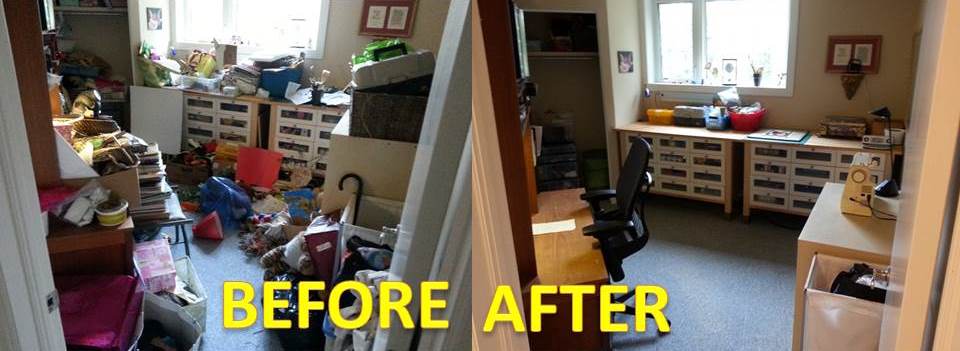
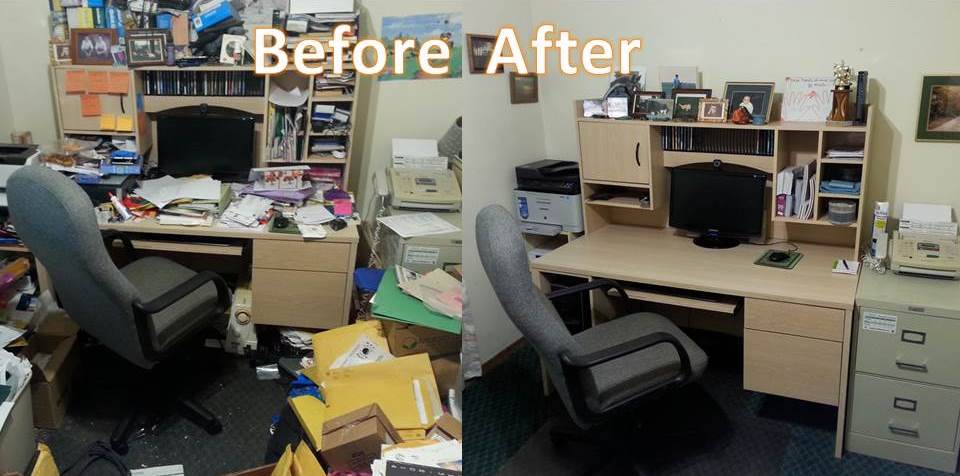
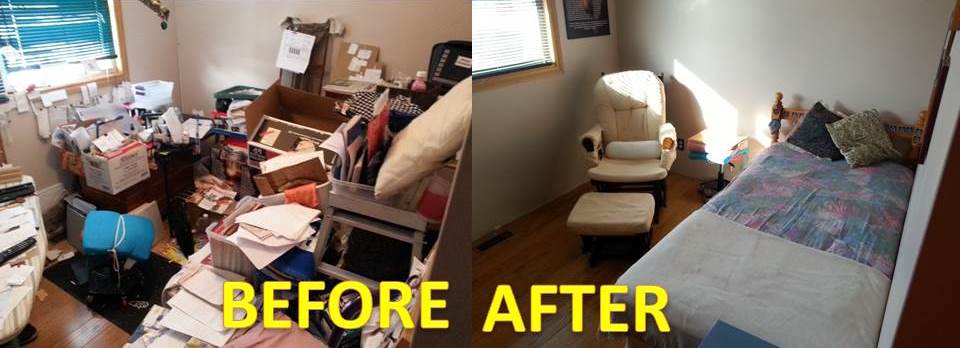
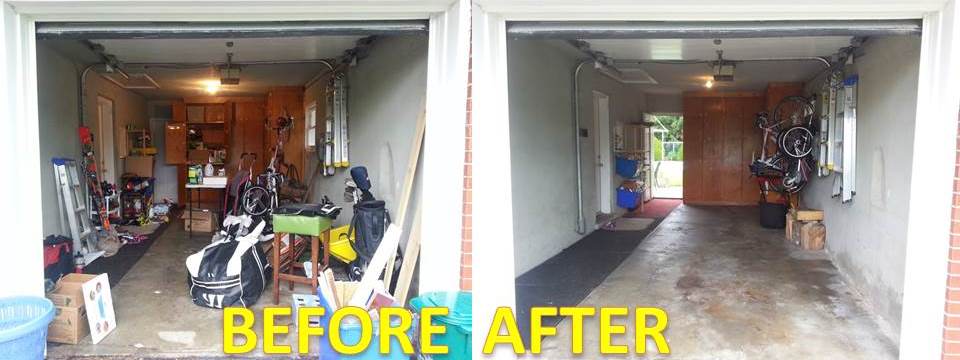
more enjoyable. Some other quick real stories
with good intentions, our home office project. The motivation to declutter
was I can leave in this organization anymore
and I need a fresh start. I cannot do it alone. The desired outcomes were having a clear desk
where I can work on, Create a paper system, get rid of all the crap, field, come and uncontrolled
and be ready for taxes. A bedroom project. The motivation to declutter
these bedroom was I would like to create my space
when I can feel calm. I don't want to see papers anymore and I want to find
things when I need to. I want to finish my
ongoing projects. The desired outcomes
for these bedroom where being able to use the bed, half a nice reading chair, make the space feel
like it is MySpace. Create a paper system
that works for me. And having a nice quiet room
to what's dB on my own. The last one is a
garage project. The motivation to the currently, this garage was we don't like a cold snowy
cut in the mornings. I also don't know what to do with my wet hockey equipment. It's always on the floor. I would like to bike more, but it's not easy to get my
bikes out of the garage. So the desired outcomes were parked the car
intake or rash, easy access to the bikes, assist them to hang
my hockey equipment, create a garbage station, access to the gardening tools, and have nothing on the floor. I would like to finish
today's session with two questions for you
to reflect about. Question number one, what is your motivation
for the catering? Question number two, what
are your desired outcomes? Be specific and share your answers in the
course classroom. I promise you will love
reading them in the future. Thank you so much for
finishing this session. I hope you got inspired
by this real instructor. I am very excited because
I can't wait to see your own transformation and how you will feel it happening. You are on your way. Yeah, I am looking forward
to being with you in the next session where
you will learn how to overcome resistance and
get into your flow. Until then, I hope you have
an amazing rest of your day.
5. Overcoming Resistance & Getting Into Your Flow: Hello, Welcome back today for thank you so much
for coming back. In the last session,
you got inspired by some real stories
I share with you. Now that you are aware
of your situation, you are ready to connect with the new reality that you
want to create for yourself. Reality that these exciting and align a reality that
just feels good. You are about to get into your flow and you are
going to love it. This session is inspired by our request I received
my circle from a member. This is what she shared. People often repeat the style of living they grew up with. It feels like home. I guess. To me it will be helpful to have some guiding questions
with which to reflect. Where do I come from, where I am at, and where
do I want to end up? These could include the
energetic aspects of clutter, like an deeming our light and stepping into
our true power. Allowing for that. I guess with a clear
perspective on these things, the decisions needed on the
way becomes so much easier. Totally agree with this. When making changes
in your life, you are challenging all beliefs, all patterns, and all habits
that are very familiar. That God you where
you are right now. While you are motivated and excited to do
something different, it's normal to encounter
resistance. To change. This resistance can show up for you in many
different ways. And it's very important
to become aware of it. You are confronting yourself. All the beliefs that
you have learned in the past and the lifestyle
that you had until now. You're at least our brain, the one who tries
to keep you safe, it scared of these changes. This uncertainty has a hard time letting go of the familiar
of your comfort zone. The predictable. You are entering
uncharted territories. And it's part of
your work to deal with the resistance
along the way. Some examples of how this
resistance can show up. Our emotionality,
like frustration, feeling overwhelmed, being
afraid, feeling irritable, anxiety of the unknown, being afraid of failing, not being perfect,
being afraid of all these reactions to
your new choices, etc. Physically, physical
pain, headaches, stomach cramps type,
neck and shoulders. Relationships, loved
ones not supporting you, not understanding
what you are doing, not getting what they use
to get from u, etcetera. If you are taking this course, most likely you may be
feeling frustrations, lack of meaning, and direction. You may be feeling not
align with yourself. Maybe overwhelmed. Yes, to name. All these emotions
are entry points and opportunities for you to
discover what you really want. Opportunities to
confirm yourself and to change your habits, routines, and your mindset. These changes are necessary
in order to create or maintain the new home and the new lifestyle
that you want to have. Please be gentle with yourself. You have been repeating
these patterns and habits. Most likely for a
really long time. Most of them will create
it when you were a child. You have carried them
all the way here. Normal. And we all create beliefs that will
serve us in some way. The problem is that as
we're both unchanging life, we keep all these
beliefs even if they no longer serve as most likely. No One share with
you how to create new ones and let go
of the old ones. I created the session
to give you time and space to help you
uncover these beliefs, these resistance, and
start understanding them and letting them go
with love and compassion. Once you start doing this, you will start noticing
how much easier it is for you to get
into your flow. Whatever that means to you, you will start
feeling more aligned, more grounded with yourself
with what you really want. Once that happens, you will have more
clarity and confidence about what kind of
home do you need to create to support yourself? Let's do a practice together. Please get in a
comfortable position. You can move to a different
location if you want. Feel free to pause the audio and come back when
you are ready. Close your eyes if you can. Take a deep inhale. Hold it. An Excel making a
comfort in sound. Like let's do a
couple more together. Hold it. Then Excel. One more. I wanted to do a
quick body scan to become aware of any
tension in your body. Start with the top of your head. Breathe in and out while you direct your focus to
the top of your head. Start going down slowly towards your eyes, cheeks,
neck, shoulders. Pay attention to how
you feel in every area. If you notice any tension, you can stay there
for a little bit. You can inhale, direct your
breathing to that tension. Hold your breath there
for a few seconds. And then visualize that tension. Going away with your Excel out into the universe
and dissolving. Notice how the
attention is now gone. And you feel more relaxed
and more comfortable. If you want. You
can be sure lysate bright light coming
in with your breath, leaving your body out, carrying that tension
with your exhale. You can do this as
many times as you need until you feel good. Then Kim moving down towards your chest, belly, legs, knees. Indeed, and toss. Take as much time as you
need and feel free to both. Come back when you are complete. I recommend you do a body scan anytime you are
facing our frustration. Challenge. When do you
feel out of alignment with yourself or when you are
feeling lack of gravity. Remember that the resistance will show up in many
different ways. And your job is to notice it. Keep breathing in
and out comfortably. And notice how you feel more and more relaxed
with every breath. Focus your attention now into the things you want to
change in your life. You can do a mental
inventory of the main ones. You can scan every
area of your life and notice the ones that
frustrate you the most. The one that excites
you the most. Or you can guess, remaining
silent for a few seconds. And notice which one
comes to you first. That isn't a right or
wrong way to do this. When you have some clarity and some specific things
you want to change. I want you to focus
your attention into one specific thing and think of their
beliefs that created this a fixed situation
in your life. For example, you may be
having privileged with grader at home and you believe that you are
not able to deal with them. Then I invite you
to investigate what is he a specific belief
behind this product? In the example I shared, it will be that you
don't feel good enough. Once you have
identified the belief, It's tend to find how it went. This belief was formed
in the example I shared. This belief was formed when you were a child because your mom or dad repeatedly pointed only
the things you did broke, but barely praised you for the
things that you the right. This is just one example. Now that you have clarity about the belief that this
course in this situation, you went to change. You know, when this
belief was created, it's time to change
it for a better one. The first step is to become
aware of the reasons why this happened and be able
to forgive, Let it go. In the example I shared, you may speak with your parents and asked them about
their childhood. You may then understand
that they were victims of their parents or was pointing out what they did
wrong because they truly believe that was the best way
to help you become better. You then can be shown as
your mom or dad being a three-year old and their parents always pointing out
their mistakes. You can use afford
often if you have one. When you do this, you will have a lot
more empathy and understanding of the reasons
why they did what they did. I believe that we
all do the best we can with the understanding
we have in the moment. Then you can truly forgive them and lead this
emotional baggage. Cool. Once you do this, you will feel very
relieved and free. It's time now to
create the new belief. That will all be
right, the old one. In this example, the old belief that was causing
the problem was, I am not good enough. The new belief can
be something like, I am in the process of
learning how to do this. I will allow myself
time and space to try fail. Ask for help. Then finally, on the way, it's very important to create a new belief that makes you
feel well and motivated. I invite you to do
the same process with any other problems you are facing that's blocking
you from moving forward. I am going to give you some time with music for
you to do your magic. When you are ready, I
invite you to come back. Thank you so much for
finishing this session. Please share in the
classroom your experience after today's session and any questions that you may have. More specific your question. They bid it answered,
I can share with you. You can ask several
questions if you need to. You can also share
what came up for you. I am looking forward
to being with you in the next session where we're going to do a visualization
of your sacred space. This is at very mindful tool
that you can use before the cratering any space to gain clarity about what
you really want. Hamwi claim to love it. I hope you have animation
rest of your day.
6. Visualizing Your Sacred Space: Welcome back to the five. Thank you for being here again. You are doing great
progress so far. Today we are going to do our
visualization meditation. To help you visualize
your sacred space. You can do this
visualization meditation before the cratering
any space in your home. Meditation has long
being a tool for building strength and clarity. Here, we explored the idea
that you can use this tool for breaking through
difficulties with credit and letting go. This may be addition
is the sign to be a relaxing and motivating way to take control
of your quest for leaving with what's
important to you. Please get in a comfortable
position and close your eyes. Think about the space that
you went to the credit. Unorganized merging, standing in the
middle of that room, and slowly turning around
to see everything in it. Take your time as you
look around the space. Think about how much
this comfort you feel will be visualizing this
room on a scale of 0. No discomfort. And 100, the most discomfort. Think about how you are feeling
as you stand in your own. Feelings might be negative. Like you could be feeling
anxious, fearful, embarrassed, ashamed, guilty, disgusted,
confused, overwhelmed. In oriented, hopeless, depressed, frustrated,
or discouraged. Feelings might be positive. Two, you could be feeling happy, pleased, relieved,
comforted, helpful, proud. Guessed, take time to explore
how you'd really feeling. It is okay to feel several
things all at once. It field anxiety and exhaling. At the same time. Take your time and explore every feeling
that's coming up for you. Next, think about what thoughts
might be going through. Your main. Could be thoughts like DC, sadly, high will never find
anything in these myths. There must be buried
treasures here. It will only take me a little
while to clean this up. This is really a
very breathable, it's not so bad. Think about this link between your feelings and your thoughts. Now, I want you to think
about the same space. But we realized that the
creditor not gone by, that everything is organized. I'm put in its place. There is no clutter. Everything that you wanted
to keep it still here. But organizing and
put in its place. What does the SRM look like? They're anchored there,
furniture, tops. Is there for free from gravity with early racks and furniture. As you visualize, these
are crowded space. Consider what you can
do with this room. What kind of activities
could you engage in? What does your
furniture look like? How would you decorate the room? Allow yourself time to
embrace this new space. Frames that you would
experience with those feelings. Now, be shoelace
yourself in that space. Having lots of fun. Being creative. Feeling count. Explain how uncomfortable you feel. This way. No discomfort. And 100 demos discomfort
you have ever felt. Now compare the rating
with the fish rating. Notice a difference. Stay here for us if you want. When you feel ready. Prepared to open. Congratulations. You have completed the credit be surely session meditation. I invite you to do
this exercise as many times as you need
to gain clarity and confidence about your
desired outcome in every space you are about
to the credit and organize. Thank you so much for
finishing this session. I hope you enjoyed this
visualization meditation. What the UC, how
did you feel them? Please share your experience
in the course crashing so that you can come back
later and reflect about it. And as always, share any questions that may
be showing up for you, even if they had from
previous sessions. I am looking forward
to being with you in the next session
where you are going to declare your intentions and connect with
your life. Be sure. Until then. I hope you have animation
rest of your day.
7. Declaring Your Intentions & Connecting with Your Life Vision: Welcome back to day six. Thank you for being here. In the last session, you data
visualization meditation. To help you really connect with the new space that
you want to create. Today is the time
to declare during tensions and create
your life vision. It's important for you to
write it down so that you can reflect in the future and
be amazed by your progress. When you take the time to
create your life vision, you will gain clarity,
confidence, and motivation. You will be able to get
in your flow easily. And you will be able to
declare that and create spaces that support
your desired lifestyle, your life patient and
your intentions can be changed anytime your
life needs change. So don't worry, you are not
going to be stuck with them. Each way easier to sit intentions and take
confident action when you are clear and align with the overall lifestyle
that you want to have. This is higher lifestyle
can be called life vision. Their lifestyle. Your why do at identity or whatever or the description
sounds good to you. I'm motivates you
to take action. Now. I want you to have
pen and paper handy. Feel free to pause the audio and come back when
you are ready. We are going to do an
exercise I call my creation. This exercise is
going to help you capture your life vision by becoming aware of
the important things that you want to include in
every area of your life. In your paper, you can
write these headings. Body, mind, family,
social, work. Give him back. Feel free to add or remove
headings as you see fit. The idea here is to capture the important areas
of your life. Once you have the headings
below it heading, I invite you to write down three to five things
that are important, that are priorities
for you in each area. For example, under
the home category, do you may write
something like this? It unorganized my garage so that I can pack my
cutting the winter. Under your body category. You may bright
degraded and organize my basement so that
they can set up my game for the wintertime. Or under your family
and social category, you can write something like
the greater than organized my kitchen and dining room so that I can entertain
my loved ones. By doing this exercise. Dividing your life in key areas. You are allowing
yourself to be more specific about what you
really want and sit. Very intentional outcomes. Don't worry if it looks messy. This is your first time and
you can tweak it as you go. Don't let perfectionism
get on the way. Allow yourself some
quiet time before, during, and after this exercise. If you feel it can
help you get grounded. Get clarity, visualize
what you just described. There is no right or wrong way. Do whatever feels good to you. Once you have finished
your creation. Make sure that you put it
in a very be sure place. You can have fun with it
by using different colors. For each key area. You can draw on it. You can be as
creative as you like. I invite you to reflect often. Do a new creation
anytime you feel stuck, lacking direction or frustrated. I normally do this every
three to six months. Sometimes I'd be longer, sometimes it'll be shorter. It all depends on how
much my life has changed. For example, I am
looking at one of my creations and I'm looking
at the home category. And underneath I have
the gradient organized my basement so that we can
rotate activities more easily. So here in Kerala, when we go from winter to
summer and vice versa, we change drastically the
activities that we do. For us, it is important
to change and rotate our sports equipment
from the basement to our shared so that
it's easily accessible. For example, in the winter
we do cross-country skiing. We go tobacco nine. We may go like skating. Those are some of the
activities that we do. In the summertime.
I rolled a blade. We play badminton,
we bicycle more. We make sure that
all those things are available depending
on the season. That's one thing I have in here. I also have optimize the
usage of our tiny office. We do have a little tiny
office in the backyard and it's changing a load
as our needs change. Before it was at yoga
studio for my wife. Now, it's going to become
more of an office space. So we need to put our desk
inside and we need to change the layout of the space. That's another thing that
is in my, in my home. That's my buddy God's eye. What if, for example, one of my priorities is to drink
more water everyday. So I have it there. I want to drink at least one to two liters
of water every single day. The way for me to do that is to drinking glasses of water, maybe one or two when I
wake up in the morning. And then one or two
during the day, a few times, and then drink some water
before going to bed. Again, it doesn't
matter how you do it. Do you set the intention? You have that reminder in there. These are just some examples of things that I might creation. I invite you to do
the same in yours. If you are feeling overwhelmed, you don't have to come up
with things in every area. I willing by U2. Reflect about each area
and see how you feel. If you are feeling good
about a specific area. Maybe you don't have to
change anything right now. Maybe you need to
focus on are on a different area that you
are feeling frustrated with. Don't let this exercise
overwhelm you. The idea here is to get an understanding of
how your life looks like and how you fit in
every area so that you can identify what needs change. Then when you identify
what needs change, you look at your home. Then you think about
how can I change my home in a way that we facilitate the things that
I want to do in my life. You see the relationship here. This is really, really
important because you are home, has to be designed to
facilitate the identity. You want to have, the lifestyle, you want to have, the
activities that you want to do. That's the whole goal
of this exercise. Once you finish your creation, you are ready to move into the next exercising call
describing your ideas of space. I want you to look at
everything that you wrote down in your
creation exercise. Think how these things
relate to your home. For example, if you
brought to exercise more, maybe you want to create a
game space in your home. If you brought down to entertain
more friends and family, then maybe you want to optimize your ketone flow and create
an inviting dining area. If you want to
start a new hobby, maybe you need to declare it and create your own classroom. If you find yourself
wanting to be more productive at work and
you work from home, you may want to optimize how
you use your home office. Once you identify
the different spaces you want to create or change, it's time to prioritize
which one is the most important that you
want to get started with? Do you need to get
started somewhere? Make sure that you pick the
space where you would spend the most time in the
space that you may use, the most space that will
give you the most joy. It's very important to
pick a space that you can start and finish so that you can get that motivation kick
of being able to accomplish something tangible with a very rewarding
visual transformation. Once you complete that space, you can then move
to the next one. Don't worry about
the how-to yet. We will talk about that soon. Now we are declaring
our intentions and learning to practical exercises
to help you with that. Let's do the describing
your idea of space. X is ice. Please grab a pen and paper. I want you to write
on the top of the bait, your ADL space. On the right-hand side, I want you to write to this
date on the top right corner. Then below you can write describe your
product and name it. So I want you to
actually come up with a name undescribed with one sentence what you
are trying to do, maybe your description
can be basement gym, and then the sentence can be I1 to create space
in my basement, to have a gym where I
can exercise daily. Then on the right-hand side, I invite you to
bright the timeline. When would you like to have
this spray completed by? Then underneath, I will
invite you to write, what do you love right
now from the space. So in the case of the basement, what do you love For
enough from your basement? Is there anything
that you really love? I'm below. I would like
to invite you to bright. What do you hate? What frustrates you? By doing that, you
are making sure that you keep the things that
you like from that space. You don't change them. You are going to change the things that are
frustrating you, the things that you don't like. So for example, if you say, I really love that shelf, that allows me to store all my equipment in
a very nice way. So don't change that
because you loved that. If you have I really
hate that bookshelf. That this only way to get to the basement because
every time I go, I guess stomach feed on it or I guess we find
carrying something. It's on the way. Maybe you
want to change the location of that bookshelf to
eliminate that frustration. Once you have those two
list, what do you love? What do you hate? It's time to stop writing the
tasks that come to mind. Okay? Start listing
all the tasks that are coming to mind
that you need to do. For an example, clear the
space in the basement, donate things that
I no longer need. Maybe you are storing
things for someone else. Write down. I have to
contact Peter and asked him to get his things
by this date, etc? Yes. Make a mental note of everything that comes to
mind that you need to go. The last thing I
want you to create a list of its challenges. Try to bright the challenges
that you are going to face. For example, you may be
facing the challenge of, I need help to move the exercise equipment
because it's heavy. So I need someone to
help me with that. I will need someone to help me take things away
because I don't have a button. I have a very small card and
things don't fit in there. Or maybe I don't have time. I need to find our
way to create time to do the spread before the
timeline that I have. Feel free to write every
challenge that comes to mind. Once you have this
exercise completed, it's going to be easier
for you to move forward. When we start moving
forward with the how-to, you are going to have
these two exercises to help you understand
what you really want. To help you have an idea
of how to move forward. If you shared your space
with someone else, inviting the people that
you live with to do this exercise and share the outcomes can be
very, very powerful. An eye-opening, it's
easier to co-create a great shared space
when everybody is aware of each other's
needs and desires. You will also be
on the same page and everybody will
feel included. So please make sure
that you include everybody else who is
going to use the space. Sometimes you guys are going to have different ideas
on how to use the space. If you know each other's
needs and wants and desires. It's going to be easier to create a common space
that can facilitate the activities that
you want to do and the activities or the other
person or persons one to do. Thank you so much for
finishing this session. I hope that you enjoyed
declaring your intentions. Please share your goals and the spaces you are
planning on creating in the course classroom so that you can come back later and reflect about your progress in order to ask any
questions you may have. I am here for you. I am looking forward to
being with you in the next session where you
are going to learn waste to include others in your
credit free journey. And today, I hope
you have animation. Rest of your day.
8. Including Others In Your Clutter-Free Journey: Hello, Welcome
back to day seven. Thank you for being here. In the last session,
you declared your intention and connected
with your life Bayesian. I am sure that you are
getting very excited with all the good that is about
to come into your life. In the next session, we will be covering how to find the time to create
your credit free home. Because many of you
may be thinking, my life is already BC, BC. I don't have time to do this. It's normal to feel this way. And I promise you, I will check great practical ways to start carving out time here and there, so that you can start
opening up more space, more time, and more energy for the things that
you want in your life. Before start taking action, it's very important to include
others in your journey, especially if they
live with you. If you start making changes and the people around you have
no idea what's going on. They may feel this wrapped
it, confused, upset. These respected, not heard,
not included, offended. Just to name some
emotions that can arise. Imagine that you arrive home one day and you'll find your
home completely changed. Things are moved around. No one asked you anything. You got to make
yourself TI net and the plates are not what
they used to be. You can't find the calorie. The ****** are not in
the right cabinet. Like always have been. How will you feel? Frustrated, surprise,
overwhelmed, angry. This is why it's so important to include your loved
ones in this process. Even if they say, it sounds great, an item
want to be a part of it. You include them in the process and they are giving you
the permission to do this. You need to find a way to
communicate what you are doing while you are doing this. How important making these
changes are for you. You can even share the
exercises we did in the past sessions for them to see and understand you more. They can even do
them to ideally, I will ask them nicely
to do the exercises with you or separately and then
come back together and share. This will be the best
way to become aware of each other's needs and
want to become aware of the changes that everybody
would like to make and to really understand each other's life vision and intentions. When you do this,
moving forward, I'm finding the happy
balance will be way easier. You can then design together how every space in the
house can look like, what activities you are
planning on doing in its space. And if conflicts arise, because they most likely will, it's a great opportunity
to talk about them. From our respectful and
curious point of view. It's way easier to
compromise when you feel valued and respected. Someone who my circle,
you're thriving lifestyle. Asked what are playful
and constructive ways to find out about
needs of everybody? To draw up a shared
vision from there, to get into changing things
together in a fun way. What everybody is
taking his part of responsibility in the process, like tips on how to become a better team and creating
a great space to live in. Isn't this a wonderful
reflection on question? The answer to this
question is to include them in the process. To invite them to think
about their life vision, about the activities
they would like to do in the rooms and in
the common areas. How about how they
want to feel at home? How they want to
use a key chain. How about the family activities
at everybody may enjoy, like Friday pizza
and movie night, Saturday board games night, yoga or meditation
morning routine. Just to name some ideas. The secret is to get them
excited and pumped to do this because they will
benefit from it when you can, what they love doing. And you suggest to make changes so that they
can do that thing. They will be excited, inspired, and ready for action. I remember helping
a family clean up a garage and they were
thrilled when we showed up. We declared it the garage. We optimize the
vertical space usage. When we were done, there was a big open
space in the middle. I then so then dragging the hockey equipment out
and started playing hockey. They were so excited
because they finally had a meeting before we came. And they wanted to be
able to play hockey in the winter inside the garage. That was the motivation they needed to get involved
in the process. They always put things back in its place because they want to give that open
space for the game. You'll see this is the
power of a WordPress. It can have a huge impact
in how we take action. Because we will take
the right action that will save everybody. If you find a wall when sharing these ideas and they don't
want to do anything, then you have to
respect that too. Not everybody is ready for this. Not everybody cares about this. I know that this is hard, and I know that when
this is your situation, I recommend that you get started with your own stuff first, with your own spaces first. Many times when all other see the transformation and they see you being happier,
uncommon there. They may feel
inspired to join you. And if they don't, then
you have the opportunity to get some practice and some
wind with your own stuff. First, you will start
creating healthy boundaries, finding ways to communicate
your needs in a nicer way. And hopefully they will start
seeing amazing results. Will be more willing
to be curious and talk with you about
the common spaces. Get curious about their
hobbies, passions, and things they enjoy doing, and try to create a space
that will facilitate yes. Some of you may be dying to
create your credit free home. And you may be living with all these who don't care at all. Maybe you are doing a lot of work to keep everything tidy. And in yes. Minutes,
they will create a mess and won't clean
up after themselves. I want to share what someone
shared in my circle. When I asked what they wanted
me to cover in this course. Family members, not
children are yes, saying that they are lazy
or we'll do it later. However, in the meantime, they are leaving a mess
behind that only gets cleaned by me when I have
time and energy. In this example, there is
a toxic dynamic happening. Family members are
taken advantage of the person who always
clean up after them. These special clearly feels
frustrated and unbalanced. This person is involved in our dynamic that no
longer serves her. She tried to confront them. The excuse is I am lazy. Conclusion is that it
takes to, to dance. Meaning dynamic
will only work when both part participating
in this specific case. I will suggest trying
some of these steps. Clearly communicate your
needs and how you feel. It has to be clear and precise. Something like when
you use the kitchen to make yourself a snack and
then leave everything out, it makes me feel not
loved, not respected. It makes me feel that
you don't care about me. And it makes me feel like you
are taking advantage of me. If water not flowing out, then try to make a video
and send it to their font. Try to write them a letter, an email, whatever
way may reach them. Then half a conversation after clearly
request your needs. In this case, the requests
may be something like, I am tired of tidying
up after you, and it is normally
responsibility. I will appreciate
if you can take responsibility for
your own staff. Happy to show you how to do it. If you don't know how. If the other person is not willing to participate, listen, try to change and they avoid you and keep
doing the same thing, then you can start creating a healthy boundary and
getting out of the dynamic. It may take a few tries to
find the best way to do this. And it will cause some conflicts at the beginning for sure. But you can embrace
this new boundary with love and positivity. For example, if they always
leave a mess in the kitchen, you have to clean up,
always after them. Maybe you stop cleaning
dishes until data Non to use. You read the situation, affect
them in a negative way. When they confront you about why you don't clean
up the dishes, you have to stay calm. Lobbying. And yes, say something like, I love you, honey. And I told you that I was
tired of doing dishes. It's not fair that I am
the only one doing them. When we all use them. I would love to have a
conversation about how we can move forward in a way
that will feel good. Do you have time now? Do you have any ideas? This is just one example. I hope you get the idea and the framework that you can use. The most important thing is that you remain calm, lobbying, and respectful towards no one will react poorly to
love and compassion. Even if they are
being challenged. Even if they scream at you. If you don't get triggered
and you don't react poorly, if you remain calm and yes. State your point of view and
asked for a conversation. If they keep screaming at
you or being disrespectful, you can protect
yourself by leaving the space and leave them alone. You can say something like, I see you're being very upset. I am going to give
you space and time. Let's talk once you are calmer, but don't fall back into
doing what you use to do, because that's what the whole
dynamic is looking for. If you start holding
these new boundaries from a place of love, compassion, and
alignment with yourself. It's just a matter of time
for things to change. You will no longer be a part of the same dynamics that
used to drain you. It's normal for
this to take time. Just think about how long these dynamics have
been going on for. They will know just dissolve into nothing in just a few days. You have to stay grounded, connected with your life vision, with your intentions,
holding your space. And always pin count, lobbying, compassionate, and respecting yourself and
respecting knowledge. Now, I would like to give you some time for you to reflect about your own situation and how you shared your
space with others. I hope this session
brought some light into waste to include your love watch in theocratic free journey. I would love to
support you further. Please share any questions, shared your specific situation, your specific toxic dynamic, you are trying to
change with details. And I promise I will answer
you with another response. Thank you so much for
finishing this session. I am looking forward to being with you in the next session. Where do you are going
to learn how to find time to make your
transformation and reality. Until then, I hope you have
an amazing rest of your day.
9. Finding & Protecting Time for Your Transformation: Welcome back Today. Eight. Thank you for coming back. In the last session, you learned the importance of including
your loved ones in your credit free journey and
some strategies to help you clearly communicate your needs and create healthy boundaries. Today you are going to learn
how to find time to create your clutter-free home
and how to protect that time against the
instructions and time wasted. By now, you have a
very clear picture in your head of how you want
your life to look like. You became aware of the
activities you want to do. You became aware of the
challenges you are facing. You have included your
loved ones in your journey. Or at least get started working on creating
healthy boundaries. Clearly communicating
your needs, and taking steps to change toxic dynamics into more
healthy and empowering. Once you are connected and
aligned with your life, patients are feeling excited and motivated to take action. The next natural challenge, that many phase at
this point is to find the time to do
this. It's normal. Your life right now may
feel very full, very busy. Maybe you have a clear idea of where your autonomy scoring. Maybe you don't really know
where your time is calling. It doesn't really matter
where you are right now. I am going to share with you some strategies that will help you create your ideal week
and start using your time, your energy, and your creativity
in a more aligned way. The first exercise
we are going to do, It's creating your ideal week. Don't worry. I know it
may sound overwhelming. I will guide you through
this exercise in a practical and fun
step-by-step, your name. I want you to take
pen and paper. If you have colors handy, please grab them to feel free to pause and come back
when you are ready. I want you to take a few
deep breaths with me. Okay. Inhale. Exhale. Inhale. Exhale. Allow yourself to
make a relaxing noise. If you feel like it. Now. I want you to
close your eyes if you can, about your week. I want you to start
on Monday morning. What time do you
normally wake up? What do you do first
thing in the morning? Do you have a lot of energy? Does it take you a little bit of time to get started
with your day? Visualize everything you do. Maybe you wash your face. Maybe you make a coffee or tea. Maybe you exercise. Maybe you look at your
phone or computer. Try to visualize what do you normally do with as
much detail as you can? What time do you eat lunch? Maybe you just not to in today. What do you do after lunch? What time do you have dinner? How are your energy
levels during the day? When do you feel
the most energized? When do you feel the most tired? What activities are exciting
to you during the day? What activities trained
you during the day? What time do you go to bed? Do you have a bedtime routine? How do you sleep at night? Do you wake up a lot? Do you sleep like a rock
until the alarm goes off? Do you use an alarm?
Then moved to Tuesday? And do the same process. Visualize yourself doing
what you normally do. Notice the things you
like. You don't like. Notice your energy levels
throughout your day. The activities that energize
you and make you feel great. The activities that you
dislike and drain your energy, or make you feel
upset, frustrated. Think about the people you interact throughout
the day with. How did you feel after
interacting with them? Then keep doing the same process in everyday until Sunday. Okay. If you don't
remember everything, I just want you to become
aware of your current week. How you feel, the activities
that you remember, your energy cycles,
your creativity cycles. Any other thing that
came out for you? Take your time to
keep visualizing everyday until you
reached Sunday night. You go to sleep. If
you need more time, please pause the audio and
come back when you are ready. Now, I want you to create your week on your
paper or your RNA. I want you to create
seven columns, Monday to Sandy, and create a column on the left where
you will write the times. For example, my time
starts at 02:00 AM and finishes at 11 PM. I use one hour increments. Yours may look different
and that's okay. By the end of this exercise, you will have your
entire week in front of you with a time
column on the left. Feel free to pause the
audio at any stage of this exercise if
you need more time. We are not aiming
for perfection here. This is your first
attempt to doing this. So please allow
yourself to be messy, to make mistakes, to tweak
and change things as needed. You can always redo
this exercise in a new blank piece of paper
as many times as you want. You can also transfer this week into your
digital calendar. But IS, do this exercise
with me on paper first. Now, I want you to start
putting things in your week. You can start with your sleep, create a block for
your sleeping time. Mine is from 11 PM
until seven AM. If you have colors, you can choose a color
for your asleep. For example, green.
Then start creating blocks of time for the things that always
happen the same way. For example, you may work nine AM to five PM
Monday to Friday. So put that in your week. You may go to the gym
every Tuesday and Thursday from five to 07:00 PM. You may do grocery shopping
on Friday night at 07:00 PM? Yes. Start coloring in
all the activities that come to mind and
repeat every week. You can use different
color for every activity. It's okay if you
only have a few. And Allen showed up when
the other ones happen, maybe you don't have structured
yet. And that's okay. If you feel that
you're weakest scales and have no idea where
your time is going. I invite you to audit your week. You can use the same blank
template that we have it and start dragging
everything that you are doing. If you want to see
an example of mine, you can ask in the
course classroom, and I will share it with you. Once you have outdated
one or two full weeks, you will then know where
your time is going. I invite you to also
bright comments on how you feel everyday and
any specific notes. Like, I felt great
after going to the gym or doing maybe as late at night
really drained me. And they were some focus at all. Next time I will
try in the morning. It may seem like a
daunting task for you. But let me ask you, how is your time management
working for you right now? How are you willing to
invest a bit of time once, to create time every week
for the rest of your life. Hi, I'm sure that
the answer is yes. Once you have completed
this exercise and you have a clear picture of how your current will look like. It's time to get into the fun process of
creating your idea week. Now you have the opportunity
to reflect about your current week and eliminate things that
you no longer need. Change things
around depending on your energy and
creativity levels. Integrate the things you
want to start doing, etc. Remember that each not going
to be perfect from day one. The goal of perfection
and get started. My first idea week only had
my sleep time, breakfast, lunch, dinner, game twice a
week, and grocery shopping. Honestly, I hadn't no idea
how to include the rest. And when I am
self-employed and I have no structure for
me, it was overwhelming. But I got started. I outdated my time
three weeks in a row. Then I was able
to start creating windows of time for work, for self-care, for exercise, for time with my daughter, etc. Every week got better and better because is
able to reflect. I was able to break
down what I liked, what I didn't liked, eliminate things I
no longer enjoyed. Start doing new things and
testing how they felt. You see, it's a work
in progress that will get better and better
the more you do it. Now, my wife and I have a very intentional week
that supports our needs. And once we both feel empowered and supported
by each other, we are feared than
we were before when we didn't have
cavity or intention. I want you to get
the same feeling. Now it's time for you to revisit your creation,
your life mission. And all the awareness
exercises with it in past lessons and study, including more of these
things in your week. Moving forward, when you start learning how to start
decluttering your home, you will be able
to create time for your decluttering process
in your week two, I can't wait to see how much
progress you start making. It's gonna be amazing. When you are setting goals for yourself. Remember to use
the smart formula. Smart stands for specific, measurable, attainable,
relevant, and time-bound. One example of a goal can be, I went to feel better at home. But this doesn't follow the smart formula because
it is not specific, it's not very clear. A better goal will be, I want to organize
my kitchen at home. So now we have a specific space, but still not very specific
and it's not timer. So a really good
one that follows this math formula can be, I went to clean and organized all the food in my fridge and pantry by May 15th and half
a clear counter space. As you see, these colonies is specific because you do not specifically
where you want to do. You can measure it if
it's finished or not. It's attainable. You can do it. It is relevant to you
because that's the goal that you want it for yourself
and it is time-bound. It has a specific date. I went to finish to
this session with a great time
management technique that will help you
stay on track, stay energized and motivated while you are
getting things done. This method is called
the Pomodoro Technique. The Pomodoro Technique is a time management
system that encourages people to work with
the time that they have rather than against it. Using this method, do break your day into 25 minute chunks, separated by five-minute breaks. After about four pomodoros, you take a longer break of
about 15 to 20 minutes. You will use a timer to do this. I recommend using
a kitchen timer or other analog timer
rather than your phone. To avoid distractions,
please feel free to tweak the length to
suit your focus capacity. The Pomodoro technique
helps you resist all of those self interruptions and
retrain your brain to focus. Its Pomodoro is dedicated
to one task and it's break. A chance to reset and bring your attention back to what
you should be working on. On those breaks. I encourage you to, in practice, self-care. Any activity that really gives you energy and
makes you feel well. I hope this session gave you some clear and
practical ideas to find time and protected against the instructions
and time wastage. I would love to
support you further. So please share any time
management questions that you may have in
the course crash on. Don't be shy to share details about your specific situation. And I promise I will answer you with a detailed
out your response. If you want to see examples of my own ideas week and
how I out in my time. Let me know and I will
share them with you. Thank you so much for
finishing this session. I am looking forward
to being with you in the next session where you're going to learn how to use self-care practices to radius, overwhelm and improve your overall mental
and emotional health. Your mind is going to love it. Until then, I hope you have
an MAC address of your day.
10. Reducing Overwhelm, Mental Health, & Selfcare Practices: Welcome back Today Nine. Thank you for being here again. In the last session, you learn how to monitor
your current week, how to create your idea week, how to set smart goals, and the Pomodoro Technique
to help you stay focused and include
breaks into your day. Today we are going to
learn self-care practices. This journey will be a
roller coaster of emotions. Feeling overwhelmed, triggered,
emotional, sad, guilty, happy, excited, and many other states are normal and unnecessary
part of this journey. When do the crater you are questioning and
confronting your past, the decisions you made, the actions you took, the habits you followed. And if you are doing this
process with orders, they will also face emotions. You may be questioned in
decisions you made together. Dynamics you created that
no longer serve you. Many other triggers that
you may not be aware of. Now, many people are not aware of how deep
this process is. And not being aware of this
can set you up for failure. Because once you start
facing these emotions, you need to have tools
to cope with them, understand them, accept them, and change him in
an empowering way. Self-care is a very simple, yet powerful tool that you have to go with all
of these emotions. Self-care can also improve your productivity and
focus while the category. In this session, you
will learn how to use self-care practices to improve your mental and
emotional health. I want to share with you a
great self-care exercise called creating your
own self-care list. When you are not feeling well, it's important to have a
mental health toolbox to help you cope with whatever is coming up in a healthy way. Sometimes you may
need to take a break. Sometimes you may need to
be able to understand. Sometimes you may
need a long time. Many times you may
need to just breathe deeply a few times
to feel better. Activities that energize you. Activities that
make you feel well. I am sure you are already
aware of some of them. There may be many, many more that you need
to discover and try. I invite you to get pain
it and get comfortable. You can use your journal to
grab color paints if you have some handy to feel free to pause the audio and get
back when you are ready. I invite you to get comfortable. Closing your eyes and take
a couple of deep breaths. Allow yourself to make noises
every time you exhale. And liver attention through it. Notice how good it feels, how much camera you are. Briefing, setup, our
full self-care activity. That anytime, anywhere, We
will get immediate benefits. Just take another
deep breath with me. Now, I want you to
focus on your day today and reflect about what
activities make you feel great. Choose one, and connect with
how you feel when you do it. Experience what you
normally experience. Visualize yourself in that
moment in doing that activity. What are you what are you doing? How are you feeling?
Notice your body. Do you feel any tension? Do you feel calmer
and more relaxed? Now, move into another activity
that makes you feel Well. What are you doing now? What are you? How
are you feeling? Notice your body.
Do you feel joy? Where do you feel that? Do you feel relaxation? Wet in your body? Do you feel that connect with that specific moment and
relief that experience? Soaking all the joy, happiness, cabinets, coziness, and any other good feelings
that you may be experiencing. You, yes, did what's
called visualisation. Visualisation allows
you to connect with past experiences and connect
emotionally with them. You just went to
past experiences. And you can also visualize
future experience. Increases. Let's give it a try. Keeping your eyes closed. Think about something
you would like to do. Something you know, it
may make you feel great. Maybe it's something that you
have already done before. Maybe something
completely new to you that you have never
experienced before. Breathe deeply and visualize
yourself in the future doing that specific
activity. What are you? He said warm or cold. He sees bright or dark. You moving or staying still. What are you doing? How are you feeling right
now in that future moment? Allow yourself to connect with the feelings that you may
experience in that moment. You are doing amazingly. The more you practice this, the more you will be
able to visualize and connect with
future experiences. You just need to have
visualization into the future. Great work. Now, I want you to open
your eyes and write down in your paper on the top,
my self-care list. Below, I want you to write activities that
make you feel well. You can break them
as bullet points. You can break them
inside circles. You can use different colors. There are no rules here. Let your creativity guide you. And please don't
be perfectionist. It doesn't have to be perfect. Gas gets started. Simple bullet points are fine. If you're not feeling creative. I will challenge you to bright at least ten
self-care activities that you can do anytime
to get a self-care boost. Try to make them
very, very simple. Some examples could be deep
breathing three times, doing a visualization, jumping
up and down three times. Taking a walk, drinking water. Looking at yourself
in the mirror and telling you nice things. Piece is called mirror work. You mentioned sitting quietly and closing your eyes
for a few minutes. This is called meditation. Rephrasing a limiting belief
into a powerful belief. Like, I can't do this or I
am not good enough into, I am in the process of
learning how to do this. I allow myself the time and
space to make mistakes, to ask for help, and to learn while having fun. This is an affirmation. As you see, I am introducing some self-care activities that you can try and include them
in your self-care toolbox. If you are having challenges finding ten things
to break down. He took the fact that
you are even trying. He's an amazing first step. Honestly, it is. I went to invite you to close your eyes and take a
couple of deep breaths. Now I want you to think about all the things that
you are grateful for. Start listing them in your mind. I am grateful for being alive. I am grateful for having
a roof over my head. I am grateful to live
in a safe country. I am grateful to
have running water. I am grateful to
have a cozy bed. I am grateful to have family and friends can love and support me. I am grateful to have the time to take this
course and learn. Keep going for as long as you can connect with the feeling
that you experience. When you say these things. I am feeling like crying a little letter right
now because I am so grateful to unhappy to have all the things
I just listed. I am sure you are
feeling the same. If you are not, that's okay. The more you practice, the more connected you will be. This practice is
called gratefulness. It is proven that you can only focus on one
emotion at the time. If you are feeling grateful, you cannot feel upset
at the same time. If you do this exercise, when you notice yourself
feeling a negative emotion, you will most likely change
your state immediately. If you are doing this
process with someone else and you start feeling
upset with each other. You can apply gratefulness
in the form of praise. Allow each other to do a full minute of praise of things you
love about a personal. It can go something like this. I love seeing you trying
so hard to support me. I loved when you show your
feelings as they are, even if I don't like them. I love you making
my morning coffee. I love you. Give me space. When I am upset. I
love how you hack me. When I don't feel well. I love your willingness to
create a home for our family. How would you feel
if someone spent two full minutes listing all the things they
like about you? How would you feel if you spend two full minute
praising the other petal? Wherever you pressing
yourself for. In minutes. You can even do this
in front of a mirror. Why do you look at yourself? This is called mirror work. I am loving this
session so much. If these activities
sound good to you, please include them in
your self-care list. At least give them a try. Be curious, and be open-minded to just give
them a try, please. Anytime you face
a strong emotion, It's normal to feel overwhelmed. Feeling overwhelmed means that you are close to
having a breakthrough. You are becoming aware of
something you want to change, but you don't quite
know how to do it yet. You are facing a limiting belief that no longer serve you. And it's time to let it
go and create a new one. You have to let go of the
familiar of your comfort zone, of the certainty of
the things you know, to open space for the new things that you need in your life. This is very
uncertain and scary. This is why you may feel
anxious or afraid of failing, overwhelmed, not
knowing what to do. He took and each normal. Sometimes we need to learn
how to be comfortable. Being uncomfortable. It's a transition
that needs to happen. And you need to learn
how to stand moving forward in a different way. The practice I strongly
recommend when you are transitioning are filling this
discomfort. Is meditation. Yes. Allowing yourself
a few minutes of quiet time can make
a huge difference. You can just be present and let your emotions out
in a healthy way. Watch them, observe them, and let go of the need
of reacting to them. You would open yourself up for insights and lots
of aha moments. Let's give it a try. Please close your
eyes, get comfortable. Take a couple of deep breaths. Relax your body. I'm be present. Think about that transition that is happening
right now in your life. That makes you feel discomfort. Think about it and
observe what's coming up. Let the emotion surface and
just let them be there. You don't need to do
anything with them right now. Observe them. Question them. Why are they showing up? What can I learn from them? What is the belief that
is creating this emotion? When did I start filling
this wave first? Who told me something
or what was the circumstance that made me create this
belief about myself? This belief true? Is this belief serving
me in a positive way? Now, an example of this
could be the problem. I have a clutter home limiting belief that
credit the problem. I am not good enough
to the credit my home. New empowering beliefs. I am in the process of
learning how to declare it in my home and create
my sacred space. Anytime you do this practice, you will get more awareness. You can do a
meditation yet to be quiet with no intention. You could do a meditation
about the specific question. You could do a meditation about specific event that
happened to you. There are no rules. You can
also do an active meditation. Why do you walk,
exercise, drive, etc. Thank you so much for
finishing this session. I am looking forward
to being with you in the next session where
you are going to learn the step-by-step method to the credit and organize
any space in your home, you are ready to take action. Until then. I hope you have
an amazing rest of your day.
11. An Aligned Method to Start Your Decluttering Journey: Welcome back to day ten. Thank you so much
for being here. In the last session, you
learned how to create your own self-care
list and how to use self-care practices to cope with emotions that may show up during your
decluttering process. Today, we're diving into step
number two, taking action. I want to remind you of the three main steps that you are learning
in this course. Step one is awareness, step to taking action. And step three, it's
maintenance and Rachel's. Once you have Kennedy and create intentions for your new reality, you are then ready to
create the home that will support you and
your new lifestyle. It's time for you to learn the specific steps that you can take to make your
cat a free home. Our reality, are you ready? Taking action involves
two main steps, the catering and
organizing your space. The criterion is all about assessing what you
currently have, certain it into categories, deciding what stays
and what goes on giving your unwanted
items or new life. Organizing is all about creating permanent homes
for all the things that you are keeping
so that they are accessible and convenient. It's very important
to declare first, then organize what
you really need. It doesn't make sense to organize things that
no longer serve you. I see many people making the
mistake of getting started organizing the space without becoming aware and
without the category. And first, I am sure by now, you can tell that they
were not successful. Deciding what stays and
what goes should be easier after doing
all the awareness in all the previous sessions. By now, you have a clear
picture of what you want your life to look
like and feel like. You have cardiac about the activities that
you want to do. You know how you want
to use your space. And you have included
all others in the process if necessary. If you don't have clarity
about what you want yet, it's okay to the
credit what you know, you don't want and create
space for what's to come. Sometimes the actual process of decluttering and opening up space and energy can help you figure out
what's next for you. It's very powerful to be
able to start and finish one space for you to experience a functional
and inviting space. These will empower you to
keep going with other areas. What space to choose? First, I want to share some questions that will
make you think and reflect. Pay attention at how you feel. When I read each question and
you may find your answer. What is your first priority? Why? What space can you
benefit the most from? What space is going to
bring you the most? What space is causing you
the most frustration? What space may be the
easiest to complete? Do you feel emotional when
thinking of this space? After hearing these
questions, how do you feel? Which one spot something on you? There are different
entry points to getting started
decluttering your home. Honestly, it doesn't really
matter where you get started. The most important part is to start and finish wherever
space do choose. From my own experience, I will recommend that you
get started with this space. Where do you spend the most time in this space that is
frustrating you the most, or the space that you can
benefit the most from. For some, that
space is a kitten. For others is the bedroom. For others is the home office. And for others,
maybe they garage. I also recommend
avoiding getting started with a space that
trigger you emotionally. For example, if a family member
passes away and you have still close and other belongings from this person in a room of your home and you are
still grieving the loss, then I will recommend that you get started somewhere else. If you love books and books are causing
credit in your life, maybe I will get
started doing something else and live books
until the end. It's better to get started in a space that you
can finish easily. The catering staff that
is not emotional for you. And get a quick win with a nice visual impact so that you can motivate
it to keep going. There is no right
or wrong answer. This decision may depend on
your specific situation. If you are still unsure
on where to get started, please share your specific situation in the
course classroom. And I will do my best to support you and give you
my honest opinion. You are not alone in this. Remember that you can do the
visualization meditation in this specific space to help
you gain for the clarity. Once you have decided on
what space to tackle first. I recommend that you
have a general look and Azure self, what's in here? What categories can see? Maybe you see papers, books, tools, close, crafts. You said anything that
you can let go off. You say anything that may
belong in a different room. Now is the time to have your intentions and
you're describing your ideal space
exercise in front of you to remind yourself of
what you wanted and why. You will be able to make more confident
decisions when you have commodity and are looking forward to an exciting outcome. If you are feeling
strong emotions when looking at your staff, gas allow yourself to
take a few deep breaths. Use some of their self-care
techniques that you learn to ground yourself
and count your mind. It's normal to have strong
emotions appear at any time. Remind yourself that you are in the process of creating change. And it's okay to feel emotions. The space fields too
much for you right now. I will encourage you to
maybe get started somewhere else and come back here after. It's a good idea to take
before photos and videos of your space so that you can always remember how
it looked like. Make sure that you have
in both others who may use the space with
you in the process. Schedule enough time,
I make sure to take breaks and celebrate
every step of the way. Every liter stable if the way make sure
that you celebrate. If you are storing stuff
for someone else or you have things that you know
for sure no longer need, especially big pieces of
furniture, equipment, etc. I will recommend you
make arrangements before you're the category and
session to let them go. Especially if you don't
have a lot of space. If you do have space
in your garage or basement or another room
that you don't need. Make sure you move them there temporarily until they are gone. Make sure you set a deadline for others to pick up their things. When you are ready to start
your decluttering process. I recommend you
create a station with different banks or
boxes for donation. Recycling. Garbage. Shredding belongs in other space to give to someone and to sell. These will help you
be more efficient. I also use a folding
table to work on. You can use a table you
may have or your counter. I find that working
on a table helps you be more comfortable
and helps you focus on the staff on the table or lead rather than stating a
dimension all around you. I also recommend
keeping a to-do list of every task that will come up while going through
your belongings. For example, take this
thing to my sisters, give these toy to my nephew, fix this broken table, etc. Keeping our to-do list will help you capture everything you need to do and will help
you declare your mind. It will also help you let
go with more confidence. Once you start seeing how
much we are writing down and how much time every
task will take to complete. The first step in the
decoding process is to sort, put things like together, close with close books, with books, tools,
with tools, etc. Having things together can help you make more
confident decision. For example, if you find
a pair of scissors, you may be hesitant about keeping them or letting them go. But if you call it
all the z-scores and you happen to
have six pairs, you can then decide that
you only need to patch. You can let go of the
rest with confidence. If volume is high, maybe you can use other
spaces to do the sorting. Like corridors,
rooms, living room. You can use a piece
of masking tape and write down the name
if that helps you. You can also put things
are medium-size boxes, labeled them and stack
them nicely in a corner. This will allow you to optimize your vertical space and
open up room to work in. I recommend you do a
wave in your room, pick a starting point, and then do a 360 degree wave, touching everything
in this space. If you encounter items,
you'll fill out, that means to set them aside and come back to them
once you finish the rest, don't get stuck with items
that you are unsure of. Instead, keep moving forward, deciding about belongings
that you feel confident with. Papers, books, and photos
together until with them, once the physical
spaces organize. Once you have everything sorted, it's time to make decisions
of what stays and what are you letting go off. Keeping in mind the
balance between how much space you have and how many things
you are keeping. If you have more
stuff than space, then you would have a
problem keeping in mind your vision and the
activities that you are planning on
doing when deciding. It normally gets
messier before it gets better. Don't panic. Things will look messier
during the process, allowing time to clean up and place things
where they belong. At the end of this session
is very important. Keep aside any
organizing products that you may find until
the end of the process. You may be able to use them. During the organizing process. Paper, dealing with
paper can take a very long time and you
will see immediate results. I recommend putting
all the papers together and deal with
them in a future session. You will learn how to deal
with papers in this course. If possible, move
out of the space. You are decluttering all
the unwanted items plus any garbage and
recycling and items that belong in a
different space. There are many
different ways to give you an unwanted
items and new life, like donating them, selling
them, assignment, etc. You will learn all about it in a future session
of this course. Once you are done with
a decluttering process, It's tend to organize the
things that you are keeping. These are the steps that I normally follow when organizing. Make sure that all the
items that belong in this space that needs to
be organized are there. Try to picture how you
are going to use a space, what activities you
are planning on doing, what items you will
use more often. Make sure you place items where everybody using them
can access them easily. For example, placing
items between kids rich, placing heavy objects
lower, etcetera. Try to set up stations. Every activity will require
specific items and equipment. Tried to group them together. Thing like in the garden. Make it easy to put things back when you are
done using them. Every item needs to
have a permanent home. When you are done
using the item, Do you know where to place it? Using the space should also know where you put
the item back. This is a very important
step to avoid clutter. Try to make work, but you are ready
on if possible, to all the items
fit in your space. Sometimes they space is not
big enough to fit everything. Be realistic. If you have more things and
space to store them, then you need to
reassess your situation. Can you optimize or
create new storage space? Can you use more of
your vertical space? Can you add extra Shelves? Remember, you are looking
for functionality and joy. If space is too crowded and
items or difficult to access, most likely you won't
enjoy using it. And credit will come back
to your space quickly. If you require
additional organizing or storage solutions, make sure to measure your space. Measure what you
need to store first. Measuring is the only way to find the perfect
fit for your needs. Personal touches to make
your spacing biting, display items that
will bring you joy. Test the end result and
don't be shy to tweak it. If anything, that's I'm
worked perfectly for you. It may take a few tweaks to consider your product finished. I hope this session gives
you a clear step-by-step method that you can follow to create your
credit free hormone. We will dive into
specific spaces of your home in future sessions. I would love to
superview further. So please share the
questions you may have. Don't be shy to share details about your
specific situation. I promise I will answer
you with another response. Thank you so much for
finishing this session. I am looking forward
to being with you in the next session where you are going to discover other methods, cough organization by
different experts. Until then, I hope you have
an amazing rest of your day.
12. Discovering Different Methods of Organization: Welcome back to day 11. Thank you for being here. In the last session, Julian, how to the grantor and
organize your home. Today I want to share
different methods of organization from Marie
Kondo unduly Morgan Stan, will help you understand
that deep down, they all follow the same steps. Yes, using different words
and different approaches. Becoming out of these
methods may help you have some aha moments and understand better the
structure to follow. Let's start with
Uli Morgan Austin. In her book, shed, your staff change your life. Julie shares her shed process. Step one is separate thresholds. Slow down to understand the emotional attachment
that you have to the grader. Then identify an Earth, the items and obligations
that energize you and have true value for the
next chapter of your life. Step two is heap the trash. Once you have selected the items worth
saving, completely, relinquish that, which
represents the past by letting go of everything that
these no longer relevant. This includes a radical
release of any activity, an object that depletes you, rather than energizes you, create a large opening
of time and energy. Step three is embrace
your identity. Recognize that you are who
you are without your staff. This is your opportunity
to reconnect to your most authentic self and pull your identity
from between. Step four is drive
yourself forward. Begin to fill your space and
sketch or with activities, experiences, and items related to your theme for the future. The first steps of shared enable you to manage
your way through change consciously so that
your transition is mindful, complete,
and rewarding. Staff should help you
move forward with your goals are not
anchored you down. Finding the credit in your life is apart of the first step. Duly defines clutter as
any obsolete object, space, commitment, or behavior
that weighs you down. These trucks you or
deplete your energy. In her book, organizing from the inside out, Julie shares. Organizing is not about
how the space looks, but how it functions. Organizing is about
discovering what's important and giving
yourself access to it. This book describes the
clutter can be a result of homeless items and tasks. Inconvenient, store it
overly complex systems, more stuff done space, the out of sight, out of mind mindset, disorganized family, fear
of losing individuality. Believe that
organizing is boring. Sentimental attachment,
unclear, goals and priorities, lack of confidence,
more tasks than time. Satisfying activity. There are three
steps to success. Analyze, strategize an attack. In the analyzed space. You will be looking at
what's holding you back. Like living with this
organized person or any psychological obstacles
that you are facing. What's working and what's not. What items are most
essential to you. Why do you want
to get organized? What's causing the problems? During the strategy step, you will estimate how much time this transformation
is going to take you. You will follow the
kindergarten model, basically creating stations for every activity that
you want to do. Creating stations for
all the different things that you want to
store in your space. For example, you can
have a reading station, you can have a painting station, you can have an
exercise station, etc.. In the attack space shift
follows the space formula. This base formula
stands for sort. And let go. Assign a home,
containerize and equalize. That means maintain and tweak. The other method I would
like to share with you is the QALMRI method
by Marie Kondo. Marie Kondo says that our
dramatic reorganization of your home will cause dramatic changes in
lifestyle and perspective. It is life transforming. She says that the root of the
problem lies in the mind. Success is 90% dependent
on your mindset. Their conclusion is that when you put your house in order, you put your first and
your path in order to the secret of success, according to Marie Kondo. Is to start by discarding. Then organize your space
throughly completely. In one goal, you will
get a new start on life. You cannot tidy if
you never learn how. Marie Kondo believes that
the ability to tidy requires training and it's not something that we acquired
through experience. Food, clothing, and shelter are the
most basic human needs. So having a home where
we feel comfortable is as important as what we
eat and what we were. Before you start. Visualize your destination.
What is the goal? What was it that motivated you to tie the interface place? What do you hope to
gain through tidying? Before you start
getting rid of things? Take the time to think
this through carefully. This means visualizing the idea lifestyle,
do you dream of? Be specific, I think in
concrete terms so that you can vividly picture what it will be like to live in a
krater free-space. Your next step is
to identify why. Why do you want to
live like that? The whole point of
both discarding and keeping things is to be happy. Before you start tiling, look at the lifestyle you
aspire to and ask yourself, why do I want to tidy? When you find the answer, you are ready to move
on to the next step, examining what you own. Do it in one shot. Marie Kondo encourages
you to tidy in one short. Rather than doing it
little by little, you can dramatically
change your mindset, your emotions, your way of
thinking, and your lifestyle. Habit. Tiling is
a special event. Don't do it every day. The work of tidying
should be completed once and for all within a
single period of time. From Marissa experience with private individuals quickly
means about half a year. Aiming for perfection. Marie recommends aiming
for perfection, yes, once the working world can be broadly divided
into two kinds, deciding whether or not
to dispose of something, deciding where to put it. If you can do these two things, you can achieve perfection. Objects can be counted. All you need to do is
look at it item one at a time and decide whether or not to keep it and decide
where to put it. It's not hard to
tightly perfectly and completely in
one fell swoop. In fact, anyone can do it. And if you want
to avoid rebound, this is the only way to do it. Resetting your life. Mary says that when you
are homies and credit, you have no choice but to
examine your inner state. You are forced to deal with issues because you can see them. There are no more
physical distractions. When you start tithing, you will be compared
to reset your life, and as a result, your life
will start to change. Tithing is just a tool, not the final destination. The true goal should be to create the lifestyle
that you want most. Once your house has
been put in order. Sort by category,
not by location. Mary says that tidying up by
location is a fatal mistake. When we take the each
play separately, we felt to see that we are
repeating the same work in many locations and become locked into a vicious
circle of tithing. To avoid this, she recommends
tidying by category. One reason so many of
us never succeed at tithing is that we
have too much stuff. This excess is caused by our ignorance of how
much we actually own. When we disperse storage
of a particular item throughout the house and
tidy one place at a time. We can never grabs the overall volume and
therefore can never finish. To skip this negative spiral. Tidy by category, note by place. Tidy in the right order. Do not even think of putting your things away until you have finished the process of
discarding. That's its spark. We should be choosing
what we want to keep. Nowhere we want to get rid off. Take each item in
one's hand and ask, thus the Spark URI
if it does keep it. If not, dispose of it. Keep only those things
that speak to your heart. Then take the plants and
discard all the rest. By doing this, you can reset your life and embark
on a new lifestyle. How to help all the styling. Start with yourself first. According to Marie Kondo, the best way to help
other study is to stack quietly working away at
disposing of your own excess. You can leave the
colonial spaces to the n. The first step is to
confront your own stuff. It may sound incredible, but when someone starts tidying, it sets off a chain reaction. One category at a time. Always think in terms
of category, not place. Dealing with just
one category within a single timeframe speeds
up the tiding process. Gathering every item in
one place is essential to this process because
it gives you an accurate grasp of
how much you have. You can also compare
items that are similar, making it easier to decide
whether you want to keep them. The process of deciding what to keep and what to this
car will go much more smoothly if you begin with items that are easier to
make decisions about. The best sequence according to the QALMRI method is close. Books, papers, miscellany,
momentous, about gifts. They are an expression of
love and consideration. Press ends are not things but a means for conveying
someone's feelings. Most of these gifts remain an open or having used only once. Admitted, they simply
don't suit your taste. The true purpose of a
gift is to be received. You don't need to feel guilty
for partying with a gift. Yes. Thank you. For the US gave you when you first received it, the person who gave it to you. That's I'm wanting you to
use it out of a sense of obligation or to put it
away without using it, only to feel guilty
every time you see it. When you discard or donate it, you do so for the
sake of the gibbons, to finding a home
for every item, the reason every item must have a designated place is
that the existence of an item without a home multiplies the chances that your space will
become cluttered. Again without a designated spot. What are you going to put things when you finish using them? The secret to maintaining
an incredible room is to pursue ultimate simplicity
in a store it so that you can tell ADA
grams how much you have store or items of the same
type in the same place. And don't scatter storage space. There are only two
ways of categorizing belongings by time of
item and by Persian. If you live with your family, first clearly define
separate storage spaces for each family member. If storage places
are spread around, the entire house will
become credit in no time. To concentrate the
belongings of its person in one spot is the
most effective way for keeping storage tidy. Having your own space
makes you happy. Once you feel that it
belongs to you personally, you want to keep it tidy rather than buying something
to make do for now, wait until you have completed the entire process and then take your time looking for storage
items that you really like. I hope this session gave you some extra ideas on how to declare that and
organize your home. I would love to hear your main takeaway from this session in the
course classroom. I love reading from you. Thank you so much for
finishing this session. I am looking forward
to being with you in the next session where
we're going to learn strategies to deal with emotional items, momentous,
and inheritances. Until then, I hope you have
animating rest of your day. In.
13. Emotional Items, Mementos & Inheritances: Welcome back to day 12. Thank you for being here. In the last session, Julian, two methods to help you
the credit and organize your home by Julie
Morgenstern and Marie Kondo. Today we're going to explore the deep connection between
you and your belongings. There is a very deep
physical, emotional, and energetic connection with all the things that
surround you in your home. Especially items
that are emotional, like mementos and
inheritances from loved ones. Your mood and mental health can be very affected by
your belongings. Understanding this
relationship can help you the credit and
organize your spaces with more confidence and create a home environment that supports the person that
you want to become. One of the things that people encounter when they go through the decluttering process
is that they have a really hard time
letting go of things, especially if they have
sentimental attachments to them. That's why I wanted to share
with you two of questions to ask when letting go
off emotional items. I invite you to get comfortable. Close your eyes if you can. Take a couple of deep breaths. Now, I want you to think about an emotional item that you
have a hard time letting go, even if you know that this
item is no longer serving you the new lifestyle
that you want to have. Corner with the emotions
that arise in you when confronting this item.
What are you feeling? Maybe you feel sadness because this item
belongs to a loved one. And letting this item go feels
like you are letting go of the patient who loved and all of the memories
attached to it. Maybe you feel it
because you spend money in that item and
you didn't use it. Maybe someone gave
you this item as a gift and it feels
wrong to let it go. You may upset the person who
lifted that item to you. Whatever emotions
and feelings arise, please let them be observe them, understand why they are showing up and the beliefs
that are behind him. Question them with
curiosity and an open mind. Remember that you don't
have to let this item go if you like. If you want it. If you have space for it. Now, I'm going to share
with you to ask questions, to help you let go
of emotional items. Listen carefully to every
question and observed how you feel and how your
body reacts to each one. Focus your attention in a specific item that you are having a hard
time letting go, even though you know it
no longer serve you. And deep inside
you don't want it. These are the questions. Do I need it? Gets one. It does this item
match my goals? Do I went to create
a home for it? Is it easy to find another one? Can manage without
it? Do I love it? The time I'm stood
at cost worth it? Might keeping it
because of guilt. He said anyone who may need it. We'll a picture of it, not meet my need for it. Keeping it to avoid
something emotional. Do I have more than 1 fifth? Answering these questions
will make their decision making so much
easier and faster. If a strong emotion show up
after a specific question, take some time to
think about it. And become aware of why
that emotion is there. Mementos is another
category that many, half a hard time partying with. Many times people
collect a lot of momentum and they don't
want to keep so many, but they can't let them go. Some other ideas on how
to deal with mementos, our hash yourself. The same questions we just
did and see how you react. Create a healthy
limit on how much space you are willing to
dedicate to store my mentor, and then prioritize what you
are keeping in that space. If you really loved him, maybe you should try to
display as many as you can so that you can
see them regularly. This is the best way
to honor that Memento. If you don't have enough space to display them all at once. You can display some now and rotate them every
few weeks or months. You can do the same idea
with art and pictures too. Another emotional category that many phase inherited
items from loaf ones. I have worked with
many people who had a huge credit problem due
to a big inheritance. They received a big volume
of staff coming from parents that downsize and didn't want to let go
of their belongings. Now the children are
having to store them, deal with them, and feel guilty about any decision
they may make. My ideas to deal with
inheritance in a healthy way. Our be proactive and talk about inheritance plants
before a crisis occur. Clear communication
between parents and children to decide who is
interested in their things. Parents can ask the children
and decide who keeps what. That can be an
ongoing document that he shared with all the
family members interested. You can also use masking tape
with the name of the person interested and putting
it on the specific item. You can include a specific
instructions in there. We'll too, if you're not
interested in anything, let them know and invite him
to do all their arrangement. They could hold an auction, sell the items, consign
them, or donate them. Many times the parents have unrealistic expectations
about their belongings. They loved them, and
they feel they are worth way more than
they actually are. They may pressure the
children to keep these things in the family polite
and respectful. No. Maybe necessary in order to avoid a huge credit
problem coming your way. You may encounter
emotional items at anytime During your
decluttering journey. It's normal. I hope this session
gives you some tools and strategies to help you deal
with these emotional items. If you have a specific question
about your own situation, please don't hesitate to share it in the course classroom. And I will try my
best to support you. If you want a copy of the 12 questions,
please let me know. Thank you so much for
finishing this session. I am looking forward
to being with you in the next
session where you are going to learn
how to give you an unwanted items or new life. Until then, I hope you have
animation rest of your day.
14. Giving Your Unwanted Items A New Life: Welcome back to day 13. Thank you for being here. In the last session, you lend strategies to deal
with emotional items. While doing your
decluttering journey, you will be facing a lot of unwanted items that
no longer serve you. Finding sustainable ways
to give those items and your life will help
you let them go with more confidence
and gratefulness. In this session, you will
learn all the options available to give
your unwanted items at the sheriff new life. Every time I have worked with someone helping them
declare their spaces, they are shocked at the
end of the process on how much staff no longer serves them and how much
open space they have. Now, many were planning
a big renovation or adding an addition
to their homes because they believed
they needed more space. They were glad they
declutter first, I'm saved lots of
money and headaches. There are several
ways to give you an unwanted items and new life. Please don't throw
them in the garbage unless they are sorted items, broken items, recycling
an actual garbage. Anything that can be used by
someone else, a new life. Remember the say, one month trash is
another man's treasure. Also, many have an easier
time letting things go when they know that
someone else will benefit from them and love them. Again. When deciding
the best way to let your unwanted items go, you need to be aware of how much time you are willing
to dedicate to the process. Especially when you are
planning on selling the items. How much space you
are willing to dedicate to temporarily
store these items. Clarity about if any
family members, friends, neighbors may want
some of your things, transportation to get the items to their final destination. It's actually a great idea
to think about how to dispose of your unwanted items before getting
started decluttering. This way you can
arrange all the details like communicate with people previously who may be interested so that they can
come and pick the items app. Research donation places in your area that may
accept your items to some research online
to see if you write hymns are valuable
enough to sell them. Talk to auction companies
who may come to your home and hold
an in-home auction, send photos to consignment
stores in your area to see if they may be interested in containing any of your items. Snapping a photo of these
items and posting them for free online for someone to
come and pick them up, etc. If you foresee having a lot
of things leaving your space, it's a great idea to start this process as soon as you can, so that you can have
all these items gone before you actually
tackle your space. In my case, when I worked with people in their
homes one-on-one, I always ask if they have a
lot of things for donation. And I asked him to send
me photos of the spaces. This way I can come prepare to this session
with a trailer or even a big truck to be able to hold away
all the donations. At the end of this session. I will make sure to
contact in advance the local thrift stores to make sure that they can
accept the donations. Being able to move all
the unwanted items out of the space, we are decluttering and
organizing allows us to be able to finish completely the
space. We didn't do this. We will be left
with a big pile of donations that may be taking a lot of space in
my client's home. This step of the process is the difference between
allowing my client to have a fresh start with a rewarding
visual impact versus leaving them
overwhelm staring at the pile of donations and
they have to deal with. When you are assessing
your spaces. Make sure you take
what you are learning in this session into account. And start exploring what will be best to give you an
unwanted items or new life. These are some of
the ways you can give your items and new life. Number one, donation. This is the easiest way. You don't have to
spend a lot of time. You don't have to
store unwanted items anymore and someone is
going to love them again. I recommend you
explore the options in your community that
will accept donations. Some thrift stores in our
community, for example, half a truck and are able
to come and pick things up. You may have the same
option in your area. This way, you save yourself the trip to giving them
to family or friends. It's very rewarding to
see a person we love and care about enjoying the
things we no longer need. Asked them if they
are interested in your unwanted items,
and if they are, ask them to come and pick
them up as soon as possible, please don't be offended if
they are not interested. And don't try to
force anyone to take things just because you feel they are a
good fit for them. Their decision. Three,
private, seldom. If you want to get some cash back for your unwanted items, you can sell them online. There are many different places and they may change
depending on where you live. In my case, I have seen
people having good luck using Facebook marketplace,
GGG, eBay, Craigslist. It's important to
do a quick search of your item and see if they're actually in demand and how much other people are
selling them for. Make sure you include specific information
and measurements. The better you are at
the sooner it may sell. Be aware that private setting things involve your
time taking photos, doing research, writing the ad, posting the ad,
replying to emails, inviting people to
your home to see the items and hopefully
picking them up. You also need to store the
items until you sell them. For many of my clients, this option is
overwhelming and they will only do this with items
that are worth a lot. It is your personal choice. For oxygen. You can auction your items. Auctions are a good
way to dispose off a huge volume of items in
a short amount of time. Be aware that you don't know how much you will
get for your things. If you have expectations, you better sell them privately and half full control
of the price. There are two kinds of auctions. Auctions that happen in a store and oxygen that happened online. Once that happen in a store, you need to drop the items off there and they
will catalog them, photograph them, and post them, or hold a live auction. You will get a percentage
of the final price. Make sure you ask for
the fee structure that you understand
how it works. Another option that is very
popular is in-home auction. This option is a
great way to allow people who are
downsizing and half an entire home full of
things to let them all go fast and
get some cashback. These kind of auctions
are very convenient fast, and they don't require
much work from your side. Again, don't have
expectations about how much you will get because you
won't know until the end. This option is great for
those who have a deadline and need the home empty by
then, it's convenient. All your unwanted items will be passed into someone who
we love them again, and you will get a check. At the end of the process. The auction company will come to your home, catalog, everything, photograph everything,
then post it online to the audience
for one or two weeks. And then they will facilitate
normally one day for viewing and another day
for picking the items app. If you are interested
in the auction, then explore what's available in your area by doing
a quick search or asking around
five consignment. Consignment is another option that may exist in
your community. Consignment store
may accept some of your items and
sell them for you. Once they sell, you will get
a percentage of the cell. Consignment requires
you to send him a photo to make sure they will
be interested in the item, then drop the item at the store. Sometimes they may
offer pickup for a fee. From my experience,
consignment can be good for high-value
selected items. Six, posting them
for free or line. Another great option
that will save you time and transportation is to post them for free and have someone interested
come and get them. You can post them in any
buy and sell platform. In my case, I post things on Facebook marketplace
and TGG for free. There is also a grid
worldwide online community called free cycle.org. Free cycle.org, F, E, c, y dot o, r g, where you can post items you want or items you
are giving away. An audit may respond. I have used it several times in New Zealand and
Canada, We success. Seven, hosting a garage sale. Another way to let
your unwanted items go is to host a grassy hill. Basically, YouTube's a day. You post your current
sales online if possible. And then you have to
set everything up so that people can
see what you have. And hopefully by
some of your stuff. From my own experience, garage sales take a
lot of time and space. You normally won't be able
to sell everything you have. Also people normally
don't pay a lot for your things and you may be
offended by their offers. Garage sales are
fun if you approach it from the opportunity
to be outside. People, involved,
friends, neighbors, children in the process. I hope this session gives you some insights and
practical steps to follow to be able to give your unwanted items
or new deserved life. If you want my
professional opinion on what option to choose, please share your
specific situation in the course instruction. I will share my thoughts on what I think may
work best for you. Thank you so much for
finishing this session. I am looking forward
to being with you in the next
session where you are going to learn how to give and receive gifts with intention. Until then, I hope you have
an amazing rest of your day.
15. Giving & Receiving Gifts With Intention: Hello, Welcome back to day 14. Thank you for being here
in the last session, Julian, ways to give you an
unwanted items and new life. Today I will share ideas for giving gifts that
are in things I'm conversations to have with your loved ones around
healthy gift exchange. Gift exchange is one of the main sources of credit
coming into your home, especially during Christmas
and birthday parties. I have witnessed
so many times how someone made a lot of progress,
decluttering their homes, finding homes for everything, and especially
creating systems for the children to keep toys
and books under control. Then Christmas time came
and they were flooded with staff to the point
that they were overwhelmed. Again, staring at a
pile of new toys, books, and other gifts
that don't have a home. Now they have to start the
process of the cratering. Again. Normally these
items are going to be emotional because they were
recent gifts from loved ones. This is why it's so important to communicate what you are
doing with your loved ones. You need to share how
hard you are working to declare your home and
keep it that way. You need to share
how important it is for you and your
overall mental health. Giving and receiving gifts, especially physical gifts, have an impact on you and your home. The more you receive, the bigger the impact
it has in your life. The same thing
applies when you are giving gifts to others. I want to share
with you a section about gifts included
in the book, the life-changing magic of
typing up by Marie Kondo. It says, gifts are an expression of love
and consideration. Presence are not things but a means for conveying
someone's feelings. Most of these cliffs
remain an opened or having used only once admitted. They simply don't
suit your taste. The true purpose of a
gift is to be received. You don't need to
feel guilty for partying with a gift guest. Thank you for the job it gave you when you first received it. The person who gave it to you doesn't want you
to use it out of a sense of obligation or to
put it away without using it, only to feel guilty
every time you see it. When do you discard
or donate it? You do so for the
sake of the giver to How did you feel after listening to
these ideas about gifts? Did you feel triggered,
relieved, inspired, frustrated. I truly believe that the
greatest gift you can give anyone is your
time and your presence. But it can be challenging to try a new tradition or as someone else to stop giving
material gifts. Don't worry, there are a
lot of different options available to try giving
something different. I went to share some
ideas for you to explore. Please listen to them with
curiosity and an open-mind. Great ideas for
giving experiences. It's one of a bench like
concerts, sports events, movies, theater, local fund
research or annual festivals. Memberships, local programs
like the symphony museums, game or rock climbing, crabs, swimming pools,
interests group crabs that required a
membership fee, etc. Gifts certificate. This can apply to just
about any business or service as your friend
or family member, what they would
really like to do, but maybe would never
buy themselves. Examples are a massage, a poetry class, home brewing
class, guitar lessons, etc. The options here can be endless. Gear membership to
online learning. You can give them access to Insight Timer and encourage
them to explore courses. You can also explore all their online
education platforms, like you can pay for the year. And they can enjoy learning. You can also explore other
online In platforms. You can pay for the year
and they can enjoy learning their great ideas for giving
to keep occasions or trips. If you have the
ability to contribute to a summer camp or
March break holiday, this could have lifelong
positive impacts. You can keep the excitement going with his cave
by continually asking about what they will do and see while they are away. Local adventure map. Use your creative side and design a trip around
the neighborhood. Use your research skills to find the interesting
things in the area. And maybe even drew up a map. Not only is this a
unique experience. If you can share it together. And who knows what
you will find, sound heart, then
try yield, caching. A new hobby. Explore a new skill set by exploring
different activities. There's something that has
pique their interests before. Examples cookie from
different cultures. Learning how to horseback ride or maybe getting
their maker on. Once a MOT certificate, set aside time once a month
to spend with your recipient. You can use this time, a meal, go for a walk, what a movie, or play a game. They will feel absolutely
phenomenal knowing that each month they have something
fun to look forward to. Great ideas for giving time. Dinner party, try hosting a
dinner in hostile potluck, hostname, query competition
or a pastor competition. For these always a great
gift that we are loved. And it can be shared
and enjoyed together. Walk or height. We can often take
for granted that maintain tread in the city
or backcountry trail. Sketch our time in
your calendar with your friends or family
to make it happen. Exercise will never feel Gas time till your
recipient that you are all There's guess scheduled time in your calendar
with no plants, whatever, other than to spend that time with your
friends or family. Maybe you can help them work through a tough decision coming up or help them prepare
meals for the freezer. Whatever they decide
you will feel great having spent
time together. I hope these ideas as fact, some excitement in you. I will invite you to think
about this specific better. Figure out what they like, what they are interested in. Even ask them if necessary. And then you will be able to make a more informed decision. Remember that gifts
half an impact. And it is very important
for you to understand the impact that can
have in someone else. So whether you are giving a
gift or receiving a gift, always think about
the impact that that gift will have your home. In someone else's home? Do you give gifts? Often? What kind of gifts
to you normally give? Have you ever thought
of the impact that those gifts can have in the
person who is received him. Have you ever thought about the situation of that specific person
in their home? Do they have greater are they working through
the clutter in their homes? Person working through the
clutter in their home. Have you had are known as
conversation about gifts. Do you normally receive
gifts from all others? How do you feel when
you receive a gift? Do you feel that you are keeping those gifts out of obligation? Would you like to
stop receiving them? But you just can't have an honest conversation
with a person. Would you like to receive
different kinds of gifts? Now? I would like you
to close your eyes if you can get comfortable. Take a couple of deep breaths. Think about the
relationship that you have with giving and receiving gifts. Thank you so much for
finishing this session. I am looking forward to being with you. In the next session. You are going to learn how to beautify and cleanse
your sacred space. Then I hope you have an
amazing rest of your day.
16. Beautifying & Cleansing Your Sacred Space: Welcome back to day 15. Thank you for being here. You are halfway into the course. In the last session, Julian, healthy ways to give
and receive gifts. Once you have the cutter
and organize your space, it's time to beautified by displaying items that you love, by painting in colors
that inspire you. By adding plants. It's time to make the
space, your space. It's time to have
fun in creating a space that suits your
personality and your style. This is by far the most
fun stuff for many. When you were visualizing
your ideal space, I am sure you were
seeing colors, shapes, ornaments that
make you feel well. Plants that you love looking at, forests that remind
you of fun memories. My mentors from your past
that brings you joy. I'm make you feel proud of yourself and your
accomplishments, etc. This step is only
possible when you have been able to the credit and organize your belongings. When looking at a space, you have to be aware of how the space functions and how the space
looks and feels like. Once you have a spacer
functions well, you don't have credit. Everything has a home, and you can do the activities
that you love in it. It's time to then focus on how the space looks and feels like. Beautifying and class
in your space is something that you can
do anytime you feel you need to refresh
the energy of that space by just changing things around
like the furniture layout, maybe painting the worst
in a different color. Changing the decor, rotating
the art on the walls, changing your family photos, adding a plant, you can
make a huge impact on that space and how you feel when you are
spending time in it. Remember that beautifying and
cleansing a space that is shared with others requires
communication and compromise. Setting healthy
boundaries and finding the happy balance can
make this process fund. For example, I worked
with a client and she and her partner have a
shared office space in their big living room. The compromise for
them was to keep the shared couch and table area, new trial with things
that they liked. Then they divided the other half of the room into areas with one desk on each area and
a very defined boundary. Each of them go to decorate and display what they
loved in there half. They both said the intention together for the new
space by saying, our intention is to cleanse
negative energy from the space that we can be
focused and productive. They did burn a little
bit of palo santo and let the smoke do its magic in class in the energy
of this space. As you see, this is
just one example of how this couple was able to beautify and cleanse
their space together. It may look different for you. Guess, make sure you have clear communication with others. You reach a common
decision that feels good for all parties involved. Setting the intentions for the new space together and doing a little cinnamony can help set the new energy
in that space. If you are facing a
complicated situation and needs some support, please share your details in the course classroom
and I will share my thoughts and ideas to help you move forward
with your situation. Let's do a practice
to help you find ways to beautify and
cleanse your space. Please get in a
comfortable position. Close your eyes if you can. Take a couple of deep breaths. Now, visualize this
space that you yes, the crater and organized. If you can visualize
how that space used, it looked like before the amazing transformation
that you created. Now, if you took a photo, please look at it
for a few seconds. Coordinate with your
excitement with all the possibilities
that lay in front of you. Having this space
ready to support you and the new life
that you want to. I want you to
celebrate this wind. I want you to feel proud of yourself for making
this a reality. You did it. You are
capable. Allow yourself. It's time to really feel all these positivity
towards yourself. Do this. And much, much more. I want you to think about
your new intention for the space. You can say that. Allowed. Some examples of new intentions
could be my intention is to release any
negative energy so that they can feel
calm and relaxed. My intention is to release
any negative energy from the past so that I can be creative and have
fun in the space. Or I went to let go
off my old habits and start spending time
exploring these new hobby. Make sure you take some time to find an intention that
feels good to you. I want you to visualize
yourself in the space. Keep in mind your new intention or repeat it to you itself. How do you feel? What's
missing for you? How can you make the space
feel even more inviting, more aligned with
your new intention? What do you need to do to
feel better in this space? To increase your motivation, to increase your productivity. To feel calmer, unfocused. What will help you relax? Keep visualizing this space. Move around it, see it. Stand. Go from corner to corner. Imagine the furniture you may have laying out differently. Imagine how it may fairly
view at the different colors. Maybe you see a plant in the corner or hanging from
the ceiling by the window. Maybe it's time to
display some of your mementos that you
have stored in a box. Maybe you could rotate
the art on the walls. You could change
the pictures you have of your friends and family. Let your imagination go wild. Explore any idea that
comes to your mind. Visualize it and
see how you feel. There is no right or
wrong answer here. This is your space. You get to decide
what to do with it. You can change things
as many times as you like and set new intentions
when it feels right to you. When you are ready. Come back to the present moment.
Open your eyes. Thank you for allowing
yourself time and space. I will invite you
to do a ceremony to create the energy
of this space. To set your new intention. Some ideas of ceremonies
to cleanse your space are burning palo santo, sage, rosemary, or
any other hair up, and let the cleansing
smoke do its magic. Open the windows,
let fresh air come in and visualize
new fresh energy, taking away the
old stack energy. Play some crystals
in your space and let them do its magic,
clearing negative energy. Clench your space using salt. You can dissolve sea salt in a spray bottle
filled with water, and miss the error
of your space. You can dissolve
salt in water and use it to clean
surfaces and floors. You can also use
an Himalayan salt. Give you a space, a fresh scent. You can use essential
oils in a diffuser, or you can use a spray
bottle with water and 20 to 30 drops of essential
oil to miss this space. You can also sit in the
room, close your eyes, and visualize clean energy
flowing out of you with every Excel and cleansing any
negative and stack energy. There is no right
or wrong ceremony. Do whatever feels good to you, and do it with intention
and positive emotions. You can do this exercise anytime
a space filled stagnant. By doing this exercise, you can make your
space feel lighter, brighter, and more creative. I would love to hear
your experience doing these exercises to beautify
and cleanse your space. So please share how it went
in the course crashes. You can also share
your February ceremony so that we can all learn
and get inspired from you. Thank you so much for
finishing this session. I am looking forward
to being with you in the next session
where you are going to learn how to
embrace your data, live in your home. Until then, I hope you have
animated rest of your day.
17. Embracing Your Digital Life In Your Home: Hello, welcome back to Day 16. Thank you for being here. In the last session,
you'll learn how to purify and cleanse your space. Today I want to talk
about how your data live, connects with your home, and how you can be more
intentional and less distracted. Detail devices have become an essential part of our lives. Cell phones, tablets,
televisions, computers, laptops,
smart home devices? Yes, to name some that are
present in many homes. It's important to
become aware of how we interact with
these devices on a daily basis and how they impact the way we use
our spaces in our home. They also impact our habits, routines, the way we feel and the way we
interact with others. Every device you have Nita, permanent home, charging
station, cables, etc. This is why I felt
it was important to include this session
in this course to give you practical ideas on
how to integrate technology into your home in a Hurley
and intentional way. And to help you avoid the creditor and ending up
with a box full of keywords, you have no idea what to do. Some call it the
spaghetti monster box. You always find one when
helping others declutter. Let's do our practice together. I invite you to get comfortable, post the audio if you need to move to a different location. When you are ready, close
your eyes if you can. A couple of deep breaths. Now, I want you to do
a mentor inventory of all the detail devices
that you have in your home. Maybe you have one
TB, TVs, 32 b's. Maybe you have a cell
phone or to a tablet, a computer on your desk. Maybe you have a laptop, bluetooth speaker,
smart home device. Each of these devices, we require a permanent home. Cables to be charged, cables to be connected. Other devices, remote controls, charging station with an outlet. This is the physical impact
that these devices have in your home and you have to
plan for to avoid credit. Do you have a permanent home
for each of your devices? Do they rotate from
place to place randomly? Do you have a specific
charging station for all your phones and tablets? Do you have a box
full of keywords and have no idea
what they are for. Now, I want you to think about the emotional impact
that these devices have over how you feel and
how you interact with him. How do you feel in the
presence of each device? You may feel excited, distracted,
frustrated. In today. I know it. Overwhelmed. Guest to name song. Guess, explore,
whatever is coming up. How do you feel when someone else is using their
phones in your presence? Watching TV loudly, hearing sound notifications
going on every few seconds. Not be impressing when
you talk to them. Youtube, Netflix, social media. Always the easiest choice. Weren't feeling bored or tired. There's more periods
around the home that seem to never get done. How much time do you
spend on your devices? Every day. Do you take breaks
from your devices? How do you feel when you
are away from your phone? Do you find it
challenging to get asleep without taking
your phone before bed? Is your phone the first thing
you look at in the morning? Do you keep your phone
on your bedside table? Do you find yourself
scrolling on your phone in the middle of the night
when you can't sleep. Do you wish you had more
time to pursue hobbies? The credit your home, it more. But are always distracted
with notifications, emails, and keeping
up with social media. I invite you to really
become aware of how you feel around
technology and devices. Are there any frustrations? Anything you could change? Test Explorer. I do recommend auditing
how much time you spend on your devices
and watching a screen. You can allocate your time
with a simple pen and paper. You can try on
application that we look. How much time you are using. Eccrine and what
apps you are using. I also recommend asking
yourself the question, what am I doing? Why? Every time you pick a device? This simple question
will help you question your usage and avoid
mindless scrolling. When I unlock my phone, I see this message on my screen. That reminds me to
question myself. It really helps me
formed a new habit. It really helps me
set the intention. Before I unlocked, before
you can set the intention, I am going to get lost in social media for one
hour. I'm guessing. This is not about
depriving yourself, but creating habits
that you enjoy and habits that support you and in your life that
you want to create. It's so easy to get sidetracked
and distracted into doing something you
were not planning for and waste a lot of time. The way you design
your spaces in your home and the
way you integrate technology can have
a huge impact in your overall mental
and emotional health. Your habits and routines
that you follow. When the crediting and
organizing any space. It's very important
to take into account your digital life and all the
devices that you may need, the use and store in that space. I am going to share now some intentional ways to integrate technology
in your home. Feel free to keep your eyes closed if that helps
you stay focused. And visualize how
these ideas can look like and feel
like in your home. Make sure that you observe
your reactions and emotions. When I shed every idea and
feel free to post the audio if you want to explore why these emotions are
showing up for you. Let's get started. Height your television. How our 50 inch flat
screen television now sits behind a picture of if we found that
the television was always a center of attention
in our living room. And we wanted to set up our space without it
being a focal point. Now when we went to
watch something, we just moved the
painting and put it back when we're finished. We also keep the remote inside the cabinet below the TV so that we have to
actually get it. It's not sitting by the couch. By adding these extra steps
were less and play more. When we decide to
watch something, it is more intentional. It's also way nicer to see a beautiful and
colorful painting. Rather than staring
at a black rectangle. Create a hidden
charging station. In our home. Phone gets put away in a cabinet every night
in the living room. And they don't come
out until the morning. Putting the charging
station behind a cabinet door made
it easier for us to distance ourselves
from mainly scrolling in the avionics and
early in the morning. Guess some of you may gasp when thinking about
whether or not someone could get a hold of me by
phone when nato silent. The truth is, I feel the
risk is worth the peace and quiet I get from not
having it close at hand. Everyone is different and
will have different levels of comfort and different needs. So to something that
feels right for you. You can still keep
your ringer on, but have your phone put away. All the notifications muted. No fonts in bedroom. And going back to
the alarm clock, get their phone had
become our everything, including the
morning wake-up call to get out of it on time. However, both my wife, Samantha, and I notice after
awhile that our phones weren't just being used as an alarm clocks
in the bedroom. We were bought developing
habits of checking e-mails, reacting
to notifications, and basically not
sharing with each other before bed anymore, not reading, not
allowing ourselves time to reflect
about the day, etc. We recognize our hybrid
West interfering with our love life and ability
to fall asleep easily. We went to a
secondhand store and bought two old-fashioned
alarm clocks. It's been years now within
offering the bedroom rule. And it made a big difference for our health and the health
of our relationship. For those of you who
are wondering, No, we have no mixed
out on any news or emergencies that we will have needed our phones
right by our bid for. Simply by going back
to old technology, we were giving ourselves
a huge digital detox. For those of you who enjoy
listening to content like meditation or watching
something fun in bed, you can always get
a specific device. Yes, for that purpose, I must have half an iPod with lots of areas of meditations
I can listen to. And I also have a dedicated
iPhone to use Insight Timer. I sometimes use this one if I want to listen
to my full content. But I don't have any
notifications on, and I don't have any other
apps in this device. It really helped me stay
away from distractions. Be intentional with
notifications and sounds. Letting your device interrupt
you with notification. Every time there is an update
in any of the apps that you use can be very distracting
and very annoying. I invite you to really be intentional about
your notifications. Every apps default is to make
noises and the strike you. It's your job to change how you receive
your notifications. I strongly recommend
avoiding noise, vibration, and blinking
lights as much as possible. In my case, for example, the early sounds I
get on my phone, phone calls and text messages. Everything else is
muted and there are no lights or by
brushing distracting me. When I decided to,
I will turn on the screen and take
my notifications. You can decide what
works best for you and your specific situation. He talks are very
helpful to delete any apps do no longer use. You can always get them again. And every time you
install a new app, take the extra seconds to change the
notification settings. Encourage the use of
headphones in shared spaces. When sharing spaces
in your home, It's important to enjoy what you are listening
to or watching, but it's also important to
respect others in that space. I myself don't like
to listen to whatever my wife is watching or
listening in her full. It really distracts
me and annoys me. This is why we all use
headphones to make sure we respect each other and
don't pollute the space. Unwanted noise. I encourage you to give it a try and notice the difference. Keep manual cables and any
accessories of its device together in a Ziploc bag and labeled the bag with
the name of the device. This will help you avoid clutter and you will
find things easily. If you decide to set the device or give it
away in the future, it will be very easy
and convenient to know that everything you
need is in that back. I know, man, I keep
everything with each device and are able to sell them when I
agreed the device. This way I get some cashback. Someone else's login the
device and using it. And the most important part, I avoid accumulating
data credit. Please be curious about all these ideas and give
them are known as try. It's important to create your spaces in a way that will facilitate
your intentions. If you make it convenient
to put devices away and have created
permanent charging stations. This will allow you to create the healthy habits
that you are after. Remember that you
have the power to set a strong tensions so that the data world
doesn't control you. When you stop being intentional, the digital world
will always win. Come back to this session
anytime you feel overwhelmed by your data world and need
to set new intentions. I invite you to share in the course classroom
which one of these ideas you like the most and your experience
implementing them. You can also share any specific
questions you may have. I promise I will support
you with an audio response. Thank you so much for
finishing this session. I am looking forward
to being with you in the next session where
you are going to learn how to maintain your credit free home and transition through
stages of life. Until then, I hope you have
an amazing rest of your day.
18. Maintaining, Creating Rituals & Transitioning Through Stages Of Life: Welcome back to the 17. Thank you for being here. In the last session, Julian, strategies to embrace your
digital life with intention. Today we are focusing on
step three, maintenance. Remember that step one was awareness and step to
West taking action. Once you have created your
new clutter-free home, it's time to maintain it
and create new habits and rituals to sustain all
the amazing changes that you have created. Consistency in your actions
is the key to success. It's also important to
understand the cycles of life and how you
need to add yes, through all the different
stages to create a home that sustains you and your
new needs and desires. Let's start with our practice to get you granite and excited. Please get in a
comfortable position. Close your eyes if you can. Take a couple of deep breaths. I want you to remember that
you are making big changes during this is and you are
questioning many habit, many beliefs Andrei to us that you have followed
for a very long time. How long have you been following the same habits
and routines for? Allow yourself time and space to really
become aware of it. Has it been months, years? Decades? It does take time and consistency
to change your habit. Each normal to drop the ball
Shawn times or many times. It's normal to
feel uncomfortable or the fact that you
at least running all the way here shows that you are committed
and ready to do this. But please let go of perfection. Let go off unrealistic
high expectations you may have for yourself. Maybe causing you stress
and even anxiety. When you do this to yourself, you start feeling
like you are failing. You may even get overwhelmed, frozen, and medicine
to even keep up. Wherever you are right now is
the perfect place for you. Whatever you are
going through now, each what you need to
keep making progress. I invite you to a focus
on the present moment, on what's happening right now. On how you are
feeling right now. On all delete their progress. You are making every single day on how your life is going to be. If you keep taking action
towards what you really want, remind yourself that you
are learning something new. It's okay to make mistakes. Mistakes are necessary for you to really embody
all these changes. Mistakes are not failures. Mistakes are the learnings
that you need to become aware in order
create what you want. Celebrate every
single milestone, every single sign of progress. Take a couple of deep
breaths with me. One more. I want you to visualize yourself enough as
a little child. Learning how to walk. Visualize how much fun
and excitement you are having when you stand up on your own for a
fraction of a second. When you take your first step, when you start walking from
the couch to the wall, when you fall a thousand times, he might get all the
adults around you celebrating every single
win with a big smile, with very proud faces, with loving and current men. They never will tell
you to stop because you felt they will always
encourage you to keep going. They will reassure you that they are there
to protect you, to catch you, to keep you safe. They won't care how long it takes you to master
this new skill. It's perfect the way T's everybody ECS enjoying the process and letting
everything yes. Happened the way it is
supposed to happen. I want you to visualize that
little child inside of you. And I want you to be the
adult to that child. I want you to treat
yourself the same way that you will treat that
little child. Learning. Walk that little child, he's in you, Lenny, how to do something new. Think scary, and certain. Something exciting. I want you to encourage
that little child. Celebrate every little step. Always, always. Love and support
that little chat. Please take us much stimulus you need to stay with
that little child. Comfort him or her, do whatever feels right. When you are ready.
Feel free to come back. Pause the audio if
you need to spend more time with
that little child. Every time I visualize the
little child inside of me, I always feel strong
emotions in my body. I feel a lot of compassion, a lot of love, and need to nurture and
protect that little child. I am sure that you are so experience emotions and I
invite you to explore them. I invite you to spend more time with that little
child inside of you. Especially when going through the process of learning
something new. It took you to cry, to smile. It took eight to do
whatever you need to do. Let any emotion express
itself the way it needs. Now, I want to share with you specific questions
I received from members of my community
that will help me answer your questions around
the maintenance step. How often to put
items from home? Is the blend to do
this four times a year or graduate puts
every month or week. Davis no right or
wrong answer here. For some it may be necessary
to purge four times a year. For others, ten times a year, and for others, once a
year will be enough. The more your life changes, the more you may
need to reassess your home and your belongings. Be aware of the different
status of life and their specific needs that
each state may require. For example, being a student, moving in with your parents, having a baby, moving
to a new home, changing your hobbies, having an accident and being
physically limited, becoming empty nesters, downsizing into a
smaller space, etc. Every time you feel frustrated
in your space, integrity, It's time to take some
time to become aware of why I made the
necessary changes. Ideally, dedicatory process
should be a onetime event, not something that
you do every day. These one time event
can last hours, days, weeks, months, but you will start the
process and finish it. Cleaning and putting
things back where they belong is something that
you should do daily, weekly to maintain your home. As items coming to your home, you can be proactive and question if you'd
really need them. And if the answer is yes, you need to create
a Humphrey him. If you lived many
items come into your home and you don't
have space for them, you may need to let
something else goal. It's also helpful to
have a donation back or box going for anything
that no longer serve. You. Either have a donation
back in my closet, the nation back in my
daughter's closet, and a donation box
in the basement. This way, every time I decided
to let go of something, I have a place to drop it. When their bags and
boxes are full. I will do a donation Runner. Another question
from another member. Ease. In different
phases of life. One has the front and neat for a staff that becomes
cluttered after a few years. Especially with kids. So our perspective on how to organize things in a flexible, changeable and belief would
manner will be great. I say were saying before every stage of life we
require different needs. Your home will evolve. As those needs change. It's important to recognize
these changes and puts them in a playful
manner as yourself. What's needed from my home now? What activities who I am, my family wanted to pursue? What are our current
frustrations? Every time your life
that changes it. To go back to step
one, awareness, to discover what's needed, and to have clear communication
with your loved ones. These are specific lesson about kids and play rooms
in this course. Another question is, what is their timeline for shunting that you
can get rid of? I mean, I said a
rule for myself. If I am not using something
for last six months, then I am going to donate. But I still get confused. That is not a set rule on
how often they should be that it would change
depending on your situation. I always recommend to
go back to step one. Works every time you feel fresh it so that you can
find out what you need to change and take action to meet these new needs
in your space. In our own case, we normally the credit our
spaces at least once a year. Unless we feel
frustration before that, then we will build time
to explore what's needed. We are very proactive with things like coming to our home. We will say no, we don't need them or we don't
have the space for them. If we accept them, then we will create
a home for it. Immediately. I went to finish this session by reminding you
that any task that you do in your home includes putting away whatever you
use in its permanent home. If you don't follow
these rules immediately, you need to set our ones
had the clean-up time. In our case every
night we make sure our kids in is clean and
ready for the next day. Think about transitioning
from task to task. I'm making sure that you include these maintenance technique
of putting things back. If I fix something and
I have used tools, I put those tools back. If I went to the gym when
they come back home, part of that activity
is to put my bag in the closet with my dirty
clothes in the laundry, and hang my towel to dry. If you don't follow these basic maintenance
technique clutter, we'll come back very
quickly to your Hong. He took it to drop the
abortion times and let a few days go
by without typing. But then maybe once a week, you said the edition
to make sure everything is pulled
back in its place. I hope this session gives you some practical and
inspiring steps to keep your home clutter-free. Please ****. Any further questions you may have in the course classroom? They don't know silly
questions, meaning, if you are thinking about it, many honors add too. So don't be shy and ****
Anything that you need. I will support you
with another response. Thank you so much
for finishing this. If I am looking forward to being with you in
the next session, where you are going to learn cleaning routines and how to create space for
your pet's needs. Until then, I hope you have
an amazing rest of your day.
19. Cleaning Routines & Pets: Welcome back to the 18. Thank you for being here. In the last session,
you will learn strategies to maintain
your credit free home. Once you create your beautiful, sacred and carefree home, it's very important to create
healthy cleaning routines. In this session, you will
learn how to streamline your cleaning by creating
simple routines to follow. For those of you who have pet. We will also talk about ways
to integrate your pets, belongings in your home
and all the necessary routines that needs to happen to ensure they are
well taken care of. When it comes to
cleaning data or an infinite amount of
products that you can get. I have seen a lot of clutter due to cleaning products, bottles. You could get one body for every specific space
if you really want it. The question is, do
you really need them? If you have this space
and you really enjoy using several cleaning
products, that's fine. If you are feeling overwhelmed, you don't have a lot of
space to store products. You don't like using dangerous chemicals and you are looking to streamline your
cleaning supplies to more natural products, then you may be surprised
that the only thing that you really need is white
vinegar and baking soda. You can clean and disinfect any area of your home with yes, these two inexpensive,
harmless and EC2 get product. Both Keaton ingredients are
effective cleaning agents because they are found on
opposite sides of the pH scale. Ph is a measure of how
acidic or basic a substance is on a scale from one very
acidic to 14, very basic. With a neutral value at seven. Pure water has a pH of seven. Baking soda has a pH of nine, while vinegar has a pH of two. Baking soda, the
source compounds like Greece and
other sticky keys. In addition, the
mineral structure of its baking soda particle provides a gentle abrasive to clean without leaving
scratches behind. As an acid, vinegar breaks down minerals that form
from hard tap water, forming unsightly
stains or sinks. Taps on counters. Here are some recipes
to try fresh in your sink by mixing one part of baking soda with two
parts of vinegar. This mixture unlocks and effervescent fees
of carbon dioxide. That greens and fresh
and drains remove high water stains by pressing a vinegar soak towel
over the affected area. After a few washings, remove the cloth and scrub
the affected area with a paste made of baking
soda and water. Killed mildew in laundry using
baking soda and vinegar. Add a half a cup of
baking soda with the laundry detergent to supercharge the
cleaning process. Follow this with one
cup of vinegar during the rinse cycle to kill
bacteria and self-image fabric. Clean grout by applying a baking soda paste made
of baking soda and water. Spray the pace with vinegar before scrubbing
the agreement way. I invite you to do
an online search of this specific area
you are trying to clean. And you will be amazed at how
many options you will find. For example, you can
type something like how to clean my tab with white
vinegar and baking soda. Or how to clean with
baking soda and white vinegar to
get dinner ideas. The next step is to create a home for all your
cleaning supplies. You can decide where
to keep your broom, vacuum mop, buckets, cleaning supplies close, and any other cleaning
related products or equipment you may need. Make sure you declutter
and only keep. What do you really need. Then do this I wear these
things are going to leave. Some people use
the laundry room, this user section
of a closed set, or use the basement. You get to this
high what area of your home makes the
most sense to you? Feel free to test it. And if it doesn't feel right, allow yourself to
try another area. Use a new area for a few weeks and tweak
it, doesn't need it. Once you use it for a few
weeks with no frustrations. That means that you find
the right setup for you. If at anytime in the future your cleanest change or
you sense frustration, make sure you reflect
about why you are feeling frustrated and change
whatever you need to change. Now that you know
what to use to clean. And you have a functional
designated area to keep all your cleaning
supplies and equipment. It's time to create
routines to keep your credit free home clean. When it comes to cleaning, there is no right or
wrong approach to it. Everybody has a different
comfort level and different willingness on how
much time to spend doing it. For some it's necessary
to clean every week. For others, every two weeks. For others, once a month. You get to decide
the frequency of it. In our own personal case, we clean the kids
and daily after. Cooking and web the table
and the counters so that they are free of credit and clean for the next years. In BC days, we do this
at the end of the day. We back in the house
and clean the bathroom. Normally once a week with us
once every couple of weeks. We take the garbage and
recycling out every time he is full and put the garbage out
on the curve once a week. This is just one example. I invite you to write down
the tasks that you want to do and then write down how often you are
planning on doing them. If you live with someone else, talk about who does what, or maybe you rotate tasks, find a happy balance. For example, I
always do garbage or my wife or with vacuums
and cleans the bathroom. We do rotate laundry, doing dishes, and
cooking every day. One day I take care of it. And the following
day my wife does it. After trying several approaches. This is the one that works
for us with the create a list together of
things we love doing, things we headed doing, and things that we
were neutral about. It worked out that she loves
vacuuming and cleaning. I love doing the garbage. We would hate
dishes and laundry. That's why it made sense
that she vacuums and cleans and either the garbage and we alternate dishes and laundry. If you have children, it's important to involve them in the process and have them complete small tasks like
putting stuff in the garbage. Thus, surfaces, put dishes
in the sink or dishwasher, put the laundry away, or dirty laundry in the
laundry basket, etc. The older they are,
the more they can do. It's important to have a
garbage station that everybody understand and it's convenient
to use in our home, for example, we have garbage
recycling and composting. We also have a designated
place for donations. So everybody knows how
to use the system. Our 2.5 year old daughter
knows how to use it. That's how simple it is. I am in charge of once a
week or when the garbage is full to take it outside
and change the box, I'm wash the bean if needed. We do have a garbage
can in the bathroom, wanting the bedroom, one in
the kids in the basement, one in our tiny
office in the back, yet I make sure that I empty all of them once
a week as needed. I also put their recycling out once a week and
empty the compost several times a week into our big composted in the garden. Situation may look different and your garbage system
may work differently. But their routine you
create may look similar. For those of you who have pets or are thinking
of getting one, it's important to allocate
space for your pets, food and water bowl, space for their food
supply and treats, space for all the accessories
and toys they may need, space for their bed and space for cat later
if you have a cat, there is also a routine
associated to feeding them, cleaning after them, cleaning
the cat litter, etc. When you get a pet,
you have to adjust your home accordingly
to make sure that all your pet's needs our cobalt and you avoid
clutter and frustration. You're cleaning
routines may change to and you may need to
clean and vacuum or often. When you have a
creditor free home. It's also way easier to hire
someone to clean for you. Many times I get calls because people wanted
to hire a cleaner. And cleaner said
that they were not able to clean due to credit. They encoded stem
to the color first, and then they can
maintain the house for you by cleaning once a week, bi-weekly, or once a month. Cleaner will help you maintain, but they normally
won't help you. They cut it and organize. That's what these
courses helping you do. When you have a clear
cleaning routine in place, it's easier to set clear
expectations with others. It may help you clean your home. Do you have like a guideline? You can also invite
them to maybe do laundry for you
while they clean. Maybe clean the fridge and do some deep cleaning that you normally don't do
on a regular basis. It's important that you
have clarity first about your needs and expectations so that you can
communicate them clearly. We tried to integrate our
cleaning routines into our life in a way that feels relaxed and
not overwhelming. For example, we do laundry
while cooking, cleaning, or watching a movie
so that we don't have to stay home
yes, to do laundry. We fold the laundry
while Watson something, listening to something, or while spending time
with our daughter, that she can help us. We make clean and do
our garbage routine while we are making dinner, while we're listening to
our podcast or nice music. I personally avoid having to stay home during the weekend, for example, because I have
to clean and do laundry. I tried to be proactive and efficient with it
so that it happens easily and effortlessly and try to make it an
enjoyable task. I hope this session hope you feel inspired and motivated to clean your credit free home
efficiently, in a fun way. Please share any questions
you may have and also any cleaning tips that you may use in the course classroom. The next sessions of
this course are going to be focusing on specific basis of your home that you can learn more specific strategies to
the credit and organize them. Thank you so much for
finishing this lesson. I am looking forward to being with you in the next session, where you are going to learn deeper strategies
to the credit and organize your kitchen,
pantry and fridge. Until then, I hope you have
an amazing rest of your day.
20. Kitchen, Pantry, & Fridge: Welcome back to Day 19. Thank you for being here. You are making amazing progress. In the last session,
you'll learn strategies to clean your home. From now on. Every
session is going to cover a specific area of your
home so that you can learn more strategies and
tips to help you conquer the clutter and create an inviting space
where you feel great. The first place I
went to cover today, East your kitchen,
pantry and fridge. We use the Keating every day and every time I
go to a house party, guess where I always
end up gathering with other people in the kids
in one of the main spaces. I always help autistic
adult and organize kittens. I went to share with you
some best practices you can use in your day-to-day meal
plan to save you time, money, and eat healthier. I went to help you create a functional kitchen,
pantry and fridge. Many people, I help describe
it as a ketone flow. Remember the three main steps to follow when decluttering
and organizing. Step one is awareness. Step two is action, and step three is maintenance. Let's get started
with our practice to help you become
aware of your idea. Flow. Please get in a comfortable position.
Close your eyes. Take a few deep breaths. Visualize your kitchen. What do you see? How do you
feel in your kitchen now? What do you love from it? What do you hate from it? Do you experience
any frustrations when you use your kitchen? Do you have enough space to store all your
kitchen equipment? Do you have enough space
to store all your food? Do you find yourself throwing
away spoiled food? Often? You able to find everything
you need easily. What are the main activities
that you do in your kitchen? You cook In this stuff. Do you use the open? Do you like baking? Your counters clear so that
you can work comfortably? Now, I want you to
snap your fingers, visualize your kids had transformed into a
space that is inviting, efficient, clear of clutter. What do you see?
How do you feel? What's different? Look around. Open your cabinet,
hope in your fridge. Half a look at your pantry. What would you be able to do in this kitchen that
you can't do now? Visualize yourself in
the kitchen, cooking. Easily. Enjoying your time, finding
things conveniently. Having clear
surfaces to work on, having a clear home for
everything that you need to stay here for as
long as you want. Looking around, connecting
with your feelings. Getting excited, joining this new kits and flow that you
have created for yourself. When you are ready, come
back to the present moment. Take a couple of deep breaths. Now it's time to take action. Make your vision a reality. Remember that once you have clarity and awarness
about what you want, it's time to declare that everything that no longer serves you keep only what you
truly want a neat. Once you are left only with
the things that you want, you need to create a permanent
home for each thing. You will designate
a space for plates, for caps, pants, and poets. Food, kitchen equipment,
like your blender, your grill, your food processor. And any other equipment
that you are keeping. Some equipment may live on
top of the counters and some other may live inside
the cabinet or in the pantry. In our case, we
keep our toaster, urban ghetto and Vitamix blender on the counter permanently. Because we use
them often enough. We do keep our food
processor, our crock-pot, and our grill in the lower part of the cabinet and
in the boundary. The plates, cups,
ports, punch, etc. Half a permanent home. And our counters are empty
and ready to work on. It's two foot. You may store food in your
kitchen cabinet, in your pantry, and
inside your fridge. It's important to know how
much space you have to store food so that
you don't over by. If you buy more quantity
that you can store, then you will be
facing having credit, basically having food
that don't have a home. In our case, we have our pantry design in
categories like pasta, rice, canned goods, baking
supplies, and vinegars. We know how many of each
category we can store. So when we create our
grocery shopping list, we know how many of
each weekend Bye. You can take the same
approach for your fried. Create a spot inside the
fruit for all your staples. And figure out how
many of each you can store so that you
avoid over buying. It's a great exercise to
try and use everything in your fried before
going grocery shopping. This way, you will
avoid food waste. It will be easier for you
to see what you have. It will be easier for
you to clean your freed. You will avoid feeling
overwhelmed by having a pact for it and not
knowing what's in there. Some people love
having a full fret. Like me, may feel overwhelmed
by the number of options. It's important that
you understand what makes you feel well, and what frustrates you
and design your fried. Accordingly. It's important to have an ongoing grocery list. In our case, we do have a
glass board on the wall. We will write down anything
we notice we may need. For example, if
our bank has paid for four counts off tomatoes, I am using the second last, I will write down two by
three contrast tomatoes. If I notice we're running
low on olive oil. I will write to get one. This way you are taking a proactive approach instead of having to figure out what you need once you are in the grocery store and ending up buying things
that you don't need. Forgetting other important
thing effects. By doing this. We also save time grocery
shopping because we only go normally once every couple of weeks to do our big shopping. You can use a notebook, your phone, or whatever
system works best for you. If you live with others. Remember, include
them in the process. When helping others
decoder and organize their kittens,
pantries, and fridges. These are some of the strategies I have fun work very well. Said The intentions
before starting. And be clear about what kind of cooking you are
planning on doing. So that you can
have clarity about what to keep and what to let go. It's helpful to make an inventory of what
you really need. For example, we need six plates, six cups, six glasses, etc. The more space you have, the more you can store. If space is limited, the things you only use
occasionally in another space, like the basement, close
it, garage. For example. If you have an extra set of dishes for when you entertain. But that's an, a
special event that only happens once
every few months. You may keep those extra
dishes outside of your kitten. Same applies for appliances that you only use
his sporadically. Make sure that you declared
it every cabinet in your kitchen and only keep
what you really need. Optimize the vertical
space in your cabinet. You can add extra shelves. You can use Lazy Susan. You can use beings to
contain loose staff like gravy, the ******. I normally find a lot of wasted
space inside the cabinet. It makes a drastic difference to optimize that vertical speaks. Create a good flow. Think about the
activities that you do and your style of cooking, and keep things I
like to gather. For example, if you like baking, make sure you have a
baking goods section where everything is accessible. Create categories
inside your cabinets, like caps with cups, plates with plate, board, with boats, and the
same idea with food. This way you will start finding
the happy balance between how much space you have and how much you can store of its type. You can always tweak and move
things around as needed. Think about the
things you use more often and place them in
the most convenient place. If you make coffee daily, make sure everything
is accessible. And together I think our limitations,
we're placing things. For example, if you have kids, make sure you place
the things they need to access in ritual places. If you live with someone
shorter than you, be mindful about it. Please. Heavy
ambiguity appliances in lower cabinet
for easy access. The criteria are pantry and design how you want
to, In your foot, figure out how much of fits category you can store to avoid overbite and optimize the usage of vertical space, if possible. Have an ongoing
grocery shopping list where you can keep track of
everything that you need. You can create a meal plan to
know what you need to buy. This will save you time doing unnecessary trips to the store. Decide how often
you would like to cook a meal prep in advance. By planning ahead of time, you can get stuff ready for
the week and safe a lot of time and energy while
eating great homemade food. You can cook more quantity and freeze portions for future use. When cooking, you
could use the oven and the stove and a crock-pot at the same time to
maximize your effort. If you have space, having an extra freezer
can be very helpful. Make sure you push on
your food properly, labeled it with name and
date using masking tape. Try to use everything
you have often so that you can clean
everything up and start fresh. This applies to your
Fritz pantry and kitchen cabinet shop
from home when possible. This strategy will
help you avoid food waste and feel overwhelmed. Plus it feels great
to start fresh. I hope these tips have you declare it and
organize your kitchen, your pantry, and your fridge. I am sure you will have questions about your
specific situation. Please share them in
the course classroom. And I promise I will share further strategies and ideas to help you create
your kitchen floor. Thank you so much for
finishing this session. I am looking forward
to being with you in the next session
where you are going to learn how to
master your closet, your clothes, your laundry. Until then, I hope you have
an amazing rest of your day.
21. Closet, Clothes, & Laundry: Hello, Welcome back to day 20. Thank you for being here. In the last session,
you'll learn strategies to improve
your kids in flow. In this session, we're
going to dive into your closet, close and laundry. We all have to get dressed every day and we all have
to deal with laundry. Believe it or not, there
is a secret relationship between laundry and how
you organize your closet. Once you discover your own
closet and laundry flow, your life will change forever. I can't wait to help
you discover your flow. For dealing with cloth is
very emotional. For others. Close ECS one more thing. They have no problem
getting things go. When dealing with clothes
and designing your closet, It's important to understand your specific needs
and your style. Some people may enjoy having variety in their
closet to choose from. Others may feel overwhelmed
by the amount of choices and prefer to just have a
few pieces to choose from. They don't enjoy fashion
too much and yes, want to get dressed and
look okay, Quickly. I went to help you discover what your relationship with close is, what your ideal clotted and
laundry system may look like. I am going to guide you
through some questions. I invite you to get comfortable. Half pen and paper ready. Notice how you feel after
listening to each question. Feel free to pause the audio at anytime and exploring
more depth, any emotions that may arise. You ready? Let's go. Take a couple of deep
breaths and notice your breath going in and out. Feel free to close your eyes. If it feels good to you. I want you to focus your
attention in your closet. In all the clothes do you own? And the way you normally
do your laundry. How do you feel? What emotions come up when thinking
of your clothes? How do you feel when
you open your close it? How do you feel when
you do laundry? Allow yourself time to really connect with any
feelings that may come up. Maybe you feel proud
of your closet, all the clothes that
you can choose from. Maybe you feel overwhelmed
by the volume of clothes in your closet and how difficult it is to get
dressed every day. Stay here for a little. It Keep breathing deeply. And notice any tension that
may show up in your body. Keep focusing your
attention in your closet, dresser, or any
other storage space. Where do you keep your clothes? What do you like
from your closet? What frustrates you? Is it easy for you
to get dressed? Do you wear everything
that you own? Do you have a lot of clothes
that you don't? Where? Do you keep Applause hanging? Fold it on a shelf. Maybe you just get dressed
speaking your gross from the laundry basket because
you didn't put them away. Maybe you feel proud of
your closure because everything is nicely
folded and organize. How you keeping close
that you no longer were because you feel strong
emotional attachment. Dq pay a lot of money for them and you feel
guilty to let them go. Did you increase
your size and are hoping to be able to fit in
them again in the future. Are you storing cross from a loved one that is
no longer with you? You feel sad, him go. Are you starting close? You don't wear because
they were gifted to you and you feel
obligated to keep them. I want you to visualize your head and
everything inside it. Really question
every item you on. How do you feel when you
encounter each item? The reasons why those
emotions come up. Now, I want you to focus
on your laundry system. How often do you do laundry? Daily, weekly? Monthly. Do you mind doing laundry? Do you normally
follow your clothes and put them back
in your closet? After doing your laundry? What emotions come up for you
when thinking of laundry? Feel free to write down
anything that may help you reflect and become more aware
of your current situation. If you could snap your
fingers and create your idea closer laundry flow. How does he looked
like? How do you feel? What would you change? Take some time to
visualize your closet. A word you would love to see it. Look around, connect with how you feel when you look
at this amazing closet. Visualize yourself getting
dressed easily. Having fun. Are looking great everyday. Visualize yourself doing
your laundry efficiently. No more pairs of 30
close screaming at, you know, more feelings
of overwhelmed. How often do you do laundry? Where do you keep
your dirty clothes? Visualize yourself getting
your laundry done in no time. I'm putting everything
back quickly. Imagine yourself freeing up
time every day and week. It more fun and
creative activities. It is possible. You can do this. You are in the process
of transforming your closet, your laundry floor. Thank you so much for taking the time to do in this
exercise with me. It really helps to acknowledge your current reality and
envision what you really want. Now I want to share with you some strategies that
may help you improve the way you organize your
clothes, closet and laundry. There is not a right or
wrong way of doing this. Depending on your
specific situation. Some approaches may be more
effective than others. For example, if you feel very emotional when
dealing with clothes, you may need a more gentle
and relaxed approach to deal with your close
slowly so that you have time and space to cope with all the
emotions that may show up and still move forward at a pace that
feels good to you. If you have no attachment to your clothes and you are
ready to just get it done, then you may benefit from a more direct and fast approach. You are ready to let
go and you don't need as much time to cope
with strong emotions. Keeping in mind
what I just said, please listen to this idea. If curiosity and an open mind, always notice your
reaction and how you feel. Some ideas may feel
really aligned with you, and others may feel
like too much for you. Take the ones that you resonate the most width and get
started taking action. As you make progress, you may be able to implement
some of the areas that right now feel like
too much for you. The secret here is to
keep making progress. Even very little
progress is better than no progress. You ready? Here we go. Make a list of the
things you love and hate about your closet
and laundry system. When making changes,
keep the things you like and change the
ones are frustrate, you test, then you changes
and tweak as needed. Make a list of all the
clauses you really need. On a weekly basis. You can divide your clothes
in different categories. For example, you may
have a work category, Jim category, a category, and add relaxed
category breakdown. What do you need
on each category? For example, work category. I need to bed of work pants and three pairs of T-shirts and five pair of socks and five petals underwear.
Gin category. I go to the gym
three times a week. I need three pairs of shirts
and three sports t-shirts, and three pairs of socks and
underwear plus two towers. And you do the same process for all the other categories
that you have. When you have a clear list
with clear quantities, you can then decide how often
you want to do laundry. If you decide you want to
do laundry once a week, you know the quantity of clothes that unit from the list
that you just made. If you want to do laundry
once every two weeks, you will need double
the amount of clothes. If you decide to do
laundry in 73 weeks, then you will need to have three times the
amount of clothes. Keep in mind that the longer
you wait to do laundry, the more close you will need
to store in your closet. You will also spend
more time doing laundry, more time folding. I'm putting things away. From my own experience. I recommend doing
laundry weekly. This way the task is less overwhelming and putting things
away don't take too long. It also helps you reduce the amount of closet
space that you need it to watch it yourself. These questions,
honestly, many times we would staff in the laundry that doesn't have to be washed yet. You can probably worth
things more than once. By doing this, you will reduce
your laundry considerably. Once you have clarity
about your specific needs, it's time to confront
your clothes. You can sort your
closing categories and the credit what
you no longer need. You can donate them, sell them, or give them
to friends and family. Only put back what
you are keeping. If you are motivated and ready. I will invite you to
take everything out of your closet, place your list. And things you need
in a visible place. And start selecting
your favorite pieces of fits category until
you have enough. If you have extra space, you can keep more
things if you like. You will then feel confident
to let go of the rest. Remove anything that doesn't
belong in your closet, and move it to the
appropriate location or letting go if you no longer needed if you need to store all their things
and clothes in your closet, make sure that you separate
the space properly. Once you know what you're
storing in your closet, it's time to optimize
the vertical usage of your closet by
adding extra sheriffs, adding a dresser or
more hanging bars. If you are facing
a big volume of growth and you feel
emotional attachment, you can get started slowly by placing a donation
back in your closet or bedroom and dropping things you no longer want or need slowly. You will be amazed
how much progress you will make after
just a few weeks. If you have a small close
it and you love clothes and want to keep more quantity
that what you can store. I would recommend that
you keep your cross at functional and not cluttered and
rotate your clothes every few weeks or
every few months. You can keep the
extra closing boxes or beans in a different space. The solution only
works if you have extra storage space
somewhere else in your home. For those of you having
a hard time letting go, I will invite you to look at
your list of needed clause. Empty your closet and only
put back what's on your list. And then keep all the
other close temporarily in boxes or somewhere
else in your home. Experience how it feels
to have a function across it for a few
days or a few weeks. Then go back to all
the clothes you stored and decide
what to do with them. I promise you that
you will feel more confident and half more gravity. If you miss something
in the meantime, you can always go and get it. If you don't miss anything, you can always decide if you
want to put things back. Maybe you decide to
rotate your closet, or maybe you love
the simplicity so much that you decide
to let everything go. Understand your preferred
storage method for your growth. Some people like to
hang everything. All this, love using chefs. Love using drawers. If you are not sure, keep all these options or try and see which one
do you like the most. You are more likely to keep a system that you enjoy using. If you are having a
hard time putting your clean laundry away
because you don't like it. You don't want to
waste time, etc. I invite you to
use pins and yes, Separate your
laundry by category. For example, you
can have a beam for shocks or being for underwear, or being for short, are being for t-shirts. The only step you need to do is to drop things
in those beams. This is a great first step, and for many it will
stay like this forever. For others, after
building this habit, it will be easier to then
start folding things. I hope some of these
ideas help you master your closet
and laundry flow. By the end of this process, you will not have any clothes, towels, linens, etc,
laying around anymore. All your clothes, towels and leaners will have
a permanent home. If you decided to keep extras that don't
fit in your closet, you will have them nicely
packed and labeled in boxes or bins in a different
storage area in your home. Always, please share any
questions you may have about your specific situation in the course classroom so that
I can support you further. Thank you so much for
finishing this session. I am looking forward
to being with you in the next session where you're going to learn how
to declare it and organize your bedroom
and bathroom. Until then, I hope you have
animation rest of your day.
22. Bedroom & Bathroom: Welcome back to day 21. Thank you for being here. In the last session,
you lent strategies to create your closet
and laundry flow. Today we are going to talk about your bedroom and bathroom. By now, you have tackled
all your clothes, towels, linens, and your closet. You have also create a good laundry flow that you
are able to maintain weekly. This is normally one of the main credit areas
of your bedroom. You are ahead of the game. Many of you may be
thinking, Emilio, I didn't have enough
time to finish with my clothes and laundry yet. And that's totally okay. I am not expecting you to finish every space
in gas one day. It's not realistic. These deep dive sessions
that we are doing now in this course are designed to help you really
conquer the credit. It needs pace of your home. I will recommend you listen
to all of them once. Ask as many questions
as you need on each one in the course
classroom that you have time to get support from
me and time to process any new information and new
tips that you may learn, then you can decide what
space you are focusing on next and come back to
this specific session. Listen to it again
and get started. Don't forget to follow the steps that you have learned
in this course. Stepwise awareness,
step to action. And step three, maintenance. And take advantage of the credit visualization
meditation and the Designing Your
ideal space exercise. Please allow yourself as
much time as you need. Be gentle with yourself and move at a pace that
feels good to you. When you are ready to
dive into specific space, remember to use the
course classroom to share any challenges, and he wins. And any further
questions you may have. You can share as
much as you want. And there is no time limit. You can come back after a
few weeks, a few months. And he went a few
years to get support. As your life evolves, your home will keep evolving to you are not alone in
this process anymore. You have lifetime access to me and to this
amazing community. Let us go back to your
bedroom and bathroom. As always, the first step of the process is becoming aware. Great job. You need to become aware of
your current situation and why your bedroom and bathroom
are the way they are. Now. Then get clear on
your desired outcome. And once you feel clear, it's time to declare
either organize, and beautify your bedroom
and your bathroom. You are going to
love the end result. I can't wait to see
the transformation the way you will feel
once you are done. Okay, Let's get started. In this session, I feel like
trying something different. I invite you to stand up
and go to your bedroom. If you are not home, you can close your
eyes and visualize it. Post this session until
you go back home. When you are ready. Please stand in the
center of your bedroom. Or visualize it. I want you to focus
your attention in one corner of the room. Then start turning
around slowly, paying attention to everything
that lives in eardrum. Now until you come back
to the same coordinate. This is what I call
the wave technique. The first time you do your wave, I want you to do a
mental inventory of all the things that
you have in your bedroom. For example, I'm standing in the center of my
own bedroom now. I have chosen a coordinate
to get started. Then I am turning
around slowly until I do a complete 360
degrees circle. While turning around. I am noticing I
see my entry door. Behind the door. There
are two guitar cases. Behind the door.
There is a hunger with a towel and a house code. Then I keep turning
right and I see a lamp bag full of
clothes to be donated. Keyboard with some books on the top to be written
to the library. My bedside table with
some papers on top, waterboarded, some
books on my journal. Then I see our bed. Then I see my wife's a table. On top of it. I see an
alarm clock, lamp, a book. Then I see a hunger with
a house coat hanging. I see a pile of clothes and
a gene back beside the bed. Then I see the window. My daughter's crafts dresser, folding Table we use
for crafts and work. Then I see our big dresser where we keep part
of our clothes, a mirror, our singing bowls, sitting on top of the dresser. Then I see the closet door. I see a null window
we have hanging on the wall that we use as
our gratefulness board. And then I am back at the
same point where I started. The idea with this exercise
is to help you become aware of what you have in your bedroom and
why you have it. You can do this
exercise several times. And it's time dive deeper
into some of the things. The more stuff you have, the more times you may benefit
from doing this exercise. Each time you could
focus on a specific. A category. By the end, you may have
a pretty good idea of the categories that live in your bedroom and the
activities that you do. It's normal to face
emotions when you do this, remember to use some of these self-care
practices that you have learned at the beginning
of this course to call with any
emotions that may arise. Now it's time to question how you feel about your bedroom, the things you like, the things that you dislike, and when to change, the activities that
you really want to do. Or maybe you just want to sleep and avoid
doing anything else. For some living in
smaller spaces. Bedroom may serve
several functions. Yes. Allow yourself time to feel what your
desired outcome is. If you shared your bedroom
with your partner, makes sure that you include
him or her in the process. Maybe you create a
clear separation on what your site and
what's his or her side. You'll find your happy
balance and then you can move into the action step. The action step, keeping your
desired outcome in mind. The first thing you
will do is to start in one corner of the bedroom and question
everything you have. Do you need it? Does it belong here? Can you let it go? You can sort things alike first, if that's easier for you. By the end of this process, you will only keep the things that you need and want
and you would let go of all the rest by donating in selling it or giving
it to someone else. If you are facing
emotional items, remember to ask yourself the
questions that you land. The next step is organizing. You will create permanent
homes for every item you are storing things like kinda garden and the stations they have. They have a reading station, Music Station,
parcel station, etc. Once you have designated homes
for all your belongings, it's time to beautify
your bedroom. You can do a cleanser every
morning if you'd like I said, the new intentions
for the space. And I invite you to display
things that you love. Hand beautiful
pictures on the wall, add some beautiful plants, whatever feels good to you. Beautifying the setup process. And you get to show your
personality and your style. It's the most fun stuff for the majority of the people
I have worked with. So take your time and
enjoy the process. For those of you who
have limited space, make sure that you optimize
how you use your closet to address her walls and the
space under your bed. I think extra sheriffs,
extra dressers, and any other
organizing solution can help you optimize
the usage of your vertical space and be able to create more homes
for your belongings. Remember to do this process only after you have the clutter, let go of anything
that you don't need. It doesn't make sense to organize things that
you don't need. I invite you to follow the same process
for your bathroom. Allow yourself some time to study in your bathroom
and look around, observe everything you
have, how you feel, the activities that you
could really do in there, and the activities that you
would like to start doing. In our case, for example, we wanted to start enjoying
relaxing bath more often. I made a nice shelf that we can put along our
bathtub so that we can set a nice Candle book
and be more comfortable. We love it. We also wanted to make
the bathroom more fun. We have beautiful family photos
displayed on the shelves. We have colorful more
stairs hanging from our shower curtain
for my daughter, Eva. We have a little speaker
for playing nice music. It's important to
declare your bathroom first when helping others. One of the main credit problems that they are facing is having too many products and not
enough space to store them. I would really invite
you to create a list. First of the things that you really need before
you get started. Bright down to things you use. For example, on my list
I have toothpaste, toothbrush, mouthwash, bar
of soap, bottle of shampoo. The other arm, sponge,
nail clippers, hand tower, cotton
swabs to clean my ears, com and sharing machine. You get the idea. Once you have your list, you have a guideline to help you decide what to keep
and what to let go. If you end up with more
produced and in space, you have to store them. You can try to optimize how you use your
vertical space in your bathroom by adding
extra shelves if possible. Another option is to
keep a bean of bathrooms supplies in another
space in your home, like your bedroom
or your closet. This works well to keep extras that you don't
need to use daily. Some people have a toiletry
bean or bag that they use daily and they just
bring that beam with them, won't go into the bathroom. This is a great solution
for those of you who have flatmate and you want to keep all your stuff
in your bedroom. Allocate space in your bathroom to store extras are
things you may need. Like totally paper,
extra clean towels. First aid been Madison's, extra toiletries and soaps and whatever you use
on a regular basis. You can use beings to
contain things together. For example, we have three
bins on top of our shelf. One for first aid or medicines, and other for extra toiletries, and another for hair staff. You can create a once that makes sense for your specific needs. If you don't have
enough space to store all the extras
in your bathroom, make sure you create a home
somewhere else in your home. In our case, IP extra
toilet paper in our bedroom closet
on the top shelf. I hope this session
helps you the crater, organize and beautify your
bedroom and bathroom. I am sure that you will have questions about your
specific situation. I would love to superglue further in the course Classroom. Feel free to share anything
you need in there. Thank you so much for
finishing this session. I am looking forward
to being with you in the next
session where we're going to dive into play
rooms, kit, and toys. Until then, I hope you have
animation rest of your day.
23. Playroom, Kids, & Toys: Welcome back to day 20 to
thank you for being here. In the last session, you will learn strategies
to help you, the creditor, organized and beautify your bedroom
and bathroom. Today, I want to share
with you ways to create a kid friendly home
without drowning in toys, diapers, clothes, Lego
pieces, or marbles. This session is especially
designed for parents, grandparents,
uncles and aunties, and anyone who shares
their home with kids. All these strategies and ideas I'm about to share come from my own experience of helping hundreds of families
in their own homes. And from my own experience
of being a father of a beautiful 2.5
years old daughter, had name is Eva. Let me tell you that
she is an expert of finding my buttons,
challenging my strategies. I'm making big fan message. Yes, for the fun of it. She really helps me bring
my a game when it comes to finding creative
and playful ways to interact with our home. Anytime you want to involve
children in any process, you need to be able
to show them first. If you cannot show
them how to do it, they will not do it. It's that simple. If you are telling your kids
to put away things, but you don't have a
clear system to follow. You don't know how
to do it yourself, then you cannot show
them how it's done. This is the reality
for a lot of families. I have helped. They have a big volume of toys and kids stuff and
no system in place. There is a great
strategy to follow when helping the later ones
lend something Neal. These are some helpful
steps for you to follow. Step number one, you show them how to do it
and they watch you. Step number two, you do
it together with them. You may need to repeat this a few times
for them to really understand the
steps to follow and feel motivated to give
it a try on their own. Step three, they do it and you watch them and support
them along the way. Please be patient and allow them time and space to try to fail. To try again. Don't jump
too quickly to help them. Let them ask you for
help when they need it, and always praise
them along the way. In step four, day do it alone. Yeah, It's so amazing when
they can do it themselves. And they feel so proud
and independent. Plus you will start reaping
the rewards of them being able to do things independently without your constant health. Now that you have a clear
step-by-step process to follow when helping the reader
once lamp something new, let's dive into some
of the strategies in no specific order
to help you create a fun and playful
child friendly home. As always, listen to these ideas with curiosity and an open mind. Upset how you feel
after listening to eat idea and implement the ones that feel right to your
specific situation. Are you ready?
Let's get started. Feel free to close your eyes if you feel more comfortable. Become aware of your specific
situation around choice. And kids staff said they intentions and get clear on
what your desired outcome is. Follow the exercises
that you have learned in this course for deeper
awareness, if needed. Says what you have
and the credit, everything that you no
longer want or need. Let go of unwanted items. You can sell them, donate them, give them
to family or friends. Gas makes sure that
they leave this space. Once you are left with only the things that
you are keeping, it's time to organize them. Soar things alike and create categories that makes sense
to you. And the better ones. Like parcel in those
books, clothes, music, Lego, shoes, etc. Once you have all the
categories created, it will be easier for you to see how much space they take. Now it's time to create a permanent home or station
where you will keep them. For example, books
live on the bookshelf. Parsers leaf in the first
row of the dresser. Music leaves on the first
chef inside the closet. Lagos live in a specific
beam under the bed, etc. You get the general idea. Create these stations, test
him and tweak them as needed. It's okay if it's not
perfect from day one, allow yourself the
opportunity to move things around until you get
the right flow going. Keep loose toys contain using a say block back a bean
or a box and label them. By doing this, it's clear
and easy to know where all the little pieces of a
specific toy need to go back. Weren't playing
with our daughter. We encouraged her to be intentional about the
activity she wants to do. Then she can open whatever
she wants to play with. It, then put it back in its back and move on
to the next activity. It's amazing to see how much she understands how William
cheese to put things back, especially when we help
her and make it fun. Limit the amount of toys and
other staff to the amount of space that you have allowed for that
specific category. For example, if you
have designated the first row of the
drifter to store puzzles, that's your bustle station. Then once that drawing is full, it's time to let
some puzzles go or rotate them and save the extras
in a different location. Include clean-up time daily to make sure everything goes
back to its home or station. You can apply here the
steps you learn on how to teach the little ones
to learn something new. Show them first,
then do it with him. Then let them do it alone where you support and encoding them. And finally, they will do it alone and feel great
to be independent. The less quantity you have. This motor demands,
they will make the list clean-up time you
will need, get like messes. So the only way to prevent an overwhelming miss
that would take a long time to clean up is too limited quantity of his staff that they
have access to. You can start rotating
toys and keeping some inboxes are beamed in a different
place in your home. For an example, we have two
big beams in the basement, store it full of toys and only keep a few in
our daughter's room. We have noticed
that Sheets pinch more intentional time
with fewer toys. She makes smaller masses
that are easier to clean up. She stays focused longer
and she gets very excited to find new toys
when we rotate them. She also loved how to let
go of attachment to things. Would rotate, choice every
two to three weeks normally. Limit where toys
leaf in your house. If you don't have to have
toys everywhere in your home, you can set specific boundaries and let the little ones know. For example, in our case, we keep all her
toys in her room. She gets to play
everywhere in the house, but she knows everything
needs to go back to her room. If you have space to have a dedicated playroom,
that's great. If you like seeing toys in
every space in your home, then that's your choice. When creating stations
to put things away. Make sure that they
are accessible for them so that they have no
problems related things. I normally keep
the messy toys on the Hager shelves in her it that she needs
to ask for them. By doing this, we
encouraged her to play and pull things
back when she's done before moving into
the next activity is more. Kids don't need specific
toys to have fun. There are many fun
activities that you can do with the things that you
already have in your home. Maybe yes, that
our daughter loves our building force with
blankets and cushions, building obstacle
racist using the couch, cherish cushions, yoga
mat and the Ottoman. Blame with rice beans. Stress, measuring
cups and bowls, playing with empty boxes, playing with water, etc. Yesterday, Samsung, half a clear conversation with family
and friends about physical gifts to avoid
being flooded with staff, especially every Christmas
and every birthday party. I have witnessed firsthand. People working really, really hard to get their
credit under control, create systems and establish healthy routines to tie the app. When Christmas or
Abernathy party arrives, they get way too many gifts and they don't have
space to give them all. They go back to square one
facing a lot of clutter. They need to deal
with. Again, feeling very emotional and very
guilty to let these things. It'll create a safe home
environment so that you can relax and don't worry
about deleting or one's getting hurt or breaking
something important to you. When it comes to close, make sure you place
everything accessible to them so that they can
participate in getting dressed, putting their jacket on, putting shoes on, etc. In our case with
our daughter Eva, I changed the glossary layout. Lower. Some of these
shares are lowered the hanging back so that
she can read it easily. She keeps her
jacket hanging with little hangers and she has
through little beams on the shelves with
nice picture labels where we keep her pants, T-shirt, insert and
shocks and underwear. She now can help us
put lonelier way. She can go and choose
where she wants to wear. And she doesn't make a mess
with these beans anymore. I also instead I got hunger in her room at her hate where
she keeps her house. Good. Tower. I instead another code hunger at her hate by the entry door
where she keeps her jacket, raincoat and rain pat. And we have our shoe rack
at the entry door where she has a dedicated shelf
for her shoes and boots, and a couple of beans on top, where she keeps her admittance
hats and sacrilegious. Create a sports section
where they can read things easily and put
things back easily. We have a little shed
in the backyard where we keep her bicycle curse could her hair bicycle trailer had helmet and other outside choice. She gets to choose
and get what she wants and she always
love to put things back, help them be able
to participate in the kitchen with you by
having a kitten Stan, where they can reach the
counter and table easily. We have a kitten, Stanford, EVA, and she loves
watching as cook. She participating,
making smoothies, making pizza, baking, and
make it hot chocolate. Help them be more independent
in their bathroom by having a stand and placing
thinks they need accessible. Like the toothbrush there comb. It said Try and keep bath
toys contained in a BIM. Make tidying up a part
of their bath diner. Keep an ongoing donation pile handy to drop anything
you no longer want or need any closer down to small shoes that
don't fit, et cetera. By being proactive,
you will save yourself time, space, and clutter. Keep any extras ambiguous, close you may be
planning on using in the future in boxes
or beans in store. It said, I reminded
in your calendar, Use your local
library if possible, to get variety of works. Movies, CDs. Our daughter loves
using the library, picking up new books or movies. And she also lens not
to get attached to fix. Create a cozy corner where your little ones can go
when they need a timeout. We lend this strategy
recently from our daycare. We create that cozy corner
with a nice cushion, nice blanket, summer fair
February choice, and friends. It's really cute when
she asks that she wants to go to heck ACI
corner to calm down. I personally think that we
all need a cozy coordinate. Include it. Don't you think? I hope these ideas motivate you to create a playful and tell friendly home while maintaining your own style and identity. At the same time,
if you went to see some pictures or videos of how I integrate these
ideas in my home. Let me not in their classroom and they will share
some with you. Also, feel free to share any
questions you may have about your specific situation so that they can superview further. Feel free to listen to this
session anytime you need a refresher or feel
overwhelmed by toys. Also, anytime you
feel ready and have their time and energy
to implement new ideas, I only went to encourage you
to set that remainder in your calendar to revisit
your intentions. The way you feel and how the
leader wants interact with your home will be a nice reminder to do something
new and exciting again. Thank you so much for
finishing this session. I am looking forward
to being with you in the next session
where we're going to dive into your living room, Greg room and entryway. Anti-addition. I hope you have animation
rest of your day.
24. Living Room, Rec Room, & Entryway: Hello. Welcome back to day 23. Thank you for being here. In the last session, Julianne, about toys and play rooms. To this session is all
about your living room, rec room, and entryway. You are going to learn
how to decode it and organize these three common
spaces in your home. And how to create a healthy
flow so that you and your loved ones can enjoy equality time and
fun entertainment. As always, I recommend
that you follow the three main steps that
you are ready know by heart. These steps are awareness,
action and maintenance. The awareness stage is very, very important before
getting started, the cratering, organizing
and beautifying the spaces. Why? Because these are common
spaces that you share with your family and any other
patient that lives with you. Clear communication is essential to make sure that the space is facilitate all the
activities that you and your loved ones and joy. Remember to have
a family meeting to give everybody the
opportunity to speak up, share what they like
about this space. Now, they are frustrated with
the activities that they would like to do and any other feedback they
may want to share. If doing a meeting
is not easy, yes, invite them to do this
exercise on their own and share with
you the least. Once everybody has shared, it's time to figure it out
what the happy balance is so that everybody is
happy with the end result. If your family members
or people you live with, don't care or don't
want to participate. That's fine. At least you gave them the
opportunity to speak up? Yes. Confirm with them that they are okay with you
doing this process on your own and they won't
be upset or resend it. Once you have all
these information, It's time to the credit spaces. You can get started by
doing a couple of waves, looking around the space. I'm making a mental inventory
of what's in there. Remember to think in
categories like books, papers, movies, clothes, etc. You can sort things
I like together. You can make pirates
on the floor or the table or the couch. You can move things that
belong in a different space or create a pile and
move them altogether. At the end. Assess everything you have and decide based on your needs
and your family needs, what you are keeping up when
you are letting go off. Keep an ongoing To Do list of all the tasks that will come up. Don't try to remember
them all in your mind. For example, GIF movie
Back to my sister. Take DVD player to
be repaired, etc. Once you are left only with the things that
you are keeping, it's time to organize them by creating permanent
homes for every item. Think of stations
like reading station, movie station, relaxing a
meditation station, etc. Keep in mind all the activities you and your family wanted to do in this space and make sure that you create
a station for them. For example, you enjoy reading, relaxing, meditating, and watch movies in
the living room. You have space in the couch. You have a nice movie station, nice bookshelf to
give your books, nice coffee table to
set your tea or coffee. Uncomfortable pillow
to meditate on, and ACASI blanket to keep
you warm and comforted. Your partner loves watching
movies and doing parcels. You already have the movie
station and we'll create a passive station that
includes a table. I space to store the
parcels and a good light. If you don't have a space for
a dedicated partial table, maybe they compromise
will be to have one of those rolling Matt for puzzles. Your son asked to be able to play video games
with his friends, be able to read his
magazines and books, and be able to watch movies. You can then create a video game station and a magazine and book
station for him. This could be on the
same bookshelf you have, or maybe giving
him a whole shelf. Depending on the volume, you can decide what
the best fit may be. Regarding playing video
games with friends. You may also suggest that that's an activity he can
do in his room. If that's an option. Your daughter would love to be able to do crafts and yoga. You will create a craft station. You can look at what kind
of crafts she's into, what she would need
to do every craft. For example, she
may do watercolor. So she needs paint, paper, brushes, a glass with
water, and a hairdryer. You may be able to fit
all these things in a beam and label it watercolor. You can even invite head to
create a colorful label. If she does all the activities, find out what she
needs for each one, and create a bean
that can be labeled. The craft station may be a shelf with all
the bins leaf on. And she can use the common table and clean up after she's done. Maybe you have space for a
dedicated table for hair. And she can store
all these beams and then need that table. If space is limited, maybe she can do that
activity in her bedroom. As you'll see, there are many options that will fit
different environments. You will also need your station. Maybe you have space
under the couch to store, had yoga mat, head blocks, have strap, and any other
equipment that she may need. Maybe there is a
better suitable space for her to do her yoga. This is just one example of a family with different needs. And how they process
may look like once you have organized and create station for everybody's
activities, It's time to beautify the
space by the spraying, things that you love and things that your
family may love. You can do all
these process alone or you can invite your
family members to help you. It really doesn't matter
as long as everybody's on the same page and everybody
feels heard and included. Once you have
created this space, you want it where you and
your family feel well, it's time to test it. Allow yourself
time to experience how the space functions and feel free to tweak and change
anything you need. The only thing you
have left to do is to enjoy the space
and maintain it. It's important for
all the family members to participate in the maintenance by
putting things back in its station when
they are finished. Cleaning this space should
be simple and easy. This formula IS shared. Works for any space
in your home, including your living
room and your rec room. I would like to talk
now about your entryway into waste are very important
spaces in every house. They are a hotspot and they tend to get
credit very quickly. Anytime you enter your home, you will take off your shoes, your jacket, you
remittance your hat. You will put down your keys, your backpack, your purse, the mail that you
just collected, partial that was
outside the door, etc. And these will repeat with every person that
lives in the house. As you can imagine, if you
don't have a good system in place and good habits to put
things where they belong. Your entryway will
look like a war zone. This is why it's so
important to assess your specific needs and how much space you
need for your shoes, your jackets, and any other
thing that we live there. You may be able to use
shoe racks called Rags. You may have an entry close it, or maybe you can
authorize a bench where you can see it and it
has stored at underneath. The first step as always, is to become aware
of your needs. The credit, everything
you no longer need, everything that
doesn't belong there, and then create permanent homes for the things that
you are keeping. My specific case, for example, we do have a shoe
rack by the door. We also have an extra shoe
rack inside our entry. Close it on top of the shoe rack and data two
beans for our daughters, mittens, hats, scarves,
and sunglasses. Within half. A code drug for me
and my wife with four baskets on top for each, where we keep our hat, mittens, scarves, sunglasses, IT, etc. There is another code drag for our daughter that she can reach. This solution works well for us. With a process, any
mail that we get immediately or set
it on our desk, we don't get a lot of mail. My ratio of our bills on
paperwork comes through email. I hope this session gave you some further insight on how to get started
the clattering, organizing and BUT find these common spaces with
intention and confidence. Now is the time for
you to take action. You're ready. I know you have questions about
your specific situation. I invite you to share them
in the course classroom. You can share as many
questions as you need. And I promise I will
support you with further ideas and strategies. Thank you so much for
finishing this session. I am looking forward
to being with you in the next session where
you are going to learn how to the
credit and organize your basement and your attic. Until then, I hope you have
animation rest of your day.
25. Basement & Attic: Hello, Welcome back to day 24. Thank you for being here. In the last session, we
cover your living room, rec room, an entryway. Today's session is all about
your basement and attic. Basements and attics
are normally one of the most overwhelming
spaces to the credit. Due to the amount of
staff sitting there. The bigger they are, the more crowded
they get. This is y. Into this session, you are going to learn how to deal with these two spaces with
intention and with confidence. Awareness is always
the first step, as you may know by now, it's important to reflect about how you are planning
to use a space. Is it going to be
a storage space? You planning on creating
an exercise space? Maybe your office. Maybe you want to get back
to play music or Lynn, a new instrument that may be your main usage
of that space. Maybe you are planning on
doing a combination of a few activities and
also stoney things. Whatever you decide it has
to feel aligned with you. Ideally, you will feel excited when envisioning this space
finished the way you want it. Sometimes you may not
have a clear picture yet of what you really want. And you feel a
node going through your belongings and creating space will help
you move forward. I remember one
time where we were helping a gentleman organize
his beautiful home. He wanted our help
in different spaces. And after having a
conversation with him, he mentioned starting in
the basement several times, that space was very
important for him. He mainly use it as
a storage space. He said that by starting there, he will feel better and more confident to then keep going
with the rest of his house. He said that the basement is
like the gods of his house. And by starting there, he will be cleansing his home, creating space for other things to be able to be
stored at easily. And he will then move forward
with the rest of his home. And that's what we did. I had another family with
an addict space. For them. The idea of space
will include 1 third of storage for seasonal items, Christmas, Halloween, and other staff that they didn't want to store
in their basement. And two-thirds of
this space will be a yoga studio to practice and record videos and
share them online. We created the storage
space with shares. To optimize the vertical space. We use beings with clear labels. And wind storm
occurred in road with some nice curtains to separate the storage area
from the US studio. This visual separation really, really helped set the right
environment in her studio. I hope these examples
help you reflect about your own situation and find out what feels more
aligned with you. Remember to follow the three-step
formula that you have, land awareness, action,
and maintenance. And don't forget to
include others in the process unless
this is your space. Now, I would like to
guide you through a practice to help
you get clear on your needs and share with you some extra practical steps to get your basement and adding the clutter organized
and beautified. Please get in a
comfortable position. And let's get started. Let's get started by taking
a couple of deep breaths. Please feel free to close
your eyes if you can. I want you not to visualize
your basement or your attic. I recommend you
choose one and repeat this session again
with the other space. Visualize yourself standing
in the middle of that space. Look around, you. Start in one corner
of the room and do a 360 degree wave absorbing everything that
they sitting in that space. Notice how you feel. Any emotions, tensions that
may show up along the way? Yes. Notice them. Keep breathing deeply. Observe them. You don't have to do anything
with them right now. Keep moving around until you come back to
the same corner. Yes. Did a full set. Now that you are aware of your space and how
you feel about it, It's time to get clear on how you would like
to use this space. Going to be storage. Would you like to exercise? Maybe you want to have
a quiet place to read, play music, do crafts. Maybe it will become a fan
playroom for your kids. Keep exploring ideas and see which one resonates
with you the most. Once you connect with the idea. Once you connect with the
ideal use of the space, I invite you to. Adapt your fingers.
Visualize this space. Finished. How does he look like? How do you fill
in the space now? What can you do that
you couldn't do before? How is this new space
going to impact your life? Who else is going to
benefit from this change? Stay in these feelings
for a little bit. Enjoy them. Keep breathing and
visualizing yourself, doing what you
really want to do. If you are having a hard time visualizing and
you like clarity. Imagine how much more
clarity you will receive once you get started. Assessing your belongings,
organizing them, letting go off only the
things that you don't need. Beautifying the space with the
things that bring you joy. If you are experiencing anxiety or feeling
very overwhelmed. Guest doing this
practice, It's okay. Sometimes this is a sign that we need more time in
the awareness stage. Before starting this process, it's important to
get clear on why you want to declare it
and organize the space. What are your reasons? Is it really necessary? Are you ready to face all
the emotions that may arise when facing
your belongings? Is there a better
and easier space in your home to get started with you being forced
to do these buy orders. If it doesn't feel right to you, do another buddies
can close your eyes, breathe comfortably and deeply. Notice your emotions,
explore them, question them. Stay in silence a little bit. If it's emotion and allow space
and time to gain clarity. It's okay to feel this way. You are making a
lot of progress. It's okay to take more
time to cope with all these new emotions
that are arising for you. Now. Let me share with you a real example from
a patient that was struggling with her basement and all the emotions that
were showing up for her. She's a member of my community and her experience
has inspired many to begin with themselves and with others going
through this process. These are her words. In my case, I was sharing goals
with a neuropsychologist. I am working with for a TBI,
traumatic brain injury. I had identified the basement as a stressor that produce
strong emotions for me. He asked me what steps
I needed to take and I did not know how to
answer or where to begin. But I ignored it, that
I felt frozen, stuck. He told me to visualize what this room will look
like when it was done. I was in a puddle of tears. The anxiety that
surface was phenomenon. I went home and spend days
go into the basement, looking at it and walking away. Then one day I
understood that moving my parents items stored
there reminded me that they had left Canada for their retirement and I
somehow felt left behind. Hey, that was a
powerful insight. I understood that I
needed to honor my grief. I stood there, cried, decided to reclaim the
space, and walked away. I was fortunate to
have the support of a BSW personal support worker to keep me company as I process the credit over
several sessions. I am not done. I do it in small doses. But every time I stand
back and see the progress, it reduces my anxiety and I feel more comfortable
that life moves on. I hope this real story helped you understand that sometimes our physical spaces and all our belongings
can trigger very, very deep emotions, sometimes
too painful to go with. All at once. Your journey will be unique and you are the one
who knows best, what feels good, and
what's too much. I invite you to keep exploring, keep becoming aware,
and keep taking action in wherever pays
feels right to you. Let's now dive into some practical steps to follow once you are
ready to take action. Sort by category. If that's easier,
store equipment for different
activities together, like camping, sports,
hobbies, seasonal stuff. Christmas, halloween
papers, photos, etc. If you have a lot of volume, gets started in one corner and start hiding what you have done. Keep the cleric contained
in a clear area. You can cover the
credit with a blanket. In the meantime, if you are doing this process
in several sessions, how much time are you
willing to dedicate? Do you need support? Be
realistic and generous. Reward yourself after each session with
something special, I put items you use
more often accessible. If you run into paperwork
in boxes full of paper, put all of it together and
come back to doing paper. Once you are spaces organized, paper, it takes a long time. And I don't recommend
you to paper. At the same time that you
are organizing your space. There is a session in
this course about paper. If you find emotional
items that you are storing because you
can get rid of them, put them all together
enough to deal with later, pile, and keep going with the things that you
are confident about. Don't get stuck trying to decide about things
that trigger you. If you have a big amount of unwanted items you
want to donate, make sure you arrange
for pickup or for transportation prior
to your it to open up space or move them
to your garage or another location
temporarily, if possible. It is okay to display
art, photos, trophies, and any other mementos in
your attic and basement, even if they are
unjust steward area. I have seen a lot
of smiles after hanging things my clients loved. They told me that they never
thought about doing this. And now every time they
go into that space, they are welcomed
by a nice memory. Labeled anything you store
in your space with the date. What is it? And
set a reminder in your calendar to revisit this item in the
future if necessary. If you are storing
items for someone else, give them a deadline or limit
how much space they use. It has to be a
win-win situation. You have to feel good
about storing them. If you really need this space. It is not your responsibility
to store stuff for others. Create dedicated space for
each family member if needed, they will need to deal
with their own items, are made their own
decisions about what they want to keep and what
they want to let go. Don't leave any unpack boxes. Assess them, open them, confront the contents
and how you feel. If they are too intense
for you right now. Please all the items
together in a bean or area, labeled them and set a reminder
to revisit them later. Don't get stuck with it. Keep going with other things. You will notice that
the more you progress, the more confident
you will become, and the easier it will be
for you to make decisions. You chefs to optimize your vertical space and
keep things aboveground. In case there is
off-roading embarrassment. If you are selling items, you can keep these
items for sale temporarily in your
basement or attic. Use masking tape
and number them. If you have many items for sale, this way you will
find them easily. I hope this session
help you gain clarity and practical
steps to declutter, organized, and beautify your
attic and your basement. It's normal to have questions about your specific situation. And I am looking forward to supporting you in the
course classroom. Please share your
questions there. I will be delighted to be
a part of your journey. I am looking forward
to being with you in the next session
where you are going to learn how to declare, organized and
beautify your garage. Until then, I hope you have
animation rest of your day.
26. Garage: Hello, Welcome back to day 25. Thank you for being here. In the last session, Julian, strategies to the credit and organized your
basement and attic. Today we are diving
deeper into your garage. If you have one, of
course, if you don't, this session we'll also learn new things to use with all
their spaces in your home. The garage is the most convenient
space in the house too? Yes. Put stuff down, especially heavy and big items that don't fit somewhere else. And thanks to the width later, this session will
help you design a garage that fits
your specific needs. The intention is not always
to park a car in sight. I would like to invite
you to think about why you went to the
character garage. What are your reasons?
Please name them. It may help to
think about during this higher intention
for your garage, parking the car, working out, using tools, store it, gardening, tiny home,
studio, appli room. What are your current
frustrations? And what are your wishes? If you could snap your fingers and have
your garage finished? How does it look like? You can also think about the
current equipment that you have for every activity
that you do regularly. What activities do
you regularly do? Cutting the grass, gardening, playing hockey, biking,
woodcarving, exercise. Who uses the garage? What do they want and need? What frustrates them? Having a career
conversation and answering all these questions
together will help you get on the same
page about how you all want your garage to
look and feel like. What emotions show up for you when you think
of your garage? Do you feel extreme
anxiety or overwhelmed? Do you feel uncertainty
and lack of gravity? You afraid of what
you are going to find and how you will react to it isn't necessary
to do the garage. Now, he said any other space in your home that you
could do more easily? I always recommend
you to get started with the spaces that
fill easiest for you. Spaces that you can start and finish so that you can get
that visual transformation. And you get your decision-making
muscle activated. The more decisions you make during this
decluttering process, the more confident you will feel and the more
commodity you will gain. This is why I
always want to make sure that you are ready
to tackle your garage, that this is the right time
for you to get it done. Garage normally contains
a lot of stuff. Many times each lots of tools, lots of things duty
than one to deal with things that you are
storing for someone else. You may not have a
clear understanding of their expectations. Or you may be avoiding that
necessarily conversation. Maybe you are storing stuff from a loved one that
is no longer with you and facing those belongings
is too painful for you. Maybe you are staring at
boxes that you'd never unpacked when you
move into your home. I just want you to know that if you feel any strong emotions, they are normal,
they are necessary. The awareness stage in this space is crucial
for success to happen. Let's do an exercise
together to get you started. I invite you to get comfortable. Make sure you have
pen and paper handy. We're going to try something
different in this session. As you notice, I like changing the awareness practice
in every session a little bit so that you get different ideas and
different approaches. You can then mix up the ones
that feel right to you. So each okay if some practices feel better than
others in this course, think of it as a sampling
menu that you are exploring. As you sample every option, you will make a mental
note like, I liked that. That was weird but interesting. I didn't like that. That felt uncomfortable. But I know it's necessary. You see, It's allowing yourself time and
space to be curious, to explore and to learn what you like and what feels good to you. There is no right or
wrong way of doing this. And you may change your
approach. As you feel like. Feel free to close your eyes anytime it feels good
during this practice, I want you to direct your
attention to your garage. Visualize yourself
opening the door and seeing everything
that you have inside. Notice how you feel, what emotions are
coming up for you. Ec2 excitement to get started
transforming your garage. Is it overwhelmed
at the amount of time you will need an older
decisions require from you. Is it anxiety about the
conversations you will need to have with others involved
in this process with you. That mix of excitement and
overwhelmed at the same time. Whatever they are, led
them be observe them. Notice how you feel. Keep breathing
deeply in and out. As you do these practice. And use your Excel to allow for any tension to
leave your body. Use a pen and paper
to write down worse to describe your feelings. Like excitement,
overwhelmed, anxiety, lag of gravity, boredom, etc. It's okay to feel more
than one emotion. And the same time. You could write, examine
and overwhelmed. Make sure you own
everything that you feel. Keep writing down
as many emotions as you feel until you feel calm. Indeed, you can spend some time reflecting about these emotions
after this session, or even pause the audio
now if you feel like it, brighten them down will
also help you reflect in the future about how much
progress you have made. Or to identify that
you are facing the same emotions
or different ones. Now, I want you to think of the intention that you have
in mind for your crush. Take a moment to think about it, to connect with it. Then I invite you
to write down words to describe your
intention or intentions. You can have more than one. We are not doing any action it. So you will have time
to reflect about these, prioritize, change and do whatever you need to do until
it feels right for you. You could write
something like storage, biking, garbage, and gardening. If you don't have clarity
about specific activities yet, but you know how you want
to fill in your own garage. You could write
something like clarity, space and all other. There is not a right or
wrong way of doing this. Whatever you Brad, he's
going to be perfect. And yes, what you
need right now. Once you have your
intentions in your paper, I want you to visualize
yourself taking action. What would your first step be? Your second step? How long do
you think it will take you? Would you do it all at once in one weekend or maybe
spend a few hours times. Would you enjoyed getting help? Anyone come to mind? Yes. Think about the logistics and break down in
your piece of paper. You're required action. Don't worry about the older yet. Yes, break them all down. When you finish grading. Keep visualizing yourself,
actually doing the sorting, the clattering, letting go, organizing and finding homes for every item, creating stations, and beautifying your garage, displaying things
that you love and things that you don't have
space for in your home. Once you are complete, sit in silence for a bit longer and observe
what comes up for you. This is an intentional focus
meditation to help you the creditor organized
and beautify your garage. You can ask something like, what do I need to know to
create the garage had really want them to sit in silence
and observe what comes up. You can close your
eyes if you want. Anytime an idea or
a thought comes up, brightly down in your paper, don't worry about or
there about perfection. About keeping a straight line. It doesn't matter right now. Yes, make sure you track everything that
comes up for you. Let's stay here
for a little bit. Once you feel complete,
you can finish. This is celebrating your
willingness to explore, to ask, and to listen
for the answers. They are all inside of you. He guessed takes some
practice to get them out and to avoid all the
emotions to get on the way. Please be gentle and very
patient with yourself. Progress is not always visible. Many times I know that the antenna process will
take 75% of the time. The actual physical work will require only twenty-five
percent of the time. These percentage of course
meetings from case to case. This internal work is
real and it is necessary. If you avoid this, you may find yourself
feeling stack. And not knowing how
to move forward. Every present moment is
a great opportunity to get started with your internal
process. You can do it. By now. You have your paper with all the emotions
that came up for you. You have all the
intentions you wrote down for your garage, and you have all the actions require for you to
make this a reality. Now it's time for you to
organize these ideas. Maybe you can rewrite
them in whatever order makes sense to you and
start taking action. These are some ideas and
steps to help you declare they're organized and
beautiful. Your crash. Follow the steps, awareness the creditor organized,
beautifying. Don't forget the invisible
work that you need to do in the awareness stage and
allow time and space for it. If you are receiving help, make sure that they are aware
and understand your needs. Don't keep delicate things like clothing, cardboard boxes, etc. If you are afraid
of them getting spoiled due to moisture, mice and extreme temperatures. And if you have to use plastic beams with
LET to protect them, optimize the usage of your vertical space
by using shares, Hooks, ceiling, basic
cost hangers, etc. Many families keep their
garbage in the garage. If that's a gate for you, make sure you create an It's
easy to use Garrett station. Think about all the
activities you do and all the necessary equipment
for every activity. Create zones and keep
everything together. Place things accessible. Ideally, you will keep
the things you use more often in the most
convenient places. An option that some have
used is to rent apart the world store at unit while
they organize their garage. Communication with all
people involved is essential to keep your
seasonal items together, containing beans and labeled like Christmas decorations,
Halloween decorations. Instagram, create
a storage space for every family
member if needed. Make sure everybody
understands the boundaries. Create a maintenance
plans to ensure that your garage is
always in good shape. At least once a year, you may need to revisit your
needs, your intentions, and any frustrations
that you have noticed and books on time
to tweak your garage. Anytime your lifestyle changes, your needs may change and you may need it change
her garage around. For example, if you
get started playing hockey and you are
planning on keeping your hockey equipment
in your garage, then you need to create a home for all your
hockey equivalent. You may also need to
have space to hang your staff to dry
after each game. So be mindful of these new needs and said
your space appropriately. I hope this session
help you get motivated. Learn new strategies
to use and half a clear document with
all your feelings, intentions, and specific to-dos for you to follow and reflect. I know that you may have a 1000 questionnaires
have audio garage. It's normal. And that's why
we do have a course crash. To give you a space to
share anything you need to borrow with any challenges
you are facing, any celebrations of
your progress and pretty much anything
you feel like sharing. I will be honored to
superview further. I can't wait to read
what you share. Thank you so much for
finishing this session. I am looking forward
to being with you in the next session where
you are going to learn more about how to the credit and
organized small spaces. Until then, I hope you have
animating rest of your day.
27. Getting Organized In A Small Home: Hello. Welcome back to day 26. Thank you for being here. In the past sessions, we have been talking
about how to organize your garage or your
basement and your attic. But many people
don't have any of these spaces because they
live in a very small home. Maybe you live in a
very small apartment and you are wondering
how to organize things when you don't have
much space. This is y. Into this session,
I want to cover some strategies to make the
most of your small home. I am originally from Barcelona. And for me it was normal to
live in a small apartment. I didn't have
access to a garage, attic, or a basement. I had to learn how
to make the most of every corner of every room. Now we live in a two
bedroom apartment on the main floor of a house. We don't have a lot
of space inside, but I do have access to an unfinished basement
and illiterate shed. I have also lived
in a camper van, a tray layer, and travel the
world for over two years? Yes, carrying my backpack. During this trip
that took me across countries like India, Myanmar, Vietnam, Thailand, Cambodia,
Malaysia, Egypt, and Peru. I had the opportunity
to experience very different
lifestyles and see how every culture uses that leaving space in such a different
and creative way. The most amazing use of a
space that I have ever seen, a Western Kashmir
North of India, an entire family of six leaf in a square
room no bigger than four by four meters
or 12 by 12 feet. These rooms served as kitchen, living room with no
tables and chairs. We just see it on the ground
or on cushions and bedroom. Their bets were folded thin matrices that we're
stuck in one coordinate. When I die my right, they will unfold them
and sleep on the floor. As soon as they got up, they will fold them and
put the bag in the corner. I know this is an extreme, but it was amazing to see
how resilient they were and how much functionality they
got out of the tiny space. After living in such
extreme conditions. You really learn quickly what's
essential and what's not. And this is a lifestyle
philosophy that I always bring with me to
every new home I move into. Since 2012, I have helped people organize very big homes
and also very small homes, like a bachelor unit with
all the little kitchen, living room and a
bathroom, no bedroom. The bed was a morphing style bed that folded up into a cabinet. My honest opinion here is that with awareness
and intention, you can create a beautiful, functional, clutter-free home. Doesn't matter the size. The smaller the space, the more limited UR for short on how much
stuff you can own. But it's also a great
opportunity to learn how to simplify your
life and appreciate more experiences rather than physical items in your home
doesn't define who you are. Your physical belongings
don't define who you are. You can be happy
owning very little. I have seen it myself in so many countries
around the world. Entire families living
on the streets in very little hats and
always showing me a smile, always excited to share
anything they had. An always excited to
make you feel special. Was a great learning for me. I was sold, that I needed this and that and that to feel well. And I discovered that
it's not necessary. You can get a lot of enjoyment of your
belongings for sure. There is nothing
wrong with that. But when space is limited, you can also be happy. Having less.
Gratefulness is always a great place to get started when the criteria in
your home and your life. Being grateful for
what you have, embracing your current
situation with love and accepting where you are right
now is a great first step. If you are not accepting
your current situation. If you are in denial, how is this emotion serving you? How is this mindset going
to help you move forward? When you are always complaining
about your situation, blaming yourself,
and feeling negative about your current
home situation. Nothing good can come
out of this mix. When you own the other side, reflect about your
current situation. Understand why you
are where you are. Accept that this is you now and start setting new
intentions for the future. That's way more
empowering, isn't it? Instead of telling
yourself something like, I hate my small home, there is no room to
do anything in here. Or I will never be able to create a greater
free home here. You can tell yourself
something like, I am in the process of creating a cosine function at
home. I feel great. I am learning new
ways to keep my home, organize and creating new
habits to maintain it. Exploring your options is also
a very good way to accept your situation or change
it if you really can. Maybe you have the option to
move into a bigger space. If that's what you really want. Maybe there is a
different neighborhood, different proteins,
even a different country where you can have
a different lifestyle. I will encourage you to explore any idea with curiosity
and an open mind. You don't have to do
anything with this idea. Gas, explore them and
see how you feel. If the end result after doing this process is to
stay where you are. I promise you that
you will feel way more aligned with this decision. Maybe it is temporary for you, or maybe you enjoy
living in a small home. Many people around the world
are moving into tiny homes. These are huge movement around simplicity and smaller spaces. In my own community, the laws have changed
to allow people to build tiny homes
in their backyard, in garages and addicts. It's real. The need for affordable
space is real. And many people want simplicity. When it comes to
organizing smaller spaces, I still recommend following the same steps that you
learned in this course. Awareness, action
and maintenance. The main difference is that
weren't space is limited, you need to become more
intentional and prioritise more. By doing this, you will decide the activities that
you really enjoy and limit how much equipment you need to facilitate
those activities. Once you have the credit and
let go of anything you don't need and anything that
doesn't fit in your space. You will also need
to optimize how you use every inch of your home. Some further strategies
to help you master your small home are get clear on how you want to
fill in your home and create a list of activities
you would like to do. Soldier Korean belongings and decide what stays and what goes. Always be realistic about
how much space you will need to facilitate a
specific activity. Creates stations and designated
spot for every category. For example, books, supplies, KTM where exercise,
painting, shoes, etc. Test any change to implement
for a few days and feel free to tweak it
until it fits great. Once your home is functional, take the attempt to beautified by displaying the
things that you love, adding colors, plants, and anything that makes
this space, your space. Have fun with it. Say no to anything that doesn't fit your
desired lifestyle. Don't allow staff to come into your home unless
you have the space, the time, and the
energy to deal with it. Add extra shares in
every closer than cabinet to optimize
the vertical space. I always find a lot of wasted space inside
kitchen cabinets. Close it. And it's amazing how much more things
you can fit in there. You can also add a dresser withdrawals
inside your closet. Using hooks and contracts to
be able to hang things on the world behind doors
and inside the closet. When looking at your
kitchen, for example, you will reduce the
number of max plates, pots and pans, and any other key thing where
you have to the minimum, you will create a habit
to watch this right away. After using them and
putting them back. By doing this, you will save space in having
multiples of everything. When looking at your closet, you may explore the idea of
creating a capture wardrobe. Basically having very
detailed options that can be combined in many different ways so
that you still look great and have fun while having weigh less
volume of clothes. You will also do
laundry more regularly. The maintenance of your
small home is more critical to follow to ensure that credit that
Sam built up quickly. To be honest, the
smaller the space, the more you will notice
things out of place. So it is more noticeable. You may take faster action that you would in
a bigger space. Use different size
bins to contain all your items in
categories and label them. Using beans can help you
stack them vertically easily. Access your things easily, especially all the
things that are small. For example, you
can use beans in your bathroom to
contain your First Aid, hair staff, extra
medicines, shaving. You can have bent inside your kitchen cabinet
to contain tea, coffee spaces, and any
other loose items. You can use bigger beans
to store your hobbies like painting, crafts, sewing. When do this I to do one
of these activities. You can just pull
the pin out and use your table to work on.
When you are done. You can put everything back
in each bin and put it away. You can stack these fins
on top of each other easily and you will
always access them. Conveniently. Create
multi-functional spaces that can serve
different purposes. Use a folding table
and folding chairs. When I lived in Barcelona, my partner and I
will just eat in our kitchen counter
using tools, tools. When we had this, we will then open up a folding table
and folding chairs. These help us create a
room we're living room. Another option is to
bring your own chair or sit on the ground if that's
cool with your friends. Question your bed. If space is really
limited for you and you are looking for
ways to open up space. Maybe you don't need to have a permanent embed always
taken up so much space. Explore the different
options of hidden bit, murphy bit, bank bed with
a desk underneath, etc. There is a very nice
feeling to this implicitly that a
small home rings. It's very easy to maintain, very easy to clean. It can help you open
up time and space to more creative activities that don't require a lot of staff. It may invite you to visit
family and friends more often, to spend more time
outdoors, to travel. If your life situation requires you to live
in a small home, you can still make
the most out of it and create a
beautiful lifestyle. I can't wait to find out how
your home looks like after you implement all these
ideas, you can do it. I would love to be a part of your journey and support you. So please share how it goes in the course classroom and ask
any questions you may have. I love reading from you. Thank you so much for
finishing this session. I'm looking forward
to being with you in the next session
where you are going to learn how to deal with books, crafts, and Hobbes. Until then, I hope you have
an amazing result here. They are.
28. Books, Crafts, & Hobbies: Hello, Welcome back today 27. Thank you for being here. In the last session, you will learn how
to the credit and organize your small home. Into the session, you are
going to learn how to the credit and organize
books, crafts. And hope is that you can
actually access things easily. Many went to push
through their hobbies, but they don't have a
space to actually do them. This space is very crowded. In this session, you will
be able to design and create your graphs room where
your creativity will flow. Are you ready, unexcited? Let's get started
talking about books. For some, books are such an important
part of their lives. They loved them and
they want to buy and keep every single
one they can find. For others, they like reading, but they don't need
to own the books. They are happy to
utilize the library. Borrow books from
family and friends or by them and then pass them
along to someone else. It's important to understand your relationship with books. Books also take space and
it's important to get clear on how much space you are willing to
dedicate two books. Sometimes the actual
physical space that you have available for books will dictate the volume that you
allow yourself to have. You can also increase your book library by
adding extra bookshelves. If that's an option for you. If books are emotional for you, I recommend you
leave books until the end of your decluttering
process and keep moving forward with
other categories that are easier for you. You can keep them
all in one place. You could use medium-sized
boxes or beans and stack them up to minimize
how much space they take. Once you declare it and
organize your home, you can come back to
books and you will have more confidence and more credit about how you feel about them. How much physical
space you really have. And want to dedicate two books, the best space or spaces
in your hub to keep them. You may be even ready to
read some or all of them go. You can donate them so that someone else can
love them again. There is no right or wrong
answer here it is your choice. Some strategies
for you to follow our set your intention and remind yourself of why you
are doing this process. For example, during intention was to be able to
do more graphs. But your space is full of books. As your shelf. Books more
important for me than crafts. As yourself, AC is
a good time to do. These. Are the books on the way. Do I need this space? Is book clutter bugging me. Maybe you have
other priorities in your life and books are
not on the way right now. Or maybe you need to deal
with your book slowly and you set a goal of dealing with
ten or 20 books every week. There is no right or
wrong formula here. Whatever you choose, make sure that you
are moving forward. Even if it's very slowly and celebrate every
single window. Remember that books don't
define who you are. How easy, easy to get a
book if you really needed. These can help you let go of the fear of needing
them in the future. Is that anyone else involved? Do they have books to do you need to create boundaries on how much space each special gets. Creating room in
your bookshelf can help you bring new
books into your life. If space is limited and you have more books
than storage space, gets started putting
back the books that you love the most first, until you run out of space. Give books away is
within tension. You can feel each book and see
if a person comes to mine. Then give that book to that specific person
with a note saying, I thought of view because I feel this book can
be of service to you. Now, let that go with
love or no expectations. Remind the person
that they are free to do whatever they
want with that book. Explored the idea
of reading books, the data using a
Kindle therapies. Ask a friend or
family who has one, if you could borrow it for a
few days to give it a try. You can also listen to
audio books on the goal. Using your local library
is a great option to have access to books without
having to store them. In my local library. I can access books, audio books, on Kindle books. I can also access movies, music, and even board games. How cool is that? I hope these strategies help
you the credit and organize your books
with intention. Let's move now into
hobbies and crafts. I have helped a lot
of people who'll of graphs and half a load
of different hobbies. I have to say that the majority
of the people I help are very creative people and they have the ability to
do many activities. Many times they find themselves lacking
the systems to keep all this stuff and equipment that every activity requires. Organized. This is why I wanted to dedicate a full session to this topic when thinking about
Hobbes crafts and designing jewelry
and craft room, it's really helpful to become aware of all the
activities we want to do and all the equipment and supplies that every
activity will require. Once you know this
is becomes easier to find out how much
space you need for every activity and how to separate and properly store
everything you will need. Let's do an exercise
together to figure out all the activities that
you are currently doing, or activities that you want to start doing in your homework. Please grab pen and paper and get in a
comfortable position. When you are ready
to take a couple of deep breaths and start thinking of the crabs and hobbies that you would
like to do in your home. I invite you to start a list of all the activities
that come to mind. Once you have them
all down in paper, I invite you to bright
all the supplies and equipment that you will
require to do each craft. It's holey. It can look
something like this. Activity type. Playing my guitar,
equipment and supplies, comfortable chair or stool. Guitar, guitar case, music Stan, music book, capable, phone, and headphones to
listen to my music. Somehow these will require a
lot of different supplies. This is why so many people
get confused and overwhelmed. Visualize yourself doing
the specific hobby and keep track of the
things you use a neat. Once you have done this with each hobby, craft and activity, you have a pretty specific list that will help you
decide how to best organize things and what
space to use these hobbies. I want you now to
visualize your home. Visualize every space, and feel, what space may suit
each hobby best. For example, you can visualize
your living room and the beautiful window with
nice light and a nice view. And it feels great to
play your guitar there. So maybe a good fit for you. Maybe to create your music
station in that window. You may create space for a
comfortable chair or a stool. You can set up your guitar
and your music Stan and designate a permanent
place to keep your music book, capable headphones, and any other things
that you may need. You will then test this idea, tweak it if it doesn't
feel good Once it flows nicely and you
enjoy the experience, your only job is to maintain it and create a time to enjoy
playing your guitar. You can do the same process with each hobby that
you brought down. If you find out that you
want to do a few hobbies in the same space and don't have the space to store the surprise
and equipment required. As yourself, if you
can optimize the space somehow to create
new storage space, can you add a chef? I hope behind the door. Can you add an extra shelf
to an existing cabinet? Can you use beings
and stack them? If the answer is no, then prioritize what
activity you do there. Move the other one
to another space. Smaller this space you live in, the more intentional
you need to be, and the more you need to
prioritize and degraded. By now you have a list with all the hosts you want
to do in your home. You have a list of
the supplies and equipment that each
hobby requires. You have chosen a space
where you will do this hobby and store all the necessary
supplies and equipment. In. The last thing I
would like you to do is a walk around your home. If you are not home now, post the audio and finish
it when you are there. Start at the entry
door and start walking around
each space slowly. Pay attention to everything
you see and notice if you see supplies or equipment
that is not on your list, maybe you forgot a
specific activity that you do and you can
add it to your list. Or maybe those things
have clarity to you now and you feel
confident to donate them. You can also start visualizing yourself doing the
activities that you brought down in its space
and noticing how you feel. Maybe you get ideas on
where to store things. What it feels nicer to see it, where the light is better. Yes, notice how you feel and what do you see as you
move around your home. By doing this tour, you will make sure
that you didn't forget anything and you will get more crediting apart where it feels good to do It's hobby. I celebrate your willingness
to do this exercise with me. I hope you found clarity. I invite you to do this
exercise anytime you're always change or anytime you feel
like your home is not flowing, the way you would like to share this space
with someone else. Invite him to do this exercise, and then get together and
share each other's list. It will be a fun activity and you will understand
each other's needs. Is higher when it
comes to holidays. You may even start
shedding a hobby together. Some other strategies
to help you create a good flow for your
crabs and hobbies are, once you get clear
on the hobbies, you would like to do, get started with the sorting
and the cratering first. Let go of everything
you no longer need and only keep what
you are going to use. Organize your staff by
category type or hobby type. Think about kinda garden and how little kids are able to tie the app fast because they understand the
system and it's fun. Create stations like
reading station, the drawing station,
the music station, etc. If you have space, you can designate a room, a table, or an
area for it hobby. If you don't have space, you can use your
kitchen island or your existing dining table or desk to work on your hobbies. You can also use a folding
table that you can move around easily and fall down
when you don't need it. You can designate a bin for each hobby where you can store all the supplies
and equipment. Beans can stack nicely
on top of each other. You can also dedicate a
specific bookshelf drawer or any other space you have
available for every hobby. Whatever system you use, make sure you don't
mix supplies and put things back when you finish
with a specific hobby. Cleric can appear very quickly. When that happens, I'm
putting things back become way more time-consuming
and confusing. Use labels and
include everybody in the process, especially
your children. Teach them how to
put things back. If there are several people in your home doing several hobbies, make sure you do the practice together and set
healthy boundaries. It's important to clearly
communicate each other's needs, support each other, and
find a happy balance. Be realistic about
how much time you have and how many
hobbies you pursue. It's more fulfilling to pursue
one or two hobbies with intention than
having six Hobbies competing for your time, space and creativity, and leaving you feeling
guilty and overwhelmed. Less is more. You can
also rotate hobbies. Make sure you maintain
your space by putting everything
back when you finish. I'm regularly decluttering
anything you don't use or use labels to remind yourself and
others who are things go? If children are involved, invite them to draw their
own labels and color them. They will be very
happy to follow the system if they
created it themselves. You can also print
fan labels too. Labels can be removed once
the system becomes a habit. If you have a big volume of spare supplies for
a specific hobby, you can store them in a
different space in your home. If you have the space and
always shop from home first. If you don't have the
extra storage space, you may want to sell it or
give it away or donated. It's not worth it to credit your space we thinks
you don't need or use, especially if they're
easily accessible. Your intention is to be able to pursue your hobbies easily, not to store staff that will prevent you from
enjoying your space. I hope these strategies and
the practice you did help you create your desired
creative a space or spaces in your home. Remember that you have access to the course classroom
to share about your specific situation and the specific questions
that you may have. I am here to support
you along your journey. Feel free to share your
biggest takeaway from today's session are what you are more excited to try next. Thank you so much for
finishing this session. I am looking forward
to being with you in the next session
where you are going to learn more about
office papers and finances. Until then, I hope you have
an amazing rest of your day.
29. Office, Papers, & Finances: Welcome back to day 28. Thank you for being here. In the last session,
you'll learn how to deal with books and crafts. The session is all about
helping you tell them your paper clutter and create
an inviting office space. Paper is one of the most
challenging kinds of clutter. You may be able
to declare that a whole room in a few hours. You may only be able
to work through one to two inches of paper in one hour. After the catering a room, you may feel accomplished and empower with a visual
transformation. After spending a few hours
dealing with paper clutter, most likely you won't
notice the difference. You may feel frustrated, confused, overwhelmed,
and exhausted. I still remember back in 2012
when I got started helping others the credit and organized in one of the
sessions that we did, our client wanted to
organize her entire home. Somehow. We got started
in her filing cabinet. Her husband was there at the beginning and
left for a few hours. When he came back,
his comment was, what have you guys
been doing all this time? It looks the same. This is when I learned
that getting started the cratering papers
is not a good idea. It's very important to create a visual transformation for you to stay motivated and excited. And also for you to be able
to experience what are the criteria and organized
space can look and feel like. This is why in most cases, I always recommend that you organize your
physical space first, then tackle your papers all at once as a
separate project. By now, you most likely have the credit pretty
much every space in your home and you have collected all the papers you need to sort, check, and file
all in one place. I recommend containing
all the papers in boxes. Beans are filing cabinet, shelf, desk, or table
that you don't use. Any other space where they are not going
to be in your way. Now it's time for me to share with you an efficient method to optimize your paper flow and free your space of paper files. Hopefully, these tips
will help you conquer the paper credit and
set up a function of paper management
system that you feel comfortable using.
I'm maintaining. Are you ready when
dealing with paper? The same three-step process that you have Len applies here. Step one is awareness, step two is action, and step three is maintenance. During the awareness stage, it really helps to
understand how your paper is flowing into your home
and into your life. Making a lease or a
diagram can be very helpful to be able to
create a good paper flow. Let's do an awareness practice. Get comfortable. Take a couple of deep breaths. Close your eyes, and think
about the different kinds of papers that flow into
your home. Right now. I invite you to visualize
your kitchen table, your kitchen counter, your desk, your living room table. Any other places where
you have piles of papers? How did those papers get there? Who brought them? The necessary
do you need to keep them? Yes. Where do you keep
them and for how long can you recycle them? To shred them? Do you need
to take any action on them? Is it possible to
receive them by email? When confronting these
piles of papers? How do you feel there any
emotional attachment? Any specific emotional triggers that are showing up for you? Once you do this
mental exercise, I invite you to do a
tour of your home. Notice work papers leaf,
observe the piles. Do you know what's in there? How do these pairs
make you feel? Any other people involved
in the paper flow? Now, I invite you to
create your own list. For example, your lease can
look like incoming papers, school papers and
crafts, builds, Let us and postcards, junk mail coming with your mail. Subscriptions, you may receive a weekly or monthly newspapers
and magazines, flyers, receipts from your expansion, manuals and warranty papers from devices and equipment
you bought. Take some time to grab
your own list down. Take another tour of your
home and have a look at the different locations
where you have paper binds. Make sure you find
out what kind of papers they are and
how they got there. Add them to your list. Post the audio until
you create your list. By the end of this
exercise, you will have. A teabag, the different
ways paper float into your home and the different kinds of papers that you have. Once you become aware of this, creating a system and a good paper flow will
become easier for you. You can then question every way paper gets into your home. You can change that if possible, to reduce the volume. Maybe you can have a
recycling bin by the male and dropping there
anything you don't need. When it comes to
financial papers, it's important to know
what you need to keep for how many years and why
do you can let go off? If you are not sure, this awareness step includes you contacting your
financial advisor, your accountant, your lawyer, and any other professional that can give you
ugly at Hampshire. Once you have this information, you will feel very
confident making decisions and knowing what you need
to keep and for how long. For example, in our own case, when we started
our own business, we had no idea. We contacted an accountant and the person who
files our taxes. They gave us clear answers
of the categories they needed to create in order
to file our taxes properly. They also told us
to 117 years of our records in case
we get out of it. So that's how we structure
our filing cabinet and our Excel spreadsheet to keep track of our
expenses by category. When it comes to personality, we do have pretty
much everything deta coming by e-mail to
avoid paper creditor. And we only keep what's
necessary to have a hard copy off.
Not much really. During the awareness stage, he socially important
to figure out where you are planning on
storing your papers. How often you are planning
on dealing with your papers? How much volume do you
receive of each category? How much space are you willing
to dedicate to store in papers and who else is
included in the process. For example, in
my family's case, we don't receive
much paper by mail. Most bills are automated and if we receive anything in paper, we keep it until the
end of the month unless it requires
immediate action. At the end of the month, week lost the Montfort our business, and for our personal finances. Basically, we
record any expenses and income in spreadsheets, one for business and for Bednar. And we will take any
action required, paying bills and filing any
papers in our filing cabinet. Doing this allows us to
know how we're doing. We also avoid wasting time and stressing out about
papers during the month. Both my wife at night and
know how to cross the month. Once you complete
the awareness state, it's time to take
action dealing with all your existing papers and creating our papers system
that you understand. These are show my
specific steps that I normally follow when
doing a paper session. The first goal should be to
clear your spaces from paper. Making your spaces inviting and functional will empower
you to use them. Clear in this space. Have really small box for important documents to
take care of immediately, bills to pay, and other
documents that require immediate action
will go in this box. Half our recycling being
an R to shred bin, ready. You can start a need
to deal with papers in boxes or beans until you have the attempt
to deal with them. You can label them and you
can stack them nicely in the corner or out of the way
in another store at area. Schedule attempt to deal
with these papers later. Once you are ready to
go through your paper, I recommend you set a
space to work on high normally bring a folding table and have the different bins underneath so that it's
easy to do in cycle to shred or to keep a cite papers that you have
to take action on. I then we'll use another table, counters or spaced on the
floor to start creating piles. You can use Post-its or masking tape to write the name
of the categories. For example, you may
find a water bill. You can create our
utilities category or a water-based category. You choose the name and you
can always change it after. Make sure that you choose names that come naturally to you. Don't try to follow a system with names that don't
make sense for you. Be mindful of the time required to go
through your papers. Ideally, you will work through all your papers, it all at once. Create the categories,
and then file them. If you have a lot of volume, it may take you several
sessions to get it done. If this is the case, yes. Be mindful that when
you are certain papers, you are creating
a temporary mise. Meaning you will have pilots around you and they
will take space. If you don't have
enough time to finish, make sure that you
allow time to put things away. If you can. You can use a room or space in your home that you
don't need to use temporarily so
that you can close the door and come back when
you are ready to keep going. You can also use a
temporary filing system. You can use a banker's box
are collapsible filing bugs. Or similar solution. Stack creating temporal
folders with categories. You can always change them
very easily as you will. Once your paper priorities done, you will know how much
finding space you need. You can decide then if you require additional filing space. Don't forget to measure before
purchasing any product. Some financial papers needs to be good for up to seven years. Some others you will need
to keep them forever. Make sure to double-check with your accountant before
discarding anything valuable. Keep a to-do list. Every time you find
out paper that requires an action from you, make sure you add
it to your list. Don't clutter your mind trying
to remember everything. It's time later in your canada
to deal with these things. You can reduce your
paper by sending effort electronic or responded
when possible, and answers grabbing from services that you
no longer need. Most Ornish manuals and
instructions can be found online. So you don't really need to keep them if you don't want to. You can digitize
documents and store them on your computer or USA crowds. Please be aware of the time that this
will require from you. Maybe you can start
doing it from now on. Some tools to do
this could be using the tiny scanner free app
or a similar product. When using the Utah solutions
to store your files, make sure to create a simple
system, easy to follow. If some papers are
stored physically, make sure to use
the same labeled in the IDA files as you do in
your paper filing system. Consider using your
local library system for books, magazines,
and movies. This will help you
reduce the clutter. Half a home for all the paper
that comes in, goes out. You have to deal with having a command center
could be an idea. Make sure to involve
everybody in the system. Microsecond, easy
and convenient. Get a small shredder if you have space implicit
conveniently where you can use it right away, store coupons altogether
or use an app in your phone to avoid the overwhelm of trying to
find them when you need them. Keep photos altogether and deal with them as a
separate project. You will learn more about
photos in the next session. Once you are done going through your papers and you have
create a good flow, it's time to move into
step three, maintenance. You decide how often do
you do with your papers. Some people deal with them
weekly and others monthly. There is no right or
wrong approach here as long as the necessary
actions are taken, timely, go back to your diagram where you have your list with incoming papers. Now you can develop
a system to follow. This is an example of your
incoming mail, stepwise. Papers arrived by mill. Step two, I take them and drop anything I don't need
in the recycling bin. Step three, I only bring
home where I really need and put them on my kitten
basket of incoming papers. Step for every Friday, I will empty their basket, take any require action and fairly papers in
my filing cabinet. This is an example
of your kids cool papers and crafts. Step one. Your kids bring school
papers and crafts and they draw them on the designated
been on the kitchen counter. Step two, you take
the papers to make sure there is nothing that
requires immediate action. Steps, display any
craft on the fruit, and put any other papers
on your incoming papers been step for Winfrey t is
full with too many crafts. Remove all their crafts
and recycle them or store them in
designated memento been. These are just two examples of a step-by-step
process to follow. I invite you to create
a step-by-step system for every paper category
that you have on your list, you can draw the steps to
if you feel like it will be easy for you to reflect about the system and share
it with others. I hope this session will
help you gain clarity and get motivated to
the credit your paper. Also gain clarity about your financial and create an
inviting office space. I invite you to share any specific questions you may have in the
course classroom. I would love to be
able to super you further with your
paper decluttering. You can also share the
different paper categories that you have on your list. There step-by-step system
that you create for each one. I am looking forward
to being with you in the next session
where you are going to learn more about
photos, trophies, and add. Until then, I hope you have
animating rest of your day.
30. Photos, Keepsakes, & Art: Welcome back to day 29. Thank you for being here. In the last session, Julian, strategies to deal with
all your paper clutter. In this session, you will
learn how to rotate art and change the energy in your space when you
need to feel refreshed. How to organize your photos
in a way that makes sense to you and your loved ones and how to best honor
your keep sakes. Let's get started with art, picture frames and
any other decor that you have decided to keep. Ideally, you have enough
space to display them all in your home while doing the decluttering process
and the sorting, I always recommend to put
all your art frames, decor, and any other items you
consider decoration together so that you can
easily see how much you have. By doing this, you will be
more confident deciding what stays and what
goes. As you learned. Once you have credit systems and organize all
your belongings, you will do the
beautifying step. And that's when you can come
back to these items and then decide where to hang
them or display them. Once you display the things you want and your home feels good, you can then revisit whatever
is left over and decide if you want to let these things go or if you want to keep them. Many times, do you
make it more items than space you have to
display or hang them? When this happens, I really encourage you to
look at the things you have and then have another look at your
home with new eyes. Do a tour of aerospace and pay attention to any
world space available, any empty shelves,
any tables, etc. If you could start
moving your items into the spaces you feel
they feed best, how they look there. And once you feel ready, start hanging them or placing them in the
respective homes, you can tweak things
around as much as you want. So don't worry. The idea here is to let your
creative side come out. I have encouraged
people to display the things that I love
in their closets, basements, store at spaces, garage, attic, laundry room. They were suppressed
at the beginning. But once they display
something there, they actually enjoy being
graded by that item. Every tend to use that space. There is no right or
wrong approach here. Do what feels good to you. My personal opinion
is that it is better to owner and display
the things you love, rather than keeping them
inside boxes or heating away in your storage where
you cannot see them. Another great idea that you
can implement is to rotate your art picture frames and keep six every time you want a
fresh changing your home. You could include this step
in your maintenance routine, maybe once every few weeks, every few months,
or every few years. You get to this at the frequency and when it feels right to you, you could tell our
remainder in your calendar that repeats every three
months, for example. To check how you feel
about this, of course, you need to have the
extra storage space to keep these things. If you live in a small
home with no extra space, then you need to
be more ruthless. Another tip when it comes to limiting how many keeps sakes, my mentors, memorabilia,
children's, our work, trophies, and any other sentimental
items is to create healthy boundaries while doing the sorting and the clattering of other areas of your home. I encourage you to keep
sentiment that items are site so that you can
avoid getting stuck. And two, triggered. Once you had done the
category in your home, you will know how much extra
space you have available. You can then decide
with confidence how much space you are willing to dedicate to these things. Be aware that everybody in your home may need
space for this. Having a clear physical
boundary can help you decide what to keep and what to let
go with more confidence. It's also a great opportunity to teach the later
ones how to let go. Remember all the
tips you'll learn about sentimental items on day 12 and go back to that session if you
need a refresher. When dealing with sentimental
items that may trigger you. Remind yourself or your
intentions and your life vision. Remind yourself of the kind of lifestyle that you want to have, the activities you
want to enjoy and the person you want to
become by doing this. And go back to those
emotional items and make more
intentional decisions. Always remember
that you can share any questions about your
sentimental items in the course, gradual, so that I can
support you further. Let's move to photos. Now. When I talk about photos, I am focusing on physical photos that may be
cluttering your home. I want you to be
able to deal with all the photos you
may have in beans, boxes, albums, and have no
idea what to do with him. While the cratering other
spaces in your home, I always recommend you
put all the photos aside and deal with
them all at once. This way you won't feel
emotional, confused. And you will be able
to move forward finishing your
physical space first. Once you are done
the transferring, organizing on beautifying
your home and your paper. You will have more time, space, and energy to maybe
deal with your photos. Sorting and organizing
photos can take a long time. So I invite you to ask
yourself if dealing with your photos is a
priority for you now, for many, it's never a priority. And that's why years go by. And they never made the
time to organize them. Unlimited you that it's okay if that's your case to its
own about intention. If you feel inspired and motivated to go
through your photos, I invite you to intention first. Why are you going
through your photos? What Stuart idea outcome. Once you are finished, how much time are you willing to dedicate to this project? How much volume do you have? Can you get help from
family members or friends? Can you hire a professional
photo organizer? Yes. Make sure that you
explore all your options. Make an informed decision. Once you are ready to
tackle your photos. These are some tips and
ideas to help you set the goal or intentions first on what you
want to have happen. Some examples could be, one, I went to have
to photo albums. It's one with the top two
photos or fits family member. To. I want to select
the top 200 and photos, scan them and create a digital photo book
that I can print. Three, I went to sort my photos by Persian and
year or by a band. Four, I went to create a scrapbook and need
X amount of photos. Five, I went to select the top 25 family pictures and create a wall collage
of printed photos. Six, I want to create a family tree and need a good
photo of its family member. Seven, I went to solve my
photos and scan the ones I am keeping to have them in a USB that I can
share with my family. Some other cool ideas
for your photos could be print them in a Mac, create a calendar, make a collage on a table and
co-vary with a glass. Display them on your fried a 108 them every few
weeks or months. And create gift card with your photos are postcards
and send them to loved ones. Once you have a clear
intention in mind, it's time to decide
if you're going to do this alone or with help. I have seen families
creating social gatherings. Were they all show the photos together and decide
which wants to keep. This can be a nice social way of getting head and having fun. Or this half dedicated room to temporarily work in
their photo project. And every day or week, they spend some
time working at it. They are able to shut
the door and come back at anytime to keep going. If you have a smaller space, this approach may not
be doable for you. You may need to clean up
after every photo session, create a comfortable
station to work all this can be a table, a folding table, counter, couch, floor with cushions, bed, and any other place
where uncomfortable. Start shooting photos in piles
following your intentions. For example, separating
your photos by Pearson, by date, by event, etc. You can use masking
tape or pause it. Write down the name of the
pile if that helps you and other people helping you
dispose off any duplicates, blurry photos, or forests
that you know for sure. You don't want half a
designated back being or bulks. Normally photos cannot go with recycling due to the
products that they contain. They normally go with trash. But please double-check
the rules in your community to find out
the best way to dispose them. Another 0 waste idea is to, if you're selling
your pictures as craft supplies or giving
them away for free. On free cycle or
similar website. Many books grabbers
may be looking for pictures like
the ones you have. You can also check schools and other education
institutions that may use them as raw
materials follow the crafts. Last idea is to double-check
with any thrift stores or charities in your community to see if they will be interested. If you are planning
on giving photos away to other family
members or friends, make sure you ask them
if they want them first. If they do, then create a
box or being labeled with the name of that person and drop any photos you may have
for them in there. Once you are done with
the shorting process, have dispose of any
unwanted photos with the patch you
decided to keep. It's time to revisit
each pile or category and do another
decluttering phase. For example, if you decided
to have 25 photos of a specific event and you
have on your pile 90 photos. It's time to sort through
that specific category. Narrow down which ones are
the best 25 photos to keep. As you see, it's easier to
do the sorting process in two or more stages so that you can make more
confident decisions. Once you have achieved
your sorting goal, it's time for you to create whatever you had in
mind with those photos. If you are scanning them, I invite you to explore the different options
available and do a test with a few photos
to see the end result. There are apps
available on your phone that are softwares that you
can install on your computer. You can also buy a
photo scanner or explore where in your community you could have access to one. In our case, our local
library has one available. You can also explore the idea of hiring someone to do
this part for you. When certain detail photos, make sure you create a system that follows your intentions. For example, if you wanted to separate your photos
by family members, then you can create one folder
for every family member. You could also rename every
photo with a detail name that contains the keywords
that you want to use so that you can
set easily after. For example, if you are starting your photos by person and date, the name could be something
like Peter, February 1994. If you are also taken into
account in specific events, you could create
something like Peter, February 1990 for Christmas, or Peter 0 to 1994 Canada. Guess, keep in
mind your desires, structure, and name the
photos accordingly. Please be mindful that this
process may take you a long time if you have thousands
of photos to deal with. When dealing with other digital devices
that have cameras, like your phone or tablet, or your digital camera, it's important to create those intentions
for your photos. In my case, I have albums on my phone with the main
categories I want to keep. I also have a general camera
folder with all the photos. I don't need to sort and
store in a specific way. Normally once a month, I upload the photos I went
to keep to my hard drive or my Cloud Storage following
my desired structure. Congratulations, your photo
period is now completed. Moving on from now, the only thing you have
to keep in mind is to be aware of any physical
photos entering your home, decide if you want
to keep them or not. And if you keep them, designate
a place to store them. Do the same with
your data photos. Create a routine of deleting
the ones you don't need. Create a structure of folders for the ones
that you want to keep. An upload them regularly to your hard drive or
cloud service before your funds memory gets
full and it becomes an overwhelming task that
most likely you will avoid. Thank you so much for
finishing this session. I am looking forward
to being with you in the next session
where we're going to celebrate your
progress and do a recap of all the things
you learned in this course. Until then, I hope you have
an amazing rest of your day.
31. Celebrating Your Progress, Recap Of The Last 30 Days, & Moving Forward: Welcome back to day 30. Thank you for being here. This is the last
session of this course. Congratulations on making
it all the way here. I am so proud of you. It stamped to celebrate your progress and
your commitment. We are going to reflect back in your intentions and
see where you are. Now. We would also do a recap of all the things
that you learned in the last 30 days and how you can keep moving
forward from here. In the last 30 sessions, you'll learn the
main three steps to follow to create your
credit free home. It's our step-1
are Warner's step to action and step
three mountains. The first nine sessions
were designated to help you with step-1 awareness. On session one, you'll learn how to understand
cluttered better. On session to a Julian waste to embrace and accept your
current situation. On session three, I share some real stories
from people just like you who this headed
to take control of their credit situation and
made the changes they needed. Decision was
designed to help you get inspired and motivated. On sessions 456 with IT practices to help
you get excited, visualize your encrypt space, declare your intentions, and connect with
your life vision. On session seven, you'll learn ways to include your loved
ones in this yearning. Session eight was all about
helping you create and predict the time that you need to make this
transformation at reality. And on session nine, Julian, how to reduce overwhelmed and deal with all the
emotions that may arise during this journey
using self-care practices. As you may know by
now, awareness, these are very necessary
step to be able to get started creating
your credit free home. There is a lot of invisible
work that needs to be done before any
physical work can happen. Many gets stuck in this step. This is why after helping so many people
through the journey, I realized how
important it is to cover all these topics
at the beginning. Sessions tend to 16. Covered this step to the
action. On session ten. Julian does step-by-step method that I have designed from
my experience of helping over 350 people one-on-one
in their homes on social. And 11, I shared with
you other methods from other experts in the
organizing industry for you to become aware of other
ways and how you can create your own method that aligns well with your personality
and your style. On session 12, you'll
learn how to deal with emotional items that you have
a hard time dealing with. Organization 13, you'll learn ways to give you an unwanted
items and new life. On session 14, we covered how to give and receive
gifts with intention. On session 15, do
you learn how to beautify and cleanse your
space on Section 15, Julian, how to beautify
and cleanse your space. Extreme. I shared
strategies to integrate your digital life into your home in a healthy
and intentional way. Session 1718 Colbert,
this step three demand. In session 17,
you'll learn how to create a maintenance plan to help you keep your
home clutter-free. How to create rituals and
routines to help you develop new habits and how to transition through the
different stages of your life. And on session 18, we cover how to create
cleaning routines. Once you had a
solid understanding of each of these steps, I designed sessions 19 in 29. Today, even deeper into
specific spaces of your home. Session 19, cover your
kitchen, pantry and fried. In session 20, Julian, how to master your closet, your clothes, and your laundry. Session 21 was wholly about
your bedroom and bathroom. In session 22, we covered
play rooms and toys. Session 23 was all
about living room, rec room, and entryway. In session 24, we cover
basement and attic. Session 25, whereas all about your garage and all the
equipment that you store in it. In session 26, I
focused on helping you the credit and
organize small homes. Session 27 was all about
books, crafts, and Hobbes. On session 28, we covered
office papers and finance. It last. Session 29 was all about photos. Keep sakes, and art. We covered a lot in this course. I will invite you
now to reflect about your current situation after
finishing this course. Maybe you just listened
to every session once that all the information
can sink in your brain, then you can get started again, this time taken action. Maybe you have a
really good instead of putting some of these
strategies into actually, maybe this is your
second or third time listening to this course. Please read out loud the intentions that
you broke down at the beginning of the course and see how you feel about them. Maybe you have
accomplished them. Maybe you are working towards
making them a reality. Maybe they don't make
sense to you anymore. And you need to set new ones or tweak the ones that you have? Yes. Allow some time to reflect and check
in with yourself. I invite you to close your eyes, get comfortable and to take
some time for reflection. If you need more time, please pause the audio and
come back when you are ready. I invite you to set a rate any
progress that you noticed, even if there is no physical
transformation yet. I'm confident that you are
doing a lot of invisible work. Working on your emotions, your limiting beliefs, on your clarity about
your intentions, etc. Celebrate the fact that
you are allowing yourself time to do these
heats. Beautiful. Perfect. Each word you need right now. If you have made progress, decluttering and transforming
a space in your home. Congratulations. Can you
believe that you did it? You can do this
and way, way more. I believe in you. Thank you so much for finishing this session and this course. Can you believe that we
spent 30 days together? I really heard that the contents of this course helps you create your peaceful and
clutter-free whole Homeboy, you feel great, facilitates the lifestyle
that you want to have. A home that helps you become
the person you want to be. Remember that you
don't have to do all this work in 30 days. I recommend new students
to go through this course once so that you can listen
to all these strategies, ideas, and examples I shared
with you in every session. And then start the course again, this time ready to take action. He took it to allow days
between introduction the second or third or fourth time
that you take this course. It's also okay to just go to this specific session that
you are interested in. If you want to have a printed layout of the
course for easy access, please let me know in the course classroom and I
will share one with you. I also invite you to
share any comments and feedback that you have
about this course. I am always open to
hear what you liked and what you thought was
missing or done differently. Your comments will help me improve the next
version of this course. It was very nice to spend
all this time with you. I am here anytime you need support and encouragement,
celebration, accountability, and
anything you may need to make this journey
as enjoyable as possible. You have lifetime access
to this course and you can participate in the
course classroom anytime you need support. Now or in the future. Make sure you said
reminders in your calendar to take him with yourself about how you feel in your home. Anytime you feel frustration
and Nathan refresher, come back, I will
be here waiting for you and please share your
progress in the future. I love, love, love. When you share how
your life has changed, it really fills my heart
with positive energy, motivation, creating,
and to keep sharing. Some next steps for you can
be to take my other courses. Once you are ready
to keep learning. You can attend one
of my live sessions. You can also work on one-on-one mentoring video call
with me here on his eye tamer so that we can dive deeper into
whatever you need, extra support and
accountability with. All this information
is available on my Insight Timer,
publisher profile. I wish you success and lots
of intention in your dirty. I know we will meet again soon.
 KW Professional Organizers, Organization | Minimalism | Self Care