Transcripts
1. Class Trailer: Five years ago, I
made a class that has become my most popular
class on Skillshare, and hopefully a
class you enjoyed, how to empower your brand. But something's always scratched in my mind about that class. And what it was is, what about those of you
out there that want to build your brand
from scratch? This is that class. Now, it doesn't matter if you want to build a
massive brand like Nike or perhaps you just want to build your
own personal brand. Something even more
important as AI and creativity start to
blur a little bit. Both share the same
building blocks, and that's why I'm
really excited to teach this class
because I will be building my own brand at the exact same time as
you are building yours. So you can go through
step by step with me and see my process
to building my brand, the more fundamental things of how to come up
with that idea, how to come up with
your brand name and find your target audience, and have the confidence
that the idea you is the right idea to
be spending your time on. And what is possibly even
more exciting is this is just one of two new classes about branding I'm bringing
to Skillshare. So you can think of
this class almost as a prequel to my previous
empower your brand class. And the idea is that
all three classes will make up a trilogy of
branding lessons. So the best thing you can do is get stuck into
this one right now, so you're ready
when that one comes out in a few months time. So like always, grab yourself a cup of coffee, take a seat, and we will figure out what is that idea that can
turn into your brand.
2. Welcome & Class Tools: Hello, welcome. It's
lovely to have you here. It's very exciting to be
back talking about branding. It's been a while since my
empower your brand class, and I really hope that you
enjoy this one as well. Now, today, I have my
remarkable with me, one of my favorite tools, and we're going to
be using this just to walk through some things. But all you need is a
bit of paper and pen or a laptop or anything where
you can write and make notes. Now, today, you're
going to see lights shifting here there, everywhere. It's England, and there are
clouds and there our sun. Who cares? We're just going to get through
everything we're going to get through today
and I really hope you enjoy what we're
talking about.
3. Personal Brands vs Business Brands: Sure all of you can think
of traditional brands, companies like Nike, McDonald's, the big corporations, but we
know them for their logos, for the tag lines, for the
feeling that they present. In the last ten years, there's
been a bit of a swing, a bit of a shift towards
personal brands. So the first thing is
just to figure out, do we want to build a personal
brand or a business brand. The real goal of a brand is to amplify your voice
beyond just you. So even if you have a personal
brand, at some point, people may be aware of the brand David Beckham versus the
person David Beckham. So you start to feel
a sense of, okay, the brand David Beckham
is all about clothing, fashion, high end jewelry. It's that top level of style. That's the brand David Beckham versus the person David Beckham. It's about being
known for something a little bit more than just you. So what is that thing that
people can latch onto, hold onto and really actually recognize that is
how we identify that person. And there are overlaps.
Sometimes we'll start in a personal brand, and we'll turn it
into a business. A really good example of
this is BPN by Nick Bar. So Nick Bear is a
he was in the Army. He is very much about
fitness and physique. And he started his own
protein powder company, BPN. Now that company, as a brand, sits independently from
him despite a big overlap. There are times where he
has his personal channel. So we take Nick
Beer, for example, Nick Bear has his
personal YouTube channel, and in here, he
details his journey, everything he's doing.
This one is all about him. Over here, in BPN, there are other athletes, and then there's products. Forgive my spelling,
I will try and write Nia than that for
the rest of this video. Whereas on the personal channel, we have family we
have his journey. But there very much is a sort of infusion between the two. You can go to BPN and you
can feel the same tone, same quality, same styling, as you can find on
his personal channel. They actually very well aligned, and that kind of gives
Nick the benefit of having almost two types of branding sitting
underneath one brand. And the reason you
kind of had to look at this is with a personal brand, there is an element of
if something goes wrong, let's say you get really
unwell or you need a break or whatever,
your brand stops. When it's a business
that allows you to pass on that responsibility to have other things going on. So it allows you to step
away a little bit more. And this is really
the main difference between a personal brand
and a business brand. It's that separation
of you from the work.
4. Finding Your Brand Idea: So how do we know which
one we want to do? Well, what we're going to do is actually figure out
what we want to build, and then we'll be
able to answer this. So I'm going to
create a new page, and this is where you
can join in here. So what you want to do
is draw a venn diagram, which if you're not 100% sure what that is
or how to do it, you're going to draw
two overlapping circles of the same size, and you can just do freehand. It doesn't have to be
nice and neat right now. Then you can do a third one that overlaps on this bottom section. So it should look
something like this. When you're looking to
start a brand or business, there are two things that everyone will tell you
need to think about. First one is, what
are your skills? So what are the things that
you are really good at? This makes sense,
right? We want to have a business brand that we can actually do
that is feasible. The next one we want
to think about is, well, what do we enjoy doing? But the third one that I think
people forget a little too often is actually it's the
lifestyle that you want. Because this is
massive in that you could have really great skills and you could really
enjoy doing something. But the lifestyle
you want, well, if you do that thing, it doesn't actually fit
into that lifestyle. And the whole point of starting
a brand or business or personal brand is for
you to get where you want to get to in maybe a year, maybe five years,
maybe ten years time. And that means thinking ahead. Well, what do I want my life
to look like at that point? Because that will
help in deciding a personal versus a
corporate or business brand, something slightly different
from your involvement. So I'm going to use M
as an example here, and please follow
along with your own lifestyle skills
and what you enjoy. So if he's like with our skills, that's probably the easiest
one to think about. For me, my skills, dare I say, is film. So that's the main skill I have. I am a film writer, film director, producer,
cinematographer. Anything to do with film, I'm actually I think I'm right at, so there's that skill for me. Another one is teaching. So obviously, I teach
here on Skillshare, but I also teach part
time at a university, and that has actually
been something that's come quite
naturally to me, something that I've
got a lot of skill at, I think, and a lot of
evidence to kind of back up. That is a skill for me.
Other skills that I have a little bit of that
maybe could develop further. So I'm interested in web design. I'm not saying I
am a web designer, but it's something
that I understand. Okay, I know, the bare
bones are things to get by. I know a little
bit more than most people things about SEO, containers, anything like that. So that is an element of something where I
could learn a skill. Other skills is music.
You might not know. I used to play the
saxophone many years ago, and currently trying to re learn the piano after a long
time away and hockey. Again, used to
play hockey a lot. It's a skill that I could
maybe come back to. Now, you can get a lot more
specific than I've done here. You might actually just
be focusing on one thing. So the more nuance, the more niche you
can go, the better. In terms of film, well, I could break
that down into writing. That is what I consider my biggest strength
as a filmmaker, but I am also able to direct or to or to do cinematography. Same thing with teaching.
Well, it's university level, actually, that I teach at. So I probably wouldn't be very good at teaching
school children, but teaching at
university level? Sure, I can teach international. And on the subject of languages, I also know, not fluently, I know a good amount of
BSL British sign language. So that's the first circle done, right? What are my skills? So what do I enjoy? Well, in terms of film, what I enjoy most is
actually writing, right? So that is my favorite
skill from there. With web design, what I really
enjoy from that kind of area is just digital
exploration. I enjoy learning
about new things, new sites, new apps, anything kind of like that
that sparks my curiosity. Do I enjoy setting
up film lights and working by myself with these studio
lights and everything? No massively. So actually, that's something I'm
not going to put here because I don't enjoy it. As much as I enjoy teaching,
which I really do, I don't enjoy setting all this
up by myself all the time. But thinking about teaching, what do I enjoy from it? What I really love are
those times where I can use as a pen and paper
to showcase something. So it's breaking down
complex subjects. That is something
I really enjoy. So whilst I might
not enjoy setting up lighting for
myself, of myself, I do love going into
the classroom with other filmmakers and
seeing what they create and helping and
guiding things like that. Other things I enjoy? Well, I've actually
really started enjoying going to the gym again. A long time away.
That's something that I'm beginning to really
find a love for. I used to enjoy running, but not so much anymore, so I'm
going to leave that one off. Okay, so let's get into
the lifestyle now. The lifestyle is what is going to help make or break
some of these key choices. And for me, the
lifestyle I want, this is not the
lifestyle I have, what I want is complete
freedom of location. In the last year or two, I found my commute to where I teach a university
to be quite tough, and if I'm doing commercial
work or making films, sometimes it kind of limits
to where you can be. And there's places I want to see around the world,
which is just, quite frankly, it's very hard to find the time
for at the minute. So whatever brand I build, I want to have that
freedom of location. I also want a minimal setup. The key thing is
you need to have a business idea that you're
not going to want to quit, something that you
actually want to do, not going to resent, because then you're
never going to do it. That's why all three of these
elements are important. So I really want a
minimal setup to make consistent progress and
actually get where we want to quicker than having all these obstacles
stopping us from doing it. I really want to be able to do a kind of fitness
first lifestyle. And what that means
in terms of building a brand is I either
need a brand that puts fitness first or a brand that allows me
to put fitness first. And they're slightly
different things. So if I was to look at that personal versus
business here, I'm thinking about
fitness first. Let's say I became Nick Bear. I started my own YouTube channel showcasing my fitness journey
and going through that way. That's great in one sense
that it would force me to be turning up and
showing up doing fitness. But as a business, if I started filming fitness
content for other people, well, that doesn't put
fitness first for me. So there may be
ways I could start building fitness first
products or whatever, but maybe I don't have the
authority in that area. So really, that would kind
of make the choice for me. If I wanted to have a brand based on fitness,
at least right now, I feel like I would have to
go down the personal route in order to utilize my filmmaking skills and
things like that, because the other
options is doing video services for
fitness brands, and that does not put
fitness first for me or starting products
within the fitness space. And actually, I don't
have that skill set. I'm not able to or
don't have the access currently to go and create
new products for fitness. So that's an example of how a lifestyle choice can start to influence where
you go with your brand. The other lifestyle
choice I want to kind of build into
this is actually, for me, I do really like that kind of interaction
with people, so I don't really want
to lose that aspect. And that kind of means I don't really know
how to phrase this. I'm going to say human
first experience. I really enjoy
meeting new people, connecting with new
people from around the world, different
communities. That's something I would
love to do a bit more of. And so I need to have a brand
that can facilitate that. So when we look at these things, if we were to look
at our areas where it's just the two
that overlap, on. These are what I like to
think of as the danger zones where you are going to find
things that you could do, but maybe you shouldn't do. So the example I gave
you a minute ago of what are my skills and
the lifestyle fitness first, I think, will I film
fitness brands. But actually, as I described, that doesn't put
fitness first for me, so it can't go in that one
because at the end of the day, I'm going to become exhausted filming all of these
bits of content. So another example is
freedom of location. I really want to go
everywhere around the world. I enjoy digital exploration, so that kind of digital nomad. But that doesn't really
utilize my skill set. And actually, that's going to require quite a big jump for me. To go from I'm interested and I enjoy digital exploration to solely relying on that without utilizing my skills,
is going to be really tough. And the last two here,
teaching freedom of location, maybe I could go
and teach around the world to all these
different places. But do I enjoy that? Well, that's not really going to be something
I am going to enjoy. I enjoy breaking down
complex subjects, not necessarily just kind of doing the simple things
over and over again. There are courses around the
world to be able to go and teach English again and again and again at
different countries. But for me, I don't necessarily enjoy that
part of teaching. What I enjoy is getting stuck into the really in
depth things about film. So a global teacher doesn't quite work in
the traditional sense. So what is going to go
in the middle here then? I've been giving this a lot of thought over the last year, not so much in this kind of black and white Vn diagram
quickly drawn aspect, but thinking about all
day, what am I good at? What do I enjoy? What are my lifestyle
goals that I'm aiming for? Thinking on a daily basis
and kind of making notes. And I have figured out what
I want to do as a brand. And that thing is actually
going to utilize, okay, digital exploration, teaching, film as a more general term. And the key lifestyle
choice that has landed me here is this one, minimal setup. For a long time, I've been wanting to
think about, well, how can I teach people
around the world about film, but not in a way that's going to require me setting
this up all the time and if I want to travel around the world,
taking loans with me. And what I realized is
there is an answer. And that thing that
lives in here, let's just do a
triangle for now. So we know what we're talking
about. I come down here. So the holy triangle
for me was this idea of minimal setup teaching film in a digital first way, that here is the brand
I'm building towards. And in the middle, I realize
exactly what I'm doing now. The thing that I enjoy doing
the most is digital dynamic, can't spell dynamic
breakdowns of film. So when I'm teaching, I have my iPad, and I will, in fact, I probably got one on here I can show you. So if I go into my drawings, Okay, so hopefully,
if I hold it up, maybe you can see
it a bit clearer. So I enjoy doing this sort of thing in class where if
I'm trying to explain, for instance, Okay, well, what is a frame rate? I will draw it, and I will
explain as I'm going through. And this will be live linked
to the screen behind me. It's much more interesting
and effective than presentations where
you're actually drawing something as you go, especially when you start
to find the tools that in a digital world can make things a little
bit easier to show. So by doing this, I can show
how frame rate changes. So I might have one
frame a second. Or might have two
frames a second, or might have 24
frames a second. This digital first
breakdowns of things, I have two routes here, and the thing is, if I go down the business
route with this, what that means is I'm
setting up this as a okay, this is a film education
platform or channel, whatever. That's fine, but these things exist already to some degree. And I don't necessarily
think that's going to land quite as
well, whereas here, for me, I am, as the
things I can showcase, while I'm a BFI funded director. I'm working towards
my first feature, and I am a university
lecturer of film. That there and this here are two separations from
many other YouTubers out there talking about film. So for me, I have a unique part as a
personal brand that can really push me to achieving that audience versus going down the business route
for this brand idea, I don't think we land
quite as strong, where's the proof that I
know what I'm talking about, or where's the interest in
people to follow that story. So see if you can find what is that thing that
you want to create. This might take more
than 5 minutes. You know, I might
take you like me, a year, two years to figure out. But this is the
thinking behind it. So the next thing we're
going to do is look at how do we validate that idea?
5. Checking How Viable Your Idea Is: So you've maybe got some flavor of the sort of brand
you want to build. We need to validate
three things. The first thing that we want to validate is, is it feasible? Is it actually possible to do? The next thing we want to think about, has it worked before? And the third thing we
want to figure out, is there an audience? Now, I believe that there's pretty much an audience
for everything out there. It's more about
finding that audience, and a key thing is the more nuanced you
can go, the better. So for me, I'm focusing on in depth breakdowns of complex
things to do with film, specifically aiming it
towards a degree level, but I could kind of start
a bit simpler and kind of build up from college level and really take people through. In fact, that is what I'm doing. Now, something I should
have add here is, is it feasible for you? So looking at these
three things, and I'll use me as an example, the first thing I
looked at for Is it feasible for me is the tools. Do I have the tools? Now, at first, I thought,
Well, of course, I do. I use it in the
classroom every day. But I realized it's slightly
different when you're teaching online because you can't just point
things on a board. So what I did is I started
by screen recording my iPad, and when I watched it
back, I went, Hmm, it does just about work, but actually the two problems
were the size of it, because it's this big, I end up having to zoom out and
zoom in quite a lot. And people watching on a phone, I think that's
actually fine, and most people are watching things
on the phone these days. But people are doing film degree stuff and they're really trying
to understand, they might be watching
it on their laptop. And it's made me
think maybe I need a bigger screen
to be writing on, so I'm not having to zoom out
and zoom in quite so much. The second thing is,
when I write on my iPad, it doesn't show up on a
screen where that pen is. So I realized, yes,
it's feasible. I have almost the right tools, but maybe not quite
the right tools, so I need to build into that. But that's
what I've been doing. I've been testing other tools
to see if it will work, and it will, so great, happy days. Let me
think about time. Do we feasibly have the
time to do this brand? And that means if you
do, great, crack on. If you don't, you need
to set out the journey. My calendar year
has been horrific, to be honest, so I've
not had the time, but I've built in the plan
for me to take this brand and target it around September when the new academic
year starts, although I will be putting
it out sooner than that. I want to already
have things in place, the channel up and running,
and videos on there. So come September, it feels like a home of information
already there. If the brand you're
building feels like it will take just too much time
than what you have, two options here is you need to find something
else or hopefully, find a way to make the time. I would suggest listening
to Nick Baer's podcast. He's currently doing, maybe
finished now a series about talking all through his journey of
building the brand. And it's really
useful to see how he had to try to factor in time around his job in
the army before then going all in and really
committing full time. So that's the second thing
you need to think about feasibility is the time. And the third thing
is obviously cost. With all these things,
none of these things are you should or
shouldn't do the idea. It's more making
you think about, okay, well, how am
I going to do it? When am I going to
do it? Me, it's a very low cost idea
I'm setting up. YouTube is free. I
have the knowledge. I have some equipment
that does the job. I have maybe other
bits of equipment that will do the job
better that I can buy, but nothing too expensive. I would love to have a studio I owned one day, but actually, it's never been something I've actively worked towards because I know the costs of it are possibly going to outstrip
my enjoyment of it. So there I'm kind of like, Well, does it get me to the
lifestyle I want? No. So should I really
endeavor for that cost? Not really. Whereas this, I can get the lifestyle I want. I enjoy it, and the
cost is a lot lower. It's a clear win. So the second one,
has it worked before? And this doesn't mean it has to have a successful brand
already out there doing it. In fact, sometimes
the best brands, there is no other company
doing it out there. But it's more about
has it worked for you or someone else. So, I know, for me, I was looking at
this, and I've gone, Okay, well, there's
Cahn Academy. It works as a digital format. No question. It is there. Then I look at my
teaching in class. So the start of the year is
when I started doing this. I've been relying on it ever since because it
has proven to be such a great tool that really simplifies things for
students and engages them. So I know it works
for me as well. And the third thing
is there an audience. You can do this either very organically or a
bit more scientifically. So you could look
at stats and data. So I could say, Okay, well, there's 20,000 film students give or take around the country. That tells me there is a
potential audience there, but it doesn't tell
me that they're going to engage with this
type of content. But something else I realized is one of my best
performing videos, and the best performing video I've made a long time
ago when I worked at a company was
curriculum related. So I made a video about
production design or meson scene. And that video does really well because students are
searching for it on YouTube. And YouTube is the biggest search engine out
there after Google. Therefore, I know, well, there
is an audience for this. They've already proven to me that they're looking
for this stuff. And I know because
I've looked for this stuff s in
learning my craft, YouTube is a place I go to. But what currently
doesn't exist that gives me this kind of new idea, new creative is this kind
of through thread here, there's never been a film
version of Kahn Academy, and given my unique positioning, I think I could be the
best person to do it. That's actually a
really important thing. Why you? You need to have no doubt in your mind that you are the best person to do this. And this is almost like I
guess you could do a kind of two person Vn diagram, what my audience needs. And what makes me unique. So your brand should sit
right there in the middle. What my audience
needs is they need difficult film
concepts broken down. They need it to be
easily found on YouTube. They need trust in
that the person that they're listening to is actually
a working professional. This is something that I've
definitely experienced at the university where I'm very fortunate that the students
I get a lot of students coming up to me within
the first week saying, Oh, students in the above
have told us that you're really great in this
and we'd love to know this, et cetera, et cetera. There is trust in the teacher because I work in the industry. So that's important
to my audience. Similarly, what makes me
unique? Same thing, right? Well, I do work in the industry. That doesn't necessarily make me unique to other YouTubers, but I am also a
degree level teacher. So I understand what's
on the curriculum. I understand what students need to do for
their assessments. Difficult film
concepts broken down. What makes me unique?
An ability to simplify difficult film science. So when I started, I would just carry around I had,
like, a faus there. I carried that around
with me everywhere I went to a class because
there were no whiteboards. Everything was digital, and
I hadn't figured out at that point how to do a
digital whiteboard on screen. So I just took
that round with me and did it in classroom. Then when I got my remarkable, and then when I got my iPad, I started doing it digitally
through the screen. And the first thing
I did it with was explaining how celluloid
film is exposed, talking about photons
and exposure, silver his and all this stuff, so a lot of film students
who are there to create art, and not thinking about
chemical compounds. Being able to break it down
through pictures and through drawing was the key to getting
them to understand it. And you can see how
really these all kind of answer each other in
this section, in the brand. Your brand is where you
prove to yourself that what your audience needs only you can provide it in the
way you're providing it. So that is how I figured out. Okay, this is a
viable brand idea. Alright. In the next video, we're going to move a
little bit away from this kind of conceptual element of finding your idea more into actually practically,
what do you need to do?
6. Vision & Mission (Empower Class Recap): Okay, so you know what you
want to do for your brand. You've proven to yourself that you're the right
person to do it. Well, now we've actually got
to figure out, Okay, well, what does my brand look and feel like, and how
do I get there? But before you go
ahead and think about anything to do with logos
or anything like that, you really need to
have your vision and your mission sorted out. I might not be the artist
that many of you are, but I can do a little
bit highlighting. Oh, even that I messed up.
Never mind. Doesn't matter. Okay, this is where
if you've done my other branding class about empowering your brand,
you can skip this bit. Just make sure that you have
your vision sorted out. If not, don't worry. I will simplify it for now, and then you can go
watch that class in fall and really
get stuck into this. So your vision and your mission, you could consider
these the same thing. That's fine. You might
have just one of these. That's fine. You don't
need to have both. You don't need to
have them separated. Many brands will have
a vision and a mission that kind of say the same thing because they kind of
are the same thing. But the way to think about it is your vision is why
you are doing it. So it's the why and the what. And the mission is more
the how and the what. I know put what twice there, but that's kind of where
this overlap comes. So we're figuring out
why does our brand exist and what do we want our brand to achieve and how are we
going to get there. And again, for those of
you that took my class, you remember the
ways we did this was through something
called the seven ys, and then we did
the rocket system. The rocket system,
just to recap for you. If I do my little rocket, we're always starting
with why as our base. Then we got into our how, and then we got into our what. My rocket was a lot nicer on my last class, but,
you know, it's fine. So how do we figure out our why? This is where the seven Ys
came in where basically, just to remind you if
you haven't done it, you start off with just I want to sell water and cans was
the example in my last class. In this case, it would
be, I want to make YouTube videos about
complex film subjects. You have to then ask
yourself why seven times, and you are always
answering the one above. Now, we're not really focusing on your lifestyle goals here. We're more focusing
on the brand goals. Was brand ideas. So, in my case, I want
to make YouTube videos, demystifying complex
film topics. Why do I want to do that? I would say traditional
methods don't work. Why? Then I'll answer that
one. Film progresses rapidly, blah, blah, blah. You'd go all the way
through, you'd ask yourself why seven
times, and at the end, you have a summary,
and that summary, you turn into more of a
aspirational sentence. That becomes your vision. Now, if I look at BPN's mission, it is to equip people
with the tools, resources, and community
to go one more every day. They haven't necessarily
put their vision on here, so maybe their vision is
to go one more, right? The mission is leading
into the vision. You can see the mission
explains how they're providing tools and
resources and a community, but really the vision is to be able to go one
more every time. So the way that looks
for them is, okay, how are they
providing it through their resources and
community and tools, while their what becomes their products, their
YouTube videos, their Instagram community,
these events that they put on. All of that sits
in their what, the how is a bit more general, and the vision is
you can go one more. So you're looking to
build your vision and your mission for your brand idea because as I explained
in that other class, your vision underpins everything you should be doing and
pushing as your brand, your brand voice,
your brand content, all of that comes
through your vision. So I've just spent the
last 15 minutes going through mine and figuring this out for me because
I haven't done this yet. And actually, what
I ended up doing is having to do it twice
because the first time, actually, I didn't think it was kneeling in the correct way. So if I just kind of hold it up, then you'll
be able to see it, hopefully, and this won't look too weird as
I talk through it. But I started off really
thinking about more of a comparison between
what I'm doing and then traditional universities
and why it's better. And that works to some degree, but that A could
alienate people, people who work in universities
or study at university, because there are some
incredible filmmakers out there at universities,
teaching and learning. And it's also doesn't
really inspire much. It's kind of a more
negative frame than a positive frame. So I
went through it again. And this time, the
difference is, I lent more about, okay, what is it for the user? What's their benefit? And I got to so
they can make films without the expensive paycheck
for universities, and why? So the world is richer in stories and more equal
for opportunities. Why? So the industry begins to tell more
original stories. Why? Because I'm bored of the same stories again
and again and again, and AI is threatening
to make that worse. Why? Well, life is really cool. And I think we should
explore that more rather than through digital rehashing of what's already come before. So my summary was, I want
to create YouTube videos, breaking down complex film
subjects so anyone anywhere has the knowledge
to make films and improve the industry's
filmmaking landscape. But to turn that into a vision, I made my vision is to
break down industry gatekeeping and prove
to the world that the best filmmakers
and the best stories can come from
anywhere and anyone. And as I explained to my
other class in more detail, really, this is important,
so you can always pivot. I could make all of these
YouTube videos and then decide, actually, I want to
do a film festival or film fund or
something different. Now I can pivot without
it feeling weird. And so my mission,
my how, my what? Well, how I'm going to provide higher education level
filmmaking knowledge through YouTube videos and maybe some searchable
digital resources. And what will that look like? Well, I went through
the other week and just put out all
the different ideas I could do for YouTube videos. And normally, when I'm thinking about my own
personal YouTube channel, I find that a little bit
hard, but within one night, I had 253 video ideas, which for me is a great
litmus test to say, Yep, this is a
viable brand idea. So go and do this, and then
we'll come back and we'll talk about your target
audience and where to find it.
7. Understand Your Target Audience: Now I know I promised
you my handwriting would get neater. I'm sorry. I feel like I may have lied. It actually feels like
it's gotten worse. I'm a teacher. What do you
expect? That's how it goes. So next thing with our brand
that we have to think about, because this helps us
define the voice we want to talk with is
a target audience, who we targeting and where
those people going to be? The part of building a brand is knowing, where
are your people? Where is that tribe of people
interested in your brand? Now, you could pay
lots of people lots of money, and Facebook marketing, ads and all of that, will
try and help figure out who the correct people are for your product, for your brand. But you can do it
yourselves a little bit. If you just think about, well, who's interested in
your project and what do they do and where do they live and build up that picture. So again, I'll take my
brand idea as an example, but please do this
with your own. So think about my
target audience. Let's to kind of build up a
little fake house, I guess. It's not the best house, I know. I apologize. Okay.
Now, what we're doing is we're thinking about all the rooms that our
target audience might be in. And this is broken down into,
well, where do they live? The living room?
Where do they study? Where do they socialize? Maybe the kitchen, right? And escape. Hey, I've broken down into these four sections for
a very important reason. I we'll start with socialize because socializing is
how your brand grows. How are these people
communicating, the people that
you are targeting. When I think about
the person that I'm targeting, and I
could write this down, I'm thinking about most
likely young but not always young or at least
inexperienced filmmakers. Now, these people, they
might be uni students. They might be independent living somewhere
completely alone, everyone else is
working in law and they're just focusing on art. There could be people
looking for a career change. There's lots of different
ways this person might look. The more easily accessible
one for me right now, just to focus on is
this little area. The young filmmakers,
maybe university students, maybe not, but someone with
Internet access, for sure. So let's start with
socialize, then, because that's where the
word is going to get spread. The places that
generally speaking, filmmakers and young people, university students
might be socializing. From what I've found, it's actually, surprisingly,
Instagram groups. I presume that everyone
would have WhatsApGroups. Turns out Instagram
groups are way more popular with the younger
generation than I'd realize. But also, we could
have WhatsAp groups. But also, importantly,
class parties, corridors. In my case, there very much is a digital and a physical
socializing room. And that's really important for me because it helps me know, well, I could push 100
pounds into Facebook ads, but what's the point if I
could get students talking about the videos I'm making in corridors in
parties, in classrooms, on Instagram groups
and WhatsApp groups, word of mouth will
spread because they're also socializing
with other filmmakers, other young filmmakers,
other university students. There is way more leverage for me in word of mouth
and focusing on these different smaller
social groups than I would ever get through using Facebook ads because
from my audience, they're probably not
even on Facebook. So that's one aspect. Now, I've put study here that might actually
be for you work, or it might be that thing
you're focusing on. So maybe it's the gym or whatever that unique
things for your brand. But for me, for study,
where are they studying? So yes, they're
studying in libraries, but they're actually studying on YouTube more
than anywhere else. That is the biggest
place to study. So I know YouTube
videos are going to be a good way to go. Maybe books. Maybe I could write
a filmmaking book that gets in at
university libraries. Fantastic. That's
another way in for me. Now, something I
know many students prefer is independent study. Doesn't mean people
don't group study, but from what I've gathered, independent is a way
more popular method. They study by being hands on, and that means film sets. So I look at this and go, Okay, well, I know I'm
gonna be on YouTube. If I can also get my videos
onto film sets, somehow, great, if I can get something
into libraries, brilliant. And I'm probably targeting
the independent person. I'm not targeting groups. I'm not trying to necessarily
build a community. Maybe I will. Maybe
that's the thing. Maybe it is all these
independent people want to find a common
group, a community. But actually, for me,
building a community, which is great for
many, many businesses, it is not right now
that important. I'm focusing more
on the individual and the community aspect. Alright, where do they live? Well, they need
to live somewhere with the Internet, right? But they're probably
also living in halls of residence if
they're university students. I imagine they're living
in cities, by and large, but importantly, their hometown
could be anywhere, right? Many students are international. In fact, a lot of students, if I was to pin it down, I'd say many of those
students come from China. So maybe I should be
focusing on also turning my videos into Chinese
into Mandarin, Cantonese. And within that, I should
be aware that YouTube, there's a different
YouTube version in China, so perhaps I need to be looking at that
getting onto there. And the last base
I've forgotten about because I don't really
use it is Tik Tok. So I know, Okay, for me, YouTube and TikTok
are really important. Instagram is really important. Facebook doesn't matter. I don't need to think about
it. Snapchat, I don't know. I don't know our students
learning through Snapchat. I've not ever been told that, but maybe they are. Maybe
I need to look at that. But rather than spread
myself too thin, what I'm trying
to do is hone in. And where do they escape? How do they switch off? And they switch off at
the cinema on YouTube, parties going home,
et cetera, et cetera. What I know from this is
if I'm building a brand, I'm not just creating a brand. I want that brand
to grow, to build. I need to be focusing more on this kind of word
of mouth aspect, looking at YouTube and TikTok as places to get
that content up. But something else I'm seeing here as a sort of
different trend is home. And if there's home, and if these people are maybe
going to university, well, perhaps this also
ties into the library idea. On top of my videos,
I could have something that is
aimed more at parents for their children who
want to become filmmakers. I could have a second thing
that grows, a second what? But my vision is
always the same. To make it clear, I believe filmmakers
can come from anywhere, and I'm trying to provide
all the tools to do that. Right now that's free
videos on YouTube, could also be a
book that's going to take your student
where they need to go. Maybe it's a ten
pound gift voucher. That gift voucher gets the something that also
works in these other ways. But figuring out
your target audience is actually not just
who that person is, but it's where do
they communicate? How do they communicate? And where do they exist outside of just the obvious
social environment? Where are the other
roots in that we can get in through the main way
we're going to market, which for me is word of mouth for you might be
completely different. But I go TikTok videos, getting them into YouTube
sounds like a good avenue, maybe a book or
something down the line, aiming at home and escape. And when we're
talking about escape, something I haven't put
is fiction books, right? I need to lean in
a little bit more perhaps into my own
filmmaking thing. I make films. I should provide a platform or maybe for
the students to upload. There's going to be
a place students can upload their films like YouTube or I have some sort of submit your film for the
YouTube channel to go on there. So this is places I can start thinking
about my brand growing. In the next video,
we'll talk a little bit about strategy
on what to do first.
8. Build a Pyramid: 'The One Thing': Is a really good book, and it is called one thing. And it talks about the
benefit of focusing on one thing rather than trying
to spread yourself too thin. If I could give you one piece of advice, it would be this. And it's a bit of
advice I'm terrible at, which is why I'm giving
it to you because I recognize it in
myself as a weakness. The more you focus
in on one thing, the stronger that thing will be. And that applies
whether you're talking about going more nuanced
in terms of your niche, you're really getting specific. So perhaps my thing does become just for filmmaking
university students, or it does become just for filmmakers who are
at university, but it's more about well,
what are you making? What are these things?
In the last video, I mentioned maybe a
book or something. Does that mean I should
now start writing the book as well as
making the videos? No, definitely not. You want to focus on one thing at a time and think of it like a mountain or pyramid where until that first
basal layer is there, it's hard for things
to sack on top. Otherwise, if you
put a bit here, then a bit here will
fall down and you just end up same place
flat at the bottom. You haven't built
your structure. No matter what you're
doing, whether it's a personal brand or
a business brand, there will be the
obvious places you're thinking of like
TikTok or YouTube. Maybe you're also
thinking about blogs. You might be thinking about
doing digital products or even physical products. You might really start to expand all the possible
things you can do. I totally understand.
I'm the same, and it's hard to not do it. But the key thing is you're going to focus
on one of them. I know how hard that is. I know it cannot always be the most exciting
thing in your mind. So perhaps you do need a
smaller minor secondary thing to kind of bounce between. But even if you have that, it should kind of link
in to the one thing. So to give you an exact
example, for me, right? I've talked about
YouTube videos. I've talked about TikTok videos. I've talked about a book. Other things that I've
thought about would be Lutz, which is, if you
don't know, it's like a digital product you can sell. I have thought about some other physical products
to do with film. But when I look at these things, if I was to be realistic
about it, I don't have, as things stand,
the knowledge or the skill set or maybe the drive or the connections
or anything to start doing physical products,
anything to do with film. And I know people
who have done it, but for me, it's not something that right now I can
do quick and easy. Lots I could do. I
could go and do it. But every time I have, what's happened is I've got lost in the weeds a little bit and end up spending
ages doing that. Now, my personal website
is an example of where I've kind of overstretch
myself where you can see, I have a blog, I
have my own films, and I have my personal
YouTube channel, and on there, I've got a notion template
you can download. I said I'll be adding some uts and some pitch
decks and all these things, and it all ties into one place. But I have struggled
to keep going with everything I
was planning to do because I spread
myself too thin. And you could see
this whole endeavor as another thing to
spread myself thin over. But I see this very
much as, like, the future of where
I'm going with things. So I can kind of park
things and focus over here. So the book right now, I
don't know how to do this. Maybe you just
kind of like that. Right now, the book is
not the right way to go. It is possibly a
really strong choice. But the thing I have to think about is it is hard
to get a student. They're not going to
be looking for book. They're going to be
looking at YouTube videos. A book will come later
because that book, it could be a personal book
or it could be a film book. I could write a book
about filmmaking, get it going and whatever, but the profit margins in
books isn't that great. And actually, students aren't
going to be likely to pick up that film book without
some sort of encouragement. Same thing with a personal book. Right now, who am
I to most people? There's no point me
writing that book. My life is not interesting
enough for people to want to go out and buy it. Who knows? Maybe one day. So then I come to YouTube
videos and Tik Tok. And you could look
at this and go, Well, they're two
separate things, so I should do one of them, or they're almost one thing. And the way I'm thinking
of this is Tik Tok. Sure, you have your 60
seconds vertical videos that brings them into YouTube. The slide issue I have is the
layout, the aspect ratio. The aspect ratio for
YouTube, 16 by nine, the aspect ratio for
Tik Tok, nine by 16. And I did think
about, Okay, well, maybe I just film it
so I have on YouTube, half of it is my face, and
the other half is the screen, then on TikTok, I can just
use that screen piece. But that brings me back to
the problem of lifestyle. Suddenly, I am then having to think about lighting, camera, all these things outside of the simplicity of
what I'm going for. So I can't do that. And
I can't necessarily just take a quick cut of
what I've done for TikTok. So I now have to think about
this as two separate things. Almost living together. Now, I haven't quite
figured this out yet. I know for sure. I know that I can get these
YouTube videos going. I can do it quickly. TikTok is something
different for me. So what I'm going to do is
focus very much on YouTube. But if and when I get
a little bit bored and I'm finding myself
itching to do something else. Well, I can come over here
and figure out, Okay, how can I translate some of
what I've done to TikTok? Because it all feeds
together in one thing. If you're doing a blog,
just do a blog if you're doing a book,
just do a book. Whatever it is, focus
on that one thing. Otherwise, you won't
have the impact because consistency beats
novelty every time. And the more consistent you are, the more that thing builds
and builds and builds. Having really kind of got back onto YouTube the
last month or so, I've noticed a good trend, a good improvement
on all my analytics, simply because I've been pushing and focusing
on that one thing. Do the YouTube, get it going. And now I'm making new
skill share class. I have three different skill share classes that
I want to make. So I'm looking at this, Okay, this is one of three next week, do another one, one
after do another one. This is the one thing
I'm focusing on for now for this season of life. Next season, I'll focus on that. I have been incredibly bad
at following this advice. So do as I say, not as I do. But the evidence
when I have done this has proven to be
astronomically proven. It's the right thing to
do. And if you don't know which one to pick, come
back to this page. It is all about, well, where is your
audience going to be? Let's start there. If
they're going to be readers, great, work on a blog. If they're going to
be TikTok people or Instagram or Facebook or perhaps it's art galleries
or illustration, children's books,
wherever that place is, that's your place
you want to start. For me, it is YouTube. That is the place
people are looking. TikTok will help me get
people there later, but YouTube is a place to start for my videos, from my brand.
9. Brand Guidelines: Key Tips: So this video is about
designing the brand. Now, I'm making a
whole other series about this specifically because there's a
lot to go through, and I don't want
to do a disservice by trying to get it
all done in here. But the key thing to
understand is you are trying to
create consistency, and that comes
through a few things. So we have brand
colors and fonts, imagery, tone of voice, which I sort of tapped into my last skill share
class about branding, but I'll go into a lot more
about that on my next one. And you might also
consider placement. And that's about how
all these things sit together, layouts,
things like that. So with the colors, again, I will be
going into a lot more detail on this
in a future class. But what you are
looking to do is figure out the hex
codes of your brands. A hex code, if you don't know, every single
variation of color on a digital screen has
a unique hex code. And there are online websites
where you can grab a pen, click a color, and it will tell you what that hex code is. If you know that hex code, then anytime you are
creating something, rather than going, it
was kind of this blue, you just put in the hex code, and it's the exact same color. Within color, you
normally have primary and secondary you might
have accent colors. And then for logos or
anything like that, you'll have a black
and a white version. Which will be a PNG that
does not have a background. If you know Canva, anytime you
export something on Canva, we will give you the
option as long as you are PNG to export it
without a background. A JPEG won't do that. If you're more advanced and using photoshops
and things like that, I presume you
probably already know how to export
transparent background. But generally speaking for a background or a logo,
try not to have one. So really, as a minimum, you're looking for your main
color, a secondary color, maybe an accent for
special things, and then a black and white
version of your logo if you have one or your brand name or
something like that. I'll just do this, try and
make it a little bit easier. I know it's a little bit crowded
on here. I'll come down. I'll do fonts down
here. And again, I will go through this
properly in future class. But what you need to
establish is your H one font. And please note as a quick tip, if you are building a website, it's important for search
engine optimization, SEO. There should only
really be one H one font on your homepage. And if it comes up really
big and you go, Oh, that's too big, and
then you choose H two, that's the wrong way to go. You should just go into the
setting to make H one smaller because H two is more
like your subheadings. This is there to give Google things to understand
about where things are, what's important,
how to read it. For you, you need to
establish, ideally, the difference between
your headings and your paragraph fonts.
And you might even. So if you look at Nick Bear, what I really love is
even the subtitles on their YouTube page
has this font type. So you want a headings font and a paragraph font
and a subtitles. And for your paragraph, it's really important.
It is readable. However it looks, it has to
be clear enough to read. Whereas for your headings
and your subheadings, it needs to feel resonant
with your target audience. Whatever that feeling is of
your brand, if it's fitness, it might be quite like I
don't know what the word is, like, cubic and strong and bold. If it's a children's
education brand, then it might be quite light and curvy and all these
different things. So, you need to pick your font. Imagery is more about the tone. Do you have lots
of bright images, or lots of dark images? Do you just have
big wide landscapes or do you have lots
of in detail things? And what you want to do to
establish that is create a vision board of the sort of vibes that you like
from other brands. Tone of voice is
the terminology, the wording you're using. I get stuck way more into that in the next
school share class. Placement is guidance on where your logos and your
text and things should sit generally on an image if those things kind of overlap. A good example of this is actually Skillshare
brand guidelines. You can find Skill shares
brand guidelines online. Just type in Skill
share brand guidelines, and you will find there
guidance on colors, on fonts, on imagery, on tone of voice, on placement. The difference between
someone starting out as a freelancer and someone
building a brand is this. It's the consistency in
everything you're doing, especially if you aren't going down a personal
brand route, you're going down a
business brand route, a corporate brand brand route. These things become
instrumental in creating consistency
across the whole brand. Now, you can get stuck forever
trying to create this. My advice to you, especially, you might as well
do this now before my next Skillshare class
comes out, is Trial and Eror. There's a great book called Black Box Thinking talks
all about how much quicker and more successful
you will be through iteration and trying to
get better every time, rather than trying to plan
perfection straightaway. Good example for
me, I spent two, three years making as
many short films as I could afford and had
the time to not great, but all those short films
were the building blocks that got me to making
my Beer F funded film. If I hadn't made them, I wouldn't have had
the skill set to make my Beer F funded film. And it's the same
with the brand. If you want to figure
this stuff out, get it wrong a couple
of times. That's fine. And then figure out
what's working, what's reaching your audience. Okay, that sort of
thing did well, that didn't lean more
there less here.
10. Choosing Your Brand Name: So one of the important
things we need to do, and the one thing that I
forgot is the brand's name. And really, this is
completely free, completely up to you
how you do this. There's no right or wrong
way. There are some trends, though, that can help you
figure that brand name out. If it's a personal brand, it is likely just
to be your name. Let's say we're doing
a business brand. Well, the obvious ways to go about it is either a surname, what the product does, or
something metaphorical. And something to
add about what it does is it might
be that you want to give off a sense of authority as an
expert on the matter. So I'll give you
some examples just to kind of spike
your creativity. So your surname, let's start
with the obvious McDonald's. That's the surname of the
brothers who found it. But going more on to Nick Bear, who we've been talking
about recently, that surname is Bear. His brand name is
Bear performance. Nutrition or BPN. So there's a combination of
its surname and what it does. Metaphorical we have Apple. Why? Steve Jobs apparently just liked apples and
what they meant. But then you have Nike, which is named after
the goddess of Victory. So there's that kind of sense
of linking into the brand. In terms of what it
does, there's Microsoft, which is two words. We've got software
and micro chip, microcomputer, I think it is. So a combination of
two words there. So how you do it, there's no right and
there's no wrong way. This is really up
to you. For me, I actually don't want
my surname to be there. And given the kind of
context of what I'm doing, personally, I feel like
this is more important, what it does and an authority. And metaphorical, there probably is something
I could come up with, but I want clarity in
order to be found on YouTube for my specific
educational goals. So if I take that approach and I think about what it does, what I'm doing, well, one thing is I'm teaching. And if we go off the words
to do with teaching, we have educate educator, um lecturer is another one. In fact, off of that, we
have things like professor, which technically is
an actual level of qualification that I don't have because it's different
in America and UK, and the way the systems work. But it doesn't stop many, especially international
students saying, Professor. Okay, then we've got film. So I could think of worst
with film could be celluloid, lens, director, and I can now start to piece together some sort
of brand name idea. And actually, I had already been thinking about
this a little bit, and I had quite
liked the idea of professor film or prof film. I like it because
it's kind of given me the Professor Green,
like, mind link. And I think, as well, it very clearly states what it's about. It's someone who
understands film very well, talking about film.
Maybe that will change. Maybe it'll become
Professor filmmaker or something maybe more
metaphorical down the line. A brand name can change. You
can develop it over time. The thing to know, though, is when you set up your company, and it's different in
different countries, so I can't just give you
one way of doing this. But in the UK, at least,
you have to register, if you want to set up a brand
properly as a business, as a limited company,
you have to give a name, and that name has
to be available. So that's why it's important
not just for your brand, but also the law to figure
out your brand name. And if it's your name
should be nice and easy. If it's not then don't rush
this, give it some time. For me, I have been thinking
about this a little while. So Professor film is
where I've landed. But yeah, they're the ways
to start thinking about it, and maybe just have a
think about what you like. What does metaphorically
represent your aspirations with the
brand is about victory, about growth. What
are those things?
11. Recap & Closing Tips: So we do quick little recap. What we've done is
hopefully we've figured out what is our brand going to be about?
What is the brand. And from there,
hopefully by now, you have some sense of
if you want to build a personal brand or a business brand for
lack of a better word. If not, it's fine.
Things can change. Again, I encourage you
to go look at Nick Beer. It's a good example
of how he started as a personal brand has become more of a business
brand through PPN. But there is actually
still a tie there. You don't have to have
a clear separation. It might just help
you figure out what you want to do later
on with your tone of voice. Second thing we did was
figure out, okay, why us? Why are we the right
person to do this? That's important
to keep you going. The third thing is we've got our vision and our
mission sorted out. After that, we looked at our target audience and
why that's important, specifically knowing, Okay, how do we need to approach
marketing the brand? Then we looked at what you need in order to do your
brand guidelines. And as I said in the last video, I have a full class
coming this soon, but if you want to get
ahead of the game, you can. You can start doing that
now. You can create it on Canva or on anything
you want, really. Places to look for fonts
would be Google fonts, I'd recommend, colors just go with the ones that seem
to work for your brand. There are nuances to color. There are, of course,
themes and moods. So yellow generally means happy. Blue might be seen
as sad or active. Blue and red are actually seen as very good conversion colors. So when you look at fitness, you'll see a lot of blue
and red and black in there. Compare that to
children's TV show, there might be a lot of
yellow and pink and purple. If you want to get more
into color theory, then there's so much information on that already out there, and it's better to look into
your niche specifically, rather than me trying to
give you a one stop shop. But yeah, think about your colors strategically if you can. We also before some of that, we talked about the one thing, why it's important
to do the one thing? But the final step that's
really important is to just go do it. So often we just plan
and we design and we try and build this future for ourselves without
actually doing the thing, it's way more exciting
to plan and create and think about what it could
be rather than to go, Okay, I've now got to
go record 200 videos. I've now got to
go do that thing. I understand. It's
totally human. But this brand will
never be a brand. It will only ever be an idea if we don't just go
start that thing. So, the project
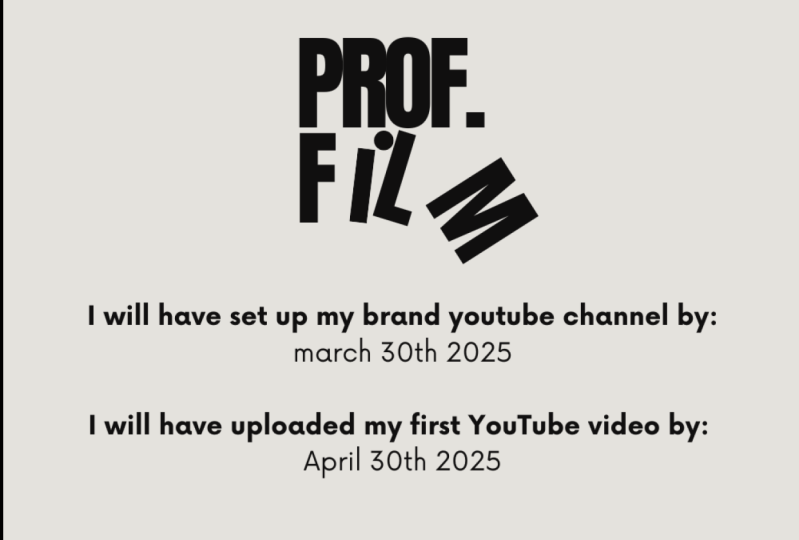
for this class is a promise and a deadline for
you to have this thing here, this record of you saying, Okay, this is the brand
I want to create. I want to have created
it by this day. I wanted to have
launched it by this day. I want to have succeeded
at this thing by this day. And I will, to do this. I will put down my own deadline, my own promise to myself, and to you about my brand
that I am building. But otherwise, I hope
you've enjoyed it. It's been lovely to see you again and hopefully you've
enjoyed seeing me again. And I look forward to seeing you soon on that brand design video. So thanks very much
and have a lovely, lonely day. He