Transcripts
1. Introduction: You've heard this term
thrown and kicked around as many times as
a ball in the backyard. It could mean
designing a new logo, coming up with a new look, choosing a name, or introducing
a product to the market. This concept of branding. What a brand is, what a brand strategy
needs to be, and is it the same as marketing? It's all connected and branding
for businesses needs to be done effectively if it's
gonna be done at all. Good. I I'm Frank. I worked with businesses
here in Australia and around the world to
identify who they are, what they stand for, how they're going to connect
with their consumers. And do so by captivating
their consumers. Attention to be a
brand is thought of. And it's done with this
thing we call a brand, bridges the gap between consumer and the
business to become a vital and valuable asset for short and long term success. Welcome to a branding for beginners course that is
made better for creatives and business owners
to be better at branding for better
business success. Bit of branding,
better business.
2. What is a Brand?: What is a brand? So a little over a century ago, a brand was what a farmer did to their livestock to identify
astray from the hood. It was theirs and it
could not be removed. Of course, this is barbaric
by modern standards. But this is where a
brand and the act of creating one branding
has come from. In the past century or more. A brand has become a thing based on the commercialism
of business, where businesses have consumers and an offering to give them. Let's break all this down. Businesses, they come in
all shapes and sizes. Large corporations of thousands, teams of 20 or even
single owner operators. They can even be people, and people can be a brand
in their own right. A consumer is anyone buying into what the business or
person has to offer. And consumers can be clients,
customers, patients, and even your audience because they are consuming what
you are giving them. Your offering is a
product, service, event, or some form of entertainment
like social media content. Where a brand fits
into this equation, is that it's the tangible
or intangible puzzle piece between a business
and a consumer. To me, a brand is a captivating
moment of connection. Now there are many other
definitions of what a brand is, a promise. What someone says about
you when you're not in the room or a
person's gut feeling. I didn't have a problem
with these definitions. But if you have a brand, I believe it needs to
do these three things. Be captivating. If your brand can
gain the attention of a consumer over
other competitors. That's the first step. It could be color,
imagery, video sound, a Logo packaging, signage, or a social media post
that captivates attention. This is why advertising
is your go-to ace card up your sleeve when it comes to getting a consumer's attention. But why do we want this
attention to create a moment in time where a
consumer either seize your brand for the first
time or recognises it. Again, we're a first impression
is then imprinted on them to occupy a few
tiny brain cells. In other words,
this moment in time is what reminds them
to think of you. They need or want what
you have to offer. This moment contributes
to brand salience, which then leads us
to a connection. This is what a
consumer feels about a business person,
event or offering. It's what a consumer experiences and the touchpoints a brand can have to connect with the
consumer for good or bad. It's why consumers pick
one brand over the other. They have options, and most
consumers have a preference. So a brand is what leads
this emotional connection, bit irrational or rational, that ties them to a brand
as they go to choice. E.g. I'm often captivated by the McDonald's
golden arches logo. It makes me think back
to a moment in time. I can distinctly remember. That was my sixth
birthday party. It was at a McDonald's
in Sydney during a terrible bushfire
season that half of my classmates couldn't get to
because of those bushfires. I'm pulling back in that moment of
experiencing McDonald's, that connection I have
with it as it is become a brand of choice over Burger King known as Hungry
Jacks here in Australia, KFC and other alternatives. When I think of
fast comfort food, which is why I take
my kids to get an ice cream every
so often from there, which I'm sure they'll look back on those moments the same way I have because of an
histologic brand moment. Now, this isn't to say a
brand doesn't exist if it's not achieving each of
these three things well. But to be better at branding
for better business success, Let's start slouch here. Am I right? A bit like a brand
mark on a cow. Your brand needs to be
imprinted in the minds of your consumers by
continually creating, captivating moments
of connection.
3. What is Branding?: A brand can be inherent
or intentional. What I mean by inherent Is that a brand can be
what it is without any deliberate action to create a captivating
moment of connection. So a brand can be inherently who you are as a
business, as a team, or as a person, by how you instinctively operate and show
up for consumers. And it can also be how your
consumers inherently see or feel about your brand instinctively when
engaging with your brand. On the flip side, a brand
can be intentional, engineered to create a precise, captivating moment
of connection. This is a deliberate set
of choices you make to elicit a captivating moment of connection with a consumer. This could be choosing colors
and a visual style that stands out from the rest of your industry you compete with. Or establishing a level of
service that is unexpected by consumers that they could
only dream of experiencing. In the last module, I established that
I see a brand as a captivating moment
of connection. To answer what is branding? I add to that definition of a brand by saying that branding is creating a captivating moment of connection from clarity. In doing so, it defines an intentional act of
creating a brand by achieving clarity of what makes the brand exists and how it continually
manages that prisons. So what do I mean by clarity? Clarity is understanding
who your brand is made for, which is all the
different segments of consumers you can
potentially target. Clarity is positioning
your brand to be thought of first over competitors. And clarity is nurturing a team culture that knows
the direction everyone is working towards and
supports growth within your team to create
greater confidence. The best part about clarity is that it's going to
influence all touchpoints, all of your brand to
consistently and confidently create captivating moments of
connection with consumers. With that, Brandon can
include the strategy, development and
maintenance of your brand, your brand name, an
updated message, keeping your visuals consistent
across touch points. Updating your logo, constantly improving the
consumer experience. Re-positioning your brand in
the minds of your consumers. Updating signage, or refreshing the menu of
products and services you have. You'll notice that branding
is not just a set and forget. It requires constant
brand management. But by having clarity, branding as a
constant activity in business becomes
more purposeful. Being objective to gain
clarity that will help you achieve captivating moments
of connection with consumers. Rather than only being
subjective of what you like, the look or sound off. With better branding
comes better business.
4. The difference between Branding & Marketing: Truth be told, there isn't much difference between
branding and marketing. Each can somewhat be easily interchanged for one
another in a conversation. The reason for this is that
branding and marketing work towards the same goal
to see the brand, when to win as a brand, it means more
consumers consistently thinking of and choosing your brand over others to win in business is to
remain profitable. These two goals are linked
by cause and effect, without consistent
consumers choosing your brand and buying what you have to offer as a business, revenue and profits
obviously can't be achieved. So if branding is creating a captivating moment of
connection from clarity, marketing is establishing
who the moments are for and making
those moments possible. If we looked at branding and marketing like a cricket game, branding is the
team on the field. Captivated great moments
of connection that consumers want to see and
catch the ball in the stands. While marketing is
the team manager. Establishing the playing
field brand to play on, managing the team and getting
the message out there. By advertising content and touchpoint experiences
to attract consumers to visit
your playing field and bias seat to the game. So analogies aside, branding is responsible for the name
and identity of a brand, the internal culture, and the external experiences and touchpoints consumers
engage with. Marketing is responsible for targeting the right consumers, positioning your brand,
pricing you're offering, placing in the right spot, promoting the brand
and its offerings, even nurturing the
consumer experience to maintain consumer retention. Interestingly, that can be an
overlap in their functions, which is why I said at
the start of this module that one could be
interchanged for the other. To give you some examples. A target market can
be influenced by the identity of a
brand or vice-versa. Pricing can influence the
identity or vice versa. And placement can influence the external experiences
or vice versa. Meaning that a
branding person can identify a target market
and guide pricing. While a marketer can also identify the external
experiences, touchpoints, and how
the brain communicates. Another objective
difference between the two is that marketing can typically be measured both quantifiable and qualitatively. While branding is typically
measured qualitatively, quantifiable data means
measurable statistics and key performance indicators that identify things
like market share, lifetime value of a
consumer, profit and loss, consumer acquisition cost or
customer acquisition cost, churn and engagement analytics. These ensure that the brand is performing when and
where it needs to. This data then helps
make decisions to either amplify what is working or
look at a change of strategy. Qualitative data measures
consumer happiness and preferences by
way of research, focus groups, interviews,
or observational studies. This helps define the
consumer experience psychologically in both
water consumers says, and what they actually do when making a
purchasing decision. Now one of the big misconceptions
I often hear is that marketing is the short-term and branding is the long term. This is total hogwash as the actions of both
complement each other in the short and long
term to help the brand when? To learn more about this, look into Benet and fields the long and short of it
to find out more on this approach to brand success without branding,
marketing falls flat. Without marketing. Branding reaches note one. While marketers can do
branding and branding, people can do marketing. This is about better branding to create better business success.
5. What is a Brand Strategy?: In the last module, my
take on branding and marketing was that they can
be somewhat interchangeable. In my view, the same goes for brand strategy and
marketing strategy. Now, it's not my opinion, it's the approach
marketing professor Mark Ritz and takes to these practice that I agree with as he believes they
are the same thing. It just depends on
whether you're talking to a marketer or a branding person. Because the same
steps can be taken to address the branding and
marketing of a brand. And then it's ultimately
about working towards a goal to see the brand when. It's also quite similar
to business strategy, which focuses on
business operations, profits, and product
development. The two can and should
influence one another. While there is also
some overlap in both approaches to
developing a strategy. H context, let's call it
brand strategy for now. And let's also say
that strategy, in a broad sense, is not a plan to win. The best definition of strategy I've heard comes
from Roger Martin. He's an author and former
School of Management, Dane, University of Toronto. He says that a strategy
is an integrated set of choices that positions you on a playing field of your
choice in a way that you, when a strategy is
a theory you have, as Roger Martin says, that is both
coherent and doable. Now in the last module, I've established
what winning can be for a business and
for our brand, as well as where branding
and marketing fit. If we looked at it like
a game of cricket. If we continue that analogy, a strategy for the business
and the brand is deciding to play your own version
of cricket, not the game. Competitors are playing. A game that attracts the same, if not similar consumers. So let's say every other
competitor is playing five-day test match cricket
and one day cricket. Your theory is to play a game of cricket that is reduced
to 20 overs per side. Your strategy is deciding that what you offer is still cricket. But the way it's
achieved is that it's your own brand of
cricket that changes the experience for
what you believe a consumer wants so
that your brand wins. It's not to say that consumers don't still like test
match and one day cricket. Or if your brand of
cricket wasn't available, that they wouldn't consume
these other options. The strategy is to
present your brand of cricket as the preferred
option for many reasons, allowing you to then execute the strategy by brand
naming it t 20, adding light up, flushing
stumps, colorful competitions, and marketed as an
action-packed brand of cricket that
is positioned for all the family to
experience cricket within an accessible for hours, not four to five days to
see an exciting result. Now if I put this into
a business context, a good example is AirBnB. The business strategy is
deciding we don't want to compete as another global
hotel chain like Hilton, Marriott or a core. And we can elevate the concept of quite bed and breakfasts to make it easily accessible and bigger than any
single hotel chain. Our theory is that we can do so without owning a single
room, building or pool. That we can share
our technology and profits with everyday people, own rooms and properties
around the world to grow our capabilities
to host people are defined by the amount of
hosts we can attract. The brand strategy
is deciding that we aren't a hotel
chain where bigger, we're everywhere and
we're just like home. Our theory is that we can
be a home away from home. And we can be where
our consumers want to be anywhere in the world. And thus calling it Airbnb. To grow, our message needs
to reach more people around the world to realize this experience is
waiting for them. Now, I have no idea if this was Airbnb strategy from the outset. But if it was in somewhat
the same ballpark, Could we say Airbnb strategy
is helped their brand when? Well, in an article
from The Guardian, Airbnb site listed more than
6 million rooms, flats, and houses in more than 81,000
cities across the globe. In just over a decade, amounting to an average of 2 million people resting their heads in an
Airbnb property. H naught. This amounts to half 1 billion
people, 2008-2019. Let's compare that to Marriott, the world's largest hotel chain, which has over 1.38
million rooms as of 2019. So that's 1.38 million rooms versus AirBnB
6 million rooms. I think it's safe to say that
the strategies in general, if this is what
they were close to, have been tremendously
successful. Now, to action a brand
strategy, much like branding, it should also not be set and forget shore some
strategies can prolonged. But brand strategy, much
like business strategy, should guide you in your day-to-day activities
and be periodically revisited to ensure optimal performance
is being achieved. This is what makes
branch strategy and integral part of effective
brand management. This is crucial to a brand
because as we've established, brand strategy is a theory. Theories don't have guarantees. So what if the theory proves ineffective
and doesn't work? Well, your brand strategy
isn't set and forget, is it. You're not locked in. You have the
opportunity to pivot your strategy when you
periodically address it, be at every 612 or 24 months. Now if things go positively and the theory proves
to be correct, then you can decide to double
down on that strategy by doing the same or more of the
above to grow your brand. So to engage in effective
periodic brand strategy is to follow eight simple steps. Start by reviewing
where you are now, where if you're starting out looking into market orientation, that can then lead to
researching segmentation, targeting, positioning, setting objectives,
then tactics, and making sure you have a budget that makes all
of this achievable. Now I'm not going
to go into each of these steps as I'll save that
for maybe another course. Meanwhile, there are also a few other practices to brand strategy based
on the brand needs, like brand architecture that can also be added to this process. But these fundamentals,
in short, a strategy is able
to be extracted somewhere in-between research, targeting, and positioning. Because we want your
brand to establish in one sentence that
this is what we're going to be for these specific
consumers in relation to our competitors within
this next period of time. By doing so, the aim is to have consumers think of your
brand first when needed. How you're gonna do
that is by following the plan part of this brand strategy
process, specifically, the prioritized objectives
and tactics that need to be achievable with the budget
you have to play with. This is your plan of action
to execute your strategy. Now I feel there is
a misconception as well about brand
strategy in that many are developing an internal
brand identity direction and calling this
the brand strategy. For the most part, it's focusing its attention on
developing a purpose, mission, vision,
values, personality, and sometimes messaging as well. While each of very important to establish the problem
with this being the basis for your
strategy is that these facets of a brand
are unlikely to change. Instead, I believed
that these facets, the core of your
brand's identity. Sure, they can evolve over time, but they also need not
change in many cases. So for those that see this
as branch strategy to them, a brand identity as a result, is only what you see. The colors, logo,
and visual elements. This is something I
also don't agree with. Why I believe this delineation in terminology and practices important is that if you compare a brand identity with your
own identity as a person, surely you are only
defined by how you look. As individuals. We have an identity that is
comprised of a realized or unrealized purpose of vision
of who we want to be, a long-term mission goal of what we want to achieve in life, values that we
morally live up to. And a personality that
is inherently who we are and can be shaped by
our life experiences. If you throw this into a
business brand context, sure. This can definitely be
intentionally crafted in a strategic manner in
an effort to attract the right team to
the business or the right target market if it influences the external
identity as it should. But this is still identity. So this approach to brand
strategy that others take is not so much an
adaptive strategy to win, but an objective or
tactical requirement to have an identity developed
or refreshed with clarity. The kicker in all this is
that a brand strategy can be executed without
the need to change the identity of a brand. If I could give you the
best visual example of how brand or
marketing strategy, whichever you want to
call it, functions. If we start at where
the brand beach is, we're just keeping to the pretty END bit and ignoring the whole journey
that comes before it. Instead, we need to make sure
we're being strategic and objective in our execution
rather than subjective. In other words, wanting just
a logo designed becomes a less valuable exercise
in time and money. To clearly define
a brand strategy, strategic thinking can be hard, but if a process is followed, the end result can be simple to be understood and executed. Yes, coherent and doable. So if we were to follow this strategy process,
are presenting, we can ensure better branding is creating better business.
6. What is a Brand Identity?: How do we remember and recognize the global
tech company, Apple? Is it for the iPhone? Is it for connecting with
loved ones on a FaceTime call? Is it the computer that you look at every day to do your job? Maybe it's the white earphones. An airport that just
about everybody on a public bus has in their ears? Or is it the identity that
you're captivated by? Two overtime connect with
subconsciously making. You choose Apple and it's inescapable ecosystem
of products and services over others. It could be the iconic
apple shaped logo, the style of their products,
the unboxing experience, the aesthetic of their
digital and physical stores, the messaging you read in here, or the team culture that you can feel in your customer
service experience. It's all of these
things and more where a brand identity
fits amongst all of this, is that it becomes the
core part of what guides your brand image externally and your internal team culture. So there are two
sides of an identity, the internal and the
external identity. And we can break it down
into three to four parts. Your internal brand direction, your message, your visual,
and you're audible. Your internal direction is, as I covered in the last module, what many see as
your brand strategy, call it what you will. But I call this a
brand direction because it informs
what your team is working towards every day until the end of
days potentially. And it becomes the bedrock
from what you built up from. It informs the personality
of your brand, which can be inherent
based on the people behind the brand or intentional, to collectively bring
together a great group of people who can work together to share a common
day-to-day purpose to measure the impact
beyond making money. Values that can
influence team culture. A common personality to feel unified by a mission
and vision to know what success can
look like for the brand long and the short term, if appropriate and if needed. This foundation of
an identity may seem arbitrary or
at least obvious. But if you looked
at like an iceberg, it's what you don't see
below the surface that makes an iceberg what it is
above the surface. And what many don't
see is the impact it makes on your team
if used correctly. Helping you not only
attract the right people, but measuring the impact
meaningfully while establishing a positive
culture that you can hire or maybe even fire by. So when it comes to what is
above the surface in what your consumer experiences
being of message, visual and audible identity. They are all made from
the same block of ice as your internal direction and
strategy to go along with it. So much so that if you
proceed in a linear fashion, starting from a brand strategy
to a brand direction, to your brand messaging, then to a visual identity, and if needed, an audible or as it's also known
as sonic identity. Each step influences
the preceding step. This creates cohesion. Your brand identity becomes a clear and consistent
reflection of who you are, who you are for, why
you do what you do, what you do every day, your personality, voice,
what you're working towards, what you have to say and
how you look and sound to cover what can be included in each step that pokes its
head above the surface. One is brand messaging. It's your tone of voice, your story, your tagline, slogan, selling and
value propositions, call to actions and more. The second is a visual identity. This is your colors, fonts, typography,
logos, symbols, icons, graphic elements,
imagery, mascots and law. And the third is a sonic
identity that can be cell logos, things, jingles, music,
and sound effects. Each of these three to four identity pillars, if you will, then fundamentally carry
through to the touch points, brand experiences and marketing your brand communicates
externally, many of which become
the distinctive assets your brand will be recognized
and remembered for. It can influence the
style of your packaging, the price of your offering, the look of your shop
filled out, or clothing, the design and function
of your website, and maintain a
consistent brand image. If followed with a clear
set of guidelines, known as a brand
guidelines document, a brand identity carries
tremendous value, and then it can help
determine a brand's value. Now it is brand equity. E.g. in 1971, Nike Swoosh logo was
first designed for $35. Today that swoosh is
valued at $35 billion. Not because the logo is a technical masterpiece
by today's standards, given any designer is
capable of designing it. But because of everything
Nike has done to elevate its brand identity based on all aspects
of its branding, marketing, business, and
consumer experience. In other words, a logo is not great because
it looks great. It's great because of the impact and success
that the business has had from getting their business marketing
experience and branding, right? So where there's a
brand identity fit in amongst the definition of branding as a captivating moment of connection from clarity, your visual identity
is likely to be the first captivating
piece of your brand. For those with visual
or audible impairments, your messaging or
sonic identity are the likely draw
cards to captivate attention over competitors and recognize when
experienced again, how you can connect
with the consumer is by the voice and
words you use to emotionally connect
with your consumer to elicit a feeling of by now, to admire your mission, to align with your values. See the benefit. Feel seen by your
value proposition that you are for them, or simply just make them smile
by the tone of your voice. While clarity is achieved for your team to know how
they need to consistently communicate and show up as a unified team that
represent the brand. For consumers. And identity can
make them feel like the brand was clearly
made for them. And they understand what is
being offered and by whom. The ideal outcome. And personally a brand
identity is the part of branding I enjoy
specializing in as it becomes an influential part of how the team and the consumer experience the brand
in a way that breeds confidence in many unique ways.
7. What is Brand Image?: At the beginning of this course, I mentioned that there were many definitions for
what a brand is. One I brought up
was a quote from the chairman and original
founder of Amazon, Jeff Bezos, who said a brand is what people say about you
when you're not in the room. I see that as a half truth. When it comes to
brand management, you can control the execution of your brand strategy and the
brand identity who present. What you can't control is the image your consumers
have of your brand. So I believe your brand is what you inherently or
intentionally make it. But it's also going
to mean whatever a consumer sees he's
or feels about it, be it positive or negative. The challenge with a brand image is that while you
can't control it, you can of course, influence it for
the betterment of your brand or even
to your detriment. But so can external forces, shifts in consumer expectations, societal attitudes, and cultural or
environmental evolutions can happen gradually or quickly. So to ensure your brand
remains relevant, thought of attractive
and valuable, your brand image needs to
be considered thoughtfully. One example of this
is the growing shift away from single use
plastic packaging. Mars has recently done this
with their confectionery. So many brands and
needing to live up to their consumers expectations by focusing their brands attention
towards a commitment to sustainable and alternative
deliveries for their product. A similar example of this is BP. In 2001, BP infamously re-branded from British
Petroleum Beyond Petroleum. In doing so, they pledged
to hold emissions constant and to be a
steward to the planet. But after a major oil spill
in 2006 and again in 2010, with the biggest oil spill ever recorded in the Deepwater
Horizon oil rig explosion. This detrimental effect on
their brand image was immense. Bp lost $44 billion of market value in the
space of three months. And no one was filling up
their cars with the petrol, leading them to quietly rescind this solar and wind
power efforts. Essentially moving away
from their re-brand. That was until 2020
when the image emerged from a long duct
spill of negativity. Re-computing their pledge to reduce its oil and
gas production in substitute for more
renewable energy investments. Now, to influence a
positive brand image that is memorable, recognizable, and thought of first, we want your brand to occupy at least a few brain cells
in your consumer's minds. I learned this concept from marketing professor
Mark Richardson, occupying three brain cells as a way of positioning your brand. I've since introduce this into my own branding
process with clients. The idea behind it
is to lean into three facets of your
brand that you believe a consumer will
likely remember you for all that you want
them to remember you for. These three things can be
the distinctive assets your brand can be
identified by like color, packaging, mascots,
logos, shop fit out, or even a tagline. It can also be
values, Personality, and the people that are
the face of the brand. If we think about Tesla
or hear their name, their three things
could be their people, which for Tesla would
easily be Elon Musk, their main product category, fast automated driving
electric cars. And then logo, the
elongated T-shape. If it was the Olympics
as an event brand, their iconic five rings
logo would be the first, followed by sport, dating
back to ancient Greece, followed by all nations
from around the globe. If it was Starbucks, it had no doubt be the coffee, the green mermaid logo. And they're trendy cafes
people tend to work in. So leaning into these three
facets can ensure your brand remains clean and simple
in your branding efforts. And for your consumers to keep your brand Top of Mind with a more positive than
negative brand image. Which means that if
better brand and keeps you top of mind to
be chosen over, others, were creating
better business success.
8. Why is Branding needed?: If it hasn't been evident throughout this
course, branding, along with marketing, is an integral part to
business success. I always say that if you
can at least think of one brand in a category that you think of first and maybe also by like Kleenex for facial
tissues or toilet paper. How did they do that? Do you think they
didn't get there without branding and marketing, to invest huge
sums of money over the years globally to
become so ubiquitous. That instead of saying a tissue, many Americans call
them a Kleenex. Same goes for Google or Uber, where they become a noun
rather than just a brand name. Branding is what
can set you apart. And if that can be achieved, it means more business is coming your way rather than
to a competitor. So let's say you're
competing with a cafe that is five shops
down from your cafe. This is fun, newer
has attractive, engaging staff and a
clean, modern fit-out. Yours, on the other
hand, is a little dated, loved whites regulars, but new customers
are gravitating towards that cafe that has a more captivating
appeal based on first and maybe even
lasting impressions. We're vein creatures. And usually if it
looks and sounds good, we expect it to be good. It's the classic judging
a book by its cover, which is why the first hurdle of branding is to captivate. If you can do that, then you have the opportunity
to connect with consumers to provide your level of brand experience
that sets you apart. This becomes trickier when a competitor is just
as captivating as you. But if you're able
to connect with your consumers or if you're offering is communicated better. These become the next level of criteria a consumer is looking
for to make the decision. So if all things
are equal and you need to find your
competitive advantages, branding can help you do so in so many ways beyond just
how your brand looks. I also touched on this
throughout the course, but branding is part of
what attracts great talent. If you want to grow
into a bigger business, each team member not
only wants to be valued, but they'd no doubt want
to share the same values, feel part of what shapes the team culture and
be supported by having a clear identity to
communicate with confidence when engaging
with consumers. Because if they're not on
the same page as each other and proud of what they're
getting out of bed to do. Then how can you
expect your consumers to have a positive
brand experience? Where this leads to, is having consumers that want
to come back for more and talk about your
brand with others to spread the word positively. As a negative experience
is more likely to spread wider than a good experience. This means you need to have your brand experience
dialed in and managed effectively to see
the benefits which might be in the
short and long term. If you think branding
is not needed, YOU any different to any of those brands you
could think of first, in any category, who did believe it was
needed to succeed.
9. Exercise: 3 Braincells: In module seven, I talked
about these three brain cells concept I learned from marketing professor
Mark Richardson. It's such a valuable facet of clarity and branding
as it simplifies the three things you're
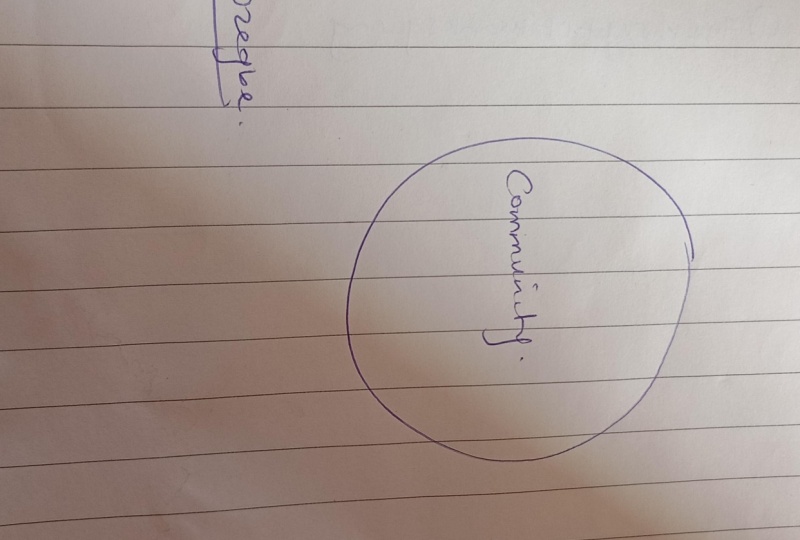
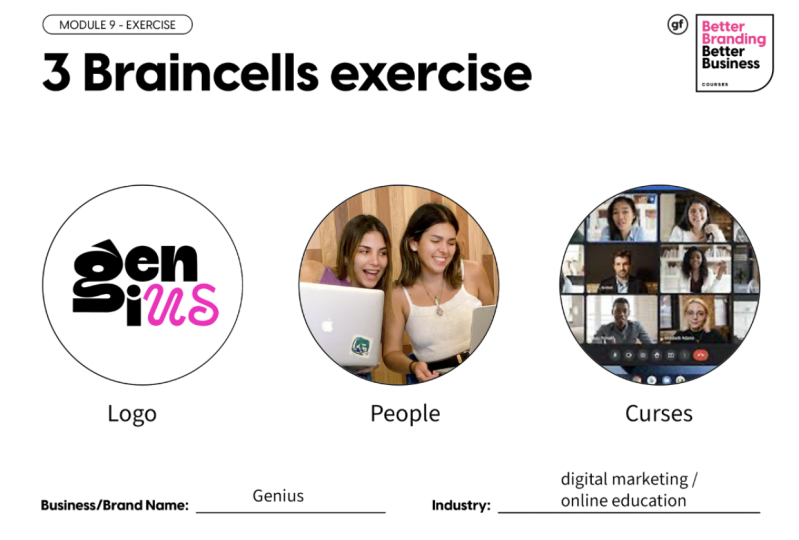
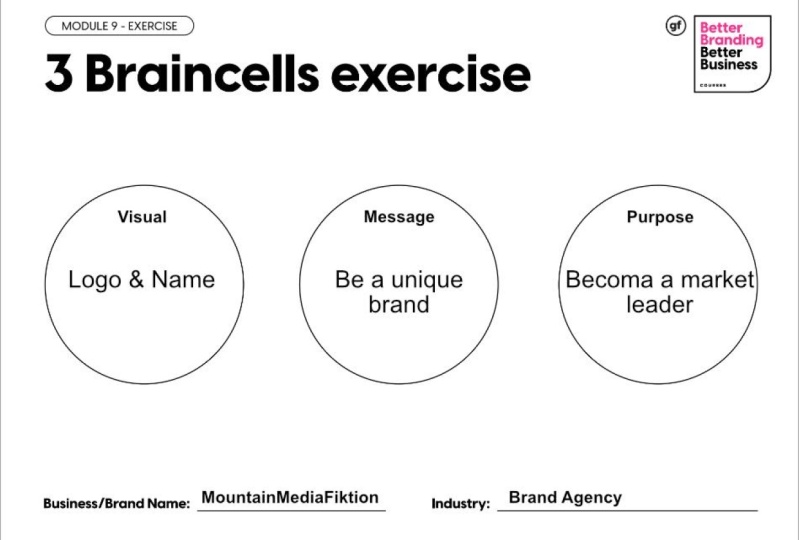
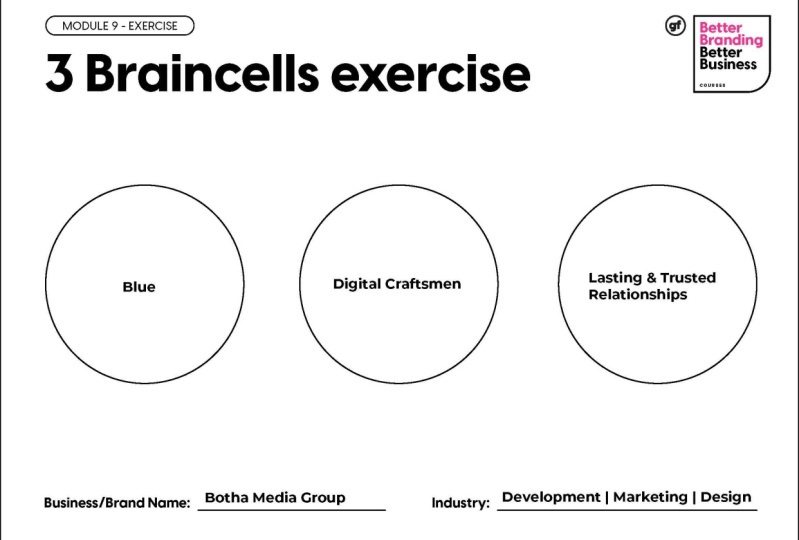
gonna be easily able to park in each brain cell. As an exercise for this course, I want you to do the following. The first is to draw
three circles on a page. Next in each circle, right, one thing your brand can
be easily remembered for. And lastly, add context of what the brand or
business is and does. Just so that I can
see what kind of business is behind this brand. You can either do this for
your own brand or business, or you can think of a past or ideal future client if
you're a branding person. But think of the most identifiable and or core
parts of what makes your brand what it is in three rudimentary but
significant parts. You can then submit
your three things in a PDF or a photo if
you've written them down, spend no more than
20 min on this. Because if it takes longer
than this for your business, you need to give me a call to
help you find that clarity. And I look forward
to reading them.
10. Conclusion: Well, thank you for coming and experiencing this branding
for beginners course. Now, I'm not the
one who said this as it'd be exceptionally biased, but the editor-in-chief of Forbes magazine,
Steve Forbes did. And he said, branding is the single most
important investment you can make in your business. I'm not going to argue
with that because I know the impact it has. I see it on my business. I see it on my wife's business. I see it on my
clients businesses. And I see it on every
successful business around the world that
we know and buy from. I'll say throughout every one of my courses with better branding
comes better business. Because there's going to be
a time where investing in your brand or helping a business take that leap with your
services will be for the better in the short and long-term
in many different ways. So I hope this course
captivated your attention, became a moment in time
that you can refer back to the foundational
theory principles for how I approach branding
has connected with you to inspire better
branding, better business.
 G'day Frank, Better Branding Better Business