Transcripts
1. Why Planning Matters: What's the biggest
mistake brands make when it comes to Black
Friday email marketing? A, not offering big
enough discounts, B, sending too many emails or C, not personalizing their message. Maybe it's D waiting too
long to take action. The correct answer is D, waiting too long to take action. This is the biggest mistakes. There are many you can make, but many brands and marketers underestimate the importance of early prep for Black
Friday campaigns. And I know preaching to
the converted here about starting early allows you to
optimize your email list, refining your strategy, and stand out from a
honestly crowded inbox. So today, we're tackling
this exact mistake, waiting too long to take action. Whether we like it or
not, Black Friday is all about timing and if you're
not prepping in advance, you risk getting
lost in the noise. But if you're watching this, and it's already close to Friday and you're
panicking, please don't. As always, I've got you
covered, dear able. In this workshop,
I'll break down a very comprehensive B
Friday email strategy, and if you are
scrambling last minute, I have created a last
minute calendar that still delivers results in
a short amount of time. Now I'll be honest,
I'm all about planning ahead. That's my thing. But just because you're rushing, potentially, it doesn't mean I can give you the tools
that you need to succeed.
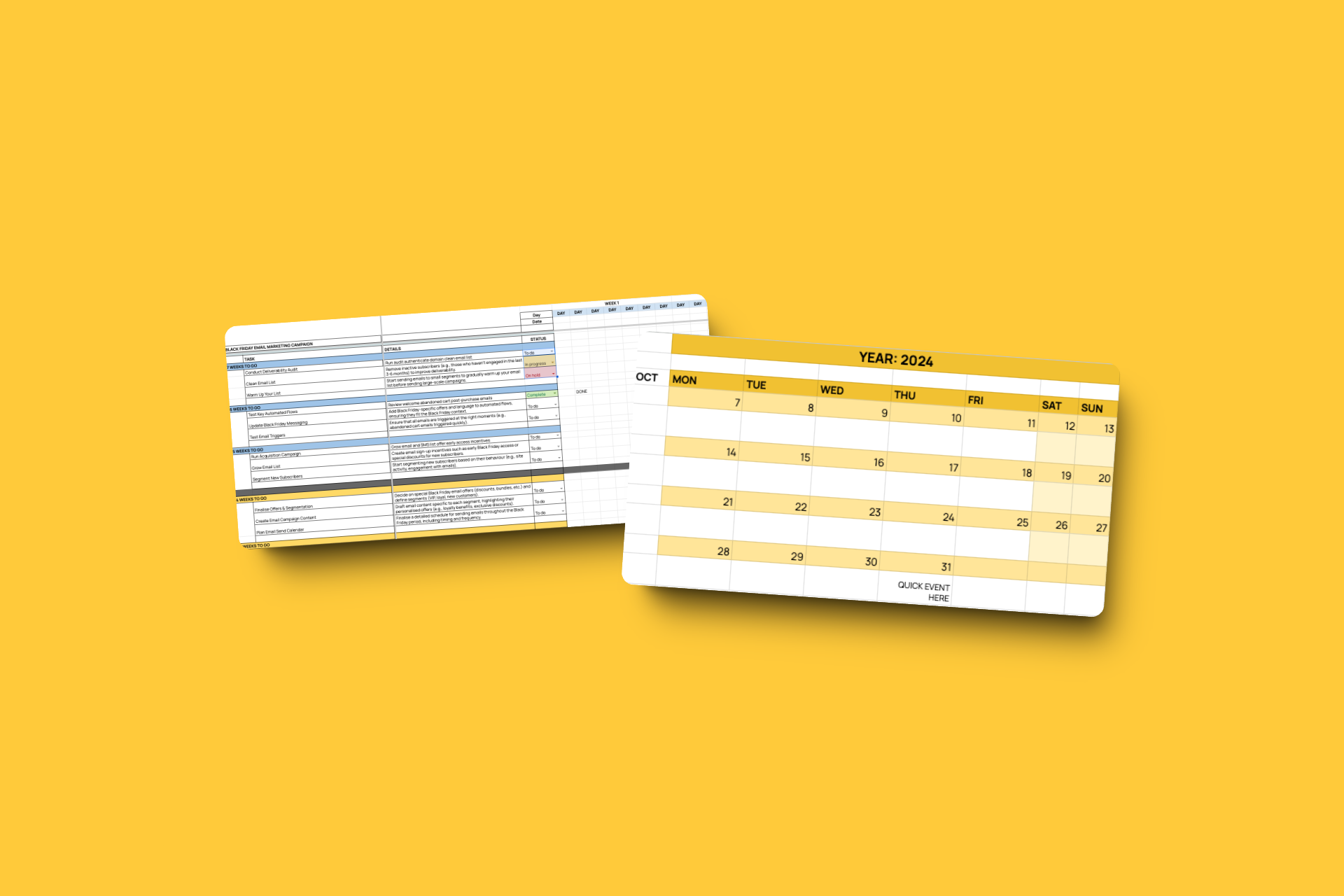
2. The Black Friday Email Calendar: So what does a Black Friday email marketing campaign
actually look like? Well, here's the
ultimate checklist. So whether you've
got seven weeks, this is what we're
going to look at as the overall timeline, or you're just down to four
weeks or yeah, even less. So if you're the last minute
planner, I'm talking to you. There are ways
that we can prepp. Let's start with seven
weeks before Black Friday. This is where the timeline
starts and it starts with an audit. Yeah, no, no. If you know me, I
like a good audit. But if you've got
the time, start with deliverability audit. You want to make sure
that your emails aren't going to lost
in the spam folder. It's an email
marketing strategy, so we want to make sure that
you're warming up your list and making sure that everything
is working smoothly. If you only have four weeks
down to Black Friday, just do the audit as
soon as possible. If you're short on time,
just focus on cleaning your list and setting
a few targeted email. Just to reengage with
inactive subscribers and improve your email
reputation fast. Six weeks before, we're going to test key
automated flows. What does this mean?
We're going to double check all your automated emails. Welcome email a banded card
email, post purchase emails. You're going to make sure that your messaging is seasonally relevant and includes some
strong Black Friday teasers. If we're struggling and
we're short on time, still four weeks before, you can skip the fancy test and just review the key flows. If you're struggling
even more with time, prioritize a banded card
and post purchase flows, as they are going to be the most valuable during this rush. Went back to the
original timeline. We're five weeks before
Black Friday and starting to heat up, which means you want to start running an acquisition campaign. This is a good time for you
five weeks before to go your email list and Bal
ina SMS list if you have. So you can incentivize sign ups with early Black Friday assets or a giveaway just to start
getting new leads on board. And it's important
that you do this. Even if you're short
on time and you only have three weeks
before Black Friday, try to make sure that you
have at least one campaign, one call to action, one way to bring new people
into your world. We're now down to four
weeks before Black Friday. This is the official four weeks. You've had already
three weeks to work on everything else and
you had a handful time. So regardless of where we're at, you want to decide offers,
dates, and segments. Now is really when
you want to lock down what you're
offering head to whom. So make sure that you have
the time you're segmenting based on costuming
behaviors like loyalty, cautious frequency,
and engagement. This is very important. If you are short of time, you can even do this
two weeks before. I did want to do it beforehand, but I really want
to make sure that you audit as you're starting. For a short term time,
two weeks before, make sure that you look at
the offers that you want to push and start a list dividing your audience into two
to three key segments like loyal customers
and Window shoppers. This is very important because if you have
a bit more time, you're actually going to
have more time, obviously, to push more to your
current customers as well. But in this case, we
are trying to do the best we can with
very little leeway. Three weeks before Black Friday, we also want to
make sure that we are promoting any
loyalty opt in. We're really pushing
our current customers and our loyal customers, making sure that you're
getting these people excited about Black Friday, tapping into any access or exclusive perks for
people that are part of the loyalty programs
if you have one. If you don't have the time to
do this three weeks before, you can just do it one
week before Black Friday. At least one email, one SMS campaign that
gets people to opt in early for a Black Friday deal is going to be so important, regardless of which
channel you use. Two weeks before Black Friday, you can start scheduling
your actual campaign for that golden week. Hopefully, we got
emails, SMS lined up, which means you're not
scrambling last minute and you have enough time
to set them and test them. If you're last minute, give
you at least four days. I wanted to give yourself
at least four days because if you're working
with just four weeks, this is the time for you
to lock your emails. Get at least your VAP and
early access emails ready, and then you can just
automate the rest. We're now on the one week
before Black Friday. It's time to reward the
VAPs and loyal team members with early access to the sale because we promised
it to them last week. This will help you
build excitement and keep your most engaged
customers happy. If you're in a time crunch, give yourself at least three days. Three days before Black Friday, launch that VIP access. Get them before the whole crowd and help encouraging
them to come back. And I heard of bonos a few
days before Black Friday. You can also launch some special private
community broadcast channel or SMS deals as well. So you can give these
people an early discount that they can get
before anybody else. This is a great
thing if you have any of these channels to use. This you can do a couple
of days before or even the day before,
Black Friday. It really doesn't
matter, but it's good to use SMS broadcast channels, internal communities to cut through the noise and
get one final push. And then we get to Black Friday. This is the big day. The moment
you're building towards. Make sure that you have
scheduled your main campaign, maybe your Cyber Monday
campaign as well. All these emails
and messages are all ticked off in
your email list, and you don't have
to worry about it. It doesn't matter
whether you have a seven weeks or
just four weeks. Today is all about maximizing
exposure and making sure that you have built enough excitement for people to expect, what you're going
to share with them. Hopefully, this gives you an
idea of the options that you have and no matter how
much time we've got, whether it's seven weeks or
four, prepare what you can. Hopefully, following one of these timelines will
help you keep you organized and make sure that you Black Friday
convey hits the mark. That was a hell of a ride
by the way, wasn't it? I give you everything, but now we're going to
break it down because now we know what
the timeline looks like, we've got to execute it. So if you're still feeling
a bit overwhelmed, let's go for it step by step.
3. Running Deliverability Audits: When it comes to
email marketing, time is your best friend. The earlier you can
start, the more you can impact the
effectiveness of your strategy. Why? Why specifically for emails? Because the success
of your emails hinges on the factors
like deliverability, list health, and
all dis engagement. And all these take
time to fine tune. Rushing last minute means you might miss some
key optimization, trust me, that will
show in your results. So at least give
yourself four weeks. What's step one? Remember, whether it's seven
or four weeks, we're going to run our
deliverability audit. This sounds a bit
technical maybe, but it's easier than you think. It makes or breaks
your campaign. So what is the lurbility audit? This audit is essentially a health check for
your email campaigns. You make sure that your emails
aren't just ending up in the spam folder and are landing in your
subscriber's inbox. Which is exactly what we want, especially in Black Friday. Here's a couple of
things for you to do. The text side is about making sure that your emails are coming from a
verified domain. Now this is something that can include setting up things
like lots of acronyms, SPM, they can mark. These are all records that tell email providers that you
are transfer sender. Now don't panic,
start screaming. Most platforms will
do this for you. When you set up your email list, especially since
Google has tightened up security on that
front in 2024. But it's worthwhile
for you to check. Also while we're at it,
check your metrics. And lell dive into your email reports and look
at things like open rates, spam complaints, anything that really shows what's going
on with your email list. Open in active subscribers
can be a red flag. This is actually a good way to explain and motivated to
clean up your email list. Before Black Friday, it's very important
for you to remove any inactive subscribers or anyone who hasn't
engaged in mouths. How do we do that? This is one of my
favorite topics, and I taught you, many
email marketing workshop. It's not as daunting
as it sounds, so I'm going to give you
a quick guide if you've never cleaned call and
engaged subscribers before. First, identify your
call subscribers. These are folks who haven't
opened your email in three to six months or longer depending if you
don't send emails that much. Then you create a special
re engagement campaign. Sending them an email
that encourages opening for the right reasons. You can share a freebie, run a special giveaway, try to find a sweet
spot between inviting, but not click Betty. You want it to be something
that feels good and aligned. Give them some time about
a week or two if you have the time within your lead way to the Black
Friday campaign. Whoever engages, you
keep on your list. For those that haven't
opened any of these emails, then it's time to say goodbye. You can literally remove
them from your main list and just keep your
engagement rates healthy, which will also get more of your people to see your email in the inbox instead of spam. Remember, a smaller and
more engaged list is way more valuable than a
large and responsive one. Last, extra brownie points, we save email costs and improve
your delibility Win win. Finally, this is for everybody who hasn't been email
inconsistently. Start sending emails to smaller segments
before Black Friday to avoid overwhelming email
providers with a huge blast. Engaging emails like
introduction emails are the best for this. Boy very simple and they're
easy for us to produce. Let's dive into an example. Imagine you're a accessory
brand that makes bubble hats for Genius, been a bit quiet on the email
front lately and want to warm up your list before
the big Black Friday blowe. Here's what a warm up
campaign might look like. Email one comes four weeks before Black Friday
because yeah, they've been B last minute. So what they're going to do, they're just going to
send an email that introduces themselves
to their audience. And the context could
be something like, it's been a while, isn't it? We've been busy
creating some pull some new bubble hat designs
for your fairy pas. Want to see, hit the button
below for sneak peek. Great way to kick
off and re engage. An email too could be something along the lines of a question. So you can ask a question
like, what's your pet style? Inside the email, you
can say something along the lines of, we're curious. Is your furry friend more
about causing nip beanie or a sparkling pomp
fom enthusiast. Click on What works best for you and we'll show you
something special. Once again,
encouraging people to really engage with the email
is going to be essential. L, you can send one
final email if you want. A couple of weeks
before Black Friday, say something big is coming. This is where you can
hint at the offer. You can say, we've got a massive surprise
heading your way. Hint involves serious
discounts and a dmable bubble hat. Stay tuned. Simple and straightforward. This is a series of
emails that could work really well if you haven't engaged with the
list in a while. So basically, how far in advance did the brand start the
warm up campaign? Was A two weeks, B three weeks or C four weeks. If you picked four weeks, you have the right answer. Why? Because it gives you time to clean and segment your
list effectively, you can gradually increase email frequency without
overwhelming subscribers. This is a great way for you to warm up your
list and also start sending emails if you're not
active in your campaigns. Starting with four
weeks allow you to do this without feeling too rushed. As you can see,
this will require some prep beforehand as well.
4. Checking Automated Flows: Next in our Black Friday time I also talked about
automated flows. See, so much of this campaign is not just about
sending emails, but also looking at
what's already there. Black Friday is a busy
time more than ever. Now is the time for
you to look at how can you optimize personalized experiences to your subscribers? Which means, yes, we're not done reviewing, sorry,
you're not sorry. But let me show you
why it matters. Back in 2023, I
worked with a client, renowned Swedish brand on a three month project and it was leading up to the big
Black Friday campaign. And we followed this process and this timeline that
I'm sharing with you now on the seven weeks mark. The real magic happened when
we got up to this stage, setting up and testing the flows after auditing how
things were going. We spent weeks fine tuning
every automated email from welcome sequences to
abandoned card reminders. And you know what? I
paid off big time. Because when Black
Friday rolled around, the email conversions
went through the roof and we great results. I could definitely see that also happening inside those
automated emails. The client was happy. They texted me occasionally because who sleeps on
Black Friday anyway. Everything went really
smoothly and this was because we actually knew all the different steps we
needed to take to make emails run without having to rush
ourselves to the stages. Trust me when I
say that this step or reviewing your key
flows is essential. These flows are your
welcome email, for example, or welcome sequence,
your banded card, and your post purchase flows. One suggestion that I have, if you're feeling
a bit overwhelmed, look at what you have, and you can even pause
existing automations and emails and create new Black
Friday specific ones. Why? Well, way to make sure that your messaging is relevant for Black Friday. A generic Qualcom email
doesn't work as well. So instead of changing what you have and then
forgetting about it, you can literally make a copy and create a specific language then you add to your automation. Iideally if you build new
ones for this campaign, you can then set them up and run them and then pause them
again what it's done. On that note, it's
also a good time now to check all of your links
in all of your emails, especially if you
change your site or updated your authors or you have specific tracking for your Black Friday
offers as well. Honestly, this is a small thing, but it makes a hell
of a difference. This is also good time for
you to look at the timing, make sure that your abandoned
card emails are sent quickly during the
Black Friday period because it's going
to be a short time for Black Friday deals. Maybe you want to
make sure that also other emails are sent
across at different times, that might not be the
usual ones that you have for your ongoing welcome
email campaigns. I know this sounds
very straightforward, but we don't think about testing all the
different steps from timings to broken links and even things like making your
emails mobile friendly. This is going to be so important because
without the basics, we cannot go to the next steps.
5. Identifying Key Segments: The next step is one of my favorite parts of crafting a Black
Friday email strategy, which is looking at and
identifying key segments. I'm a big fan of
personalization. You probably know this by now, and I generally believe that personalization is huge on email and it's very
untapped for people still. Not all of your
subscribers are the same, and tailoring your messaging
based on who they are, especially what they've done and how they engage with your brand, or your products is going to be huge for Black
Friday success. To help you out, we're going to talk about three segments you
should be focusing on, especially if
you're just getting started or you're
strapped for time. The first one is shoppers who haven't made a
reaching purchase. These are your Dorman customers. They haven't purchased in the last three
months or even more, but it doesn't mean that
they're not interested. Maybe they just need
the right offer. They will pull them back in. F this group, you want to
deliver a great offer, something that really
gets them to act. Often, a tailored discount or bonus works really well
here for these people. So I really suggest sending multiple touch
points to this segment. Who were others? Like sending a gentle reminder, I think
is really important. Re engaging with them
and then following up after that with more urgency as Black
Friday gets closer, can be really powerful. Now this is where you want
to segment this group based on any things any pages
they've been checking before, any products they had
in their cart before, anything that you can use to make it better and to make it more
personalized to them, even if it's just basic
interests, it's going to be huge. Last year, shoppers are also a great deal because they've already
scored a deal before. So these are the people they purchased from you
during launch back, Friday or Saber Monday. They might be primed to
do this again this year. One of the problems and
the biggest mistakes I see is that people repeat what they did
the previous year. I'd like for you to think
about other things. It can be Early Access offers work really well. AP discounts. Anything that almost celebrates the level of loyalty
that they showed you is really important here because this loyalty will
have them choose you over other brands that
are getting their attention. You can building a longer
term trust here and driving some good conversions for these people that
already bought from you. And then there are
the Window shoppers, and these are just
website visitors. They haven't made a purchase. Mother shown interest by
browsing your website. Hopefully, you will know this
by any side of tracking. You already know what they're
looking at most hopefully. So you can actually hit them up with a product
specific discount, whether it's because of
a link they clicked or just things that you can
look at when it comes to what you can access
from your data. You can actually make your
messaging hyper relevant, potentially by going as far as offering them a
specific offer on a specific product
that they were looking at when it comes
to their page views. These shoppers are usually
the ones that compare prices and features and benefits
across different brands. A really specific offer is just the nach they need to
choose you over somebody else. Now this type of audience works really well if you're
already capturing website viewers through any ad pixels or any
connection between your email marketing and
your website analytics, especially if you're
doing social ads as well. But if you are a beginner, don't worry too much about overcomplicating the experience
of the Window shoppers. But for all the Rebels
are a bit more advanced. This is something that
you can do and bear in modern combining
email marketing with social ads for Window
shoppers as well. So before we continue,
which one of these strategies do
you think is the most effective for converting
widow shoppers during a Black Friday
email campaign? A, sending a generic
Black Friday discount code to subscribers. B, offering product specific discounts
based on pricing history, or C, waiting until Summer
Monday to send any offers. As I mentioned, just before
the best thing to do is be offering product specific
based on browsing history. This is super effective
if you have access to any data about who they are, about the browsing history that can be tied with
your website analytics, your email analytics, or potentially your
social ad tracking. When possible, sending
anything that is targeted to the specific people
or any interest that they have will help
them converting faster. This can be anything from
freebies they got before, forms they joined or webinars that they were part of or products
they had in their card.
6. Planning Campaigns & Timing: Now that we saw a couple
of target key segments, I want to go deeper
into how to take these into than designing a
campaign and segnting it. This is where the
proba book comes in, everything is wrapped together. I said it to you before.
You don't want to just send emails for emails sake. You want to send the right
messages to the right people. Right time, right channels, all the good things.
So how can we do that? I want to give us a couple
of examples to show how powerful segmentation can be based on what
we've learned so far. First off, let's think about
Black Friday as a way to build that consistency
experience across multiple touch points. I want to mention this because we're looking at
emails right now. This is what this
workshop is about. But if you're looking at SMS, you're looking at social media, if you're looking at
broadcast channels and internal loyalty programs, you want your audience to feel like every message is
designed just for them. This is what we're
going to do right now from em perspective, we're going to take
a couple of segments and based on the
customer journey, slightly adopt what we tell them and how
we tell it to them. For example, let's take
any loyalty members, any existing customers. We saw a couple of
examples before already. These are VAPs and they
deserve to feel like it. Already saw in our timeline, they actually get a bit
of a special treatment, and they are most
engaged customers. So I wouldn't just throw them the same offer
as everybody else. Instead, I would make it
exclusive and rewarding. Remember our pet accessory
brand, doing bubble hats. Let's bring them
back just to look at how we can start this Black
Friday campaign for them, focusing on different segments. If we're looking at
the VAP segment, we would offer these people access to the sale
with an added perk. For example, they get
double loyalty points where every purchase of our durable
bubble hats for pets. So we can have an early
access email with something along the lines of
Black Friday deals for your pets winter wardrobe. You can even add more layers to it and have an option to tap into SMS or a short
follow up email with a personalized reminder, just to kick them
engaged enough. This could be a
48 hours message. Literally two days later,
you can have something like, don't let your furry
friends missed out. Early access to our Bubble hands su loyalty points still
available. Pet choice then. In this case, again,
we're showing the value of the loyalty
and we're nudging them to act before the pets are left out in the cold figuratively, of course, it shows the
power of segmentation. If we're stepping away from
this and we're actually looking at segmenting
by purchase, we have different type
of customers from loyal members to soon
to be customers cross. Not all of these people
will behave the same way. Why would you send them
all the same message? Which is why I
suggest to splitting these people into
different groups. Frequent customers and people
that are less frequent. Let's see how we can
approach both segments. This is a very common
segmentation that we have if we don't have any VAP
or loyalty customers. The first one will be
frequent customers, and this is where we're just
going to give them again, early access to some of our features or some of our
products, I should say. Something like shop early
and get free shipping is a really good example of
customers that don't need a massive incentive
to take action. So we want to focus
on early access to the favorite products
and give them a small bonus like
free shipping. It's simple but effective. Whereas with less
frequent customers, we might actually need to build more curiosity
and enticement. We can say something
like encouraging to discover what is new, the new collection with a
special pricing attached to it. With less frequent
customers for emails, I like to focus on what's fresh. I like to tempt them with
something new and make it as personalized as possible to reignite
their interest. It's not as much about urgency, but it's about showing
them something that feels new and exclusive
at the same time. So I talked about
personalization, but how the heck do we do that? I want to dive a bit deeper into some practical ways to
personalize our emails. Remember the goal
here is to make your messages as relevant as
possible to each customers. So there are a couple of
things that we can do, which I mentioned
already, but we're going to dive a bit deeper here. The first one is, if you're using any platforms
like Shop Ifime, you've got a gold line of data already at your fingertips,
which is delightful. So it automatically tracks cosoma purchases and
even browsing history. So you can use this
to create segments based on what people have
bought or looked at. And this is something that I
did with my clients as well. We did it actually through a combination of
ecommerce and emails. For example, you can target customers who have purchased
winter gear before with offering complimentary
items specific to a new hiking experience
they might have. You can also look at
email marketing tools. Most email platforms come with built in segmentation features. As I mentioned, male HIM
po is one that I use with my clients and I like because I could group people based on some of the
journey as customers. We looked at purchase
history again, for example, frequent buyers who also
bought a specific product, but also we looked
at email engagement, which is very
important if you're following the full time
line of this workshop. So people that regularly open their emails versus
people that don't. But also customer
lifetime value. Again, people that
are VAPs that deserve a special treatment
because they've been customers for
a very long time. What you can also do with email
especially is tag people. If you don't have access
to any of the above, you can just tag subscribers
based on their interest. You can get information like
this on the welcome email, which is always a great way
to start a conversation. But also links they'll be clicking on and start
tagging based on those. You can even use
pools these days as some email providers and start segmenting people based on that. This is obviously
just an example of how you can do some
of these things. If you're starting
out and you want to create something to help you
don't overcomplicate things, start with basic
automated email triggers by specific actions. Thinking at least about three. I'll give you one example. If somebody buys a jumper
from a shopper by website, you can send a follow up email
with matching accessory. This is a very simple way to personalize one email or one activity without
overwhelming yourself. Remmer room wasn't
built in a day, and neither will
your segmentation. But find at least
one way to better identify segments of your sins based on the customer
journey. Just one. And then make the
time to do that. Because the more you become
comfortable with it, the more tools we add to
your marketing toolbox. So let's consolidate
what we just learned about
personalizing data, especially for Black
Friday emails, which are the following is the most effective ways to personalize your Black
Friday email campaign. A, sending unique discount
codes to all subscribers. B, using the
customer's first name in the email subject line, or C, offering product
recommendations based on past purchase history. Take a moment to think about
it. Don't let it trick you. The correct answer is
C. You want to offer product recommendations based on past purchase history
where possible. Listen, I love a good first
name in an email subject, but leveraging data on what
customers have previously done or bought really creates highly targeted
and robot offene. This not just increases the
likelihood of conversion, but also makes the whole experience so
much better for them. Remember, effective
personalization goes beyond using a customer's name. It's really about using the
data that you have to create a tailored shopping
experience that resonates with each
individual customer. When it comes to Black Friday, timing is everything just in
case you didn't get that. But also, it's so
easy to overwhelm yourself and your audience with too many messaging
and too many things to do. So before Black Friday, we talked about sending a few emails to let people opt in for your
special Deal alerts. Specifically, as
you're sending these re engagement and
teasing emails, you actually can give
people the option to opt out from
your Black Friday. This not only reduces the
risk of unsubscribed, but it also shows that you
respect your gases in blocks. It's all about
marketing too hot. So when it comes
to your campaign, you want to make sure that
you are giving people the option to choose whether they want to be
part of it or not. And it will be a
huge differentiator in your Black Friday
email marketing. Once you've done the step, once you remember to almost
give yourself permission and ask for permission to share all of the amazing offers
with your audience, don't forget the power of AB testing throughout
the whole campaign, subject lines, sending times,
even content potentially. I just want to take
a bit of a detour to explain AB testing
if you are a beginner. AB testing emails is like a
mini experiment that you run. You create two
version of an email, A and B with one key difference, and that can be
different subject lines, different email content,
different send times. You will send version
A to one half of your audience and Version
B to the other half. Then you conqare which version perform better, for example. Usually it will be
something like having the most opens or
the most clicks. This will help you
understand what resonates best with
your audience, allowing you to refine your
email strategy over time. Even better, you can
do this automatically if you're sending a subject line for a Black Friday email. Some of the things
I've seen working really well is once again, subject lines on emails
that you're sending. But also, if you are pre
testing a Black Friday offer, this could be a great
time for you in one of your warm up emails to do a poll and ask
people what are they most interested in right
now to help you qualify. What are you going to launch, push, promote during
Black Friday? Don't underestimate
AB testing and how we can help in every aspect
of this type of campaign. We talked a lot
about long timelines are shortened timelines, and I've been a lot about the importance of starting
with plenty of time ahead. But if you started late
and you're looking at a shorter timeline for your Black Friday
campaign, don't worry. I want to do the one
final tip because if there were only three
things that you should be looking to set up ahead of a Black Friday
email campaign, you should focus on Shocker running a quick
delibility audit. Make sure that
your list is good. Make sure that you
clean up your list. He set up automated flows for tleast abandoned cards
and post purchase offers. And three, create at least
one sequence of emails for your Black Friday
author to go out at Black Friday and at least Saber Monday
throughout that week. Extra brownie points, if
I can personalize them slightly based on different
segments of customers. It doesn't matter how
much time you have, it's really important that you understand that Black
Friday strategies are an interesting beast in the way that they are
not just about the crap, which can feel extensive, they're not just about the
week, which feels endless. Trust me, I've been doing
this for a long time. But also it's about
what happens next. This is why I want to
talk about this as well.
7. Post Black Friday Strategies: After the Black Friday
Rush is handed, your work is not over. I know. You get excited about
sales at the beginning, and you get excited about
actually seeing results. But the real challenge
and opportunity lies in the days after
the weeks after, I should say, your Black
Friday and Sabermndi offers. Because these have opened the
doors to really improving your retention strategy and
make sure that your customers will coming back
after your campaign. We want to create a
transition now from the initial purse to a lasting relationship
with your brand. What are some of the
things that you can do to actually build a retention
strategy after Black Friday? Let's use an example to help us bring some of these
ideas into life. Before you panic because
I know you might feel like Fab, I
thought I was done. I just sent my last email and it's going out to the world. Remember that the more you
think about the journey that goes beyond that
first interaction or that one interaction, the more you're going to see
the results going forward. As a marketing, right now, you left Bowl hats and
you're working with a natural skincare brand and is preparing for its first
Black Friday campaign. As we explore Black
Friday strategy, we're looking also at post
Black Friday strategy. So let's see how this brand
can apply the principles of retention to turn
Black Friday shoppers into loyal long term customers. Let's look at re engaging
your new customers. I don't talk about re engaging a lot, but for good reason. You've got new customers,
and I'm obsessed with that. I'm celebrating that with you, but we don't want to
let the momentum fade. So what's the first
step is to send out personalized follow up that can make them feel valued. For example, if somebody
bought a natural face mask, your email could, first
of all, say, thank you, and then not only give them
10% off the next purchase by pairing the face mask with natural toner or
the ultimate globe, but it could also encourage them to find a full
tutorial on how to run their own
little spot experience with the new face mask. I think that adds
value, adds context, and maybe a sprinkle of incentive to keep
them coming back. If we're going to
keep this up a notch and let's say you already re engaged with some of your audience and maybe these are more frequent customers, but you want them to
keep coming back. This is where we're going to
get even more incentives. We're going to
give them a reason to actually come back to you and incentive emails are the ones that I like to send
with a specific pacing. If at first I give a bit of
context and a bit of value, I would wait maybe after a couple of weeks
and then having some monthly or even
quarterly nudges because anything
like daily emails or weekly emails can
feel very aggressive. So let's say a customer bought your serum
during the sale. Following up after
a couple of weeks, asking for their opinion, I'll get to that
as well and then suggesting that they
could actually look at combining the serum
with your turner and moisturizer for a
bundle that saves them over 20% and also encourage them to the user as part
of a loyalty program, could be a really powerful
way to give people a great deal and
start introducing ways for people to
become loyal customers. Because this is the next step of any incentivization,
especially with customers, the Black Friday customers is a great chance so they might be interested in enjoying a
loyalty or referral program. This is where you can
transform, obviously, a one time buyer
into a superfan. It's really important that
you know where you time this, this encouraging them to sign
up to a loyalty program. I love to do this either
in the first email where I thank them and I welcome
them after the purchase. Or I like to do this after a couple of emails that will be maybe after a month or so. Because this approach is not just about getting
folks to come back. That's pretty great.
We love that, but it's also about growing your community through
the power Word of Mouth. After all, good
news travel fast. Hopefully, by providing great products and
a great experience, people will be encouraged
and incentivized to sign up for our
loyalty program. Finally, let's talk about reviews and let's
talk about feedback, which is a shocker coming
from me right now. A few weeks after the purchase, send your customers
a quick note, can be anything like love
the natural face mask, leave review and get
50% of your next order. An example like
this is a win win. You get valuable feedback and they get another reason to shop. When it comes to these emails, I will say least choose
two of these emails or strategies and
then schedule them across the first month after
your Black Friday campaign. You can do all four,
but in this case, you would want it to
stretch a bit more.
8. Running a Campaign Analysis: Almost at the finish line, and now we need to just step back and actually look at
how things have been going. Ideally, post, your
Black Friday campaign, you can actually look at what
has worked and what hasn't. And it's not just about
patting yourself on the back and I'm
obsessed with that, I'm obsessed with celebrating
us and the hard work, it's also about learning what worked and what didn't to make things even better
for the future. After your Black
Friday campaign, I wanted to look at three
things at the very least. First up, your open rates. Is little nugget will tell you how many people actually
opened your emails. And it could be interesting
to see whether it lower down has things progressed or if
it stayed quite consistent, which means you
actually got people interested all the
way throughout. Next, click through rates, and this is really where
the Rubber meets the road. Were people actually
engaging with your content? If not, it might be
worth it to think about the offers that you were giving them throughout the
Black Friday email. Also conversion. This is the real literalist
the moneymaker. But we want to see how many of those cliques turn into cash. Now, the reason why this is important is because
you can set a benchmark of what has worked and what hasn't and look at things
like landing pages, checkout process as much
as the emails themselves. This helps you looking at numbers, and then
if you have time, which I would encourage, you can dig deeper and look at
patterns beyond that. You can step back
and ask yourself, did any of these emails in my campaign perform
better than others? Where are some of these actually
having more engagement? This will help you maybe looking at what
offers people loved, what kind of content
resonated with them, or potentially also what really spoke to them
for the campaign. Based on what we just
talked about, which of these following
metrics is the most directly related
to financial sex in a Black Friday
email campaign? Is it A, conversion rates? Is it B, click through rates, or is it C, email list size. Take a moment to think about it. Remember, we're looking
at the metric that's most closely tied
to actual sales. The correct answer is
A, conversion rates. I actually want to
talk about email list size for a second, though. Yes, conversion and
open rates are amazing. But if you have been following the timeline and you've been
doing the work correctly, we'll actually start seeing that hopefully your audience
has also grown hopefully seven weeks or
four weeks based on the fact that you've done lots of prep and lots of warming
up of your audience, bringing new people in, and making them excited
about your offers. Because remember, Rebels, analyzing your campaign isn't
just about looking back. It's also about looking forward. After all, the best marketers are always learning
and always improving.
9. Final Takeaways: Whoo. Alright, we have covered hopefully everything
you need to build an unstoppable Black
Friday email strategy from early preparation
to post sale retention. My parting away gifts are the importance of early
preparation because it can impact the effectiveness of
the Black Friday campaign. But also the power
of segmentation. Tailor your messaging to different customer segments for better engagement and results. Audit, audit, audit. Make sure that your
emails are reaching your customer inbox by
maintaining a healthy list. This is the time for you to
check this out and review it. Finally, don't forget retention. Keep customers engaged
after Black Friday with strong retention
strategies. Because remember, hopefully,
your customers are for life, not just for Black Friday. Keep them engaged, treat them like the
wear piece they are. Trust me, the result
will follow because all the practice you're
putting in makewap progress. I hope this was insightful for you and I hope you
can get in and put this all into practice with your own kick *** that
Friday email campaign. Until next time,
class is dismissed.
 Fab Giovanetti, Head teacher at Alt Marketing School