Transcripts
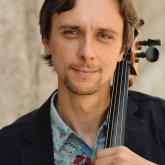
1. Introduction to the class: Hello everyone. Welcome to my course, basics of playing cello. I still remember the day when my mother brought me six years old boy to sign up for music lessons. And I heard someone to play this gorgeous prelude by Johann Sebastian Bach. That very moment I decided I want to learn to play cello. And that became my life story. For eight years later. I'm still learning and enjoying this process. I'm really happy you decided to join me. Let me introduce myself. My name is Maxim Kozlov. I was born in Russia, where I got my Doctor of Musical Arts degree from Moscow State conservatory. Later on, I moved to United States, where I got my graduate performance diploma from Peabody Conservatory of John Hopkins University. Cello brought so many wonderful things to my life. It allowed me to see the world. Being principle cellist of different orchestras. I was able to travel all over the world. I played hundreds of concerts in Europe, Asia, South, and North America. About 20 years ago, I started teaching and got wonderful chance to learn a lot by giving thousands of lessons to students from beginner to advanced level. One of my passions is to share the knowledge I got from my teachers with the cello community. I created very popular YouTube channel Cellopedia and started podcasting. I will be teaching you the same way I'm teaching my private students. I will not rush you from step to step. And I will try to explain a very basic technique of playing cello as patiently as I can. If you have some experience playing cello, you might still enjoy reviewing few basic things I'm going to teach you. Because there is a chance that you might miss something. And it will be very good experience for you to review all material with me. In this course. You will learn how to hold a cello, how to hold the bow, how the play pizzicato, how to play a note with a bowl. Finger numberings, parts of the cello. How to tune your cello, The names of the strings, how to read notes on music staff. Basic counting beats in a measure and how to read them. You will learn how to subdivide. And I will teach you how to play Twinkle, Twinkle Little Star and happy birthday. This way, at the end of this course, you will be able to play music and impress your friends with your new skills.
2. How to hold a cello bow: In this lesson, we'll talk about how to hold the bow. Well, I should show you how not to do it first. It might be funny, but the most common mistake is to hold the bow in the fist. Seems to be a reasonable way, but it will never work. This part of the bowl is called a frog. It has nothing to do with that loud amphibian serenading at night in your backyard. Let's try to do it this way. Just spread your fingers a little bit. Make sure your wrist is relaxed and put your fingers in this position. Your middle finger should be touching a ring. Your index finger has to be spreaded little bit and let other fingers fall next to it. Very important thing is, position of the thumb. The common mistake is to hold the bow this way. So you can see that my thumb is stuck right in the middle. Try to avoid this mistake. And when you hold the bow this way, your thumb. We'll be just gently touching this part of the frog. The angle between fingers and the frog has to be approximately 90 degrees. Often beginners, come to me with the bow hold like this. And I can tell right away they started playing violin first. Let's try not to copy this kind of bow hold. Make sure that your pinky is not in the air, but that you can touch the frog or stick of the bow with it. Although you have to do it very gently. One more time. It's good to think about the angle between fingers and the frog 90 degrees. And that will be wonderful starting position. From the day one. Try to think about holding the bow as just supporting its way. The bow is not that heavy. It's about three ounces, even less than that. So try not to think about squeezing the bow. If you just started playing cello, chances are that you have relatively inexpensive bow. Trust me, it's much better to drop. It was likely will not break it. Then to get a habit squeezing it. Because most of the beginners are afraid of dropping the bow. And that creates a lot of tension in the right hand, which will not allow us to make beautiful sound in the future.
3. How to hold a cello: In this lesson, we will talk about how to hold the cello. We'll talk about your posture. Let's start with saying that your cello has to be on your left side. Well, it's not very rare where beginners try to hold cello like this. Well, it has to be close to your left hand to make notes. You have to make cello close to it. Now, very important thing. You have to adjust the cello so it's not sitting on your belly like this. On the other hand, you don't want to keep the cello in this position. So those are extremes you need to avoid. Your posture will be changing. Day after day, year after year. Your posture will reflect the way you play cello, your skills. And if you are still growing, it will reflect the ratio between how tall you are with the size of the cello. Well, cello comes in different sizes. So as an adult, I'm using the full size cello, also called 4/4. Younger kids are usually starting with the quarter size cello. Although there are eighth size cellos. And even 10th, tiny cellos available. And then little by little, you move on and you change it to half size cello, three-quarter size cello, until you are ready to play with the full size Cielo. Pay attention to your knees position. Your right knee should be touching cello at the right side. Below the C bout. This part of the cello has a name C bout. Some people think that C bouts are to put your knee, which is incorrect. Your left knee should be behind the cello. It's incorrect to hold cello this way. Move your left knee behind the cello. This way. Cello is slightly tilted to the right. That will be very helpful to reach the A string. In other mistake to avoid is that you shouldn't keep the cello far from your neck. It's very common mistake because all beginners like to look at the fingerboard, to be able to see where to put left-hand fingers. Well, although it seems to be very helpful at the beginning, that it might create bad habit, which is very hard to get rid of. So my advice is, try to keep the cello this way. Pegs have to be behind your neck. If you have pegs touching your neck, then you might develop posture like that. And very soon you will feel very uncomfortable. And you might even get a sore neck. One more time. Those parts are the cello pegs, they have to be behind your neck. This is why it's very important to bring to this position. We shouldn't forget to talk about the endpin. This part, which violin or viola doesn't have. The endpin allows you to adjust your posture. This part of the endpin will be touching the floor. And you can adjust it. In order to adjust the endpin, you have to loosen up this screw. It might look a little bit different on your cello, but it all works the same way. You loosen it up. You make the endpin longer or shorter. Then you tighten the screw and try it. If the endpin is proper length, that means you adjusted it right. That means that your knees are in a position I described before. The cello is touching your chest somewhere here. Neck of the cello is close to your neck. And pegs and peg box and scroll are all behind your neck until we're ready to play.
4. How to play pizzicato on cello: In this lesson, we will learn how to play pizzicato. This fancy Italian word is just translation of plucking. You would say, I'm going to pluck a string. Italians would say, we are going to play it pizzicato. Easy way to remember this word is to think about pizza. The proper way to play pizzicato is to use your right hand, not the left-hand. You will need to left hand to play the notes in the future. You can play pizzicato while holding the bow in the right-hand or without it. I put the bow down to show you the easier way to play pizzicato. You could use one of three fingers to play pizzicato. The thumb, the index finger, and the middle finger. Let's start with the middle finger. It's most common way to play it. What you do is you pull the string. We'll start with the second string, D string. So I'm pulling the string to the right. I feel it resists my finger. And then I release it. String starts to vibrate. Therefore, you can hear wonderful sound. Let's try another string. G string one more time. Now, C string one more time. And the top string, A string. And again, the more you pull the string, the louder string will sound. If you just gently pull the string and release it, you will get much softer sound. Compare to pulling the string a lot and releasing it. Now it sounded very loud. Let's try other fingers. We can try. Index finger, the same way you pull the string to the right. Now, you can also use your thumb. That helps to make even louder sound. And you will have to pull this string opposite way to the left away from the thumb. So when you just start playing cello, you don't have to worry much about which finger to use. Whichever finger is more convenient for you to use, that should do it. I mentioned that it's also possible to play pizzicato while holding a bow. That's how it's done. Most of the time, especially if you played in the orchestra and you don't have much time to switch from playing with the bow to pizzicato. If you feel like doing that, you can try it. You hold the bow this way. So your thumb, index finger, middle finger, depends on the finger you about to use is not busy holding the ball and you play pizzicato. Let's start with thumb. I feel that all four strings keep vibrating. Now with index finger. Remember, unlike when you play with thumb, when you pull the string to the left, you pull the string to the right. When you use index finger and middle finger. Let's try to do it. Pizzicato, from A string to D, to G and C. And let's use middle finger. Now you tried it. And most likely you will feel that it's easier to play pizzicato without holding a bow. So let's keep doing it this way for now.
5. Bow maintenance: Don't forget to prepare the bow. Every day you practice. You will need to use rosin. What is a rosin? Well, main part of that is tree sap. With few extra ingredients. It is, is made so to make the hair of the bow sticky. So when you play, it adds extra resistance between the hair of the bow and the string. How to use a rosin. You hold it in one hand. Try not to drop it. It's very fragile. And most likely you will have to buy a new cake of a rosin, save yourself some money. Be careful. This is what I'm doing. I'm rubbing rosin against the bow. You might do more motions with the bow as if you're actually playing or you can use more of your left hand. It's entirely up to you. Do it for say, thirty seconds. Don't be too gentle. If there is very little contact, there will be very little rosin left on hair. So rosin it as active as you can, try to avoid touching the frog with rosin, especially that metal ring that will chip away parts of rosin. And then again, you will have to replace it away too soon. When you use rosin, you might see a cloud of tiny particles of rosin in the air. Well, don't be afraid of that. Remember, it's made of tree sap. Unless you are allergic to it, you can safely use it. In the rare case that you are allergic, there is rosin made from different ingredients available online. So you should be able to play cello without worrying about it. A very important part of the bow is this screw. You might even think that it's done for beauty, but it actually works to tighten or loosen the hair on the bow. If you turn it counterclockwise. As I'm doing now, you will see that hair gets looser and looser. And you actually can see bunch of hairs. And if you keep loosen it up, it will actually come apart. And now you can really see how it's made. I wouldn't recommend to do it because then you have to put it together. And it might be challenging at first. But say, if it happens, then carefully put it together and put the screw back into the bow stick and start turning it clockwise until you will see that little by little. The hair will be tighter and tighter. Now. Don't turn it until you can feel that it doesn't turn anymore. How to decide if you tighten your bow enough? Start playing. And if you see that in the middle part of the bow, there is still a distance between the hair and the stick, means it's tight enough. Generally speaking, if you see that hair of the bow is touching the stick, especially in the middle part of the bow. That means your hair is too loose. Making the bow hair too tight will not help you to play louder. But it might damage the stick of the bow. Too much. Pressure from the hair, might bend it too much, and ultimately it might even break. It is a good idea to tighten your bow when you I have to play. And then after you're done practicing, then turn it little bit to make it looser. This way, the stick of the bow will get some rest. And then next day when you have to play, you tighten it up again.
6. Finger numbers: In this lesson, we will talk about numbers. Four fingers on the left-hand fingers. For cello. Well, we have five fingers. But unlike real life counting 1, 2, 3, 4, 5, or maybe you count this way, 123454, cello, like violin, viola, or double bass. We have only four numbers. One for index finger, two for a middle finger, 3 for ring finger, and four for pinky. Well, you might ask, what about thumb? Which number does does it get? Well, it doesn't get any number. For some time. You will not even be using it. But later on, when we will start using it, it will get a special sign, the sign for thumb. So this way, we will get a symbol for thumb. First finger, second finger, third finger, and the fourth finger. In your music. When you see that you have to play the note with first, second, third, or fourth finger. That will mean that you see number one, you put one finger on the string. Number 2 will require you to have two fingers on this string. Number 3 - 3 fingers. And when you see number four, all four fingers will have to be on the string. It will not always stay the same way. Later on, you will learn about exceptions from this rule. But for now, the best way to learn it is the way I suggested to you.
7. Parts of a cello: In this lesson, we'll talk about different parts of the cello. And sometimes I'll tell you where that material came from. It's really fascinating to know how cello is made. I'll try to keep it short, but I will try to share my excitement with you. Let's talk about body of the cello. If you look at it, you can see that it's made to imitate the shape of human body. And good cello is not just a wonderful instrument to produce gorgeous sound, but its object of art, something really enjoyable to look at. The top of it is made from spruce. Very soft wood, which allows for all vibrations, for all sound waves to escape from the cello. Ribs. And back of the cello is made of maple, very strong kind of wood. And this would help for sound waves to bounce off inside the cello. And this way, they bounce off inside and escape through F holes. Every cello has to F holes. And they carved in a special way. You change the way they carved. You place them a little bit off the spot, and cello will lose its wonderful sound. So it took many generations for violin makers, cello makers, to figure out the best way, the best proportions, the best materials to make. Those instruments. After the maple tree or spruce are cut. They are sliced into smaller pieces and put to the storage. And then they have to mature at least for 10, 15, or 20 years. So it was custom for generations and generations of violin and cello makers to pass those materials alone. This way, the next generation can take advantage of special wood prepared by their fathers and grandfathers. Another important part of the cello is a bridge. And it's looks like a bridge. It's also made of maple. And that bridge helps to deliver vibration of the string to the body of the cello. Another part of the cello, which we cannot see, is also made of maple.
00:03:47.555 --> 00:03:56.135
It's tiny stick inside the cello or between the belly of the cello and the back. That part is called a sound post. And it's extremely important for sound production. If you move the sound post even an inch away, a cello will sound in different way. You will put your fingers on this black part of the cello called a fingerboard. This is made of ebony. And ebony comes from Africa. It's one of the strongest kinds of wood and it, resistance to friction is outstanding. This way. You can play cello for year after year. Rubbing your fingers with a lot of pressure. And it will stay the same. Eventually. Usually after dozen or so of years, you will get tiny grooves on your fingerboard. And it's fairly easy to fix. You bring it to a luthier, repair person. And then they will send the fingerboard and it will be very, even again. Sometimes pegs, Those parts of the cello are made of ebony. Like on this cello. And this is important. We'll talk about how to use pegs in the future. But pegs have to withstand a lot of pressure too, so they have to be very strong. This part of the cello is called the peg box. Well, it's a box for pegs. In other part of the cello would like to talk about is a scroll. I consider it as a signature of violin maker. By the way, people who make cellos are often called violin makers or luthiers. A violin maker carves the scroll by hand. So he or she has to be very good sculptor. This part of the cello is called tail piece. And those are fine tuners. We will use fine tuners and pegs to tune the cello. And we will talk about tuning the cello in our next lesson.
8. How to play with a bow, part 1: In this lesson, we will learn how to make a note with the bow. Using the bow is one of the most difficult things to learn. If you want to play a string instrument. Everyone thinks that finding correct spot with the left hand. It's the hardest thing. Well, after learning it, after playing cello for few years, most likely, you will agree with me that the making the sound with the right hand is the most difficult thing. That doesn't mean that you have to be afraid of it. So let's start it. Do you remember how to hold the bow? Your fingers should loosely fall on the frog. This way. Remember, middle finger, should be touch in the ring. Spread your index finger. Make sure that you remember about 90 degrees angle. And you're ready to play. Oh, and don't forget about thumb position. Don't stick it through the frog. Your thumb should help the other fingers. Think this way. Okay, we'll start playing on the D string. The second string of cello. Let's put the bow fairly close to the frog, couple of inches away and start moving it to the right. Was it difficult? No worries. We will do it a few more times. You might even want to help yourself with the left hand. So put the bow on this string. Check your bow hold. And let's start playing one more time. This direction to the right is called down bow. This is a sign for down bow, how it's marked in music. Now let's try to play up bow. So put the bow closer to this part, this part of the bow, by the way, it's called a tip. So put the bow closer to the tip and let's start moving it. Should we do it one more time? Let's do it. Help yourself with the left hand. Put it closer to the tip and start moving it. Now, I think you are ready to make several bow strokes in a row. Bring the bow in its starting position. And now we'll start playing. I'm not using my left hand. So you can put it here or even let it rest on your knee. Now, you probably noticed that when it was playing, I started to turn my wrist. Let's play it again and now pay attention to rotation of the wrist. Do you see when I'm in the upper part of the bow, my wrist is in a lower position. Now. I'm starting to move it back. And I'm arriving to this position again. Let me show it without the bow. You start in this nicely curved position. Then you start moving the bow. And about when you cross the middle part of the bow, you start lowering your wrist, turning in down. And then you do the opposite. One more time. Let's do it together. Why do we have to do it? Why not to play...? It would be so much easier. Well, the main goal is to keep your bow on the string. At the same angle. If you don't turn your wrist, then you will see that the angle will change here. And that will move the bow closer to this part, a bridge. And when you, when you move it up bow this direction from right to the left, it might go other direction. When the bow is losing this position between the bridge and the fingerboard, then you will hear that sound quality will be much worse. Let me show it again. If you don't do it right, you might risk to start making these kind of noise.
9. How to play with a bow, part 2: So the proper way is to prepare the bow and then relax. And turn a wrist. Well, then once you start moving back, your wrist will come back to the nice round position. Let's try it on another string. Let's put the bow on the G string and start moving again. By the way, in order to decide which angle of the bow is correct, You might consider the position of C bouts. Those parts of the cello When you play on the top two strings, A and D, aim your bow to be somewhere in between those two corners. And when you play on the lower string, C or G, then your bow has to be somewhere between those corners. Otherwise, like many beginners, you might think, well, it looks different. It's different angle, depends from where I'm looking at the bow. So, it gets really confusing. Many beginners starting to take this position. Well, it's not helpful. You can not do it and play well. Instead, remember to observe the bow position compared to the middle part of C-bout, right in between those corners when you play on lower strings, and those corners when you play on top strings. So let's play on G string. And then on the C string. When you play on C string, you might find it difficult because you if don't have a correct posture and your cello is not in the proper position. The bow will be touching your knee and then you will even have marks from your rosin.. Well, it's fairly easy to get rid of those marks. But yet better, Let's try to avoid this mistake. So, adjust your leg position. Move it a bit lower. You can also slightly turn your cello in when you play on the C string. Your bow will go just above your right leg. It will feel that you have to draw the bow towards yourself. It's quite opposite from when you play on A string. So there are two extremes in terms of bow angle. When you play on the A string Haven't done it yet, it's actually try it. You will feel that you have to move the bow away from yourself, send it this way. And when you play on C string, it's quite opposite. So keep it closer to yourself. This way. When you play on the lowest strings, point it that way. When you play on higher strings. Let's conclude this lesson. Trying to play on all four strings will start with the A string, the first string. And then we'll move to D string, G string and C string. Ready? Prepare you bow. The care of your bow hold. Position. No sticking the thumb into the frog. Nice, round wrist. Now you're ready. And let's play one bow stroke on the A string down bow, then up bow on the A string. And then we'll repeat it on D string, G string and C string. Let's go! How did it go? It's much harder to do it this way. Let's do it one more time. Just remember, no matter what, you have to keep the bow on the same spot. If you see it up or down on the string. That means that you don't have correct angle between the bow in the string. And to remember, top strings, a bow has to be somewhere in between those corners and lower strings, somewhere in between those corners. One more time. Don't be discouraged. If it doesn't sound the way you would like it to be. It takes some time. You have to learn completely new skill. Sound making on stringed instrument requires very high coordination. And if you give yourself time, if you practice this way, you will be able to make this gorgeous sound.
10. How to tune a cello with fine tuners: Now it's time to learn how to tune your cello. Well, if you will choose to play piano, you would never have to worry about this. Maybe once a year or sometimes even in two years. You would call a professional piano tuner. And that person will take care of it. Well, we string instruments like violin or cello. You will have to become this expert. Because if you don't tune your cello, well, chances are that you will not play in tune. It will never sound good. Luckily, there is no lack of devices, tuners. To help you. You can either buy a special device tuner. Usually it comes with metronome. You can buy it online or even faster and easier. You can download it to your phone or another device. In this lesson, I will demonstrate how to tune it with an app I downloaded to my phone. What you need is to turn on your device or an app and start playing. You always start with the A string. Don't try to tune cello by plucking the string. It will never make very clear sound. Therefore, it will be very hard for a tuner to figure out what to show to you. We will use a bow and start playing A. As you can see, the tuner is showing that I'm playing A, but this arrow is off-center. It's to the left side. That means it's low. The easiest way to make a string higher is to use fine tuners. And fine tuners are located on the tail piece. Each fine tuner corresponds to the string. So the first fine tuner is A, then comes the D, G, and C. To make a string higher, you need to turn it clockwise. This way. Well, by the way, if you forget, you have to turn it clockwise or counterclockwise. We don't even think about that. Well, you start turn it and you will see if an arrow gets closer or you will make it worse. So, remember, I had to make a string higher. So, let me turn fine tuner clockwise. I made few turns, and now I'm checking it with my bow. Is a little bit better, but still too flat, too low. I'll make a few more turns. Little closer. And you see you're getting green light. That means that a string is tuned. Well, let's check a D string. So the tuner even shows E-flat, which is the note half a step higher than D, very high. Let's make it lower. So I'm turning the fine tuner counterclockwise. Time to check an almost there, you can see green light, but the arrow, it's not right in the middle. So I'll turn it counter clockwise, little bit more, little bit too much. Let's make it higher clockwise. And that seems to be about right. Let's try G string. The arrow is where a far to the left side. So it's flat. And remember which way to turn when it's flat. Clockwise. By the way, when you are turning. Then you can quickly check it with plucking this string with the left-hand , you learned how to tune and you remember how G in this instance should sound. You might decide that it has to be a little bit higher yet. But no worries if you don't hear it yet. Just simply stop, turn in a fine tuner and check it. With the bow. Still flat. I keep turning. It's very close now, but still needs some more adjustment. And now it sounds about right. And let's turn our attention to C string. Almost right. Just slightly flat, turning in a fine tuner. Clockwise. Little bit more. Now, after you tuned, you don't have to do it. But I like to double-check it. And I play two strings together. And that should sound nice because the interval between strings a perfect fifth. And the important word in this is perfect. It should sound perfect to you. Let's try it. And let's make D tiny bit higher as D and G. Same, I'm making fine adjustment. And then G and C, the same, tiny bit higher. You don't have to do it. You don't have to tune your cello by year, but it doesn't mean you shouldn't try. You might make some mistakes with it, but that's how you learn it. Just always make sure before you start practicing. You use tuner and you tune your cello as well as you can.
11. How to tune a cello with pegs: Now let's imagine that you are about to start practicing and you try A string. And it sounds very low. Well, we cannot use fine tuners in this case, because they don't work this way. They let you make a string little bit higher or a little bit lower, no more than one step. And when your string is off a lot, usually it's flat. Then you have to use pegs. Well, pegs are harder to deal with. For kids. I usually ask them to get someone else help. When they come to the lesson. I tune cello with pegs or I ask parents to help. It just requires some extra physical strength. But for Most of teenagers and adults, that's not a problem. So let's try to do it. A string is very low and I need to find A string peg. They go in this order. This is A string peg. Then above it, on the left side is d, Then other side, right side, my right side. This is g. And then lower is. See. If you forget, you can look inside the peg box and you can see where a sting goes for D string or G or C. So we have A string off. I'm right-handed. That means I need to turn cello this way and grab the peg. Now, when I'm turn in it and I have to turn it clockwise to make it higher. I have to be very careful. Unlike fine tuner, you can turn it several times and a string will be just a little bit higher. If you turn the peg, too much, string might get too tight and you end up breaking it. Not the end of the world. But good strings are fairly expensive and it takes time to order them. And you better try to avoid this hassle. So I'm holding the A string peg with my right hand. Well, if you're left-handed, you can hold it like this. And to make it higher, I need to turn it clockwise. Just remember, do it very little, very gentle. Usually no more than a quarter of the turn. If not less. What I'm also doing, I'm plucking a string with my thumb. This way I can hear how close the stream is to the A. Since we are tuned an A string. So I'm turning the peg and I'm plucking the string and turn it very little. But you can hear is getting higher and higher. Now, when you turn the peg, you also have to make sure that you push it in. If you just turn the peg, most likely, once you release the pressure, it will go back because a string will pull it back. A peg has conical shape. It's thinner on other side. And by pushing it in, you provide enough of friction. And that helps the peg to stay in a position when you have it. When you're about to release it. I'm keep turning it and push it in. And that's about right to my ear And then I can now tune it with a bow. Let me show you how to tune the cello from other side. Say, my C string is too flat. So in this way, I'm right-handed. I don't have to turn the cello other direction. Well, if you are left-handed, that might be very inconvenient to hold the peg this way. So you might want to turn cello other way. But in this case, it's easier for me and I'm about to turn it. But this time from this side, to make it higher, I will have to turn it counterclockwise. Again. If you're confused about which way to turn the peg, don't worry. I'll just try it a little bit. And if it goes to the wrong direction while make an adjustment. So pegs from this side, G and C, I have to turn counterclockwise to make it higher. I'm doing it very gently, very slow. And while turning it, I'm plucking this string. Remember when it turned back? You also push it in. Now it sounds about right to me. So I can tune it with a bow, which we discussed earlier. And I will use fine tuners to tune it perfectly well. It takes a while to get used tuning the cello, especially tuning the cello with pegs. If you need extra help, you can try to ask your friends who might play violin or viola, or you might want to go to the violin shop. There are always people willing to help you, but again, this is not something you cannot do. And you need to learn to tune your cello on your own. And you will be able to do it. Just give it a try.
12. How to read notes, part 1: In today's lesson, we will learn how to read notes on music staff. When you look at the page of music, it looks like a foreign language. Or maybe cold. Well, like in language or code, each symbol has meaning. And once you get it, once you learn to read it fluently, you will be able to speak this language and communicate a lot with other people. We read music from left to right, like English. The first symbol you see at the left side is a bass clef. There are different clefs in music, but playing cello, most of the time, this will be a clef. You will be using. Clef is key, in French, is a musical symbol used to indicate nodes. Which nodes are represented by the lines and spaces on musical stave. When a clef is placed on the stave, it assigns a particular node to one of the five lines. This line becomes a reference point by which the names of the other nodes on the stave are determined. The use of different clefs makes it possible to write music for all instruments and voices, regardless of difference in range. Using different clefs for different instruments and voices allows each part to be written comfortably on the stave with a minimum of ledger or additional winds. Bass clef notes can either seat on the line, line note, or in the spaces between two lines. Space note. There are seven different letters to represent different nodes. A, B, C, D, E, F, G. It makes very short alphabet when we run out of letters. When music has to go either higher or lower, then we will reuse those letters again and again. This way, after G, the next letter up is A, followed by B, C, etc. If you want to find the note below a, the next note below will be G, then F, E, and so on. It's about time for us to start plane. Some notes. In the previous lessons, you learned how to play pizzicato and how to play with the bow. Let's first play all the notes we can do on cello. Pizzicato. We need to learn the names of the strings to make it easier to figure out where to put our fingers. The top string, the thinnest one is A. Let's pluck it. Next, comes D, Then G. And the thickest string is C. This C is the lowest note you can play on cello. Now, let's try to figure out where to put fingers. I'm using this cello with tapes. Most of the beginners will have those stapes on their cello. It helps to figure out where to put fingers. As you can see, there are four tapes for each of the fingers. If you don't have tapes. And you are starting from scratch, ask either your friends who play musical instruments or go to a music store and they will help you to put those tapes on your fingerboard. We start with the lowest note on cello, C We'll see in music, it will look this way. You see there are two extra or ledger lines below music staff. It happens because we cannot fit all the notes. cello has to play on the music staff. Once again, this lowest note is C. In order to play it, you just use the open C string. No left hand needed to play the next note. You put first finger. Remember, for all cellists, the first finger is the index finger. So you put your first finger on the first tape. By the way. What to do with thumb? Well, thumb has to be on the other side of the cello neck. And you just loosely touch the cello neck with it. Don't squeeze your thumb a lot. It will not help. It should be positioned roughly between first, second fingers on the other side of the neck. Once again, let's put the first finger. On the first tape, your thumb is touching the neck. On the other side. Press the string so it will be in full contact with the fingerboard. And let's play pizzicato
00:07:05.410 --> 00:07:14.190
So that was D. Then two fingers will make E-flat. By the way, flat. We need to briefly talk about flats or sharps. Those symbols help us to make a note little bit higher or a little bit lower. This little bit is actually a half-step, but we can simplify it. Just saying that sharp makes a note higher and flat makes the note lower, or remember two fingers. E flat, let's put three fingers on the fingerboard. E natural. Natural means there are no sharps or flats. We don't always need to say natural with every note. I just said E natural because right before that we have E flat. So that means that E-flat is now canceled and we play normal E, E, natural, four fingers, F. Next note will be open. G. Next string no left-hand fingers are needed. For the next note, we will use only one finger. And that will be A. Two fingers, B-flat. Three fingers on G string, B-natural. Four fingers, C, open string. D. No fingers. First finger on D string is E. Two fingers, F, three fingers, F sharp. Four fingers, G, open string A. First finger B, two fingers C three fingers, C-sharp. And four fingers, D. This D is by far not the highest note. We will be able to play on cello. In order to learn how to make higher notes, you will have to learn how to make shifts. This is more advanced technique and we will cover it later on.
13. How to read notes, part 2: In other technique you will have to learn at some point is how to make extension. We will be extended the first finger to reach little bit lower note here on each strain. And then we will be able to extend fingers this way to reach higher nodes without making shifts. But once again, this technique you can learn a little bit later. So you don't have to learn everything at the same time. And now, let's try to play D major scale. Don't be afraid of these Ward. A scale is just the set of the nodes which will be used to play Twinkle, Twinkle Little Star. In this scale, like twinkle twinkle little star, we will just use top two strains on cello, a and D. This is D major scale. They may note in this scale is D. It will be our first note. It will be the highest note we'll play, and it will be the last note of the scale. And this is D major. And major scales, like music eight and E-major. Always sounds happy. Let's do it. We will use the bowl. Prepare your bow hold. And we will play very slowly node by node. The first node is open D. Now, both the first finger on the first tape. And let's play E. Next note is F sharp. Three fingers, then g, four fingers. Then a. We will use open a stream. Open means nor fingers. Next node is B. One finger on the a string. Next node is C sharp. Three fingers on the fingerboard. And the highest note is D. All four fingers on the fingerboard. And let's go down. Individuals order C-sharp, B, a, G. Move your bowl, led to the DStream. All four fingers are on the fingerboard. F sharp, E, D. Wonderful. Your first scale. They display it again. Now without stopping. You can also play the scale pizzicato display constraints. If playing with the bowl is too hard at this moment. Once you get comfortable with the left-hand position, then you can try it with both. Again. Does it feel too overwhelming to memorize all nodes on each line and space? Well, there is help. You can memorize just two phrases. And the first letter of each word will help you to remember the name of the node on each line or each space. Let's start with lines. There is a phrase, green, buses drive fast always. And in this phrase, the first letter of each word will tell you the name of the node. On each line. We start from the bottom, bottom line, green, G. Second line. Buses be the third line, drive. D, the fourth line, fast, F, the fifth line, always a, G, B, D, F, a, green. Buses drive fast always. In other phrase, is to help you to remember names of the nodes between lines in spaces. We'll start with this space between first, second lines. And the phrase is, all cows eat grass. So the space between first, second lines or a next space, cows see. Next, eat E. And the top space graphs, G. All cows eat grass. Does it make much easier to memorize? I hope so. And little by little, you will not have to think about those phrases. Very soon. You will just see the note and you will know which letter it is and where on shell to put your fingers to make this node.
14. Basic rhythm, beats and meter: Hello everyone, Welcome back. Today we will talk about basic rhythm and we will learn how to count beats in a measure. Music wouldn't exist without time. Besides learning where to find the notes and how to make sound, we need to figure out what is the relation between those notes. Which note is faster? Which note is slower? How long is each note? And when it's time to move to the next measure. I like to think about beats in the music. As heartbeats. When we walk slowly, our heart beats slowly. We pick up the pace. We starting to run. And our heart starts pumping blood and beating faster and faster. Okay, Let's take a look at the very first piece of music we are going to learn together. Twinkle, Twinkle Little Star. Well, you are familiar with the music stave - 5 horizontal lines. You know what the bass clef is? We briefly talked about sharps. Here we have two sharps, F-sharp and C-sharp. But we never talked about meter. So you might be wondering, what are those two fourths? How to interpret them? Well, the meter is fairly easy to read. The top number is how many beats are in each measure. And the bottom number is what the beat is. Before we dive into that. Or let me tell you what the measure is. You can see that in the first line, there are four vertical lines. Those lines tell you where the first, second, third, fourth, measures and why we even need measures. Each measure is shown with help of the bar line or measure line. Well, think this way. It would be very boring if music would go 1 2 3 4 1 2 3 4 and so on. We need stronger beats. We need to feel the pulse. And measure helps you to see this structure. The very first note of the measure is usually a little bit. Louder. This way we have 1, 2, 3, 4, 1, 2, 3, 4. It helps a lot in every kind of music. But especially when we play dance music, usually dancers would make bigger or more active step. At the beginning of each measure. I think about measures as rooms in a big building. Let's, we're building because every room is the same size. And the meter at the beginning of the piece tells you how many people every room can fit. Number four is four beats, four people. And the second number also four, in this case, means that each beat is a quarter note. So this way, every measure can fit four quarter notes. By the way, there are different meters. You will see meters like two four. That means that every measure can fit two quarter notes. Also, very popular meter is 3/4. Think waltz. 1, 2, 3, 1, 2, 3. Where every measure can have three quarter notes. And like in Twinkle, Twinkle Little Star, for every measure can fit four quarter notes. Of course, music would be very boring if every note would be the same length. That's why we have different kind of notes. The longest note you can usually see is the whole node. And note, which would feel the whole measure in this piece. Well, guess it's four quarter notes long. Then you might see half note like this. The note which is two quarter notes long. Then there are quarter notes like this. Then eighth notes. And later on, you can see 16th notes, 32nd notes, or even 64th notes. Well, luckily, in this piece, we only have to deal with quarter notes, notes like this, and half notes notes like that. Imagine yourself walking slowly, 1 2 3 4. And this will be the speed of your quarter notes. To learn how to play with good tempo and correct rhythm. We will use help from metronome. You could use an app. Metronome app on your device. Or you can use metronome like this and set it so you can start learning how to play in correct tempo. I'm going to set this metronome to the speed of 60. Each click will be 1 second long. By the way, what are those numbers on the metronome? Quite simple. They just tell you how many clicks you will hear in a minute. This way, the higher the number is, the faster metronome will click. If he sat metronome to 60, that means that you will hear 60 clicks every minute. Well, and that means that every click will be exactly 1 second long. Now, I will start the metronome, and I will not play this music, but I will clap. And I suggest you to join me. It's much easier to clap then to play cello. This way, we can study, read them, doing something easier. That means we can pay all attention to the rhythm rather than how we play notes. Let's do it. Look at the first line for measures of Twinkle, Twinkle Little Star. And we will clap this written together. Most of the notes are the quarter notes. This way. Each of your collapse will be exactly with one of the bits of the metronome. And half-note will get two beats. So you don't clap for two clicks already. Let's go. Half-note. How did it go? Let's do it one more time. Get ready. And Wonderful. You see that measure can have different set of the notes. Like in Twinkle, Twinkle Little Star. You can have four quarter notes or a combination of two quarter notes and a half note. It could be many different notes combinations But what is important is that when you add the value of all notes in a measure together, you will get four quarter notes. I feel that you cannot wait to play Twinkle, Twinkle Little Star. Let's meet in our next lesson and we will do exactly that.
15. Let's play "Twinkle Twinkle Little Star" !: Okay, Now it's magic moment. When we start making music together. First, let's learn Twinkle, twinkle little star by playing it pizzicato. Do you remember what it is? We will pluck a string. It's easier than to use the bow. This way we can pay all attention to left-hand position. And we will learn what is the length of each note. In a sheet music I provided for this course, you can see that each note is marked either with 0, which means we will play open string. No fingers have to be pressed on the string. first finger. That means you put only index finger on the string. Second finger. That means two fingers on the string. Number 3, third finger, three fingers on the string. number 4, where you have to put all four fingers on the string. Let's first prepare left-hand. Make sure that you spread your fingers and they are above the fingerboard. Each finger should be right above corresponding tape. For first four notes, we will not use the left-hand, but right away at the beginning of the second measure, you will use the first finger. First two notes we are plucking D string. This way we'll play Ds. And next two notes, A string that will make A's. I will give you four bits for nothing, for counts before we start playing together. So you can feel the place of music. 1 2 3 4. When you're working on a piece of music, you don't have to play it through. It's better to break it down to shorter pieces. Let's work on the first four measures. By the way, the first line, first four measures and the last line, the last four measures. are the same. That helps a lot. This way we will learn the first line and then you will be ready to play the first and the last line. Let's do it one more time. Remember, in the measure three, you will have to put all four fingers on the D string. Let's try to play it one more time. Get ready to prepare your left hand. And I'll give you four beats for nothing. 1234. Was it a little bit easier? Well, you can always stop the recording and practice on your own. Or yet better. Just rewind it and practice with me again and again until you feel more confident. Let's now try to play the second line from the measure 5. Here, we play to open A's. And then right away, four fingers on the D string. 1234. Was it too fast? Let's try it one more time. Slower. 1234. Okay. And as I mentioned, the last four measures, the last line of this piece is the same as the first one. So I think you are ready to try it with a bow. playing with a bow is much trickier. But it's possible for you to do it right. Remember, check your bow hold. Make sure that your fingers are evenly spaced. That you are not squeezing the bow too tightly. That your wrist is in a nice round shape. Then prepare your left-hand. Make sure your thumb is touching the neck of the cello, somewhere between first, second fingers. And we are ready to go. Let's do it slowly. 1234. How did you go? Tricky, isn't it? Well, again, we will learn it by repeating it many times. And if you pay attention, each time will be better and better. And even more important. The next day, you will try it. You will not start from scratch. You will remember a lot what you learned today. And it will be a bit easier. And just imagine it will be easier in, easier each day you practice. This way In say, few months, you will get so much better. You will start enjoying playing this piece. Let's play it one more time. And we will try to play through the piece. If you get lost. Don't get frustrated. That's perfectly normal. Just stop the recording, rewind it, and restart it with me. And you can do it again and again. I will not mind it. Now, let's play with the metronome and I will set it to 40 beats per minute. That means that every click will be slower than 1 second. And we will decide that every click will show us where each quarter note is. When we'll have quarter notes, we will have to play every quarter note with a click. And well, we'll have a half note. You will have to play it two clicks a note. How did it go? Was in hard? Now, you had to figure out left-hand position. You had to figure out what to do with the bow. And you had to listen to the metronome. Don't get frustrated if you couldn't finish the piece with me together. If that happened, you are in a good company, in a company of beginner cello students. If you had experienced playing on piano, it might help you to figure out the notes, but try not to compare your rate of success. When you started piano, usually all students can play basic melodies just a few hours from they started learning piano. It's not the case when you play string instruments. Be very patient. You will have very slow start. But soon you will pick up the speed. And you will be able to play beautiful melodies.
16. How to subdivide. Let's play "Happy Birthday to You": Let's learn to play happy birthday on cello. In order to do that, we need to pay attention to the special rhythm will have in this piece - the dotted rhythm. It starts right away with the dotted eighth notes and 16th note. Well, let's not make it too complicated. What we will need to do is that we will need to learn how to subdivide. And subdivision is just the skill to measure longer notes. With the speed of the shorter notes. We will be measuring the notes of this piece with 16th notes. Are you good with math? I hope so. It helps a lot in music because the rhythm is the basic math, which you will have to do in real time. But regardless, if you love math or hate it, lets just agree to think about notes in basic terms. I love to imagine pizza as the whole note. Remember the very long note, which is four quarter notes long is our pizza. Then if we divide it into two parts, we will get half notes, half pizza, and there are 2 quarter notes in the half note. Then we can divide this pizza to four parts, four slices. And those slices will be quarter notes. Then if we divide each slice to two slices, it will be eighth notes. And then each eighth note slice, we divide one more time to two parts, and we'll get 16th notes. Guess how many 16th notes are in the whole note? Well, I guess you have a right answer. 16 Happy birthday to you Starts with the dotted eighth note. Do you see the tiny dot at the right side of the note? That means this eighth note is half longer than normal one. Think you had to add to 1/8 of the pizza, tiny slice, 1/16th of the pizza. And altogether, dotted eighth note is three 16th notes long. And this note is followed by 16th note. The next note is the quarter note. And each quarter note has four 16th notes in it. When you divide a quarter note in half, you will get an eighth note. And then if you divide each eighth note in half, you will get a 16th note. Well, in music, we can talk a lot about rhythm, but we can also play it. And you will get it by listening and then thinking how that works. I will set the metronome 120, and each of those beats will be 16th notes. Now, let's try to play it together. We'll play it pizzicato. First note, dotted eighth note will get 3 clicks. The 16th note, just one click. And each of the following quarter notes will be four clicks long. Ready, and prepare your first finger. You will need it soon. Just keep, keep it slightly above the string. And we will start on the second string Let's try it one more time. How did it go? It's hard. Let's do it just one more time. Okay? Once you learn this rhythm, you can turn off the metronome and play without it. Just for fun. What do you think? How many 16th notes are in a half-note? Did you think eight? If you did, you are right. Well, it's time to play now. Pizzicato. I played the first half of the piece, but the second half. It's exactly the same. Just more fun to play it twice. And now we can play it with the bow. The same way. Make sure that you prepare your right hand. Check your bow hold. Makes sure that the bow has correct, 90 degrees angle to the string. Prepare your left hand. You can look where the tapes are. If you have tapes on your cello. And let's go. Now, of course, this is a bit slower than it usually goes. If you are ready. If you already have some experience playing cello, let's play it in the faster tempo. I will set my metronome to 72. But this time we will imagine that every beat, every click of the metronome will be a quarter note. It will sound this way. If I set it to 16th notes, that will be a way to many clicks from the metronome. I will try to follow it, but in my mind, I will subdivide each quarter note to four parts. So my mind will be keeping track of 16th notes. Pop, pop, pop, pop, pop, pop, pop, pop, pop, pop, pop, pop, pop Remember that each dotted eighth note has three 16th notes. Each quarter note is four 16th notes. And if you keep subdividing when you play half note, then each half note is 8 16th notes long. But I'll tell you a secret. Once you work enough. Once you play enough and get some experience, you will not need to sub-divide a very long year note to 16th notes. You will get the sense how it goes without it. Well, it's hard to say when you will be free to do it. Let's try to play it in tempo quarter note 72. If you play this melody slower or maybe faster, that's perfectly fine. That's your artistic choice. You can also play with different bow directions. At this point. As long as your friends and family recognize this melody and enjoy hearing you play. That means that you achieved a lot. I wish you all the best in this wonderful journey to become a good cellist And more importantly, to become a good musician. Playing music makes our life very special. It opens the doors to other people's hearts. It will help you to meet other people who will be interested in listening to you or making music with you. All the best to you. Don't get frustrated. When you will feel you get stuck. You will always get better. As long as you give your energy and time to the wonderful art of playing cello.
 Maxim Kozlov, Cellopedia YouTube