Transcripts
1. Introduction : Hello, my name is
mocha this Rashid. Welcome to my class. In this lecture, we will see
the basic English grammar. And I will tell you
guys about the, all the categories falling
in the English grammar part. I will explain
types of sentences, parts of speech, which are noun, pronoun, adverb, adjective, etc. We will see the types of space. And I will also explain tenses
along with the examples. And I will tell you
about the articles, which are two that are definite
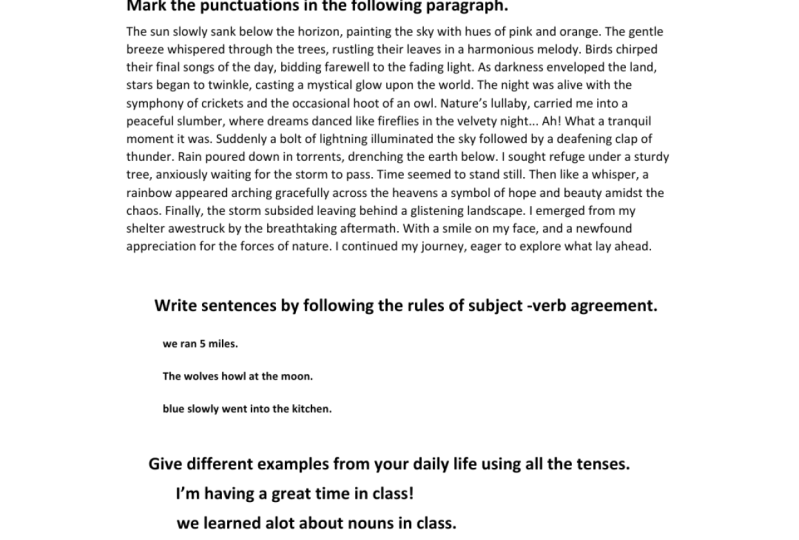
and indefinite article. We will also see that. And I will explain punctuation. And I will give examples of punctuation paragraph with D along with the
punctuation marks. So let's begin our
first lecture.
2. English Grammar : In order to understand and
learn English grammar, we should know what
English grammar is. English grammar basically
refers to the set of the rules and
structures that go on, the usage and
arrangement of words, phrases, and sentences
in the English language. It encompasses various
aspects such as syntax, morphology, phonetics,
semantics, and punctuation. Understanding and applying
English grammar rules is essential for clear and
effective communication. In both written
and spoken forms. It includes concepts like work dentists,
sentence structure, part of space, agreement, pronouns, adjectives,
adverbs, and many more. By following grammar rules, speakers and writers
can ensure that messages are conveyed
accurately and comprehensively. You should learn first the
basic or the English grammar, which is sentence structure. You should understand
the sentence structure so I will explain it. First. Sentence structure basically
refers to the arrangement of words and phrases within us and dance
to convey meaning. It involves understanding how different elements of a
sentence, such as subjects, verbs, Objects,
modifiers, and clauses, are organized and
related to one another. There are some key components
of sentence structure. The first one is subject. The subject is the noun or pronoun that
performs the action, or is the topic of the sentence. Typically answers the question, who is doing something? E.g. john is the subject
in this sentence, which is John ate an apple. Second one is verb. The verb expresses the action or state of being in a sentence. It indicates what the subject
is doing are experiencing. E.g. let us consider
the previous example, which is John ate an apple. It is the verb in this sentence. Next sentence structure
involves object. The object receives
the action of the war. It can be a direct object which directly
receives the action, or an indirect object which receives the
action indirectly. That is considered
the previous example, John ate an apple. Here is the direct object. Fourth one is modifiers. Modifiers provide
additional information and describe our specify other
elements in the sentence. They can be adjectives, adverbs, phrases, or clauses. E.g. John ate a red, apple. Red. Here is an adjective modifying
the noun in the sentence. Next one is clauses. Clauses are the groups of words that contain a
subject and a verb. They can be independent
clauses or dependent clauses. I will explain them briefly
in the next section. Let us consider an example. Here. I go for a walk. When the sun sets. When the sun sets is a dependent
clause in this sentence, which cannot stand alone
3. Types of Sentences : Basic concept of English grammar is to understand the
type of sentences. Before understanding
the type of sentences, we need to see what
are these sentences? Or sentence is grammatical
construction made up of one or more words that fully expresses an idea or thinking. In most cases, our
sentence has a subject, the object, person, our
concept it refers to. And a predicate. Predicate is the section of the phrase or sentence that
describes this object. Set as the action or state of being as intense
typically starts with a capital letter
and it is punctuated by a period question mark
or exclamation mark. Sentences enable us
to communicate with one another and express
our convey the meaning. Let us see some examples here. I want a cup of tea. Please pass me the glass. Are you ready for the
dance performance? I have taken the sentences
in all categories. Use the period mark, exclamation mark,
and question mark. First of all, we
need to understand what are the types of
these intensities. There are basically four
types of sentences, which are simple sentence, compounds and dense
complex sentence. And the last one is
compound complex sentence. Now, I will discuss the
types of sentences shortly. Then we will move toward
the concept of claws. What is simple sentence? A simple sentence
contains one clause. It has a subject and verb and makes complete
sense independently. It is the primary component of the activity or
sentence description. Here are some examples. Alex is a good boy. Andrew is hurting for the test. These are the examples
of simple sentence. They do not need any explanation and make the complete
sense independently. Second type of sentence
is compound sentences. These are the combination
of two independent clauses. Or in other words, in order to establish a
single thing or Notion, two or more words
are combined to produce a compound noun
or noun and a verb. Noun and adjective and a noun or other combinations may be
used in the combination. Compound nouns are frequently
written as a single word with a hyphen or as two
distinct words, compound noun. Examples include the following. Football. Football is the combination
of foot and ball. Other example is haircut. Haircut is the combination
of here and cut. If we take the example, these are connected with the coordination
conjunction, e.g. John sang and he danced. Here, the coordination
conjunction is n and two clauses are joined
by this complex sentence. Complex and tense contains one dependent and one
independent clause. Independent clauses
are necessarily for the whole meaning of
the dependent clauses. Cause and effect. Contrast, time, condition, or other
connections can be used to determine how the independent
and dependent sentences relate to one another. These are connected by the
subordinating clauses. E.g. I. Will go to the park if I
finished my study on time. The independent clause here is I will go to the party or part. The dependent clause is if
I finish my work on time. The subordinating clause here
is if and I will explain subordinating clauses
and coordinating conjunction in next slide. The compound complex sentences. Compound complex sentences
require the combination of two or more independent clauses and at least one
dependent clause. Let us take an example here. E.g. I. Went to the park, but my sister stayed home
because she was sleeping. The independent clauses
are I went to the park. The other one is my
sister stayed home. The dependent clause here is
because she was sleeping. The two clauses are
combined due to, because it is a
coordinating conjunction Now let us discuss what are
coordinating conjunction. Coordinating
conjunction, health, two independent clauses to come together and make a
compound sentence. These include for, and, nor, but, or, yet. So you can remember
them as FANBOYS. Let us take an example here. It was hard. So I slept in a
subordinating conjunction. Subordinating conjunction
connects independent clause with a dependent clause. Subordinating conjunctions
include although, whenever. However, if, though,
even if, because, unless, since you can
remember them as a bus, let us take an example here. If she comes let me know. Let me know here can
stand independently. She comes is dependent. And if this subordinating
conjunction here, oh, I will explain clause. A set of words known as our loss is composed of a
subject, a predicate. It is a key building
block of grammar and is essential for
creating sentences. Independent and
dependent clauses are two primary categories into
which clauses may be divided, are two categories of clause, independent clause
and dependent clause. Independent clause. A clause that may stand
alone as a full sentence, is referred to as
independent clause, often known as a major claws. It communicators are whole idea without referencing
any other clauses. To do so. Here is an illustration. I did the store. On the other hand, dependent clause depends on an independent phrase or clause. Forests whole meaning. Or dependent clause, also
known as a subordinate clause, is unable to stand alone
as a full sentence. It contributes to the
meaning of this statement. By adding details are
changing a section of it. Here is an illustration. I went to the store after. This is an incomplete sentence. The other example is
gatt was smarter. Over here. Smart ratios are comparative
degree and we are not sure whether the cat was martyred than red or any other animal. So please understand
that dependent clause will have both a
subject and verb, but it will be incomplete
in its meaning, and hence, it is recognized as
dependent clause and depend on an
independent clause
4. Parts of Speech: Now the very important part of the grammar is
parts of speech. First of all, we have to see why parts of speech
are important. Parts of speech are crucial, are important because they lay the groundwork for interpreting
and analyzing language. They assist us in recognizing an categorizing
words according to their grammatical purposes
and position in sentences. Understanding that different
components of speech enables us to correctly
formed sentences, identify word relationships, and produce cohesive and
meaningful communication. It makes it possible for us to understand how our
work as subjects. Objects warps objectives,
adverbs, and more. Enabling, clear and
efficient communication. Reading comprehension, writing ability, and
general language, competency are all improved by understanding the
elements of speech. There are eight types
of part of speech, which are noun, pronoun, verb, adjective, adverb, preposition, conjunction,
and interjection. I will explain all
these parts of speech. First one is noun, or noun is a term that designers
as specific individual, location, object, or a notion. It is a key component of
English grammar, speech. Or in other words, noun is the name of a
person, place, or thing. Here are some few examples. I love listening to the music. My sister is a talented singer
that line chased the deer. There are two common
types of noun. First one is proper noun, second one is common noun. Proper noun, properly named particular individuals by particular locations
or particular objects, as opposed to common nouns, which refer to January, persons, places, things,
or concepts, e.g. here, common noun can be animal. If we specify or
in a proper noun, the proper noun is dog. Types of noun or
collective nouns, possessive nouns,
and compound nouns. The collective nouns
name given to a group of things as one is referred
as collective noun, e.g. we are family. What is possessive noun? Possessive nouns shows the
ownership of the noun. In possessive nouns. Apostrophe S or both are added. E.g. John's book, Alex, car. Noun is when two or
more nouns are added. Sometimes they are identified
by a hyphen in between e.g. football. It is the combination of two nouns for and ball. Mother-in-law, bus
stop here, good. These are the examples
of collective noun. Other part of speech is pronoun. Words that are substituted for nouns or noun phrases
are known as pronouns. They are frequently employed to reduce repetition and
lengthen phrases. E.g. Martha went out, she had some work. Here. Mara is a noun. In second sentence, we did
not add the name Martha, but instead we use a
pronoun, which is she. There are four
instances of pronouns. First one is personal pronouns. Personal pronouns identify particular people or
organization, e.g. he, she, they weigh and you may say He went to the store as opposed to John
went to the store. Second one is
possessive pronouns. These words denote
possession or ownership. E.g. mine, yours, his Hi, there and hours. Let us take an example here. Is this book yours. Yours is the possessive pronoun. The third one is
demonstrative pronouns. These pronouns identify
articular individuals, locations are objects. Here are few examples. This, that these and those
let us compile in an example. This is my favorite restaurant. Here. This is the
demonstrative pronoun. One is reflexive pronouns. Reflexive pronouns reflect back to the subject of
these sentences. For instance, myself, yourself, herself, age self, him cells
are cells, your cells. And then says, Let us
take an example here. I heard myself while
playing basketball. Here, myself is the
reflexive pronoun by enabling us to refer to people or things without repeatedly repeating their
names are descriptions. Pronouns play a crucial
function in the language. What are verbs? Verbs are basically action words that describes the events, behaviors, or mental states. They are essential for creating sentences and
communicating ideas. E.g. get, climb the tree. Climbed is the world. There are four
categories of worms. First one is action verbs. Action verbs are the verbs that describe mental or
physical act, e.g. run it, ping, dance and dry. An example might be
she dances gracefully. Here, dances is the action verb as she is performing an action. Second one is linking
verbs are linking verb. Links are noun, pronoun or
objective that characterizes our identifies the subject of a sentence to that noun pronoun. Our adjective. Examples include
the verb tenses, is, am, are, was, and were. In this case, he is a
Dr. is a linking verb. Third one is Assistive verbs. Assistive verbs, often referred
to as auxiliary verbs, had the primary
work communicate, voice, mode or densities. For instance, should, Mike, dan, and hence, an example
might be, I can swim. Gan is the assistive
work in this example. Fourth one is modal verbs. Modal verbs convey potential, readiness, demand, or approval. There are other examples, such as Gan should, most good, and may. For instance, you should
study for the exam. Should is the modal verb. Here is another part of speech. Adjectives are words
that describe, alter, or give more information
about nouns or pronouns. Here is an instance of an adjective and second
and description. She received a nice
compliment on her art work. The word nice in this
statement denotes the positive or a Bailyn
nature of the complement. It is possible to
communicate good feelings or opinions by using
adjectives like nice. To describe nouns,
positive characteristics. Features are experiences, objective answers
the questions like, who knows, how many, what kind, and which one are some key characteristics of
adjectives or descriptive? Placement, agreement, comparative,
and superlative forms. If we talk about descriptive, objective describes
the qualities, attributes, or characteristics
of nouns or pronouns. E.g. in the phrase blue sky, the adjective blue describe
the color of this guy Let us talk about the placement. Objectives usually
come before the noun. They modify. For instance, in this sentence, he bought a new car. The objective new comes
before the noun, car. How? There are cases where adjectives
can come after the noun, such as the president elect
or the world famous singer. Third one is the agreement. Objectives should
agree in number and gender with the
noun they modify. E.g. in this sentence, she has two small dogs. That adjective small agrees
with the plural noun dogs. The fourth characteristic is comparative and
superlative forms. Objectives can have comparative
and superlative forms to compare our Express
degrees of qualities, e.g. big. Big is the comparative,
bigger superlative. Verbs. Adverbs are the
words that modify verbs, adjectives, or other adverbs. They include details
regarding the how, when plays or degree to which an action is carried out
or a quality is expressed. In making our language more
precise, an in-depth e.g. can you move quickly, the tiger and foster quickly
and foster our head robes? Adverbs answers the
question like, how, why, when, and we're, here are some characteristics
of adverbs. First one is modifying verbs. Adverbs often modify verbs to describe how an
action is performed. Mortifying adjectives. Adverbs can also modify
adjectives to provide more information
about the quality or degree of something. More defined. Adverbs. Adverbs can modify other
adverbs to indicate the degree of manner or
an action or quality. Placement. Adverbs can be placed before
the verb, the Modify, at the end of a sentence or in other positions
within a sentence. For instance, she sings
beautifully or he left. Early. Rejections basically
express the emotions and they are followed
by an exclamation sign. E.g. allows. Hooray. Oh, wow. Let us consider an example here. I won the Nobel Prize. Hooray here is in bijection
and indicating happiness. What is preposition? Preposition is a word which usually used to
indicate the link between a noun or pronoun
and other words in a phrase. Prepositions are frequently
used to denote plays, time, more, direction,
or position. They aid in setting the
scene and elucidate how many bars of a phrase
relate to one another. E.g. she is in class, in is the preposition here. Preposition also denotes when something is happening or
where it is happening. E.g. the glass is on the table. The other example is I will come at 07:00 P.M. conjunction, conjunctions connect two
or more clauses, e.g. Mater warrants or
candy and ice cream. The conjunction here is end. There are three types
of conjunctions. Coordinating conjunction, subordinating conjunctions,
and correlative conjunction. The first two times I have
explained in the part one. Now I will explain
correlative conjunction. Correlative
conjunctions are either or, neither, nor, both, and not only, but also these conjunction connects
two clauses in a sentence. E.g. give me either
a pen or a pencil
5. Types of Speech: Now I will explain
types of space, the very important another
topic of English grammar. First of all, we have
to see what speech is. Speech is a form of
communication that involves the production and
articulation of sounds through the vocal tract. It is fundamental human capacity that permits verbal
expression of thoughts, ideas, and emotions, facilitating efficient communication
and mutual understanding. There are two types of speech, which are direct speech
and indirect speech. First of all, I will explain what are the
direct speech is. Direct speech is a form
of communication where the exact words
spoken by a person are coated and presented
within quotation marks. It allows for the direct representation
of someone's speech, conveying there
towards statements. Our conversation, we're betting. Direct speech adds
authenticity and immediacy to written
or spoken narratives. Let us called an example here. Martha said, comma
quotation marks. I will be absent
from class today. In this example, you can
clearly see the words spoken by Mara are presented
directly within quotation marks
indicating direct speech. The sentence accurately
course model statement conveying her exact words. Now what is an indirect speech? The word uttered by
someone are paraphrased. Are we countered without
using quotation marks? Is the indirect speech, which is also known
as reported speech. Instead of giving a
verbatim transcript, it entails communicating
the original speech, meaning our substance,
to indicate the change from direct
to indirect discourse. Indirect speech
frequently entails modification to work tenses, pronouns, and other components. Let's take an example
of indirect speech. Martha said that she would
be absent from class today. In this example, you can
clearly see the words spoken by Mara are reported without using
quotation marks. The statement is paraphrased to convey the meaning
of original words. The verb tense changes
from IV to she would do reflect the shift from direct to indirect speech. I've explained how to convert our direct speech into
an indirect speech. But before we have to see
the parts of direct speed, let us consider the
previous example. Mara said, I will
be epsilon today. This sentence has two parts, the reporting part and
the reported parts. The first part,
which is reporting, that is called as
reporting clause. And the other part which is being reported is known
as reported class. Like same, we have a reporting
verb and I reported verb. The reporting verb is said, and they reported word is will. We will see how to convert the
direct to indirect speech. The first rule is you will
add a connector that e.g. Alice said, I am not happy. This is a direct speech,
is quoting himself. Now let's make it
indirect speech by using the connector,
which is debt. And he said that he was not happy to remove the comma
and the quotation mark. We will replace them with debt, which is a connector
which will make the direct speech
to indirect speech. This is rule number one. Now, we will move toward
the rule number two, which is the change in the pronoun of the
reported speech. I have explained that reported speech is the
second part of this intense. Let us consider an example here. John said, I've, let us talk
about rule number three, which state that the change in the tenses of the
reported speech. This is a little bit critical. Let us consider an example here. Mary said, I am busy. This is our direct speed. Mary said that she was busy. This is an indirect speech. The m tends from the first
sentence has changed too, was in the second sentence in order to make it
an indirect speech. Remember that the
reporting clause has said, this was in past, so we will change the
reporting class tense in past. This is very
important point here. The rule number four says, change in time of
reported speech, e.g. a. Lizard. I am meeting
my teacher today. How we will convert this
into an indirect speech? Hailey said that she was
meeting her teacher that day. Today was the time. We have changed this
into the we have a long list of these time I
will discuss in next slide. There are the
convenience of the time. Tomorrow, Yesterday, today, now, tonight, this and here
there is a long list. Tomorrow will be
converted to next day. Yesterday into previous day, today into dead day, now into then tonight,
into debt night. These into those. And here, into, there. In order to convert our direct speech into
an indirect speech, you have to remember
these convenience, which are very important here.
6. Subject-Verb Agreement : Now we will talk about
subject and verb agreement. If you want to learn
English grammar, you should be aware with
subject verb agreement. There are some basic
rules which I will explain step-by-step
in this lecture. The first one rule says
that singular subject leads to singular
and plural subject leaves to plural verb. E.g. if you are using a
singular subject like John, you will use a singular
verb in the sentence. And if you are using the
plural subject like we are, they, You will lead
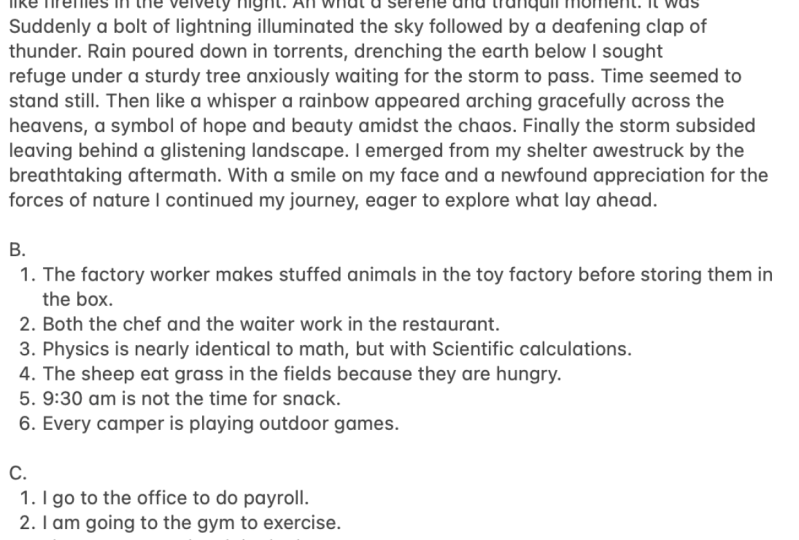
to plural verb. Let's take example. John is a good boy. Is, is this singular
verb here and subject singular is John. Now take the example
of the other, which is they are working
hard for the exam. Day is the plural subject and
R is the plural verb here. Second rule tells us
that when you have two subjects that are
connected by the word, and then you use
plural verb, e.g. John and Alex are working hard. John, Alex are connected
by a world which is N, So we will use a plural verb. The other rule says
that many subjects S, but they are still singular, so we use singular verb, e.g. mathematics is a
difficult subject. In subjects, we are
using S at the end, but we're also having this
singular verb, which is, is. Let's take another example. Physics is my favorite
subject, physics. S. N is singular verb. With the subject. There is an other rules for
subject-verb agreement, which tells that some subjects don't end with as
they are plural. So we use plural verb, e.g. the men are so smart here that men do not end with the
S. They are plural, so we will use a plural verb. Let's take another example
that women are working hard. Woman is the subject
which is plural, and they do not end with S. So we are using a
plural row, which is R. The other rule says that
quantities of time, money, and distance are
considered singular. E.g. dollar 5,000 is
a lot of money. Here. In this intense, we have taken the amount of money and we
have used a singular verb. With that. The last rule tells
us that when we use the word each are
every innocent dance, we always use the
singular verb, e.g. every student is working hard. Here in this intense, we have used every and we're
also using singular verb
7. Punctuation : Now I will explain
punctuation briefly. Punctuation in English. Source to clarify the meaning, structure, and
flow of sentences. It involves the use of various marks and symbols
to indicate pauses, intonation, emphasis, and the relationship between different parts of a sentence. I will explain some
common punctuation marks. Punctuation mark is period, which is known as full stop. The period is used to
indicate the end of a sentence that makes a
statement or expresses effect. In simple words,
we use period or full stop at the end of the sentence in order to
complete this statement. Indicating a both, e.g. I. Am going to the market. First row. Second one is question mark. When we ask a question, we use a question mark at the
end of the sentence, e.g. are you coming with us? Other example can be, as you prepare for the test. There are many examples which involve the use
of the question mark. We use the questions in daily life and end them
with a question mark, e.g. are you busy today? Can you lend me the money? Have you eaten, variables
you today, etc. The other Mark is
exclamation mark. Exclamation mark is used to show a strong emotion,
emphasis or surprise. These emotions can be of sadness, happiness,
our surprise. Let us take an example here. What a beautiful
day exclamation. We can also use. In other sentence, e.g. I lost, I lost the mesh. We will put exclamation
mark after the word allows. Now, I will talk about
the use of the coma. Punctuation is basically
used in our daily life. What Acoma is, commas are
used to indicate a pause, separate item list, set of introductory or
non-essential freezes and separate clauses. E.g. I. Like apples, comma,
oranges, and bananas. The commas are here to
separate the items in a list. The next one, punctuation
mark is semicolon. Semicolon is used to separate closely related
independent clauses are two separate items in a list when the items themselves
contain commas. E.g. I have to finish my work. Semicolon, then
comma, I can go out. You can clearly
understand the use of colon semicolon
from the example. Next is colon. The colon is used to
introduce a list, explain or provide
emphasis, are separate. Ours. And minutes in time. E.g. please bring me
the following items. Colon, then coma,
paper, and a notebook. Next is apostrophe. Apostrophe is used to indicate positioned or to
form contractions. Let us take an example here. The gaps there. It is indicating
possession, gone. It is the contraction
of connote. Other one is dash. The dash is used to
indicate our boss. Our break in tort, emphasize a point or set
of additional information. I finally found what
I was looking for. Happiness. This is the example of dash, which is a punctuation mark. Last one is barren. Test is Parentheses are used to enclosed additional our explanatory
information that is not essential to
the main sentence. Let us consider an example here. She went to the
concert than TCS, which was held outdoors
with her friends. Now, let's take an example of some paragraphs having
punctuation marks. First one is, I went to the store and I bought
some groceries. Will store the items
on my list where milk, comma x, comma bread, comma n, which table? Full stroke. As I walk through
the aisles, coma, I noticed as special offer, buy one, get one
free, full stop. I couldn't resist. Current is the contraction
of good naught comma. So I picked up a bag of chips for stroke at the
cash register comma, I realized I had forgotten
my wallet exclamation sign. I quickly ran back
to my car to get it. Finally comma, I paid for my
groceries and headed home, satisfied with my purchases. Full stroke. In this paragraph, you can see the use of various
punctuation such as comas, barriers, and exclamation marks. They have separate
clauses, indicate pauses, set of items in our list, and convey excitement
or surprise. Proper punctuation
contributes to the readability and
clarity of the paragraph. Let's consider an
example where we will see the use of semi-colons
and apostrophes as well. Status, passion for
cooking every day. In her culinary
skills, semicolon. She can flip up our
delicious meal in no time. Signature dish, comma,
grandma's famous lasagna. Comma is a crowd favorite. Soda carefully layers
the pasta, sauce, coma, and cheese, semicolon, then begs it to perfection.
First job. She also enjoys
experimenting with levers, semicolon, her latest creation, alma as spicy mango
salsa comma x are delightful with two
traditional dishes will stop. Sorrows. Dedication to
her craft is inspiring. Semicolon. She is always seeking
new techniques and ingredients to
expand her culinary. Deeper. In this paragraph, you can see that
semi-colons are used to separate closely related
independent clauses. While apostrophes
indicate possession. E.g. sada, special, and form
contractions like grandma's. These punctuations help in
structuring the sentences indicating relationship between ideas and clarifying ownership
8. Articles : Now I will talk about
English articles, which plays an important
role in English grammar. English articles such
as our n and the r, a crucial component of the
language grammar and are used to denote a nouns
specificity or generality. The following list
of justification for using English articles, e.g. that distinction between definite and
ambiguous references is made in English. Why are the use of articles? When we are referring
to a certain person, thing or concept that is
previously known or has been stated before that is employed for specific
or definite reference. When referring to an
unidentified person, thing or concept, the word R and N are employed as
indefinite pronouns. This paragraph is explaining the importance of
English articles that these are used to refer something definite and
indefinite things are present. Let us take an example here. E.g. I. Saw the line in the zoo. This sentence is referring to a specific line that has
been mentioned before. So we have used the
article in this sentence. Let us consider another example, which is, I saw a
line in the zoo. This sentence is referring
to any unspecified line. So we have used the article
or in this sentence. I hope these examples
made you clear. We will further discuss
in next slides. Articles basically
are employed to denote announced
accountability or incapacity. Vile is used with both singular and
plural countable nouns, as well as uncountable nouns. R and N are used with singular
countable nouns only. Let us consider
some examples here. First one is, I bought a book. It is referring to as
single countable noun. So we have used the article
are in this sentence. The second example
says that I bought the books referring to
specific countable nouns. We have used the article. The third example is
I bought the milk. This sentence is referring
to uncountable nouns. The article is used in the
sentence instead of R and N. We have seen in the first
slide that articles denote a noun specificity
or generality. So now I will talk about debt. That degree of specificity or generalization may also be
expressed in English articles. While R and N are used to refer to generic
or non-specific nouns, that is used to refer to a specific noun
that is distinct. Known to the listener. E.g. that I felt over is a
famous landmark in Paris. It is referring to the
specific I felt over. So we have used the article
are in the sentence. Other example is Apple. Our day keeps the Dr. away referring to any
Apple in general. So we have used
the article here. We will talk about why English articles are
important in English grammar. English articles are significant
for a number of reasons. In the beginning, they
help in communication. But adding detail and clarity. The word, the dynodes
are distinct noun that has already been mentioned
or is known to the listener. In contrast, are n denotes a
generic or indefinite world. By making this difference, we may more clearly express our meaning and steer
clear of ambiguity Secondly, articles
are crucial component of English sentence
structure and grammar. They define the connection
between nouns, adjectives, and verbs, affecting the overall grammatical accuracy
and sentence structure. By appropriately
employing articles, we preserve grammatical
integrity and guarantee that our work or speech
complies with English grammar. Finally, articles
are significant. Within the cultural and
linguistic conventions of English. Native speakers expect
the appropriate use of articles and their mastery demonstrate
proficiency in the language. For non-native speakers,
understanding and correctly utilizing articles is
crucial to convey. Messages are greatly
and adhere to linguistic norms within the
English speaking community. In conclusion, articles play a crucial role in English
grammar and communication. They contribute to specificity, clarity, and comprehension, ensuring that our
messages are accurately conveyed by understanding and
using articles correctly. We maintain grammatical
integrity, enhance coherence, and adhere to linguistic nodes, thus facilitating effective
communication in English. Now, I will talk about the
two articles in the English, which are definite
and indefinite. I have explained them
in previous slides, but now we will talk in clarity. First of all, we will talk
about definite article. The definite article in
English is the it is used to refer to a specific noun that is already known to the listener or has been mentioned before. The definite article is used in the following situations when referring to a specific
person, thing or concept. E.g. the cat is on the table. Here, we are referencing
or referring this specific animal
which is scared and we're referring our table. So we will use the article. The other situation is when referring to a particular
noun that is unique. The sun rises in the east. We use definite articles before this
superlative objective. He is the tallest
person in the room. Our list is the superlative
objective here. So we have used the article the before the
superlative adjective. Now, I will talk about
indefinite article. The indefinite articles
are in English, which are r and n. They are used to refer to a
non-specific or general noun. The choice between R and N depends on the
sound that follows the article is used before words that begin with
a consonant sound. E.g. I. Saw a dog in the park. Here, article is used and is used before words that
begin with a vowel sound. She is an excellent student. There are 54 vowels in English, which are a, E, I, 0, and U. The indefinite article is used in the following
situations. When introducing
singular countable noun. For the first time, I bought a book. This is the example, are when referring
to any person, thing or concept in
a general sense. And Apple or day
keeps the Dr. away. When we talk about
English articles, we always is that there are
two articles in English. But now I will
explain a third type, which is zero article. The zero article refers to the absence of an
article before a noun. It is used in the
following situation. Before plural,
countable nouns and countable nouns when they
are used in a general sense. E.g. dogs are loyal animals. Here, no articles are used. And we're referring
to dogs in general. Are their situation is before proper nouns that mean names of people, places,
or negotiations. E.g. john is a Dr. no
article before the name. The third situation is that
in some fixed expressions, titles, and names of meals, we use zero article. E.g. I. Like to eat breakfast. Here, no article is used. So these are the examples
of zero article. When no articles are
present in a sentence, they are called as zero articles
9. Tenses: Now we will talk
about the last topic of the English grammar,
which are dentist. Dentist are basically
grammatical forms that indicate the time
of an action or event. In English, there are
three primary tenses, which are present tense, past tense, and future. Tense has different forms to indicate different
timeframes. Read after me, watered
three main densities. These are present tense,
stands and Georgians. And each tense has
four categories, which are both continuous, perfect and perfect continuous. First of all, we will
talk about present tense. The present tense is used
to describe actions. Events are steroids that are happening now are
generally true. Each James has its own
four categories or types I told you
in previous slide. So we will discuss this. First one is simple. We will, for present tense, we will see simple present. Simple present. We have a subject. We use first form of woe. And is our m plus S or
ES are used plus object. I have explained each
dense in this form. So you have to note down on the paper in the
form of a table. And remember those,
these are going to be very helpful for you. We know that we use subject
and object in a sentence. So you should draw a
table and write d, which forms of verbs are used in this dense and which are going
to be used in this tense. Okay? Now let us consider the
example of the simple present, which is he sings beautifully. He is the subject here. And we are using things, which is four, since it's
the first form of war. And we have used the S and beautifully is
the object here. Other example is she runs fast. Ms. previous. She is the subject, runs, is the row with the S, N, fast is the object. Now we will talk about
present continuous. We will use subject verbs. First form with is our m plus. We will use I-N-G here. With the plus. We will, as usual, we will have our
object or example. John is playing cricket. John is playing cricket. Here. John is this object we
are using is blind. We are using I and j, I and g. Playing. Cricket is the object. This is the example of
present continuous debt. He is doing something. He is blind cricket. The other example is
she is writing a book. Sorry for the mistake. Here is she is writing a book, not R. R is a mistake here
in this layer, so ignore it. And who's here? So in this example, we have used is subject
is Ishi writing. We have right, I-N-G, so it became writing our book. She's doing this example
of present continuous. Other example is they
are dancing in the rain. Now, what is present perfect
and present perfect tense? We use the third form of
the verb with has and have. The sentence structure
will be subject plus verb. Third form, plus has
or have plus object. E.g. I. Have finished my task. Subject is I. We have the third form of
verb which is finished. And we have also used have
here in this intense. And my task is the object. This is the clear example
of present perfect. The other example is she
has done her homework. Instead of have, we have
used the as in the sentence. She is, this object has
done is the third form. Is the object. If you learn this object, sent sorry, sentence
structure, you will Clearly identify the example. So I will suggest you
guys to draw a table accordingly and write
this sentence structures. And these are going to
be very helpful for you. The last tens of present is
present, perfect, continuous. In this sentence structure
is subject plus verbs. First, form, plus has or have, plus, I-N-G plus object. Okay? Now let us consider
some examples. He has been running for 3 h. We have ING with R1. So this is the example of
present perfect continuous. And we have also used the
heads in the sentence. I have been learning German
for three months, okay? So you have to consider
that you will also use being in the present
perfect continuous tenses. Okay? I have been learning
German for three months, have been learning. Learn is the first form and
we have used ING with it. Okay? German is the object
here and subject is. I hear. Now, here is the past tense. The past tense is used
to describe actions. Events are staged that
occurred in the past. Like present tense, we
have four categories. Now in Boston, we will also have the four categories as
like the present tense. First one is past. Simple. Sentence structure is
subject plus second form of verb plus object. This is a simple sentence. I've washed the dishes. Washed is the second
form of verb. I is the subject here, and the object here
is the dishes, dishes, dishes is the object. So this is the example
of past simple tense. Let's move on to
the other example. That is, John
walked to the park. Park is the object. John is the subject. And what is the second row? That is, what is
past continuous. The sentence structure is subject plus first form
of verb plus wars, and we're blessed,
I-N-G plus object. That is considered examples. They were playing cricket. They, here is this object
we have used for playing. Play is the first form of verb, and we have used ING with that. Cricket is the object. I'm making these
sentences simple to you so you guys can
understand easily. Other example is John was
washing the dishes yesterday. John is this object. Wash is the first form and
we have used ING with it, so it is washing. And we have used,
was here with John. Because he is singular. This singular we will use wars and with plural
we will use Word. Dishes are the object here. Now let's talk about
past perfect and the sentence structure
is subject plus whoops, third form, plus
hat plus object. E.g. she had already
left when I arrived. So she is the subject here. We have used head
in the bus sense, and arrived is the curved form. Now let's consider
the second example. I have finished all my homework. I is the subject here. Had finished. Finished is the third form. All my homework, homework
is the object, okay? Now, here is past perfect
continuous subject plus verb, plus head, plus being
plus I-N-G plus object. E.g. I. Had been working
hard for our ear. We have huge head. You have used bean, we have used verbs. First form, which
is work with I-N-G, so that we can working. We have used all the above sentence
structure in this example. Let us consider another example. She had been flipping
all the day. Last type of the tenses. The future tense. Future tense is used
to describe actions. Events are states that
will happen in the future. First of all, we will talk
about future simple dense. The sentence structure
is subject plus verb, first form plus, we'll flesh
shall thus object. E.g. I will work hard for the exam. Here, work is default form. We have used will with the subject and
exam as the object. We shall meet tomorrow. We subject, we have used shell, made the object and tomorrow is indicating the future,
is future continuous. The sentence structure is
subject plus walk first form plus or plus b plus
I-N-G plus object. Now, for the Future continuous, then we will be using B. E.g. John will be
traveling next Monday. John will be studying
for next week. We have used B with our
shell and ING with the work, and use the first form of
the subject and object. The third category is future
perfect, subject plus verb. Third form plus or
shell, half plus object. Now let's consider an example. E.g. she will have
cooked dinner. Here we have used the
third form of war, which is cooked
and we have used, we'll have, next example is, I will have met John and Alex. Here. Matt is the third form and
we have used have with the category of future than its future
perfect continuous, which is subject plus
first form of verb plus, plus half plus
I-N-G plus object. And we will also use
being with these, okay? Ad being here. E.g. I. Will have
been studying for 6 h by that time
the exam starts. Here we had used will have been sturdy first form
of verb with I-N-G, so it began studying. The other example is by next, one day will have been living in that house for ten years. I hope you guys enjoyed this lecture and learned
something important. I tried to make the
lecture basic for all of you so you can understand
the basic English grammar. Thank you for watching. Please do leave a comment or a review if you
like the lecture. And if you have any problem live in the
discussion section, I will try to improve that and try to solve the questions
in the project section. And thank you so much for
watching this lecture. Goodbye, Take care. We will meet in the next class.
 Muqadas R