Transcripts
1. Introduction and Supplies You Will Need: Hi, friends. How are you? I hope you're having
a great day today. I'm excited about sharing
this project with you. This is a drawing and
watercolor painting project that I designed,
especially for kids. Students do not need to have any drawing or
painting experience at all to be successful
with this project. I will guide students step by step through all the steps
that they need to take. Today, we are going
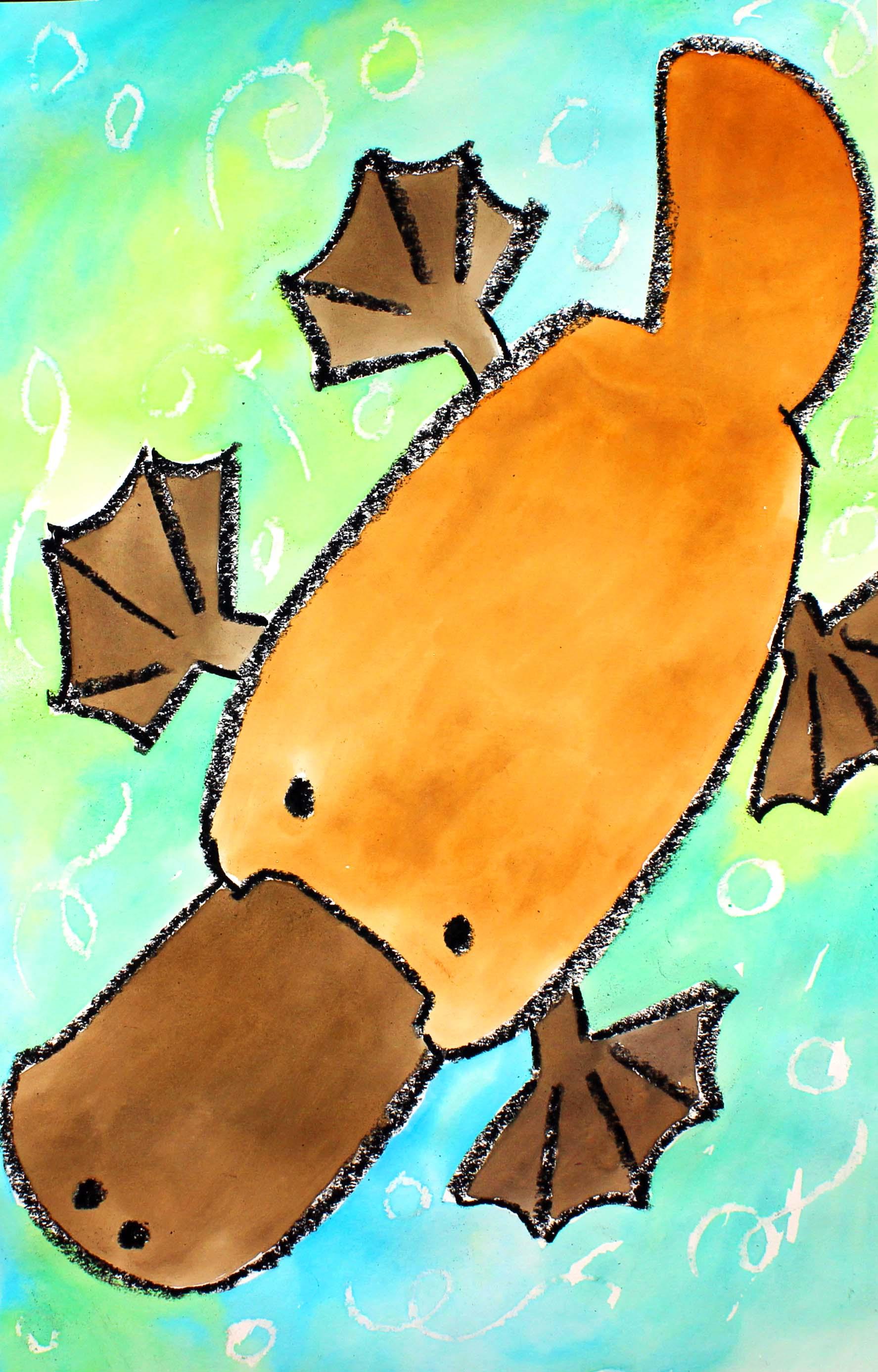
to be creating this little platypus that
is swimming in the water. Let's talk about
the supplies and the materials that you will
need for this project. The first thing
that you'll need is a sheet of watercolor paper. You will need a set of watercolor paints
and a paintbrush. You will also need a bowl
or a cup with clean water, and you will need a set of crayons or a set of oil pastels. The colors that we're
going to use within the set are black and white. The last thing that you'll
need is a paper towel. So go ahead and gather all of those supplies
and materials, and I'll see you back
here in the next video.
2. Step 1: Draw a Platypus Design: I in this step, we are going to draw
our platypus design. So let's get started. The first thing
that we're going to do is we are going to pick up our black crayon or
our black oil pastel. I'm going to use a
black oil pastel, but you can use either
crayons or oil pastels. And my oil pastel is broken, and that happens a lot with oil pastels because
they are very soft. So if that happens
to you, that's okay. Just put the broken
piece back into your set of oil
pastels and move on. So what we're going
to do is we're going to find the middle of
our sheet of paper. Mine is going to be
about right here. Right now, we're just
going to work on the bottom left hand part
of our sheet of paper. So find the middle
and then go to the left at pretty
close to the bottom. So what we're going to
do first is we're going to create a line that
looks like this. So over across and then down. Now what we're going to do
is we are going to create two curved small
lines just like this. This is going to be the
top of our platypus bill. Now what we're going to do is we're going to start about right here and we're going to
end up about right here, and we're going
to create a bill. So your bill might look different than my
bill, but that's okay. We're going to come over.
Come up just a little bit, come around, and then close up. Alright. So now we have the
bill for our platypus, and what we're going to
do now is we're going to make the body of the
platypus coming up this way. Alright? So the platypus' body
is going to come this way. It's going to be a
little bit curvy. Let me show you what I mean. Let's start this one right here. We're going to come
up with a curve line. Then we'll stop
right there and then we'll come out with
another curve line, and we'll stop
about right there. Now what we're going to do is
come in just a little bit, come in a little bit,
and then we're going to create the platypus' tail
right here at the top. So we're going to come out
around and then come back in. And your tail shape might look different from
mine, and that's okay. All right. Now what
we're going to do is we're going to add
a little bit of detail inside the bill. So let's add some nostrils. And then we're going
to add some eyes. Their eyes actually
aren't that large. I'm just going to make some
circles. About right here. Here we go. Actually, maybe I'll make my eyes just
a little bit bigger. Sometimes as I'm doing an art
project, I change my mind, and so I just do whatever I feel like doing because
this is my project, and I want to make sure
that I'm happy with it. Alright, as you see,
this oil pastel is getting on my fingers, but I'm going to wait
to clean off my fingers until after I'm finished
drawing my design. Alright, so now we're going
to come over on this side, and we're going to
create some legs and some webbed feet
for our platypus. So we're going to come down
with some really short legs. And then we're going to come down with some
really short legs, and then we're going
to add some toes. So we're going to come out. The first toe is going to
touch that line right here, and then we're going
to come out with some more let's see, five
lines altogether. The last line is going to
touch this part of the leg. Now what we're going to do
is we're going to attach these toes together with
some curved lines like this. So some curved lines
between each toe. And that will create
a webbed foot. Let's do the same
thing on this side. Now, this foot might
be going off the page, might be going off the sheet
of paper, and that's okay. Alright, let's move on to
this side of our platypus, and we're going to
do the same thing. We're going to make some
more legs and feet. So come out with some
small lines in the front, and then come out with some
small lines in the back. Then we're going to add five
lines, two, three, four, five, and then five lines on
this side, 23, four, five. Now we're going to connect
those toes together, those lines together
with some curved lines. And then we're going to do the same thing on
this foot, as well. Alright, friends. So now we
have the basic shape and some basic details
for our platypus. What we're going to do
now is we're going to put our black oil pastel away, or if you have a crayon, a black crayon, you
could put that away. And then what we're going to
do is we are going to take a moment to clean
off our fingers. And this will only happen if you're using the
black oil pastle but probably not the crayon. All of the black
oil pastele will probably not come off of your
fingers, but that's okay. That just means that
you're being created. Now that we're finished
drawing our platypus, we're going to add
some designs to the water surrounding
our platypus, and we're going to
use the color white. So go ahead and pick up your white oil pastel
or your white crayon. And what we're going
to do is we're just going to make some circles, some small circles,
maybe some swirly lines, maybe some wavy lines. It's completely up to you. Now, the tricky part is, you are not going to be able
to see what I am doing. So I will just describe
what I'm doing. Because I'm going to be using my white oil pastel on
a white piece of paper, so you will not be
able to see that. So I'm just going to
start out by making some circles and
some swirly lines. Maybe I'll make a
circle here, here, here, and then some
more swirly lines. And then I'm just going
to make sure that I push pretty hard. Some circles. I can barely see
my own drawings, so it's going to be
kind of a surprise to me when I see what I've done. So we will see. I can't remember if I made
anything right here, so I'll make a
couple of circles. All righty friends. So
there we have our platypus, and then we have some swirly
lines around in the water. When we come back, we will
start painting our design.
3. Step 2: Paint the Design: I In this step, we are going to paint
our platypus design. So let's get started. The first thing that
we're going to do is we are going to add a drop or two of water into each
of our pans of paint. And what that will
do is it will soften up our paints a little bit so they are easier
for us to use. So I do encourage my students to put a drop or two of water
into each pan of paint. Now that our paints
are softening up, let's turn our attention
to our design. So here we have our little
platypus swimming along. And what we're going to do
is we are going to paint the platypus' body
brown, the tail brown, and we're going to paint
the bill a very dark brown, and we're going to add a
little black to the paint, as well, and the feet will be
the same color as the bill. Alright? So let me show you
what I'm going to do first. I'm going to add a few drops of water into one of my wells. Now that I have some
water in one of my wells, I'm going to add
some brown paint, mix it up really well. And then I'm just going
to start painting the body of my platypus. I want that to be a
little bit darker. I'm going to try to
stay inside the lines, but if I go outside of
the lines a little bit, that's okay. No problem at all. That's what watercolor
paints sometimes do. They go outside of the lines. So I'm going to go
ahead and I'm going to paint my platypus' tail and body Alrighty friends. Now I have the body and the
tail of my platypus painted. And what I'm going to
do now is I'm going to make a little bit
more brown paint so that I have enough to paint the bill and the legs
and feet of my platypus. So I'm going to add
some more water, some more brown paint. And I'd like this paint to be
darker than the paint that I used for the body
and the tail of my platypus. So there we go. Now what I'm going to
do is rinse my brush, and I'm going to add a small
amount of black paint. It only takes a
very small amount because the color black
is very powerful, so we want to make sure that
we use just a small amount. And this will create
a dark brown color. So I'm going to go ahead
and paint the feet and the legs and the
bill of my platypus, this color, brownish black. Alrighty friends, so I'm
finished painting my platypus, including the bill and
the feet and legs. So when we come back, we will start painting the background.
4. Step 3: Paint the Background: In this step, we are going
to paint our background. So let's get started. So here we have our platypus, and this platypus is
swimming in the water. So what we're going to do
is we are going to paint the background water colors. So think about the
colors of water. You might think
of the color blue or maybe a little bit
of purple or green. It's up to you the
colors that you'd like to use for the background. Remember, we do have some
white oil pastels or crayons. So what might happen
is you might be able to see those shapes and those lines coming through and resisting those
watercolor paints. So that will be a neat treat if you can see that happening. What I'm going to do is
I'm going to start by putting a couple drops of water, maybe even a few drops of
water into one of my wells, and then I'm going
to add some blue. That's the color that I'm
choosing to paint the water. Then I'm going to add some
more water to another well. And I'm going to add a little bit of green.
This color green. I might even add one more color. I have a turquoise color here. Right here that's between
this green and this blue, and I might make some
paint for that as well. So I'm going to put a few drops of water
here in one of my wells, and then I'm going
to put some of this looks like a bluish
green, a turquoise color. So I think I'm going to
use those three colors, and I'm going to just
mix them together. I'm not going to be careful about keeping those
colors apart. I think that will
look really nice. So I'm going to
speed up this video. I'm not sure if
you can see this, but here I have a few little circles that I've created that
are popping out, and that's exactly
what I want to see. So as I was saying, I'm going to speed
up this video. You can watch me,
and then you can get started on your own
painting of your water. Alright, friends, I'm finished
painting the background. I really like the way
that it turned out, and I can see some of those white lines and
shapes that I created. They're really popping out. They're really
resisting that paint. So I hope that you had a lot
of fun with this project. I had a lot of fun teaching you. I will see you next time.
 Em Winn, Teacher, Art Instructor, Artist