Transcripts
1. Class Introduction: Hi, guys. Welcome
to my course on TatGPT& Google Gemini for
Digital Marketing SCO and Ads. All tools and features,
my name is Samoikomatas. Just to give you a
background about myself, I am an ex Google employee with 16 years of experience
into paid advertising, and I've been teaching
paid advertising for more than ten years now, and I teach to a lot of
young professionals, entrepreneurs, and experts who want to get into this field. I wanted to take this
opportunity today to let you know what we are going
to learn in this course. We're going to look
at the usage of Chat GPT and Google Gemini
in digital marketing, specifically looking
at the SO ads part. We'll start off with
marketing foundations and audience strategy with Chat GPT, SEO email marketing, which
we can do with Chat GPT. Then we'll look advertising,
online advertising, paid ads, funnel building, lead generation
funnels creation. All of these will be done through specifically
with ChR GPT, and then we will move
to Google Gemini. With Google Gemini, also we'll see digital marketing
foundations, conversion focused
content marketing, we'll see how we can do business growth and productivity
with Google Gemini. Then we'll get into ads, copywriting with CAGPT,
sales funnels, creation. Also, we will see how
you can use AI and digital marketing specifically
in various segments. And then we'll see how we can also do AI chat and messaging, also AI marketing analytics,
automation for business. So the intent of the
course is to help you how we can integrate
these AI tools, which is Chat GBT
and Google Gemini, specifically in digital
marketing segments, which is going to be
covering SO and ads. So thank you once again, guys, for enrolling into this course, and I'm really excited to
see you inside the course.
2. Welcome to ChatGPT Marketing: Hi, guys. Welcome
to this session. In this session, we'll
see how we can make use of the hATGPT in,
let's say, marketing. You're looking at
digital marketing and in different spaces, we can make use of this tool. So the first thing which
we're going to look at over here is how we can
make use of Chat GPT to optimize our websites so that they rank better
on search engines. So we'll see different
optimization strategies, SEO strategies, which you can build out here with
the help of this tool. The second thing which we'll
see is how we can build out complete email sequences for marketing with Chat GPT,
starting from scratch. So if the tool can be used for building out a complete
email sequence, which we can then set up for our email
marketing strategies. Another thing which we can
do is funnel building, which is like sales
pages creation. We'll see how to create
different sales pages for different products and services and how we can optimize them with the help of Chat
GPT so that they convert. And then we will see how we can build out
different types of ads. Okay? So you can create
different types of ads across Google,
meta, Instagram. We can provide headlines. It can generate
headlines, descriptions. So we'll see all the ad
creation process as well, which you can do here with
the help of this tool. Also, we will see how we can build out a complete
content calendar. We can create a content calendar with the help of Chat GPT, which can give us a
specific schedule of how we can generate this
content over a period of time. And in the next video, to start off with all of this, the first thing which
we are going to look at is defining our target audience, what kind of target audience
we want to go ahead and build out and target our
product and services too. So there as well, we can
make use of CHAR GPT. And based on the
target audience, we can do all the other
things which we are discussing out here. I
hope this makes sense. Let's go to the next
video and let's see how targeting audience can be done with the help
of the student. Thank you. Thank
you so much guys for listening into this session.
3. Target Audience: How a well defined target audience can help you sell more: Hi, guys. Welcome
to this session. In this section, we want to talk about the target audience. Who is our target audience? Okay. So here, what we want to do is define our target
audience clearly, whom we want to
target our content, reach out to them, and try to sell our products
and services. So ideally, defining our
target audience becomes the first step towards
marketing, right? And here we have to
think about and analyze what is going to be the audience I want to target here.
Who is your audience? Idally what we try to
do here is we look at the product and
services which we are trying to sell
and now for that, we try to see what kind of users would be
interested in this. Right. So based on which,
we have to define that. So you need to go ahead
and make a list of people who would
be interested in buying your products
or services. Okay? For example,
let's say I'm in a business where my
product is running shoes. So now I'm thinking,
what kind of users would be interested
in buying my product, which is a running shoe. So as per my understanding goes, I feel the best audience
can be an athlete. An athlete who has a job to run or
tendency to run and who usually does a lot
of physical activity would be interested
more to buy my product. So this is how you need to first clearly define what is
the target audience, who is going to be the audience, the most appropriate one, who is going to buy your
product or services. Then comes the pinpoints. Okay, we need to
document all of this because this is what is going to help in our content marketing. So when we start writing
content in different formats, we can use these as points
or hooks to capture attention and which
influences people to then eventually visit our
website or blogs or articles, check out our products and
pages and eventually buy. So defining the pain points is again a super critical
part that what can be the pain points in cases of what is our product
basically solving? Our product or service is solving for our target audience. Then comes where do
they live online in the sense that what kind of
audiences are we targeting? Where do you find them? Would
you find your audiences mostly on Google Search or
on Facebook, Instagram? Where do you find them online? So in my case, let's say, I'm in a business where
I sell running shoes, then I'm thinking that
majority of my users are going to be young professionals, okay, young demographics. So I feel that majority of
the audience would be on Instagram or let's say
Twitter or let's say Tik Tok. Okay. So these can be
my ideal places where I should be doing a strong
content marketing campaigns. And then the customer persona. So we need to also define
the customer's persona. Customer's persona is basically a profiling which we
do of our customer, our ideal customer, what kind of person you want to
target your products with. So this involves
a lot of things. It involves their demographics, their interest, behavior, okay? All these things you jot down, you make a list of and then you go ahead and create a
customer's persona. So these are the four
major categories of how we are defining
our target audience. So who we are marketing
to another aspect of, uh, the pontin marketing part
or target audience part is, what kind of audience are you
targeting your products to? Okay? Now, usually a big
blunder which people tend to do is that they want to sell their product to everybody
and anybody out there, which is not the right
way of doing it, because of the fact
that when you say that your product is going to
be for everybody out there, then it is actually diluting
your target audience. We are not clearly defining
who is the target audience, whom you want to show your products to or
sell your products to. The better approach is going
to be to niche down to select a specific
targeted audience to whom you want to
sell your products. That way, we have a clear
idea about the user persona, customer persona, profiling of the user,
whom you want to target. Like in my case, when I'm
selling running shoes, I am only looking at
people who are athletes. Okay? I'm not looking at
everybody who wears shoes, which can be really broad and which does not clearly
defines my user persona. And then, if you look at the
demographics part of it, there are these major
factors which we look at, we look at the user's
age, gender, location, okay, uh, education,
also income, we look at the
interest part as well. These are all factors
which you will be using to do a lot
of your content marketing part so that you can
clearly define the kind of users you want to cater to and target them
with your content. To give you a simple
example of this, how it's going to
work in my case. In my case, as we have seen
in the previous videos, we talked about the case
that I look for people who are interested in learning
about paid advertising. So keeping that in mind, I feel that the right age group of people who would
be interested would be 24 to 40-years-old who want to learn
digital marketing, performance marketing,
paid advertising, preferably both male
and female gender, location can be the
English speakers primarily because I
teach in English. I'm looking for those
kind of people, uh and education wise, I'm looking at higher education, mostly professionals, people who are starting
their professional journey. Okay, so that is the kind of
audience I want to look at. Income as well, there is no specific disposable income needed out here
because this is going to a learning path where
they just possibly would have to invest
in the course and learn the skill of
performance marketing, paid advertising, and
then they can start their journey of running ads for their own business or
for their clients. Then finally, the interest part, they should be obviously
interested in paid ads, paid advertising, and that is why I would be
targeting them. So this is how we are going to define very clearly,
categorically, what is the kind of target
audience we want to cater to and reach out to with
our products and services. So what I would
suggest to you guys is to go through these
all parts, okay, look at the features of it, and define your target
audience as well. Okay. Clearly define what kind of
target audience you would want to cater to and sell
your products and services. This is going to really make
things easier, simpler, clearer in your mind later on
when we start building out anten marketing formats where you can easily go
ahead and use this. I hope this makes
sense. You understand the target audience
defining part. Thank you so much guys
for listening into this, and I will see you
in the next video.
4. Target Audience: ChatGPT for audience research and analysis: Hi, guys. Welcome to this session.
In this session, we'll see how we can
identify our target audience based on the kind of information which we're looking for
with the help of Chan GPT, and we can do some
audience research here. So we can give a
specific kind of a prompt now to Chan GPT
regarding our target audience. So we can explain to Chan GPT what exactly
is your business, what you're trying to sell
as a product or service, and based on which you can
ask for the target audience. So I can mention it over here. I'm course creator on let's say digital marketing
and other digital products. I'm asking them to provide the ideal audience
audience for age. So now each AttiBT will
give me different types of audiences who will
be relevant for this. Like you can see, aspiring digital marketers,
business owners, entrepreneurs, okay, marketing professionals,
freelancers, and consultants. So we are getting a lot of
options now based on this. So now that you have
target audience, you can also look at what can be the pain areas
for these audiences. So now it will try to tell
you what are the pain areas. Why we need to
know about this is because then based
on these pain areas, possibly you can
build some content. You can write some blogs, you can do some
videos, possibly. You can go ahead and possibly do a podcast around a
particular pain area. So that can reach out
to a lot of people, and now they can become
your potential customers. So you can see now, like for an aspiring digital marketers, pain area is lack of
practical experience, overwhelmed by information, too much of information there. Career uncertainty. Okay? So these are
some pain areas for digital marketers,
aspiring people. Okay. So like this, we
can get some ideas, and now you can expand this further into creating
various kinds of content, again, with the
help of ChachiPt. Another thing which
we can do here is what we can look
for is what kind of searches our target audience does related to digital
marketing, let's say. So we can give that
kind of information. So now we understand that
what are they looking for? So this is a direct information which is really smart, right? So this is the kind of
information they are looking for. Like, for example, a
small business owners, they're looking for affordable digital marketing strategies, form of small businesses, or how to create a
digital marketing plan or maybe best social
media platform. So now, this is
giving me a lot of ideas that I can build a lot
of courses around these, possibly, or I can conduct a podcast around this or maybe
create some videos around. So this is giving us
really good, clear, crisp ideas of different type of content creation which
can happen from here. Let's take one
example, let's say, how to create and
sell online courses. So what I want is let's say, a video script on this. So I can take this as well
and ask Strat beauty for the same So now it is going to give me a
complete video script which I can use now, and I can build this video out and post it on different
social media platforms. So this way, guys, we can research about the
target audience, which we want to target over here with the help of Cha GPT. And we can go granular
into looking at specific angles or
areas which you want to focus on and build
on it and build out different types
of content around that and reach out
to our customers. Hope this makes sense. You
understand now how we can do target audience creation
with the help of this tool. Thank you so much, guys,
for listening into this, and I will see you
in the next video.
5. Content Calendar ChatGPT: How to create a complete Content Calendar: Hi, guys. Welcome
to this session. In this session, we'll
see how we can build out a content calendar for us
with the help of Chat GPT. So content calendar is
basically a schedule of content which you plan to create over a period of time. So you build out a
calendar wherein you plan out what
type of content you would like to create
on a regular basis and show it to your users, target your customers,
so that you can generate leads and
customers sales out of it. So you can build out
a complete calendar, which will be over
a period of time, where in different
types of content, you will be creating
on a regular basis, and you post on different
social media platforms. When people see that, you
nurture your audience with the help of it and you try to convert them into
your customers. So this content calendar we
can also create with the help of HATGPT and we can provide our information
related to it. So let's have a look at this. So once you are on HATGPT we can give it a prompt
similar to that. Like create a content calendar. Training. Okay. All right. You can also ask it to
ask us some follow up questions related to the kind of content calendar we
want it to build. So now we are asking to ask
us ten follow up questions, which can give them
complete information to create this particular
content calendar. So now the chat TPT will ask
us those specific questions, which we can have
a look at, okay? And then we can go ahead and answer those questions
specifically. So the first question
is course topics. Okay, so we can say the course topics are
related to all of this. The second question
is content type. Okay, so content type is going to be we are
creating videos. We are creating let's
say blog posts, Okay, social media posts. Third question is
target audience, target audience or business
owners posting frequency, we would like to post
on a weekly basis. Preferred platforms
will be we can say my website, social
media, YouTube. Promotion strategy, paid
promotions, which we want to do. Okay, so we are saying
Google and Meta. Seven is key dates. So key dates, we are saying that any important dates or events
which are launch dates, Okay, I will highlight
no special dates. Eight is call to actions. So we want them to
go ahead and enroll, sign up for the courses. And then content goals, which is the increase sign up. The whole idea is to main idea of content creation is
to increase sign ups. And the last would be
the existing resources, no existing resources.
We're saying for now. So these are the
answers which we have now for the follow up
questions it has asked us, which I can provide now here. So based on this, it is now going to create
the whole information out. Okay? It's going to create the content
particularly ideally. The weekly content calendar
will be given to us Week one, what all things are we creating? Okay? So that is
given to us a video, blog post, social media post, what it would be on what
platform it would be, o, and we can see the call to action
phrase as well on it. So this way, we have now got a calendar built out
on a weekly basis. As you can see, it is
creating week over week, what will be the type of content we are creating
on different platforms. And now you can
elaborate on this. So let's say for the video, for the video, which
is for Google Ads, Baysix for business owners, I can ask Chat GPT to create
a video script around that. So now it will create
the video script for us, giving us all the information, the script needed
in the presenter, scene one, all that
we can get out here. Similarly, if I want, I
can also ask it to create a blog post around top five mistakes to
avoid in Google Ands. So now it's creating
the blog post for us. So you can see what is
happening is, on one hand, the first step which
we did was we built out the content calendar that what will be the type
of content we will be coming up with
on a weekly basis. And now for each of them, I can also get the content
generated as well. Okay? So I got the
videoscript created, I got the block post created
on those specific topics. So this way, guys,
we can easily get our content calendar
built out and then also build content
eventually after that. I hope this makes sense.
You understand how we are able to use this tool
in different formats. Thank you so much, guys,
for listening into this, and I will see you
in the next video.
6. SEO ChatGPT: Optimized Keywords and Blog Titles: Hi, guys. Welcome
to this session. In this session, we'll
talk about how we can go ahead and look for
relevant keywords, optimized keywords which
we would like to use and use them to create
some blog titles. So here again, we can
use at GPT for this, so we can make use of the
keyword research part. So, ideally, what we are
trying to do here is we are planning to
write some blog posts. Now, before you
write a blog post, what is more important
for us to identify the keywords around which the blogs will be
written, right? So we need to do a proper
keyword research for that. So there are different ways
of doing keyword research, which is available out there. Okay? So you can use any of
the keyword research tools, and you can find out
the list of keywords. That is one. Or you
can make use of Chat GPT as well for the same and then come up with
different block titles. So let's have a look
at both the options. So one of the keyword
research tools which you can make use of is the Google Ads
account from where you can get the keyword
research keyword planner tool. So for this, you would need
to open a Google Ads account, and then you can use their tool. So you can come to
the tool section in planning where you
have keyword planner. And you can see here we
get discover new keywords, so you can mention
whichever topic on which you want to build
out the block titles. So let's say I'm doing this
for digital marketing. So I can give that
keyword over here, and now it is going to give me a list of keywords around that. So now I have the keywords
with me based on which I can then go ahead and go ahead and get the block
titles around them. Okay? So this is one
way of doing it. The other way is we can ask Chat GPT itself to provide
us with those keywords. So we can say, like, provide When we provide this
kind of information, it is going to give us those
keywords which are ideally being highly searched
on any search engine. And now, based on this, we can also look
for blog titles. Also give a tone specifically. So in this manner now we are getting the blog titles as well, based on the keywords
which we have received. So now, these are going to be the blog titles which we
are getting out here. We can make use of this. Now
what we can do with these is next step would be wherein we will write down
we'll write the blogs, possibly we can take help
of hatGPT as well over there where we can write the
blogs based on these topics. So this way, we can do a lot of keyword research through using different tools or chat GPT. Then based on that,
we can find out the block titles for. I
hope this makes sense. You understand the whole
idea of how we are using CHANGPT for
various SEO strategies. Thank you so much for
listening into this, and I will see you
in the next video.
7. SEO ChatGPT: Writing an optimized Blog Post in seconds: Hi, guys. Welcome
to this session. In this session, we want to see how we can write a blog post, an optimized block post
with the help of Chat GPT. So as we saw in the
previous videos, we are able to come up
with different ideas for block post as well. So we're going to make
use of those ideas to build out a complete
block post based on that. Okay? So there are two
different ways of doing it. One is where we can
simply ask Chat GPT to provide us that particular
block post, okay? So you can say that write a blog post about let's say this was one of the topics which we
had come up with. So it is going to now write a complete
block post based on this. This can be one
scenario, one way. This is going to be
a little generic in which manner we
can create this, and it will simply create a block post based on the
topic which you mentioned. Okay? The other option can be that we can be a
little bit more specific. Specific in terms
of what information you want it to contain. Okay, what should be the
tonality of the post? Okay, what all things
it should be looking at the way it is going
to address the audience. So we can create a little
bit more customized prompt, which we can give
for it as well, and we can build
out the blog post. So let's have a look at this. So we can write in something
like in this manner, where we say that
I want you to act like a blogger and
digital marketing expert. You are writing a blog post
for your gal marketing blog. The topic of the post will
be unlock the secrets. This post should be helpful
for my target audience. So in this chat, as you can see, we had also defined our target audience over here in the beginning as if you remember
the previous videos, we had find out the
target audience. So it will automatically
take these into consideration to
write the block post. So we are taking that
into consideration. We are also giving the
length of the blog post over the tone needs
to be formal, and we can ask them to write in a manner like an
individual blogger, where with a personal approach, and we are referring
to we are not using plural first person over here and do not use
a passive voice. So like this, we can also
give a particular prompt and give it to ChaGPT to give
us a blog based on this. So now it is going to look
at the inputs we have given and based on which
it is going to write the blog for us. Okay? So you can see, so now it is becoming a little
bit more formal, wherein it is writing in
this particular manner, it is also take into consideration the word
limit given by us, and the topic is
going to be unlock the secrets stop digital
marketing strategies for 2024. So this way as well, we can go ahead and make the
blog post based on the topics and the
content which we wanted to build it out. I
hope this makes sense. I hope you understand
now how you can tweak the usage of the tool as
per your requirement. You can write different
types of blogs based on the kind of
inputs you give it to it. Okay, thank you so much, guys, for listening into this, and I will see you in
the next video.
8. Email Marketing ChatGPT: Overview of email marketing: Hi, guys. Welcome
to this session. In this session, we
want to discuss about email marketing and its impact when we are running
our online businesses. So as you understand,
when we start doing some digital marketing
regarding our businesses, there are different strategies
which we're applying. We are applying SEO, we're
running some paid ads, and along with that, we can
also do email marketing. Now, email marketing
turns out to be extremely effective for
the reason that here, you are able to contact them
because you have collected their information like their
name and email addresses. So this is happening
because they have interacted with your
website, your blog post, your some kind of information they have seen, which
they have liked, and in exchange for that, they have provided
their contact details. And now with these
contact details, you can reach out to them. Now email marketing
turns out to be extremely effective
because now you can nurture your audiences
by sending them different types of content which might be of
interest to them. You can share
information regarding new product updates or any
video which you created, any kind of blog post
which you wrote. So all these things
you can continuously send to them to
nurture your audience, to set up a
relationship to build a relationship between yourself and your audience or users. Over a period of time, this is an important thing
to do because this makes them more acceptable to
your products and services, and there are higher chances
of their buying from you. Otherwise, it is very
unlikely that people would straightaway come to our website and check out
our products and purchase. That's why evil marketing
works out really well, wherein over a course of time, we are able to
nurture our audience, explain to them our vision,
what we want to offer, and they're able to
trust us as a brand, and they're more open to go ahead and do
business with us. So that's why it makes a lot of sense that whenever we are running any marketing
strategies, email marketing is one of
them which we are using. Now, when you start doing
the email marketing, there are a sequence of
emails which you need to plan out and you
have to send it across. So this is a sequence
of emails wherein the one email leads to the
second and then the third one. Wherein you're
trying to bring them to the particular situation where you asking them to take an action by your
product or service. So for building such
an email sequence, it takes a lot of brainstorming thought process which we have to fill in to understand how you want to
build this sequence, how you are going to make
them nurture them to come to a state where
they are going to convert and buy your
product or service. So that might take
a lot of time. In such cases, now with Chat
GPT coming into picture, that same work can be done in a much effective
and fast manner. So we can use the
tool to build out a complete email sequence for our email
marketing strategies, which we can quickly apply and we can start
getting our customers. So in the coming videos, I'll show you how
we can build out these email sequences for our digital marketing
initiatives. Thank you so much, guys,
for listening into this, and I will see you
in the next video.
9. Email Marketing ChatGPT: Developing optimized email sequences: Hi, guys. Welcome
to this session. So in this session, we're
going to see how we can create that email sequence
for our target audiences. So we can use hat GPT for this. So let's begin, guys. So this was the one where we had
defined our target audience, so we're going to
continue on this itself, and we're going to ask Chat JPT to create a email
sequence for that. In this manner. Now, simply, it is going to look at the
target audience which we had defined earlier
and based on that, it is going to give
us a email sequence. What all can be the email
which we can get out here. Like this first email can be a welcome email introduction, then we can have a second
email which talks about a strategy which is how to master hyperpersonalization
in 2024. Voice search
optimization. Like this, it is going to give
us an email sequence which we are getting out here. It is also giving
us the content. So not just the email sequence, which we are creating, what
type of email it would be. It is also giving us
the content as well, which it is providing us. So it has given us
six email strategies, sequences which we can build out here along with the content
which is being given. So in this manner, we can
use this specifically. So if you want, you
can go ahead and optimize this as
well going forward. Okay. Like, for example, let's say we want to
optimize email number four, which talks about
boost engagement with interactive content. Okay. So in that, we can
ask for more information. So now it is going to make changes to specifically
the fourth email, which is interactive content. So it's going to give us
more options over here. So under quizzes itself, this is giving three
different types. Then interactive infographics, we're getting
examples over there, videos, interactive content, interactive videos
related to that. So now you can once you
get the email sequence, if there is anything
any part of it which you think can
be made better, you can pick on those
and elaborate on them and optimize them further. To get a better content, better email sequence created. In this manner, you can build out the whole email
sequence, guys, for your digital marketing
initiatives with the help of Chad JP. I
hope this makes sense. Thank you so much, guys,
for listening into this, and I will see you
in the next video.
10. Online Advertising ChatGPT: Facebook Ads: Hi, guys. Welcome
to this session. So in this session,
we're going to see how we can also write Facebook ads for our
target audiences with the help of CHANGPT. So you can give specific
prompts regarding Ad Poppy creation
as well in JAN GPT, and it can give us
that information. So we can make use of the target audience which
we had defined earlier, and based on that,
it can provide us the Ad Poppies. So let's
have a look at this. So once we are on
the same chat box, we can give it a prompt
as simple as this one, where we write Facebook ad, based on the target
audience defined earlier. So now it is going to give us a simple Facebook ad related to the target audience
which we had identified. So this was the audience, right, business with expert digital
marketing strategies. So now it is giving
us the body text, which can be used out here, o, and it's also giving us a
call to action which we can use image or videos which
we can consider creating. So this has built
out the ad for us. Now, along with this, what we can also
customize the ad a little bit more
wherein we can say that give five different headlines make the language
informal and casual. We can also give specifically, we can ask also define the target audience you're targeting
in Facebook ads, okay, the budget,
duration. Okay. All these things
which we can ask for it to provide as well. It can look into that as well. Also give some descriptions. Okay. Also, we can give some, you can say character
limits, okay? So we can also give
five descriptions. Under 90 characters each. So you can give very specific requirements
which you have. So now it is going
to give you those. You can see there are five
headlines which are coming up, descriptions which are under 90 characters, which
I'm getting now. Okay, target audience also they have defined
for my audience, which is age 25 to 55 interest, location, gender, budget
also they're saying could be around $50 and
then the duration. So this way, I can get complete details
regarding the ad creation which I want to do
on the platform. Otherwise, what is
going to happen is for target
audiences and stuff, we will have to go
ahead and search for your target audience on Facebook specifically
that can take more time. So this gets really
shortened because of the information which I get from the tool. I hope
this makes sense. You understand now how ad creations can be done
with the help of Chat GPT. You can also ask for
different structure. You can ask to build out a campaign structure
based on ads, Facebook ads or Google Ads, any other ads platforms
you may have. And it can give you that
kind of information. Thank you so much, guys,
for listening into this, and I will see you
in the next video.
11. Online Advertising ChatGPT: Google Ads: Hi, guys. Welcome
to this session. In this session,
we'll see how we can make use of CHANGPT to
create some Google Ads. Like we saw in the
previous video, where we use hatGPT for creating Facebook
ads for ourselves. Similar manner, you can use it for other ad platforms as well, like Google or Linden
Microsoft ads also. So let's have a look
at it, how we can make use of Google
ads over here. So what we can do is based
on the target audience, which we have defined already, we can use that itself to
build out some Google Ads. Now in this prompt now, what we're going to do
is we're going to give some specific prompts of
what kind of ad we want and certain feature specific
things which we would add ask also to the tool
to provide us with. So let's have a
look at this guise. So like this, we can define
the target audience, and we can mention what we
are trying to sell over here. So let's say it's a
regional marketing course. So we are going to ask for specific things like headlines, descriptions, display URL. We can ask specific
information of the search ad. And we can ask for a number
of headlines and descriptions as well with character elements. And similarly for
descriptions as well. So now, the ChaGPTTol will try to generate a Google search
chat for us based on this. You can see we can get the
website URL in this manner. The headlines are
also provided keeping Kirt character limit as
the limit given to it. And similarly for descriptions, we can see we have got
the information as well. Also provided the extensions
which we asked for, letting us know
different types of extensions with
examples provided also. So this way, we can get
specific information. So now, this is what you
can straightaway take it to your platform and you can
create the ad over there. You can customize it more to your target audience or your
website or your business, and then you can run
the ads very quickly. I hope this makes sense. You understand now how
very easily we can create some Google ads as well with the help of this tool. Thank you so much, guys,
for listening into this, and I will see you
in the next video.
12. Sales Pages ChatGPT: Developing sales page copy: Hi, guys. Welcome
to this session. In this session, we'll see
how we can make use of Chat GPD to build out sales
pages for our businesses. As we understand that having an effective sales page is critical to our business goals, so it makes sense to put the right information
needed out here. So this requires a certain level of copyright so for
that also we can take help of HAGPT to understand what are the different types
of copywriting frameworks. So first, we'll
identify what are the frameworks available,
and from that, we can select the most
relevant one for us and use that to build out a complete sales page
for our business. So let's have a
look at this guise. So once you are on HAGPT, you can go ahead and first ask for the framework which
you are looking for. So we are looking for
copywriting frameworks. So now it will give you a list of different types of frameworks which are widely known
across the world, which we can see
out here like AIDA, which is attention, interest, desire, and action, or PAS, which is problem, agitate
solution, four piece, fab, okay, all these are
now available to us. So now looking at this,
you can go ahead and select the one which you want
to use for your sales page. So let's say I want to
use the AIDA framework. So now I can ask it to create
a sales page based on that. Um, So now it is going to take those
particular concepts into consideration and build
out the sales page for us. So as you can see
now, what we are getting over here
is information. So attention under attention. The great thing about, again, hat GPT is it's going to segment it into
different sections. So as we saw in ADA, there are four segments, attention, interest,
desire, and then action. So for each of them, there's a particular section created, and then the sales page
has been designed so where we can see the
section title text, the bullet points to focus on, so that you can mention out here with a visual
which we can provide. Same thing for the
other ones as well, which we can get out here. Can see for desire,
specifically, we are adding
testimonials as well. Okay. And then in
the action part, we're giving some
actionable button like get Instant access, limited time offer, okay, guarantee box, given
provided out here. So these are very
super customized to the particular section which we're trying to
address out here. So this way, we can
build out a sales page, looking at different
copyrighting frameworks and using Chat GPT, we can get the
whole page created. And then now you can put
them on your website. You can build out the page, and you can also go
ahead and customize this as per your relevance, your business as well on
I hope this makes sense. I hope you understand
how sales pages can be created with
the help of Chad IPT. Thank you so much, guys, for listening into this, and I will see you
in the next VD.
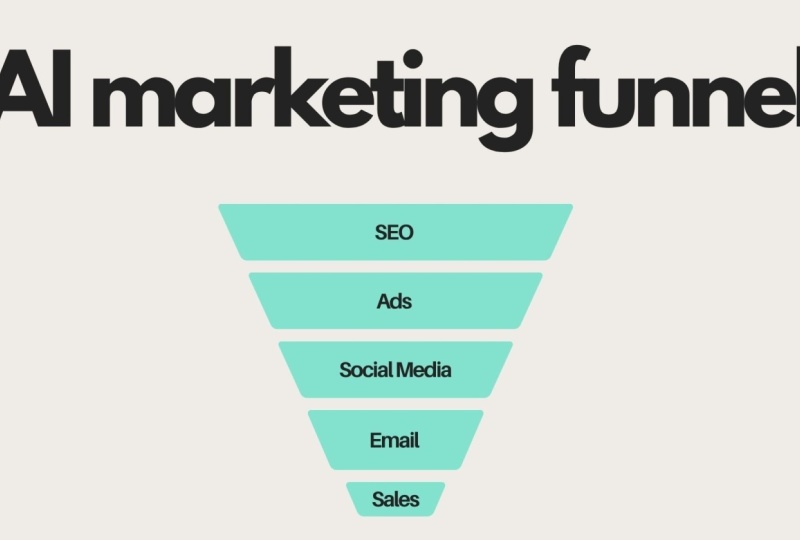
13. Steps to create a powerful marketing funnel with ChatGPT: Hi, guys. Welcome
to this session. In this session, we'll
see how we can create a very effective
marketing funnel with the help of ChatGPT. So marketing funnels
are going to be a series of steps which we take to bring customers to our particular page
and make them convert. So this can involve creating a lead magnet and then having an email automation setup done so that we can
nurture our users. And then finally give
them our offers, which we would want
them to take up. So all the strategy building can take a lot of time that what kind of lead magnets and email sequences which
you need to provide. But now with the
help of ChatGPT, we can get these steps in place, and then we can start building
them one after the other. So let's have a
look at this guys, how we can have a basic steps of marketing funnel created
for our businesses. So once we are on the ChatGPT, we can go ahead and give
that prompt to it, as well. And you can ask for
specific steps. So now the chattibt will give us specific information
regarding that, which we can get over here, defining the audience,
map, the customer journey. Okay. And then we can see different stages over
here, marketing funnels. So lead magnets, creating lead magnets, nurturing
the strategies. You can see these all can be the steps one
after the other, which we can get out of here. Now, looking at this, now we can start building out these particular steps
one by one going forward. So, for example, we can start working on
defining the audience. So as we spoke
multiple times before, also in the videos,
the target audience defining is the
crucial part of it. So that has to be
done, creating buyers persona map the
customer's journey. So looking at the
different stages of the customer's journey, which can be the
awareness stage, consideration stage, and
decision making stage, okay? And then we
developing content at every stage for it, okay? Then we choose the marketing channel so
whether we are going to SEO strategies or we're running paydds or influencer
partnerships. All those we can ponder on and we can decide which ones
we want to go ahead with. And then finally, we
create the lead magnets, which can be a lead
magnet is like a value of information which
you are sharing with your users in return for
their contact details. So you must have
seen this a lot on multiple websites where
people offer free eBook or downloads in exchange for the users name and
email address. So that can be a lead
magnet which we are trying to which we can create
and provide, okay? And then starts the
email automation part, email campaigns
which we're running, where we send out a number of emails to our users who
have joined our email list, and we try to nurture them. And then finally bring them to the page where
we give them the offer. We give them the
offer of the product and if they're interested,
they can purchase. So this whole thing is a part
of your marketing funnel, which also involves
landing page optimization, Spaul two actions, which
has to be created. And then obviously going ahead and analyzing the performance, optimizing the
performance as well, a lot of AV testing
goes out in this. So you can see, these are
the ten steps which we can follow and then build out
our whole marketing funnel. So this way, we can have
the structure in place, and then we can start working on each of these
stages one by one. So in the next video, guys, we will move forward and
pick up one of these and we will see how we can create those as well
for our business. I hope you understand how marketing funnels
getting created with the help of ChatGPT. Thank you so much, guys,
for listening into this, and I will see you
in the next week.
14. Introduction to Digital Marketing with Google Gemini: Hi, guys. Welcome to this section where we're
going to see how we can make use of the Google Gemini tool for digital marketing
initiatives. This is going to
be very similar to the ChaGBT section as well, where we used it for
doing different types of steps which we took tasks which we did related
to digital marketing. So here as well, we'll
repeat those tasks, but with different prompts which we are going to
give to Google Gemini. Like, we're going to
start looking at how to write and create
marketing campaigns, setting up defining
the target audience, content calendar creation. We're going to see
how to write a copy with Google Gemini Tool, also how to optimize
keywords as per SCO. Okay, email marketing as well, which we're going
to see out here. How do we create sales
pages for our websites, for our businesses, with
the help of this tool, Al how to write paid ads, which can be on Meta or Google related for our business
with this tool, and then also creating the
full marketing funnels. Okay, how we can create those as well with
the help of it. So these are all
the things we are going to cover in this session. I hope this makes
sense. Let's go to the next videos and let's
start with these one by one. Thank you so much guys for
listening into this session. I'll see you in the next video.
15. Target Audience: Google Gemini for audience research and analysis: Hi, ais. Welcome
to this session. So in this session, we wanted
to see how we can make use of Google Gemini for coming
up with our target audience. So with respect to
digital marketing, the first step towards
it is going to be where we have to define our target audience
or buyer persona. What kind of users do you want to target with
your marketing? And then comes the next steps which are going to be there. So the first
foundational process is going to be to define
very clearly what is going to be your target
audience or buyer persona for which you want to do you want to sell your products
and services too. For this, again, we can make
use of Google Gemini tool where we can ask it to create
a buyer persona for us. So we can give it a prompt wherein we can tell him
what is our business and what kind of customers we are looking for and based on which it is going to create a buyer persona or a
target audience for us. Let's see this in action
how this is going to be. So let's say I'm giving
it a prompt right now to help me identify
my target audience, ask any follow up questions until you have all
the information you need regarding my buyer persona and target audience
for my business. Okay. So now I'm going
to give this and Google Gemini will ask me a
list of questions over here. So let's answer those questions one by one. What
is your business? We can say online
courses, business? Who are your current customers? We can say entretrenurs,
professionals. What problem does your business
solve for your customer? Teaches them about
digital marketing, AI. What are your goals? So you
reach 1 million students. So we have given all the answers for the questions
it wanted to know. So based on which,
it is going to now ask us to further refine
your target audience. You're asking a few more
questions over here. So let's answer these as well. So specific
industries or niches, so we are saying tech. Marketing, okay,
marketing agencies, startups, experience level. We can say more than 17
years geographic location, global, we can say. Budget, typical budget range for
your target audience when it comes to online
courses. Typical budget. They're asking, let's say we
are saying $10,000 monthly. Learning preferences, do your target audience prefer
self paced learning? Yes. Okay. So self paced learning. Okay, so now we are given all the answers
to that, as well. So based on which it is going to now to further refine
specific roles, so they're asking a
few more questions. So this is good, actually, because the more and more
granular questions we answer, the more accurate your audience
persona will get created. So let's continue further. Specific roles or job titles, we are seeing marketing managers specific challenges
or pain points, we can say complex topics. Preferred learning
platforms or formats, online learning, video lectures. Additional interests or hobbies. We can say technology. Okay? We can say industry blogs. Reading industry blogs. Okay, so these are
the interests which we are providing Okay. So a few more questions. My answering the
questions, you can get more detailed. Let's
have a look at this. Specific challenges or pinpoints
pinpoints, we can say, uh challenges can be related to not clear through video lessons. Preferred to preferred
topics okay we can say, let ads industry trends. What are some of the current
industry trends that your target audience will likely to stay up to date with AI? Professional development
goals, what are some of the professional
development goals that your target audience might have such as obtaining a certification,
advancing career advance. We can ask it finally, we can say based on
the above information. Create the bier persona. So now based on all the information which
we have provided, it is now going to create
the buyer persona for us. So this is going to be the buyer persona name, job title company. We have talked about
goals, challenges, interests, online behavior,
motivation, pain points. So now this becomes my target audience for
my kind of business, which is an online
courses business. I create courses around
digal marketing and AI. So this is the kind of students
or people I would like to target with my courses, and I would like them to go
ahead and take up my courses. I hope this makes sense. You understand this
complete process, how we built out
the target audience with the help of Google Gemini
and the prompts which we gave it and answered its queries so that it
can come up with the proper buyer persona for us and which we can now use
forward in our marketing. Thank you so much, guys,
for listening into this and I will see
you in the next video.
16. Content Calendar Google Gemini: How to create a complete Content Calendar: Hi, his. Welcome
to this session. So in this session, we
want you to see how we can make use of
Google Gemini tool to create a content
calendar as well for our content which we're
planning to build out. So as you can see, we have gone ahead and created
a target audience, and now we're thinking of
building some content for our target audience and post it on different
platforms as well. So we should have a schedule. We should have a calendar
that regularly what type of content when it is going to be posted on
different platforms. For which what we require is
a content calendar, Okay, which also Google Gemini can
help us with generating. So let's see how we can
create it with this platform. So we can give it a prompt, which is something like this, where we say that
create a 30 day content calendar for
my buyer persona, which we have built
out already here. Okay, include the
type of content, content ideas, social
media platforms, ask any follow up
questions you may have, which you need for
all the information you need to create
this calendar. So we are giving some context about the type of
content we're looking for is going to be for
posts on Instagram, YouTube videos, and blog post. Let's see with this
what it comes up with. So here, it's going to ask some of the content canda structure can be in this
particular manner. Okay? So now it has created the content
calendar template out here, which you can also export into Excel sheet, which
we can get as well. You can see it has kind of created the sheet as well for us. So let's
have a look at this. So now we have all
of this out here. Now with this is going to be, it has given us the ideas, also the date and
topic over here, and we can ask it to put the calendar in a
calendar format, put the content in that
particular format. Now you have all of it out here specifically on a daily
basis, Instagram post, Mondays, metad tips which you want to give
Tuesdays blog post, future of AI in marketing,
and so on and so forth. Now you can see the
complete sheet is out here. Let's see this also.
This is for week one. M let's ask for
full for 30 days. This is for October 14 to 20, then it is for 21 to 27. Then finally, October
28 to November 3. We have the full calendar
now in place in front of us, which we can make use of
and we can go ahead and start scheduling our content
based on this calendar. This is going to be the
way guys by which we are easily able to create
a content calendar also. We are planned, we are decided and we are ready
for our content to be published on
that particular day at that particular time.
I hope this makes sense. You're able to understand
how we're using the same platform for a content calendar
creation as well, which is going to really make our work much more
organized and systematic. Thank you so much, guys,
for listening into this, and I will see you
in the next video.
17. Write copy like a Pro with Google Gemini and Copywriting Frameworks: Hi, guys. Welcome
to this session. So in this session, we want
to discuss about copywriting, which also we can get a help
from Google Gemini too. So with the help of this tool, we can ask for a list of copywriting frameworks
which we can get from it. And based on which we
write down our copies, the landing pages
which we build out. Now when you start building
out a landing page, the landing page can
be customized to a specific kind of framework
which you are using for, which works and which
converts for our businesses. So the tool can really help
us learn about telling us about the different types of frameworks which are
working at this moment, and we can have a look at
those list of frameworks and choose the one based on which we want to build
out the landing pages. So let's have a
look at this guys. So once you're on the tool, we can ask it to list down all the copywriting
frameworks um, So now it's going to give us all the copyrting frameworks
which are working right now. So AIDA pass we can see all
these ones are available now. And based on these, now we can start thinking of which one works
for our business. Okay? And based on which we can ask the tool to generate
a landing page, keeping that framework as the main attention and based on which we build out
the whole landing page. So we can have a landing page customized around
AIDA framework, or it can be a BAB
framework as well, which we can make use of.
I hope this makes sense. You understand now how copywriting can be done
very effectively by following these frameworks
which the tool is to provide us and can be really useful to convert
those specific leads. Thank you so much, guys, for
listening into this session, and I will see you
in the next video.
18. SEO Google Gemini: Optimized Keywords and Blog Titles: Hi, guys. Welcome
to this session. In this session,
we wanted to see how we can make use
of Google Gemini for coming up with
optimized keywords which we would need
for writing articles. Whenever we are
writing articles, our intent remains that articles should rank really well on
different search engines. It should come on top of
the search result pages. So for which, what you require really optimized
keywords and titles. You article titles should need to be also fully optimized, and that is how we can expect articles to rank better on
different search engines. So for that particular purpose, the first two things
which you need to be very correct with is your optimized keywords and the titles which you will
be building upon that. So let's see how we can use Google Gemini for
the same thing. So we can use a simple
prompt over here, which can be that we
can ask Google Gemini to make a list of all optimized keywords
related to our topic, let's say, paid advertising. And that we are going
to use in an article, and we want to make sure
that the keywords are related to our buyer
persona on Google Search. Keeping this particular
keyword in mind, which is paid advertising, the Google Gemini
will give us other related, SEO optimized keywords. Let's have a look
at this. So now it's giving us those keywords, as you can see,
paid advertising. Which is the keyword,
paper, click advertising, online advertising,
digital advertising, paid media, which
is quite relevant. Specific keywords as well, paid advertising
strategies and techniques, very relevant keywords
now that we have got based on our topic
which we had mentioned. Now that you have this in
place, you can use these. The next step can
be that you can ask Google Gemini to
write an article, keeping these keywords in mind. Let's see with an example how
that would look like. Okay. Like this, we can
give it. Now we are asking the
Google Gemini tool to write an article with the above keywords
which has given us. So it's going to
go ahead and write the complete article
0N paid advertising, keeping the keywords in mind. And now you can see it's using those particular keywords and creating the article for us. Okay. So this is
quite optimized. As for the keywords
which we have generated. Now what we want is a title
for this article as well, which should be also optimized according to the
keywords chosen. So for that, we can take another specific
prompt wherein we can say that make a list of
title ideas for my niche, which is for my paid
advertising blog. That is related to the
keywords we just found. Remember to optimize it
from the buyer persona. Now it's going to give us
some titles, ideas as well, mastering the art of
paid advertising, a comprehensive guide
for marketing managers, future of paid advertising
trends and predictions. This looks really nice.
These are all titles optimized based on the keywords which we had got
earlier, as you can see. Now we can choose from any of
this as are article titles. So this will be the way, guys, where you will be
researching on keywords and titles for your articles and completely SE optimized
so that your articles rank really high on different
search engine websites. Thank you so much, guys,
for listening into this, and I will see you
in the next video.
19. SEO Google Gemini: Writing an optimized Blog Post in seconds: Hi, guys. Welcome
to this session. So in this session, we wanted
to see how you can now generate a blog with the
help of Google Gemini Tool. We saw in the previous
VTOs where we went ahead and found out SEO
optimized keywords. We also generated
some blog titles. So now we'll see with
all of that how we can write the optimized
blog as well, blog post in seconds. Okay? So let's have
a look at this. So for this particularly, we're going to use
a specific prompt, which is going to be this where we give some
information out here. So we Google Gemini
to act like a blogger and as let's say paid advertising expert
because that is our topic. You're writing a
blog post industry which is paid ads. We
will say over here. The topic of the post will be and we can pick
a topic from here. Let's say we are talking
a general topic. Let's say this is the topic. This post will be
helpful for people, people who are entrepreneurs. It should direct
them to the website. Website, which is let's say I'm just giving my website,
UR allowed here. There should be a call to action at the end
of each section. The length of the post will be, let's say we give a number
over here, let's say 500. 700. The tone will be,
let's say helpful, we are saying You should be writing as an
individual blogger with personal approach and
do not use plural. We're giving some directives over here, how to be written. That is being followed. Do not use passive voice. I want you to include keywords. Let's say, here you can
give a list of keywords. If there is a particular
list of things which you wanted to incorporate,
you can add that also. Let's say that's
not here for now. Keywords, we are saying PC ads, paid ads, paid advertising. We can take these keywords possibly the keywords we had
identified earlier also. Okay. So let's take
these specific ones. Okay. And now we have
given all the information, so this is the post which
we want to give and expect it to create a complete blog about
this particular topic. So let's have a
look at this guys, how this is going to work out. So now Google Gemini
is going to write the complete block for us
for that specific topic, mastering the art of
paid advertising, understanding the paid
advertising landscape. Is going to write
the whole article, the blog post in this
particular manner, keeping in mind all
the data inputs which we had given specifically, uh, in this particular draft. This is how you're going to
also generate blog post. You can do so with the
help of Google Gemini. Once the post is created, now you can customize it. You can change it,
tweak it a little bit more related to your
kind of audience, you can do so and
then you can post it on your website. I
hope this makes sense. You understand this.
I hope you're able to understand the prompt as
well which we used here. Feel free to go ahead and use that and generate your blogs. Thank you so much guys
for listening into this and I will see
you in the next video.
20. Email Marketing Google Gemini: Developing optimized email sequences: Hi, guys. Welcome
to this session. In this session, we wanted to
see how we can make use of Google Gemini for writing
email marketing sequences. So when you're doing
even marketing, you need to write a sequence
of emails to your users, to your customer
base and to convince them eventually to buy
your product or services. In such a scenario, writing the copy of the email can be
tedious and time consuming wherein we have to
plan and strategize what will be the content which you'll be
writing to your users. So that is what you can also use Google Gemini to help you with where it can compose
the whole email, write down the
whole email for us. So we can give it a
specific prompt to generate a sequence
of email copies, which you can use now in the
email marketing campaigns. So let's have a look at
it, how you can do this. So for this, we're going to use a specific simple prompt where we're going
to ask it to write, let's say, five emails. For an email marketing
campaign about our topic which we had continued using
in the previous videos. We're going to put
that again out here and remember to optimize
it for my buyer persona, which is again payads. The first email is going
to be a welcome email. We're giving some
more specific inputs, the first email is
a welcome email, then followed by a
few content emails, related to the same
topic which is paid ads. The last email is where
we invite them to buy our paid ads online course. So now we have given
the directive, the prompt to Google Gemini, and based on which it is now going to compose
the emails for us. So you can see the first one is coming out to be
a welcome email. Welcome to Adds Mastery Hub. It's picked up the
company's name as well from the previous inputs. Okay, I'm so excited
to help you have you join us on this journey to mastering the art of
paid advertising. This looks absolutely correct. Okay. Second one is the understanding ABCs
or paid advertising. Now the content
emails have started. Okay? There are different
types of paid advertising, how to set up paid
advertising campaign, the key metrics to
track your success. So if you feel that the content, the email content is a little
concise and very less, you can again, give a prompt to Google to expand on
a specific email. We can do that as
well. Third one is about crafting
compelling ad copy, which is again a strong topic. We have given a series of content emails,
and then finally, we are giving it the
last one which is action oriented to enroll in
our paid advertising course. Take your paid
advertising skills to the next level in this course,
what you will be learning, we have informed that
we are also giving it an option to click on the link to enroll
into the course. This is how you can compose
the complete emails for your email
marketing campaigns as well with the help
of Google Gemini. Then once you have these emails built out, you can customize it. You can obviously go ahead
and make changes to it or ask Google Gemini itself
to expand on it more, go deeper and specific into it, and then use them in your
email marketing campaign. I hope this makes sense.
Thank you so much guys for listening into this and I will
see you in the next video.
21. Sales Pages Google Gemini: Developing sales page copy: Hi, ais. Welcome
to this session. So in this session, we
wanted to see how we can make use of Google Gemini
for creating the sales page. So as you can
understand, when we are building out
the sales funnel, the sales page has a great role, a big important role to play because that is where
customers when they land, they have a chances of converting and
generating sales for us. So we have to make a very
impactful sales page whenever we are building
it out for our business. So for this, there can
be different types of copywriting frameworks
you can take help. So there are various
copywriting frameworks available at this moment, which you can research upon, and then you can choose the ones which are best suitable
for your business. So for that as well, we can
make use of Google Gemini, where we can research
about different types of copywriting frameworks
and then see and choose from there and create
different versions of our sales pages and
then choose the best one which best suits
our kind of business. So let's see with in action
how this is going to happen. So let's say the first thing which we want to see is what are the different types
of frameworks, copywriting
frameworks available. So we can give a
specific prom to Google Gemini where we
ask it to provide us all the copywriting frameworks
that exists right now. It's going to give
us all of them. As you can see, these
are the prominent ones which are available
at this moment. Now based on these, we can create the sales page. We can ask Google Gemini to create an optimized
sales page based on our buyer persona with respect to a specific
copywriting framework. For that, we can use this
particular prompt where we ask it to write a sales page optimized for our buyer persona, where I'm selling, let's
say, paid at stores, and we're going to use the copywriting
framework, let's say, AIDA, which is basically
going to be attention, interest, desire, and action. Now it is going to
write the sales page for us based on this
particular framework. So once you get that, you can take it aside,
put it in a document, and then you can build few more other sales pages
based on different frameworks. Right now, you can see
based on IDA framework, it has created the sales page which has different segments, which is attention,
interest, desire, and action, which is absolutely correct
as per our business. In the same manner, now you
can ask it to create for a different framework Again, this is for selling
paid a sports. And the framework we
are going to use now, let's say we are going to
use out of all of this, we're using fab,
which is basically features advantages
and benefits. It's going to rewrite
the whole sales page, but with a framework of fab, where it talks about the
features of the course, advantages of it
and benefits of it. Then finally, the call to
action phrase is given to us. This is really great. Now we have a second version and then you can create
another version of it. Where we are selling the same
product paid at SposR now, we're going to use
another version where we can use, let's say, before after bridge framework so now it's going to create the sales page with this
particular framework in mind. You can see before,
after bridge given, and then the key benefits
of the course and then the actionable step
to enroll into the course. So now you have the three
different sales pages with three different
frameworks used in it, and now you can see which one is more aligned to your
business goals, your vision of the company, and use that in your sales copy. This is how we can
make sales pages as well with the help
of Google Gemini. I hope this makes sense. You understand the
whole process now. Thank you so much, guys,
for listening into this and I will see
you in the next video.
22. Online Advertising Google Gemini: Facebook Ads: Hi, guys. Welcome
to this session. In this session, we'll see
how we can make use of the Gemini tool for advertising, for Facebook ads, the
different things which we can do on the platform with the
help of this particular tool. So let's start with looking
at creating a Facebook ad for a specific product
which we're trying to sell to a specific
target audience. So we can give it
in this manner, write a Facebook ad about
selling running shoes. For athletes include you can say call to action, features, benefits
of the product. We can also save prices thousand define the audience targeting budget location. We can giving
specific information. Location is, let's say,
location is India. Okay. We're talking about that. Also suggest placement targeting websites where the
ads can be shown. So these are all
the things which I require specifically
for running the ads, so which I can now ask the
tool to provide us with. So it's going to
go ahead and write the Facebook ad for this particular product
for the buyer persona, which we are looking
at right now. So let's have a look at this. This now giving us the ad copy. Okay headline image body, which is giving us the price is thousand audience targeting
is choosing is this. Daily budget can be
at 100 to 200 rupees. Placement websites
are given out here. Okay? So now to build
further on this, we can say that provide all the different
types of audiences What type of audience targeting would be
suitable for this product. Okay, we can mention that. So now it's going to give us all the interest
categories, behaviors. These are all the type of
audiences which we able to target on the Facebook
ads platform, right? Apart from this,
we can also ask it what kind of ads will really
work for this product. And so campaigns we can
create for this color. So now we're asking for
campaign types, ad types, which is going to really work for this particular
kind of product. So it's giving me that idea. So image ads are really
good because it's a shoe, which we're trying to sell, so it's prioritizing
in that manner. Okay, video ads, causal
ads can be working out really well
for us over here. Okay. So we can ask for
that information as well. Apart from that, you can also
ask for variations of ads. So when we come to
the ad creation part, you can be very specific if the character
limits for headlines, descriptions, which you
can ask for it as well. You can give it in this manner, five primary text with 100
character limit characters. So now it's meant to write
those ten headlines for us, okay, in this manner, primary text, and the
headlines are also provided. So this way, we can get a lot of different options
specifically with respect to Facebook
campaign creation, which we can get from the tool. You can look at the campaign
structure, campaign types, audience targeting,
budget, okay, different types of ad types
which you want to create. All those suggestions
you can get from the tool. I hope
this makes sense. You understand now
how you can build out your Facebook ads
campaign strategies as well with the
help of this too. Thank you so much, guys, for listening into this session, and I will see you
in the next reading.
23. Online Advertising Google Gemini: Google Ads: Hi, guys. Welcome
to this session. In this session, we'll see
how we can make use of the Google Gemini tool in order to generate some Google ads. In the previous video,
Peg went ahead and looked at creating Facebook ads
for our advertising. In the same manner,
we're going to see how Google Ads will
work with this tool. So let's have a look at this. So what we can do here
again is we can provide the particular
information regarding the ads which I want to create, and we will see how the tool
goes ahead creating it. So we can say that create
Google search ad to sell. So we were looking at
running shoes, for athletes. Then you define
the other things. You can say we are asking specifically
we're creating a search ad, so we wanted to
provide the headlines, description of the ad, provide five headlines and four descriptions
with 30 characters, you can say four headlines
and 90 characters. Let's say respectively. We can also mention, okay, the the cost of the product is thousand INR, we're giving some specifics
regarding the ad, which we wanted to
have in it as well, provide a call to action. As well. So now we have asked
all this information. So based on which it
is going to provide us the information,
it's quite proper. So product is running
shoes, cost is 1,000. It's given us the
five headlines for five descriptions as
well with 90 characters. Each call to action,
they're saying order now. So this way, we can get the
ad created apart from this, we can also now ask
for it to tell us what type of ads would be beneficial for this
target audience. We can ask you to define a
target audience as well. Okay. Since it is again going
to be a Google product, so we are looking at Google Ads advertising in Google Gemini. So ideally, it should
be able to give us some effective audience
targeting as well for the same. So now we are asking for
the audience targeting. Now, this is what we can
take to the platform. We can create a campaign around these audience targeting
in this particular manner. It has given us all
the different types of audience targeting,
which we can do. Now we can also ask
for it to provide us some campaign types. What type of campaigns would be really useful for this
particular product? We're giving the product
as well out here and now it can give us
information search campaigns. You can see in this manner, it is giving us
different type of campaign ideas which we can consider for this
product as well. Lastly, we are also asking
for some relevant keywords and add extensions it can
create for the product. So now it's going to give
us some core keywords. So these are the keywords long tail keywords is
also it's giving us, and then the ad extensions, which we can consider out here. So this way, there are a lot of different things which you can ask as we can give a prompt of with respect to
Google Ads platform from the tool and it can give
us suggestions around that. I hope this makes sense.
You understand now how we can make use of this tool for Google Ads
advertising as well. Thank you so much guys, for
listening into this session, and I will see you
in the next video.
24. Complete Marketing Funnel Creation with Google Gemini: Hi, guys. Welcome
to this session. In this session, we'll
see how we can use Google Gemini to create a
complete marketing funnel. When you look at a
marketing funnel, there are different
parts to it, right? So the first part is going to be setting up the
target audience. You need to have a specific
target audience clearly defined whom you're going to target to sell your
products and services. Then comes a lead magnet. A lead magnet is basically any kind of service or any
kind of information which you're providing free of
cost to your customers in exchange for their
contact details like their name
and email address. Then what you have to also
create is a landing page, a landing page where they are going to find
the lead magnet. They will see all
the information and they will provide
their name and email address in exchange for the lead magnet,
the free offer. Apart from that, what you also
require an email sequence, which is a sequence
of emails which you send to them to
nurture your users, to convert them eventually to take your products
and services. We'll see now all of these which you can create with the
help of Google Gemini. Okay. So we saw in the previous videos that we can define our target audience, so we can continue with that if you have already been
following the videos. Otherwise, we'll have to give a specific prompt to define
our target audience first. Then we can go ahead and
create the lead magnet. Now for the lead magnet, let's look at what are
the different types of lead magnets available, which can be suitable for
our kind of business. So for that, you can
use Google Gemini to provide give it a
prompt specifically. So let's say you
are saying that we can create a list of all
possible lead magnets, I can create for my audience. Now Google Gemini will give you different
types of options. You can create a free book
or a checklist or template, webinar recording
you can provide or a case study, infographics. There are various options
which you can take from this. Now, we are going to pick one of these or
a couple of these to create a optimized
particular landing page. Let's create a particular
lead magnet of a eBook. Let's say you're
creating an EBok Now the tool is going to
create the E book for us. Now, once you have the E book, you can convert this.
You can go to Canva. You can put it on
the Canva and create an eBook template,
use it from there, and put it on Canva and then create the
Ebook for yourself, which you can then share
with your customers. Another option can be,
let's say you want to create a
particular checklist. Now the tool can create the checklist for us as well
in this particular manner, and then we can use the
checklist over here and we can convert that into a PDF
through possibly Canva, and you can use that
as a lead magnet to get contact information
of your users. Now that we have created
the lead magnet, next comes the next stage, which is going to be
the landing page. Now for using the
landing page as well, we can use the
copywriting framework we had seen in the
previous videos where we can ask Google Gemini to create a landing page for a buyer
persona where I'm selling, let's say, of paid ad
sports use a framework. Let's say we're
using the framework, which is IDA and we'll ask Google Gemini
to provide a headline, subheadline, and all the
elements of the optimized copy. So this is going to be
the landing page where the lead magnet will
be will be placed. And now people will
reach this landing page. They will see the
free lead magnet. They will take it,
they will download it in exchange for their
contact information. You can see now it has created that wherein we
have the attention, desire, interest, and
action components of IDA copywriting framework
being used out here. This is going to be the landing page which
we have created, which we can now
create this with. If you want to use any other
copywriting framework, you can do that as well. You have all those
options as well to build your landing page as per
your business requirements. And then finally, going
to be the email sequence. So you can use this
specific prompt wherein you can ask
Google Gemini to create five different email sequence for an email marketing
campaign which you want to run and reach out to your users for selling your
products and services, you can give it in this manner. Now it is going to give us those emails specifically,
which you can send out. You can make it
specific wherein we can start with a welcome email, then some content
value adding emails, and then maybe a converting
email which you can give. So here it is giving us
similar kind of information. So power of paid advertising, creating effective
copies, measuring your paid advertising
success, and then enrolling. So this is pretty good. This is exactly what we
wanted the sequence to be. So this is going to be
the email sequence. So now you can see we have
all the components of a specific marketing funnel created right here with
the help of Google Gemini. Okay, so now that you have all
the four components of it, you just need to transfer these onto your website,
o, build this out, and you are ready to launch
your marketing funnel, to bring your leads
in, and then convert them and provide them your
products and services. I hope this makes
sense. You understand the whole process now, and you're able to execute
this as well and build your own marketing funnels with the help of Google Gemini. Thank you so much, guys,
for listening into this, and I will see you
in the next do.
25. Replying to emails with Google Gemini: Hi, guys. Welcome
to this session. In this session, we'll see
how we can make use of the Google Gemini tool to reply to emails which we get at work. So we get a lot of
different types of emails at work on
a regular basis. So in such situations as well, we can make use of this tool
to reply to those emails. We can give a context of
the email to the tool, and it can provide us a
response based on that. And then we can go
ahead and tweak it and customize it to our scenarios, and then we can send
out those emails. So let's have a look at
this, how we can do it. So let's say this is one of
the emails which we received, which is around an email
which we have received to brainstorm around how we can sell running
shoes for athletes. So what they're asking
us to provide some ideas around how we can sell
running shoes for athletes. Okay? So now for this, we have to provide a reply. And here, you can
provide the whole email. Now, the tool will go ahead and provide
us the information. It's now writing the email back, providing all the different
types of ideas which we can take personalized
performance tracking, adaptive cushioning. There are different ways
which we can use out here. So this way, guys, we can go ahead and write
out the email specifically, regarding any kind
of official email or personal emails
which we're getting, we can make use of the tool to write emails
customized for that. I hope this makes
sense. You understand now how we can go
ahead and do this. Thank you so much, guys, for
listening into this session, and I will see you
in the next video.
26. Meeting Notes, Key Points, Decisions, Action Points,: Hi, guys. Welcome
to this session. In this session, we'll see
how we can make use of the Google Gemini tool for summarizing our meetings,
which we have at work. So there are different
meetings which we have, sometimes we require it
to after the meeting, we need to send out meeting
notes or key points which we discussed or particular
actionable items decided for each team member, okay, decisions which were made. All these needs to be documented and shared with all
our team members. So in such a case as well, we can make use of the Google Gemini tool which
can help us with this. So let's have a
look at this, guys. So once you're on the tool, let's say this is the kind of meeting script which we have. Okay? So you can get
your meeting transcript from your if it's
an online meeting, virtual meeting through Zoom or Google Meet where you
can record the meeting, so you can get the
transcript from there, or you can use certain tools
like descript as well, which can help you generate
those transcripts, and you can feed that to
the Google Gemini tool, which can do this work for us. So let's have a look
at this. So now that we have the
transcript over here, we can ask it to
summarize the meeting. We're also asking to give any tasks which
are delegated to team members to
mention that as well. And here we can provide the
whole meeting information. So now the tool is going to
summarize the meeting for us, okay, identifying the key
points and decisions made. Okay, task allocations,
which are done now as well, so you can see what are the task allocation done
for each team members. And this you can simply
copy from here and send out as an email to
everybody in the team. In this manner, we can generate a meeting notes as well with
the help of this tool guys. I hope this makes
sense. You're able to understand how we are
making use of this at work. Thank you so much, guys, for
listening into this session, and I will see you
in the next video.
27. Optimize my resume with Google Gemini: Hi, guys. Welcome
to this session. In this session, we'll
see how we can optimize our resume as well with the
help of Google Gemini tool. So what we can do
here is we can go ahead and provide our
resume to the tool, and it will optimize it for a specific role which
we are looking at. So it can make changes to the particular resume in
terms of the choice of words, you have used,
grammatical mistakes, if there are any, it will fix all of those and customize it, optimize it to the
specific job role for which you are
looking in your resume. So let's have a look at
this, how we can do this. So all we need to do, let's
say this is the resume, which we have in
place and we can take the resume and we can give it to the tool
with the specific prom. So now we have provided
all the information. So it's going to look
at our resumesptent, and based on which it is
going to optimize it, make it better in terms
of how we are writing it. So now you can see
it is giving us the whole information in a
much more structured manner, which we can see out here. So this is a really good format now which we can easily use, and we can use this for
applying for any kind of jobs. Another thing in
addition to this, what you can also do is based on the kind of resume
which we have got, we can also get a cover
letter created for the same. So we can ask for that
as well to be created. We can again give some
specific requirements. We can also ask for it to be customized for
a specific job role. So now it's going to write the particular cover letter
as well related to this. So you can see it's going specifically in the school counselor position
which we're looking for, you can add the job board
school name over here, and then you can send
out the cover letter along with the resume
which we have optimized. So this way, guys, we can use the tool as well to optimize our resumes when we are planning to apply for
any kind of new roads. Thank you so much, guys, for
listening into this session, and I'll see you
in the next week.
28. Ads copywriting opportunities with ChatGPT: Hi, guys. Welcome
to this session. So in this session,
we'll see what are the opportunities you
have as a service, which you can provide
around at copywriting. So there are a lot of
things which we can do around at
copywriting as well, which we can provide as a
service to our clients with the help of CHAPT. So
let's have a look at this. So in At copywriting, we can write ads
for Facebook ads, Google ads, even
remarketing ads. If you want to write specific
remarketing ads that also you can do out here,
radio ads, scripts, video ads scripts is something which you
can certainly generate with the ChatGPTTol and
then AB testing of ads. If you want to do that,
you can do that as well, trying out different types of ads and comparing
their performance. So you can create those
ads also over here. And there is a lot many things. Apart from this, the other
ads platforms as well, which where also you can
create these ad copies, generate these ad copies
with the help of ChanGBTTol. So let's have a look
at the platform like fiber where people are already providing
these as services. So once you go on Fiber, you can search for, let's
say, Facebook ads copy. So here you can see
now there are a lot of people who are already
providing a copyright, okay, writing services, which they're giving
for Facebook ads. So you can see here specifically,
if you look at this, this person is
providing copywriting, which he does for Facebook
ads to generate sales, okay? He has already worked
with 1,400 plus people. Okay, and he's charging a certain amount
where he's giving one Facebook ad Popy
with two bonuses to attract customers
in the basic plan. Then the second
plan is to highly converting at poppies,
which he's giving. And in the premium
plan, he's giving three finest at Popy variations. So like this, a lot of different types of
copywriting opportunities, which you can also build out. You can build a similar kind of a gig on fiber and
provide the services. Let's look at some
other ones as well, for example, Google Ads Poppy. So here you can see, now
let's look at this is the one for copywriting
for Google Ads. This person helps with
creating Google Ad Poppy, designed to convert sales, where she's providing
specifically, she's writing 15 headlines, four descriptions, designed to generate clicks and conversions. Here as well, you can see with the headlines and descriptions, she's also giving 15 keywords with monthly search metrics, and premium, she's giving the
headlines and descriptions, landing page copy, which has 300 words
with three keywords. So here you can see
that people are already providing this as
a copywriting service, which is for different
ads platforms. And there are chances, possibilities that they might be already using Chat GPT
for generating those. Okay. Apart from
this, let's look at another one which can
be video ad scripts. Here you can see they are providing different types
of video ad scripts. Let's look at writing
entertaining video ad script, which we can get over here. Video scripts, let's look at
video scripts specifically. Now you can see this person is providing video
scripts here as well, turn script or
article into video, write a script for
your YouTube videos. We can do that here as well. Wherein this person is writing will research and write a
script for your YouTube videos. So a video script
which he can provide. Okay, this person can provide, and he has already worked
with more than 2,800 people. So he has different plans which he's providing
a basic plan, which has a 1 minute to
four minute video script. Second one is 5 minutes to
10 minutes video script, and the premium one is ten
to 15 minutes video script. You can see, people are already providing this
also as a service, which you can also do that. You can create a gig or a service around
this on fiber and similar platforms
and provide this as a service to your clients.
I hope this makes sense. You understand now what are the opportunities already
in the market around ads, copywriting, which you can provide as well with the
help of Chat JBT too. Thank you so much, guys,
for listening into this, and I will see you
in the next video.
29. Case Study: Facebook & Google Ads with ChatGPT: Hi, guys. Welcome
to this session. So in this session,
we'll do a case study around seeing how we can generate these Facebook
and Google Ads, specifically types with
the help of HAGPT. So in the previous video, we talked about the case
that we can use CHAGPT to generate some Facebook ads and Google Ads specifically, headlines and
descriptions, which we can sell as a service
on different platforms. So that is what we
are going to see as an example here practically. So let's see first
on fiber as well what kind of services people are giving around this
particular thing. So if you see on fiber, you go and you look
for, let's say, Facebook at Copy, you will see there are a lot of services which people
are providing right now. As you can see, this
person is helping with writing a catchy Facebook
ad copy that sells. If you see here, this person
is already doing that, getting a good rating
out of it as well. This is already a service which people are providing
where people can write Facebook ads or any kind
of clients and businesses. The same thing which
you can do as well, where you can generate
these ad copies with the help of Chat JPT. So we're going to see two
different specific proms, which we're going to use, one for generating
ads for Facebook, and the other one can
be for Google Ad. Okay? So let's have
a look at this. So we are using a
particular prom over here, which is for
Facebook right here. So you can also go
ahead and make use of this if you want
to as the prompt. Wherein we are asking
ChagBT to write a Facebook ad to
sell my product, so we can mention our product or service out here to
my buyer persona, so we can give the target
audience also here. And now we are
giving some specific requirements of the ad, which is I want the tool to
provide the primary text. So the primary text is a part of the ad, which you
have to provide. Headlines link description
is a place where you could give more description about the product and
also a CTA phrase, which is a call
to action phrase, something like buy now, shop now, register
today, sign up today. So I want the Chat GPT tool to provide that as well when
they create the ad copy. Apart from that, I'm also
asking the tool to make the ad exciting and show a sense
of urgency in the language, the choice of words
they are going to use. So let's see how this works. So first, we are going
to define the service. So let's say I am into a business of selling
running shoes specifically to people who are into physical
activity or sports. So I'm going to write a Facebook ad to sell
my running shoes. To my buyer persona. I'm saying that to people who are in who are interested
in physical activity. So now I've given
the buyer persona, my target audience, I've told
what product I'm selling. Now I want the tool to
generate the Facebook ad around this based on the kind of specifics
I have given to it. So let's have a
look at this guys. So now the tool is going
to go ahead and look at the particular
information which I've asked for and now
it's generating. You can see the headline
it has given over here, specifically the primary text is provided with an Imoge as well, it's giving, which is
really great headline also. So we have asked to
make the ad exciting. So last chance to get the
perfect running shoes, which shows sense of
urgency over here. Link description is also given. I also asked for a CTA phrase, so they are given a shop now. So like this, I have the
ad created over here. Now if I want, I can ask it to create few more similar
like these as well. Which I can then share it with my client as well
without any problem, and they can make use of it as well in their ads and
their advertising. So now you can see it's
creating the different types of ads based on the
same thing which we have given the specifics
which we have provided. So this is one way where we are generating our Facebook
ads for our clients, which we can share with them. The second one is going
to be for Google Ad. So let's have a look at this. So in case of the
Google Ad, again, we have to define the service. We are saying running
shoes once again, to my target audience or
my target audience is to people who are interested
in physical activities. Here again, I'm being very
specific about the headlines, so I need 15 headlines
with 30 characters each, four descriptions with
90 characters each. I'm also asking it to
provide an exclamation in the description
which we can use. Also, asking for a CTA, a call to action phrase
out here to be added. And I'm asking the
tool to make the ad, something like the tone should
be like asking a question, and we're asking a question to the audience and showcase
benefits of the product. So these are some
particular specifics I've asked to add
in the ad creation. So let's have a look
at this as well. So now it will create
the ads for us. So you can see it's
creating the 30 headlines. Okay? And then the descriptions, which are 90 characters each, it is creating over here. And then it is giving the
particular CTF phase as well. So the question it's giving the question ready for
your best run yet, want to run faster, comfort
and durability in every step. Okay. Are you ready
to upgrade your run? Searching for a perfect fit. Okay? So you're asking
a question like this, and then the CTF phrase also it provides,
which is Shop Now. So now I have the Google Ad also generated in this
particular manner. I hope this makes sense. You're able to understand
how we can generate specific ads with any
platform for that matter, we are just taking an example of Google and Meta specifically, but there are other
platforms as well like Microsoft ads or LinkedIn
ads you want to generate. In the same manner, you
can generate ads for other platforms also
and share that, give that as a
service to a clients, and generate revenue from there. I hope this makes sense.
Thank you so much, guys, for listening into this, and I will see you in
the next video.
30. Sales Funnels opportunities: Hi, guys. Welcome
to this session. In this session,
we'll see what are the opportunities
do we have around sales funnels creation as a service which we can
provide to our clients. So in sales funnel,
there are a lot of things which we're
creating, right? We are creating our
marketing funnel. We are creating a lead magnet. We are creating a landing page. We are creating email sequences. All these can be generated
with the help of Chat GPT. And you can provide all
of this as a package to your clients on these
freelance platforms. So let's see some of
these examples of how these services would
be looking like. So if you go on fiber, there are different
services provided. Like you can see, this
particular person is providing a service which is where he can write sales copy for sales page, sales funnel, landing
page, copywriting. All of this is being
provided by this person. And wherein he has three
different packages, basic standard, and premium, where he's
going to write this, which is pretty expensive
and he has around his work with 598
clients already, and so many people have
made it favorite as well. So it is something which is
absolutely working for him. And this is something guys, which we can absolutely go
ahead and create ourselves on a Chat GPT tool and we can
provide this as a service. So we can certainly go
ahead and build this out, customize it as per our
clients requirements, and then we can sell it
out as a service to them. So in the coming videos, I will show you as
well how we can build out our sales funnel
in the same manner, and we will see the
complete process being done on a Chat GPT tool and which we can then share with our clients. I hope
this makes sense. Thank you so much, guys, for
listening into this session, and I will see you
in the next video.
31. Identifying your buyer persona with ChatGPT: Hi, guys. Welcome
to this session. In this session, we'll
see how we can create a buyer persona from scratch
with the help of Chat GPT, like we had done
previously as well. So that was wherein we had used a particular
bier persona. But now, again, we are
going to start off from scratch to see how we can build a buyer persona and based on which we move
forward from here. So let's have a look
at this once again. So what we are going to do is we're going to provide
all the information, ask Chat JBT for asking us all the information
it would need to build the bio persona, and we can give a prompt
in that particular manner. In this manner, we can give the ask them to provide us
ask us all information. So now, the Chat IPT will try to help us build out
the buyer persona by asking all the
relevant questions. So these are some
questions related to our business which we
would need to provide it. And once we provide it, then it will be able to create
the buyer persona for us. Okay? So let's have a look
at these questions, okay? So we can answer these
questions one at a time. What are the primary products
and services you offer? So I'm saying digital
marketing Fs. Second, what makes
the unique compared to we can say forces in
different languages. Ideal customer, we can provide our ideal
customer over here. What are their primary
goals or challenges? What are their motivations
for purchasing or engaging with your
product and services? So like this, we're providing
all the information. So let's say provide
some more information. Where do your
customers typically go for information or solutions? As you can see, is asking
us very specific questions, which we need to provide
answer in the same manner. What factors influence
their purchasing decision? How do your customers typically interact
with your content? What are the main pain
points or objection your customer might
have before purchasing? A. Let's do ten
questions over here. And the last one, how do you currently reach your customers? So now we have provided ten answers to the questions it has asked us in order to build
out the buyer persona for us. So now we are going to
provide this back to Chat GPT so that it can analyze these answers and based on which it creates a
buyer persona for us. So let's have a
look at this guys. It's going to analyze this whole information and then create a buyer
persona according to that. So as you can see,
it's building it out right now so we
can get the name, age, job title, experience. All that information is being given to us along
with locations, languages, goals,
challenges, motivations, so we can get all
this information now. So this is becoming
the buyer persona or the target audience
we want to reach out to sell art
product and services. So this can be a right flow
guys in which manner you can build out an effective
buyer persona for your business with
the help of Chat GBD. Hope this makes sense.
Thank you so much guys for listening into this and I will
see you in the next video.
32. Creating a lead magnet with ChatGPT: Hi, guys. Welcome
to this session. In this session, we'll
see how we can create a lead magnet also from scratch with the
help of Chat GBT. So in the previous videos, we saw that how we can build out our buyer persona
target audience. Now keeping that in mind, we're going to ask
Chat JBT to give us some different types
of lead magnet ideas. It can be a scenario that
we are not clear about which lead magnet would be most effective for
our kind of business. So in such a case, we can
take help of Chat GPT itself, and it can give us multiple different ideas around
and then from that list, we can pick the one which it makes sense for us and we
can build that out for them. So let's have a
look at this guys. So once we are on Chat TPT, based on the same
chat box which we have used for creating
our buyer for sauna, we are going to ask further. So in this manner, we
can give a prompt, and it is going to
give us a list of different types of lead
magnets which we can consider. As you can see now, what
it is providing us with are maybe a bigness
guide, a mini course, disti marketing
glossary, who is, okay, a checklist which we can create, maybe a free webina
which we are doing, or a video series
which can be done. So there are different
types of lead magnet ideas, which it is providing
us with now. So looking at this, you can go ahead and
build this house. So you can pick the one which you think is most relevant for you and you can pick that up and you can
expand that further. So let's say we are doing, let's say, a mini course, okay, mini course, or
let's say a bignersGuide, which we are creating an
E book kind of thing. Okay? So we want to build an E book around
digital marketing, okay, and also which we want to build out and we want
to structure around that. So let's have a look
at this as well, which Chat GPT can help us And you can ask for
specific pointers, and headings which
you need out of it. So now it is going to build
out the complete eBook. It is going to give
us the titles. It is going to give
us the framework or the outline of the eBook. So we can understand
that this is how our eBook is going
to be around this. And now that you
have the table of content of what you plan
to build your eBook on, you can now get a
eBook built out. Okay? So you can
pick up the topics, and based on that, you can get a complete
Ebook built out. So let's see the first
topic it's asking is talking about is introduction
to digital marketing, okay? So we can take this So now we have given the
specific information that on what topic you want
the eBook to be created. So it is going to now build it out for you in this
particular manner, as you can see, and
then you can use this and you can convert this into an eBook with
the help of Canva. You can put it
into Canva and you can create this
particular topics eBook. So now you can see the
first topic is done. And then you can
similarly move to the other topics and build
out other eBooks pages. So other topics also can get added to the proper eBook
which you are building up. In this way, the whole
eBook can be built out on this specific topic
which you have now as a lead magnet and
which you can use for getting the customer's
information as well. I hope this makes sense.
You understand now how we can make use of
this tool to build out lead magnets for our
business and how you can use this to do your advertising
in a much better manner. Thank you so much, guys,
for listening into this, and I will see you in
the next video. And
33. Creating copy for the landing page and social media with ChatGPT: Hi, guys. Welcome
to this session. In this session, we'll
see how we can create an optimized landing page for our business with
the help of hatGPT. Also, how we can use that to
create a social media post, which we can drive from where we can drive
organic traffic. So what we can do is we can look at the different
types of copywriting frameworks and based on which we would like to create this
optimized landing page. So let's have a
look at this guys. So once we are on the hatJPTTol, we can be on the same chat box which we're using for
our target audience. So based on the target audience, we can ask for different types
of copywriting frameworks. So now the tool will provide
us different types of copywriting frameworks which
we can look at and based on, we can pick and select one particular one which
makes sense more us to our business and use that to create an optimized
landing page for us. As you can see, these
are the different types of copywriting frameworks
which we can see here. And now what we can do is, let's say we want to
pick the first one, which is DA so you can take that and ask Tra gibt to create a optimized
landing page around that. And you can also mention what
you're selling in the page. And you can ask for specific information which you
need to be mentioned, the structure of the landing
page headline, subheadline. So now the tool will
start providing us an optimized landing
page copy based on the AIDA framework which
we have given it to it. So as you can see, now it's
giving us different sections, so attention specific section, then the section two
is interest pase, so we're getting the
structure over here. This is all going to be
our landing page fontin. Now, this you can transfer it on your website and build out
the landing page as per this. This can be a great
way where it is customized to your
particular buyer persona, based on which we
are creating this. Now, in the same manner, you can use this to build out social media post as well
for any of these platforms, which can optimize targeting your buyer persona and trying to generate
some organic traffic. And you can give the same
framework over here as well, which can be used in the post so that we can drive
traffic based on that. So as you can see,
we have already given our target audience. So based on which it can give us the information
in this manner, so we can give a
particular visual, which we can provide a caption which we can give over here. So in this manner,
we can create it, and then we can also
provide so you can see it is also giving
us the hashtags, relevant hashtags as
well, which we can take. It has automatically
taken it based on the bio persona we had
created on this chatbox. So all these are relevant
ones which we can see, we can also provide
the website link over here so that we can
drive traffic from there. So in this manner, guys, an optimized landing
page can also be created for our businesses
using the Chat GPT too. Thank you so much, guys,
for listening into this, and I will see you
in the next video.
34. Writing a complete email sequence for your funnel with ChatGPT: Hi, guys. Welcome
to this session. In this session, we'll
see how we can build out a complete email sequence for our funnels with the
help of hat GPT. So so far, we have
seen that we have gone ahead and created a
marketing funnel, then we created a landing
page as well, okay? And now we're coming
to a situation, a stage where now people
reach our landing page. They check out our product and services, and if they like it, they might take
our free Download. Okay, so they take
a free download. They provide through an e book, they provide our email address. They provide their
email address and name. And now we need to send out a number of emails
to them to give them value information
about our product and services so that at the end, you are now then able
to give them the offer. So for which we require
an email sequence. So that is what we are
going to do out here. We'll build out an email
sequence for our business, which we can send out to our
mailing list to our users. So let's have a
look at this guys. So once we are on hat TPT
again on the same chat box, we can start creating this
so we can say that create five sequence for you can mention for
what we are trying to do this email
marketing sequence. We can also mention
to customize it according to our target
audience or bio person. So now the tool will start building out these
email sequences for us, which will be focused towards selling digital marketing
course to the buyer or persona, which we had defined earlier. You can see now, we have the first email going
out as an email, welcome introduction email, where we're welcoming
the new user. Then the second one
goes out as highlights of the benefits like why digital marketing
skills are essential. So we are creating a sense
of need or urgency in this, which gives that information. Then we give us more testimonials
and social proof that why it is important, don't just take our word for it, hear from our
successful students. And then addressing some objections which
people may have, okay, concerning
about the pricing or the quality of training. So we address that
particular objection. And then finally, we send out
an email to take an action. So this way, we
have now identified the email sequence
which we would like to use email
marketing campaign. We can put them in an email marketing campaign where we can schedule them to be sent out to our users on a regular basis, which can be weekly,
biweekly or monthly basis. So this way, we can get a full email sequence
created for our business, for our target
audience, and we can set up the email marketing
campaigns based on this. I hope this makes
sense. You understand now how you can create a complete email sequence
with the help of Chat GPT. Thank you so much, guys,
for listening into this, and I will see you
in the next video. M
35. What is Artificial Intelligence (AI) and why is it important for your business?: Hi, welcome to this session. In this session, we wanted to understand what is
artificial intelligence and why is it important for us to know about this
for our business. So the first thing which
we need to understand is what is this
artificial intelligence. It's basically going
to be an ability of a computer or a robot
to do tasks that are usually done by humans
because you know that the humans need because this requires intelligence
and discernment. So for that, AI is the
replacement of it, which can do this work without
any human intervention. So AI computers have all
the ability to learn and then modify their behavior
based on prior experiences. So whatever information
it is collecting, it is improvising on it, and it's trying to
make its processing much better for the future. So based on which, it
continuously improves its past historical data and tries to give better
responses going forward. So what is so in this particular
business, specifically, AI is used to describe a software that is
capable of learning and getting better
at doing its job without any inputs from humans. So here, what is going to happen is you are
going to provide certain inputs in terms of
information which you require, and that is all the AI tool requires because it's
connected to the Internet. It pulls up information
from everywhere, and then it analyzes the prompt and based on
which it gives responses. So it's able to learn itself and then improve its responses
as we move forward. So the idea is, how do we apply AI? So our focus for this
course is going to be on understanding how AI
can be used in marketing. So as you know in marketing or specifically in
digital marketing, you can say, there are a lot of repetitive tasks
which we have to do. We have to if I'm doing
social media marketing, then there is a
requirement for us to post on our platforms
on a regular basis. If I'm running paid ads, then we are creating
ads on a regular basis. We need to optimize all
of so there is a lot of repetitive task which we do when we are looking into
marketing section, and that is where AI can
be of great help where it can learn and perform these repetitive tasks
and make decisions. So you would not have to be there to do this work anymore. The AI tool can do
this work for us, and that saves us a lot of time, which we can use on
other more strategic, important, high impact work. So that is how you're going
to see in the coming videos how we are going to use AI in different aspects of marketing. Now, the major benefits
if you see of AI in digital marketing is going to be because of the usage of AI, you will be wasting
lesser time and money in trying out different
types of marketing plans. Okay? We will be
finding out AI tool can be used to find and target
the most valuable customers. So you can use AI tools to
define your target audience, what kind of audiences you want. You can give some inputs and it can create that buyer persona, the user profile for you, which can be your
relevant target audience. It's also going to help us to increase our customer's
lifetime value, the amount of time
they're spending. So you can ask the AI tool what are things you can
incorporate in your business, which can increase the
customer's lifetime value. Also, when we're running
an online business, there is a lot of reviews
which we get, comments, reviews, which we get on
our products and services. Now, as a part of our
business operations, it's required of
us that we should be analyzing those
reviews and feedbacks. If you are not able to do so, we can give this job to the
AI tools to do it where it will analyze it and tell us what are the good
food feedbacks, which are the bad feedbacks and what can be the areas
of improvement for it. Also, apart from that, the AI tool can be
used with predict which products and services will be popular in the future. So looking at the kind of
business which we are running, we can train the tools
to give us an idea that what kind of products will be a winner in the
future as well, so it can make
those predictions. Other than this, you
can certainly use AI tools for refining and optimizing your
digital advertising. We can optimize our ads, different types of ads
which we are creating. We can get our ads
built as well. So if we want the AI tools
to write the headlines, descriptions of our ad, it can do that very effectively. And then lastly, we can
also use the EI tools for converting our leads
into conversions or sales, with cross selling, upselling strategies, wherein we can take the help
of the EI tool to build the complete marketing
funnel for us and we can use that to bring our leads into the funnel and then finally
eventually converting. So all these are going to
be great benefits of AI, which you will see in practical as well in the coming videos, and that is how we are going to implement them in
digital marketing. I hope this makes
sense to understand the basic importance or usage of AI in specifically
marketing for us. Thank you so much guys
for listening into this and I will see
you in the next video.
36. How the world's top brands are using AI marketing: Hi, guys. Welcome
to this session. In this session, we
wanted to talk about what different types of top brands around
the world are using, how they are using AI in
their marketing strategies. So let's look at this.
So, for example, Amazon is using AI specifically to personalize the experience of their users. Users can see past purchases and customer behavior while they're searching through different
products on the platform. Over here, Amazon also uses AI to implement dynamic
pricing of products. Amazon goes ahead and fluctuates the product prices based on
the demand in the market, and when there are
demand is less, they reduce the pricing as well. So there is a lot of dynamic
pricing of products which happens automatically
at the pckend because of the AI usage. Similarly, if you
look at Alibaba, E Commerce platform again, they created a fashion AI store, specifically to help streamline the fashion
experience for users. So this really helped to
increase the user engagement and which eventually converted into additional incremental
revenue for them. Similarly, if you
look at Facebook, specifically started using AI as well to provide customer
insights like behaviors, interest, things people
are looking for. All these kind of
insights are provided by Facebook AI to the marketers
when they are running ads. This really helps to
target the right kind of customers on the
Facebook network, which can generate
higher sales for them. Similarly, another
platform is Netflix where Netflix is using
the AI specifically, which helps them to go ahead and which is based on content
recommendation engine, which they have created,
which is based on users viewing history and
the user's behavior. So based on the kind of interest users have and the viewing history
they have got. Now the Netflix AI tool goes in and gives
recommendations based on that. They also look at
the interest of similar users on their platform
who share same interest. In the same manner, there is
Spotify the music platform, which uses their strategy basically to keep their
subscriptions active and keep their users
engaged by providing new and exciting ways to find
music on their platform. So their AI creates a personalized playlist for each user based on
their listening habits. So these are different ways of AI usage you will find on
top brands around the world. You can see AI is
getting integrated in marketing strategies a lot
by different companies because it really helps
to identify opportunities in terms of growing their sales and
revenue in the future. I hope this makes sense. You understand the impact of AI in marketing specifically. In the coming videos,
we'll see how you can use them specifically in specific
segments of marketing. Thank you so much, guys,
for listening into this, and I will see you
in the next video.
37. Examples and Uses of AI in Digital Marketing: Hi, yes. Welcome
to this session. So in this session,
we wanted to see different examples and use cases of AI in
digital marketing. So AI can be used in different aspects of digital
marketing, as you can see, so it can help
you, first of all, in improving improved personalization and
recommendations. So when you are doing
digital marketing and looking for specific
kind of target audience, so it can research on the specific audience
you're looking for, which is personalized
to your business, your product and services. I can give you recommendations around what kind of
targeting we can do or what kind of
users you should be targeting to show your
market, your products. Another thing which you can use AI for is dynamic pricing, wherein it can help in increasing or
decreasing the prices of the products as
per the demand. That way, it helps to generate more revenue
for the company. Also, you will see in
the coming videos how AI can be used for customer
service chat boards. Now days you must have
seen when you go to any website and you have a chat service
provided over there, it is an automated
AI chat bood wherein it has specific
responses which you can ask for and all
queries which you may have can get resolved with
the help of it as well. Other than this, in
digital marketing, AI can be used really well in social in search
engine optimization, which is basically
going to help in ranking your websites higher
on the search results. So here you can use
AI for writing blogs, optimized keywords which
you can research for, you can optimize
your blog titles, articles which you
want to write. You can get new content
ideas for article creation. All that can be done
with the help of AI. Also apart from this
in digital marketing, when you're running PPC ads, advertising, paid
ads you're running, also you can use AI for
optimizing these ads. It can help you to generate specific headlines
and descriptions, dedicated to a specific ad angle or a hook which you want to use. You can generate different
types of language, which can be used images can
be generated now with AI, different types of images
which can be used in the image ads which you're running in your paid
ads advertising. Also digital marketing
in digital marketing, specifically, AI is used a
lot in content creation, all types of content creation, which can be blogs,
which can be, let's say, you're
writing articles. You need a video script
for a video content. For all these purposes, AI can be used very effectively, and it can help you in
generating these as well. In the coming videos, we'll see this in practical as well. Different tools we'll
see how you can help use them and generate this
content at scale. Other than this, AI
is also used now where we can use it for
optimizing for digital promotion. So the AI tool can look at your past historical
marketing strategies you have built in
and it can identify patterns when and where
it worked really well. Now it can give you
those predictions, those forecasting and
recommendations that when and where you should be doing your digital promotion
to maximize the returns. So that is really impactful and amazing that AI can help
us with that as well. Also, you will see how AI can
automate marketing process. The whole digital marketing
process can be automated, which is creating a
marketing funnel, creating the landing page, email sequences
you are creating. All these things can be built out with the help of AI tools. So we have seen EI being incorporated in
processing big data, which can be huge amount of data for bigger companies and for other companies as well, where huge amount of data
of customers you have stored and now you need to analyze it to understand
customer's behavior. That is being done with AI
now and that really gives you important insights
which you can then apply in your daily business
and take actions on that. Also you will see how AI can be used for understanding
customers behavior, and also in improving
the user experience. You can also use
AI for analyzing feedback of customers and then responding to that as well, understanding what are
the pain areas and what are the strengths of the product and services which
you're offering, and now you work upon that, you improve that as well. So these are all different
types of use cases and examples of usage of AI
in digital marketing, which you will be
seeing as well. So in the coming videos, we'll see in different
scenarios in practical way how AI used in different
aspects of the business. Thank you so much, guys,
for listening into this, and I will see you
in the next video.
38. How to choose the right AI tool for your business: Hi, Ayes. Welcome
to this session. In this session, we wanted
to understand how to choose the right AI
tools for our business. So before you start
using the AI tools, we need to be very
clear with what kind of tools are we going to
use for what purposes. So there are five major things which you need to think about and prepare before you
start using these tools. So the first thing has
to be clear goals. So we need to be very
clear with the goals which we want to achieve with the
help of these AI tools. There are different
types of tools which you can use over and possibly you have to select the right tool based on your
goals which you have set. For example, let's say, if your goal is about
speed and productivity, then it does not make
sense that we're using AI tools which helps to improve customer experience. So for example, there
are various types of uh, goals which you can
have over here. Let's have a look
at this. There are different tools which you can use in AI for
marketing specifically. So for example, there are
email marketing tools. We'll talk about these
content marketing, chat and messaging tool, social media, SEO related. So there are various
tools available. So we're going to
see all of these in the coming videos
practically as well, and that is why it becomes
super important for us to have clear goals about
what we want to achieve. The other idea is, we need
to plan for a short term. Whenever you are
looking for a solution, a particular tool
which you want to use, we have to make
sure that it's able to provide the RI in a
shorter period of time, let's say six months or less. For example, pay advertising can be one stream in
digital marketing which you can do and expect to get returns in a
short period of time. That can be one of the
priority which you can look at and maybe start using
some EI tools around that. Important that we plan for
the short term because that is what is
going to give you that initial push
in the business. Another thing is, we need to start with
one tool at a time. Once we start working on, let's say, email marketing, we set up the AI tool and
it starts working for us, it starts showing
some returns as well, and now the whole setup is on AI tools and
it's automated, then we should think of
jumping to the next one, the next source of marketing
which we want to look at. Ideally, that works
well because of the fact that when you are
working on one tool at a time, you have the complete focus of optimizing it in
the right manner, which can give us the
proper returns out of it. Another thing which
we need to keep in mind is setting the
right expectations. So ideally, what
we are trying to say here is the AI tool is going to have a lot of elements to improve your customer
relationships and sales. However, it depends from
products and services. Different products,
different brands can have different aspects
of the products, so we have to set right
expectations with our customers from the beginning based on the kind of AI tools
which we are using, okay, so that there is
no discomfort later on. And the other piece which
we need to be really, uh, focus on is going
to be re evaluation. We need to constantly evaluate whatever we are
taking actions of. We need to analyze the
performance of the AI tool. So maybe on the tools, let's say you're using an AI
tool for email marketing, which composes email
copies for you, you can check the email content. You can see whether
it's customized to what your requirement is, business objectives and to
the email list it's going to. We need to continuously re evaluate the process and keep on improving upon it so
that the system is in proper direction and you're getting the
expected returns. So these are five most important ideas which
you need to keep in mind when you're
thinking of choosing the right AI tools
for your business. I hope this makes sense. You
understand these points. Going forward, we're
going to see a lot of videos where we
will start looking at using different types
of AI tools for different segments of
digital marketing. Thank you so much, guys,
for listening into this, and I will see you
in the next video.
39. What are chatbots and why they are important for your business: Hi, guys. Welcome
to this session. In this session, we want
to discuss about chatbots. What are chatbot and why they're important
for our business. Chatbots are basically going
to be a messaging system, and automated chats, which has the purpose
of helping your client, selling your products and promoting your
brand all the time. They are going to be an
automated chatting service, which you can install
on your platform, on your website, on different
products which you may have where people would
be able to go ahead and interact with your
chatbot while you're not so you can program it in such
a manner that it can answer certain queries
which people might have related to your
products and services. So in such a way, what happens is you would not need to be there to yourself reply
to those chat messages. This bot can do that job for
you and saves you that time. So chatbots turns out to
be really effective way of communicating with
your customers on a regular basis all the time. And this really helps to provide a good supporting system
for your business. Now, there are
different ways you can places where you
can install chatbot, so you can do it on your
Facebook messenger. So where you can set up the
chatbot and any person who's coming to your Facebook
page and sends your message on your
Facebook messenger, the chatbot can reply to those. Similarly on Instagram
messages as well, you can implement
this to answer number of queries which you get
on your Instagram page. Similarly, chatbots can be
created for SMS sending. You can send SMSs as a blast
to a lot of your users. And also, it can be done
in WhatsApp as well, which is another SMS
automation platform. Where as well, chatbots
can be implemented. So there are a lot
of use cases and benefits of chatbot
which can really help to give a good
user experience to our customers. I
hope this makes sense. You understand this.
In the coming videos, we'll see practically
as well what AI tools you can use in
the chatbots category, which can really help in generating a decent amount of
revenue for our businesses. Thank you so much, guys,
for listening into this, and I will see you
in the next video.
40. Tool #1: Manychat - Creating your account: Hi, guys. Welcome
to this session. In this session,
we're going to talk about the first tool in chat boards which you
can use is Manichat. Manichat is an AI based tool
which helps to automate a lot of messaging processes which you need across platforms. So let's see this guys how
you can set up the account on ManyCat so if you search
for ManyChat on Google, this is their official
website where you can come and you can see this is the particular platform
where we can go ahead and set it up for various
platforms like Instagram, Whatsapp, Messenger,
ManyChat AI, and they also do integrations with other
platforms as well. So if you look at
their pricing as well. So this is how it is going
to look like where it can go ahead and send out automated
messages to your customers. Okay. It has a lot of users
at this moment being used, and across different platforms, you can install it and then have an automated messaging
system setup for yourself, which can respond to
your customer's queries. The pricing model is going to be they have a free
version as well, and then they have a
Pro and Elite version, as you can see over here. In the free version itself, you have channels
which you can access to a Instagram DMs, Facebook Messenger, and Whatsap. So let's have a look at this, how you can open an
account with this. For opening the account,
the first thing they will ask you is to connect this platform with
your channel, specifically, let's say we are doing
Facebook Messenger out here, sign up to ManyChat, and we're going to connect
with Facebook over here. Once it does that, then we
can verify our email address. And we can give the
particular code over here. Let's look at the code. Now we can give all the
information related to it. This is going to be let's say relaxer option which we are
taking type of company. Now we can choose
the particular page. Let's say we are
choosing this one, adds Mastery Hub, which
is my business page. We need to choose the
business page as well for this and start with
a free plan for now. What is the primary purpose
of creating the account? We can say business use. How do you intend
to use ManyChat, short term projects, both? We can say both. What best
describes your company? Let's say we are saying
for now creator. In what ways are you currently
monetizing your account? Promoting my own services.
This is what we are doing. Retailing, there's no
physical products, digital products, yes,
we are doing that. Okay. What other marketing and business tools do you
use for business? Okay, so let's say
we are using Canva, we are using Google
Sheets right now. So now it is connected. The account is open guys. So let's start
with this. So this is how the account is
going to look like for us. So this is the
homepage of many chat. So from here, we will
set up the whole thing, the automation for
automated chat messages which we can send
to our customers. So in the coming video, I'll show you the complete process, how you can build out a complete automated chat messages
for your customers, which can work four by seven
even when you are not there. I hope this makes
sense. You understand this platform and you're also able to open the account in the similar manner to use it for your business
and for your clients. Thank you so much guys
for listening into this and I will see
you in the next video.
41. Creating a chatbot for Facebook: Hi, ays. Welcome
to this session. In this session,
we'll see how we can create a chat booard
for Facebook Messenger. We saw in the previous video how we can open an account with Manichat and then we integrated Facebook
account also to it. Now the next step is
going to be building out the complete chat booard for it. Let's have a look at this. So once you log into
your account over here, specifically, you can go
ahead and start the process. So you can explore all the templates which
they have out here. These are some free
templates which you can certainly work upon. Let's say we are looking
at the first one, which is capture customer
data with Lead Man. Okay? So now here, these are steps given over here, so we're going to
set up the template. So now you can see this is the whole structure, which
we have to build out. So let's look at each
of the sections. So when you click
on each of them, you will be able to see it on the left hand side and
you can customize it. Okay? So let's look
at the first section. So the first section talks about in this particular manner. So it says when user
sends a message, okay? Message contains leads, okay, or keywords, then you
send a greeting message. Okay? So let's say we're
saying the message contains Let's say we are giving the method
here Google Ads force. We're going to use Google Ads. If message contains Google ads, then the condition
is going to be here, create the keyword that you will be using
for lead magnet. In this example, when
contacts diet messages, you will you with
the word leads. This automation will trigger. We'll say here, Google Ads. Now they will see that they are going to get this particular
message over here. I'm excited that you're interested in
learning more about, so we can customize this
and say Google Ads. How to how to get Google Ads. Oh so we can customizing it over here right now related to our business. Wait for three second. Are you ready for free? Let's rock? Now, we can see the
message over here so which we can customize,
offer a lead magnet. This can be Ebook or guidebook, which we are giving
over here and then we give the link of it. So each and every part is
going to customize over here. Enter your email below
to receive the eBook. We're asking for the email. Then a user input
block is used to collect the contact details
which we will get here. Once you get that, then we're saying, Hey, are you still interested
in the free E book? Yes, let's do it or not now. Then there are two
different directions. If it is yes, then we can
say enter your email now. If it is no, then we
say, got it. No problem. And then if they say yes, then we are going to
send it out to them, so we let them know when
they will get the e book, all of that information
we provide. This is going to be the
complete layout which you have. And as you saw,
in every section, you can go ahead and make the changes as per
your requirement. Now that you have created this, we can do a preview of it. You can see it says
Google Ads over here. And the email address,
we can say that. So we can give our
email address. All that will be possible.
Let's set this live. Once you set it live, you will be able to have this specifically installed into
your Facebook messenger. When you go on Facebook
Messenger specifically, here in the message section, you will be able to see the
pop up coming up over here. S will start with the first one, which is going to be this. If somebody writes Google Ads, then we are going to give this
particular pop up to them. This is how you can set up the whole chat board for
yourself or Facebook messenger, and then you can
use it to reply to your clients or users messages
on your Facebook page. I hope this makes
sense. You understand the complete process now. Thank you so much guys
for listening into this and I will see
you in the next video.
42. Accessing the chat data and conversation history: Hi, guys. Welcome
to this session. In this session,
we wanted to see the chats which we have
had with our customers. In the last video, we saw how we can set up
the chat board. Now that we are having the conversation
with our customers, we can analyze that
chat data as well and we can then decide what we have to do
with that information. Let's have a look at
it, how you can easily access the chat data
on the MihatPl. So once you are back
on the platform, you can go on the left panel where you have a
live chat option, and this is where you will
see all the channels. So let's say in our case, we had integrated Facebook. So in case of Facebook, all the messages chats
will be out here showing up for us from different customers
which we have had. So now here, if you see a particular customer
who has given us a five star rating
a good review, possibly, you can also
collect their data. So their contact information you can collect from this
particular segment, and then you can
reach out to them. People who have given
us a lower rating, let's say one star
or two star rating, then also you can contact them specifically understanding their pain areas and
try to fix that. This can be really useful
in managing customers, people who have engaged
with your business, who have taken your
products and services, and then given certain reviews, you can analyze all that through the chat data which this
platform will show you, and then you can go ahead
and work upon that. This way, it can really
help in improving the user experience
going forward for your business. Hope
this makes sense. You understand this feature
as well and hopefully you can use this as well in your business and
for your clients. Thank you so much guys
for listening into this and I will see
you in the next week.
43. Customizing your chatbots for other goals: Hi, guys. Welcome
to this session. In this session, we
wanted to discuss another feature of the platform, which is customizing our chat
boards for specific goals. So once you start building
your chat booard, there can be some by default customizations which
you would like it to have. Like, for example, a welcome
introductory message. The moment before a user
chats or writes anything, there can be a welcome greeting, email or a message which
we can compose here. Let's see how you can do this. So once you're on the
Mini chat platform, we can go to settings where you have all the
channels available here. So you can select the channel. Let's say it's messenger
for which you are creating. So now you can first
give a greeting text. So this will be the
text which will be shown to the user before he starts he or she starts chatting with us. So this
you can provide. You can see how it's going
to look like over here, like a review
preview on a device. Other than this, you can
also have a default reply. Let's say you want to
have a reply which is kind of a messaging
which you want to give. Let's say, there is some kind of information which
you don't understand. For that, you have
a default reply, uh Let's say there is one situation wherein you
need more information, then there can be a
different default reply. These kind of
scenarios which can happen on a regular
basis in a conversation, you can define it
by a default reply and you can set
it up right here. Other than that,
you can also have a welcome message
which you can create. You can also have an opt in automation setup
done over here or an opt out automation
setup done over here. All these things,
customizations you can do beforehand before you set up the chat for your customers
This would really help in giving a good overall comprehensive experience
to your users. I hope you understand this
feature and can use it going forward in your coming
businesses and for your clients. Thank you so much guys for this. I'll see you in the next video.
44. Creating chatbot for Instagram, SMS or WhatsApp: Hi, guys. Welcome
to this session. In this session, we want to
see the other platforms, other channels,
which you can also set up your chatbot for. Let's have a look
at the other ones like Instagram, SMS, and Watsa. Once you are back on
your Manychat platform, you can go to settings where you find all the
channels over here. Let's say now I
want to integrate Instagram to this and
create a chatbot for it. We can just connect
our Instagram channel. In this process is going
to be pretty much the same with this as well
for all the channels, it's going to connect with
the Political platform, and then you can create
the flow yourself, and then you can go
ahead and do that. Over here, once you connect, then you will be able to
create the process yourself. So let's see over here, so now we can start with the free plan and
we have connected. So now this is created. Now this is for
Instagram specifically. So let's say we want to
explore all the templates. So these are different templates for Instagram specifically. Okay? So let's look at some
of the information which you would like to have over here or to send links, capture data. Okay. Similar ones which
we had seen earlier also. Okay? So we can
use this as well. Okay? So let's say we're using for Instagram
specifically, we are using these ones. Let's say we are doing
with launch a new product. So now you can see this
is the complete flow. The same process in which way you can go
ahead and apply this, you can go ahead and customize
each and every section yourself and then create a particular flow for
Instagram as well. Okay? So that will be the idea of how we can
set up different flows, as well as if you want to create a new automation altogether, okay, and start from scratch,
you can do that as well. So you can start a new trigger. Let's say I want to start a
new trigger for Instagram, wherein I want
specifically users replies to your story or
sends a message. Okay. Now if the message contains, we can define the
keyword over here. Let's say we are
saying Google Ads. If the message contains this, then we are going to
choose the next steps. The action which you want
to take with respect to that In that case, if they say particularly, specifically a particular
word, they're taking. Then these are
different types of action which you
can take over here. Let's say we want uh the
Instagram to opt into something and they can
opt into this Okay. And then you can build out the
next steps for it as well. Specifically. Let's
say after that, you want them to take
another action specifically. So this is how it is
going to look like, where you can send them
a message over here. Thank you for opting in. And then you build it
further based on that. You can see now what
is happening is we are building out the whole flow
ourselves from scratch. These are two different ways. One is the automated, you can templates
which we have got, which you can certainly explore and use them. That's
one way of doing it. The other way is you
can build the flow yourself as well from scratch
as per your requirements. So you can have a
very detailed flow created which can share all the information
with the customers and then make them
take certain actions. Hope this is clear to
everyone how we are putting it across on
the mychat platform. Thank you so much guys
for listening into this and I will see
you in the next video.
45. Installing the Chatbot on your website: Hi, ais. Welcome
to this session. So in this session, we
wanted to see how we can set up the chatbot
on the website. So far, we have seen that we
could set up the chatbot or different channels like
Facebook Instagram, messengers and DMs. But now, let's say
we want to set up the same chatbot
on the website that also you can do from the Manychat platform. So
let's have a look at this. So this is going to be a pretty simple
straightforward process wherein you can go to your flow, specifically the automation
which you have created. And what you require
is the messenger referral referral URL, okay? So the referral link which
you will get over here. So what you can do out here
is when you are editing this, so this is the specific your messenger referral URL, okay, which you can get
and you can copy this and now what
you can do is on your website where you have created the option for
your chatbot to be placed and there you create a specific button over there at the back
end of that button, you just need to paste
this particular UR. Now what will happen is
when a user comes to your website and
clicks on that button, it will open in a new tab where the whole
chatbot will start. It will take them to
Facebook Messenger, and now they will see the
welcome message first and then they can start
responding to it and the whole flow
will start from there. So all we need to do is once
again that we just need to take the messenger referral URL from here, which you can get. If you have to get
this specifically, you can do in this
manner as well, wherein you can go ahead
and edit this particularly. Let's say this is that greeting
message which we have. Let's say we're
creating a new trigger. Let's remove this and let me show you from the
beginning itself. So in the new trigger, what you require is user
clicks on the referral link. This is what you require. So now you have the URL out here. This is what you will copy and now you go to your WordPress
let's say website. In the WordPress website, you go to the specific button which you have created
on your website for the chat booard specifically
and the back end of it, you can place the
particular code. Okay, particular URL, which
you can put out there, for which you can just go to
Header and Footer plugin. You can take up a header
and footer plugin in which you can just paste
the particular URL. This way, you will
be able to install your chatbot on your
website as well. This will be a simple process that would really
do the job for us, and now people can
communicate with you on your website as well
with the help of the chatbot. I hope this is
clear, you're able to understand this
complete process. Thank you so much guys
for listening into this and I will see
you in the next video.
46. What is AI Analytics and why it's important for your business: Hi, guys. Welcome
to this section. In this section,
we'll see how we can make use of AI in analytics. So once we start doing our
marketing, digital marketing, let's say we are running a lot
of social media campaigns, paid advertising,
which we are doing and we're reaching out
to our users a lot. That gives us a lot of data. That leives us a
lot of data about how many people we
are reaching out to, how many people are
engaging with our ads, clicking on our ads,
coming to our website. There's a huge amount of
engagement data which we will get now and it
requires to be analyzed. So unless and until
you analyze this data, you really don't know
what's going right, what is not going so right, where you need to focus more on. And that is where analytics
comes into picture, and it becomes
extremely crucial for any business which wants to
reach a certain landmark, they need to analyze the data which they're getting through their
marketing initiatives. So AI Analytics is going to
be one wherein it's going to gather and analyze data for
our marketing specifically, and that is where artificial intelligence comes into picture. With the help of AI,
it will cut down on the time required
to do so, okay? And it is going to collect
and analyze insights about our marketing activities in a much more structured manner. So you will see a lot
of data visualizations, you will see a lot of reports being created by this AI tool, which will give you clear idea
about your analysis about your marketing initiatives
which you have taken and tells you what should
be your next steps. So in the coming videos, we'll see some of these tools, AI tools which we will see, which will help you specifically
in the analytics part, and it will show us how to analyze this data in
a seamless manner. Thank you so much, guys,
for listening into this, and I will see you
in the next video.
47. Tool: Amplitude - The #1 Analytics Tool foe Product Teams: Hi, Ai. Welcome to this session. In this session, we wanted
to see the AI tool which we can use in analytics
for our business. So this is going to
be called Amplitude. Amplitude is another platform
for analytics specifically, which can give you all the data. So once we are as we were discussing in the
previous video, that a lot of dish marketing strategies which
we are building out, we're reaching out to
our customers, users, it is extremely important
for us to analyze that data. Understand what people
are doing on our website, how they are interacting
with our website. How much time do they
spend on our website and the user's behavior on a
website to analyze that is extremely important
because that is what is going to tell us is connecting or resonating with
our users and what is not and based on which we
can take necessary steps. For do so, you need to
analyze the user's behavior or data on your website for
which you can use Amplitude, exactly the tool
AI powered tool, which you can use for
the same purpose. You can go to their
website, which is this, where you can see these
are all the features of this particular tool, which is product
analytics, web analytics, session replay, multiple
things which you can do out here with
this particular tool. Such. They have various
solutions as well, industry specific as well, use cases, which
you see out here. One platform,
countless insights. You will get a lot of
analytics information out here with respect
to your business. As you can see,
sessions of users who dropped off. We get to see that. Conversion from home
to purchase completed. How much is that? We get to see all this
information as well. Apart from that, you can also
do we can do experiments, create, build some experiments, and do some level of AB testing. All of that can be
possible out here. Okay, so this is going to be a really good
tool which we can use. This is one introductory
video, okay, of aha moments, basically, of the business who are using
Amplitude specifically. We can watch this to
understand how it has helped success stories of
different businesses who are applying this
in their business. So let's have a
look at this pace. Cholas Kim, Vice President of Data and Analytics at Fender, people are super passionate
about this brand. So it's important
for people like me to move forward into
the next generation. The mission of better play is to teach the
next generation of teen how to learn and then reach their goals
and then create music. We're trying to
figure out how to get people to achieve
their dreams, how to get people
to the next stage, how to get people to
next next lesson, the next skill set. One of the things that
we found out is that 90% of that start their guitar
learning journey quick. The aha book for me was when we looked at the data
and we found that there was a separation between people that got to their first song and
people that didn't. Those that got to
their first song, they converted much better. They had a much higher lift. So we really started the
first thing we wanted to try was move the first song earlier.
Did that happen to them? And it didn't? Then
we're like, Okay, what if we made more ss and made them select what they want to
do? That even had a higher. Now we used Amplitude to track all those changes
well the way it front. So it sparked the idea, I opened us up to the idea, and then it helped us iterate on that idea and change it into a whole other different thing that has become with us today. And when we did that, we saw an increase in conversions and an
increase in people that made it to the next day by 4% and then 8% Amplitude has helped us answer more questions faster. It puts more chances to find insights in the hands of
product leaders and workers. I hope this makes sense, able to understand the product now, how we can use this
specifically for analyzing a lot of
data which you get on your website and how people
interact with your website. Thank you so much, guys,
for listening into this and I will see
you in the next video.
48. What is marketing analytics automation and how it will save you time: Hi, guys. Welcome
to this section. In this section, we
want to talk about marketing analytics
automation and how it can help us save
a lot of our time. Marketing Analytics
automation is basically a way wherein
you can automate, creating and delivering
marketing reports. So once you are running digital marketing efforts
like SEO or social media, there's a lot of you are
reaching out to your customers, your users, and there is a lot of data which
you need to analyze. You need to look at what
kind of pages people are clicking on the websites they are going to the Facebook page, the YouTube channels, they're looking at the ads,
they're clicking on. You need to now
analyze that data. In a normal situation, what you're going to do is
you're going to look at them single handedly wherein you will go to each
and every section, analyze it, and that can be a very tedious time
consuming cumbersome job. Rather than that, we can
use a platform like this, which is Analytics
automation where you can get reports built out for each of these sections by the platform
and that you can analyze. So there will be a single
report for each section. Let's say one report
for Instagram, Facebook, Q two, PPC campaigns. The reports will be shared
with you on a daily, weekly, fortnightly or monthly basis
as per your convenience, and you can just analyze that report to understand
what's happening, what is working well,
what is not working well. This is going to save
you a lot of time. Otherwise, building these reports can take
up a lot of time, which is not the ideal
usage of our time. For that particular purpose, we can make use of
analytics automation, marketing analytics automation, which you can do out here. You can see there are
different use cases of it. You can use it for analytics
automation for your website, for your Instagram,
Facebook page. For example, for a website, it will give you
data about traffic coming from different sources. What kind of demographics
of traffic are coming? What kind of browsers
are they using? How much time do they
spend on your website, which sections of your
website they click on? All that information
gets shown in the report from website, specifically
Analytics automation, and so on and so forth. This particular platform will
give you different types of analytics automation
reports for PPC campaigns, let's say you have
a YouTube channel, so it will give you
analytics around YouTube analytics and also
for your ecommerce website. If you're selling
products on a website, it can give you data about
the revenue generated, the high selling products, the low selling products, the winners of your business. All that data inside will be given to you and now
you can just analyze. Your work will be to
look at these reports. Reports will be automatically sent out to you on
a regular basis, and you can just sit down and analyze these reports to come up with the most top priority
actionable steps from that. That is how you can
move to the next step. You can strategize for
the next big thing which you want to build.
I hope this makes sense. You understand
marketing analytics, automation, what we are
trying to get at over here. In the next video, I'll show you a tool which you can use
for doing this same work. I hope this makes sense.
Thank you so much guys for listening into this and I will
see you in the next video.
49. Tool: Whatagraph - Marketing Analytics Automation for your business: Hi, guys. Welcome
to this session. In this session, we'll
see the tool which we can use for marketing
analytics automation, which is going to
be water graph. You can go to their
website and you can check out the functionalities
and you can start using it. What we are going to do as we spoke in the previous video, we can connect this to
our different channels, let's say, our Facebook
account, Instagram, YouTube, Google Ads,
Facebook ads as well. All of that we can
connect it to, and now it will create
individual reports for each of these channels. Now you can analyze
them from one place and understand what's going on with your business and take
the necessary steps. Let's have a look at this guys. When you search for Watergraph
on the search engine, you will come to their
official website, which is this one. Where you can use it. Okay? So you can see
the kind of products. So they have different
you can connect it to multiple custom API, big query, organize it, all that is provided. The solutions are
going to be wherein marketing agencies can use it
in house teams can use it. Okay? Integrations are
possible out here. You can see there are various integrations
which you can do. Under paid
advertising, these are all the platforms you
can connect it with, and then you can create reports for all of
these platforms. Specifically in social media, you have Facebook, Instagram, LinkedIn, Pin Tres, Tik Tok, Twitter YouTube,
all these are here. SEO specifically, you
can connect it to all these segments and generate reports
from each of them. Email marketing in
the same manner, you have various platforms
you can connect it to. Analytics, you can see, GA, GA four, metamoPWP
all these are there. E commerce, you
have big Commerce, Magento, Shopify, Woo Commerce,
you can connect it to. Similarly, call
tracking, Call RN, call tracking metric is there. And then apart from
that, a BigQuery, Google Sheets, hub
sports, sales sports. These are all the platforms
you can connect this two, and it can create
different types of reports for each
of these platforms. The first step would
be that you can go ahead and set up the account. Once you open the account, you can link all these tools, whichever you are using
currently actively. And then once these accounts
are linked to Autograph, then you can build
different types of reports for each of them. That is how it is
going to be for us. I hope this makes
sense. You understand the use case of autograph
and how we can use this for analyzing different types of reports from different
types of channels and then using that
particular analysis to take the necessary
action for our business. Thank you so much, guys,
for listening into this and I will see
you in the next video.
50. Potential challenges in AI marketing and how to overcome them: Hi, guys. Welcome
to this session. In this session, we wanted
to talk about what are the potential challenges
in AI marketing, which we can face and how
we can overcome them. The most common and
the basic challenge, the first challenge or
problem you can face is the lack of knowledge about it. So insufficient knowledge about EI can be a bigger challenge in marketing because then it will take time for people to
learn about the product, implement it, and then
see results out of it, which can ultimately
delay the success. So this is something which is
a bigger problem right now, which is prevalent and
common with all the masses. So we can certainly overcome by looking at going through
courses related to it, which we can learn from
and then implementing it. Another challenge which people
face with AI solutions can be related to the budget limits for it for implementation. Sometimes it can
be a case if it's a complicated AI tool that it might be at
a higher pricing. But overall, you
will see there are a mixture of tools
available in the market, which we have seen in the
previous videos as well, wherein some of them
have been paid, some of them have been
free versions as well, which you can easily use to overcome this
particular challenge. So that is the main thing. So over here, ideally speaking, in our course, in this
particular course, you must have seen tools
which some of them were free and some required
minimal investment. So you can certainly use
them to go ahead and apply AI into your
marketing as well. Another challenge which you feel over here is going to be data, lack of data or
poor data quality. Since AI works really well
with high quality data, any AI system will
produce poor results if we provide insufficient
or poor quality data to it. It's going to look
into that itself and generate similar
content going forward. So for this as well, we need to make
sure that whatever content data which we are giving to these AI tools are
clean and rich in quality. So this will otherwise create an unsatisfactory
result from the AI that will
negatively influence the overall success of AI
powered marketing campaigns. I hope this makes
sense. You understand the potential challenges
with AI which you might face in your
marketing automation, and also the solutions for it, how you can overcome them as
well, which you can apply, and that is going
to help you use AI in a much more effective
manner in your marketing app. Thank you so much, guys, for listening into this and I'll see you in the next video.
51. Introduction to ChatGPT and its applications in SEO: Hi, guys. Welcome
to this session. In this session, we'll discuss about understanding what is Chat GPT and the
different applications we will use it for in SEO. With respect to an SEO, we will see in the
coming videos there are different types of applications
we will use it for. For example, for
keyword research, we can use Chat GPT to come
up with different types of keyword research which we can use for content
creation in SU. We will see all of that. We will also see how you can
brainstorm about different content ideas in SEO specifically when you
have to write articles, blogs, and for ways you
new key content ideas, it will be useful to
use Chat GPT for that. We will also see
how you are able to write SEO friendly content. You can use this tool to come up with SEO friendly content, which can be specific to the keywords which you
have researched on. Also, it can give you
different steps to optimize your website for SEO specifically,
how you can do that. We will see that in
the coming videos. So we can see in this how
we can do Blink research. We will be conducting
advanced Backlink research, which can help us understand how to generate links over here. So all of that will be coming
up and I'll show you in the coming videos and also how to look at competitors websites, understanding what particular
features they are using, which you can use as well
to outrank them on the SEO, on the Google search
result pages. So before we get
into all of that, we just wanted to see how
you can access ChaGBT. So CAGBT is AI tool
created by Open AI. So we're going to have a look at the website first over here. So if you go on Google and
you search for OpenAI, you will come to their
official website. So Open AI is the company
which came up with Chat GPT, which is an AI tool. So this is going to be an AI
tool with which you can go ahead and give certain prompts
to get textual responses. So this has come up
with a free version and a paid version to access Open AI or Chat
GBT specifically, you can go to products
and in products, you can go to Chat JBT Log. So you can come to
ChaGBT login and you can sign in into the account
in this particular manner. This is going to
be the interface of HAGBT specifically speaking. Okay. So right now, they have a free version
which you can use, which is ChatBT four, and they also have a paid
version which is Chan GBT 40, which is for $20 per month. So here you can come and
here exactly you can give your Trompt for which it can give you all these
specific results. HATPTTol is linked to Internet and all the
information around the world, and it is able to give you specific responses
to the queries or prompts which you give it. So in the coming videos, we'll see how we
are going to use this platform for
various SEO strategies. I hope this makes sense.
You understand so far. Thank you so much guys
for listening into this, and I will see you
in the next video.
52. Utilizing ChatGPT for keyword generation and optimization: Hi, guys. Welcome
to this session. So in this session,
we'll see how we can make use of Chan GPT
for keyword generation, which will be needed for content creation in
our SEO strategies. So there can be different
types of prompts which you can give it to generate
different types of keywords. So let's have a look at
some of these prompts. So for keyword generation, we can have some promts
like generate a list of relevant keywords for a website about certain topic or industry. So you can give this prompt, so I will give you keywords related to that
industry or that topic. What are the top five
most important keywords for a specific niche website? We can ask in this manner as well to generate some keywords, identify keyword
opportunities for a specific business located in a particular city.
So it can customize. It will take those
into consideration and then generate those
specific keywords for us. These are some of the prompts
which you can easily use. You can take these as well
and start off with it, which can help you generate some specific
keywords which can be really useful for content
creation going forward. Let's see this in
practice as well. How exactly are we
going to do this? So let's say we are
doing the first one. We can take this
prompt and you can ask hat GBT over here and we can give the specific industry
we are catering to, let's say, online education. Now it is going to give a list of relevant keywords
related to it. So this would be really useful. So now you can see it has given us a huge list of keywords, ideally speaking,
which is respect to business, online education. So these are the keywords, types of courses,
popular platforms. It has given more than
what we expected, the information, we benefits and features related keywords, target audience
related keywords, given us different themes of keywords out here with
this simple prompt. Okay? So this is really great. Apart from this, let's look
at some other ones as well. Let's say we're looking at this, and here as well, what we want is for online
education business. How it is going to be. Let's have a look at that.
That would be really nice. Once these keywords
generations happen, we can go ahead and use them for any type of content
creation as well. Let's say this is
again going to be for online education website. Now what we're looking for is the top five most important keywords for
an online education. Here it is going to give us the keywords
primarily speaking. Out here. So you can see these other information
which it has given us the top five ones
online education, online courses, e
learning platforms, distance learning,
online degrees. It is also giving you
the explanation why they are the top most
important keywords. So which is really great again,
so which we can get here. Let's see some other
different ones as well. Let's say we are looking at setting up a business
for a particular region. And now let's see how Chat GPT gives us keyword
opportunities around that. Identify keyword
opportunities for let's say hair cutting business. Located in let's say we
are saying New York. So now it's going to take
these two data points into consideration and based on which it's going to give us
customized keywords. You can see haircut, New
York New York hair salon. It has taken these two
into consideration, which is the city location, which is New York, and then the main business
is haircutting. So it has taken both of them into consideration and
given us the keywords. So this is how you are going to use Chat chiqT for
various purposes, one of them being
keyword generation. I hope this makes sense. You understand now the process, how you're going to use this. You can go ahead
and use the prompts which we are sharing
here and you can start generating keywords for your business and
for your clients. Thank you so much, guys,
for listening into this, and I will see you
in the next video.
53. ChatGPT for generating high-quality long-tail keywords: Hi, guys. Welcome
to this session. So in this session, we'll
see how we can make use of ChatGPT for generating some high quality
long-tail keywords. So long-tail keywords,
as you understand, are going to be keywords
which multiple words in them. So they're going to be
in a phrase format, which also people tend to search a lot on Google
and other search engines, and you would like your
website to be listed ranked higher in such
search queries as well. So what we want to do here is to research on such
long-tail keywords, which you can also
generate through ChatGPT. But this again, you can use
different types of prompts. So here like this one, find long-tail keywords
related to the main keyword, whichever is your business
for better is CO targeting, or let's say generate a list of long-tail keywords
related to the topic, the main topic or any specific topic for which you want
to have these keywords. Or let's say another
one which can be identify long-tail
keywords that address common questions or problems in a specific industry or
in a particular topic. So these are different
types of proms which you can certainly use
again in ChatGPT, which can then generate those specific long-tail
keywords for us. Let's see this in practical
how this would be happening. So let's say we are going
with the first one. And we can say related
to online education. So now what we want is to give us some
long-tail keywords. So see these are the
long-tail keywords, which has multiple
words in them, giving us long-tail
keywords by headings or outcome focused on
long-tail keywords, specific long-tail keywords. Okay, so like this, we can see this platform specific
cost and value, geography specific
long-tail keywords. So this is giving me
different types of long-tail keywords by a particular segment,
which is really great. So this is one way of finding
long-tail keywords for us. Let's see another
one which can be identify long-tail keywords that address common questions or
problems in an industry. The industry, again, we are
saying is online education. Let's see what it gives us for addressing common questions
which people might have. How to fix Internet connectivity problems during online classes. This can be a
concern, absolutely, problems, how to improve computer performance
for online courses. Okay, time management problems, how to balance work and online studies effectively.
This is really great. So now you're getting a lot of new keyword ideas,
long-tail keywords ideas, which you can use for
new content creation in your SEO strategies. You can see, again, it is
segmenting by different topics, cost and financial issues, social interaction and isolation,
and so on and so forth. Let's see one more different way of finding content ideas. Okay? So let's say find find long-tail keywords
that incorporate synonyms or related terms, of the main keyword
which you want to give. Let's say the main keyword
is online education. Now it is going to find out
long-tail keywords that incorporates synonyms
or related terms. Synonyms can be e learning. It's choosing e
learning over here, distant learning it is using and creating long-tail
keywords for you. Virtual learning,
digital education. It's picking on these
specific synonyms of online education and creating multiple long-tail
keywords for us. This is another way of churning out new keyword ideas which you can have now and create content around them. I
hope this makes sense. You understand the
complete process, how we are getting long-tail
keywords generated as well with the help of ChatGPT
for our SEO strategies. Thank you so much, guys,
for listening into this, and I will see you
in the next video.
54. Optimize existing content to rank #1 on Google: Hi, guys. Welcome
to this session. In this session, we
wanted to discuss about how you can use StratibT as well for optimizing
your existing content. So once we start writing
a lot of content, we write articles, blogs, even YouTube content,
which we're building. This becomes a huge amount of data which we
have put up online. And it becomes our
responsibility to update this content
on a regular basis. Only then we can expect it to rank high on the
Google search results. Otherwise, such content might
go to the second, third, fourth pages and might not
add value to the business. It becomes another part of our job that we have to
continuously optimize and update our
current content which is already available
online to our users. For this as well, you
can make use of chat TPT by giving various
prompts out here. Like, for example, we
can give a prompt, analyze the current SEO
performance of my content on the topic which you have and suggest areas
of improvement. Or let's say, identify the primary and
secondary keywords, I should target to improve the S of my content about the
topic which you have given. Let's see with example how
this really is going to work. So we're taking the example of the previous quotes
which were taken. So this is the results
which we got earlier. So let's look at the first
prong, which is this one. So what we're
asking to currently analyze the current SU
performance of my content on. So our content was on paid ads and suggest
areas of improvement. So what we are going
to do also is we're going to give the content
which it has written. Let's say this is the content
which it has written, So we're giving the
whole content till here. Conclusion, next steps. Here we are going to
go ahead and give it and then we'll ask it to look at the current SEOs performance of this particular article and
suggest areas of improvement. Now it is going to look at
that and based on which it is going to
give us some areas of improvement,
which can be there. So like this, you can
use it. We'll see. So now you can see it is
giving us the content again. Current status,
strengths, what are the areas which we're
writing was good, areas of improvement where
things can be better. Okay, so it's giving me
those suggestions as well. So now we can improve upon this. We can make these part of the content better, modify them. And it's also giving us specific information, what
we can add over there. So you can see for
every section, it has broken it down into strengths and areas
of improvement. Okay, this can be one way. Another way, let's
say we want to know the primary keywords over here. Again, we can go ahead and ask it to provide
the primary keywords, secondary keywords to target in content about let's
say, again, paids. And for this as
well, we can provide a specific content out
here which we had given. Let's say we are popping
this hole again. And we can give it out here. It's going to analyze
this content once again to identify the primary
and secondary keywords. So let's see,
ideally it should be looking at what are the main keywords being used over here, primary and secondary keywords. Let's see. So the
primary keywords, it's saying paid advertising,
which is correct. This is the topic, mainly running paid ads, paid
ads, all of that. And then the secondary
keywords are also relevant related to ad
campaigns and stuff. So like this, you can find out what are the
improvements you can do, what are the gaps which
is there in the content. You can ask Strat JT about that, so it can identify those, and then you can
start improving them, making your content better, and update them on
a regular basis. Is how we can also improve
our existing content, guys, with the help of Chan gibt and create better
content and make sure our content
which is available on the Internet are
relevant to our users. I hope this makes sense. You understand the
complete process now. Thank you so much, guys,
for listening into this, and I will see you
in the next video.
55. Optimizing headlines and subheadings with ChatGPT: Hi, guys. Welcome
to this session. In this session,
we'll see how we can make use of
Chat GPT to come up with optimized headlines and subheadings for our articles. For this as well, you can
give specific prompts to improve your headings and headlines because
as you understand, headlines can be very effective, very important as well when
you're writing any articles because they create
that specific hook which makes people
pay attention, notice our articles, and make them click on our
articles and read it. It becomes super
important for us from the business point of view
that we have our articles, headlines and subheadings
are very effective. From the SEO
perspective as well, we want them to be very much interesting and optimized
because that is what is going to make
them rank better on different Google search
engine result pages. Let's see some proms
related to this. These are the sudden proms
which you can use out here for getting optimized headings,
headlines and subheadings. Like for example, generate a compelling S
optimized headline for an article about the topic, you can mention the topic here or let's say use power words and emotional triggers that
can improve the click through rate of the headlines and then you can give
your headline out. So let's see with examples
how this is going to be. For example, let's say we are
taking this particular one. So we want it to generate a headline for the
article about let's say paid ads you can also say give us ten headings. So now we're asking
for providing SE optimized heading for
article about paid ads, so this is giving us
ten different headings. It's also giving
us the reasoning why these headings
will really work, because it's using those
optimized keywords. That's why it is going
to be of much more help. That is really great.
We can get that. The other option we
can use over here is, let's use this and we can
give the heading over here. We can take one of
the headings which we had chosen earlier. Let's say we're looking at
paid adtsing for bloggers and pontin creators, bignersGt. So now it's going to give
us some specific headings, which will focus on power
words and emotional triggers. Okay, unlock massive growth, the ultimate paid
advertising guide for bloggers and
content creators. Master paid advertising
essential tips every blogger and
content creator needs. Supercharge your blog growth, comprehensive paid advertising tactics for content creators. So you can see now it has taken those particular
key points into consideration power words and emotional triggers and created these customized
headlines based on that. So this way, you can
optimize your headlines, your subheadings of
your articles as well with the help of aji
Pet and make them more effective for SEO strategy so that they can rank better on the Google search results pages. Thank you so much guys
for listening into this, and I will see you
in the next video.
56. Enhancing Meta Tags and Meta Descriptions with ChatGPT: Hi, yes. Welcome
to this session. In this session, we'll see
how we can make use of ChatGPT for generating meta
tags and meta descriptions. Meta tags and meta descriptions, as you know, is an
integral part of your SEO, where we have to provide
this when needs to be relevant because
they really help to rank your website better on the Google
search results pages. For this, also, we can use certain prompt,
something like this, where we can generate multiple variations of
the meta descriptions for a blog post about your topic to test
their effectiveness. It is going to give you multiple different meta descriptions
to select from. So let's see how this is
going to work for us. We can go ahead and use this specific prompt and we can mention the
topic over here. Our topic was paid ads. In addition to this, we
can also provide the, the article which
we have written for which we require the
meta description, so we can provide that as well. Let's make it an
article over here. And we can mention the
article over here. Now we have provided
the article as well. It's going to look at
the article and based on which it is going to generate the meta
descriptions for us. Now you can see it has given
us some meta descriptions, master paid advertising with
our comprehensive guide, learn essential processes
and efficiencies to be tips to boost your
business visibility. Like this, various
meta descriptions are created and in
the same manner, they're also giving us
additional information that why these meta
descriptions will work for us because it has incorporated certain primary and secondary keywords like paid advertising, running paid ads, boost visibility, and so
on and so forth. This is really great. Now, you have the meta tags meta descriptions
as well with you, which you can use now on your articles and for
your SEO strategies. I hope this makes
sense. You understand the complete process,
how we are doing this. Thank you so much guys,
for listening into this and I will see you
in the next video.
57. Generating SEO Optimized Content ideas that will keep your audience coming back: His. Welcome to this session. In this session,
we'll see how we can make use of Chat GPT to generate some content ideas as well for our business for our
specific kind of audiences. There can be different types of prompts which
you can give it, which we can generate
different types of content ideas
for our business. So let's have a look at this. So for example, a
simple prompt can be that I'm looking to create content on the
topic which you want. Can you help me generate a
list of potential articles, ideas, and titles for it? Or let's say I want
to create a series of blog posts that
can cover topics, the basics of the topic, and can you help me
generate a list of subtopics and titles
for this post? This can be these are the
different types of ideas, prompts which you can use, which can help reach At GPT to generate
our content ideas. Also something like we can
use something like I am a content creator
looking to come up with new ideas for
my YouTube channel. Can you help me
generate a list of potential video post that would be popular
among my audience. I can define my audience here, and then it will help
me generate that. Let's see this in action,
how this is going to be. Let's say we are
doing the first one. Which is a straightforward
one where we're asking, I'm looking to create a
content on, let's say, I'm saying paydadsPaid advertising for beginners. Okay. And I want it to give me some articles ideas
and titles for it. So now let's see with this, it is going to
generate those for me, specifically, so you can see introduction to
paid advertising. Paid advertising one oh one, bigness guide to
getting started. Types of paid advertising, there are different
articles, topics for it, and titles for it, given strategies and best practices,
and so on and so forth. So many different types of article ideas and titles which we have got now
related to our business. Similarly, let's see one more. Let's say the Blog post one, which we were
talking about create a blog post for the topic, let's say, pads for beginners. So now this is for blog post. You want to write blog post, you want to get some
content ideas around that. These are different types of content ideas around blog post. Introduction to
paid advertising, types of paid advertising, setting up your paid ads
account, and so on and so forth. You can see different types of ideas being given over here, which you can use
as a blog post. The title also is defined here, what you will be describing
in the blog post, that also you can see it has given us a simple
overview of it. Let's look at the last one, which is say content creator
one for YouTube channel. Let's say I'm saying that I'm a a content creator looking up to new ideas for my YouTube channel specifically. Can you help me
generate a list of potential video or post topics that would be popular
among my audience. I have to just define my audience for
Pigners in Palinx. So now I've given the audience
specifically as well. Okay? So now it's
going to give me some ideas around that, okay? So you see paid ads for Big Nurs introduction
to paid advertising, we can see Google Ads for Big Nurs, Facebook
ads explained. So these are now going
to be different types of video topics or post
topics which I have now, and based on which I can start generating my video content. So these are different
types of ideas around video content
creation going forward. So this is how it is going to be with Chat GPT guys
where you can give specific prompts related to different types of content
idea generation as well, which you can do here with
the help of this tool. Thank you so much, Kyles,
for listening into this. I hope you understand the
complete process now and you're able to execute this as well in your business and
for your clients. I will see you now
in the next video.
58. Writing SEO-Friendly content using ChatGPT: Hi, guys. Welcome
to this session. So in this session,
we'll see how we can use CHANGPT for writing content as well, which is SEO friendly. So there are different
ways of doing that, which you can give
different prompts to generate SEO
friendly content. So we can use any of
these proms over here, write a blog post
about the impact of specific event or news or
industry or community. We can inform that
we can mention that over here or let's say, write a blog post about
some common misconceptions about and we can give the topic and how they
can be corrected. There are different ways of giving prompts
which can generate really effective SEO
optimized content. You can also provide you can give this prompt and
then give a list of keywords which
should be added in that particular post or
the blog or article, and ChachiPT will generate the article with those
specific mentioned keywords. Let's see some examples of how this is really
going to work. So like we saw in the
previous videos as well, we had created some prompts
and generated content. Let's say we want to
write a particular blog, And if you remember in
the previous videos, we had seen some titles
which we had generated, so we can take some
titles from there. Let's say we are looking
at paid advertising. This can be a pretty
straightforward prompt which we are giving where we're asking you to write article 0N
paid advertising, so it's writing a complete
article about it with the particular table of content and specific
information for each of them. This is really great.
In the same manner, you can go ahead and
use one of the prompts. Let's say you're using
this particular prompt, write an explanatory blog
about the process of the topic and include tips
how to do it efficiently. Uh, and we can
mention over here, let's say running paid ads. Now we're asking
you to write a blog about the process of
running paid ads. Now you can see it's giving
us the complete information of what is the process
of running paid ads. Specifically we had
pointed out a thing which is related to how
to do it efficiently, so it's taking that also
into consideration. Let's look at one more one, which can be let's
say related to this one where common
misconceptions, write a blog post about
some common misconceptions about a topic and how
they can be corrected. Again, we're mentioning
let's say paid ads here. So now let's see what
kind of misconceptions. Okay, paid ads are too
expensive for small businesses. Paid ads are guarantee imitator.
So this is really great. It's giving us the
misconception, six mixed misconceptions,
which it's mentioning and how it
is going to resolve it. Okay? The misconception,
then the reality, what is the reality,
how to correct it. So it's giving us
a proper structure of how the content
can be written, and this you can now
further improve, improvise, and then use
it for your business. I hope this makes sense.
You understand now how S optimized content
can also be written. You can also do a specific one, which is going to be
a case wherein we can use the keywords which
we had initially taken. Let's say, I want to
use these keywords, particularly we can say, write a SEO optimized blog post blog or
let's say article, we say article about
online education. Make sure to use the
following keywords. Here you can mention this so now it's going to write
the whole article with these particular points
taken into consideration. As you can see, it's writing
the whole thing out for us with those specific points
taken into consideration. This is really great
where we're able to write down content based on
various topics which we want. We can also incorporate certain
S optimized keywords in the content and give it for generating a particular
article for us. There can be various permutations
and combinations you can have with which you
can generate your content, which can be SEO friendly, optimized as per your business. Hope this makes sense. You understand the
complete process now. Thank you so much, guys,
for listening into this, and I will see you
in the next video.
59. Conducting Backlink Research with ChatGPT: Hi, guys. Welcome
to this session. In this session, we'll see
how we can make use of Chat GPT for researching
on backlinks as well. As a part of SEO strategy, backlinks becomes
really important for us as well where we
need to get a lot of backlinks from other
websites which vouchers for our website and that
improves our domain authority. For this as well, you have to
do a lot of research about reaching out to
different types of websites who are willing
to give you back links. There are a lot
of websites which are openly available
which you can go to and you can get some
guest posting requests from them and you can get
some backlinks from them. But to find out such websites
can take a lot of time. For such reasons,
you can make use of Chat GPT where you
can ask hatGPT to provide you those websites which can provide backlinks and have a decent
domain authority. There are different
prompts you can give Chat GPT for this
particular information. Like we can say that can you provide a list
of, let's say, ten high authority websites
in the niche or industry that allows guest posting
and can you suggest specific topic ideas
for my guest post? You can give very
specific prompt and this can give us
all the information. It can provide us a
list of websites with good domain authority and
who allow guest posting, then you can easily reach out to them and do a lot of guest
posting on their website. And that can help in getting you a better domain authority. Let's have a look
at this in action how really we can get
this information guys. So we're continuing with the
same chat box which is on earlier we had done and this was where we are
doing paid advertising. So we're going to take
the same prompt and we're going to do it for paid
advertising specifically. Let's say we're
looking at list of ten high authority
websites let's in online advertising industry
that allow guest blogging and suggest paid ads ideas. Okay, so this is what
we have given and we are looking for some
websites related to this. Now hatTVT will research on
the Internet about which are high authority websites around online advertising and
a topic like pay ads. So it's now giving us
search engine journal, which is absolutely great. I know about this,
marketing props business to community,
social media today. So it's giving us all
the websites and it's also giving you the options
of how to reach out to them. You can submit your page
through their contact page. So it's also giving you the process you can follow
for submission guidelines. Okay, so this is really great. Now it has given us
ten search websites which we can reach out to for getting some backlinks from these websites by doing some
level of guest posting. I hope this makes sense. You
understand this as well. Here again, it shows you the ideas for guest post
to generate back links, which you can have out here. I hope this process is clear
to everyone how we are making use of Chat GPT for
generating backlinks as well, for researching about back
links and identifying them, and then using them to
improve our domain authority. Thank you so much guys
for listening into this and I will see
you in the next video.
60. Analyzing competitor websites and content using ChatGPT for SEO insights: Hi, guys. Welcome
to this session. In this session,
we'll talk about how we are doing
competitive analysis. Now, competitive
analysis becomes one of the critical strategies
which we apply in SEOs. Wherein we look at the
competitor's website, we see what kind of
content are they creating we try to identify
some of the ideas, set keywords which
they are using, which possibly we never thought. And take that as an inspiration to build more content
for ourselves. So for this purpose as well, you can make use of Chat
GPT where you can ask, first of all, who are the
competitors for your business? And then moving
forward with that, you can ask it about
different stuff related to analyzing the content
strategy for it. So these are some of
the prompts, guys, which we can possibly
use out here, like, identify the top
five competitors for a specific industry website. And then we can analyze
the content strategy of that particular website
and suggest and we can ask Tradipit to suggest us some areas of improvement
for our own website. Okay? So these are some of the problems which we
can certainly use. Let's see how we can apply them and get some
results out of it. So let's say we're
starting with the first one where we are saying that identify the
top five competitors for you can say paid
advertising website. We are just changing that and saying competitor
website specifically for pay at website specifically. So now we have specifically
asked us to provide us some competitive websites
for paid ads specifically. So there is WordStream,
okay, Neil Patel. Okay, then there is
Search Engine Journal, and so on and so forth. We can see these examples, which is really great,
which is relevant. Okay? So now we have the competitors
websites with us, okay. And now we can ask TAPT to analyze the
content strategy of a particular
competitor's website and suggest some areas of
improvement for our own website. Okay? So let's have
a look at that. So let's say we're asking to analyze the
content strategy for WordStream and suggest
potential areas of improvement for
our own website. In this case, also,
we just need to mention either we can give
our website URL or we can provide some content from
our website here for habit to know what kind of content do our website contains. For now, let's see what
information it gives us. It's going to
analyze and look at the content which
WordStream gives. This is what it is getting. These are potential
areas of improvement for our own website
can be all of this. Building a strong community, developing high quality tools. All these can be the areas of improvement or actionable steps which we can take over here. You can see it also giving us the next steps which we
can perform out here. So this way, you can certainly analyze multiple
competitors websites, identify their strength areas, which ChaGPT can
point out to you, and then you can use those
in your own website, in your own content,
you can incorporate them, and bridge the gaps. I hope this makes sense. You understand now
the process of analyzing competitors
with the help of CHANGPT. Thank you so much, guys,
for listening into this, and I will see you
in the next video.
61. Create a PRO Website with AI: Hi, guys. Welcome
to this session. So in this session, we'll
see how we can make use of AI to create a professional
website in minutes. So we're going to look
at a different platform now and we'll see how very easily because of the AI improvements advancement
which has happened now, you can also build out
websites really fast. So a lot of platforms have
come up which helps you build out websites with the
help of AI technology. So let's look at one
of such website, which is going to be posting. So if you come to Hostinger, you can sign up for
their plan, Okay, which you can get with a
very reasonable rates. Okay. And this will allow you
to build out your website. They have a website
Builder option, which is AI powered. Okay? So either you can build
your website on WordPress through Hostinger which can be a completely manual process, or if you want to quickly
start off with your business, you can make use of
their website Builder, which is AI generated. Okay, so let's have
a look at this. Once you log into this,
you take up a plan. You will come to
their page where it will allow you to create
a website in minutes, we can start creating from here. We can give the website type. So we are going to say over
here, let's say specifically, what we are creating
out here is going to be a let's say digital
advertising coaching business. So we are going to choose
something similar to that. Okay. So we are going
to say, let's say, other, and we're going
to say as mastery. Hubo we're going to give some information
about this business. Um, give as much information as you can so that it becomes extra information will
be used by the AI tool, and it will help in creating the website in a much
more effective manner. So now that we have given
all the information, what is the nature of
business we are into, we can ask it to
create the website. It's going to
generate the website based on the content
we have provided, the website URL we have given. So now it's picking up on those and building it out for us. So you can see all the
information which you have given is just the information
regarding the website, the business which we
are trying to build. Now, the complete AI tool is building it out for
us in different manner. So now you can see the
website has been created, which is master your ad skills, empower your digital
journey, join here, okay. So like this, it has created
expert advertising coaching, which has been built out, okay. You can also see different
types of sections over here. Then the social media handles, your contact information
can be here. This whole template
has been created. They've also created
different tabs for it. For courses, specifically, these other courses which
are running right here, the community which
you talked about, you can talk about the
community over here, how people can join it. Your contact
information is here, which has been created now. All that is up here
and now you have the option wherein you can go ahead and edit
this furthermore, customize it, make it much more specific to
what you are providing, so you can go to the edit
section and you can do that. You can see how easily we are now able to
build out website, customize to our business by giving the right information
on the platform. So this is how we're going to
build out websites as well. And similarly,
there are a lot of other platforms
which you can use, which are AI powered
in the same manner. In the coming video,
we'll see how we can edit this and make it more
customized to our business, which we want to
set up out here. Thank you so much, guys,
for listening into this, and I will see you
in the next video.
62. Customizing Your Website with AI: Hi, guys. Welcome
to this session. So in this session,
we'll see how we can go ahead and customize
the website as well, which we created in
the previous video. So as we saw in the
previous video, we were able to build
out this website. Okay. And now we need to customize it as per
our requirements, which is going to be pretty
simple straightforward job. Okay? So you can
go to Edits site where we have all
the options now. You can see over here. Now we are in the edit
mode specifically. Every single part is
going to be editable, so we can go ahead and change this we can say in this
particular manner, we can change the text
over here as well. Okay. Apart from that, if you want to change the image, we can change the image
over here as well. We can increase that or we
can just make it a little bit more better in this
particular way. Next, if you have other options, you have got multiple
options here, you want to add any button over here, you can
do that as well. Let's say we want to add a specific button over
here on pre recorded. So you can just pick
it and you can put it out here in this
particular manner. So you can see So now you can put it
anywhere on the page. So in this manner, you
can put it over here, specifically you want
to create a copy of it and you want another one. Specifically hosting your
website gives you the option, so you can align it properly. Center alignment can be done. So now we have added two
buttons over here where people can click on it
and go to specific pages. Let's say you want
to add more pages, you can do that as well. You can add more page over here if you want to from here and you can choose specific layout which you want for it,
you can do that as well. Okay, these are all the
pages which we have got ideally speaking,
which is there. And in the same manner,
you can customize it. You can change the information. Let's say we want to change
the contact information, so you can come on this page and you can add your
contact details. You can give your
contact details, you can give your
email information. So we are changing
the contact details. Okay? This part as well, you want to change
on the button, let's say we say
submit is one to use. Submit. Okay. So what
we have done is we have made changes to the
contact us page as well. Okay? You want to change
the text over here, the information which
you're collecting, you can also change
that if you want to. You can see the
navigation, so we can add new pages over here. You want to change
the color font over here that we can also do. Let's say, we want to choose
a different font altogether. So this is what
we are using now. Okay. So now if we go back we can see this is
how it is going to be. Let's say we want to use
this particular one. Let's say we want to reduce this in this manner. Now we have made a lot of changes to this and then
we can review it as well. You can see now this is how
it is going to look like, we use the button
over here, we'll edit the button and
put it over there. All this, if you want to change the images, we can do that. If everything looks fine, then you can go live. When you go live, it is going
to show you in this manner. You can view the website here. We'll also have to connect this to the domain which we have, because that is what is
going to host the website. But if you just want
to visit the website, you can view it in this
particular manner. So now you can see very easily we are able to build
out a website, edit it, customize it as per our requirement on
the hosting platform, and then we can set it out and we can make it
live very soon. I hope this makes sense. You understand the
whole process now, how we are building
websites as well with the help of AI
powered platforms. Thank you so much guys, for listening into this, and I will see you in
the next video.
63. Introduction to using ChatGPT in your website: Hi, guys. Welcome
to this session. In this section, we'll talk
about how we can make use of Chat CPT in order to
build out our website. So when we start thinking of
building out our websites, the first thing which
comes to our mind is obviously the
structure of the website, which we will be having a
homepage, product page, about page, contact us page, and similar other pages
which we're building out. But then the next part comes is the content creation or
the copywriting part. Okay. So for which it takes a lot of time because
we need to sit down and strategize and plan
what really we want to put up as a content or the copywriting
which we have to do. Because at the end of the day, when the user comes
to our website, they're going to
read that content, and it has to be
that much appealing, compelling enough for people
to do business with us. So that is why we spend a lot of time most of the time in
generating in building, creating these at Poppies, these particular content,
copywriting content, which we need for our websites. So for that
specifically as well, we are going to make
use of Chat GPT, where we can give
it certain prompts, which can help us then build out different types of
pages for our website. It can be the homepage
or the product page, contact us page, about a page. So all these can also be generated with the
help of this tool, and we are going to see
in the coming videos how we can do it. I
hope this makes sense. I hope you understand how
we are going to make use of this tool to build out our
website going forward. Thank you so much, Cars,
for listening into this and I will see
you in the next video.
64. Website copy for the homepage, about us page and contact us page: Hi, guys. Welcome
to this session. In this session,
we'll see how we can write a copy
for our homepage, product page, about page, contact us page
for our websites, like we saw in the
previous video, so Chat GPT can also help us
with copywriting as well. So we can give certain
prompts where we can ask it to write a
copy for our pages, and we can also ask it to ask us all the information it requires to build out
such a copywriting. Okay? So let's have
a look at this. So we can give a
particular prompt which can write a copy for our homepage contact a stage. Let's say we are looking about a sage. On my website. Then we will also mention it to ask us all the
relevant questions. So now the tool is going to help us ask all the
relevant questions. So we can have a look
at the questions, answer those questions,
and based on that, the tool is going to generate the copies for the pages for us. So let's
have a look at it. These are the questions
which I asked primary purpose of the website. So we can start
providing these details. Purpose of the website is
to generate sales or leads. Key services we are
providing is we can save digital marketing courses. Target audience is going
to be business owners. Min value proposition or
benefit your business offers, so we can say, easy
to understand. Do you have any specific
features or selling points? So we can say testimonials,
case studies? What tone we can say friendly. Are there any specific
call to action? So we can say, in this case, we can say, um, enroll. So these are kind of information which we want to
provide based on which the tool is now going to build out the pages for us, o, the different types of pages which we had
asked it to provide. So here you can see
the contactless page is coming up, okay? So they're looking at the other pages as well for which to require
the information. So we can provide the
information here as well. So let's say for
contactless page also we are providing
some information So we're giving the answer
for the other pages as well. Okay? Do you have any
preferred method of contact? We can say email and
would like to map. So we can give that
information as well. So this is the answer
for the previous one, and now we can get for the
contacts page as well. We given for the contact s
about this page is left, so we can provide information
for this as well. What is the story
behind your business? How did you get started? So we can say it's
an online business. Started to get to help others with
digital marketing. Business mission. We
can say that we want to make people use
digital marketing easily. Third, who are the key
members of your team. Only. What makes a
business unique? Easy to understand
complex topics. So we are just right now
providing all the inputs and based on which the tool
will generate the pages. Man major milestones. We can say awards
and testimonials. We can say trustworthy
and friendly. And the last are there
any testimonials? Yes. So now we have provided
the information for the About us page as well. So now looking at all the
inputs which we have given, the tool is now going
to create the homepage, the About page, contact
us page for us. As you can see over here, okay, welcome to Edge Line Marketing. It's giving us the
homepage content, similarly for contact
us page as well, and now for the About page.
I hope this makes sense. You understand now how
you can do copywriting for your website pages as well with the help of this tool. Thank you so much, guys, for
listening into this session, and I will see you
in the next video.
65. Landing page headlines and copy: Hi, guys. Welcome
to this session. In this session, we will
see how we can generate a landing page as well for our businesses with
the help of Chat GPT. So landing pages are going
to be those pages where we want to drive traffic to
to generate leads for us. We want to give them some
value, and in return for it, we expect them to provide their names and
email addresses so that we can reach
out to them with our email marketing
campaigns later. So these landing
pages are really useful for lead
generation purposes. So we can also create these with the help
of our Chat GPT tool, where we can tell it what
is our target audience, our buyer persona, and
we can also give it the copywriting framework it can use based on which it builds
out the landing page for us. So let's have a look
at this guides. So once we are here, if you have already defined
your target audience, the Chad GBT tool can pick that up and you
can start from there. Otherwise, you would have to first define your
target audience, and then we can come to
landing page creation. So we can start over here. We can give the business which we are trying
to sell over here. And now we can provide the
copywriting framework. We can also give some specifics which we want it to
have in the page. So now based on this, it is going to create a landing page on the topic which we have given
for our target audience, specifically with the headlines, subheadlines, the specifics
which we have given. As you can see, it is applying the AIDA copywriting framework, which is attention, interest, specific copywriting,
desire and action. So we can get that.
And then it also summarizes the key components of the optimized landing page, what it is going to do, so which also we can use out here. In this way, we can get a landing page copy also created with the help of this now we can expand
further on this. We can use this on our website and maybe make changes to it, customize it as per
our business needs. I hope this makes sense.
You understand now how a landing page can
also be created out here. Thank you so much guys for
listening into this session, and I will see you
in the next video.
66. Meta descriptions with ChatGPT: Hi, guys. Welcome
to this session. In this session, we'll
see how we can also generate meta descriptions
for our websites, which is needed
for SEO purposes. So the whole idea is that once we have our online
business setup, we would also want our websites to rank better on
search engines. We also require these
meta descriptions whenever we are creating
new pages for our website, which can be a
blog page as well. So we can create a meta
description over here with the help of Chat JBT tool. So
let's have a look at this. So what we can do here is we can ask it to provide
a meta description, which can be an SEO friendly
description based on the target audience and the business which we
are trying to cater to. So in this manner, we can
provide the information, what it requires, we
can clearly mention also that we want it to
be a CO friendly as well. So now it is going to look
at the target audience and based on which it is going to create the meta
description for us, which we can make use of. As you can see over here, it is giving us the information. So this is for the
whole website in the same manner if you're
writing a particular blog. So for that blog as well, we can get a meta
description created, and which we can make use
of. I hope this makes sense. You understand now how
meta descriptions can be easily generated as
well through this tool. Thank you so much guys
for listening into this, and I will see you
in the next TO.
67. Welcome to ChatGPT for Social Media Marketing: Hi, guys. Welcome to my
course social media marketing with CHANGPT all
features and benefits. My name is Samoikomadas. Just to give you a
background about myself, I am an ex Google
employee with 16 years of experience into PPC advertising, and I've been teaching
PPC advertising for more than ten years now, and I teach to a lot of
young professionals, entrepreneurs, and experts who want to get into this field. I wanted to take this
opportunity today to let you know what you are
going to learn in this course. Sore going to look at
how we can generate content with Chat GPT for
social media marketing. I will also show you
some advanced prompt engineering tips
which you can use for social media marketing
and we'll also see different platforms which can
help you with automating, social media marketing
with Chat GPT. There are much more
other features which we'll cover in
this particular course. I hope by the end
of this course, you understand how
you can make use of hat GPT for doing all kinds of social media
marketing strategies. Thank you once again, guys, for enrolling into this course and I will see you
inside the course.
68. Prompts to Get You Started: Hi, guys. Welcome
to this session. So we just wanted to start
off looking at how to give prompts to generate content for our social media marketing. We will see how to log in to hat GPT as well in
the coming videos. Let's see how this particular platform is going
to work for us. So this is where you can go ahead and start with a
new chat altogether. Let's say we're starting
with a new one where we want to just generally
ask hat GPT about, can it help us with generating any kind of social media
marketing material? So we want to see what kind of information it
can provide us over here, and you can see it has given us all the
options over here, what are things
it can do for us, ideally speaking with respect to chat social media
marketing content. So now, it can help us with all this information,
ideally speaking. Let's say we have a specific
scenario wherein we have a particular brand and we have a vision and the
mission of the brand as well, and for which we want to build
some social media content. So we would want hatGPT
to help with that. Let's see that also how
that is going to operate. So let's say we are giving
this particular prompt, where we can give the
name of our brand out here Let's say
this is our brand. Along with this, we're giving the mission of the
company as well out here. So now we're asking
for some level of introductory post
which it can do for us and it's defining
the mission, the vision of it,
what sets us apart. You can see this is how
it is going to create. It's creating some
hash tags as well and some visual suggestions
which we can take as well. Some captions for LinkedIn
specifically is also provided. You can see this is how
it is going to work. Lastly, let's say we want hat GPT to help us with generating a social
media posting schedule, based on the above, so we
can ask for that as well. So now it's going to create a specific schedule
for us as well, how we can on a weekly
basis or a daily basis, um, develop content
and post content, which can be really
useful to get followers and people to interact with us and
do business with us. You can see now it has
created a weekly social media posting schedule for our
brand, which is And Austria. So this is how we are
going to see, uh, we're going to see how
to use Chat GPT for different types of social media marketing
content creation. I hope this makes
sense. You understand how this is going to be
throughout the course. Thank you so much guys,
for listening into this, and I will see you
in the next video.
69. Key Capabilities of Generating Content with ChatGPT for Social Media Marketing: Hi, guys. Welcome
to this session. In this session, we'll see
what are the capabilities of Chat GPT with respect to generating content for
social media marketing. We can just have a look at the scope of work which
we can do with the help of Chat GPT in social media marketing. So
let's have a look at this. So we can continue
with the same chat box where we can give this
prompt wherein we want to use Chat GPT
to help us create some social media
content strategy and social media content. Let's see what kind of
information it will provide us, and that gives us an idea about the scope of work
which we can do over here. So you can see it tells me that how ChaGIP can help
is in brainstorming goals, defining objectives, which we can do is over
here creating personas, which is needed in social
media marketing strategy, audience insights. We can also look at identifying competitors, analyzing
content strategies, as well as we can look at how different types
of content ideas it can help us
generate scheduling the content specifically. Speaking captions and copy, visual content ideas, hashtags, it can help us with generating. You can see there is ample of opportunities around social
media content generation, which you can do with AGBT. Now, these can also be
transformed in different manner. Let's say you can use Chat
GPD for generating a Tweet, which you want to do on Twitter, and then possibly you can use that transform it
into a long post, maybe a 300 to 500 words post, which you can use on Facebook. Then similarly, the same post, you can transform it into a little bit more
professional post, which you can use on LinkedIn. There are different
ways in which you can use Chat GPT for generating different
types of content, which you can publish on different social
media platforms. See so many different
options reporting templates. You can do AB testing
ideas it can give you as well for analyzing performance. Then you can look at for any
trends or best practices. For that, also, you
can take help from Cha JBT and it can give
you those suggestions. These are all the
different types of ways of content creation which can certainly happen in social media marketing
with the help of Cha Gibt. I hope this makes
sense. Thank you so much guys for listening into this and I will see
you in the next video.
70. Write Great Prompts: How ChatGPT Prompt Quality Determines Everything: Hi, guys. Welcome
to this session. In this session,
we'll see how writing great prompts makes a lot
of difference in chat GPT. It becomes very important for us when we start
writing prompts on Chat JBT that the prompts are much more specific
and detailed. So we're going to
see some examples of how you can
start off with it. You can start with
a generic prompt, which gives you some ideas, and then you flesh
it out and you give much more detailed prompts from the second
instance onwards. And you can see the
kind of responses Chat JBT would give
will be much better. Let's see this with one example
how this will turn out. So let's say I'm giving a
simple prompt right now wherein we're asking
Chat GPT to give us some Facebook posts which it can create for people who want to learn how to become
a freelance writer. Now, this can be as generic as possible wherein we have not
given much context about it, but still it is going to give us a lot of information out
here as you can see. So it has given us different types of posts
which we can create out here. Ideally speaking, which
is inspirational quotes, tips and advice, okay, which we can use out here. So the idea is to help for people who want to learn to
become a freelance writer, what other things
can be happening? So we can give
some inspirational quotes, tips and advices, we can give success
stories we can talk about educational
content we can give. So there is an ample of opportunities which hajBT
gives you as a post, which you can do on Facebook with respect to this
generic prompt. But now let's look at
how we can flesh this out and give a little
detailed post a prompt, which we can give
to Cha JPT and see the difference in the
outputs with that. So let's say this is the post, wherein we talk about that act as a digital marketing expert, use the following
information about my brand and business
to create ten helpful, high value longer from Facebook posts per
my target audience. So the audience is millennials and Genses who are burnt out, overworked in debt and not making enough money
at the day job. Okay, social media
platforms we're targeting our LinkedIn
and Instagram, and marketing goal
is to generate brand awareness and increase
followers, but above all, drive traffic to the website
to make them download my lead magnet so that they
can buy my courses or books. Content teams can be providing
quick bites or values and tips for how to become a
better writer, writing tapes. This is what we want Chat
JPT to create content around and how to find
pitch and pitch cliens. Tune and style can be direct, punchy, humorous, the
style of writing. Ask active voice, use contractions to make
it conversational. We can also ask it to provide some hashtags as well as per
the business mentioned here. Let's see with this
kind of a prom, what kind of output
hat GPT can give us. Now we are asking
Chat JBT to act like a digital marketing
expert and keeping that in mind and all these information
which we have provided, we're asking it to give us some social media,
Facebook post ideas. Now you can see, escape
the nine to five grind, start your freelance
writing journey today, caption is given, okay? This is much more detailed, top five writing tips to
boost your freelance career. Very specific, write
every day, read widely, seek feedback, edit
ruthlessly, stay organized. It's giving much more
clear crisp points, which can be used as a very
effective Facebook post. How to find and
pitch clients like a pro from debt to financial freedom. This is
what we were talking about. We had just mentioned that these are going to be millennials and Gensis who are trying
to meet their ends, and for that, it has given
us this particular line, which is really
great, ultimate guide to building a stellar
writing portfolio. Overcome writer's block. So specific points
being given over here. A lot of difference
in the output now, which you see versus the first one where
in the first one, which we had given
a generic post, it's giving me basic
ideas like post, writing prompt
channel challenges, educational content
free webinar. So this is bit more generic. As you can see, the
style of writing is also very generic versus what we got now is where we are seeing it is
far more specific, crisp to the point, particular actionable steps
which it has given us. This is how it
makes a difference, guys in writing different
quality of prompts. The more detailed granular and specific prompt
you are going to give, the more high quality responses you will be able to
generate through Cha JEPD. I hope this makes
sense. You understand the concept now and you can
apply this going forward. Thank you so much guys
for listening into this and I will see
you in the next video.
71. Other AI Tools for Social Media Marketing: Gemini, Claude & More: Hi, guys. Welcome
to this session. So in this session, we want to see some other
platforms as well, apart from hat GPT, which you can use for social
media content creation. So which can be the
Google AI tool, which is Google Gemini,
and then Cloud as well. So you can use these for a
lot of different types of AB testing of prompts
and responses. So you can give the same
prompt over here as well on these platforms and see what kind of responses
they provide. So let's have a look
at this, as well. So this is going to be
Google Gemini tool, which you will get from
Google specifically. Okay? They also have
a free version and a paid version which
you can take up, which is called Gemini Advanced. Okay? So here we can
give the prompt. Let's say we're
starting with the general prompt over here. So now, the Google Gemini tool is going to give us
some information. Help me create Facebook posts. So engaging questions, okay, information posts, motivational
quotes. This is similar. You can say to a lot of extent, similar to what we got on Chat GPT as well,
visual content. Okay? So example,
post it has also given us with the hashtags
switches provided out here. So this is how Google Gemini is going to work,
ideally speaking. And you can use that as well for comparison purposes
to see other options, different ideas or
points which it might provide you versus hat GPT, you can
do that as well. Another tool which
you can certainly look at as an AI tool is Cloud. Okay. So we can come here and you can give the same prompt. Let's say, we're looking
for Facebook post. Okay, so let's see what kind
of response it gives us. It works like a chat, wherein it is going to give us
all the information. So now you can see it's given us all the information
over here. Specifically we're looking
to create Facebook post. So it's creating the
Facebook post for us. This is a sample
post it's giving us. So this is how the information
is going to be on Cloud. So if you see the difference between Chat GPT, Google Gemini, and Cloud, there is some
level of differences, you will see in the
responses they are giving. Overall, if you look at it, Chat GPT can give a better response compared to the other platforms
which we have. But having said that, you can certainly experiment
with them as well and see what new ideas you get from the
other platforms, which you can incorporate in your social media
marketing content. I hope this makes sense. You understand the
different platforms available for for information
generation on AI. Thank you so much, guys,
for listening into this, and I will see you
in the next video.
72. Generate Optimized Social Media Posts & Captions with ChatGPT for Any Platform: Hi, guys. Welcome
to this session. So in this session,
we want to talk about how you can
generate content based on the type of
platform for which you are generating through hat GPD. So, for example, a
Facebook post content versus a LinkedIn post
content should be different, ideally speaking, because the
audience is very different. So with the help of Chat
GPT, you can customize. You can optimize
your post content based on the kind of platform for which
you are creating it. So you can give
specific prompts, which will be customized to
a specific kind of platform, so it can be, let's
say, a Facebook or Twitter or LinkedIn. So different types of writing styles can be
customized too with the help of hat GPT and you can create various types of
content related to that. Let's see this with some example
how this is going to be. Let's say I'm doing it for a
Facebook post specifically, we are going to choose, let's
say this particular prompt, wherein we're asking
it to act like a social media marketing expert and social content generator, use all the information
about my business from this chat to generate ten
long form Facebook post. Let's see this. So it will look at my
business specifically, and based on that, it's going to create the Facebook post, so you can see the usage of Imogs and the way it
has been written is more customized to a
Facebook post which we are talking about in
this particular manner. Okay. So it caters to that. So because you have
given certain idea about for which platform
you want the post, so the tool automatically customizes the content in
that particular manner. Or else you can
be more explicit. You can give the prompt very explicitly saying that
add these images, keep the tone of the responses as friendly
and casual down to earth. You can write that
explicitly as well. However, the tool is intelligent
enough to pick that up and provide the content customized to the
social media platform. Okay, so this is something which we have got for Facebook. Now, let's say the same
thing for the same business, I want to post on LinkedIn, which is a much more
professional audience, so I can use this particular
prompt where specifically, we're going to say that
we can make these posts more professional to suit a LinkedIn career
driven audience. Let's see how different
these are going to be. So now we're asking to provide some LinkedIn posts examples which it can provide
for the same business. So now you can see this is how
it is going to be where it is giving us information,
five proven strategies. Okay, we are talking about that. Blueprint. Okay, this is more professional language which is being used out here,
ideally speaking, Okay, productivity and writing techniques which we're
using over here, okay, consistency and quality. These are all words
which are more relevant for LinkedIn kind of an audience for whom you are catering to you're
creating post. You can see this is how
you can go ahead and customize your content
for different platforms. Now, you can take this content
from here and you can ask Tat JBT to condense it to
make it a Twitter post. You can do that. From there, you can take the Twitter
post and you can ask Tat JBT to convert that into a video script for
a YouTube content. Similarly, you can use the
same content from here and you can ask it to transform it into a Instagram caption. So all that can
be possibly done. So you can see the opportunities are endless over here to build different types of content
for different platforms catering to the nature of
audiences on each of them. I hope this makes
sense. You understand now how we are making use of Chat JPT for creating different type of social media
content for our business. Thank you so much guys
for listening into this and I will see
you in the next video.
73. Write Longer-Form Blog Content to Promote on Social Media with ChatGPT: Hi, ayes. Welcome
to this session. So in this session, we'll
see how we can also generate long form
content like a blog post, which we can do and
which we can then use, and we can promote it on social media through
various Facebook posts. So let's have a look at this. So let's say we're looking at a particular prompt which
we're using out here, which is going to be a
case where we say that we are an expert digital
marketer and a blog writer, and we're going to
give you a keyword. Okay, so we wanted to write
some material based on that key and the block can
be of 700 to 800 words, specifically based
on that keyword, and the keyword is habits
to overcome writer's block. This is the specific topic which we have given
based on which we want it to write the
whole block for us. Now it has gone ahead and
written the block for us. You can see it's also giving
us the hash tag suggestions, additional tips for optimizing blog post that also
has been given to us. So now we have the
blog post with us, and now what we want
is we want to promote this blog on our Facebook
post on Facebook, specifically through different
types of Facebook post. So we can do that as well. We can simply say to create
Pi Facebook post about it. It is going to look at the
previous blog which it has generated and based on which create some
Facebook posts for us. You can see it says break free
from writer's blog today. That was the topic. Based on which it has created
the blog feeling stuck. Here's your solution, transform your writing routine today,
and so on and so forth. We have different types
of Facebook posts now promoting our
blog specifically. You can go further. You can ask for ten more different Facebook
posts which we can do, which can be unique
and different. Let's say we're asking you
to create ten more posts, promoting the blog,
but keeping it more unique and different
from the rest above. So now you can see
it says discover the secrets to unleashing
your writing potential, struggling to write, elevate your writing game with
these daily habits. So now we have ample opportunity around promoting the
same blog post which we have generated through
Tragibt through these various types
of Facebook posts which we can do on our
Facebook platform. So you can see now
how we are using Cha GPT for creating
different types of content, which can be used for content generation,
content marketing, all that is possible through haGPIT where we give
those specific prompts. I hope this makes sense.
You understand the process, what we are following out here. Thank you so much guys
for listening into this and I will see
you in the next video.
74. Tailoring ChatGPT content for Different Platforms, Video Scripts, and More: Hi, guys. Welcome
to this session. So in this session,
we'll see now, like we saw in the
previous videos, we generated some
Facebook posts. Now that you can also
convert further into different other social media
platform posts as well. Like a LinkedIn post,
you can convert that, modify that into a
post for LinkedIn. Or let's say you want to
create some video scripts for Tik Tok or YouTube shots,
you can do that, as well. So let's see this with
example how this is going to so these are the posts which we created
in the previous video, the Facebook posts
which we have created. Now, let's say we
want to convert this into a LinkedIn post, we should look
more professional, so we can use that as well
in this particular manner. So now we're asking you to take these Facebook posts and adapt them for an
audience for LinkedIn. And keep the tone should
be more professional and also catering to a
career centered audience. Okay? So let's see this. So
the tool is going to now convert and transform
these posts into LinkedIn post making
it more professional, as you can see out here now, in this particular manner, so these are all going
to be customized for a LinkedIn audience to whom which we can post and
we can connect with. Similarly, you can move further
and maybe you can convert this into a video script for TikTok or for YouTube
shots as well. So we can say that
the tool can act like a social media
script writer and adapt the post to a short
ten to 15 second scripts for TikTok and YouTube shots. So let's see this.
So the same content now is getting transformed
into YouTube shots as well. And then which can be used further going
forward from here. The idea is that we are going to use and we can use
the tool primarily for transforming the whole
content into different ways altogether and try to get
more options out of that. So you can see it
is going to now go ahead and create
those shots for us, and this is going to
be useful for YouTube specifically and for Tik Tok. So now you can see
these are video scripts which we can use, and this can certainly
be customized to YouTube shorts and for
your TikTok videos. I hope this makes sense.
You understand now how you are using ChatGPT for
transforming the content, tailoring the content
as per the platform, and then reaching
out to our clients. Thank you so much guys,
for listening into this, and I will see you
in the next video.
75. Create Month's (or a Year's) Worth of Social Media Posts & Ideas in an Instant: Hi, guys. Welcome
to this session. In this session, we want you
to see how we can make use of ChatGPT for creating
content for a longer period. So we saw in the
previous videos as well that how ChatGPT can be really useful on creating different types of social media
posts for our businesses. Now, let's say we want to do
this for a longer period, maybe for six months
or for a year. You want to have some
social media posts created, that as well, you can
do with Chan GBT. You can give a specific
prompt regarding it, and it can generate prompts, those particular posts
for us very easily, and that you can go ahead and
analyze and you can expand further on it and start building out that post as
well for yourself. Let's see this in action how
this is going to happen. So once we are on the tool, we can just give it a specific
prompt wherein we can say that it can act like a social
media content creator. We need to create 100
unique social media posts for a target audience
mentioned in this conversation which
we were having earlier. The focus would be that we're providing my audience
with tips, tricks, and has, helpful tools and advice to
help them reach their goals. Keeping this in mind, the tool is now going to give
you different types of social media posts and which can be up to 100 of them
which we're looking for. So now you can
see, it's going to start generating
those posts for us. Now there are different
ways of making use of it. You can see it has started
generating it for us out here. Now, this is pretty good, which we get to see out
here the power of editing, master of art of storytelling, they're picking
on the same topic which we have been
continuing further, it has given us
different types of post. Now, let's say, uh, there is one particular post on which you want
to expand further. You can pick one
of the posts from here you can ask
ChatGPT to go ahead and expand it and make it a little bit more descriptive
or maybe you can make it like a 200 words
Facebook post you want to convert into that also
you can do out here. You can say that for
this particular post. We can ask it to expand
this particular post. Now it will specifically go
ahead and do that for us. Here you can see it has
already gone ahead and created those hundred social media posts for us and you can
organize this now. Now, this can go on for next
six months or 12 months and you can schedule it in that particular manner
that you have it in place. Every day you can pick up the
post, you can analyze them. Let's say for a week, you want to send out seven post. You can pick the seven
post for a week, analyze them, expand
them further, and then you can go
ahead and use them. Let's see this as well, how it will expand a specific post. So here we're talking
specifically about consistent writing schedule
is equal to success. So now you can see it
has gone ahead and expanded that and this
can also be done. Wherein you can
use this as one of the Facebook posts which you want to use in your social
media marketing strategy. I hope this makes sense.
You're able to understand how ChatGPT can be used for long term purposes as well for social media marketing and
for building post in bulk. Thank you so much guys,
for listening into this and I will see
you in the next video.
76. Helpful Prompts for ChatGPT: C Score, Active Voice, Conversational, Contractions: Hi, guys. Welcome
to this session. So in this session,
we want to talk about the kind of style and tone you want to use in your writing when
you're using ChatGPT. So you can define your
style and tone as well to ChatGPT and based on which it is going to develop the
content for you. So this is very important
because you need to have a specific
kind of writing style and tone when you are
communicating with your customers through social
media marketing content. So for this, as well, you
can give a specific prom to ChatGPT where you define this very clearly in
the beginning itself, and then you start generating
different types of content. So what happens is
ChatGPT writes in that specific style and
tone for you and that way, you have a very customized
content getting generated, which you can easily use. Let's see this in practice
how this is going to be. So let's say this can
be some guidelines or rules which you
defined to ChatGPT regarding the writing style. Using active voice,
use short sentences, vigorous English, use a
short first paragraph, which we can ask it to do. This is really good, which is use direct punchy
headlines every time, use positive language
and positive tone in the content,
incorporate some humor, minimizing the use of adverbs, use contractions to sound more conversational
and approachable. This also can be also, what we understand is
usually on the Internet, the majority of the
people would have a reading level of
six to seven grade. We want to customize
to that and we would want trajib to write
in that particular level. Explaining concepts to readers
that way becomes easier. Also you can use
conjunctions to improve readability and improve S. These are some guidelines or rules which you can define
for ChatGPT in the beginning itself and
get its consent on it, and then you start
building your post, your social media post. It will take all
these pointers in its consideration and then it will write your
content for you. You can just take this
as a specific prompt. Which you can put on ChatGPT
and you can give it to them. Now so that it
understands it and going forward acknowledges it when it creates any kind of social
media content for us. I hope this makes sense. You understand the
objective of this. This can be really
useful to build some guidelines around your
content creation as well. Thank you so much guys,
for listening into this and I will see
you in the next video.
77. How to Get ChatGPT to Provide Feedback on your Content: Hi, guys. Welcome
to this session. In this session, we'll see
how you can make use of ChatGPT to provide
feedback for your content. This can be content written
by you yourself originally, or it can also
provide feedback for its own content which it
has generated for you. Both ways you can use ChatGPT here where it can give you
some concrete feedback, and then you can
also ask ChatGPT to implement that feedback on
the post and improve it. Let's see all of this,
how we can do this. For this, what we can do is we can give a specific prompt, which can be something
like this that uh can you provide feedback on
how I would optimize this below social media post
for audience growth? Let's say we want to optimize that and this is the post which we want to optimize it and we want it to
give us feedback for. We can provide the
post right here. This is the complete
post which we have here right now
and we can give it. It will look at the post
and it's going to give us the feedback on it that what
all things can be done. This is the post is written
generated by ChatGPT itself and it is being the
critique for it and it's giving us specific
pointers around that. Now it has given us
the tips for it, and now you can ask it to implement those
particular options. You can just simply ask, can you implement these as well? Now the tool is going to
go ahead and implement these particular feedback on the particular post
which it has critique. This way, you are
able to improve your own content as well
with the help of ChatGPT. Now, this same thing you can do now with your
original content as well. If you have any
original content, you can just give it to
ChatGPT to proof read, to edit, to give us
some feedback on it. All that you can also do with it wherein it will give
you those pointers, and then you can
ask ChatGPT itself to implement those into the
post and make it better. This can be a great way of
improving our current content, which is already there on
the social media platforms and making it much better for our social media
marketing strategies. I hope this makes
sense. You understand this concept as well and you're able to implement
it in your business. Thank you so much guys
for listening into this and I will see
you in the next week.
78. Create Social Media Content for Different Platforms, Goals & Outcomes w/ChatGPT: Hi, guys. Welcome
to this session. So in this session, we'll
see how we can make use of ChatGPT for creating
different types of social media content for different goals or outcomes
which you're looking for. So there can be
different scenarios for which you are
using social media. So maybe you're looking for growing some
email subscribers. You want to sell your
products and services. There can be various reasons for which we are
using social media. Maybe we want to run a poll
so for all these purposes you can use ChatGPT for
generating specific content. So let's have a look at
some of these examples. So let's say one of them can be for growing our
email subscribers. So we can use this kind of
post prompt specifically, which we can give ChatGPT where we're asking according
to our social post, I want you to write
specifically for Facebook. The goal of the post is to get more subscribers
to my email list. So we can give specific
information like this, and then we can see what kind of prompts results the
ChatGPT platform can give us. So let's have a look
at this in action. So let's say this can be one option which you are looking at. And we're continuing with the
previous one post as well, which we had worked on
in the previous videos, so it will take that
into consideration. Now we're asking it to generate a social post
for Facebook wherein it is going to be looking at building a writing
portfolio from scratch. Now you can see consistent writing schedule is
equal to success. So it's giving me a
social media post row how to set up your
writing schedule. That also it is providing me
in this particular manner. We have the complete
post now with us, which we can make use of.
So this can be one way. Another thing can be that
let's say we want to use social media to sell our
products and services. Then we can change the goal of this post to let's say to get our followers to
buy our products. Let's say we are selling
a course to how to build your writing portfolio
from scratch in two weeks. And this
is what we want. So then we can give this
as well as a prompt. Now this whole post which
ChatGPT has created, we want it to be transformed into a different
post altogether, which will help
them to purchase. So let's see this. So now it's going to create the
post for us based on that. So for purchasing
specifically, okay. We're asking for 34 versions, so that's why it's giving us
the five different versions of the post right here, where it is giving us the
call to action phase as well. Now you can see this
is the particular one, ready to transform
your writing career, purchase my course now. This is the course
information given out here. This is the post
which we are using at this moment for writing as
a freelance profession. Similarly, moving forward, another thing can be that we
want to increase engagement. You want to write a post
which is on LinkedIn, wherein you want
people to comment on your post and get some
engagement from them. Maybe you want to write
a post in the form of question wherein people can answer that question and
comment on your post. Then in such a case, we can
rewrite the whole post, this particular post in a format which is going
to be for LinkedIn. Let's see how this
will turn out to be. Now we want the post,
the same content, the topic to be transformed into a LinkedIn post wherein
we are asking a question. It's asking what's your
favorite writing niche. Then it's tech health,
finance, creative fiction. Now when we are asking this, it is going to give us different
versions of it as well. In this manner, it's creating different versions of the
post which you can see, now what we can do is
we can go ahead and use this for our LinkedIn post where we're asking
for some engagement, we want people to
comment on our post. Similarly, another option can be wherein we want to
run a social poll. We can use TragPT to create a
social poll for us as well. Wherein we're asking
that, which field are they interested in writing? That can be a poll
we're giving as an example and we're
giving options for it. We want Chat TIP to create similar more polls with
different options altogether. Now we want ChatGPT to
create the social post with a specific question and we want some engagement
from our users. They can answer for those
polls particularly. Let's see that this is
the second version. Let's look at the first version. Discover your ideal
writing niche, boost productivity and focus, reduce writer's block
enhances team management, and how to set up
writing schedule, we can do that, and
now comes the post. What niche are you
interested in writing in? This can be the post. Similarly, in the second one, we are using a different
case altogether. What writing niches
excites you the most. This is the poll which
we are going to run. Same manner. In the third one, we're asking what writing
niches are you interested in? So like this, it's creating different types of
polls for us as well, which can be put on LinkedIn and we can get some
engagement from that. And then lastly, we can also convert these posts
into a video ad script. So let's say you're
planning to create a video content regarding your business and for which
you requires a script. So you can make use of the posts which you've done on different
social media platforms, and we can ask
ChatGPT to transform those posts into video
ad scripts for us. So this can be the prompt
which we can use there. It is going to look
at the post content and transform them into
a video ad script, which can be a 15 second
YouTube video ad script, giving us all the
segments of it, you can see scene one,
zero to 3 seconds, it will be a visual narrator
can't find time to write, and then the scene
starts 3-6 seconds. Again, there is a visual, it's
giving us clear breakup of each and every scene which we can incorporate in
our video convent. This can be the script
version which we are getting and then
narrated by my course. Ten to 15 seconds can be put in to give you a bright CTA button. These all can be used in
the video ad creation. Part. This is how we can use ChatGPT for
different platforms, for different goals which
you may have for achieving those business
objectives which you have through social media
marketing strategies. I hope this makes
sense. You understand all these scenarios
now and I hope you can apply these as well in a practical scenario in your business and for
your client's businesses. Thank you so much guys
for listening into this and I will see
you in the next video.
79. The Architecture of an Effective ChatGPT Prompt: Hi, guys. Welcome
to this session. In this session,
we'll see how we can create a specific prompt, which we can use
as a template for generating really
high quality content for our social media
marketing strategies. So if you look at our social
media marketing content, there's four major components which you are going to look for, which we need information about. It is going to be your
role, the goal of the post, what it's supposed
to do, business, what business we are
trying to cater to, and what kind of audiences
we are targeting. So these four is the
main component of the prompt which you
would like to have. Now you can create a
prompt wherein you can ask TGBT to act like a
particular role, maybe a social media
content creator. I want you to help me
create type of content. You tell what type of content
you want for my business. You define the business
over here specifically, you also give your
target audiences, you describe the
target audience, their pain points,
their goals and stuff. Apart from that, you also give a specific tone like we saw
in the previous videos, and then we can ask
for the output. The output can be in
certain formats which can be using some adjectives
like unique, interesting, humorous, actionable,
sarcastic, clickable, click wait or listicals
which we can use. This can be a specific template for generating social
media content, which you can use out here. So just to give you
some examples of how this would be like we had done in the previous
videos as well, we can take, let's say, a
similar kind of post over here, where we are asking
ChatGPT to act like a social media expert and a
social media content creator, and we're asking you to take the information, the business, and generate ten long
form Facebook posts, tips for how to
overcome ters block. This is in the similar lines on the similar lines of the
structure which we just saw. These four components would
be really useful to generate really effective and specific
social media content which you can then use
for your business. You can see now with
the help of it, we are able to
generate different type of content out here, which is very specific in
nature and this can easily be put into any of the
social media platforms. I hope this makes
sense. You understand the process and the way you can build this magic prompt and can use effectively
in your business. Thank you so much guys
for listening into this and I will see
you in the next video.
80. Coaching ChatGPT on Tone: Hi, ays. Welcome
to this session. In this session,
we'll see how you can also train ChatGPT on tone. You can give ChatGPT some inputs about what
kind of tone you want for your content and based
on which it can go and copy that and create content
based on that specific tone. So there are different ways you can train ChatGPT on this. So let's see one of the ways how you can do
this for your business. So we can give it
a particular kind of prompt wherein
we can ask Ta Jibt that can it go ahead and copy the tone of certain
specific actors, writers, influencers,
comedians, or content creators. Now, based on which we can give the particular special
persons tone information and Tajibt is going to ape
that and going to go ahead and create content
based on the style of delivery of that
particular personality. Let's have a look at
this, how we can do it. You can see it's
acknowledging that yes, it can absolutely
do that and it's giving some examples as well of the personalities,
who we can consider. Let's say we are giving
out a particular prompt wherein we want it to
write the Facebook posts. We wanted to use
all the information we have given about
our business. We want him to write 25
to 30 YouTube scripts. In the tone of Mr. Bees the Number one, YouTube and we're asking it to come getting straight to the point without
any intro or outtro. The content should be
conversational and high on energy,
just like how Mr. Beast speaks, and we can add
some humor to it as well. Now let's see with this how ChatGPT gives
us the information. Just going to look at
our content and try to imitate the tone of Mr. Beast and give us
the posts over here. The video scripts over here. You can see the
script one is out here struggling to
find time to write. Let me tell you a
consistent schedule is your secret weapon. Okay one can be, Hey writers want to
skyrocket your productivity, a consistent writing
schedule is the key. You can see it's trying to
imitate the high energy of Mr. Beast, how he speaks and
based on which it's creating various types of
YouTube video scripts for us. I hope this makes sense. You understand now how
we are making use of Chan giPT for training it
to imitate specific tones, which we can also use in
our social media content. Thank you so much, guys, for listening into this, and I will see you in
the next video.
81. Using ChatGPT to Generate Ad Copy or Sales Copy: Hi, guys. Welcome
to this session. In this session,
we'll see how we can make use of ChatGPT as well for creating ad copies or sales copy for our businesses for running
different types of ads. So you can use
ChatGPT and give it a specific copywriting
formula and based on which it can generate different types of ads for us. Let's see this with a practical example how
this is going to be. Let's say we are using a particular copywriting formula which is going to be AIDA, which is going to be attention, interest, desire, and action. We want ChatGPT to write an ad with this
copywriting formula. Specifically, we are giving the specific goal of the ad is to get audiences and followers to sign up
for a free E book. We are given the particular
copywriting formula and the information
here with this, we expect it to
generate ad for this, which can be used
as a Facebook ad or an Instagram ad.
Let's see this. How it is going to create this. It's going to look into the perspective of the
copywriting formula which has been given to
it and based on which it is going to customize
the ad for us. Let's have a look at this,
how it is going to do that. In the same manner, you can use different types of
copywriting formulas as well. This can be a really
good tool for us to use it for
different reasons, which can be for writing different ad copies
not only on Meta, but other platforms as well. Now you can see it has taken
that into consideration, so let's have a look at this. It has taken attention, struggling to find the
time or strategy to launch your freelance side
hustle. You're not alone. In interest, imagine
kick starting your AI powered freelance writing career in
just two weeks. Desire, say goodbye to your writer's blog and
hello to consistent income. And then action don't wait, download your free book now. You can see it has
taken that and now creating the ad copy for us, which we can use on
Facebook and Instagram. Let's try something else, another type of copywriting framework which
you can use here. Let's say we're using Pass, which is going to
be specifically around problem,
agitate and solution. We want to write
the same ad copy with a different
copywriting formula. Let's see what it comes up
with in this particular case, it will define the problem, then the agitate, and
then the solution. So the problem is
feeling stuck and overwhelmed trying to start your freelance
writing side Hussle. Agitate is every day you delay, opportunities slip away, right? Solutions say goodbye to uncertainty and
hello to success, our free e book How to
launch is here, right? So this is really good. It is using those particular copywriting formulas to create different types of ad hooks and add angles which we can use. Let's look at one more, which is going to be
benefit benefit benefit and see what it
creates with this. Different copywriting
formula where we're just talking about the
benefits of the service. The benefit one is launch your EI freelance writing side
hustle in just two weeks. Second benefit, overcome writers block and boost
your productivity. Third, build a
standout portfolio that attracts high paying chins, which is very good,
very effective. There's nothing much which we should be changing out here, and then we end it with
an action as well. Don't wait, download our
free book, which is nice. This way, different types of copywriting formulas
you can use. Let's see, one last one, which can be before or after
bridge copywriting formula. So wherein we talk
about what is happening before and then the after and
how we can bridge the gap. Let's see what it
says in before. Are you constantly battling writer's block and
struggling to launch your freelance
writing side Hussle? Imagine overcoming those
hurdles effortlessly, picture yourself
writing consistently, which is your after and bridge, how do you transform your
stuck to unstoppable? It's simple download our
freebo. Pretty neat. This way, as well,
ChatGPT can be very effectively used for creating different types of ad copies, sales copies, which
you can use on different social media platforms like Facebook and Instagram. I hope this makes sense. You
understand this process, how you can give these
prompts as well, and you can use them to generate different types at
angles and ad books. Thank you so much guys
for listening into this and I will see
you in the next video.
82. Recommended Software to Further Automate Social Media Marketing: Hi, guys. Welcome
to this session. In this session, we'll see
what all different types of social media management
platforms you can also use for managing your social media
marketing strategies. So there are a lot of platforms, services available which can
automate this whole process. Ideally, if you see when you're managing multiple
social media platforms, it can be a little
tedious job to post on multiple platforms on a regular basis where you have to go on each and every
platform like Facebook, Instagram, X or Twitter
and post over there. Then again, you go
to LinkedIn and post the same information over there and this can take a lot of time. For those purposes, a good idea would be to take up any of these social media management
platform services, which can completely automate this particular process for us. Let's use ChatGPT to identify and research about different
such platforms available, and then you can test them out. You can do a free trial of
these platforms and then select the best one which you find is good for your business. Let's give it a
particular prompt. Where we are asking
it specifically to create a list of top social
media management platforms. I need the platform to manage multiple profiles
which I've given information of Now list
the pros and cons. I want to know what are
the pros and cons of these platforms plus
their price range on a monthly and annual basis. Let's see what
output it gives us. So from this, we can
easily then select. We can look at it.
So it's giving us HootsuitPs and cons of it. What is the pricing of it, on a monthly basis,
yearly basis. Okay, different levels
are there so which we can see buffer as a website, pros and cons of buffer, and the pricing for
it, which we can have a look at
Sprout Social again. Okay so we can check
out their websites. URL also is provided
out here with the pricing information given later is another platform
which you can use. Apart from this, agro plugs, which is there, which we can use as well for
the same reason. You can see it is giving us multiple options as
well where it gives you detailed information
about the pros and cons of fat with the
pricing information. Now you can select from this and take up some of the free
trials of these platforms, run them and see
experience the platform, and then select the best one
which suits your business. Hope this makes
sense. You understand now how we can also
research about different social media
management platforms with ChatGPT and then work on the
one which we have selected. Thank you so much guys
for listening into this. I will see you in
the next video.
83. Analyzing Reviews And Optimizing Your Products and Services: Hi, guys. Welcome
to this session. So in this session,
we'll see how we can analyze our reviews as well, given by our customers
with the help of ChatGPT. So when we are running any
kind of online businesses, customers provide reviews for
our products and services. It becomes extremely
important for us to look through these
reviews to understand what are the things which you
are doing really great and what are the things where there
are areas of improvement. So once we understand what
is going really great, we can focus on
those more and keep up the levels and try to
improve them further. When we identify which are
the areas of improvement, then we can fix those issues, make them as priority and
try to reduce them okay, fix those particular
segments of our business so that the overall user
experience becomes really great. So for all of this, you can use ChatGPT again. So what we can do
here is we can give all the positive and negative
reviews to ChatGPT to analyze and tell us what exactly our customers saying with
respect to those reviews. And then we can make a list of those particular pointers and we can start working upon them. So let's have a look at
this with an example. So let's say we are looking
at a specific place like let's say Heathrow airport and we're looking at
the reviews for it. So there are 55,000 plus
reviews of this airport. Okay, so we can go to reviews. So these are all the reviews. It has an average 4.0
review right now. What we can do is we can sort the reviews by highest rating, let's say, and these are the
reviews which it has got. So we can just take those
reviews for now till here. And we can go to ChatGPT
and we can say that And we can ask to make
a list of points. And we can give the
reviews out here. So the tool is going to
look at all the reviews given out here and based on
which give us all the ideas. So it's giving all
the positive reviews like the science and
navigation airport is huge, requiring a train to read
some boarding gates, okay, exceptional surveys
at Fromminal two. So it's giving all
the positive reviews, specific ones being
provided over here. Okay? So this is really
great, which we have it now. In the same manner,
we can also get the negative reviews and see
the areas of improvement. So let's say We'll look
at the lowest ratings. And now we again
copy the ratings. And we can go ahead and put the reviews over here the
way we had done it here. Um, so now we're giving all
the negative reviews to it to analyze and tell us which are the areas we need to
go ahead and fix. So, for example, poor
assistant services, inadequate support for
people with disabilities, uncomfortable waiting areas, crowded and chaotic environment. Okay? So these are some
areas where we have to now focus on and we can
make the situation better. So this is really
great pointers ideas which we are getting
from the tool, which is telling
us about the pros and paws of our business, of our products and services, given straightaway
from the clients, from our customers, and now
we can work towards them and make it a much better user
experience for everybody. I hope this makes
sense. You understand now how you can also analyze feedback or reviews of your customers with
the help of charting. Thank you so much, guys, for
listening into this session, and I will see you
in the next video.
84. Come Up with Great Social Media Post Ideas with ChatGPT: Hi, guys. Welcome
to this session. In this session, we'll
see, we'll talk about different ideas which
we can get from ChatGPT related to
social media post. So let's have a look at this. So we can start
with giving a topic and ideas which we
can get from it for social media. So
let's write about that. Let's say we are doing this
for digital marketing. So we are looking for posts which we can do related to digital marketing
specifically. Okay? So it is going to give
me some ideas around that. Okay. So now we can see
the other different types of social media post ideas. Okay? So let's change this
specifically a little bit. So now we are getting
some ideas around this, so these can be the
different types. So now in this, specifically, we can choose a particular type on which you want more clarity. Let's say you want to build out on educational infographics. So we're going to provide that Now the tool is going to specifically give you
social media post ideas related to educational
infographics which you can build out on. Now we are getting these
particular types as well. In this again, you can drill down and let's
say you want to get some post ideas
around content marketing. So now you can
see, we're further drilling it down to
specifically looking at content marketing related
social media post ideas. So now we are getting
a lot of these ideas. You can ask for more
ideas, possibly, which you can build out on, which can be 510,
hundred, maybe. Okay? So like this,
we can get some ideas around the specific content which we want to build out on. The other option
can be that we can also ask for some
blog post ideas. Now, let's say you're
planning to write some blogs around your field at
relative digital marketing, so it can give you various
ideas around that as well, and then you can again
expand it further. Let's say we want to write about the top digital
marketing trends So now it is going
to give you block post ideas related to
digital marketing trends, specifically, which we can get. These can be our new topic
ideas for our blog post. Then we can build out our blogs as well and we can
write that content. In this manner, guys,
you can go ahead and build out and you
can go granular into the ideas which you
want to pick on and create those specific social
media post ideas or blog post ideas
which you can get. And after this, what you can do is you can write
the blog post. That also in that as well, you can make use of ChatGPT. So to write those post social media post
or the blog post, we can get ideas off. I
hope this makes sense. Let's go to the next video
and we'll see how we can create those blog post or social media posts.
Thank you, guys.
85. Write Social Media Post Copy with ChatGPT (Instagram, Facebook, etc): Hi, ais. Welcome
to this session. In this session, we'll see
how we can now convert the previous posts into ideas into social media
post of various types, which can be Instagram
post or a Facebook post. So let's have a look at this. So the kind of
ideas which we got, right, the blog post ideas or the previous one
which we had seen. So these social
media post ideas, we can now convert them into a complete post of possible. So let's
have a look at this. So like this, we can
give the topic out here and it can write the
complete post for us. You can see this is how it is going to create it,
ideally speaking. It is also adding by default
the hashtags over here. If we want, we can also ask
it to add a call to action. So now it can modify
that and provide a call to action as well with the hash tags which
we can get out here. Okay? So in this manner, we can get social
media posts created. Also, maybe you can create a social media post for
a particular article. So let's say there's a specific article based on
which you want to get a post, you want to write a
post on social media. So you can take that
article as well. Let's say this is the article. And we can provide the
article over here. And we can put the
platform name as well. So now what it's going
to do is it is going to look at the article and based on which it is going to
write the post for us with all the
information added to this. We can also modify this prince. It is a post which you're
doing on social media. We can ask it to add some Imogs as well and call
to action phrases, and sense of urgency, also we can say,
and build it up. So it is going to
look at all of that, the pointers which
we've added to it, and now it is going to go
ahead and give us some idea. So you can see it has taken
all that into consideration. Hurry, stay updated.
Okay, big news. Okay? So like this, we're
creating a sense of urgency. Okay? And then the hashtags are also taken into
consideration. Imogs are added over here. So we can build out the social media post in
this particular manner. Apart from this, you
can also do any kind of a post for any kind of other scenarios which
you might have, which can be useful out here. So this way, our
social media posts can be created in
different manner, depending on the topic
which you want to create. I hope this makes sense. You understand how
we can make use of social media posts as well and how we can create
them through this tool. Thank you so much, guys. I will see you in the next video.
86. Create Engaging Polls & Quizes with ChatGPT: Hi, guys. In this video, we are going to see
how we can create some engaging pools and quizzes
with the help of ChatGPT. So we're going
forward with this, so let's say we want to
create a pool around, let's say, for example,
digital marketing, so I can ask it to provide
a poll regarding that. So now it is going to give me pools around digital marketing, specifically five
pools around that, which I can make use of. And this is going to be a little generic one wherein we are just asking for specific pools. Let's say I'm going a little
more specific in this wherein I say that I would need ten poles on
digital marketing, okay, wherein we are not
repeating the same information. Okay. And we also are
looking for users. We're looking for pools
with four options. So like this, we can give
some specific information. So now it is going to provide me those particular ten pools with four options which I can
make use of over here. As you can see out
here, now in this, again, we can go further
and make changes, so the polls can be
of different reasons. We can create another poll, possibly, which can
be similar to this. Let's say we have a history of we have been running
polls in the past, so we know what kind of polls really works for our business. So we can say something
like this as well. So now what is going
to happen is it is going to create five pools, which will be similar to what is the most promising
field in digital marketing. So now we can get that
information as well out here. As you can see, it has created more pools around
in those same line. Like this, various
kinds of polls you can create based on different
ideas which you may have. Similarly, you can also create different
types of quizzes, okay, number of quizzes with number of options
which you want to give. All that you can specify. And you can give me more
specific in this as well. We can ask for a
number of questions. We can give the focus area. We can also talk about
the number of options you want to give in the quiz
that also can be mentioned. Plus, along with this,
since it's a quiz, you can also ask it to
provide the answer key. So in that way, what will happen is the chat PT will go ahead and provide the answer key as well
for each of the options. So now you can see it's
giving the questions with the particular topics and
the four options out here. And most probably
at the end of it, it is going to provide
the answer key as well as asked from it. So let's wait and
have a look at that. So, you can see the answer
key is also provided. For each of the questions,
we can get the answers also. This way, we can build out different types of
polls and quizzes, which we can create for our businesses with
the help of ChadiPt. I hope this makes sense.
Thank you so much guys, for listening into this, and I will see you in
the next video.
87. Come Up with Social Media Post Ideas with Google Gemini: Hi, guys. Welcome
to this session. In this session, we're
going to look at different types of
social media post ideas, which we can generate as well with the help
of Google Gemini. So in this section,
we're going to spend a lot of time
understanding how we can create a lot of
content through with the help of Google
Gemini for social media. So let's have a look
at some of these ideas so we can give it a
prompt according to that. Now it's meant to
give us some ideas around the topic which
we have provided. So let's say for
beginner cricketers, so practice videos,
match highlights. These can be some of the type of content
which we're asking for. And now let's say we can
also expand this further, and we're saying that asking for different types of
practice videos. So now we are getting
different types of practice videos which
we can look at. So these can be some of the different types which
we are getting over here. And now the next step would be where we can expand
them further, convert them into some
social media posts which we can post
on our platforms to drive traffic from there. So this way, we are able to generate some ideas
around social media, and then we can help
use that to build out our content accordingly.
I hope this makes sense. You understand this.
And in the next videos, we'll see how we can create the social media post
also based on this. Thank you so much, Charis,
for listening into this, and I will see you
in the next video.
88. Write Instagram, Facebook & Twitter Posts with Google Gemini: Hi, guys. Welcome
to this session. In this session,
we wanted to see how we can make use
of Google Gemini for writing social media
posts on different platforms. So you can do that as well
over here from scratch. So we can look at it in a
particular process manner, wherein the first thing which we can take help of is
understanding what are the different types of
social media post ideas we can get from the tool
from Google Gemini. Once we get those ideas, we can based on those ideas, we can ask it to build
some topics around it, which we would like to post on our social
media platforms. And once we get those topics, we can ask it to compose a complete post on
a specific topic. So that way, it will
be easier process, a structured process
which you can follow to build out
different types of social media posts for your different social
media platforms. So let's see this with an
example how this can be done. So let's say I'm asking Google
Gemini to give five ideas, ideally speaking, which can be for social media post for my Instagram account
about digital marketing. So now I'm just looking for ideas around
digital marketing. Okay. So now that I have these five ideas for
social media post, maybe what I can do
is I can pick one of them and ask to give
some topics around that. Okay? So let's say
we are talking about a content tape over here,
case study showcase. Let's say we are
talking about share the latest news and trends
in the dig marketing world. We're going to ask for
topics around that. So we're asking for
the latest news and trends in the
digital marketing world. So now, based on this, what we want is different topics
which we can get. So these are going to be all
the ten different topics related to our main topic
which we had given, okay? And now, based on this, you can build out your post. Okay? So let's say
we are talking about AI and machine
learning in marketing. Okay? So we're going
to ask you to write a social media post about Okay. AI and machine learning in
marketing. This is our topic. And now what we want is we want the post for
different platforms, so we're going to
mention that as well and add any other important
information which is needed. Okay? So, for example, I want the hash tags as well. Okay, if you have
anything, let's say, add MoGs to it. Okay, we can do that as well. Okay. All these things which are an integral part of
our social media post, you can add those
pointers as well so that Google Gemini keeps that
into mind in record, and then based on that,
generates these posts for us. So let's see now how this
is going to turn out to be so now it's going to create
different types of posts. As you can see, it has created separate posts for Instagram, Facebook and LinkedIn as well. Along with that, it has given
us the hash tags as well. What they have done is given the Imoges in a different
manner over here. What I would say is, uh, we need to rewrite the post with the Imoges and the hashtags. This is what you were
expecting, ideally speaking. Let's see how it does that. Now they are you adding the Imoges and hash tags
with the post itself, and that is what we wanted. Now you have that in place
and this is what you can use. If you want to elaborate
on this, you can do that. If you want to get more versions of the topic, you can do that. There are various ways
you can generate now different types of post
for different platforms. Hope this makes sense. You're able to understand how this platform can be used for generating different types of social media posts as well
for your different pages. Thank you so much, guys,
for listening into this and I will see
you in the next dia.
89. Create Social Media Polls with Google Gemini: Hi, guys. Welcome
to this session. In this session, we'll see
how we can also create some social media polls with the help of the
Google Gemini tool. So this would be one
of the type of content which you would like to post on your social media platforms. So creating polls really helps
to engage with our users. So let's have a look
at this. We can build a simple poll over here. Right now, we are
just starting with a basic pole for big cricketers. The topic which we
had taken earlier, you can now customize this, change it in a different manner. Let's say, I'm asking
for creating five pools for so now it's going to create five poles for
us with different options, 55 options each which
it is giving us. Okay. Let's say I want to be very specific creating
create five poles on regular cricketers with only two options. So now it's going to create the poles with two
options given to them, so you can customize as per your requirement and
you can build it out. Another way can be
that you can ask it to refer to an article and based
on which create a pole. So So let's say this is the article which
we are taking, okay? And specifying the
options as well. So it's looking to look at the article and based on which
create the poll over here. So you can see it's quite customized according
to that itself. So this way, we can simply
build out different types of polls as we require for
our social media content. Thank you so much guys
for listening into this, and I will see you
in the next video.
90. Generate Fun Facts, Quotes & Jokes with Google Gemini: Hi, guys. Welcome
to this session. So in this section, we'll see what different other
types of content, which we can create
for our social media, which can be fun facts, which can be related to some inspirational
quotes and also jokes, which we can create out here, we can use on our
social media platforms. So let's have a look at
this. So we can simply give the prompt to the Google Gemini tool
regarding the same thing. So we're continuing
with the same topic which were taken earlier. This can give us
some quotes as well. Now, in this case, specifically, you can see there are some of the codes
which are unknown. So are coming with let's say the name of the
author over here as well. We can look at some other
drafts to see if there are other drafts where the names
are also provided properly. Here as well, they're not
able to provide here, it is providing to
a certain extent. Let's change this
particular prompt. And see if that
makes a difference. Yes, so now we are getting it. However, there is some which are unknown still. Fair
enough, right? So we can see that
it's almost accurate, but there can be some
discrepancy there. Let's look at some other
prompt provide ten fun facts. A big nerve cricketers. So fun facts around
big nerve cricketers. Let's see. So we're getting
some fun facts here many big nerve cricketers
experience a surge of one nervous energy
before a match. This is pretty cool. This looks almost relevant and
absolutely relatable. Let's look at some
jokes as well. What do you call a big N
cricketer who can't catch a ball, a field fielder. Okay. Why did the
Bigner cricketer wear a helmet to
practice fielding? He was afraid of falling
over. All right. Okay. So this is
also great stuff. So now we have different type of content which we
have got from here, which we can now build out. We can possibly go ahead
and schedule these to run on our social media
platforms on a regular basis. Maybe we can use
this to build out some images through Canva
or any other tools, which can build out
these images for us. Other EI tools which are there can help us
in that as well. So you can get those images
built from them and then post it on our social media platforms.
Hope this makes sense. You're able to get the
understanding of the scope of this tool and what all things it can possibly help us with. Thank you so much, guys, for listening into this session, and I will see you
in the next video.
91. Social media content opportunities with ChatGPT: Hi, guys. Welcome
to this session. In this session, we'll see
what opportunities do we have as work which we can get with respect to
social media content, specifically with
the help of ChatGPT. So let's have a look at it
on fiber platform but what certain services people are already providing with respect
to social media content. So if you look at it, these are the different
types of content which we can give as
a service to people. We can create content calendar, social media posts, we
can do for clients. We can also do social media
captions, hashtag research, social media stories,
articles, bios, okay? All these are the
kind of services which you can provide for
your clients on social media. So let's see some of these how they look like what
kind of services are already available in
the fiber marketplace. So let's look at the first one, which is content calendar. If you see right now
there are people already helping with
creating Ptent calendar, social marketing
Ponten calendar. So if you see this one,
the first one over here, this person already has the
plan already given over here, a custom content calendar
she can create because she already has 744 clients
she has worked with, okay, and 14 are in
the queue right now. She has different plans which
she's providing out here, which we can easily build out
with the help of ChatGPT. Okay, so this is really something which is
already happening. People are working on it and
providing it as a service. Let's look at something
else, as well. Let's say we are looking
at social media posts, which we can do for clients. So here again, they're working as giving social media post. Let's see. Okay, I will create social media
post Camera template. So like this, they can provide social media
posts as well. This person has worked
with 728 people by now, and 28 are in the queue. Okay, and he helps with creating social media
post for clients. So this is something
already executed and people are generating revenue
through this already. You can see he has three
different plans on it. Another one which we can
let's have a look at is, let's say, hashtag research. Um, Okay, Instagram. Instagram hashtag research where he's providing the
service over here. Okay? So we can also use
it for Instagram hashtags. Okay, if you want to generate
those for your clients, ChatGPT can help us with that, and you will be able
to go ahead and build that out and share it as a
service with your clients. You can see he has
worked with more than 3,700 clients already, and he has different plans where he's providing
these hashtags, which can be used on Instagram. So like this, you
can see, there is a lot of services which we can provide as a social
media content services, which we can provide
on fiber and similar other market places with the help of ChatGPT
and Midjourney. Thank you so much, guys,
for listening into this. I hope this makes sense, and I will see you in
the next video.
92. Case Study: Content Calendar & Social Media: Hi, guys. Welcome
to this session. So in this session, we'll
see a real life as study of how we can also generate
content calendars. And so social media posts, basically content
calendars which we can create for our clients
and share it with them. So these are also kind of services which you
can provide to your clients on fiber or similar platforms.
So let's see this. So for this, we can use
a particular prompt where we want to
create a content calendar for a specific, let's say, a social
media platform like Facebook or Instagram. For a certain period
of time, and we can ask certain questions
related to that. So let's have a look at
this, how we can do it. So we can ask this particular
prompt to chart GBT. So now it is going to
go ahead and create the particular one for us. Okay. So here, let's edit
this and we want to make it more specific
social media platform, let's say, Facebook, and we want this ideally
for two months. So now this is more specific. We want a wonton calendar
for Facebook for two months, and we're asking all the
information over here. Okay? So let's say, these are the kind of questions
which we're asking. So let's answer the first
two questions, okay? So who is the primary
target audience? Let's say our business
is into selling running shoes for athletes. So the target audience
are athletes. Um, and tell you what are
the demographics, age. We are saying all age groups. Or let's say we can say age
is 18 years to 35 years. Being specific over here. Okay, gender, male and female. Okay, location, all locations. Locations which
you're giving. Okay. And interest
interested in sports. These are the two
information which we are giving based on which we want it to generate a
content calendar for us. Looking at these
two information, it's going to give us
the specific themes, fonten themes as
well, post frequency. Okay, all this information
which is providing us. We're asking it to provide a
weekly content calendar now. Okay, so now based on that, it's meant to create the
content calendar for us. You can see Monday.
Okay, so daily wise content calendar is being
created with proper type. Okay, what kind of post
will that be? What content? What will be the call
to action information? All that is being
provided out here. Okay? So this you have in place. So now we can ask also to let's because we have to
share this with our client, Okay, specifically. So for two months, so
what we can do is first, we can go ahead and generate
this for two months. So now it's going to provide a two months pontine calendar
calendar based on the data. Based on the specific days, we can see that it's giving
us that particular one. And now what we can do
is we can also ask it to convert this in a table form. So now the same data is what we are looking
for in a table format. So you can see weekly information month
one specifically is given's creating it
in a table format. We have this particular
one created. Now, on top of this, let's say you want to also
add some other columns to it like a caption column to the table, you
can do that as well. Okay. So we are adding
caption to the post, so now it's giving
the caption as well. What will be the
caption for week one, week two, week three, week four? All of that is being given out here on a daily basis.
I can see that. So this is how we can generate the whole content out for us a content calendar which
we have created now. Okay, which can be shared
with our clients as well. Okay. Apart from this, what you can also do possibly is look at social
media posts as well, which you can create out here. So there are a lot of social
media posts which people are creating and providing
as a service on fiber and other
platforms as a gig. So you can see these are
on different types of social media posts
which people are doing, and they have different
plans available here. So this also you can
provide as a service, okay, where you can create
social media posts. So let's see that And you can give some information, images, and make it exciting. So you're asking for ten social media post around above content. Okay, so it's going
to provide that now. So this you can now use as a
social media post as well, which you can provide, okay, which you can provide
as a service as well. And this can also be
given to your clients as a service if they're looking for social media
posts to be done. So a lot of these people
are there wherein they can provide services of social media post
done for a month, 30 posts which you can get. So same way, you can generate
those many out here. So now the tool is
going to provide 20 more such social media posts, as you can see over here. So we have 30 of
these built out, and you can package it in a PDF possibly and share
it with your client, so that becomes like
a one month posts which we have
provided it to them, which they can post on
their particular platforms. Hope this makes sense. You
understand now how we can also provide services around
content calendars which we can provide a survey, social media posts, which we can generate with the
help of ChatGPT tool, and we provide these services on fiber or any other
similar platforms. Thank you so much, guys,
for listening into this, and I will see you
in the next video.
93. Introduction to AI Social Media Tools and why it's important for your business: Hi, guys. Welcome
to this session. So in this section, we're
going to talk about how we can use AI
in social media. So with respect to
social media as well, there are various AI tools
which you can use out here. Now, as you can
understand, when we start doing social
media marketing, there is a requirement
for us to post and create content for social
media on a regular basis. We have to create
these content and post them continuously for a significant amount of time so that it creates that
kind of an impression, existence, appearance to
the user so that they start noticing and then
possibly commenting about it, liking the page, following us
also over a period of time. Now, this requires a
lot of consistency with respect to generating
content on a regular basis. And that also goes back
to the idea of coming up with new content ideas as well on a regular basis,
which you have to do. So this can be a little difficult in the sense for
the humans perspective, that generating content
continuously consistently for a long period of time
can become little difficult. And that is where these AI tools can really be of great help. With it, you can generate
different types of content. Maybe let's say you've created one single content and now you want different versions
of it to be created. So the tool can easily
do that for us. And this can be used
for a longer period. What is best suggested
is that you build a long form content and which you can post
on a weekly basis. Possibly, you can make
a plan of, let's say, a 52 weeks plan where you plan out 52 different
types of content. With the help of this tool, we'll discuss it in
the coming video where we'll see how
you can do that, and then you start executing. You start implementing it and now you have a one year
plan in front of you, which you can do on
a regular basis. This would be a
really great way of setting up your online
social network, social media presence in a more structured and
simplified manner. In the coming video, guys, we will see this particular
tool which you can use here as an AI tool for
social media specifically, how we can use that
effectively going forward. Thank you so much, guys,
for listening into this and I will see
you in the next video.
94. Tool: Lately - Auto Generated Social Media posts: Hi, guys. Welcome
to this session. In this session,
we wanted to talk about the software
or the AI tool, which you can use in
social media marketing, which is going to be Lately. Lately is the AI tool which we are using out
here for creating, auto generating different
types of social media post. Lately AI tool, it learns which words will get you
the most engagement, and then it is
going to repurpose it into our different
types of video, audio or textual content, which you can use on
your social media pages. There are different
use cases of it. So the AI studies what your
audience wants to watch. It is going to look
at all of that, they're going to watch
or hear or read. It's also going to build you a custom writing model
based on what it learns. It uses that writing model to automatically re purpose
any long form video, audio, or text for you. Each content which
is going to create, it creates dozens of pre tested social media
posts based on that. The good part is this
particular tool can generate this content in
different languages as well, which can be English, Spanish, German, Portuguese and Japanese. Let's have a look at the
website as well where you can go ahead and use
this particular service. This is the website, guys, late.ai, where you can come, you can do am free
version of it as well, or you can request for a demo as well here and you can use this. Let's have a look at their
introductory video also. Lately's AI can
turn anything text, audio, video into dozens of
high performing social posts. From podcasts to weaponars, Lately does it all, but it's
more than just a chop job. Lately also creates newly
written super engaging posts. To scrap an article you
want to generate from, pop into the generator.
And get it going. So how does it know
what to slice up? Lately's neuroscience
driven AI gets smart by analyzing your
social media history and eds. It learns what resonates
most with your audience, and compares it against
industry best practices. It's not just slicing,
it's creating. Lately builds a custom writing
model crafted just for your brand voice and uses it to transform your content
into engaging voice. Then it's time to schedule. With a few clicks, your
content is ready to go. Print, repeat and keep
those posts rolled. Bailey's not just AI powered, it's your marketing
teams Seger weapon. Turn long form content into precise scroll
stopping posts. Let's rock on with content
that converts out. As you can see, this tool has a lot of features which you
can certainly use out here. The pricing model is going to be such wherein if you're
taking it on a yearly plan, that is going to be at $49 as a starter plan
which they have. Beyond that, if you want,
you can also go ahead and take up eventually later on.
I hope this makes sense. You understand
this platform now, how and what are the
capacity and scope of work it can do for us with respect to
social media marketing. Thank you so much guys
for listening into this and I will see
you in the next video.
95. What is Social Media automation and why is it important for your business: Hi, guys. Welcome
to this session. So in this session,
we'll talk about social media marketing
and automation, which you can do with AGBT. So as you can understand,
for any kind of business, social media marketing would be crucial because with that, you can create some
brand presents, people get to know
about your business, your products, and services. They can reach out
to your website. They can ask for any questions about queries they may
have, which we can resolve. So for any kind of business
to flourish and grow, it is extremely
important that we do a lot of social
media presence as well, which we create through
social media marketing. Now for this, you're
required to choose certain platforms which will
work for your business. You need to make sure how many times you're posting
on the social media, and the other things
which you will require is the content creation ideas. So all this will be a part of the social media strategy which you're going to
build out out here. So for this, specifically, we are going to see in
the coming videos how we are going to build this out
with the help of ChatGPT. So the three things which
you are primarily going to focus on is the first is we're going to choose
a certain platform on which we are going to
build out the content. Okay? So we need to go with one specific platform
to start off with. It can be Facebook,
Instagram, Twitter, LinkedIn, wherever you want you feel that your business is
best suitable for, choose a specific platform first and start with that where
we start creating content. That is one thing which
we are going to do. The second is, then we'll
decide the frequency, the frequency of the
posts which we are going to do on this platform. Okay? Do we want to
do our daily post or a weekly post,
fortnightly post? Based on the kind of
business we are trying to give to our clients, to our customers, we will decide the frequency of
the post on the platform. And for all of this, we are
going to make use of ChatGPT. I will show you all of this in the coming videos
how you can do that. And the third thing would be the different types
of content ideas, unlimited content ideas which we can generate with
the help of ChatGPT, which can help us
create our content. So we will generate ideas, and with that, we'll
create social media posts. We can do content
article content, content can be in form of articles, videos,
post, podcasts. So there are various
ways you can build out content for yourself,
for your business. So in the coming videos, we'll see how we can
follow this process to set up our social media marketing strategy
for our business. I hope this makes sense.
You understand how we are starting off with
this particular section. Thank you so much, guys, for listening into this, and I will see you in
the next video.
96. Overview of the Social Media automation strategy: Hi, guys. Welcome
to this session. In this session,
we'll talk about the social media
automation strategy. So before we start
looking at how we can do automation
for social media, we need to build a
particular strategy around what specifically
do we want to automate. So we spoke about the case that in social
media automation, there are different
things which you can automate like
posting new content, scheduing posts, republishing
content, curating content. There are various
things which you can do chatbard,
automated responses, producing analytics reports, social media automation,
and automation. All these are some features
of the automation, which you can do
in social media. But very important for
us to understand is also that what exactly
would you like to automate, which is going to
reduce your time. Okay? So that we
have to figure out. So for doing so, the first
thing which we think about is which are the platforms
where we are going to post. So let's say that's Facebook,
Instagram, LinkedIn. Okay? And now, what things would you like to automate here? For example, one of
the things which you can be automating is
posting new content. In a normal situation, how that is going to work out is you have to manually go to each and every platform
and you have to post the content on each
of them individually. Now, that can be a tedious
time consuming job. Now, this is something
which we can automate. We can use an
automation software wherein we just create the
content on that software, and then the software
will go ahead and post that content on multiple
platforms in one go. That is what we are looking at here as social media automation. Another thing similarly
can be scheduling post. Now, as you can understand, if you're doing it
manually, then again, it's a very human thing which we have to do
on a regular basis. We have to go ahead and post on social media platforms
on a regular basis. Other than that,
you can automate this whole activity
by scheduling it. That also can be
possible through these automation platforms
where you can schedule your posts so that
they go out on the specified time and
date as designed by you. Another thing which
we can do here is republishing the content. Now, a lot of times it happens that the content
which we post on different social
media platforms does not reach the significant
amount of users. In such a case, what is
suggested is to republish. We can again post that content maybe after months, a
couple of days time. Now, this also can be
automated by these platforms, which we're going to see
in the coming videos, where it will republish your content over
a period of time. So these are something which you need to
sit down and think. These are just ideas which I'm throwing at you to think about. What are things
would you like to automate in a social media
marketing specifically, which takes most of your time. And then you can go ahead
and automate these through the platforms we will see.
I hope this makes sense. You understand the strategy behind social media automation specifically and how
we should be using it to maximize the ROI out. Thank you so much guys
for listening into this, and I will see you
in the next video.
97. Tool for Social Media Automation: SocialBee: Hi, guys. Welcome
to this session. So in this session, we'll start looking at different types of tools for social
media automation. So one of the tools which
you're going to see today is going to be social B. This is one tool which you can use for social media automation, which is basically around
it will help you to create social media post
and which you can put it on multiple
platforms in one go. You can automate
a lot of things. You can schedule your post. All of that becomes easier
to do through this platform. So you can search for
social B on Google, and this is the
official website, which you will get to social B AI Power social media
Management tool. So you can come here. It comes with a 14 days
free trial as well. So you can sign up over here. Okay. So once you sign up, the first thing which
you will have to do is you have to connect
your social accounts. Okay? So, in my case,
as you can see, I have connected over
here, my Facebook page, my Instagram profile over
here in the same manner, we'll have to connect
our specific pages which we have created. Okay. Once that is done, then we can go ahead
and create posts, which we can put up on
multiple platforms. You can see over here,
there are a lot of things which you can do.
You can connect account. It's a service
marketplace as well. So this tool would
be really handy and useful for you
to do a lot of content creation and posting in a much faster manner through
this automation platform. So there are multiple similar social media
management tools available in the market. You can try those out as well. But my personal experience with social B has been really great. So that's why I would recommend
you to use this possibly. Okay. And with this, you can
easily go ahead and create your post and put it up on different platforms
very quickly. I hope this makes sense.
Thank you so much, guys, for listening into this, and I will see you in
the next video.
98. Social Media post schedule and automation: Hi, guys. Welcome
to this session. So in this session,
we'll see how we can go ahead and schedule our post, okay, on multiple platforms with the help of
social B platform, which we saw in the
previous video. So this is going to be a pretty simple
straightforward process. So once you are on
the platform here, you can see we have the option given over here where
we can add post. Okay? So let's say we
are planning to post certain things on multiple
of our platforms. So you can come here
and now it is going to go ahead and choose
the particular platform. So you can see there
are different platforms which I've added already, which I can select in
this particular manner. I want to post on all of this. So now it is going to give me
a preview of it over here. Okay, so I'm going to
write a simple post Now, once I arrive there,
you can see the preview. This is how it is going to come up on different platforms. You can also go ahead and add any photos or
videos over here. You also have an option to
integrate Canva over here, all those options
which you will see, which you can use
for customizing, you can use Ematicon
and other stuff as well to make your content
look much more appealing. Let's add a photo over here. You can see it is
connecting it to Canva over here as we can see that
option is also here. And here you will
get some images as well or Jiffy you want to add. Let's say now you can select any of it, and now you can see this
is how it is going to look like on
different platforms, how it is going to look like. Okay, so you have added
the image over here. This can be one way. You can create your post
on multiple platforms, and then you can go on posting. Let's say you want to try
with different variations, so you can add a
variation as well. So what is going to
happen is this is one variation which
we have created, and we are changing it as well. So let's say we want to change the image and use
something else as well. Okay. Now we have added another one over here. Um, so in this manner,
you can select. Okay, so now we have
selected this one. So now you can see the are
two variations which we have selected over here
for different platforms. Okay. And now we
can go ahead and post them as well. Okay?
So we can do that. You can also customize
for each profile. Let's say you want to use
a different language. You don't want to use
the same language on different platforms, so you want to customize
that, you can do that also. Okay? So let's say
you want to change something specifically
on Instagram, then you can do that as well. So a lot of customizations
are possible, ideally speaking with this
particular option over here. So this is how it is going to be wherein you can
build out a post, customize the whole post, create your own post, and
which you can publish it on different platforms from this section
of the platform. I hope this makes sense.
In the coming video, we will see how you can
schedule it as well. So here as well, you see you have the option
of posting the time. Okay you add a posting time, so you want to post
it today itself, you want to do it
in the future date, all that will also be possible. You can also set a time when on a particular date
you want to post. So that also you can do out here. I hope this makes sense. You're able to understand
how to use this platform for content posting on different
platforms which we have. Thank you so much, guys,
for listening into this, and I will see you
in the next video.
99. Social media reposting automation: Hi, guys. Welcome
to this session. So in this session,
we'll see how we can do social media re posting
as well and set it up as an automation so that
it can work on its own through the social platform.
So let's go there. So what we saw in
the previous video was we had done a
post over there. Now, once you do a post,
like we saw over here, we're creating a post, you have an option wherein you can
put it on draft as well. So sometimes it can be a case that you have a team which is working for you
and you have told your team to build some post, but not to publish them
before you check on them. So they can come here,
they can create the post, and then they can
keep it in draft. And now you as the
owner of the business, can go ahead and check the content first and do an
approval of the content, and then you post them. So if you come to
the content section, you have the last option
which is content approval, where you can see
the whole post. You can see the
post. Okay? And if you want to make changes,
you can do that. All that will be possible, and then you can approve it. You can share now, you can
approve it, you can edit it. So this can be one way of
content approvals which you can do when you are building multiple posts on
different platforms. Second part is of reposting, which you can do over here. So for which again, when
you start creating a post, let's say we are doing a repost. Let's say this is
the repost content, for which you are creating it. Okay, so now here you
are scheduling it. Let's say we scheduled
it for 20th. Okay. And now you have to before you go out
and do a reposting, you have to also
do a segmentation, which is a case of categories
which you have to create. Okay? So you have to
create a category of content which you are trying to post on multiple platforms. Okay? So categorization is basically segmentation of
different types of content. There can be a content which
is specifically for your, let's say, online
courses business. There is a certain
type of content which you're doing for
consulting business. There can be a certain
type of content which is specifically for an
ecommerce store. So what we do here is we can
create a category over here, let's say we're putting it in this particular
manner, okay? So now this is my poses
creation category in which this post
will specifically go. Okay? So what I'm going to do is I'm going to
create the post now. This is a repost content
for horses creation. So now I've created the post. Okay, I'll build out
the post, customize it. Then I will schedule it as well. Let's say 20th is when
I want to schedule it. And now I choose the
category from here. So the category is going to be courses creation
which we had done. Okay. I can also decide where to put the
post in the queue. So a queue is basically a
list of posts which are already in the queue to be
published on the platform. So there can be a
scenario that on a monthly basis,
you are posting. There are 30 posts
which goes out. So one post a Okay, so you have a queue of 30 post. Now, where do you want to place this particular new post
which we have created? So either you can
add it to the top of the queue or bottom of the
queue. You can do that. Let's say you're doing
a bottom of the queue, and then you can switch on the requeue after
posting option. So requeue is basically
where the tool, the platform is going to put
once the post has happened, it will put the post back into the queue for
again posting. Okay. So it will start posting it later on as well,
so it goes on. It continues like
that, like a cycle. I will come back to
the queue and again, it will get reposted. Okay? Now, this you can do for various I can have
expiry date as well. You can expire it after it has published for
X number of times. Let's say you want it to expire after it has
posted 50 times. So you can do that.
That is one option. Okay? Uh the other option is if you have a specific
date in mind that you want to let this post go on the platform
till a certain date. So you can do that as well. Let's say we want to do this
till the end of the year. So now we can give a
last date as well. So this is how we can
do a reposted content. Now, the good part
about this is this is all one time affair where you
have to set it up for once, and this will work
in automation. Okay? So the post will now
continuously go and getting reposted
on a regular basis as per the scheduling
you have done over here. Okay? Till the time it
is going to be there. So after 31st December, this post will expire from the queue and it will not
be posted any further. I hope this makes sense. You understand the
complete process now of social media
reposting, which you can do. It is a great way to
repurpose your content, okay, and keep reminding people about your business,
your services, and that can help you generate more traffic
to your website. So usually what happens is in a social media
platforms, once we post, let's say we have like 1,000, 2000 followers on
Facebook page, okay? When we post on it, it does not reach out to all
the followers in one go. Okay, so that is why reposting
of content is helpful. With reposting, your reach of people increases
over a period of time. Thank you so much, guys,
for listening into this, and I will see you
in the next video.
100. Setting up your social media automation schedule: Hi, guys. Welcome
to this session. So in this session, we'll see
a simple process of how you can schedule your
social media post as well for automation. So in the last video we saw, we could create the post. We can go ahead and
repurpose it as well. Reposting is done. But when
exactly will they be posted? So that is what we are trying
to cover in this video. So let's have a look at this,
how easily you can do this. So once you're on the
social B platform, we can go on the left panel, far left, we have
schedule setup. This is where you go and you can see the calendar over here, separated these
earlier in the past. So you can choose the time frame when
you want to do this. Let's say we want to do it
on a Tuesday at 10:00 A.M. So you can select that
empty blank space. Now you can select where
all you want to post, so you can select,
let's say, all of them. And now you choose the category. I'm saying courses creation
from the previous video. I want to post it on
Tuesday and on Friday, let's say this is going
to be at 2:00 P.M. Specifically, I create that, and I can create
and schedule it. So now you can see, it has been created over
here for 2:00 P.M. Specifically, we are doing it on Tuesday and Friday
where we can post, we can do the courses creation. So this is how you can schedule your posts
on a regular basis. So now automatically,
this will be happening on Tuesday and Friday
again and again. You will not have to go
ahead and schedule it manually yourself. I
hope this makes sense. You understand now
how scheduling a post is also possible. Thank you so much, guys,
for listening into this, and I will see you
in the next video. M
101. ChatGPT Sneak Peek - See the Power of AI for Text Generation: Hi, guys. Welcome
to this session. In this session,
we just want to do a quick sneak peek
into ChatGPT tool. Let's try to understand what is the potential of this
particular tool, okay? So for this, you can go to the OpenAI website where
you can access it. This is the website, the company behind ChatGPT who have
built out the tool. So you can come to this
where you can come to products where you can go
ahead and go to ChatGPT Login. So where you can login and
open an account with them, or if you have the account, you can directly access
them and reach this page. So this is the home
page of ChatGPT where you can start
using it specifically. This is the chat column where all the previous chats
will show up out here. If you don't want to see it, then you can just expand it in this particular manner
and you can use it. So the tool is basically
going to be where we can provide a
prompt to the tool. And with the help
of that prompt, the tool will
analyze your prompt and give you the output,
the results of it. So there are different versions of it right now,
which is available. These are the ones
which we can use, which is the latest
version is GPT four oh, which you can see here, okay, which is very useful
and very fast with respect to complex tasks
which we are giving it. The other ones, the
daily usage task can be done through
four oh Mini, and there is the legacy
model as well of GPT four. Now, there are multiple
options which you get if you see the settings
of the tool as well. So there are certain
settings which you can set up over here, the
general settings, how you want to look
at the theme of it, the look and feel the theme of the particular tool can also be changed in this particular
manner if you want to do that. Okay. Apart from this, certain personalizations
which you want to do, you can do it as well out here. Now, the tool works in a very simple fashion wherein we can giving
these prompts. So just to show you some example of what
we can do, let's say, I have given a
particular prompt, which is of planning an itinerary to visit
Kashmir in India. So it's going to quickly give me all the particular
day wise itinerary where how I can
arrive to this place, what places I can check out, all those things, it
will quickly give me. Now, based on this,
let's say I want to see some images of the places
to visit in Kashmir, so that also it can provide
in this particular manner, which I can get an
idea of that this is what I would be able
to see in Kashmir. Also, what we can
understand is, let's say, I want to know about
different types of eating options
which I will get. So that also it can give
you the information here. If I want to see an image
of any of the food, I can see that as
well very quickly. And then if I am
looking for any kind of fun activities which
I want to do in Kashmir, then I can see some examples
with images in this manner. So very quickly, I
have a clear idea, more information about
what all options do I have before I visit
any particular city. And then finally, I'm
also looking at the cost, the spend expenditure
of visiting the place, so it can give me a rough idea of the flights, accommodation, transportation costs, meals, activities and sightseeing
cost, all these estimated. So total estimated
cost also I can get on for seven days trip or the
number of days I mentioned. So this is a very
valuable information which I can get
now very quickly. Otherwise, what I
would have to do is I have to do a lot of research
on different search engines. To get this information, which
can take up a lot of time. This is much more
organized information, which I can quickly
get right here. Another way which can
be used for hat RPT is in my business where
it is prose creation, I can give it a
prompt like I want to know which I am
a course creator on ii and I am looking
for people who would be willing to which are the top performing courses
which I can look at, which is of high
demand right now, and people are willing
to take those courses. So it can give me some
prompts around that as well. So this way, there can be endless different
opportunities or ways of getting information from this tool and different types of prompts which we can give, which can be useful for us, and it will give us organized
information based on that. So I hope you are
able to understand the potential of this tool, what all things it can do
for us and give us solutions for various things which we
are looking for right now. So in the coming
videos, we will also see in depth ideas of
different scenarios, situations where we can use this particular tool to
get organized information, which can be of a lot of value. Thank you so much, guys,
for listening into this, and I will see you
in the next video.
102. Midjourney Sneak Peek - See the Power of AI for Art Generation: Hi, guys. Welcome
to this session. In this session, we wanted to do a quick sneak peek into
Midjourney AI tool. So let's have a look
at this. This is another AI tool
which you will get. You can go to and you can
search for Midjourney, which can bring you
to their website. Now, this is an image
generator AI tool, which we can use, which is very effective and very strong. So here you can see these are the kind of images which
are generated through AI. So you can give
specific prompts, which can produce this kind of an image which we can then use. So there are different ways of providing the prompt
over here as well. So to show you
just some examples of the prompts I've
done over here. So you can do the prompt. Over here, you can create, you can just do a particular prompt. So I did a prom which is kids playing in the
snow in Kashmir. So now you can see this kind of images gets created
automatically. Okay. There are different
versions of it, as well, so you can go ahead and
change the version as well. And if you want to see
different versions of it, that is also possible. So you will be able to use it
from this particular tool. Also, the Midjourney AI
tool is built on Discord, so you can do image generation
from Discord as well. So if you go to the
Discord tool as well, and you go to your Midjourney
bot, here as well, you can give different types
of particular options, prompts you can give,
and it will generate those kind of specific
kind of output. So let's say we are doing
another prompt over here, So providing a prompt over here, we just have to write Imagine, and then we can give the prompt. Let's say in this particular manner. And now the bot will try to
generate that particularly, and you can make
changes to it as well. It will give you
four versions of it, and now you can choose the version which
you really liked. And then possibly you can go ahead and make changes
to it as well. So now you can see it is
creating those versions here. Right now, we have 46% done. And now they've
created those images. So let's say, out
of these images, we like this one particularly,
which we really like. So we want to upgrade that. Let's say So you can
upscale it as well. There are various ways to go ahead and upscale
the whole thing. So you will be able to make improvements to the image
which you really like, and then possibly
you can go ahead and download it as well
and make use of it. So this way, we can build
out different types of images by giving different
prompts as you can see here, and the tool will give you different outputs based on that. Okay. This is another going to be an AI tool
which can be really useful, which we can make use of
for image generation. In the coming videos, we'll
see these tools as well, and we'll have a look
at how to use them in detail in
different scenarios. Thank you so much, guys, for
listening into this session, and I will see you
in the next video.
103. 15 Minute ChatGPT Crash Course with ChatGPT 4o Upgrade & Features: Hi, guys. Welcome
to this session. In this session, we'll see
a little in detail what are the potential things
which you can do with ChatGPT. So let's
have a look at this. So the first is, which we saw
in the previous videos as well that we can ask for any kind of information
which we would like to know. So let's have a look
at this once again. So once you're on the
ChatGPT particular tool, you can ask for any kind of
textual information out here, and it will be able to
provide that information. Okay? So let's have
a look at this. A so now based on the query, it is going to give me
all the information which is needed so we can see that they give you specific information which
I can now implement. So this is one
information which you can get in this
particular manner. Now, it also on the interface, there are a couple of
things which you will see. So right now, what I'm
using is ChatGPT 4o. They have other versions
as well over here. Okay? So there is also an
option for temporary chats. If you switch this on, then the previous chats will
not be visible anymore. Okay, I will not create
a history of it. If you keep it switched off, then you will have a history of other previous chats as well, which you can access later. So this way, you can find the information which comes out. Now, you can go ahead and ask
it to read it out as well. So if you want to do that,
you can do that as well. Or else if you want to copy this content and use
it in somewhere, so you can simply
copy from here. If you want it to regenerate, you are not so happy
with the response. You want to ask it
to do it once again, then you can do that, as well. Or else you can give
it a feedback as well that possibly the response
is not that great. This part specifically shows which version we are
using at this moment. You can change the version also from here to get a
different response. So this way, we can find out all the information
which we are getting, which we like to
know from ChatGPT. Another thing which you can
do here is you can add files. You can add some files over here with the help of this icon, and you can ask questions. I can analyze those files. Okay? So let's have
a look at this. So in this one, specifically, what I'm doing is I'm uploading
my image and asking that, what is this image specifically. So it can give me some clear
information about that. So chatbot has this
capability where it can look at the image and
understand what is the image all about and give
you information around that. Also, you can use it in different manner
wherein, let's say, I want to find out
about certain image, some information, so I can upload images that way as well. So now, when I give
this information, it will understand try
provide information, and it can tell me what kind of an image it is and
information around that. So this way, also, it
can read into files and images and understand it and give necessary
information related to it. The other thing which you
can also do is you can also generate new
images, AI images. If you want to, you can do
that as well if you require So in this manner, you can give some kind of illustrations
which you want to see, and it can generate the
image generators can work on this and provide you
certain images like that. So you can see in this manner, we can get the information. So this is also a
possibility which we have. Apart from this, you can
also provide websites. You can provide a
website article. Let's say you've written
a particular blog and you want to summarize it, you want to make it better. Possibly it's an old blog
which you had written, and now you want to update
it to the latest version. So you can provide the
article over here as well and ask the ChatGPT
to summarize it. Um, So what it's going to do is it is going
to look at the article, understand the content
of the article, and try to rephrase it
specifically and go ahead and summarize it for
us so that we can understand more better
how it is going to work. So these are some of the
possibilities which you have. Apart from that, what
is also happening is ChatGPT has also a mobile app which they
have provided with, which you can use now with
all the same capabilities, and also it has
voice chat in it. So you can talk to
ChatGPT through the voice chat and give
your commands or prompts, and it can give you
results based on that. Okay. You can use it
in different manner, like Imagine you can
take a picture with your phone of food recipe
which you're trying to make, and you give that
image to ChatGPT, and you can ask ChatGPT
to walk you through that make you explain how to make
that particular recipe. So this way as well, you can make use of this
particular tool. So you can see here it has now summarized the article
and given it to us. Other things which is available
on the tool right now are some other GPTs created
by people based on this. So there are various GPTs are created for various reasons
which are developed, and now you can use them as
well for different reasons. So some of them they're
segmented in this manner, particularly, so writing
related GPTs which you can use. Okay, write for me. So
this can help you write for you for specific content
creations you want to do, you can use this as well. Or let's say productivity
specific ChatGPT, which you want to use, image generator, which you
can make use over here. Research and analysis. Let's say scholar, as we know, scholar is another
tool which we use for finding out
educational information. So based on that, there is
a particular GPT created. Like this, there are
various other GPTs are also created in the community
which you can make use of. You can see education
specific math using tool which we
can use out here. So a lot of these have
been built out now, which can be used
as well as a GPT, which we can use for generating
informational content. I hope this makes sense. You understand now how this tool can be useful and the
possibilities of it. You can now start thinking
about what all things can you ask Char GPT to provide
you information about. Every daily work which
you are doing at office, at college, possibly where
you are working on it, you can get some information
related to that, and you can get information
around which can be a structured step by step
information provided to you, which you can start thinking of experimenting with ChatGPT. I hope this makes
sense. You understand now the potential of this tool. In the coming videos, we are going to look at different
types of situations and circumstances where we can use TragiPt in a far more
effective manner. Thank you so much guys,
for listening into this, and I will see you
in the next video.
104. Prompt Engineering 101 - How to Get Better Responses From ChatGPT: Hi, guys. Welcome
to this session. In this session,
we'll talk about prompt Engineering or how do
we write prompts on ChatGPT? So there can be
different scenarios. The first is identify
the purpose, give ChatGPT a role, possibly, okay,
specifying the audience, which we can look at as
well, provide context, give length parameters,
ask for specifics, and adjusting the tone. So let's have a look
at this. The first is identify the purpose. So which is where what we are trying to do is in the prompts, we want to give a
clear purpose of what kind of information
we want from ChatGPT. Like, for example, compose an
email to our customers that informs them of a
new product launch and encourages them
to make a purchase. Or maybe draft a policy
memo that instructs our employees on new safety
guidelines in the workspace. So here you can see it
gives a clear purpose, write an article that teaches how to use a particular product. So we are specifying
what is the purpose behind giving this specific
message particularly. The other one can be,
give ChatGPT a role. You can give ChatGPT a specific
role that assume you are a writing assistant or maybe you are a customer care representative
or you are a teacher. So in such a case, how will you teach your students who
are not listening to you? So in this particular one, you are giving a
specific role to ChatGPT and then let it respond back, pretending to be
working in that field, in that role, and it will give you responses
based on that. Okay. Another way of looking at another prompts can be
specify the audience. So you are telling ChatGPT
that you're writing to a business audience or you're writing to an elementary
school students. Maybe you're writing on a
specific social media followers or you're writing
to beginners or experienced users or
maybe general audience. So you're specifying the kind of audience to whom
you're writing so that ChatGPT can customize its messaging according to that. The other kind of
prompts which you can use is providing context. So here we are going a little bit more detail
wherein we are providing some context in terms of
previously generated ideas, outlines, content and asking ChatGPT to provide new
information based on that. Okay? We can provide
ChatGPT with some keywords, some key phrases to use and provide
information accordingly. We can provide it with some
audio or video scripts which can give information, some context about
the information, and based on that, it can
give us the response. Or we can give examples of
our existing website content. Ask it to provide
information according to it. So we're providing some
context beforehand, based on which we are expecting
a response from ChatGPT. Another prompt, which can be very widely used is
providing length parameters. Maybe we can ask them to write a particular essay on a
particular topic that is up to 500 words or maybe writing a particular video
script for them. Maybe we want to write
a specific post on different social media platforms like Twitter or Instagram. So we giving some clear
length parameters as prompts to ChatGPT and expecting them to provide a
response based. And then there can be some specifics as well,
which we can ask for. We want ChatGPT to provide the response which
contains a call to action. Maybe the response should contain Imoges
throughout the page. It can include a list
of things rather than giving us a subjective response. I want things to be
put into points, specifically simple
crisp points. I can ask for specific pointers
which can be asked for, and I want the response in
that particular format. Maybe I want them
to use or include particular keywords
in their response when they're providing it to me. And then maybe I can ask them to use my website's domain so that they can use my website's domain in the response they're
providing wherever possible, they're adding my
website's domain. So these are some specific information which
you can provide. Other than this, we can also ask Tragipt to provide
responses in a certain tone. It can be formal, informal being professional or assertive. It can be responses can be casual or down
toward or exciting. It can be encouraging or
positive or negative, or we can also ask
to provide be funny and quirky or we can ask
to give a joke, as well. So all these can be the
possibilities of tones, which you can provide
as a prompt to the tragipty and it can give
us responses according. So you can see there are so many different
types of prompts which you can use on this tool and you can expect
different types of results. Now, this is just the beginning
of it. You can imagine. If we go in these directions, there can be a lot
many other variations which we can come up with, and we can provide those
as prompts to ChatGPT, and it can give us
response accordingly. I hope this makes sense. I hope you're getting the
understanding of the reach of this tool and
how it can be utilized. In the coming videos,
we'll see them in practice as well in
different scenarios, how you can make use of it. Thank you. Thank you so much
guys for today's session. I'll see you in
the next video. M.
105. Google Gemini Crash Course & Comparison to ChatGPT: Hi, guys. Welcome
to this session. In this session, we wanted
to do work sneak peek into understanding the
Google Gemini AI tool, and also doing a quick
comparison of it with ChatGPT. So let's have a look at
this. So as you know, that Google has also built
out their own AI tool, which is Gemini, you
can search for it on Google and you can go to their website to open
an account with them. So you can have a
free version of it, as well as you can see here or you can also take
the paid version, which is Gemini advanced. So here, it looks very
similar to ChatGPT. You can enter the
prompt over here, and you can also
upload any images, and you can listen. Microphone is also available out here which you
can make use of. So here we can put the prompt. So let's see how the responses
comes out in this case. In this manner, we can
give the information. So now it is going to give us all the information about it. The good thing about it, the formatting is
really nice where you can highlight the important
information in this manner, and we can read through
it very seamlessly. So that's a really good,
nice thing about it. Along with that,
they also provide an attached related
content article which you can read
through as well, which justifies
with authenticates the content provided
by the AI to. Furthermore, let's
expand this further. Uh, So now we can give an outline
also of an article. Let's say we want to
write an article so we can get some outline around it, it gives you some
subheadings, as well. So information given in this particular
manner, golden era, heroes, modern era, masters,
and so on and so forth. So we can get that
information as well out here. You can furthermore, use this information and we can convert this into
an article as well. A So now we are asking to write the article. So here it is producing the article based on the
outline provided above. So this way, we can
get the information. So the information is pretty
straightforward, simple. We can understand the
language is really nice. You can see O legacy is
a tale woven with gold, a saga of unparallel dominance that once defined the
sport on global stage. So the language is very
upmarket and very advanced and professional which we get to see through the
Google Gemini AI two. Let's try to compare the same
prompts with ChatGPT now, and let's see what kind of
responses we get there. So we're going to
use the same proms. So we're asking the same prom, so it is going to give
us the information, we can see it's using the
similar kind of information, which is obviously
the same person which we have seen
out here as well, which it is giving us right now. Let's see the other
prompts also. So now it's giving
us an outline for an article over here, similarly, the introduction
Dancheno Bulwsing it's now picking up the
specific players and their specific specialities and their history that is being shared out here,
which is pretty good. Very specific information. Whereas if you look at ChatGPT, it is going a little bit
more generic information about the evolution of hockey, Indian hockey in the last
years, in the decades. So this is more precise information which
we get out here. Let's look at the
article as well. So now, a So now we're asking to
provide an article as well, so it is giving us
that information. So good thing is, it's again, creating a structure in the article, like an introduction, then talking about each of the particular important players in this particular
manner, we get to see. Whereas in case of
the Google Gemini, it gives an overall
information about the whole era and the topic which we're
covering out here. Here, the article is more
structured in terms of under picking up on each
of the special players and talking about them. So overall, if you see, the experience with
both of them is decent. Personally speaking,
I find ChatGPT much more specific to
the point Chris and giving us more accurate
information in terms of the particular
information which we are looking for comparatively. I hope this makes sense.
You understand now how both of these tools are
going to work out for us. In the coming videos, we will have particular section
where we are going to dedicate them only to looking at how ChatGPT works in
different scenarios. Then we'll jump into
Google Gemini scenarios as well where we'll see
how that tool can be used. Thank you so much guys
for listening into this and I will see
you in the next video.
106. Better Than Google Research with ChatGPT: Hi, guys. Welcome
to this session. In this session, we just
wanted to see how better ChatGPT would be than Google for any kind of
research you want to do. So let's take a simple example of how this would be happening. Let's assume that I have to go for a business tour to
a particular place, and I'm going to be there in
that particular city for, say, three to four days. And what I'm thinking of doing is I'm thinking
that I might visit some places as well along with my business tour,
which I want to do. So regarding that, I want
to research on places to visit and maybe some information which I need regarding it. So
let's have a look at this. So I'm going to start
the prompt over here. So let's say I'm traveling
from Delhi to Agra. So now, ChatGPT will
give me some options of how I can travel different
modes of transportation, which is the options
which you're giving you. It is also telling me
the train names which I can consider possibly
car options, bus air options, which I
can get over here as well. So I can consider from this. Now, let's say in
Algra specifically, I'm looking to visit
Taj Mahal, okay? So for which I want to get some information around
how are the two options? Okay, what pricing will be involved in this. So I
want to know about that. M So now it can give me some
options around that, so the pricing of it, okay, which I can see over here. So I can understand now what
can be the costing required. Okay, where can I visit it? How I can visit that
place, best time to visit. Okay, all that information
I can get over here. So this way, I'm able to plan out my travel in a much
more organized manner. Along with this, let's say I also want to get
some information. I want to build out an
itinerary around all of this. So I want to give this
information to Chad repeated that I'm traveling
to Agra for four days and Now in this in this prompt, I am not telling proactively that it needs to include
Taj Mel in the itinerary. Okay? So I'm just saying that I just want an itinerary
for four days. So let's see what it gives
as an option over there. So it picks up the
particular Taj Mil option as well over here in day two, and it gives me in that
itinerary as well, which I can consider over here and then possibly go
ahead with this itinerary. So in this manner, I
can plan out and I can research around any particular activity which I want to do, and then I can use ChatGPT to get some
organized information. So this way, if you look at it, the same thing if you would have done on Google specifically, it might not have
been that effective. I hope this makes
sense. You understand. So the research
works becomes pretty much easier and organized and good quality information which you're able to
generate through ChatGPT. Thank you so much, guys,
for listening into this. I will see you in
the next video.
107. Intro to Copywriting and Content Creation: Hi, guys. Welcome
to this section of copywriting and
content creation. So in this section, we're going to learn about
different types of content creation and
copywriting which you can do for your professional
and personal usage. We'll also go through another
section where we'll see different types of third party
tools which can also use, and we'll deep dive
into that as well. In that section,
we'll see how we can connect and use these
different types of AI tools to create another level of productivity
in a fraction of time. In this particular section which we are going
to go through now, we recommend you
to go through from start to finish to gain
the most benefit out of it and understand specific types of
content creation which you can do with the help of ChatGPT and which benefits your business
professionally and personally.
108. Articles and Blogs: Hi, guys. Welcome
to this session. In this session, we
want to see how we can make use of ChatGPT for writing any type of articles
or blogs which you may need. This can be endless
topics around the world, whatever you feel
like you can write articles and blogs about
with the help of this tool. Even a topic which you
have no idea about, you can take help
of ChatGPT to write articles and blogs content
about the same topic. Let's see some examples of how this is going to turn out to be a lot of customization as well you
can do in these articles. You can set the tone
of the article. You can ask ATGBT to add certain things in
the article blogs. All that is possible out here. Let's see some examples to understand how this
will really work out. Let's say I'm giving a prompt right now
to ChatGPT to write an article which
is going to be on the future of predictions
in the field of AI. Let's say I have no clue how it is going to be
in the next ten years, how AI will transform. I'm just asking
ChatGPT itself to predict how it is going to
be for the next ten years. Now, we can see ChatGPT can
give us a particular article, a full article 0N
the same topic. AI will become Universal
tool for automation, AI will revize healthcare,
major advances, challenges. AI will become more
autonomous and site learning. You can see a lot of things will come into picture out here
in this particular manner. So now we have this in place. Let's say we want to
also write another blog, we can ask ChatGPT
to write a blog. We're asking ChatGPT to
write a blog about let's say the evolution of AI
for fifth grader kids. Now we want the language, the tone has to be
simple enough or it becomes easier for fifth
grader kids to understand. We're also asking
ChatGPT to add humor, jokes, Imoges wherever possible. Now you can see it is writing
the whole blog for us. Hey, there, you young explorers, today we are going to
make a fun journey through time to discover how artificial went from being
a simple idea to a smart, super smart problem
solving wizard. Long, long ago, there were no fancy robots
or talking computers. But some very smart people
like a guy named Alan Turing, began asking can machines talk. You can see it has started taking all of those things into consideration because it's
meant for fifth grader kids. The language has been toned down in that particular manner. It has added the emojis, the jokes as well are added
in that particular manner. So this is how you can
build out content, you can write content, which
can be around articles. You can ask for essays, um, blogs, which we
just saw right now, any format of content
which you want to build, you can use TajiPt to create that for you and
it will be able to do so you can give the specifics
you want and it will incorporate all of that
in the content itself. I hope this makes
sense. Thank you so much guys for
listening to this, and I will see you
in the next video.
109. Write and Rephrase: Hi, guys. Welcome
to this session. In this session, we'll see how
we can make use of ChatGPT for writing any kind of essays
on any particular topic. You can also go ahead and modify the content of the essay. You can ask ChatGPT to
rewrite certain sections. You can add certain parts. You can ask it to expand
on certain parts of the essay and multiple
different types of amendments, changes which you can
do to the content. Let's see this in practice
how you can do that. The topic, we are
just going to give the initial original
topic Let's say we're asking ChatGPT to write an essay at the
comprehension level of a college student on the various ways to
build a healthy physic. We're also asking ChatGPT to use all the technical terms which supports this particular topic. It's going to start writing the whole topic for us out here. As you can see, nutrition,
strength training, cardiovascular exercises,
recovery and mental health. All that has been written down. Now, let's say we are unable to understand and we want to get more information
around let's say HIIT. We can ask ChatGPT to expand further on this
particular topic. What ChatGPT will do is we'll emphasize more on this
particular topic and expand further so that we get more detailed information
about it over here. So now we're getting
information specific to HIIT, the topic which we talked about. Now, let's say we are
asking ChatGPT to give us we want to post this particular article
0R an essay online. Now what we require is for the original essay. We need them to list down
the top ten SEO keywords. So that we can have the
SEO keywords in place, we can use them in
the original article. Now, they're going to
use the SEO keywords which we had picked
up from here and use them back into the original
article so that you can see they are being
highlighted now over here. The whole article has
been rewritten by ChatGPT using those SEO
keywords, specifically speaking. We can also ask, let's say
the conclusion part of it, we wanted to make
it a little bit more exciting and maybe add
a call to action to it. They're going to rewrite
the conclusion part of it? And finally, we can
get the whole article out in this particular manner. You can see now we have come
up with the whole article, the essay which we wanted, and the changes which we
did over here as well. Those are also incorporated. Specifically, SEO
keywords are added. The conclusion part we rewrote, all that has been taken
into consideration as well, and now we have the full
essay in front of us. This is a lot of iterations have gone through which
you can do over here. You can expand further. If you want, let's say, the
other way around as well, you can use it where
if the article 0R the essay turns out
to be really wordy, you can ask Stip
to make it crisp, shorter, all those things can also possibly
be done as well. I hope this makes
sense. You understand the feature of writing and
rewriting paraphrasing, which you can do
here with Chantipet.
110. Create an Ad for a Product: Hi, guys. Welcome
to this session. In this session,
we'll see how we can make use of ChatGPT to come up with the ad copy for a product which we
are trying to sell. The first thing which
we're going to do is we're going to use ChatGPT to generate an ad copy for a Facebook ad for a product
which we're trying to sell. Once we have the ad copy
created as per our requirement, then we're going to get a image generated for that product with the
help of Midjourney. And once we have that, then
we are going to use Canva to edit the image as well
as per our requirement. Let's see how we can do this. So we can start off
with the first stage, which is the At
Poppy generation. You're going to give this
specific prompt to the tool, which is going to be to
write a Facebook Ads Popy in 100 words to sell
reusable yoga mats. Now, my target audience is environmentally conscious
and outdoor people. Please include the title
add a call to action to sign up for a newsletter
and be more persuasive. So keeping all this in mind, it is going to write down
the Facebook ad for us, which looks pretty interesting given the call to action
as well, sign up today. It has used Imoges as well, given a title to the
product as well. So this looks really good. Okay? So we have the
ad copy now with us. What we require next is the
image of the particular tool, of the particular product
which we want to sell. So let's look at that. So let's say so we'll go to Midjourney, we'll cover a Midjourney section as well later on in the course. We'll go in depth into it. For now, we're just going to see the platform to generate
an image for this product. So here now, we're going to give a particular command which is going to be in this
particular manner. We want a specific image of a product a reusable yoga
mat product photo shoot or a reusable yoga mat, professional lighting,
photo realistic one which we are looking for. Is going to come up
with four versions. You can choose out
of the four versions which looks best for you. And then once you
have that, you can download it and then
use it further. So you can see it started generating those four
versions for us. Once you have the four versions in place, you can enlarge them, have a look at them closely and then decide which one
you want to go ahead with. You also have options
for upscaling it, getting more versions of it. All that becomes possible. Here we have. Let's look at it. You can see this is how
they have come up with it. Let's say we are looking for the purple one which we
want to go ahead with, which is going to
be second image, so we're going to
upscale the second one. Now we have the image in place. This is Yoga mat, which
we're talking about, so we can open it in browser, and we can save the image. Now the image has been
downloaded as well. We can now go back and
we can go to our Canva. In Canva, we are going
to upload the file. You can see this is how we
have got the image now. Once the image is in place, now we can make changes to it. We can remove the
background as well. If you want to all
that becomes possible. You can use other features of it as well to make it
a little bit more better. S in this particular manner. You can edit the whole thing, and then you can finally come up with the version which you
would really like to use, and then possibly
you can go ahead and use that image in the ad. This is going to be
the complete process of coming up with ad for any product
which you want to sell with the help of ChatGPT, Midjourney, and Canva, where
you can create the ad copy, you can get the image
of the product created. You can then make changes
to the ad and build out a complete digital ad for
yourself or the product which you're trying to sell into the market for your
target audience. Hope this makes
sense. You understand the complete process of using three different
platforms to quickly come up with a ad copy
for your business. Thank you so much
guys for listening to this and I will see
you in the next video.
111. Scripts for Social Media Videos: Hi, guys. Welcome
to this session. So in this session,
we'll see how we can make use of ChatGPT
to come up with different types of scripts which we can use for our
social media videos. Let's see some scenarios here. Let's say the first one
which we want is for a YouTube blogger video script, which we want to generate
with the help of ChatGPT. So we're giving it a prompt, which is writing a
200 words script, specifically for a YouTube blogger teaching
viewers about healthy eating. So now you can see the script is getting generated over here. We can make modifications to it. We can add more specific things to it, maybe if we need so. Okay, we can do all of that. So let's say we want to
expand this further, and we're asking it to make
it a 400 words video script, and change the tone to be
more upbeat and engaging. So now it is going to modify the same script, as you can see. Hey, hey, hey. What's up, guys? Welcome to the channel. If you are new here, I'm so
proud to have you join us. You can see that tonality has changed and now it is a
little bit more wordy, so around 400 words is what we are looking at
at this moment. Similarly, another
scenario can be that, let's say for the YouTube
video which we are planning to create in the
description part of it, I want to give bullet points
regarding it as well. Uh for that purpose as well, I can make use of
ChatGPT where I can ask you to give me
a bullet points, recap of the whole script. This is something
which I can use in my YouTube description, the video description
which we will put up. So this way, you can
get a video script also created for a video
content on YouTube. Another scenario
can be, let's say, I want to create a 2 minutes
script for a video skit, which we are planning
to create for a product about eating a burger. Now this is going to be
a two minute script, which we want for a video
skit, specifically. It's going to give me the script over here,
eating a burger, scene one, scene two
realization all of that is being created with the characters names
over here as well. This is a two minute
script which we have got. We can make modifications to it. If you want to change the name of the character,
you can do that. All those things can be done by giving specific
proms around that. The other scenario which
we can use here is, let's say we want to create a TikTok videos and for
which you need some scripts. So it's three different 15 seconds TikTok video scripts which you
want to generate. Now this is for my
reusable yoga mats. We had talked about it
in the previous videos. So for that, we are going to create some 15 seconds
TikTok video script. These are the script one, eco friendly,
stylish and durable. Looking for a yoga mat that's
as strong as your practice. Say hello to our
reusable yoga mat, eco friendly, stylish
and built to last. First one, second one,
and the third one. You can see now it is going to be endless
opportunities you will get with AGBT where
you can create different kinds of script
for different platforms, social media platforms,
which you can use these scripts for and then build your video content around them. I hope this makes
sense. You understand how we can make use of this. Thank you so much guys
for listening to this and I will see you
in the next video.
112. Product Specific Content: Hi, guys. Welcome
to this session. So in this session,
we'll see how we can make use of ChatGPT for, let's say, creating a
product specific content. So there are specific things
which you can do out here. So let's start with the
first prompt where let's say we want to create a
specific coffee mug, which is we're going to sell, which has a cool Avengers logo
on it for the millennials. We want ChatGPT to write a detailed description
of the product and put a list of SEO Keywords and
bullet points list at the end. So we will have the product
description over here. Then the key features,
SEO keywords, all of that comes into picture. Now that we have this
in place, let's say, the second one which you want
to do is I want to promote this product on
YouTube specifically, and along with that, I want to come up with
three ideas which I can use to create the
video content for YouTube, we want to use a particular
storytelling style of George Lucas as
well, let's say, and we're asking CTA to
keep this in mind to come up with three
different video ideas which we can use on YouTube. Now it's giving us
the three ideas, the rise of the Avengers Mug. A hero's journey, the battle
of the perfect coffee mug, a day in the life of a superhero powered by the Avengers mug. You can see it has given us the three different
ideas as well. Now what we can do is possibly we can go ahead and ask
it to create the script. Now that the ideas are in, we can get a 62nd script
created for the first idea. Now, it will create the
script as well for us. You can see we are getting the script also
generated over here, which we can make use of in the YouTube video which we
are planning to create. This is how we can make use of ChatGPT for coming up with product specific content,
which we can create. If you want to use
some stock images, also royalty free, then you can make use of
this platform as well, which is artgrad dot, where you can get
these images also, which you can incorporate in your content in your
product as well, and you can use that for
your marketing purposes. I hope this makes
sense. You understand how we are able to create customized content as well
with the help of Cha GI.
113. Video Description, Title, and Tag: Hi, welcome to this session. In this session, we'll
see how we can also generate video
description title, tags as well for our YouTube
video content creation with the help of ChatGPT. So here, let's say we are taking a prompt right now,
which is going to be, I just want to create a video
on intermittent fasting and I want it to write
100 word description. So once we have this in place, it will start creating the hundred word description
for it as well, the video for
intermittent fasting. Now what we also
require would be, let's say 20 eye catching
YouTube video titles related to Intermitten fast. This we are going to use
as well for a video title. Now we have come up
with 20 different eye catching YouTube video
titles which are up here. Then the third thing which
you can also do is you want the SEO optimized video
tags because this will really help to rank your YouTube video higher on the rankings in
YouTube algorithm. Now you have the 20 SEO
optimized video tags as well, which you can use for
this particular purpose. You can see so easily
and effectively, you are able to generate these
particular descriptions, titles, and tags for your
video content process as well with the help of CTA.
114. SEO and Keywords: Hi, guys. Welcome
to this session. In this session, we'll see how
we can make use of ChatGPT for SEO and keyword
research purposes as well. As we know for SEO
and keyword research, there are multiple tools
available in the market, which you can do and a
lot of different types of strategies can be built
out and tools can be used to really do an SEO
strategy for our business. But here as well in ChatGPT, there are certain things
which you can absolutely do, which really helps
to improve the SEO. Your organic rankings can become better with the help
of these steps. Let's see some of these
which you can do. So let's say, the
first thing which we want to do is
we want to write a particular hundred
word product description of a skateboard with
glowing wheels. You want to get a product
description done first of all. Once we have the
product description, then you also want to generate high search
volume keywords for the product which people are
looking to buy right now. It's giving me all
the different types of products which people usually buy skateboarders
by specifically online. Let's remove we just want
the products over here. And ask to provide us
the products to be here. So now that we have
the particular things, so now we can ask to optimize the initial product description with these particular products. So it's going to rewrite the product description with these specific ones in place. So now that we have the product description
correctlyated, we can do more things
like we can ask ChatGPT to suggest some
content ideas as well, which are more likely
to perform well in search volume searches
for state board. You're going to give
us some content ideas as well, which we can use, which we build content around, you can write blogs, articles
around these topics. All that can become possible. There are some topics
which it has come up with. Plus, along with that, we can also ask ChatGPT to analyze our competitors keywords to determine how
they are targeting, how they are ranking,
and how to optimize my content so that we can beat my competitors in
the ranking space. So now it's giving me some
ideas around what they are focusing on to use
search keyword tools like, I need to use these tools which can help me
organize better, research better on my keywords, do competitive analysis, okay, content gaps, what
they are marketing, which I'm not marketing. So all those things
which we can look at. These are certain
steps they're giving certain tools like
Google Analytics, Google Search Console is
something which I can also make use of to
make my SU better. So these are some of the things, which is the starting point of SEO related steps which you can take related
to your business, and then you can dig deeper
into this to get into specifics and get
more information related to SEO and keywords.
115. Sales Copy and Direct Response: Hi, welcome to this session. So in this session,
we'll see how we can make use of ChatGPT
for generating a sales copy for a particular product
which you're trying to sell and also looking
at direct responses. Direct responses are basically going to be responding
to your customers on social media or
different platforms you may have. So let's
have a look at this. So for sales Copy, we
can give it a prompt over here where you ask
ChatGPT to write a sales copy. For a eco friendly product. Okay? So it's going to give us the complete sales
copy over here. As you can see, it's
giving us the point. And now, once you have
the copy created, you can go ahead and make
modifications to it, changes to it, you can
add some specifics to it. All that can become really easy. The other thing
which you can do is also with the response part, the direct response
part, which is very useful for
customer experience. You want to give a better
user experience to people who are buying products
and services from you. So in such a case as well, you can make use of ChatGPT. For example, let's say an
online course creator like me, I get a lot of messages
from our students regret to questions or
queries they may have. So in such cases as well, you can make use
of ChatGPT and you can respond with the
help of this tool. So let's take one example of one of the responses
which I received. We'll take the response and we can give the
prompt over here. M you can also set the
tone of the email as well. Now you can give the
particular email as well. It's going to take that into consideration and write the
email out for your students. This can be really useful when you have a
bulk of messages, emails which you're getting
from your customers. Quickly, you can get
an email responded by ChatGPT and you can give a better user
experience to them. And
116. Social Media Posts: Hi, guys. Welcome
to this session. In this session, we'll see how
we can make use of ChatGPT to come up with different
types of social media posts. So you can use it for
different reasons, specifically for any
kind of purposes, you can use ChatGPT and generate
different types of post. So let's look at
the first one which can be the most common
and generic one. Where we want to give a
live update on Facebook to all our friends
network specifically about what I'm doing right
now currently with my life. I can give a post like this. I want to make a live
update post on Facebook. I want to share what
I've been up to, This what I've been
up to and I can mention all of the
things out here. Now, based on which and looking at the Facebook as a platform, it is going to go ahead and
write the whole post for us. See it is also giving us
some hash tags as well, which we can use or we can
modify as per our requirement. This can be one type of post
which you can easily do. There are things
which you can do is let's say for a Twitter post, you want to do a
Twitter post where you want it to write ten
Twitter posts on a topic of importance of video editing
and fonten creation from the voice of let's say
a YouTuber or a logger. You can also define that. You want to write a post in a certain style of a celebrity, of a person who is in a
particular specific profession, all that you can define
in the prompt itself, and the ChatGPT
is going to write the prompts in that
particular style. So we have the ten post
now, which is coming up. Want to grab attention, your video would
be ten out of ten. But if the editing
isn't on point, it's like a pizza
with no topics. So this is how we
can get our post created really effective ones
with the help of the tool. Let's look at a
third one, which is, let's say a traveling
post for Instagram. I travel to exotic
destinations around the world and post running images
to my Instagram, list down ten positive des
I can put related to it. Now this is for
Instagram specifically. It is going to create the post, keeping in mind Instagram
as the platform. And now you can see how it is giving us this adventure awaits. Go find it. The journey
is the destination. So this is how we can
go ahead and build out different types of posts for different social
media platforms. As you can see, automatically, based on the platform
which we are mentioning, ChatGPT is intelligent enough
to customize the material, the choice of words
according to it.
117. Content for Specific Niches: Hi, guys. Welcome
to this session. So in this session,
we'll see how we can also use ChatGPT for creating specific kind of
content for specific niches. Let's say for a travel agents
travel field industry, we need to create some content, so we can start with
a specific prompt. Let's say this
specific destination which we are planning to
generate content for. So we can start off with
getting some information about that particular
place so we can give the prompt as give me
five things to do in, let's say, South
Ireland, New Zealand. So chatbot is going to glist down all the
five things which we can do out here specifically
in this particular location. Now, once you have
this in place, then we can ask it to
generate because we want to build create a
video content around it, so we can ask it
to turn that into a 200 word script or a travel
influenza YouTube video. Now it is going to
create a video script around all these places which you can travel
in South Island. Once the video
script is built out, the next which we
can do is we can ask it also to provide
some images about it, which we can use in
the video as well. Possibly for each of these, we are going to ask it
to generate some images. It will start building
out the images for us which we can add
in the video content. Whenever we are creating
the video content, these images can be added
one by one so that it can goes with the topic
which is being talked about discussed
in the video. Also, apart from this,
then we can ask. Finally, we are looking at
a video content creation. So what we can ask
it to do is we can ask it to give us
some video titles, YouTube video titles, which
we would like to use, which can be eye catching, engaging enough for
users to notice and then click on it and then watch the
video specifically. So we can give that over here. Let's say we're going
to stop after this one. And we'll ask it to provide some ten eye catching
YouTube video titles. Now you can see we have
got the titles as well for the YouTube video content
which we're planning to build. Apart from this, what you
would also require is the SEO optimized
keywords for this because obviously you would want your YouTube video to rank better in the YouTube algorithm. So you will need the
S optimized keywords which you can add as
tags in the video. We are getting those ten SEO optimized keywords right here. Once you have the SO keywords, the last thing which
you would require is, let's say 150 word blog
entry about the video, a blog as well, which you
can write about the video, which we can put up upload. We can make it also SQ
optimized specifically so that it gets a better ranking and brings in extra
additional traffic. In the blog itself, we
can add the link of the YouTube video so that we can drive traffic from there. Can see for a specific
content as well, you can build the whole
thing out end to end with the help of chatbot by giving
those specific prompts, and you will get all those
pieces together coming up, which you can then put it
all together to generate a high quality content for your business professionally
or personally.
118. Find Keywords & Content Ideas with ChatGPT: Hi, guys. Welcome
to this session. In this session, we'll see
how we can research or find keywords related to our business and get some content ideas, as well from ChatGPT. Okay? So we can easily do this. So let's say, for example, I am looking for building some content around
digital marketing. So I can look for certain keywords which are
most relevant for this. So we can give a prompt in
that particular manner. So now, it was going to give me some ideas around that
specifically. Okay. So I can get some top keywords related to it out here in
this particular manner. Now, let's say these
other certain keywords which are generally
providing me at this moment. Now, what I want to find is also some specific keywords which are more SEO friendly keywords. So I can ask for that as well. So now we can get some
keywords which are more relevant to us in
this particular manner. We can get ideas around that. So now that we are
getting these keywords, what we can also think of doing is that now
keywords which we have understood that these
are the main keywords around digital marketing,
which we understand. So we would like to build some content around
that as well, which we would like to
post on social media. So we can give that kind
of a prompt as well, a specific kind of a prompt to ChatGPT to provide us
some content ideas. You can also ask
for certain tips around each of those keywords. So now we are
getting some content ideas around what type of content which we can post on social media related
to those topics. So for each topics, you can see, there are some specific content
ideas like maybe trends, engagement tips
which we can give. For PPC, we can give
basics at copy tips, email marketing
related templates, case studies, all these
we can build out. So now I'm getting
some ontent ideas related to digital marketing, which we can post on different
social media platforms. And now let's say we want to
get specific information. So let's say we are looking for a particular
affiliate marketing, okay, success stories. Let's say I want to get
some success stories around affiliate marketing. Which we can post
on social media. So now, it can give me those success stories
specifically. So which is being taken
from the history. Now, we need to
verify this as well. It is not something that we
can completely rely 100%. So we can just search for it online and verify
this information. So these can be some of the success stories around
affiliate marketing, which we can now
collect from here, take it from here and you
can post on social media. So you can see how granular
research can get too. Okay? So starting
from looking at generic keywords around
digital marketing, we have come to this
particular segment where we're posting on success stories related to affiliate marketing. I hope you understand the approach, how we
are looking at it. The more specific prompt you are going to
give to the tool, the more specific information
you will get out of it. So the idea is that we have to give prompts
which are very clear is to the point
and very specific, which gives us the
right kind of output. I hope this makes sense.
Thank you so much, guys, for listening into this session, and I will see you
in the next video.
119. Create Article, Video, Podcast Outlines with ChatGPT: Hi, guys. Welcome
to this session. So in this session, we'll see how we can create some articles, video podcast outlines for the kind of content which we're
trying to build out here. So looking at the previous
video which we saw, so wherein we had done some research work and content ideas around digital marketing. So let's build on
this specifically. And now what we want to do is
we want to get some outline around some articles
which we can write on digital marketing.
So we can give that We can give specific information in this
particular manner. So now it is going to give us an outline around
digital marketing, giving us specific
sections which we can create and we can build
our article around this. So you can see what is
happening is we are now getting a specific kind of structure for the article which
we can write out here, and now we can expand
this further to build out a full fledged article with these topics involved in
it. So that can be done. Similarly, we can
create outlines around a video script or a
podcast script as well. So we can ask for a
video script as well, wherein we can talk
about it will give you the structure around
how we can go about it, which is discussing
about digital marketing components
of digital marketing. And now you can see how
they're putting it across. So visuals which we can show and what can
be the voiceover. Okay? So now we can get specific
information around that. So this I can use this. I can give it to my video
team and they can build out a particular video around digital marketing,
which we can do out here. So it gives us
topic wise visuals and voiceover information. So this can be built
out in the same manner, I can do it for a
podcast as well. In this manner, we can
give the information. So they're going to create
a podcast outline as well. So what can be the segments, episodes which we can
have for the podcast? Okay? What topics are
we covering each of the episodes and the
segments of the episode. So what is going to
be the first segment, what we are understanding, SEO tools and strategies,
success stories. So like this, we can get a complete outline for
a podcast as well. And then we can do a
podcast series around this. So this way, we can build
out different types of outlines for different types of content which you're
trying to build out, which can be articles, which
can be social media post. It could be videos, it could be podcast as well. So all this can
be possibly done. So you can see the more specific information
you're going to give, the more specific details and information structure which you will get from the two. I hope this makes sense. You
understand now what will be your approach towards giving those specific
prompts to this tool. Thank you so much, guys,
for listening into this, and I will see you
in the next video.
120. Write an Entire Article with ChatGPT: Hi, guys. Welcome
to this session. In this session, we'll
see how we can write a full fledged article with
the help of chat repeating. So like what we saw in
the previous video, where we went ahead and
created different outlines for articles, videos,
and podcasts. So let's use that
specifically, okay? It is a better option
that rather than giving a particular topic
to write an article 0N, it is better first to create an outline because once
you build an outline, then you you are kind of
giving it a direction. Otherwise, giving
a specific topic, a general topic to write an article 4 can be a
little bit more generic. So the approach should be
like this that we build out the outline and then we create
an article based on that. So we can give a
prompt like that. So the tool is now going to look at the
outline we had provided, and now it is going to write out a full fledged article
based on that. As you can see over here, the topic was digion marketing. I did not have to
provide the topic because it picked it up from the previous prompts
which we had done, and now we are getting a
complete article based on this. So like this, we can have
the articles created. A full fledged
article can be there. So now let's say I have this
article which is created, but now I want to if you see the tonality of the article is very formal, which we have here. But what I want to do
now is, let's say, I want to tone down, I want to make it a
little bit more casual. So I can mention that swell. So when I do that, the
whole thing changes. So you can see
they're using here, they're digital enthusiasts.
Okay, let's dive in. Okay. How exactly is digital
marketing? Simply put. So you can see now
what they're using is they're providing the
same kind of information, but the tonality of
the whole content is much more casual and friendly
for the target audience. So this way you can
customize it as well, and you can give specific
requirements which you have and based on which it is going to
give you the output. So in this manner, let's say, even without if you're writing, let's say you're writing
a particular article which is without an outline,
you can do that as well. So that should not be a problem. So you can see it says
happy marketing, okay? So in this manner, you can give out
different types of proms which can give
you customized results. So let's look at another prom, which can be, let's say, a
little bit more specific. We are asking for article 0N top ten digital marketing
agencies in the world. We are also asking for
specific information provide the business website and let's say location. We can say the
headquarter equation. So now we have asked for
some specific information. So let's see with this what kind of information
they're able to provide. So now they're going to give us very specific information. So they're telling us which are the top digital
marketing agencies, head office is located there. Okay, what kind of
agencies are these? What are they specializing
in so that information, we can get out here very easily. And we can verify the
websites as well. We can go to the website and see ourselves how they look like. I hope this makes
sense. You understand now how you can
customize your articles. It does not need to be in
a particular one format. If you have specific
ideas around how you want to build
out your article, your specific
requirements which you want to be incorporated
in the article, you can provide those prompts. You can give those prompts
inside the article, and based on which it will customize it and
give it out to you. I hope this makes sense.
Let's go to the next video and see the next topic.
Thank you, guys.
121. Generate Catchy Titles & Headlines with ChatGPT: Hi, guys. Welcome to this session.
In this session, we'll see how we can build
out different types of titles or headlines for the articles which
we are writing, with the help of ChatGPT. So let's go back again. So now that we have the
article in place, okay? So what we can give it
some headlines as well. So we can give different
types of headlines and we can give specific
tone to it as well. So let's ask for it. Now, the ChatGPT will look
at the article before, and it is going to
provide us with some catchy headlines which
we can get over here. In this manner, we can get it. Let's say we want to change
this a little further and we're saying that funny. Okay, so that we can add that tone to the
headlines as well. Okay. So now you can see how it is changing
the whole article, the ten marketing agency
that make magic happen. Okay? That could sell
sand in the desert. Really nice choice of words
which we are going to use to take that prompt
into consideration, which is we are asking
it to make it funny. Okay. Another one
which we can give is, let's say we want to, uh, ask for article
which is SEO friendly, headlines, which
are SEO friendly. So in this manner,
it is now going to give us some articles which are going to
be SEO friendly, you can see the
language changes, however, the meaning
remains the same. So this way we can customize
our articles as well. We can also go ahead and give
other types of information, which we're asking
for it, so we can In this manner, we can change the tonality of it as well
so we can see how it is going to change the tone
of the articles and we can have this particular written in this
particular manner. Another one which we
can have over here, which can be something we can say show a
sense of urgency. So now the article will have
that tonality where it will going to show some sense of
urgency for the audience. Like Act now, don't miss out the leading marketing
agencies of 2024, immediate results.
Time is ticking. So as you can see, based on the kind of prompt you
are going to give, it is going to customize the
output according to that. So this way, we can build
out different types of headlines as well for the articles which we're
writing for our businesses. I hope this makes sense.
Thank you so much, guys, for listening into this, and I will see you
in the next video. O
122. Keyword Research with Google Gemini: Hi, guys. Welcome
to this session. So we can use Google Gemini, as well for keyword
research purposes. So we'll see how you
can make use of this. So you can start with a
particular approach wherein you can start looking for keyword research in a specific manner. As you understand for
content creation, keyword research
becomes super critical because this is the first
step towards content creation where we start looking at what
would be the best keywords to look at which you would like to use in
creating your content. So there can be different approaches
which you can use out here to research on
keywords for your domain, for your specific field. So one of those approach
can be that you can start at a generic
level where you start with basic keywords which you try to find out and then go deeper into that segment to find out specific keywords
which you're looking for, which will give you more ideas to build out different
types of content. So let's have a look at
this, how we can do this. So let's say I'm starting
with keyword research which I want to do for my
field of paid advertising. So I want to use a
specific prompt, which is a very generic
prompt right now, which is what are the keywords related
to paid advertising? So when I give this, Google
is going to give us a list of general as we paid
advertising terms which are available
now. Okay, out here. It's also breaking it down by specific platforms and channels, strategies and tactics.
So this is really good. It's given us quite a lot of
specific keywords as well, which we are getting right
from the beginning itself. Okay? So, which is a good idea. However, you can now give some specific prompts
also related to let's say I want to ask specific popular keywords in the field of paid advertising. I would like to
know this as well. Now Google can help us with those specific keywords which
are being used out here. These are some of the
most popular keywords used in this particular domain. Which is great now. This is giving me
a lot of ideas of different types of content
which we can create with this. Another aspect can be now, you can pick on any of these. Let's say I want to get specific keywords
related to Google Ads. Okay? So I can do that as well. Let's say I want to
know which are trending SEO friendly keywords
related to Google Ads. So now I'm digging deeper. I'm going into a
particular segment, and I'm trying to fetch for more keywords related to
a particular segment, which is a subset
of the first topic, which was paid advertising. So now we are seeing keywords which are related
to only Google Ads, and these are SEO friendly
keywords which would be really useful for us to go ahead
and create content around. The other way of
looking at it can be wherein you can look at a specific topic
maybe for that topic, you would like to do
a keyword research. Let's say we are looking at
in this particular manner, wherein we say that So now when I've given
it a particular topic which is display
remarketing in Google Ads, it's now going to give
me keywords around that. So this is another approach
which you can use for doing keyword research for
your particular segment. Another way of doing
keyword research can be wherein you provide
a complete article. Let's say you have
a specific article written and now you can
provide that article to Google Gemini and
ask you to provide the top SEO friendly
keywords from that article. Okay? So let's say we're writing an article On the above topic, we're asking it to provide
the article over here. Now we have the
articles over here. Now, based on this,
we want to take out the most important so
friendly keywords from it. So now looking at
the above article, Google Gemini is
going to give us the specific keywords which
we are getting as well. There can be different
approaches with which you can
research for keywords related to your business
and then use that for creating different types of content for your
business going forward. I hope this makes
sense. You understand this approach and you're able to use this
practically as well. Thank you so much guys
for listening into this and I will see
you in the next video.
123. Create Outlines for Articles, Videos & Podcasts with Google Gemini: Hi, guys. Welcome
to this session. In this session, we'll see
how we can go ahead and create an outline of articles, podcast or video scripts with the help of
the Gemini tool. So in the last video, what we saw over there was we had gone ahead and done some
digital marketing research, let's say, Google
Ads advertising for a particular
ecommerce website. So continuing further with that, we're going to create
these articles. So let's have a look at this. So we're going to
create an outline for an article about
Google Ads campaigns for an E Commerce brand. So now it's meant to
create an article around Google Ads campaigns, which we can run for an
ecommerce brand, as you can see. Again, it's picking
the similar format, which is understanding
the target audience, choosing the right
campaign types, effective copywriting, setting the targeting options,
bidding strategies. Is given us the complete
article outline now, which we can get from this. So building on this, we can also get an outline for a video script around this. So now it's going to build out the video script as
well, based on that, so we can see these are
the particular topics, hook, problem statement,
solution which it's giving us. Okay, this is a video script. And then we can see the
type of information It's continuing with
the same structure which we had started off with. So within the same chat box, it's picking the previous
information and based on which giving us a structured
answer in the same manner. And lastly, we can also create
an outline for a podcast. H So now we're asking for a podcast
outline for a podcast, so we can give
this introduction, guest introduction overview. It's again, picking
the target audience, campaign types, which we can do, and the targeting options,
bidding strategies. In this manner, we can get an outline for any kind of content which we're
planning to build out, and it's going to give us the specific information
around that. And then the next steps
would be that we can pick on each of these sections
and expand it further. So this way, we can build
out the complete content for us which we want to
use for our businesses. I hope this makes sense. You
understand now how we can create outlines as well with
the help of the Gemini tool. Thank you so much, guys, for
listening into this session, and I will see you
in the next video.
124. Write an Entire Article with Google Gemini: Hi, guys. Welcome
to this session. In this session, we'll
see how we can get a full article also generated with the help
of this particular tool. Also, we can get scripts created as well with
the help of it. So let's have a look at this. So in the previous video, we got an outline
creative for our topic. So now what we are going
to do is based on that, we can get an article
also created, so we can give it a prompt like m So now it's going to write out
the article for us. So the great thing about
with Google Gemini is that it's going to structure
it in a very nice manner, giving it headings, subheadings, bullet points will
come up as well, highlighted properly topics which are being
covered over here. So it's a good structure
which it follows, and you're able to understand the language also pretty well. So that way it does
a really great job. The other thing which you can do here is even also ask it to write a particular script
for the same thing. So now it's room to write
scripts as well for us, which can be in this
particular manner, we can get the Google Ads. So it's picking the
Google Ads scripts, which is one of the
features which it has got. What we are going to
say is we can go to say Pp video scripts. And which we can use out here. Now when we say video scripts, it's going to give us the
proper script format, which is going to be
visuals narrator as well. So it's going to pick
on all the three types. So it's picking
on five different topics and based on which, it's creating the visuals
and the narrator. In this manner, we can get
a lot of different types of content built out for our businesses with
the help of this tool. I hope this makes
sense. Thank you so much guys for listening
into this session, and I will see you
in the next video.
125. Generate Catchy Keyword- Rich Article Titles with Google Gemini: Hi, guys. Welcome
to this session. In this session,
we'll see how we can write some catchy titles for the articles which we have generated in the
previous sections. So let's have a look at it. There are different
ways of doing it. So we can just ask it to provide us with
some catchy titles. So now it's fine to provide us the catchy title in
this particular manner. So as you remember, the topic was around Google
Ads campaigns for ecommerce. So based on which it is giving
us those catchy titles. Now we can make some
modifications to this. Let's see what it
does with that. Google Ads a secret
sauce to ecommerce domination or at least
a decent profit margin. Like this, we can get some different tone to
the titles as well, which we can get out here. Another way of using it can be, let's say, I want to get
some SEO friendly titles. It's going to give us
SEO friendly topics, so mastering Google Ads, boost ecommerce sales, drive
traffic and conversion. They're picking all these
terms from the article itself, from the contrail itself
and based on which it's building such SEO
friendly titles as well. In the same manner, you can ask it to generate some
YouTube video titles. So now looking at the
YouTube algorithm, it's going to look at
the different types of titles which will work
on YouTube specifically. As you can see it says boost your ecommerce sales
with Google Ads, a complete tutorial, right? So this is something
they will customize according to the platform
we're asking it for. Another way, can we for emails, let's say you want to get
some catchy subject lines for emails you would like
to send to your users. So now it's going to provide
us some email subject lines. You can see boost
your ecommerce sales with Google Ads, or must read, level up your online
store, master Google Ads, drive more traffic and
conversions with Google Ads. This is really great
suggestions which the tool is providing us with respect
to email subject lines. So this way, guys,
we can get a lot of different types of
titles also generated, which we can use for
different reasons. I hope this makes sense. You understand this now and
can implement it as well. Thank you so much, guys, for
listening into this session, and I will see you
in the next video.
126. Make Existing Article Titles More SEO-Friendly with Google Gemini: Hi, guys. Welcome
to this session. In this session,
we'll see a quick tip around articles which
you are generating. As we saw, we created
so many different types of articles and their
titles as well. Sometimes if you are a
content creator and you have already written a lot
of articles in the past, you can also improve the
titles of those articles. So you can ask the
Google Gemini tool to go ahead and improvise and provide better
article titles based on the ones
which you already. So let's have a look at it,
how you can improve them, make them more SEO friendly
with the help of this too. So if you remember in
the previous video, we had created some articles, titles already like
these ones, right? So what we can do is we can ask Google Gemini to go ahead and
make it more SEO friendly. So we can pick
that and ask it to provide that, create five, catchy and keyword SEO friendly titles. For this. So we can be very specific about how we want
the titles to be. We want it to be
catchy, keyword, and SEO friendly, and you can
give the title over here. It's going to work on
the title and provide us much more SEO friendly
titles based on that. Now we have that
mastering Google Ads, a comprehensive guide
for ecommerce growth, boost ecommerce sales with effective Google Ads strategies. So you can see, we can also
use this tool to improve our current article titles
which we are already using. I hope this makes
sense. You understand the use phase of this tool now. Thank you so much, Caris, for listening into this session, and I will see you
in the next video.
127. The BEST content creation and distribution strategy: Hi, guys. Welcome
to this session. In this session, we want to talk about the content strategy, the content creation and
distribution strategy which you can think of pursuing, which we are here to discuss. Let's have a look
at this. Once you start looking at content
creation and distribution, there can be different type of content which we can
create and distribute. So now there can
be YouTube videos. You can also create podcast about your products
and services. You can create blogs, articles. You can also do
Instagram posts, reels, stories, images, videos,
Facebook posts and videos. You can do ads as well. So there are various types of content which can be created, and then you can distribute. Now, the idea is what we
want to discuss here is a specific way by which you can do this distribution
specifically, which is the content
strategy which we want to propose to you guys. So the idea is that what you can do is
you can first of all, build a specific video content, a long form video content, let's say 30 minutes
and more video content which you create and
make it a schedule, which is where you're
going to build this content on a weekly basis. Now, once the video
content is created, obviously, you can
post it on YouTube, which can drive traffic to your videos and eventually
to your website. But apart from that, we can also use Descript as a tool
where we can extract the audio of this particular
video which we have created and now we can
post that as a podcast. The same video, but what we have done is we have
taken out the audio and that we are using as a podcast which can drive
additional traffic to us. Now you have a podcast also ready based on the
same video content. The other thing which
you can do now is also transcribe that
particular video content, use Descript again, and
you can get the text. So Descript can help you just completely transcribe,
get you the text. Once you get the text, you can just proof
read it with ChatGPT so that it looks proper
absolutely fine, grammatically and also grammar wise and technically as well, it looks absolutely fine. And then you can post it like a blog or an article
0N your website. Now, this way, you are
now generating blogs, you're generating
articles based on the same original video
content which we built. Other things which you can
do is you can again use Descript to segment
your video content into small nuggets or chunks of of videos which you
can create out of that. Let's say we have created a video content around
marketing automation. Now that's a 45 minutes
long marketing automation where we talk about
different types of marketing automation
which is there. There is social media, there
is let's say chatbots. There are different types of marketing automation
which we talked about. Now, you can use Descript to segment it into smaller,
smaller videos, and those you can post on
your social media pages, which can be as a
Facebook videos, Instagram, or on LinkedIn. Now, similarly, you can do the same thing wherein
you can use Descript to segment your original video into smaller videos and use these
smaller videos in your ads. When you are planning to run some Meta ads or
let's say Google Ads, there you can use these videos as well to drive traffic to your website and generate sales
and revenue for yourself. This is all getting created from your original one single video content
which you created. You can see this can be a
really great way where you can strategize about how you want to distribute
your content, build different versions of it, and now you can generate
traffic based on this, this you can do week over week. I hope this makes
sense. You're able to understand the whole process, how you're going to do this. You can use this tool
Descript as well for this particular
purpose and ChatGPT which can help you in
making the content better. I hope this process is clear. Thank you so much guys
for listening into this and I will see
you in the next video.
128. What is content automation and why is it important for your business?: Hi, welcome to this session. In this session, we
want to discuss what is content automation and why is it important
for any business? Content automation is basically a digital marketing
strategy wherein we are trying to
remove the need for human intervention in
the content life cycle. So when you are building
out any content, we are trying to
use automation in such a manner that a
human intervention is not required for it anymore. It can be for content curation or creation of the content, content ideas which
you want to generate. All this should be able to
be done with the help of AI, and that is what we refer
to as content automation. So here, the goal of content automation is
basically to help to program, to automate any kind of
processes involved in content marketing that may be redundant and time
consuming and expensive. So we want to replace it with an AI technology which
can do the job for us, and human intervention will
not be needed for this. Automation can be
applied to any phase of the content marketing strategy which can be as we
spoke about planning, creation, publishing
the content, monitoring the performance
of the content. All this can be automated
with the help of AI. So there are different
tasks which you can optimize over here with
content automation, which is like search
engine optimization. So as you understand in
search engine optimization, you can go ahead and look at the content ideas,
the blogs creation, the articles which
you're writing, the blog titles, all this can be generated
with the help of AI. Then in social media, you can use AI for scheduling, you can use it automated by
using specific tools which can schedule and do tagging
of social media post. Apart from this, you can also use content automation
tasks which can be there, which is target audience
analytics analysis, which you can do out here, any type of plagiarism
check which you want to do so that you make sure that the
content is original, which is being posted
on your platforms. And then also for
email marketing. So wherein you can
use the AI tool to automate the whole process
of email marketing, where the email copy is created, the email delivery
optimization can be done. All that can be done
through the AI tool. So these are all the benefits of content automation which you can get with the help of AI tool, and it will not require any kind of human
intervention going forward. I hope this makes sense. You
understand this objective, why content automation plays a big role because this
can save you a lot of time and that time you can use on other impactful
strategic work, which can generate
better results for you. I hope this makes sense.
Thank you so much, Dys for listening into this, and I will see you
in the next video.
129. Artificial Intelligence for Content Automation: Hi, A. Welcome to this session. In this session, we wanted
to talk about how we can use artificial intelligence
for content automation. So content automation
tools can use that utilize AI and natural
language processing to generate content that began
to grow in popularity. So what is happening is with respect to
artificial intelligence, also you can use in content
automation in different ways. Let's have a look at all
the different use cases of this in content automation. So the AI tools can be used
for writing landing pages, blog posts, social media,
captions and move. What we can do here is we
can feed the AI tools with the specific keywords with which you would want it
to create the content, and then the AI
tools will generate those particular content with those SEO optimized keywords. It is going to analyze and learn from articles
which you provide the keywords which you
will give and will create similar kind of comparable unique optimized
content for you. So there are various
use cases of AI, which can be happening
in content marketing. The first is can we identifying
topics to write about. When you're doing
content marketing, you are looking for new ideas
to write content about, and that is where the
AI tool can be used. There are any
number of scenarios in which the AI
tools can be useful. Another is generating
new content. So it is going to also help you to come
up with new content, which you can write generating that content as well,
writing the whole article. All that it can do
as well for you. Proof reading if
you have already written a content
which you have, it can help you in
proof reading it, looking at the spelling
and grammar issues. Apart from that,
the the AI tools can also create
personalized content. If suppose you have
different audiences, different buyer personas, whom you want to reach
out to, for each of them, it can generate a
personalized content as well. Apart from this, we
can use AI tools in content marketing
for SEO strategies, SEO recommendations, any kind of let's say articles
writing, blog titles, meta tags which you
require for all of that, you can take help of these AI tools which can
help you with. And apart from that,
updating the content, let's say you have been
writing a content for a long time and now you have a lot of content
already built, it is always necessary
that we should update that content on
a regular basis that really helps to rank our websites higher on the
search engine results pages. So these are some of the use cases of AI which you will find
in content marketing. In the coming videos, we'll
see in practical these tools, how you can apply them, implement them in your
content automation section. Thank you so much guys
for listening into this and I will see
you in the next video.
130. Tool #1: Content generation for Website, Blogs and Social Media: Hi, guys. Welcome
to this session. In this session, we'll
see the first tool which you're going to use
for content generation. This is going to be Jasper AI, which you can make use of. This tool can be used
for various types of content generation which you might need for your business. So let's have a look at this. You can search for
Jasper AI on Google, and this is where you can
find their official website. And you can come to the website, you can see it has a
lot of functionalities. Features wise, it can
help you with a lot of solutions out here,
specifically speaking. Solutions wise, they have
multiple options over here. You can use for
integrated marketing, specifically blog
writing, copywriting, SEO content strategy, social media marketing,
and so on and so forth. Okay. So this is what
we can use out here. You can sign up. They have
a free trial as well. So you can go for a free trial and then use it for the
first seven days and then see the capabilities of the tool and then possibly if you like it,
you can move forward.
131. Tool #2: Transcribing your videos automatically and Descript: Hi, guys. Welcome
to this session. In this session, we'll see
another tool which you can use over here for
content automation, which is going to be Descript. Now, this is another tool
which you can use for Transcribing your video
content automatically. Let's say you have been
building a lot of video content in terms of YouTube
videos, let's say, any videos which are posted
on your social media handles, social media platforms
like Facebook, Instagram, or let's say podcast
videos which have created, which are really
valuable content. Now, what you want is that
you want to transcribe them, get the textual
content of it and then use that content to create any other type of
content going forward. You want to basically transcribe your video content and then once you have
the transcribe of it, you can modify that into
an article, into blogs, into different types of textual content can
be created on that. For that to happen, the first thing
which you require is the transcribes of all
this video content. For which we can use Descript. Descript is a platform AI
tool which can transform the video content and give us the transcriptions of
our video content. Let's have a look at this,
how you can easily do this. You can go to their
website which is Descript This is the website where you can come
and you can sign up. Once you sign up over here, now you can go ahead and upload your video
content from here. Let's say we're starting
a new project together. This is the homepage
guys, where you can see. Now you can go to projects where you can
create a new project. Let's say it's a video project. You want to upload
a video out here. Let's say we are saying this one and you want the
Transcribing of it, so it's going to transcribe
the whole thing. Now you can see it has
already started the process. It's going to take some
time to transcribe. It will then give us
the whole content in the textual format,
specifically speaking. Once you have the textual format of it, then you can take it. You can go to any other tool. Let's say the previous
tool which we looked at. Okay, so you can go to Jasper and you can put the content on Jasper and ask it to create a blog post around it or
an article around it, or maybe you can use it to let's say this is a video
YouTube video script. Okay. But now you
want to generate also a podcast based on that. Now, once you have the
Transcribing over here, you can go to Jasper
and ask it to give you a podcast
script based on that. Now you can see, we have
the whole content out here. For this particular video, which you can now go
ahead and copy from here, ideally speaking and then use it for your other content creation which you
have in planned. I hope this makes sense.
You understand this tool. This tool is primarily for Transcribing any type of video content which you've
created in the past. Then once you have
the transcribed content in front of you, you can use it for
transforming it into any other type of textual
content for your business. Thank you so much, guys,
for listening into this and I will see
you in the next video.
132. Tool #3: Grammarly: Hi, guys. Welcome
to this session. So in this session, we wanted to see another tool which you can use for content automation
is going to be Grammarly. So Grammarly is a
tool which we use for fixing our grammar or spelling issues
with our content. So it can be a possibility that when we're writing
so much of content, different types of
it for our business, there are some human
errors which might happen. So it makes sense for having this hygiene
check being done. But once a content is created, we check it for any kind of spelling or grammar
related issues. So for that as well, we can use this AI tool
absolutely wonderfully wherein it is going to
check for that and fix it and give you suggestions,
better options for it. So they do have a free
version and a paid version, wherein the free version has a lot of features which
you can certainly use. Otherwise, you can also look
at the paid version as well, and you can use that as well. So let's have a look at it how Grammarly can be used out here. So if you search for
Grammarly on search engine, you will find their
official website here. And once you log in, this is how the dashboard is
going to look like. Okay? So once you are here, now we can upload our document, we can give them the text, the content which
we have created, which we have written,
and it can proof read it. So let's have a look at that. So let's say we're
going to upload a new content over
here, specifically. I'm going to take some content from the previous video
where we had used it where we had transcribed a particular content with
the help of Descript. This is the content which we had gone ahead and transcribed. Now we are going to copy
this and put it out here. Now, you can see the moment you hand input the information, it is going to give you
all the information here, specifically the problem areas, what it is looking at
right now out here. Correctness, things which needs
to be corrected out here, specifically clarity,
engagement, delivery. Is giving you various
options out here to look at. Remove the proposition. We are saying,
Okay, accept that, add a comma, accepting
that also chatbots, we can write in this
manner, corrections. We are just correcting
the information being provided, selling wrong verb. We can say sell promoting needs to be a better
verb here as well on, it has to be and over here. This is not wrote
in a proper manner. Clarity. If you want to give a little bit more better
clarity of the text, so you can accept those as well. Basically, can be removed. You can see now you
have completely proof read and corrected
your first paragraph. In this particular manner. This is how we can use
the Grammarly platform, specifically for proof reading our content which
we have generated. I can look at the grammar piece, the clarity of it,
engagement, delivery. I will look at the
spelling mistakes, all of that can be checked
with the Helbogtol and then you can publish
it on different platforms. I hope this makes sense.
You understand how Grammarly platform can be used as well for
content automation. Thank you so much guys
for listening into this and I will see
you in the next video.
133. Other tools for content marketing automation: Hi, guys. Welcome
to this session. In this session, we want to
discuss some other tools, which you can also use for
content marketing automation. So there are plenty of tools
available in the market, which you can use for content
marketing automation. The one which we looked at specifically was the other one, which is on MailerLite
or email marketing, but other than that, there are other tools as well, which
you can have a look at. So we wanted to
share a list of it over here as well. So
let's have a look at this. So if you look at this particular article which
is on content automation, specifically, there are a lot of such tools
available right now. So we can go to the specific content marketing
automation platforms. If you see, these are the top most globally used
automation tools right now, which is like SASPts
mail him, IFTTT, post schedule, mention and Quill all these are going to be different tools
which you can use. Out of this, if
you look at IFTTT, which is going to be the
one where you can automate, this works like Zapier
wherein you can integrate, you can connect
multiple apps together. Let's say I want to link my Google Sheets with
GetResponse, I can do that. Google calendar can be
linked with any other app. There are a lot of different
options which you can create here and build out an
automation for yourself. These tools you should also be exploring to understand
their use cases, and then you can put
them in place for your business and use them for content automation purposes. I'm going to share this
resource with you guys in the ports itself so that you
can get an access to it, and then you can go
through them as well to build out the automation
for your business. I hope this makes
sense. You understand these different types
of tools available. Thank you so much guys
for listening into this and I will see
you in the next video.
134. Email Marketing opportunities with ChatGPT: Hi, guys. Welcome
to this session. In this session,
we'll see, what are the opportunities do we have with respect
to email marketing, which we can get on fiber and similar other platforms,
which you can work with. So with the help of ChatGPT, we can also generate a lot of services which
we can provide to our clients with respect to email marketing opportunities. So let's have a look at this. So there can be a lot
of services around email series or sequences which you can create
for your clients. You can also build
out email campaigns. You can plan it out with
the help of ChatGPT. You can also generate
subject lines, catchy appealing subject
lines for clients, emails, email copies, which you can create for them for
different marketing reasons. We can also create
newsletters on ChatGPT, which can be used for
email marketing purposes. And similarly, there can
be promotional emails, re engagement campaigns which
we can design on ChatGPT. We can also compose cart
abandonment emails, post purchase, follow up emails. All these you can
generate through ChatGPT and provide these various kinds of email marketing services. So let's have a look at these
as well on fiber and see if there are any gigs created
around them also or not. So let's look at
the first one can be email marketing, writing. Searching for some services. So yeah, we can see there is people who are providing
email marketing writings, email copy, which people
can write for us. Okay. So here you can see this person is
providing email copies, she can write
specifically. Okay? She has already worked
with 191 users, and she has three
different plans where she can provide
this service for. Okay. So this is
absolutely something which we can also
provide and do. Let's look at something else. Let's say we are looking
at subject lines. Subject lines can be very
new and rare to find, so we can just be more specific. Let's say, email subject line. And see if anybody
is providing that. Okay. So yeah, there are some people who are
providing it right now. Okay? So very few of it, which we can see
ultimate subject line, email subject lines pack. Okay, so this person is
providing subject lines, which it can create for. There are three different
plans, ten, 20, and 40 subject lines
he can create for us. Okay? So this also is a
unchartered territory in the sense that people have not yet dig deep into this
particular segment. So maybe you can
start building out some uh a portrait of portfolio of different
services around subject lines with
the help of ChatGPT, and you can provide these services as well
on the marketplace. Let's look at few more. Let's say we're looking
at newsletters. Email newsletters. So yeah, there are people who are creating
newsletters as well. So here, as you can see, this person provides
email newsletters, which can be created out here primarily for email
marketing campaigns. Okay. So this also you can
definitely build it out on the ChanGBTTol and
you can also create a similar kind of gig and provide this service
to your clients. So you can see,
there is a ample of opportunities around email
marketing services as well, which we can provide
to our clients with the help of this AI too. Thank you so much, guys, for
listening into this session, and I will see you
in the next video.
135. Case Study: Email marketing freelancer with ChatGPT: Hi, guys. Welcome
to this session. So in this session, we'll
see our real life case study around how we can provide email marketing
services as well as a freelancer which AGBT
on different platforms. So there are a lot of gigs and services which people
are providing around email sequences which
they can create for their clients. Let's
have a look at this. So if you see on
fiber, specifically, there are a lot of people who are providing these services right now where they write
powerful email sequences. Like this person is writing powerful email
sequences for any kind of business where she
has different plans. So the first plan
where she writes 250 words emails with
unique subject lines. Standard one has five to
50 word emails. Okay. The basic one has three emails, five emails, the premium
one has seven such emails. So like this, a service, you can also provide on the ChatGPT tool
by creating these with the help of you
can provide this on fiber with the
help of ChatGPT. Okay? So let's have
a look at this. What we can do is in this one, we can give a
specific prompt like this where we want it to write a particular five emails for an email marketing
campaign about any topic, any service which
your client provides, and we'll ask it to ask us
five follow up questions. These questions we are
going to share with our clients to answer once they provide those answers based on which it is going to
create the email sequence. So we'll take an example to understand how
this will work out. So let's say I'm
taking these right now and we'll write it over
here, we'll edit this. Let's say we want it to
write five emails about, let's say, gardening services. And we've asked to ask us five follow up
questions related to it. So the tool is now going to for writing the email
marketing sequences, we'll ask us for
these questions. So target audience,
let's start writing. Target audience is
going to be all our oners services providing. So we are saying cleanups, organic gardening, we are providing
campaign goals is sales. All to action, we can
say book a consultation. And the current marketing
channels we are using, so we can say play thatas. So these are the answers
we have given for the follow up questions.
So let's see now. So based on this,
the tool is going to generate the email sequence
for us five emails. First is introduction
and welcome. So where we are
welcoming the user specifically and giving
a special offer, then in the second
one, highlighting about organic
gardening benefits. This is what we are
given as an answer, so it's picking that up. Then the third one
is about seasonal cleanup services
which we provide. So this is the service
which we're providing, so we are writing an
email about that. Okay, customer testimonials
and success stories, which we can give over
here as well, okay. Then the final email can
be a call to action. We're asking them to book
an appointment, possibly. That is what it is doing.
Now we have this in place. Now this is something
which we can certainly share with our
client as a service, the five emails we
have created for them, we can do that and then wait for their response,
their feedback on it. Let's say they mentioned that the customer testimonials is not something
they're looking at. Other than that,
they want it to be the email for should be
an educational email, so we can change that as well. A so we're asking to
change email four. So now it's changing it to an education email
regarding the same topic. So this is what once if our client asks for
such kind of changes, we can make these changes on
ChatGPT on the same chat box and provide the changed
information back to our client. So you can see this way we can
create the email sequence. Apart from this, there are
other services as well, which you can provide like
email series sequence, we just saw email campaigns,
planning, subject lines, creation, email copy, newsletters
if you want to create. All these can be done as well as information
which you can provide. Okay. So let's look
at newsletters. So we're giving the
information over here. Ten newsletters which
we're looking for, so newsletters related to the information which
we're giving here. So it's giving us the
newsletter as well. In this manner, we can
get the information. Same way, you can look at
other services as well, which you want to
provide through this email servicing
email marketing service, which we're providing
on ChatGPT, and then you can give it
to your client through fiber and generate
revenue through that. I hope this makes
sense. You're able to understand how we
are making use of the tool for leveraging it for generating different
type of services, which we can provide
on freelance.com or fiber.com kind of platforms
and generate revenue for us. Thank you so much, guys, for
listening into this session, and I will see you
in the next video. M
136. Introduction to AI for Email Marketing: Hi, welcome to this session. We are going to
start off looking at AI which we can use
for email marketing. So as you can understand,
email marketing wherein AI is used. So it is basically
going to use it is going to help
you with companies and entrepreneurs to achieve better deliverbility,
open rates. You can say click
rates on emails and revenue in your
email campaigns. So these AI tools will really help to optimize
your email campaigns. We can use these tools
to write better emails. We can look at how we can improve the deliverbility
of the email specifically. All those things you can do
with the help of AI tool. Which we're going to see
in the coming videos, just to show you some examples of what we are
talking about here. These are the kind of
tools which we're going to use specifically for
email marketing. Like, for example,
personalize is used for what your contacts are looking for
identifying all of that. Seven sens is used for
optimizing email delivery. Parse is used for
subject lines creation. Smart writer and writer, this one are used for writing better emails with
the help of AI. All these can be
used specifically to overall improve your
email marketing campaigns. So I hope it makes sense. You're able to
understand what we're trying to discuss over here. So in the coming videos, we'll see in practical
each of these tools, how you can use them and improve your email marketing
campaigns for your business. Thank you so much guys,
for listening into this, and I will see you
in the next video.
137. Tool #1: Email delivery optimization: Hi, guys. Welcome
to this session. So in this session, we want
to talk about the first tool, which is going to be email
delivery optimization tool. So this tool is basically used for optimizing your
delivery of emails. So ideally, what we are looking at here is that
this tool is going to help you to optimize when
to send out the emails, the best time to send out
emails to your contact people. So for that, we are going to
use the tool which is $0.07. So these are the benefits
of this tool, guys. The first thing
which it does, it's going to optimize
your email delivery. Okay, it's going to look at the user's behavioral profile
to win the attention. I look at there can be
different ways people check out emails during
different time of the day, it's going to look at that
particular pattern of it and based on which
the AI tool will try to send out the email during the best send time and also it will look
at the email frequency. There can be
possibility that there are people who
only prefer seeing one marketing email to send to them or
there can be people who require multiple reminders being sent and then they
take an action on it. Based on looking at each
contacts past pattern, behavioral pattern, the AI tool will optimize the
email delivery. So it will also optimize all your email
marketing campaigns, and it can be integrated
with Hubspot and Marketo. These are all the
features of this tool. Let me show you how you can access this from
the sheet as well. So once you come to the sheet, this is where you
can come and you can go to their website,
which is $0.07. So this is the website,
guys, where we can come. Let's have a look
at an intro video of the tool, what
it actually does. This is a very important email
carrying your newsletter. And this is Sandra. Sandra blew right past your newsletter
on Wednesday morning. She only had time to check for last minute updates before
her weekly webinar. She'll be doing her
research on Sunday evening. Unfortunately, your newsletter
will be buried by the $0.07 analyzes the
historic engagements for each person in your
marketing automation platform. Then builds an ever improving
bottle to predict when each subscriber on your list
is most likely to engage. Personalized, one, one,
and available at sale. That means customers
like Sandberg get your email exactly when they're most likely
to engage with it. $0.07 email delivery
optimization. So this is the use case
of this tool, guys, and you can use this for optimizing your email
campaigns going forward. I hope this makes sense.
Thank you so much, guys, for listening into this session, and I will see you
in the next video.
138. Tool #2: Identify what your contacts are looking for: Hi, guys. Welcome
to this session. In this session, we're going to see the second tool which you can use for email
marketing specifically, which we are going to use for identifying what our
contacts are looking for. Let's say you have an
email contact list of 100 people or 1,000 people
or in an email list, and they visit your website. This tool is really
going to help you to analyze what they
really do on your website. Which pages do they go to, which links do they click on? How much time do they
spend on your website, which products they are
showing high interest in? Okay? So this is
called personalize. You can come to their
website specifically and you can take their
service as well, which is going to analyze
all this kind of data. So let's have a look at this.
So this is the tool guys, which you can make use of, wherein it is going to look at the user's behavior
on your website. Like, for example, this is
one example of let's say a user like Al who has
interest in three products, which is watches,
sunglasses and hats, and this shows the pattern of interest which is
going up and down. So if you see with
respect to watches, Alan's interest was initially less, but over a period of time, that has increased,
whereas in case of hats, he had a high interest before, but now that has reduced
over a period of time. This kind of analysis, this tool will do and
share that with you, which is going to be really
useful based on which you can personalize your email
marketing campaigns. Okay, so let me show you
an introductory video of this tool so that you get a better idea of the
capabilities of this tool, what it has. So let's
have a look at this. Customers interests are
constantly changing, but can your marketing keep up? If you're in the dark about what your customers want and
need in the moment, send them generic messages. Won't get them to open your
emails or make a purchase. To spark real results, you need to deliver hyper
personalized messages that resonate right now. Personalize is an AI
data marketing tool that reveals the products and services your customers
are most interested. Personalized gives
you instant access to the top interests of each customer and
website visitor right from the
dashboard in real time. Simply drop the
universal code snippet on your site and create the interests you'd
like to track. The AI guided system then
analyzes key user behaviors. Like page views,
the time on page. Visit dcency and
visit frequency. Based on each individual's
unique digital footprint, the AI determines the real time top interest for right
now. Not yesterday. While other digital
marketing tools might simply track page views
or product views, personalize uses advanced AI to pinpoint the one thing
your customers really want, making it easier for you
to connect with them. Easily sync personalized
interest data with your favorite ESP or CRM. You can customize every
campaign. The result? Not only is personalize a smarter way to promote the right product
at the right time. It gives you a clear
marketing edge that leads to 100% higher open and click
rates and more sales. Build targeted campaigns,
the personalized way and enjoy enterprise
personalization for a fraction of the price. Start your free
trial today at human automation.ai slash
PersonLIE also, if you look at the pricing
of this particular product. They have different
pricing over here. You can get it for a
premium pricing of $219 or else you want a
personalized plus or light. They are of different pricing. You can start maybe at a light, which is $69 and then
based on the usage, you can improve and you can
increase the plans as well. I hope this makes sense. You
understand this tool now, the use case of this tool, how it is going to really help in your email
marketing campaigns. Thank you so much guys
for listening into this and I will see
you in the next week.
139. Tool #3: Optimize Subject lines and email copy automatically: Hi, guys. Welcome
to this session. So in this session,
we wanted to see the third tool which you can use for optimizing subject lines
for your email copies. So this tool can be used, which helps to
generate customize subject lines for us and
which is going to be phrasy. So this is an AI tool
with the help of which you can write
better subject lines. This is going to use
natural language generation models it uses data insights to
generate millions of natural sounding copy variants
for your subject lines. So the good part about
Phrase is that it's going to help in creating and discovering
new effective ad copies. Okay, it generates millions
of human sounding variants. I can personalize
language models. It creates a lot of
personalized language models for each of the
customers you have got. Also, it will learn from the
audiences how they respond and based on which it rebuilds the prediction model every time. So because of which, it
creates very customized, effective, responsive
subject lines for your email copies. So to access this, again, you can go to their
website over here. Where you can go ahead and use this particular service
from this website, Idally they have multiple
things which is there, so the core platform is
for content creation, then audience optimization and personalized campaigns which
you can build out out here. This is going to be
another tool, guys, which can be really
used over here for subject line optimization.
I hope this makes sense. You understand this tool now and possibly can use this in your business and
for your clients. Thank you so much guys
for listening into this and I will see
you in the next video.
140. Tool #4: Write personalized email automatically: Hi, guys. Welcome
to this session. So another tool which you can
use over here for writing personalized email is
going to be Smart Writer. Smart Writer is really great in terms of generating thousands of personalized emails which you can write to your contacts. So these two these
emails are going to be completely personalized based
on the contact information. So this AI tool is going to
look at the contacts profile. Understand what are their
interests, behavior, and based on which it is going to personalize the
complete email for us. Imagine you are sending
emails to 20,000 contacts and each of them is personalized based on their
background, their profile. This tool can be of great help. When we have to send
an email blast, we have to talk about
us product launches which are happening possibly. In such a case, you can
make use of this tool. As you can see, it's going to
give you a great response. I will get you more
than eight times more replies within minutes
using this AI, and this is going to be
really useful in terms of connecting with
your customers in a much more effective manner. So you can check
out their website, which is going to be
this one, smart writer, where they give you a seven
day free trial as well, so which you can
see as over here. And then they have
various options as well, so you can see the features of this AI tool is going
to be it's going to automate hours of research work. You can send
personalized emails, industry shattering reply rates. You can get very
good reply rates with these emails as well. And it's used in
different business models where in B to B sales, social personalization,
deep research, cold emails. In all these places,
you can use this. If you look at the pricing
of this particular tool, the basic plan is at $49, which you can start off with. This tool is another great
tool for automation for using AI in your email
marketing strategies. I hope this makes sense. You understand the use case of this specific tool
and I hope you're able to use this as well practically in your business
and for your clients. Thank you so much guys,
for listening into this and I will see
you in the next video.
141. What is email automation and how you can use it to grow your business: Hi, guys. Welcome
to this session. In this session, we'll talk
about email automation. So email automation is
basically a way by which you can automate sending out
emails to your subscribers. So there can be
different scenarios of different types of subscribers
which you have received, and you can build out automation
wherein a sequence of emails can be sent to them to convert them into
your customers. So there can be
different scenarios you can build out in this
email automation. The best part about this is we just need to set up the
automation for once, and then it continuously runs on its own at the
back of our mind. Okay? So let's have
a look at this. So in the Mirit account, you can very easily create these automations by going
to the automation section. And there are
different scenarios which you will get out here. So for example, you can create an automation from
scratch if you want to. However, there are various
templates provided by them. Like, for example, a
simple welcome email. This is an email which
the subscribers will receive once they subscribe
to your email, okay? So this is a simple
automation which we can have. But now look at maybe winning
back inactive subscribers, people who have subscribed
to your emails, but they have not been
engaging at all, okay? So in such a case, you
can have a different kind of automation, which
can be set up. So let's have a look at this,
what is happening here. So what we can do
is we can go ahead and send a discount offer to such subscribers,
wait for three days. Okay. And then look at the discount offer has
been clicked or not. So if it is yes, then we send
out a custom email to them, or else we send them like a last chance offer
email asking them. And again, wait, we
wait for three days. And then in the next one, we say that the last
chance offer is here. So if they want to avail
it, they can click on it. If they say yes, then we can move to another email and
pursue them over there. Otherwise, if they have not
still they don't click on it, then we can mark them
as unsubscribed. So this can be a really
good way of going ahead and trying to bring back
unsubscribed users to our mailing list. So like this, there
are various options. So re target subscribers
another scenario, okay? In retarget subscribers,
we are trying to re target to the people
who are subscribers, so we can start with giving
them a campaign offer, wait for three days
for them to respond. And then we can say
that we can provide the campaign offer with a condition that
if it is clicked, then it is good. Okay, they can get a
custom email for that. And then we also give them other offers which are
available to three offers, which we can give them and try to convert and
retarget them. So like this, there
are various types of templates which are available here which we can make use of. A new promotion automation
email can be created. Okay? Maybe if you're giving an online course
to your subscribers, we can create an
automation email where we can bring them to the particular offer page for the course and make them
possibly purchase it. Or maybe birthday wishes as
simple as a birthday wishes, automation can be done. So we can track
the birth dates of our subscribers and send them an automation
email based on it. So like this, if
you see, there are different scenarios of
automation emails which can be created a
sequence of emails which we put into place and which
runs at the back end, and we try to reach out
to different types of our subscribers with a specific actionable
step to be taken. I hope this makes
sense. You understand how automation emails work. In the coming videos,
we are going to see multiple examples
of these and we'll create these as well
on the Mente account. I hope this makes sense, and I will see you in
the next video.
142. Case Study: Email Automation examples: Hi, guys. Welcome
to this session. In this session,
we wanted to see some real life case studies
of email automation, which we do for businesses. Email automation is
going to be where you're going to
set up a sequence of emails which
are automated and they are automatically
sent out to our users. Usually when users come
on our website and they provide their contact details like the name and email address, they would expect some
emails to be sent to them. Now, let's say there is a
company where users visit the website and they fill up their email address and
after that, nothing happens. Now that creates a bad user experience and for that reason, setting up email automation
becomes a necessary step. Let's look at some case studies, some different scenarios, real life scenarios where email automation works
in a much better manner. One of the series examples
can be wherein, let's say, you're going to send
out a series of emails to your mailing
list to your users, wherein the first one is
going to be where once the user subscribes
to your email list, they join your particular group, we send out a welcome
email out here. After that, we wait for, let's say till 8:00 A.M. In that particular
day when we send out the welcome email to them, which is welcome to
the fashion shop. Let's say this is a store
which sells clothing, we send out the welcome email. After which we wait
for one more day and then we start sending out
other product related emails, like, here's what's
new in the stock. We're going to give
that information. Then again, we wait for two
days after which we go ahead and give them a choice of
making a purchase, possibly. Here's what's new in the stock, so they can go and
if they agree to it, then they can go to the previous one case
to the beginning, and that is where they
can see the products. If they are not so interested,
then in that case, we send them an email
where we show them other similar products on the website and trying to
convince them to purchase. This can be one kind of email automation which
you can set up over here for a fashion related,
clothing related website. Another example can be
guys book promotion. Let's say the user
subscribes to your group, and now the first
thing which you do is you send out a welcome email, an automated email has
been set up already, and then you wait for one day. After which you send out
a selection of new books, a list of books which are there available in your catalog. Then again, wait we put
a delay of one day. And then we give a choice to the particular user
wherein if they want, they can buy a book
or get a free E book. Okay? So if they're
not interested, then we can just share
a free E book to them, which lets them read the book free of cost and understand
the style of writing. And then if they're
interested, they can purchase. So this can be another
use case where email automation is used for
book promotion specifically. And the third one which
we want to see here is, let's say birthday offer, where specifically the
anniversary of a date with the birthday is when is
going to be the subscribing, the users are subscribing to it. If the birth date is
before a particular date, then we are sending out the happy birthday
message to them. If it is not, then
we are sending out here's a gift promised
to say happy birthday. This way, we are just
promoting, let's say, a birthday offer which we have
in place for our prismas. So these are some
use cases, guys, where you can see email
automation can really work. If a business has not set
up an email automation, then it can create a bad user experience
because they would not be receiving
a sequence of emails, which ideally gives them
idea about the business, the products and services, and helps to nurture them. I hope this makes
sense. You understand the use case of
email automation. In the coming videos, we'll
see how you can set up email marketing and move forward
with automation as well. Thank you so much guys
for listening into this, and I will see you
in the next video.
143. Creating your MailerLite account: Hi, guys. Welcome
to this session. In this session,
we'll see how we can open account with MailerLite. MailerLite is one of the email marketing
service platforms which we can make use of. So let's
have a look at this. You can search for MailerLite
on Google and you'll see the first website for
that, which we can go to. So this is the website, guys, which we can use
for email marketing. I prefer MailerLite because
of the fact that it has a lot of features which are
very simple and easy to use. The interface is
also very simpler, and you can quickly get into it and you can start building
out campaigns out here. You can see the
features right here, like email marketing automation. All of these are
here. You can also build websites, create a blog. Okay? You can collect leaks, all that features are also here. And if you have planning to sell any products, digital
products, ecommerce, you want to run a paid
newsletter subscription, all these options will
be easily available. So you can come to this
particular website. They have a 30 day free trial
premium feature option, which does not require
providing any bank details, and you can test
it out yourself, and then you can go to there and you can
take the service. If you like the service, you can continue by taking a paid plan. Their pricing is also reasonable wherein you can see
on a monthly basis, they will charge on
an advanced one. You can have like
$20 per month for 500 subscribers and
so on and so forth, which you can see out here. On a free plan, which they
are giving right now, you will get to reach
out 2000 subscribers. So let's have a look at this,
how we can sign up here. So we can go to SignUp for free, and we can give our
business name and we can create a password and
create the account. Okay. And then what is required is the email
verification, which we can do. Once we do the
email verification and we complete our profile, then the account get open, and then we can start using it for our marketing purposes. So in this simple
manner, we can start using this platform
and we will look in the coming videos
how different types of campaigns we can build
on the same platform. I hope this makes sense.
You understand how to sign up on this particular email marketing
service platform. Thank you so much, guys, for listening into this, and I will see you
in the next video.
144. Quick look at the MailerLite interface: Hi, guys. Welcome
to this session. In this session, we'll have a look at the
MailerLite interface, how the platform looks like. So we'll do a quick
navigation of this. So once you log into
your MailerLite account, this is going to be
the dashboard page. So as you can see, this is the homepage where
you will arrive at. Okay? So the dashboard
page gives us a performance overview of what kind of subscribers do we have at this
current moment? Okay, we can see how many
emails we have sent out. So month over month performance data will be showing up
on the dashboard page. So we will be able
to see all of this. Now, the important
section is going to be the campaigns page where from where you can build out
different types of campaigns. So we can build out regular campaigns, AB split campaigns. These are all the
different types of campaigns you can
build out here. We will see their creation as
well in the coming videos. Other section is subscribers, so you can see who all are the subscribers of the emails
which we have sent out, so that data will show up here, and there are
different segments in which we can see
this data as well. Groups which we can see, we can create different
types of groups. All of that will be possible. We can also create forms. So if you want to create
some pop up forms over here, so there are different options
which you will get here, which you can use and you
can create these forms, which can be a part of your emails which you send
out to your subscribers. Also, there's a sites Builder
option where we can build out different types of
landing pages or websites. So MailerLite gives you multiple template landing
pages which you can choose from or you can go ahead and use the ones
which you can have here, the websites options
are also there. So you can build out
certain websites which we can use in our emails. Other than this, you have the specifically
automation section. So in the automation,
you can set up the automation for yourself, wherein we can set it
up for our emails, or welcome emails, reminder emails to go out automatically. We don't need to send it
out manually from our end. This can reduce a lot
of manual work for us. So you can set up some email automation from this section. Apart from this, if you
go to account settings, you will find the basic details
of the account out here. And if you want to make changes
to your plans or billing, all that will be
possible from here. In addition to this, the
platform also gives you options for integrations in the sense that you
want to integrate the MailerLite account with
other third party tools. So it gives you multiple
options like this. You can integrate with a lot of CMS tools like Boo commerce, Shopify, BigCommerce.
All of this is possible. Even let's say
Facebook audiences, you want to link it to Facebook audiences, you
can do that as well. So these are all the third
party tools to which we can link it to and
then make use of it. Other than this, you
have file manager. File Manager is
where you can keep a repository of all the images which you are going to
use in your emails. So those can be
uploaded out here. And then the last is the
MI template section where all the templates which you
are creating will be up here. So any campaign templates or landing page templates
which you are using will be showing up in
the MI template section. So this is how a
MailerLite account is going to look like for us, very simple
straightforward interface, which we are going to use in the coming videos to look
at all these features, how they are going to be used
in a real life scenario. I hope this makes
sense. You understand now how this interface, the platform is going to be for us and how we can make use of it to send out email
marketing for our flins. Thank you so much, guys, for
listening into this session, and I will see you
in the next video.
145. Plan Your Email Sequence Like a Pro: Hi, guys. Welcome
to this session. In this session, we'll
talk about how we plan about creating an email
sequence for our businesses. So whenever we are planning to build out an email sequence, we need to think of what is the purpose it is
going to fulfill. Okay? So from there, we start mentioning and thinking about how the email sequence would be. So all the automation
which we were seeing in the previous video
has to do with a sequence of emails
which we send to our users who have
joined our list. So the first thing which
we obviously should be doing is sending
out a welcome email. A welcome email to welcome them into the community where
you're going to serve them, nurture them, providing
more value through emails. So welcome email should be a must thing which
we should be doing. And then we build out
an email sequence. An email sequence is basically a sequence of
emails which can be a three to four emails which we are sending to them initially. So these four emails can
be about your business, your product, your services, the information which you
want to share with them, all that you can give in
the first four emails. So this way, you are building a relationship
with your users, and also giving them an idea about what they
can expect from you. The other aspect of
email sequence is, like we were discussing
earlier also, we need to clearly
define what is the goal to achieve with
this email sequence. There can be different
types of businesses out there who have different
goals altogether. You need to also clearly
define what do you really want to achieve as a goal through this
email sequence. So there can be
different scenarios. So one scenario can be one of the goals can
be that you want to sell your products and services through
the email sequence. Now, in such a case, we need to this
is only possible, and you can do so
through email sequence. When you in each of your emails which
you're sharing with them, you are adding value in it. Okay? So you're adding value, you're giving information
of value to them, and they read through
ways and they are influenced by the information
which you have provided, and now they are ready to buy
your product or services. So this can be one of the
goals which people can have. Another one can be
wherein I just want to the email sequences are created
to increase credibility. I'm not planning to sell anything through the
email marketing, but I want to just
build credibility with my users who
have come to my list, and that is why I've built out an email sequence where I give a lot of information
regarding a particular topic. The other aspect of a goal which can be there is wherein I want to inform my users about
products and services. I'm not selling it, but I just want to give
them information, create some awareness about the product and
services which we have, and then leave it up there. So the intent is just to make them aware about
what we have to offer. Similarly, a lot of
businesses can be there whose goal of creating
email marketing is just to send news or updates regarding products and services which they are bringing in. If there is any new
product launch, or if let's say there is a new blog page which
you have written. So in such a case, in
the email sequence, the four email sequence
which we send out, we can add another
email to that. Wherein we give them an update about the new blog
which we have written, so that people can
read that as well. And if they're interested
ever in the future, they can reach out to us
for doing business with us. So there can be
various reasons or goals based on which these email sequences
can be created. Another goal can be
wherein we want to send out email sequences
on specific dates, which can be like a Father's
Day or a Mother's Day, Christmas or on holidays. So now we are trying to reach out to our customers
on a seasonal basis, and based on which we want to get some leads generated
sales generated from that. So this can be another approach of sending out email sequence. And then if email
sequence can also be used for talking about
new product launches, services which we are
bringing in the market. So we can make them aware
about it that there are new products which are coming in and they can check it out. And if it adds value to them, they can go ahead and purchase. So like this, we can build out different types
of email sequences, guys, for various goals. So in the coming videos, we are going to see similarly
email sequence created on the platform where
we are going to see and reach out to
the new customers, new users who are
joining our list. So let's have a look
at that and see how we can build it out on
our MailerLite account. Thank you so much, guys, for listening to me on this session, and I will see you
in the next video.
146. Creating An Email Sequence in MailerLite for new customers: Hi, guys. Welcome
to this session. In this session, we'll see how we can create an automation for our new customers who are joining our list on
the Mail Alt account. So let's begin and we can
create this automation from the automation section
which we get on the account. So once we are here, we can start creating
a new automation. So we're going to
start from scratch. So we can give it a name. Let's say new subscribers. And we're going to
start building it out. So we'll take the same example which we had talked
about earlier also. So let's say we're
creating this sequence, four emails which
we want to send out to our people
with a welcome email. So let's begin with this. So here, you're going to start off with it,
ideally speaking. So what we are
doing is we want to create this for people who are joining the
particular group. Okay? So we are going to
mention the group as well. Let's say, people
who are joining the Facebook group
for students is the one where I want to start off
with this email sequence. And now you can save this. So now we have this on
the starting. Okay? So now it will give
you multiple options. So what we want to do is we want to send out the
first email to them, which is ideally going
to be a welcome email. In this particular manner, we can provide other details, who is sending it from
the sender email. Okay, we can also
design the email, the content of it, which we'll
see in the coming videos. You can also set any tracking. If you want to do UTM tags parameters which
you want to set, you can do that here as well, and you can choose
your language. So this is going to
be the first part. Now, after this, we want to
look at the second email. So we can go ahead and
add the second email a, where we can give
more information, content, topics about it. But now if you see there
is a problem here. The problem is that
let's say this is what we have implemented and
this has started running. So how it is going to
look like to a user. A user who just subscribed to your mailing list will first
receive the welcome email, and then right after that, he will receive
the second email, which is not a good user
experience, we would say. So what we would
want is that between the first email and second
email, there is a time delay. So what we are going to
do is rather than this, we are going to
add a delay first. So here you can add a delay. Okay, let's say, a
delay of one day, you can have different
types of scheduling which we can do out here as you can see multiple options available. So we are putting a
delay of one day after one day is when we want to
send out the second email. So now this is better. So we can put the second email, provide all the information and save this and move forward. Similarly, we are
going to follow with the third email which
we want to send out. So there as well, what
we are going to do is we are going to go
ahead and add a delay. Let's say a delay of two days, and now comes the third email. Which you can provide out here. Once you provide the third
email, now after this, you want to segment and see what kind of users you
want to reach out to. So here, what we are going to
make use of is a condition. So condition will based on certain actions which
people have taken, now you want to
segment them into different groups and give them different
types of treatment. Okay? So here, with the help of condition,
we are going to split. We're going to split
the whole mailing list users into
different groups. And that is where you can
make use of conditions. So Mat gives you two options, any rule, or all
rules. Any rule means. So here we're going to
add some conditions, and any rule means that if any
of the conditions are met, then we go with the green path. However, all rules means that
all the conditions need to meet only then it can go through the green path. Okay? All right. So we'll see this as example. So let's say I'm choosing a particular activity over here. So now we have put a
condition that the users, particularly who clicked
on the email, Okay, if it meets this rule, okay, they're going to
go to the green path. Okay? If I in case of all rules, it is going to be same
again because right now there's only one condition
which we have created. Okay? But now look at this
if I add another condition. So now we have two
conditions over here. So how this is going to work is, if I choose any rule, then any of these conditions, either this one or this one, if meets the criteria, it will go through
the green part. But if I choose all rules and it becomes and then both the
conditions need to meet, then only it will go
through the green path. That is how you can customize the rule for yourself
and build it out. So let's say we are going
ahead with this right now. Wherein we are saying this
one and we save this. So this is a group
which has been created, and now the action
which you want to take. So now you have segmented them. Okay. So what do you want to do with the people
who go through the green path? You
can put an action. So let's say you want to move them to a different
group altogether. So these are all people from the Facebook group specifically
which we are looking at. What you want to do
is move them from Facebook group to another group. Okay? So let's move that. So you're going
to move them from Facebook group to
let's say email. So this way, I can create this part and for the people who did not
meet the criteria. Okay. For them, I want to again, go ahead and send them
out another email, let's say, another email, which can be a let's
say a free guide, which I want to provide them, which gives more information
regarding the business, and I want to set
this up for them. Now, here again, if you see
closely, there is a problem. The problem is after
the third email, just after the third email, they will get both the options which is coming up
over here for them. Here again, we should
have added another delay after which we could
have gone ahead with the conditions,
emails being sent out. So we have to go back and
add one more delay out here. So now this looks proper. So this is a simple
email sequence, guys, which we have created now to
nurture our new subscribers. People who are joining our list, we are sending them
a welcome email and then a sequence of couple
of more emails and then providing them some more
information to segment them into different groups eventually so that we can nurture them
differently over there. I hope this makes
sense. I hope you understand how very easily you can build out
such a email sequence on the Malte account, and you can use this for
different scenarios. So you can build it out
for different situations, different types of customers
whom you want to cater to, and you can set this
automation so that you don't have to do this again
and again manually later on. Thank you so much, guys,
for listening into this, and I will see you
in the next video.
147. Activating and Testing your email automation: Hi, guys. Welcome
to this session. In this session,
we wanted to see how we can activate
our email sequence, which we have created
the email automation, which we saw in the
previous video. And then also maybe
we can test it out. So for that, once you have
created your email automation, you can switch it on from here. Okay, so there will be
a gray editable button, so you can use this to switch on your particular
email automation, and you can find it in
the automation section. So now it will appear over here, you can come to the new overview the overview page
where you will get all the information regarding your automation which
you have set up. So here you will be able
to switch the activity, which is you can switch it on or you can pause it,
all that will be here. Okay. You will also
be able to see the subscribers over here
specifically how many you have. So all that information will
be provided right out here. Okay? So you can also see the
subscribers in the queue. Okay, how many are about to join this particular group Okay, that also information will
be provided right over here. If you go to the and now what you can do is you can
go to your landing page, and over there, you
can fill up your form, fill up the form with your name and email address
and test this out. So once you fill up your email address
and name and submit, that should ideally now
become a part of the group. And when you refresh
this particular page, it should show as one
subscriber out here. So this way, you will
be able to maintain, manage your automations from this particular page where you can also go ahead and edit the workflow as
well.ver you need it. In the future, you can come here and you can make changes to the automation as well as the system requires. I
hope this makes sense. You understand now
how you can manage your active automation on
the account and how you can continuously make
changes to it and also try to improve the list
which you have generated. Thank you so much, guys,
for listening into this, and I will see you
in the next video.
148. Analyze Your Campaign Data: Hi, guys. Welcome
to this session. In this session,
we wanted to talk about how to analyze
the campaigns data. So once you start running your
email marketing campaigns, it becomes important for
us to analyze this data. To analyze this, there are
certain metrics which we should be understanding very clearly. So let's
have a look at this. So these are some of
the most common KPIs for understanding the email
marketing campaigns data. So the first one is
going to be open rate. Open rate is basically
a ratio between out of the total number of times the number of emails
which was sent out, how many emails were
opened by our users. So let's say, if I send out
100 emails to our users, out of that hundred emails, if 40 emails are opened, then my open rate is 40%. So this is one of the
important metrics or KPIs which we
track over here. Another one is going to
be click through rates. Click through rate is
what percentage of the people actually click on the links in the email provided. So the emails which we have
sent out now in that email, what percentage or
how many people click on the links
provided inside the email. This also is very important
because this shows us how much of the email content
people are reading, people are going through, and people are able to understand. So we also want to make sure that we have a high
click through rates, which give us a confidence
that people like our content and they're
interacting with our content. The other aspect of it is
going to be subscribing. So we just want to
keep track of also how many people unsubscribe
from our email list. So which gives us
an indicator of what percentage of people find our content irrelevant for them. So these are some important KPIs which we should be looking
at on the platform as well. So if you go to the
MailerLite account here on the dashboard, you will get to see such kind
of information open clicks. This is where you will
see data coming up. Also, campaign wise,
it will give you information that which are the campaigns which are running, how many emails were sent, how much percentage was
opened, clicked, unsubscribed. So you will get data
over here as well. If you want to see the
data at a campaign level, then we can do that
as well by going to the campaign section
specifically where the complete
information will be provided. So now once the campaign
starts running, it becomes important for us also to analyze or optimize
these campaigns. So there are a few
things which we can certainly look at to
optimize campaigns. So the first is, we
should be focusing on increasing the
click through rates. Now, as we spoke about it, click through rates are the
percentage of how many people clicking on the links provided in the emails which we send. Now, in order to improve
click through rate, what we have to look at is, how can we provide more
value to our users? So in the emails which
we are sending out, if you're able to provide
a lot of more value, then only we can expect high click through
rates to happen. People will be more engaging with our content and possibly click on various links on it to go to different
pages of our website. So we have to work a lot on improving the value which we
are providing in our emails. The other aspect of it is
increasing the open rates, which we can try to
optimize the performance. So for getting
better open rates, what we have to look
at is we have to make our subject lines much more
impactful and intriguing, and it should be
very much appealing. So when you have your subject
lines very appealing, then we can say that you can
have a better open rates. People will tend to click on it. It should have that sense
of suspense or urgency, which we can add to
the subject lines, which can make
people trigger them to click on it and come
to and visit the email. The other aspect is going to be, obviously, increasing
our subscribers. So we should be creating
a lot more content and the different sources which
we are using where we are promoting our
content on our website, we should be doing a lot
of more marketing of our website and on social media platforms
where we are available, where we try to engage
with our customers more. We need to increase
that in order to build our subscribers
population. So over a period of time, when we are continuously
building content, we should be going out and doing regular content
posts which we can do across all social
media platforms to generate that kind
of traffic to our page, which can increase the number
of subscribers for us. These are three
optimization tips which we can always keep
in mind and we should be working on when we are running our email marketing campaigns.
I hope this makes sense. You understand these points and you are able to apply them, implement them in your business. Thank you so much guys
for listening into this, and I will see you
in the next video.
149. Thank You For Taking This Course1: Hi, guys. I wanted to congratulate you for coming
to the end of this class. Thank you so much for
taking this class. I hope this was useful. We're able to learn
the strategies and implement it in your
business going forward. I look forward to seeing
you soon in a new class, guys. Thank you, guys.
 Tanmoy Das, Ex-Google | Content Creator |