Transcripts
1. Introduction: Hello and thank you for joining this course. Now, on this course we're going to be looking specifically at how to develop your skills within acting. I'm going to go over improvisation techniques. We're going to go over or audition techniques, mastering the audition room, the mindset of mastering the audition room. We're going to be looking at character development and we're going to be looking at script analysis. I'm also going to take you through some really, really useful exercises to help you get the very best out of yourself when you're preparing for an audition or when you're currently in.
2. Character objectives: So the first thing that we're going to look at is your characters objectives. Now, you've been given a script. Maybe you've secured the role or it's for an audition. Once you get your script, you do usual things, you go over it, you kind of look at it, maybe try and learn some of the lines you identify what's going on within the scene. But what I want you to do next is I want you to take a really, really good look at what your character is trying to achieve. Not just within this scene, but overall, what are their goals? Question, why, why are they doing? What they're doing? What's causing them to behave in this way? What's the ultimate goal? And to be honest, in a lot of cases, it's not so easy to figure that out. It really takes a little bit of creativity for you to identify that maybe can make up your own objectives. It doesn't have to stand out, but by doing so, you're going to help build confidence in how you play this role. You've got to build a deeper understanding of this character. So sit down with a pen and paper, take your time and go over the script and identified those goals, those objectives that your character has within this scene, but also overall.
3. Self interview: Following on from your script character objectives, we're now going to look at the very first exercise. So once you've identified those objectives, I want you to find a space where you can do this freely and you're not going to be disturbed. I then want you to start interviewing yourself in character. And I want you to start expressing whatever comes to your mind. Just be as freely and expressive as you can with this because it really helps. I really want each just stop saying what comes to your mind in character. Maybe that you've got to carry it and maybe he's sick and tired of his life and he's not happy and he wanted to get out of his job. And he's got to express that. So maybe it's a kind of Should I will, I am sick and tired of this job. You know, our companies, they're talking about it beyond my back. Yeah. I don't know what I think of her as well. I think she's so stupid. I think she's jealous of me. I think she wants this job. That's why I think I mean, I do really like Vanessa. She's she's really beautiful. She's so pretty, but I mean, I call it I'm working with somebody and it's not going to work out. And we army could work, how couldn't it? I mean, what do you think? I mean, should I was grounded day. And we add to our player maybe phi approach or in the office she might. I mean, she smiles at me all the time, so I don't see why she wouldn't. I mean, can you see it's just free flowing, it's just easy. There's no kind of restrictions here. That was just a nice example of something I made up on the spot. But if you've got your script and you've identified your characters objectives, I really want you to play around with this exercise and try and make it a habit obvious. So do it every other day if you can. And before soon you're going to be really finding a lot more easy to play this character because you've already got inside of his head by doing this exercise, it may seem like it's a little bit outlandish at first, but I promise you if you stay consistent with this exercise, it's really going to help you build an understanding of the character.
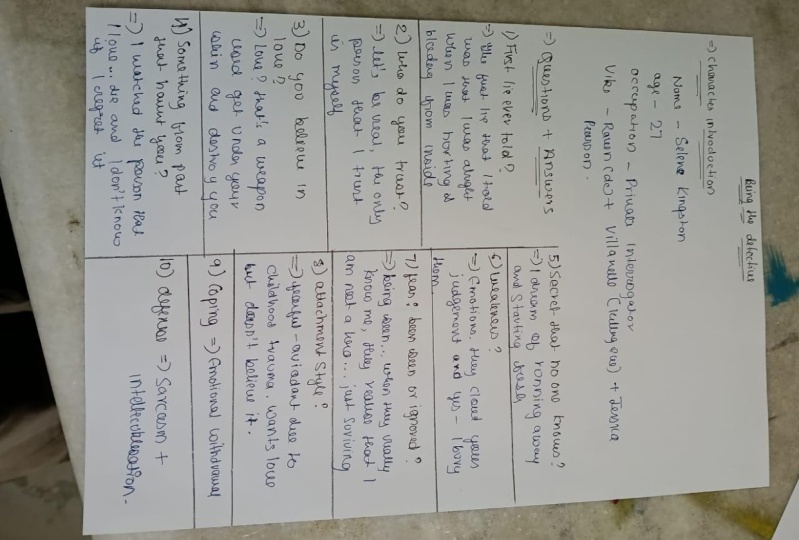
4. Being the detective: Probably one of the most crucial exercises that we're going to look at is script analysis for our character. So we've been given a scripts we've had and the code for it before we start making any objectives about what I care it is trying to do. We really want to look at them personally. Can we gauge what they're like as an individual? What are they like with other people? Do they engage with people politely? What's their kind of personality traits can be picked up? How about their age? How old are they? What do we know about them, their family, that background, all these things that we can think on always going to be clearly obvious, but anything that we can use as information we're going to use, and it can be good points, it can be bad points because it's all ultimately helping us build a better idea of accuracy. Next exercise is probably something that I've really enjoy far too much and I'm preparing for a role. It's called being a detective. So I want you to put your detective cap on now. So I want you to identify a character in the script. Now, this doesn't even have to be the character that you're planning. It can be any character that in the script simply because overall, when you're working on a project, you've got to know what's happening in the script, the film, the play. Anyway, because you're in it, you need to know what's going on. So it's really important that you understand about all the other characters. You understand the context of what's going on and basically it set to scientists that puts it together. So you're a detective for the moment. And what you're gonna do is you're going to select a character that's in the script, okay? And then I want you to assign 10 questions, okay, that you can ask this character. It can be anything. It can be about what they've done, can be about the backstory. It can be about, you know, who they are. It can be about absolutely anything. It could be outlandish, it doesn't really matter. But I want you to play detective. Think of 10 questions that you can ask a character. Now, if it's the character that you're playing, then there's nothing stopping you from then reacting and answering those questions. You could do it yourself, where you can do it's a camera. You can have a look at the questions on a piece of paper and you can answer them in character. Of course, he workspace if you've got someone else to do with you. Fantastic. They can ask you the questions or you can ask them the questions if they're playing the character, but you can do it by yourself. Okay, ten questions on a piece of paper, looking at an answer them in character, you'd be surprised at how fun this is and how good it is to again, just build confidence in the character that you plan it and your understanding of the scenes in the script.
5. Moments of stillness: I'm going to talk to you about now is one of the most important things that we need to be aware of as actors. And that's our physicality and our presence. Now, as I'm sure you're aware, there's a very big difference between theta acting and screen acting when we're on stage and we're in front of hundreds and sometimes thousands of people were required to make sure that we're communicating everything to our audience. So we require to be far more physical with our gestures in our movement, in our voice, and our projection. When we're onscreen, absolutely everything is tongue down. The camera has the ability to pick up every single minute detail. And that's something that we've absolutely, you've got to be aware of. Now, one of the big things which I think is extremely important for screen acting is the power of stillness. It's often use on stage, is also used on screen, but it's really, really powerful. And I'd like to give you a couple of examples. So that sounds delivering a monologue. You're not going to tell anybody. You're gonna keep it under wraps. Thing nobody would find out. What I found out. I found out that Can you see even in those small short little sequences of stillness there, it really kind of added an extra pair of intensity to the scene. It created a lot more tension, kind of a little bit on, you see, and that's how I felt was well in character. Now, what's really important to be aware of? Do not want to overdo this. Moments of stillness. Really need to feel natural. It's okay to do them, but it's very important not to overdo them. They need to feel natural and they need to come at the right moment. They need to be able to be benefiting the scene, not taking away from it if that makes sense. So when you're practicing the scripts, just give yourself the opportunity to practice moments of stillness within the text when you practice in it, when you some lines with the colleagues, wherever it may be, make sure you practice a moment of stillness to create tension, to build up the intensity of C, but do not overdo it. Make sure it flows and comes naturally.
6. Physicality and breathing: So I'm going to take you through an exercise now which is really going to help you develop the physicality of your character. It's something that I still use today myself. It's very simple, buys immensely effective. So all I want you to do is when you are home and you buy yourself and you free and no one's around you. I want you to go about your day, whether that's maybe going to the restroom, you clean up a work surface, maybe do some housework whenever it may be. And while you're doing that, I wouldn't need to do it in the physical capacity of your character. Okay. I want you to be character physically whilst you do those things subconsciously. I mean, you can literally just be walking to the bathroom, right? And I know this is slightly exaggerated. It's a kind of an exaggerated character. But maybe you just doing dishwashers or maybe if your characters quite angry, it's a kind of made me feel so happy hour that he pallor they do that, you know, I know it looks city, but trust me on this one. So consciously this is going to help you develop your character or the things that we go through all these exercises are also build up your inner confidence of developing characterization. So as I said, just develop a physical characteristic of your character. Go about your day in the physical mode of that character. Now, if your character has got a physical, physical limitation, for example, I don't want you to walk around all day and lead you back home. Punchline there so, you know, if they can't walk properly, that's no good because of course, I don't want you to injure yourself. This technique is used by method actors, but I wouldn't advise you to use it in long periods and prolonged. Okay. So when we're looking at Wrap Text and we're looking over our script, it's not always going to be pointed out to us exactly how I carrots and moves around how they physically look. It's kinda sometimes something that we have the workout and using the technique that I've just demonstrated, that's really going to help you with gaining a clear insight into your characters physicality. But what do you to practice it frequently? I want you to practice it as and when you can. Because as I said, subconsciously is going to help you develop an understanding of how eukaryotes moves around. I do want to emphasize that of course, screen at seeing is a lot different. And it doesn't mean you need to be as excessive with your movements, gestures because of course, it has different theatre depending on eukaryota. Of course, one of the most important things as an actor is our voice. Okay, without voice, we can't do our jobs. It's crucially important that we know how to warm up properly. It's crucially important that we know how to treat your voice properly. With that, say, we can't do our jobs. I always say to people, as an athlete prepares for again, they do their structures, they prepare the muscles. It's no different with that same, regardless of how intense or delicate the scene is, we've got to make sure that we're preparing properly and efficiently. Okay, so the exercise that I'm going to take you through now is one of the first exercises that I want you to do as you're warming up, as you're preparing to discard to an audition. If you're preparing for a rehearsal, if you're preparing to shoot. And it's, it can be really useful all of those things, okay, it's to do with breathing and it's to do with a little bit rejection work. Okay. The exercise does work best if you're able to lie down on your back and you can face the ceiling. But Einstein, if that's not possible, you can just do it as I'm going to show you now, standing. First thing that I want you to do is I want you to place one hand on your stomach, okay? If you know where your diaphragmatic muscles are fantastic. I want you to place it right just just above your belly button. Okay. And I just want you to hold it there. And what I want you to do is I want you to breathe in, but as you do, I want you to expand your stomach. Okay. Expanding as you breathe in and hold it. Cancer 512345. And then as you breathe out through your mouth, I want you to continue to try and expand your stomach. Okay. No rush. Make sure you expand that exhale nice and slowly. Okay. Preparing the diaphragmatic muscles, but this time, okay. I want you to breathe in again through your nose, okay. Expand out through your mouth and also obviously expanding our stomach as well. But at the same time, I want you to make a sound when you exhale. Okay, here we go. Let me show you. Breed it off 53. Exhale. Really get in there with those sharp S is okay. You can feel it. You start MCO contracts when you do it. Okay, make sure that you really kind of add in a little bit better fire to there S or when you were, when you were exciting. Okay? Okay, So we're gonna go through that once more, but this time, okay, When we're exhaling, I want you to make this sound okay. Okay. I know it's quite kind of violet intense sound, but keep alive that it's good. It's going to help you muscle, just going to help you work correctly. So here we go. Inhale over five or three. 5, exhale. Expanding your stomach. Okay. And we're waiting. I feel like I'm able to speak a lot more a lot more with projection and it's not causing me to put any effort in. It's all ok. already and I've only done two short exercises to show attempts there within it and it's okay During my breathing. Okay. A waste to the same thing, continue to inhale again, but this time we're actually going to do an open, okay, and open hmm, okay. So it'll be inhale. Okay. Yellows of 512345 and then I could go to day. But what we're doing with that particular, it's an exercise there is when we're releasing it into we need to make sure that we're relaxing our jaw muscles, relaxing your neck muscles relaxing and stomach. Okay. Because it's diaphragm is holding all of that a1 and it's allowing us to do it when we relax. Okay, make sure you leave that 12 loss. So you start off with yes, you move on to that. And then we go onto the sea. How much always totally relaxed when I do that. All my muscles are relaxed. My neck muscles relax. Okay, There's no tension here. Okay. We need to make sure that we're free and we're prepared and that we're ready, but we're relaxed okay. For wherever scene and wherever we're doing. And that's really going to help you. It takes ten minutes, okay, that's all it's going to take and you'll be ready to rock and roll once you do that exercise, I promise you. Okay, so doing if we've got your addition do before we rehearsal, do before you can stage your onset, it's going to help you Million.
7. Projection and tone continued: So what we're gonna do is we're going to try the exercise again. But this time we are going to look at increasing gap rejection and decreasing our projection. What I really want us to focus on is the use of a chest voice and Mitch, his voice and head voice. Now if you're not sure what those are, I'm going to show you. So a chest voice is very, very powerful. It's at the bottom, as you can see, it's quite baritone is quite powerful. It's quite, it's quite different, and it's quite distinct in its tone. But then as you move up a little bit, we get to our chest voice like this. Okay. And then this is again, it's quite a distinct tone. It's kind of more talking like, but we can still protect quite far. But then as we go up here, you can actually feel this, this is the headquarter we can fill in our face as well. Says here that enable us to do it. Okay, I know this is really crazy and over the top, but I just wanted to show you guys exactly what it is and different parts of our muscles and our diaphragmatic muscles that we're using here. And when you do this exercise, okay, and we do stop playing around with rejection. I feel we need to be kind of little bit free and expressive with it simply because we are warming up. So it's okay to kind of be a little bit over the top with this understanding if you're not in a quiet space or maybe with people, you can't hone it down a bit. It's still going to be able to warm up your muscles and get you in the right. So, but if he can do kinda go a little bit all out on this just to get yourself in the right state to prepare your muscles as well. So I'm gonna give you an example now with my sentence which is, well, I think you're wrong. Okay, chest voice and then we go up to the mid chest. Well, I think you're wrong. Okay. Then we're going to go up to the head voice. Thank you. Okay. Make sure we play about with tone would be do it. So each time we're gonna do, we're gonna do another nine times after that. So make sure you do it in other nine times. By again, you're working on your projection. You paint around with the tones so it can be what I think you're wrong. Well, I think you're wrong. Thank you. Wrong. Me. Be free with it. Be silly. Be expressive. You have the more light and more fun you can keep it, the better it is.
8. Pick a sentance and mean it: Crucial thing that we have to have as an actor is confidence, complete confidence in our delivery, in our tone. Anymore we're doing, we have to be believable. If we don't believe in what we're doing, no one else is going to believe in us. No one else is going to enjoy watching what we're doing. So one of the things that I always like to use to build confidence around carrots or to build confidence around performing is taking a script, okay? Take your scripts and select a sentence. Let's say that sentence is, for me, It's, You've always hated us. Okay? What we're going to do with that sentence is we're going to say that sentence 10 different times. But each time we're going to say completely differently. And we're really, really going to hone in on our tone and the way we deliver it, okay, this is how we build confidence in performing. So you've always hated us, I'm going to say 10 times in a different way. You've always hated us. Always hated us. It is always hated us. Here. You've always hated us. You, you've always hated that. I always hated us. You have ways to us. You've always hated us. U is always hated us. You've always hated us. Now, can you see each time I did that it was totally different. Of course some of them are more expressive than others. Some of them I was using physical gestures and hand movements. That's fine. That's absolutely fine. I want you to do that. Okay. Make sure that you are doing this every day if you can't, because let's say you do this over the course of a week. You do every day. You practice with different tones of different delivery types, the course of a week. And maybe you've got to, you've got to go through an audition a week later. Or maybe you've got to perform a certain scene a week later. Now, you may be in the room with the director and the director may say, Well, can you try and do like this? Well, guess what? No problem, of course I can't because the likelihood is, is that what I've been practicing this exercise for the last week? I'll probably done it a 101 different ways and I've probably covered the way that the director wants it. Which is why this exercise is so useful. Because the more ways that we can try and play around and play with this kind of delivery of tone. The more it's going to benefit us, and the more confidence we are going to build around this character and how will we perform it ultimately. So practice this exercise, play around with tome. Experiment, be free, be fun. And that's how you're going to get the most out of this exercise. And that's how you got to build confidence.
9. Self tape: Great way to build confidence, especially for screen, is to video yourself. Now if you want to use to video yourself and seeing yourself on screen, figure yourself performing your lines, okay? If you want, you can, of course out with lighting, you can make it professional or you could just do it on your phone. And the crucial part here is you getting used to seeing yourself on screen. Now also you can pick up a few mistakes as well. And also you can identify a couple of things that maybe you want to improve upon. For example, if it's a certain way that you're looking at the screen or either differing line. You want to make sure that you didn't it the right way. Make sure you're not blinking, for example, when you're delivering the scene. Maybe a certain look that you do throughout the performance that you want to switch up and you just think, well, Bye, maybe altering it slightly. Well, by recording yourself. You've got to identify those things. So make it a habit every coordinate yourself, even if you're not sending off for a self Tape, just video yourself. See how you performing. It doesn't matter if it's for theater a lot because if it's a theater, you know, you can be big, you can be bold, can be expressive. You still going to see how you perform it and how you perform in the script.
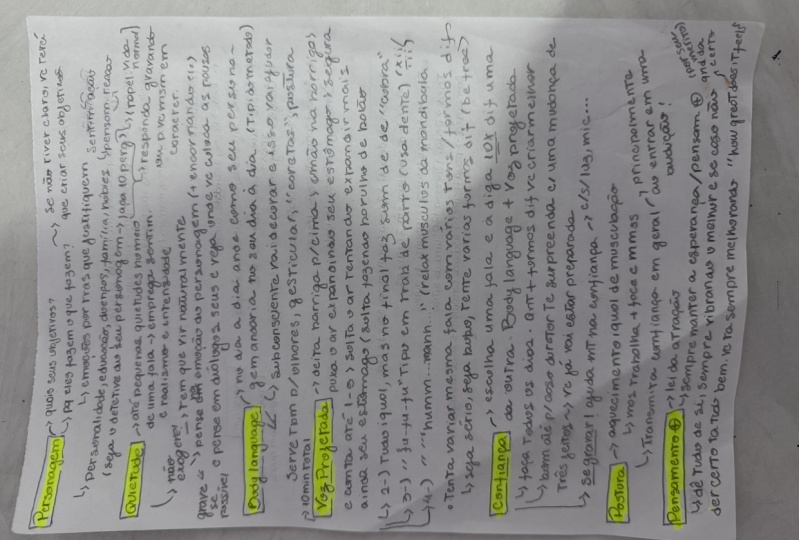
10. Confidence and posture: Things are a lot of people miss out, especially as actors is a physical posture when it comes to confidence. Now, I can't really stress enough that your posture really, really does define your many ways. Your body language says a lot before you even speak. The last thing you want to do is go into an audition room, for example, or being the rehearsal space and have horrendous posture. Now I'm not going to lie to you. Pretend that my posture is always perfect. It's not, it's, it's very difficult to try and maintain great posture all the time every single day because of course we're human beings, are emotions fluctuate and sometimes our body language follows with our emotions and how we're feeling. We're not always feeling over the moon and exactly confident, but it's important that when we're in the zone, when we're acting, when we're in the space, when we're in the audition room, we're confident, okay? And we've got to show it in our body language. Now, I'm going to take you through a couple of exercises. It's important to know that these exercises are great exercises, that you can include them in your vocal warm-ups. You can add them in addition to what you're doing. They don't take long to do. They help. They read really do help. But if you've entered fitness, you know a lot about exercise and stretching. All those type of exercise is movement-based stretching is really going to benefit you. So absolute include those as well because they're all great for posture work. So one of the simple things we can do is rotational shoulder shrugs, okay, but loosening up the upper body, the chest and the shoulders, we can also hold here up to the neck for eight seconds. 45678, and drop. Now when you do that, you also massively fair to loosening here in the trapezius muscles, which are your trunk muscles. Again, really, really, really nice technique. I do this every day, every morning because I'm getting older now I get tense. But it's really good to do because again, it helps you with your posture. So you've done rotational shoulder exercises. You can also do a little bounce, bend at the knees, and then you can bounce and touch the floor. You could do about 12 ounces, it's good. And as you come up, you leave the head pointing down and then you rotate the shoulders and you come up and as you do, you leave the head to loss and you point it up. Okay? And then basic neck movements to the side are also really great as well. Tilting the head backwards and doing your extension movements again, loosening here. Sim, simple things like that. It's really important, just keep on top of it. Stretches you can add, To be honest with you, not only is it good for writing bytes, good for all well-being health. To be honest, you want to keep yourself active. You wanna keep yourself in good shape. You want to be flexible, you know, especially if you're a stage actor, required to move about physically, fairly important to keep flexible. Or if you're playing a role on screen which requires you to be quite physical, keep flexible, especially as you get older. So I notice always quite tricky. But when we're when an audition room, the last thing we wanna do is, I guess, and it's easy when we're being spoken to or read depth of discussion where we're kind of. But if you a lead role for example, or you don't want to be, he's appearing to be kind of not approachable and not confident. It's quite a simple adjustment, but it makes the world of difference. You know, shoulders, back, chest forward has looking directly forward much in my head isn't down, it's up here. I'm confident I'm aware of the situation. I'm assertive, I'm not overly arrogant. I'm just assert it. You know, you're confident in the space. Can you see the difference here? Okay? And it just really, really makes you appear some different physically. You know, I'm not a massive guy. Okay. I'm not a massive guy. I don't do bodybuilding. I go to the gym. I like to box a lot to keep fit. By no means I'm a huge, hugely NOV, muscular know, but you can still see the difference, right? You can still see the difference visually. And when we engage in a conversation, who absolutely see that this prints and feel the difference because I feel more confident. And when you change your posture and you correct your posture, you also feel more confident. You don't just appear confident you feel it. So keep tabs on it. Make sure that you're confident and make sure you're always being aware of your posture.
11. Mastering the audition room: I'm now going to cover something which really affects us all as actors. That's the audition room, okay? It doesn't really matter how long you've been acting, how long you've been in the industry. You're always gonna get nervous. You're always gonna get excited. There's always going to be some type of emotion when it comes to the audition room that will never change. Okay? And there is often an awful lot that's on the line to be honest, it can make or break us in many ways. But I really want to explore the mindset of the audition room because in my personal belief, mindset truly is everything when it comes to the audition room. Okay? My personal opinion is, is you need to associate positivity with audition room. You need to focus on the positives because let me tell you if you're going through R1 of consistent, you know, bad luck in auditions. Maybe you've got ten auditions in a row and every single one of them, you don't get cost. It can absolutely have a detrimental effect on your outlook Looking forward, it can affect your mental health, it can affect your determinations carry on in this industry. Let me be the first to tell you. This industry is immensely challenging and difficult, okay? It is. But you've decided that this is your career path. You decided this is what you want to do. Have confidence in that, okay? You'll taking decisive action by doing this course. You're taking decisive action to improve yourself, to get better, to dedicate yourself to your craft, to do what you want to do. Now, the first thing and the first thing I'd love you to do when it comes to the audition room process is to really think about every time you step for inside the audition room, what opportunity you having, even if you don't get the job? Well, let me tell you. You've got the opportunity to demonstrate your skills to that casting director. You've got the ability to demonstrate your skills to whoever else, the director, the other actors, the writer, whoever else is in the room. And let me tell you, just because you fail at Audition does not mean that those people that are in that room were not remember you. And it doesn't mean they won't call you back in the future for something else and you get something else in the future. I've seen it happen. It's happened to myself, is happens to successful actors that I know it happens. Bear that in mind, okay, which is why it's so important that you go into every single addition, like it's your last, give it your absolute 0. Okay, There's no halfway here. It's absolute 100 percent every time. But you do so without the attachment of if I don't get it, my career's over. I don't want you to think that. You cannot think like that because if you think like that, it's going to be so detrimental to you. You're not going to have a success, you're not going to be able to push forward. Okay? I want you to have the mindset eventually of yes, this is no disa Yes is important. But guess what if I don't get it? I'm going to be okay. That's the mindset of that i've, I really want you to kind of install because that's the mindset that's going to help you get success. And what I want you to really remember is this phrase, how great Does it feel? Okay? Every single time you get ready to go in that room and every single time you walk out audition room, how great does it feel? How Great Does it feel? Okay, the I get to showcase my abilities, my skills to those casting directors, to those writers, to those directors. Every time I stepped foot inside the other should room, I'm allowing people to know who I am. People are seeing my face. How great does that feel? How great does it feel to know that I'm developing myself every single time I go into the audition room. Okay, I'm developing myself as an actor. I'm developing my experience on developing myself as an artist, as an individual. I'm growing, I'm getting better. I navigated was, I'm always improving how great it feels. Know that I'm learning every single time I go into an audition. Always remember that phrase. How great Does it feel? Okay, let it sink into your head. You know, if there's somebody that practices, you know, kind of mindset and affirmations. 100 percent include that into your kind of affirmation set list. How great Does it feel? Because it's really, really important. Okay, So in conclusion of this course, do make sure you go over it as many times as you need to, to make sure that you understand everything, to make sure that everything sinks in, in regards to the exercises guys do be consistent themes because the more you practice, the more you give it a go, the more you're consistent, the more you're going to benefit from it, I promise you. I have also included some little audio episodes from the exercises we've gone over. So you can listen to that freely as and when you need to. I've also included a nother audio episode, again on audition mindset because that's really important. So you can listen to that as and when you need to. I've also included a PDF document of character objectives and an example of a character objective that you can take a good look at and you can utilize for your own characters as well. Thank you so much for joining me on this course. It's been great to have you and I look forward to seeing you again soon.
 Sam Cole