Transcripts
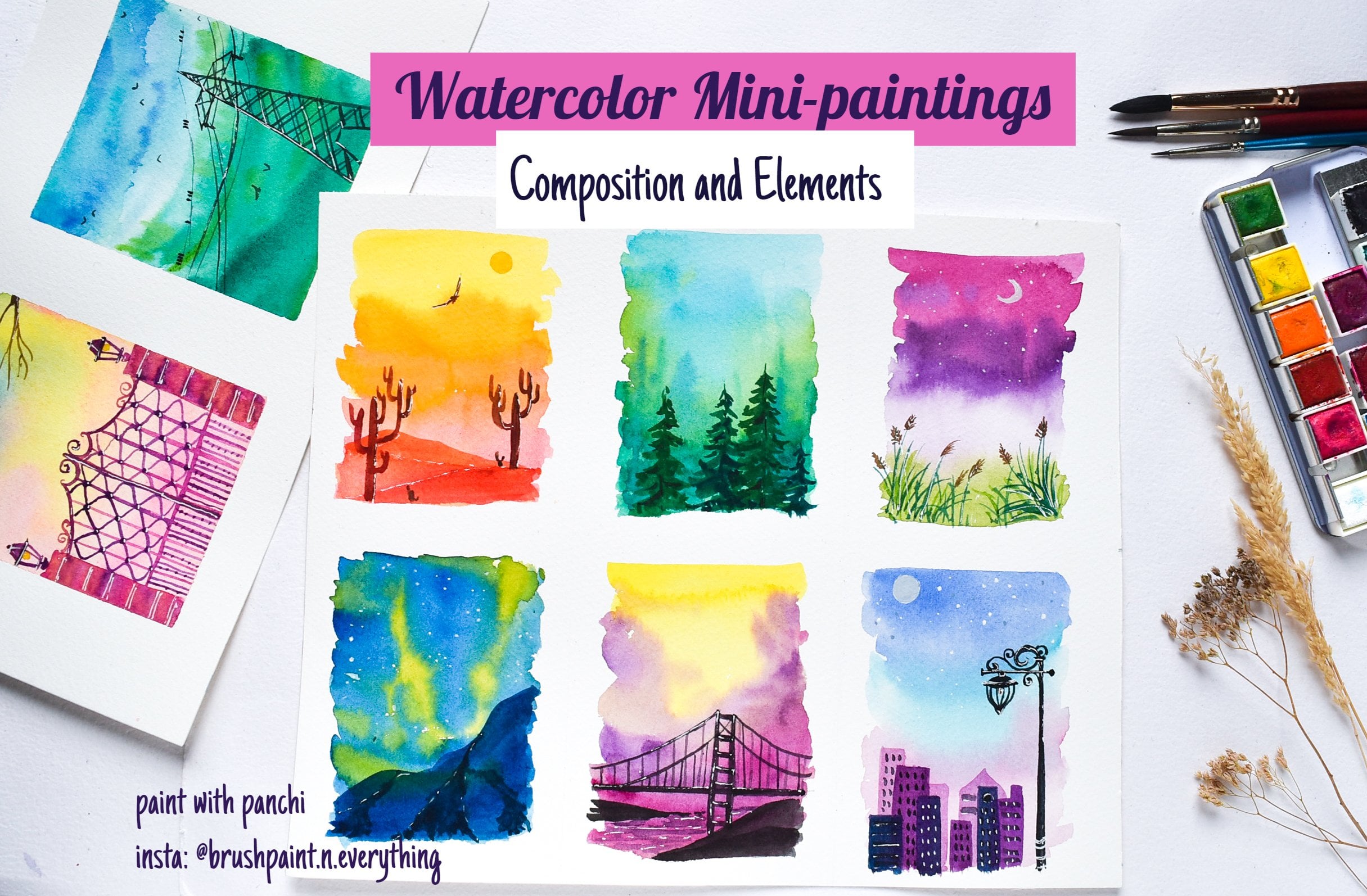
1. Hello!!: Hi everyone. Thanks for tuning in. My name has been to me and I'm a watercolor artist
and instructor. Sometimes watercolors can be very tricky and intimidating, especially as a beginner, because I believe it
has a mind of its own. But some of the effects
can only be update with watercolor and
no other medium, which is why I love it. I bring to this class
which everyone can enjoy. Working with the
most basic nature movement of pigments
and looms on paper. This is the best
way for you to get comfortable and friendly
with watercolors. I will talk about the
materials used in the class, alternative colors
that you can use from your available palette if you don't have the
same shapes as mine. And some hacks, tips
and simple practice. Then we will jump onto the sixth beautiful and
simple class projects, which takes about 15 min each. You can choose to
paint the projects you want off paint them all, even if you have never touched
watercolors, do not fear. You don't need to worry about brushstrokes are making
mistakes in this class. This can be your
first step towards a creative practice to work something simple when
you have an art blog, or just to let your mind free, enjoy the watercolor
magic and relax.
2. Colors n tips: I have used a variety of colors. Now I understand that it's
not possible for everybody to have all the exact shapes
when you're painting. So I'm just going to recommend some colors that I think that commonly is available
in most of the palettes. If you guys don't have it, you can always use
the colors that looks close to what I have used. Here. I have used royal blue. Instead of royal blue. You can also use indigo, or you can use Prussian blue
or any kind of dark blue. I would recommend not to use
light blue, cerulean blue. But if that is something
that you like, then you can go ahead. It will pull up perfectly. Here for the height, I
have used, permanent reds. Complementary color to blue
is also yellow and orange. So instead of red, you can
also use yellow or orange. So even if you use those colors, it will, the house will
pop out in this scene. And if we look beautiful, then here I have used royal blue and
quinacridone magenta. Instead of quinacridone magenta, you can use opera pink
or quinacridone rose. So any kind of pink shade that you have you can use
for this project. On the contrary, if you do not
have this particular pink, you can fall back
to green color. So here I have used leaf green. So this is basically
yellow color but with danger of green, right? So you can just try
and mix these colors, lemon yellow and any kind
of a light green that you have and see whichever gives you a very bright
and catchy result. You can use that. Use lemon yellow and permanent
yellow deep for orange. And this has been
occurred on magenta. And instead of
permanent yellow deep, which is orange shade, you can use vermilion and mix a little bit of
yellow to vermilion. Phone down that orange genus so that you get a very warm orange. It's pretty simple. I've used different
shades of green. So to make the green dark, you can add blue to it. And to make the green lighter, you can add some
yellow to it and prevent different shades
of green for this project. Let's talk about
consistency of paint here. One thing that you
have to keep in mind is when the paint
dries on paper, the saturation of the
color will reduce. So you'll have to keep in mind that the brightness of the color that you see when the paper
is wet is going to reduce. So based on that, are keeping that in mind, you have to apply your paint. Here. This is a batch of
paint which is already dried. Now I'm going to
take the same paint, same consistency of
paint and apply next to it so that we can
compare the saturation. And you can understand what
I'm trying to say here. You'll see how dark it is
when the paint is wet. So when this dries off, it becomes this
saturation which is a bit lighter than the
wet version of it. Now let's talk about the
consistency of paint. When I take my paint
directly from the palette, when I move around, you cannot
see the white background. So this is a very thick
consistency of paint. You'll see how
bright it is here. Now, I'm going to
add some water to this and move it around. So you can see this, see that this has become
a bit more watery. You can see the bottom
by palette apply this saturation has reduced. When you paint with it, you can feel that this
is much more fluid. Now, I'm going to add
some more water to it. Now here in the palette itself, you can see that
this is extremely flowy and the saturation
also has reduced. So this is our
light consistency. So as in when you go on
adding water to this, it will just get
lighter and lighter. This is my medium consistency and it is going light as
in when you add water. And this is my
thick consistency, which is extremely dark. What I want you guys to
do is I want you guys to mix the paint on the
palette and try to get different consistency so that you can understand and have a better muscle memory
of how much water you need to add to
your pigments to make these different
mixture of paint. Most of the projects
here in this class, we are going to work with medium consistency
because this is, this has ample amount of
pigment in it at the same time, there is good amount
of water for it to allow it to move
freely on paper. So I want you guys
to be mindful about how much water to mix to get this mid-range of
saturation in your paint, try to choose colors
that do not form brown color upon
mixing on paper. E.g. if I'm going to use this red and I'm going to use a
blue along with this red. I will mix them on paper and
see that when I mix them, they give me a good
color transition or good color and it doesn't
form brown shape. So when I mix this
red with this blue, it gave me a nice purple. Now, for the same blue, I'll do another experiment. Let's say I want to
work with orange. Along with this. I'll take some orange
and try to mix them. I'm getting a very not so
pleasant color of green. So if I'm going to paint a background of
sky or something, this is not a color
that is desirable. So I work with this. I said this, this
process for you guys to do when you decide
on the colors, just mix them on a little sheet of paper and figure it out. This is a good color
choice for your painting. Another important thing that
you need to understand is when you apply paint on
wet portion of paper, pigments will always move from high concentration to
low concentration. So this is my wet area here. I'm taking some pigments and I am going to drop
it here at the bottom. You can see that the
motion is always towards the lower concentration
here there is no pigment, but here there is
lot of pigment. So it is moving towards the low pigment area.
To some extent. After that, it will need
our help for motion. So you have to move your
paper. For it to move. It is very unpredictable. No matter how much you try, even I cannot replicate the
same result. The second time. When you are going to repeat the actionable items that I have done are shown
in this class. You might not end up getting
the exact same results. So don't be disheartened. This is expected and
you're definitely going to end up with
a different result, but a different result which
is beautiful in its own way. So glass, the
painting background, or having fun with
this flowing nature of watercolor is what
is most important. And most of the paintings here have the subject
of silhouette. Are there a lot of silhouettes, objects that are available on
Pinterest and Google them. You can also use the
same silhouettes I'm using because I've
kept it very minimal. You can see that I've
kept it very minimal and it's only at the
bottom of the paintings. I have used 300 GSM hundred
percent cotton paper. I would recommend the same
for you for the best results. Another important recommendation
I would like to give you guys is work with a
smaller sheet of paper. If you're using a
smaller sheet of paper, the area in which
you have to control your paint and
watercolor is very less. It's a smaller area here. So your stress will also
reduce and it is easier and you can add quicker or react quickly when
something goes wrong. So it is easier when you start with a smaller
sheet of paper. As you grow confident
increase the size of paper.
3. just the Basics: Let's do a quick
practice session. I recommend you guys to do this practice so that you
understand your paper better when you actually paint will not be worried about
your paper drying too fast. And if you have the
understanding of what's the right amount of
water your paper needs. Your whole painting process will be a very pleasant experience. Working on the top section here. And as you can see, I have wet the paper totally. You can see I'm making horizontal and vertical
brushstrokes and making sure that the
paper is nicely wet. I will tilt the paper so
that excess of water will come to that side and
the tissue or red clot, you can remove it, the
paper and hold that. All the water gets
accumulated at the bottom. Now while removing also
kick off the water, don't have the
tissue on the paper because we want every
part of the paper wet. And if you dab it on the paper, that particular area
will become dry. So carefully remove the
water which comes to the side of the paper on
top of the masking tape. For this demo, I'll be
using just two colors. I will add one layer of blue on the top and one layer
of blue at the bottom. And I'll add pink in-between. As discussed in the color
consistency section, I'm using medium
consistency here. Now. I'll start tilting
the paper vertically, moving it up and down. I'm doing these movements based on the movement
of the pigments. So I'm watching here the pink paint move as
it reaches the border. I'm changing the
direction. This way. The pigments will interact
with each other and at some point they give you a very unique pattern
and different blooms. I'm pretty sure
that your outcome will be completely
different from mine. Even I cannot create the
same result the second time. So you have to keep in mind
that each of your pieces will be unique in itself and it
may not look like mine. Even I cannot create the exact same background even if I try for
the second time. So let yourself free follow your instincts and enjoy
the painting process. So this is our basic approach. Now, if you want to see some
more movement of pigments, then what you can do is just
add some more pink here and till the paper
so that pink and move to the edge of the paper. So you can see I have
dropped some pigments where which has increased its fluidity and
movement on the paper. This is why we need to
wet the paper well, so that it stays wet longer and we get enough time
to play with the color. Just tilting the
paper or pen down and letting the colors
move and create patterns. Now I'm going to try the
same by adding some blues. I want you guys to try all these practice sessions
so that you can Get to know all the different
things that you can try and also feel confident with your paint and paper to
understand your materials better. So just have a closer look how I'm playing
with the pigments, just making them
move up and down, just with simple up
and down motion. Now let's practice in
the second section. But this time, let's move
the paper differently. Again, writing the paper
thoroughly yard and making sure that
the excess water is removed by tilting the paper. Will work with same
set of paint here as well so that it's
easy to compare. And I'll do the
same layering that is being sandwiched
between blue. This time, I'm not going to move the paper just up and down, but also in a circular motion, in a vertical motion and
in a sideway motion. So that's what I
want you guys to do in the second bit of
practice section, just try all possible
movements that you can do so that you can see for yourself how the pigments will move, or how they will react, or how the pigments just beautifully move as
you direct them. Now you can see some
vertical motion. Let me take a drop of pink here and just add it on the paper and then
just move it around. I want this dropped to
meet this pink line. So I will tilt it
till that happens. I'm hoping by now
you get the idea. So you see I had actually
applied the paint in the same fashion appeared
and also down here. But just because the way I have moved the
paper was different, the end results are
also different. Small sheet of paper just
spare some 10 min and do this exercise will advance
in one scrap of paper, you just try one
particular direction. And in others type of paper you try a different
direction and try to see and observe how the paints are moving
and more fluid, the fluidity that it has. Now let's begin with
the class projects.
4. Project 1: Well, the first project,
Let's begin with the sketch. I'm going to draw a
very simple house, something similar to this. Note here that I'm
not stressing too much on the sketch
and I'm just going to draw something rough
because I do want to stress too much on the
accuracy of the sketch here. So that what we really
want to do here is just have a simple sketch, as simple as possible. I have some good fun while
painting with watercolors. Now I'm going to draw
a horizon over here, just so that it's almost
close to the top of the roof. Something like that so that
we can have the most of easy, ease while painting this. That's why I'm just drawing the horizon just
close to the rooftop. Or you can even have
a horizon complete where the house is
completely inside, under the horizon inside. Or you can also have
a horizon where the roof or the house is
completely inside it. You can just place this has
a little bit in the bottom. Now, let's begin to paint and wait to take some royal
blue for the sky. I like this color a lot. So you can take any other
blue that pleases you, which is a bit dark in hue, like indigo or cobalt blue tried to avoid blooms
that are very light. I'm going to wet the
paper thoroughly now. I'm going to break this area. I'm going to leave this white. I'm just going to Skype bot. So I'm just going to
tilt my paper so that excess of water can move
towards one end of the paper. I can remove it. We can see the excess of
water is flowing down here. I lose my rack lot to clean it. And you're cleaning
this excess water, makes sure that you are not
cleaning it on the paper. Do you mind just leave a batch
of dryness on the paper? My first layer, I want it to
be really extremely light, so I have my paper evenly wet. You can see that it's shining towards when I
hold it towards the light. So this is the same
thing you can do. This hold it towards the
light and see if it has if it is evenly wet or not. So the first thing I'm
going to do is work with a very light mixture of paint. It's going to be super light. I'm just going to add a super light section
here in the bottom. Now I'm willing to take some nice pigments and start
painting from the top. And I'm going to work
in slight slant stroke. There you go. So what I want to do
here is I want to get little light area here
and dark area on the top. I'm going to take some
more pigment and just add it here. Now. Take my papers without my pigments can move
towards the bottom. Now you can see that I'm holding it in a horizontal or in, out in this direction
so that it can move from this corner
to this corner. You can see some nice
movements happening here. I'm going to take
a different brush, a clean brush, dilute
it with water. I'm going to dab some
water here in the bottom. So when I dab the water here, it will start moving towards the direction of higher
concentration of paint. And what it'll do is whatever
little pigment it has here, it tries to move along
with it and as it moves, it'll give me some
nice blooming effect and also some nice light hues. Make sure that you do not dab these white paint on
top of the dark color. I just want to put it
here in the area which is like and also I'm going
to dab some here because. Paint has come all the way down and this area has become dark. So I'm just going to
add some drops off white so that it moves
the pigment from this point towards the
darker pigment section. I'm going to add another
layer of dark color that is healed from the
second layer of paint. I'm also going to dab something just filled
in the center. Now, let's try to move
it a little again. So you can see that the excess of pain that comes over here, I don't want that effect, so I'm just going to take
my paper to the right. Quick pay for few seconds, and just going to remove that excess paint
and liquid here. And now again, moving in this direction so
that the water can move from here to here, right? You can see the motion. You can already see that it has formed a very nice
blend over here. Again, I'm going to move
it or hold it tilted. What is Andre direction again? So this way, I'm getting a
range of motion of pigments, which is in this direction. I'm willing to drop some more. Dark pigments. Just appeared in the corner. Because I want it to look a
little bit more dark, appear. As it moves on the top. I'm just dropping some
more pigments here. And again, allowing it to move. I'm not holding it in
this direction for too long because I don't want it all the way to come
down till here. I just want this these pigment to stay just in this portion. So I'm just moving it quick
so that it blends itself. I think we're having a nice,
good-looking blend here. So while this dries off, I'm going to take extremely
light mix of blue here. You can see this is
a very watery mix. I'm just going to take
some of that and just add some blue sections are little sections of
brushstrokes of blue here. This kind of adds
shadow snowpack when to take a bit
of pink shade and makes it easier to get
a little bit of purple. It's going to take
that at the tip of the brush and just
add some highlights. Emotion, some you
can just do this to kind of add depth
to your snow here. But then that's it. I'm
not going to overdo it. While this dries,
let's paint the house. Red, mixed with a
little bit of orange. Different complementary
colors to this blue. So I would suggest if you
don't have this kind of red, you can either use orange or
you can use yellow as well. That is a nice compliment
in color to this blue. So when you're using complementing
colors, How's we look? Popped up? And even though it is a
very minimalistic painting, it will still look very catchy. I'm using a bit of brown to paint the side
portion of the house. Now let's wait for
this section to dry and then we can add
more details to it.
5. Project 1 detailing: Now that my paper and the
paint has completely dried, you can see this nice blend and the movement and these nice
blooms here that you've got. Also you have to
note that because of the movement of water or
there was excess of water, you can get some
darker edges here like this in the gardeners that
is sometimes unavoidable. But if you get
something like this, what we can do is you
can paint some trees here in the corner and
try to cover it up. But I think I will
leave it as it is. I don't mind having
them because it is not that prominent in my case. I'm taking this mixture of pines gray and royal blue here. And I'm going to paint some
trees yield in the distance. I'm going to take
some ivory black. Or you can also again work
with the same dark color. Taking some black, you can take some Payne's
gray and indigo. And I'm just going to paint
this boundary for the door, just adding some
highlights here. The same dark mix. I want you to just paint some
shadow here for the house, just near the roof. Lines here, which adds a
woody extra to the paint. And then I want you to take this dark color
and again darkens a little bit here at the top with the same paint
that I used for shadow. I'm just going to extend it here just so that
the roof is visible. This shadow has come
a little light, so I'm just going
to use a bit more darker and paint the scene. Now that this is
done, I want you to take some blue again, some very light mix of blue. Seats. This light, very
light mix of blue. And add some shadow here. Next, take some, this
is Chinese white. I'm using watercolor itself. You can preferably use pasta
colors or acrylics or wash, or even posca pen, Jelly Roll pen for
this exercise, adding stars are painting
some highlighted smooth. I'm just going to dab some
white here on the roof to show that there is some snow
collected here on the top. I'm going to add
some white drops. Alternatively, if you have
Jelly Roll pen, also, you can just choose the spots where you
want to add the stars. Then what I like to
do is I like to show some snow here on
these lines I've drawn in order to give the
impression that the snow has dissipated here on top
of these wooden blocks. And just darken the roof here a little bit with
my pencil itself. If you've got too much of
whitespace here at this area, then also you can just paint
a tree here so that it doesn't look too bad or too
empty around this area. Darken the corners here. Just some dry strokes,
dry brush strokes. We are done.
6. Project 2: For our next project, let's scale up and
you're going to use two colors in this project. Olive green from PWC and the same royal blue
that I had used earlier. Me write the paper first. I'm going to paint the entire sheet of paper
for this one so that we don't have too much
of a restriction when we are moving with the paint
and playing with the colors, so that we are free of any other inhibitions
and just have lots of fun. I can see my paper is completely wet and
I'm just deleting it so that excess of water can just come all
the way to one corner. I'm just going to clean that. Now it's important to clean this because when we add paint, we are going to add some more
water to it so it will just become way too
watery on the paper. So it's better to just
remove these excess water. As in when VR going
ahead with the painting. My paper is nicely wet. I'm just going to make a nice
consistency of sap green, sorry, this leaf green. I want a nice thick consistency loaded with pigment itself, a medium consistency of paint. It's going to start
with leaf green first. And then a smaller line here. Royal blue. Take a nice lot of pigment and paint
in this white area. But I'm making sure that
I'm not painting on top of the leaf
green color here. And I'm just going to leave
some space there so that they have enough space to
interact with each other. I'm just filling this
AGL with this area. I'm just going to add some
water so that I can help them tilted vertically so that these can interact
with each other, that whitespace
that I have left. Now you can see that
it's not moving much. Let's get them moving. Some more. Blue here. And I'm going to keep
it tilted and just add this blue here so that it moves some more light blue. And then move it
down and then add some appear some green. I'm just I'm just
helping it to move this up and down motion again so that you again reset the movement of the
pigments in this direction. Okay, Now, let's
wait for it to dry.
7. Project 2 detailing: My background is completely dry. I will be adding pine trees here because I really
love painting there. But you can also make
Cascade Mountains. Instead. I'm using a
mixture of indigo and pines gray to get a very dark color and
add the tree silhouette. I will be adding a link to
my YouTube tutorial that I have explained in detail how
to paint easy pine trees. So you can check it out. If you're having trouble
painting the pine trees. You see I'm adding
a wonky tree here, which is a little bit bend. I like adding such
small imperfections that we see in nature. It makes the scene
more interesting. Adding some stars
with Posca pen, you can also use Jelly
Roll pen or just splatter some white paint with white gouache or
white acrylic color. And that's it. We're done.
8. Project 3: For this project, I'm
just going to have a very small horizon here, just in a very kind of shape. Team my paper. So this portion is actually the most important portion that is wetting the paper because you really need to wet
it well so that the paper doesn't dry off soon
and stays wet for longer. The papers so that
excess of water can just come to one point
and I can clean it off. Now that the excess
of water is removed, Let's begin to paint quinacridone rose
for the pink shade. So if you don't have
exact quinacridone rose, you can just find an
alternative pink that you have. Maybe you can use opera pink, ordre, madder lake or any other pleasing
pink that you have. Or you can just work with
the light green color, which commonly is used for
northern light painting. So that might now
that my paper this completely and nicely wet, wanted to start with pink
because once I mix blue to it, it's going to become purple. And I do want to have any purple right from my
palette because anyway, it's going to mix on
paper and become purple. So I'll start from
the top and move. Add some strokes here. I just add three of ink. I'm gonna take this royal blue again for this painting as well. And just add that the
remaining section. I'm keeping some of whitespaces
here because I just want to get that blend going on. The excess of paint that
you can see in the corners. I'm just going to
remove it right away. Now. Let's just still the
paper so that it moves. I'm going to only move them up. It is excess of water here. I'm going to remove that first. Take some more pink and tilt
my paper up here like this. My paper. And then
adding some pigments. Some more here. Now I'm going to
take some more royal blue adding from the top
and allowing it to move. Pending some here. Now, here, I'm not going
to restrict myself with any particular movement or
the direction of motion. And there is lot of X's
pigments and water. I'm just going to
remove that first. Now that I can see that that is good blend and mix of colors, I'm just going to
take some more blue. This time I'm going to take a thick consistency because I want some areas
of dark blue here. I'm going to take a
very thick mixture and just drop some. So you can see how
dark this is in comparison with my
previous mixture. Since it is already a lot
of water on the paper, I'm not adding too
much water into this blue mix because when
I tried to move them, it will start reacting with the paint that is already there and it
will move accordingly. So now the second layer of
paint that I have applied, I just wanted to move
up and down direction. So I'm just moving it
in that direction. I'm not going to darken the bottom part because
we'll add some trees. And if we add too much
of dark pigments there, maybe the trees might
not look bright enough. I would like to point it to you. Again. That end result need not be the same as mine looks like. Because the way in
which you're going to move your paper and move
your pigments are applied, pigments or even drop-off. Pigments that you apply
on the paper will be in different amounts and you are going to have movements
in different direction. So the end result will
definitely not be the same. But also don't forget that the main purpose of this
class is to have fun. Just have fun with the
movement of pigments. And now I can see that the
paint is not really moving. My motion of paper, so the pigments have settled and all the movement that has to
happen has already happened. So I'm just going to
let this settle and B, so that this can drive a very light mix of purple and
just add some restaurants. Now let's wait for this to dry.
9. Project 3 detailing: My paint has
completely dried here. So you can see I have got a nice dancing colors over here. So I like it the way it is. And I'm just going to start or begin with adding some stars. So I'm going to take
some white paint. Next. I'll add few pine trees, which is a logical
and probably the common G that you would
see around the snow area. Some brush flux in the V
direction but outwards. And as you move down, the tree will start kind of
blooming in a conical shape. So here I have the outer
structure of the tree. Usually do filled up inside. Just add one more tree here. I also have a YouTube
tutorial on painting different kinds of pine
trees in an easy step. So I will add the link to it. You can visit that as well. Thank you.
10. Project 4: For the sun, I'm drawing a
circle on a masking tape and I'm going to cut it out
and stick it on the paper. Alternatively, you can
also use masking fluid, sticking the DPO or
wet the paper first. And then I've taken my
yellow, lemon yellow. And I am adding the first layer of lemon
yellow here at the center. Now I'm going to
take some orange and apply at the next layer. I have taken nice medium
consistency of paint. Next I'll take my magenta
and apply it on the top. And here in the bottom. Now, I'll try to get some nice range of
movements of the paint. So at first, you can see
that these are moving down. Now what I noticed is that my yellow is not having motion. It's not really
moving up or down. So I'm just going to take
some more yellow and apply here just to get it moving. So I can see that there is a nice blend of orange
and quinacridone here. So this is why I
said that you should make sure that the
color mixes do not give you brown
because these paints will mix on the paper. I also have these deposits of few paints here in the corner. I'm going to tilt it in the
vertical direction as well. So I'm going to remove this excess water
here at this point. Just remove the excess
pigments here on the top is from the sides. I think I'll just let this be and I'm not going to
touch it further. I want to make a
point very clear to you guys is once the papers begins to dry or some areas, it has already started
to dry off, e.g. you can see here that
it is getting lighter, that means it is getting dried. So at this point
when the paper has already started the
process of drying, don't add more
water because that is going to give you
unnecessary blooms. And I think just
with a little bit of allowing it to move a little, we've got a nice range of
blend of orange and pink. And you can see the kind of unexpected patterns
that I've got here. Same goes with your
painting as well. Don't stress too
much on, you know, how to move it or just
to move it to get it in a particular kind of
pattern on your painting. As long as we're getting nice
blends and nice movement, it will definitely end
up very pretty and nice. Let's just wait for this to dry. Now. I have tried to create
a similar effect, but here I have used for
colors that does have also used purple here in
the bottom and in the top, and some way, some
points here in-between. Now you can also spice up a
little and add more colors, but more colors you add the more conscious you have to get in
the movement of the paint. What I'm trying to show you guys here is that no matter
how much you try to control it the same way or try
to get a particular style. It's just going to end
up unpredictable and have motion and movement
in its own way. So just relax and
enjoy the process.
11. Project 4 detailing: Paint is completely dry now. Now what I can see here
is this portion is has come out dark and this portion has come
out a little light. So I'd like to invert this
and keep this darker portion on top so that it acts as
a nice, beautiful sky. And also it has got these
nice blooms around here. Carefully remove the tape. Take a clean brush. And I'm just going to blend
just this area at the edge. Because I just, I want a
smooth edge here for the sun. I'm just going to try to smooth
and it here a little bit. So let's draw and Electric Boat. I'm not sketching
beforehand because the outcome is really
unpredictable. And I do not want to just worry about how it
has turning out to be. I'm going to take some black and mix it with
little bit of brown to get a dark brown color. And I'll just fill in the paint
starting from the bottom. This is going to be
really simple one. Nothing complicated here. I'm just going to
take some orange. And just to stop portion, I'm going to paint with this light color to depict the reflection of the
light of the sun. With rigger brush, I'm going
to paint the electric wires. If you're not confident to paint these thin
wires with the brush, you can always use a black pen or a micron pen to
draw the wires. With black, I'll
paint silhouette of a house and some tree foliage. But in the sky with orange, I'll paint a small bud. As I go close to the sun, I'm going to paint with
extremely light orange. You can just check
out my previous class to understand these concepts of changing colors when you're dealing with sunrise
or sunset better. And I think we have
done with this. Here's another example of a
different silhouette idea. A silhouette of some trees and mountain kind of structure. And I've added some books. And these colors, some light brown colors
here near the sun. If you want to find out
how to effectively paying sunshine are depicted sunset
or sunshine kind of effect. You can check out my
previous Skillshare class. I have explained
in detail there. So this is one way how
you can add silhouette.
12. Project 5: Let's begin with wetting
the paper first. Let me remove that
excess of what? When you are reading the paper, it's really important to
remove that excess of water because when you're adding more pigments and more
paint on the paper, it's going to add
more water on it. The water will tend
to move to the side and from this thin line, which is why it's important that you
remove the excess water. And you keep on removing that, as in when the water
content becomes more on the paper that you can
figure out when you look at it. Using our philosophy
classic palette here, I'm taking the
purple color first. I'm applying on the top a
good load of purple pigment. Purple first, cleaning my brush and I'm
going to take some opera pink. And when to take some
dark blue color. I wanted to apply a
bit more dark shade on the top so that there is some kind of
transition of colors. And I'm going to apply little purple just
here in the bottom. And some water here in-between, just very thin layer. Some more pink. So I have
all my pigment on the paper. I'm leaving this
white space here. And now let's just
move our pigments. I'm leaving this way deal
because I want to get some nice bloom effect here. So let's see how that works out. I'm going to add some
more blue pigments. Dog. But before that I'll see, I'll remove this
excess of water here. I've got this nice
blooming effect here. I'm just taking some
more dark blue. I'm going to tilt
my paper and then just add it up here so that
I can help it to move. And then I'll take
some more purple tape my paper down so that it can move and join with
this dark shade. I'm just going to
tilt and add that. I'm applying a second
coat because I feel that my first
code is to light. Again, I'm taking some
more pigments of ink. I love added near
the white section, but I'll add it right
up here on the top so that there is enough room
for the pigments to move. You can see that I've
got that straight line, a little bit of pigment cells. I'm just going to dab it out. Around this point. It is really white and there is
no match of pigment. I can remove it from the paper itself because anyway
does white down here, if at all there
are more pigments and more colors just don't dab directly on the paper because it is going to
leave white patches. So I just don't want
you to do that. I think this is it and
let's wait for it to dry. My paper has dried and I
can see that there are some unexpected white
patches here that I have got after reapplying the
pain for the second time. I am not particularly
happy with this result. So I'm going to take this
opportunity to explain to you how you can leave it the paper
and run the whole process, that you can eliminate these kind of
unexpected anomalies. I have a clean jar of water. For this, I would
recommend you to use a flat brush because it does it will have a wider span and it is
easier to wet the paper. I don't want you to press and
read the paper and I do not want you to run over us particular segment
over and over again, which is why I recommend flag. So if you have a
thicker flat brush, it is even better
because this will eliminate the amount of brushstrokes that
we'll do on the paper. Dip your brush, take some water. I'm tilting the paper just
so that I can show you guys. You don't have to tilt it. So I'm just going to
take the water and very lightly read the paper. I'm not going to press much, but I'm just going to
lightly wet the paper. Very conscious that
my brush doesn't pick up pigments from the paper
that has already been loaded. And I'm not going to
do this over and over. I'm just going to
apply just one layer. And quickly before that dries, I'm just going to repeat
the same process of applying the colors that
I had applied before. So here is my purpose. My new Carlo, Mike, opera pink. I'm just going to take some
plain water and just going to apply it here in the bottom
to help it move further. Now again, let us try to mix it. I'm taking some pink and
just applying it here in between so that I can get some different pattern so that it doesn't
look a bit monotonous. So you can see I'm
moving here and also the patches that I
had earlier underneath. They have been covered. There is some little bit of
water here at the bottom. I'm just cleaning it off. I've got a nice result here. The patches are covered. I've got nice blooms here. Nice blooms here at
the bottom as well. Would flow a mix of
colors urine there. So I'll just I'll
leave this to dry now. See you in the next section where we'll paint
the foreground.
13. Project 5 detailing: And looking at the outcome, I just feel like this
looks something like post sunset scene where there
is a dark sky on top. At the same time there
is some redness and that purple color that is still there in the sky
from the sunset. So I have this picture
that I took from my balcony few months ago. So even though this is
not the same color, I would like to leverage
this scene where there is a building and a small tower in the background and
there are some lights. So what I'm going
to do is I'm going to paint this bottom
section here with the building and probably
some foreground buildings here at the back and add
a moon or some stars. So let's do that. Using black for the foreground. Seeing a bit of
purple to this black, which is going to be my
first layer of background. I want to keep this
little transition of pink and white
that we have here. So I'm just going to paint
some background section. Looks like a mountain. Actually. It might
reference picture. It's not really. I live
next to the beach. It's close to beach. So the light foreground that I see in my reference
picture is actually the ocean. But that's a little bit
difficult to predict here. So instead, I'm
just going to make this kind of failure first. Let's wait for this to dry. Now let's wait for
this layer to dry. Meanwhile, this dries to
add one or two stars. So the thing I've noticed
is that this kind of technique works ready to paint a nice guy or paint some really
interesting patterns. Now, let's wait for
this black portion to dry and then we can
add some lights. I will be using
yellow gouache to add some light into the scene. If you don't have gouache, you can make some
yellow color to white watercolor and make a
very thick paste out of it. Or you can also use poster or acrylic white and yellow mix or just post or colored or
acrylic yellow directly. So I'm going to make
these tiny dots of light in the bottom. This probably, this could
depict something like street lights or maybe that a small houses here
and underneath. These lights are basically
of those houses. Yeah. It comes for
the buildings. No, it's not possible
that in a building, all the houses and all the
windows will have light slit. So they're going to faint. Only few lights. Do it ended. Add some white dots for light, but this is it. So to the sky if you want, you can add some more
stars, or if you want, you can add a moon, half-moon or crescent moon. So it's really left to you, to your imagination
and how you want to fill it. It's all this. I just remembered my
balcony scene because of which I painted this buildings
and some foreground. Alternatively, you
can also paint a cascaded mountain and then
some lights in the bottom. Or you can again paint
some more pine trees. Once you've got a very nice
and playful background, whatever inspires you, you can always paint
that on top of it.
14. Project 6: Wet the paper well, as we have done in the
previous projects. Let me just remove
these excess water, starting with dark
shade of green, using Prussian Green
from my palette here. I'm taking medium consistency and adding the
dark shades first. You can pause at this moment and watch me paint the
background first so that you have an idea as
to where which color goes so that it's easy
for you to follow. Next, I will take leaf green. This is a very light
and bright light, green, almost close to yellow. I leave some pockets of
whitespace in the background. Next, I will mix the greens that I have already used to get a medium tone green
that is a light green and dark green that
I have used already. And mix those two to
get a medium tone green so that the color
transition looks natural. Adding water to
this mix and making a real light
consistency of paint. Now, I will add this around the paper so that
I can start moving the pigment on people and it helps the pigments
to move around. Do know that I maintaining these pockets of whitespace
on the background. Let's start moving
the pigment on paper. I can see that the
initial dark green part has already started to dry, which is why the pigments
are not moving around here. But the rest of my
paper is still wet. So I'm just going to add some more light consistency
of dark green over here again so that the area is wet and the pigments can move. Dropping some more
light green on the paper to help the
pigments move again. Now I'm going to move the paper in a circular motion slowly. Now I'm just going to help the pigments move whichever
way they are flowing. There is no right or wrong here. So just trust your instinct and whichever way you feel the
pigments need to move, just turn your paper around. No pressure at all. Go with the flow. You have already dropped
the initial pigments. Now just play with them. Now before the paper
dries completely, let's add some background stem. I'm taking a dark brown here. I will recommend you to
use a thin brush to make these branches because
since the paper is wet, if you use a bigger brush, it might drop in a
lot of pigment on the paper ending up the
branches to be very thick. We want thin branches
just like this. Adding light strokes
off branches one appear, probably another one. I'll draw at the bottom. You see, I'm holding the
brush at the far end here. This is so that I can get a very free and flowy movement and the brushstrokes
are not too rigid. Now I let the paper dry. Let's add some detail ones, the background layer dries off.
15. P6 2 resized: Now let's add some
quick bouquet. One way to do this is take a clean brush and
evidently mortar. Move to brush in
a circular manner and remove the paint
from the paper. The circular motion with the damp brush activates
the pigment on the paper. With dry towel, I will lift
the pigment from the paper. This can be easily done
by the pigments are duck, which is why I'm
using this technique, whether it's good
concentration of pigments to be
activated and lifted. Also, please make
sure that you are using a fresh batch
of clean water so that it does not have
any pigments in it or a new color does not get
introduced in this activity. Now, I will take some light
consistency of a light green or rather a very
watery mix of light green. And add some bouquets are on the background wherever
there is light green on it. I will add some light
green book is a girl's coinciding with the
previous white ones. Now I'm adding a little
bit of this dark green that is making this
saturation at a tad bit dark. And I'll add some more circuits. Makes sure that the circuits
vary slightly in size. Also paint some of the circles separately and some
overlapping bouquet. Just let your cell-free
and have fun with it. You don't really have
to follow my moves, but paint as it pleases you. Another way of
making this bouquet, instead of lifting paint off the paper is by using
some white paint, make a light
concentration of white because I want a
semi-opaque effect. So if I'm going to use a
very thick paint off white, it will just be opaque and
look very white and patchy. I'm mixing a bit of water
to it so that I can get a bit of opaque effect. Now this approach
is rather easier and quicker than lifting
the paint off actually. Alternatively, you can also use Bosch if that's your comfort. I'm speeding up the video here a little because all I'm
just doing here is adding the circles
of bouquet and make sure that you add them
in different sizes. You can vary the saturation of the pain from white to
light green and dark green. So just have fun with it. Now let's wait for
these circles to dry and then go for
the foreground. Now, when you're going
to paint the foreground, try to avoid the
area where you've already added nice bouquet. Maybe you can just add
some later on as well. I like the bouquet here
and other parties, there is already
dark portion here, so just try to avoid that. So I'm just going
to paint a stem, something in this direction and almost close to the center. So for that, I'm going to take the same dark green mix
that I had taken earlier. But for this, I'm going
to add some integrals so that it becomes a
really dark green mix. Darker then initiate that is
already there on the paper. If you want, you can just have a light sketch if that helps. So I'm just going to draw a
stem, something like this. A stem and some branches. Alright, so with the brown, I'm going to paint the
stem. The dark brown. It's important to paint the stem and the foreground object
with the dark colors so that the light background
is at the same time. You'll foreground is
also made attractive. I'm using the tennis brush
that I have here for this exercise because that
would be the best approach. Next up with the dark
green color that I have, I'm just going to make long, needle-like brushstrokes,
something like this. I'm going to add
these kind of leaves. So starting from the tip, I'm going to turn over for ease. I'm adding some pine leaf. Being the same differs
so that it gives you a nice clarity on the
direction. Off your knees. I'm just adding
some random leaves at the tip of these branches. So you'll see the ones
that are actually there. Any other lighter
area kind of pops out rather than the ones that
are near the dark section. So try to add more leaves where the background
is much light. Now with some white and add
some more bulky in this area. The bottom here. So basically, I foreground is not something
that is important here. The important part is playing
with the watercolor and understanding that just to have some kind of relaxing
exercise with the paint. That is our main intention here. I just add one leaf here. Okay, somebody stopped me
from painting more leaves because I'm kind of enjoying
adding these leaves here. They're pretty fun. So this is it. If you like, you can
add some more branches, like maybe one extra on the
top or something like that. So you can just experiment and play with it
as it suits you. You don't have to just do the exact same
thing because right now I'm just dropping your
ideas, how to paint them. But more than anything, how to just let go and
relax with the colors. Adding some highlights right
now with white posca pen. You can also try light green colored pencil
or white colored pencil. That also should work fine. With this. We're done
with this project.
16. See you soon: I hope you guys have enjoyed
the class and have had a stress-free
experience of playing with this flowing
nature of watercolor. And I'm extremely excited
and looking forward to see all your projects and all the fun paintings that you have done with watercolors. And I really feel that this is the best practice to
know your colors better, letter cell-free, and work with the fluid nature of watercolor to
understand it better. Please do leave a
review I would love to hear from you as to how you enjoyed this class or what
sort of improvements and topics that you would like me to cover in the next
Skillshare classes. Thank you for all your
love and support. See you again with the
next class. Bye bye.
 Panchami Shetty, Watercolor Artist and Instructor