Transcripts
1. Introduction: By the end of this
class, you'll have a memorable tagline that sums up your brand
in a few words. Words you can use under
your business name or logo, on your website, your portfolio,
your social media, and anywhere you
promote your brand. You don't need any
branding experience, creative writing skills or clever wordplay to
take this class, just a willingness to put your
brand's personality into words. Hello, I'm Ruth. I'm a
creative copywriter and storyteller who writes
persuasive copy for businesses and charities. And I'm here to help you
craft a tagline that captures the heart of your brand simply quickly and
with confidence. This class also
pairs perfectly with my 15-Minute Mission
Statement class. Together, they give you both the big picture statement
that defines your brand and the short punchy tagline that captures it
with just a few words. So, are you ready to write the perfect tagline for your
brand? Let's get started.
2. Essentials: In this lesson, we'll
explore what makes a great tagline and the different directions
yours could take. A tagline, sometimes referred to as a strapline or slogan, is a short, memorable
phrase that encapsulates a brand's
core values and essence. It's often integrated with
the brand name or logo, and like those things, it's designed to last. A great tagline is short, distinctive and
easy to remember. It captures the essence
of your brand in just a few words and helps
people understand what you do, what you're about, or
how you can help them. You might notice that some
big brands get away with ultra short taglines like Mastercard's "Priceless"
or Nike's "Just do it". That works for them because
their names, logos, and budgets are already doing
a lot of the heavy lifting. When your brand is
a household name, your tagline doesn't
have to explain much. But if you're a freelancer, a small business or building
a brand from scratch, it's worth using
those few words to give people a clearer idea
of what you're about. There are lots of different
types of tagline. Here are three of the most
useful general directions to consider when
writing your own. First, the descriptive tagline. This type clearly
states what you do. It's a great choice
if you want to be direct and informative. For example, Palletline's tagline is "Network freight distribution". No bells or whistles, just a clear description
of what they do. Throughout this class,
I'll be writing a series of taglines for
my fictional client, Green Cat, an ethical
cat supply store. Their simple version of a descriptive tagline is
"Ethical cat supplies". It really can be
as easy as that. Second, the benefit-led tagline. This one highlights the
transformation you offer. It focuses on the outcome your audience gets
from working with you. Walmart's "Save money, live
better" is a great example. It fits two major benefits
into just four short words. For Green Cat, a
benefit-led version might be "Treat your cat,
Protect the planet". Third, the evocative tagline. These are all about feel. They might not spell out
exactly what you do, but they spark curiosity or
create a strong impression. Apple's "Think different"
is a good example. It doesn't describe the product, but it hints at a brand that's
clever and unconventional, which is perfect for Apple. For Green Cat, something like "Paws and
purpose" could work. A quick note of caution if
you're considering this route. You don't want to
confuse people. "Paws and purpose"
is a catchy phrase, but it doesn't tell anyone
what Green Cat actually sells. A good solution is to combine your evocative phrase with
a more descriptive one. Green Cat's full
tagline could be "Paws and purpose:
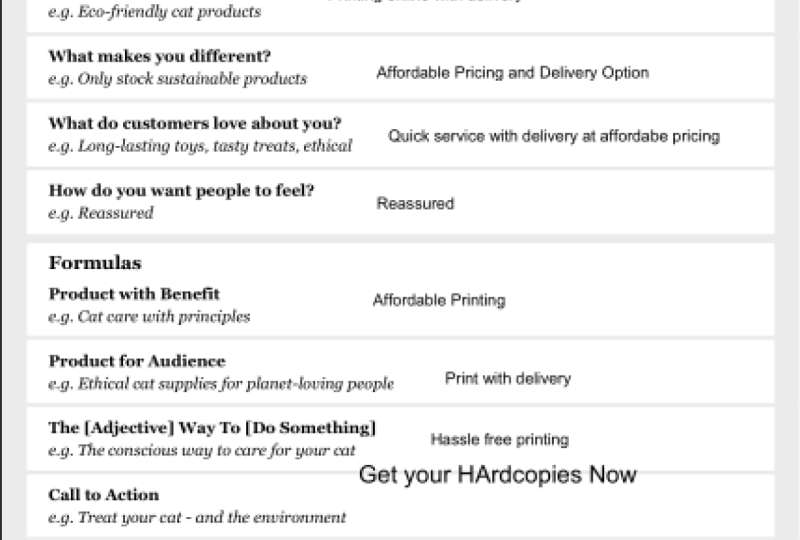
Ethical cat supplies". Before we move on, download this worksheet from
the class resources. You can either fill
it out electronically or print it out and
fill it in by hand. It includes reminders
of the types of tagline, formulas,
and approaches, plus space to record information
about your brand you'll use when working through ideas and space for the
ideas themselves. In the next lesson, we'll
gather the raw materials you'll need to start
shaping your own tagline.
3. Gather Your Ideas: Before we jump into writing, we're going to gather
some raw materials. Think of this step like prepping ingredients before you cook. It makes the actual writing
easier and faster and helps your tagline feel more grounded in what your
brand is really about. You don't need to write
full sentences here. Jot down a few words or phrases in response to
each of these prompts. First, what do you offer? Try to sum it up in
a few simple words. For example, "Coaching
for freelancers", "Handmade ceramics",
"Digital marketing advice". Green Cat might sum up their offering as "Eco-
friendly cat products". Next, what makes you different? Is it your approach, your
values, your tone of voice? Maybe you're especially
playful or unusually thorough or focused on
accessibility or sustainability. Green Cat's USP is
that they only stock sustainable products that are kind to animals and the planet. You might find that some
of your answers overlap, and that's absolutely fine. For example, what
you offer and what makes you different
might be closely linked. That's actually a good sign your brand is
cohesive and clear. Don't worry too
much about getting everything in the right box. The point is to get your
ideas down on paper. If you're struggling to
come up with answers, think about conversations
you've had with customers, clients, or even friends when you've tried to
describe your work. What words did they use? What questions did they ask? What were they most excited by? Sometimes it's
easier to reflect on real interactions than to try and sum it all
up from scratch. Speaking of which, what
do your customers or clients love most about
working with you? If you've had feedback, this
is a great place to use it. Are they always
saying you're easy to talk to or that you explain things clearly or that your designs are
beautiful and practical? Green Cat's customers,
for example, say that their toys last longer, their treats are tastier, and that they appreciate
being able to shop ethically without
compromising on fun. Finally, how do
you want people to feel when they see or
hear your brand name? Safe, excited,
inspired, understood? Green Cat want their
customers to feel reassured, like they've made a smart
and ethical shopping choice. This step doesn't need to
be polished or perfect. The goal isn't to come up
with your tagline yet, just to give yourself a pool of words and themes
to work with. It's much easier to
shape a great line when you've already gathered a
few sparks to start from. In the next lesson, I'll share
five simple formulas you can use to start
putting your ideas together and shaping
your tag line.
4. Formulas: Now that you've gathered
some raw materials, it's time to start
putting them together. In this lesson, I'll show you five simple tagline formulas you can use to create
your one liner. You don't have to
follow them exactly. They're here to
give you a place to start and something to build on. First up is "Product
with benefit". This formula puts what you offer and its key
strength side by side. It's clear, punchy, and modern, great for brands that want to keep things simple but strong. A real life example is "Skin care with integrity" from Face Theory. It works well because it tells you what
they sell and what they stand for in just
three short words. The tone matches their
clean no fuss branding. Green Cat could use this formula with something like "Cat care with principles" or "Cat
supplies with a conscience". Next is "Product for audience". This one spells out what
you offer and who it's for. So it's a solid option if you're targeting a specific
niche or community. Studio Cotton use this formula with a bit of quirky charm" "Utterly splendid websites for independent brands and podcasts". It works because it's both
clear and characterful. Their audience knows
exactly what they offer and gets a taste of
their personality, too. Green Cat might try
"Ethical cat supplies for planet-loving people" or "Sustainable shopping
for spoiled cats". Third, is "The adjective
way to do something". This formula highlights how your brand does
something differently, which is helpful if your process or approach is part
of your appeal. A good example is Go Cardless with "The
easy way to get paid". It works because it
focuses on simplicity, something their business
customers care about a lot. Green Cat could use
this approach with something like "The
conscious way to care for your cat" or "The sustainable
way to treat your feline". Next up is the "Call to action". This formula invites your
audience to do something. It's a good fit for mission-
led brands or anyone who wants to create a sense
of energy and shared purpose. Too Good to Go use it with "Save good food from
going to waste". It works because
it's motivating, positive and clearly reflects
their reason for existing. Green Cat could say
"Treat your cat and the environment" or "Shop
kind for your feline". Last is "Contrast or surprise". This one works by putting two
unexpected ideas together, which helps your tagline stand out and stick
in people's minds. Ikea's tagline, "The wonderful everyday"
is a great example. It works because it
combines the ordinary with the delightful and neat way to express their goal of
making daily life better. For Green Cat, we could
try "Spoil your cat, save the planet" or "Low
waste, high zoomies". Play around with your raw
materials from the last lesson. Try mixing and matching different words and phrases
to see what feels good. Don't worry about
getting it perfect. This is about experimenting. Write down a few different
versions of your tagline. You might end up
combining bits of different ones to
create your final line. For example, Green
Cat might want to add Cat care for planet-loving
people" to their shortlist. In the next lesson, we'll
test and tweak your favourite, to see if it's doing the
job you want it to do.
5. Test and Choose: By now, you should have a few tagline options written down. In this lesson,
we'll test and tweak your favourites to make sure they're working hard
for your brand, and finally, choose
your finished tagline. Here are five quick
questions to help you test each of the taglines
on your short list. First, is it short and simple? Ideally, five or
six words or fewer. You want something
that's easy to read, easy to say, and
easy to remember. Dunelm, the UK homeware brand, uses the tagline
"The home of homes". I love this because it's short, catchy and includes
the keyword "home" twice in just four words. Second, does it sound
like you? Read it aloud. Does it match your
tone of voice? If your brand is
warm and friendly, does the tagline
feel that way, too? If your brand is more
polished and professional, does the language reflect that? Imagine if McDonald's
tagline wasn't "I'm lovin' it" but
"I am loving it". The meaning is the
same, but dropping the contractions makes it
feel formal and awkward, not a good fit for a
casual fast food brand. Speaking of which,
a tagline that trips nicely off the tongue
is a beautiful thing. Take Bounty kitchen roll's
"The quicker picker upper". It tells you the benefit
of the product while also being fun to say which makes
it stick in your mind. Fourth, is it clear? Would someone seeing
it for the first time understand what kind
of thing you offer or at least be curious
enough to find out more? Disneyland's tagline, "The
happiest place on Earth", gives you a strong sense
of what to expect, and it's intriguing enough
to encourage a closer look. And finally, will
your ideal customer or client feel something
when they read it? Even if it's subtle,
does it make them smile, feel reassured or want to click? Think about "Because
you're worth it", L'Oreal Paris's famous tagline. It's designed to
spark a feeling of pride and empowerment while also encouraging people to treat themselves by spending
money on L'Oreal's products. Now it's decision time.
Choose your final tagline. Pick the version that
feels the most you. The one that sums up
what you offer in a way that's simple,
true, and memorable. My favourite tagline
for Green Cat is "Spoil your cat,
save the planet". It ticks all the boxes. It's short and simple, on brand, memorable,
clear, and evocative, while capturing
the twin benefits of indulgence and
sustainability. Once you've chosen
your favourite tagline, play around with how it looks. Lower or uppercase?
And or ampersand? For Green Cat, I'm changing
the comma to a full stop. "Spoil your cat. Save the planet." It gives it a cleaner,
more modern feel. Remember, this isn't permanent. Taglines evolve over time,
just like your brand. Airbnb is a great example. Their brand has changed a
lot since they were founded, and their tagline
has shifted with it, from the punchy
"Forget hotels" to the more descriptive
"Book rooms with locals rather than hotels"
to the more esoteric, "Travel like a human" and eventually back to punchy
again with "Belong anywhere". Your brand will evolve, too, so don't be afraid to tweak your tagline to keep it in sync. In the next and final lesson, I'll invite you to start
sharing your tag line with the world and suggest
a few next steps.
6. Next Steps: Thank you for taking
this class with me. I hope you've enjoyed it. You now have a clear,
memorable tagline that reflects your brand
and helps you connect with your
audience at a glance. That's a powerful thing to
have in your back pocket. Your next step is to share
it and start using it. Post your tagline
as a class project. I'd love to see what
you've come up with. You can also let me know
if you'd like any feedback or help choosing between
different versions. You can also start sharing
your tagline with the world. Use it on your website, your business card,
your Instagram bio, your email signature,
anywhere you want to quickly communicate who you
are and what you're about. If you found this class helpful, please take a moment
and leave a review. Your feedback helps me improve
future classes and helps other students find classes that will suit their
learning needs. Now, what would you
like to learn next? If you haven't taken it already, I recommend taking my 15-Minute Mission Statement class next. Your mission statement gives you the foundation of what
your brand stands for. And when you pair it with the tagline you've created here, you'll have a
complete toolkit to introduce your brand
with confidence. If you want to improve
your copywriting across social media platforms, also check out my Social Media
Copywriting Masterclass. This is my most popular class
on Skillshare for a reason. It's also freshly updated and packed with insights
to help you create standout content across
all social platforms more quickly and easily. Visit my profile page to
see my full collection of Skillshare copywriting
classes and hit "Follow" for updates
on new classes. Thank you again for
joining me today. I can't wait to
read your taglines.
 Ruth Clowes, Professional Copywriter