Transcripts
1. INTRO: Hi guys. [MUSIC] In this course, I will give you tips
on how we can prepare our voice for a lot
of online speaking, speaking that we were forced to do more and more in the
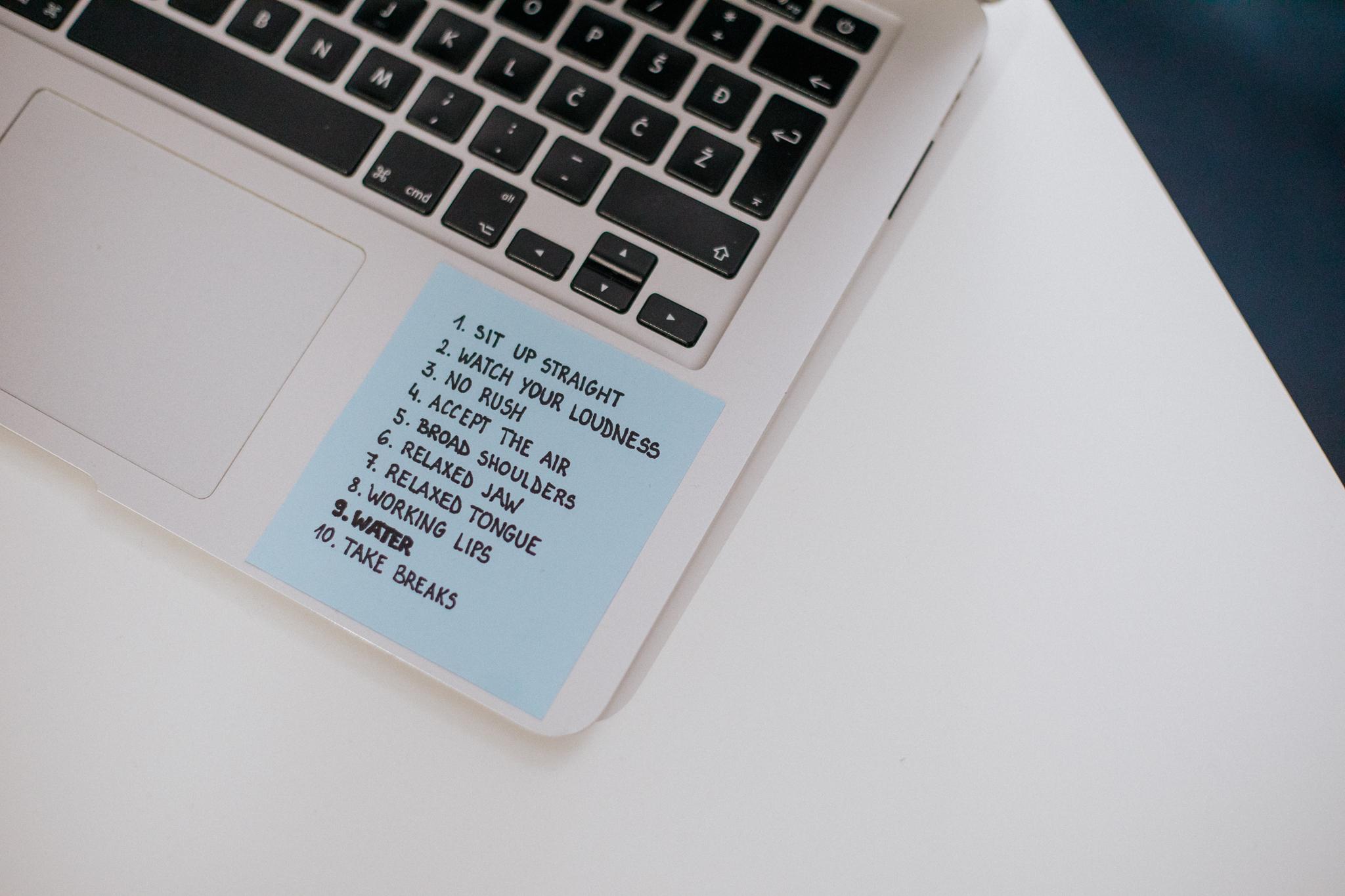
last couple of years. We'll, together, create
a small piece of paper that we'll
be able to put on our computer and that
will remind us on how we can use our voice
in a more efficient way. I'm Natasha. I'm a
doctor of medicine who decided not to work as a doctor
and teach voice instead. For the past 17 years, I've been working as a
vocal coach with singers, speakers, teachers,
and also with a lot of people who would just like to explore and develop their voice. Two years ago, when because of the quarantine all of my
teachings went online, was the first time
in my career that I started to face vocal problems. I started thinking,
"What am I doing wrong? What am I doing differently compared to when I
taught in person?" I found out that when
I was teaching online, I was way louder, I was speaking with
more energy and faster, almost like I wanted to push my voice and energy through
the computer to people. I started researching
how to take better care of my voice
when I speak online. Over this course, I will share the most important tips
that I found with you. Welcome to How to Prepare Our Voice for Online
Meetings and Calls. If you have any
questions and comments, please feel free to ask, and, see, see you in the classroom. [MUSIC]
2. SIT UP STRAIGHT: [MUSIC] Tip number 1, sit up straight, instrument for our voices
are our whole body. Everything in our
body is connected so every excessive tension in your body can affect our voice. Vocal cords are in our neck, so also our neck position
affects our voice. You hear my voice now and
you hear my voice now. When we are on the telephone, when we are on our computers, a lot of time our neck is not in a really balanced position. We're having our neck
like this or like this. Now you can see on the
picture [LAUGHTER] how most people sit
behind our computers. Do you find yourself in this? When I started to teach online, I didn't even realize that most of the time I was like this, like almost I was trying to push myself through the
computers to my students. So it really helped
me when I wrote down like sit up straight and I
also wrote out lean back. They can see you. They can see me from like
this and this is really healthy for my body posture
and also for my voice. I will give you three exercises
that you can do that will help to put your head and your
neck in a better position. First one, pull your hair up. You can just imagine
that somebody is pulling your hair
or your head like a string up and your head will
go in a better position. Then the second one
is tuck your chin in. Then the third one is, put your head left and right. Try to imagine that
your hair is on a ball and it moves freely. So not like this, this is tight. But like this and this is
really great because we relax our neck and we relax our vocal cords
and our voice can really work at its optimum. You can also do this three
exercises in your head. When you're in the middle of the lecture and you
start to feel tense, just think about
tucking my chin in, pulling my head up, and relaxing my neck. So this will not only
be good for your voice, but also for your body posture. Let's write this down. Number 1, seat up
straight [MUSIC]
3. WATCH YOUR LOUDNESS: [MUSIC] Tip number 2,
watch your loudness. They can hear you. That's
what I wrote on my computer. Watch your loudness
they can hear you because our ears get used to the certain
loudness that we use. If I start to speak
loud then my ears in time they feel that
this is a normal loudness. But if I would record myself, I would see that
I'm almost yelling. That specially started to
happen when I was teaching online because I felt that I need to really give
energy to people, that I need to be
exciting for them. That's why I was really loud. When I started to take care of my loudness
and started to be less loud then my voice felt way better after
a long day of talking. That's not only my story, also in my Academy of voice, we have seven other teachers and they all said the same that when they're teaching online,
they're really yelling. I remember one time I came to my waiting room
and Christian, this is one of our teachers he was really
loud, like yelling. I was like what is he doing? Yelling on the students
but in a nice way, in a good energy way. I opened the doors and he was just having an online lesson. I was like, "Hey,
what are you doing?" Then he lowered loudness. It's almost like we don't even
know that we're too loud. I sometimes say to my students, just record yourself or do this. Try to put your hands
like this and talk 1, 2, 3, 4, 5. Now you will really
hear yourself that if you're going
to be too loud, it's going to hurt your
ears a little bit. This is a cool exercise
that you can do to put your voice in a little better
like a normal loudness. Especially we do this loud thing if we're excited about a topic. One thing that really helped
me the most [NOISE] besides this was having microphone
and headphones. If you speak a lot and if
you have a lot of meetings, then this is the best thing because it will
constantly remind you. It's almost like you would have your hands all the
time like this. It will constantly remind you
if you're going to get too loud and so you're
going to get less loud. Let's write down, watch your loudness. [MUSIC]
They can hear you.
4. NO RUSH, PAUSE, LISTEN: [MUSIC] Tip number 3, no rush, pause, listen. A lot of times we're
speaking too fast, trying to tell a lot of things in a shorter
amount of time, especially if you're
an excited teacher or excited type of person and you really want to put all your passion to people and then you were
talking really fast. This one was really
big one for me. I found this out when I one time recorded my online
workshop and I was like, Oh my God, I'm really
talking too fast. I don't even know how
people understand me. But it was almost
like I felt that I need to be really exciting for people and that they're going to get bored if there's going to be a small second of
pauses and silence. I've found out later that
pause and silence is actually really good because it allows people to think what
we're talking about. It allows them to think
and then to ask questions. This one, I also started to teach myself how
to listen more, so how to listen when somebody
else was talking to me, how to wait until they're done, and then wait for a
couple of seconds of silence and then
I start to talk. Especially if we don't wait, like in an online
environment when we have online meetings
with more people, that what happens is that we
are talking over each other. Two years ago I started to work with one of the
Slovenian theaters, I started to have online
workshop for all the actress. We had like 90 minutes with women and 90 minutes with men, so it was like altogether
three hours of talking. I can't explain you how my voice was
exhausted after that. I was like, Oh my
God, I can't even do anything more because it was
three hours of me talking, [NOISE] and that's why this was really
big one for me and I put it on my computer, I wrote down, just that one, no rush, pause, listen. I can't even tell you
how much that helped me. Every time I started to rush, I just saw this, I
was just like, okay. My intention is that I give them my knowledge and I don't
need to rush for that. It's not that I lost my energy and my happiness or whatever, it's that I just started
to be more easy, and that was really
amazing for my voice. If this one is big one for you, then write this one in a
little bigger letters. If not, then just write it down in a normal
letters. Let us do it. Number 3, no rush, pause, listen [MUSIC].
5. ACCEPT THE AIR: [MUSIC] Tip number 4, breathing in, accept the air. Why is breathing
important for our voice? Because with inhale, we put our vocal instrument
to a certain place. If I breath in like this, then my voice sounds like this. If I breath in like this, then my voice sounds like this. See I put my vocal cords
on a certain spot, depending on the way I inhale. Exhale is important
because exhale actually starts the
vibration of a vocal cords. Exhale actually
creates our voice. It starts with
vibration [NOISE] and our vocal cords create voice. The tip about breathing
that I found important for us at this moment
is accept the air. Inhale should be just letting
our body to accept the air. What I mean here, if
I say to my students, "Breath in," they do this
[NOISE] like really a lot. When I say to them,
"Just accept the air." It's almost like breath
in is not the right word, it should be accept the air. [NOISE] Because then we just let our body to do its thing
and we are relaxed. Before we do an
exercise together, let us talk about
do we breath in through our nose or our mouth. Our nose is actually
designed for breathing. When we do any activities
besides talking and singing, it's really good that you're
breathing through your nose. But when we talk
or when we sing, it's completely okay if we also breath in
through our mouths. We're going to breath in now through our
mouth and we're just going to try to sit up straight, relax, and just let our
body accept the air. To feel this is really great, it puts oxygen in
the right lungs. Not only this will be
great for your voice because it will put your vocal
cords on the right spot, this will also be great for
relaxing you through the day. Especially after talking
for a long time, what I found with myself is like my breath was getting shallowy. It was almost like, here, here, here almost like I'm
waiting until the end and my breath is here
and when I had it written down like accept
the air, I remember it. Relax, accept the air, pause, and no rush and talk. This goes together
with the tips before. Let's write down breathing is
[MUSIC] accepting the air.
6. BROAD SHOULDERS: [MUSIC] Tip Number
5, broad shoulders. The way we have our shoulders
affects our inhale. If my shoulders are like this, then I can't really
accept the air, my inhale is very shallow. It also affects our exhale. That's why it affects our voice and our neck muscles
get tense with this. That's why our shoulders
really affect our voice. We want to have broad shoulders. Not only that this will
be better for our voice, this will also give us a way more confident look and also a way more
confident vocal color. I think there is
also a phrase where you guys in English say he
is broad shouldered enough. That means that he or she is capable of doing
certain kind of things. So this is really good then. When we're under stress
or we're afraid, or we're on the stage and
we have stage fright, most of us do this,
or hide ourselves. Now I will give
you a really cool, just like a short exercise
to relax our shoulders. We're going to roll
our shoulders. Then we're going to massage
our pectoral muscle. You'll see it on the picture. We're a going to try
to make it longer. Now look at my left shoulder. We're going to try
to make this muscle longer and pull our
shoulders back. Do you see this one compared
to this one? It's different. So let's do it on
the other side. Try to make it longer. I'll see I look way more open, way more confident and this is really good also for my voice. They say that shoulders should
be like clothes hangers. See it's a resemblance. We want to keep it like this
all the time, when we talk, when we inhale because we
don't want to do this. Now, they're not like
clothes hangers, right want to leave
it like this. Great. Write down
broad shoulders and try to keep it in your
mind when you speak online. [MUSIC]
7. RELAXED JAW: [MUSIC] Tip number
6, relaxed jaw. Appreciation consists of jaw, tongue and lips movement. That's why the way
we have our jaws, if it's tense it can
really affect our voice. Everything here is connected. If my jaw gets tensed
and my voice get tense, and if I'm talking like
this all day long then my voice can get tired faster. Look at this picture.
You will see a muscle. This is called masseter muscle. Put your hands here
and just do a bite. Could you feel this muscle? We'll try to relax this one, and if we're going to
have this one relaxed, then our voice will
be able to be free. This muscle gets tense a lot
of times when we're angry, when we're fear we do
something like this, or this muscle is tense
because it's just our habit. Certain cultures have this
muscle more tense than other, like Slovenian
language, for example. Most people here in Slovenia
are talking like this. We have a really
closed up language and we all have this
muscle a little tense. Most of the time when
students come to my lesson, a first couple of lesson
we're just trying to feel this relaxing
feeling in this muscle. What we're going to do,
we're going to put our hands here and we're just going
to massage this muscle. Try to make it longer. It feels really great. This will not only help
your speaking voice, it will also help
you accept the air, because if your
jaws are like this, then you can't really
accept the air. Great. Do you feel
this relaxing feeling? Now, we're just going to try to relax our jaw in our minds. What we can do in the middle of online meetings, we can do this. But we can just think about jaw. I'm relaxing it, I
feel better now. It's just like starting to fuel your body, what's going on. A lot of times when we
speak for a long time, we're getting tenser and tenser and we're getting more and
more tension in this part. Just think about it, relaxing, and this will
help your voice a lot. Let's write this
down. Relaxed jaw. [MUSIC]
8. RELAXED TONGUE: [MUSIC] Tip number
7, relaxed tongue. Why tongue is important
for our voice? Because it's really close
to our vocal cords. Look at this picture
now and you will see that the back
of our tongue is really close to our larynx
and to our vocal cords. That's why when the back
of our tongue is tense, our voice gets tense and if we talk like
this all day long, then our voice
gets tired faster. Also, why tongue
is important for our speaking is because
the tongue is actually the muscles that allows us to speak vowels and
some consonants. Without tongue, we
wouldn't be able to speak. Tongue is a conglomeration
of eight muscles, so it's not just one muscle. One cool thing about tongue is the only muscle in our body
that can actually move in all of the directions
without bones and ligaments, which is awesome. For this course,
we're going to try to relax the back of our tongue and we're
going to do it like this. We're going to put our
tongue down and we're going to touch with it the
back of our lower teeth, and then we're going to
push it forward like this. Really push it hard
[NOISE] so that you will feel the back of your
tongue to get relaxed. Let's do it again [NOISE]. If you would do
this like 10 times, you will really feel like this relaxation in the
back of your mouth. We'll do another thing, we're going to roll our
tongue around [NOISE]. The other way [NOISE]. This is a really
cool way to warm up your voice before
you do the speaking, so you can do it in the car
before you're in the job. With this one, you will
relax your back of your tongue and
you will also put the energy in the front
of your tongue because we need our tongue to be
intensive and moving. We don't want it to be relaxed, we just want the back of
our tongue to be relaxed. You're going to put on the
paper, relaxed tongue. When you see this on a paper, you will just try to relax
it in your mind again. Just try to think of it and try to get that feeling that you
got after that exercise. If you're going to do this
more often through the day, then the habit of tension
in your tongue will slowly be replaced with a habit of
relaxation in your tongue. Let's write this down. [MUSIC] Relaxed tongue [NOISE] [MUSIC].
9. WORKING LIPS: [MUSIC] Tip number
8, working lips. Lips are really important
for our pronunciation, they are actually the last one to shape the color of our voice. If I speak like this, my sound sounds different
than if I speak like this. For a healthy speaking, we want our lips to move. Sure, not too much, but also not too little. If our lips are
not moving enough, then it's easier for
us to tense our neck, and with that, we're
at tensing our voice. Let's do this one together. Put your hand over your
neck and try to tense your neck. Do you
feel that tension? Now, put your lips forward like this and
try to tense your neck. It's impossible, right? That means that if
we're going to have enough energy on our lips, then it's going to be
harder for us to tense our neck and our voice will stay healthier and
in a better shape. Go in front of the mirror and
look at yourself when you speak and just try to think to yourself if your lips
are moving enough. If they're not moving enough, then this will really help you when you're going
to have it written down and I will remind you on using your lips
a little more. If you feel that you
move your lips enough, then you can write
down this steep were a little smaller letters. I will also give you two
exercise that you can use to train your
lips to move more. First one is this one. [NOISE] With this one, I have relaxed neck
and I have my voice, and I also have
energy on my lips. [NOISE] This is also a really cool exercise
to just warm up your voice before you go
speaking all day long. You can go up and down. Because also your voice
is not only on one note, but it goes a
little up and down. You want it to go up and down because then your voice
is more like exciting. The second exercise
is we're going to put our finger
between our teeth. Then you are going
to talk like this, hey, how are you? I hope you are
enjoying my class. If you're going to talk
like this for five minutes, you're going to feel
all the muscles, you're going to feel the
muscles in your cheeks and your lips is going
to hurt a little. That means that they're working. So you're going to
start to teach yourself how to use your lips more
and in a better way. So this is a really
great exercise. If this one is big for you, write it out in big
letters, working lips. [MUSIC]
10. WATER: [MUSIC] Tip number 9, drink plenty of water. Why? Do you know
that when you talk, your vocal cords clap, or vibrate around 200
times per second. That means that are
around 200 times per second, they do this. [NOISE] Can you imagine
how many times they clap, if you talk 10 minutes
straight, it's crazy. That's why our vocal
cords shouldn't be dry. If they're dry and they're
clapping that fast, they're way more
prone to injury, or we are vocally
tired way faster. How water gets to
our vocal cords? Water first needs to
get to our stomach, then it goes to our vessels, and then it slowly goes
into our vocal cords. Water doesn't go straight
to our vocal cords, it needs to go in our vessels, and slowly to our vocal cords. We need to be hydrated. We need to have all
body hydrated to get water into our vocal cords. For that, we need at least two point five liters of water, a day, if you don't do sport, or if you don't sweat a lot. If you do sport or sweat a lot, then you need more
liters of water. We're going to put this tip down in a little bigger letters, because we really
want to be reminded on this one more often. Let's do this.
[MUSIC] Drink water.
11. TAKE BREAKS: [MUSIC] Tip Number
10, take breaks. Vocal cords are like
any kind of muscle. They need to rest after work. I would say that after
45 minutes of talking, we would need a short break. But from my story, when my voice got really tired at the beginning of the quarantine when I started
to face vocal problems, I got myself a speech therapist. She gave me a questionnaire on how I spend my days
using my voice. You know what I found out? That I don't really take breaks. Even I'm speaking like 45
minutes or teaching and then I have 10 minutes of break but I'm not using it
for a vocal break. I'm actually talking on
the phone at that time, talking to my mom,
talking to a colleague, or talking to my kid. I don't even take a break and
then I go teaching again. Then in the break, I again talk to my friends or whatever. I never really took a
break for the whole day from eight in the morning to 10 in the evening hours
talking straight. Then she was like,
''Well, that's really not normal for your voice. It's some muscle,
it needs a break.'' That's why I would say to
you that if you talk a lot, like maybe after 45
minutes or an hour, just take 10 minutes. Ten minutes of quiet time, do other things. Just not talk. Then your vocal cords will regenerate in this time and then you'll be able to talk again. I think we also do
this in life a lot. We're a lot of
times just working, and then when we come home, we're not taking time
for a real rest. We're going straight to, TV, or talking to our friends, or going out with our
partners or whatever and we don't even take time for just being with ourselves. When was the last
time that you were sitting in the room
without your phone, without music just
with yourself, and just letting
your body to rest. If our body's tired, then also our voice is tired. We're together on the
first step of this course, everything in our
body is connected, so not only that, our vocal cords need to rest
between meetings, also, our body needs
rest, enough sleep, and taking time
for you, just you. I would also say that let's
write this down also in big letters because I think that a lot of us need this one. [MUSIC] Yeah, so I came almost to
the end of this class. Our paper is done and now
we can put it on the wall. In the last lesson
I prepared for you, a short vocal warm-up
that you can do daily before you start your
day full of talking. It's like jogging before
sport. See you there.
12. TRAINING: [MUSIC] Welcome to the
short morning routine. First, we're going
to move our head just three times in one
side and the other. Now we're going to massage our neck muscles
from up to down. First on one side and then on the other side. Now we're going to
relax our shoulders. Let's put shoulders up and down. [NOISE] Up and down and the last one up and down. Now let's roll our shoulders three times back and
three times forward. Now let's massage
our pectoral muscle, try to make it longer. Let's make our shoulders
broad and on the other side. Now we move our attention to
our jaw and we're going to massage this muscle here. We're going to try to make
it longer, three more times. Now relax the back
of our tongue. Push your tongue forward and now let's roll
our tongue five times in one side and five
times in the other direction. Great. Now we're going
to do a lip bubble. [NOISE] Try to make one long note. [NOISE] This will start your lips to move. Now let's go up and down. [NOISE] We're going to end this
routine with humming. Humming is really
healthy for our voice. It puts our voice to the
great position for speaking and also it has so many
good affects to our body. It releases happy
hormones and it strengthens our
immune system and it has so many other effects. Let's do just a normal hum. [NOISE] Do it on your note. It could be lower
[NOISE] or higher [NOISE] and then play with your voice up and down. [NOISE] Great. This is a short morning routine. [MUSIC] It's going help
your voice to warm up and it's going to prepare you for a long day of speaking.
 Natasa Nahtigal, Vocal Coach & Doctor of medicine