Transcripts
1. Welcome: The key for taking your
content creation from a hobby to a business
is being consistent. It's easy to say
post consistently, but how exactly do you do that? That's what we're
going to cover today. Hey, I'm Katie Sekley, a content creator and
entrepreneur that teaches other creators how to turn social media into their career. I've always loved creating, and I personally
get so much joy and satisfaction out of making
videos for the Internet. And I feel so grateful that I get to make a
living doing this. And I want to be able to share that with other creators, too. This class dives deep into
the backbone of my business. The habits, systems, and organizational strategies
that helped me generate over $500,000 in revenue through my content creation
business last year. And all you need is
a desire to make content and a willingness to
build a schedule around it. I'm going to show
you how to go from posting when you feel
like it and seeing little growth to actually having a consistent content schedule that's going to get you results. When you implement
this, you're going to feel proud of your progress, and you're going to actually
see your community grow. The truth is the secret to success as a content
creator isn't about any specific software or fancy camera or
special strategy. It's about making a plan
and sticking to it, even when no one
is watching yet. It's through this commitment and consistency that
you will eventually grow thriving community in a successful business
that's based on it. So, come along, as I teach
you the best methods for consistency that are
actually going to help you grow as a
content creator.
2. What You Need to Know: The beautiful thing
about being consistent as a content creator
is that it doesn't require any fancy software
or specific camera gear. It just requires a
mindset of commitment. The biggest reason why a lot of beginner content
creators struggle with being consistent with their posting is
because unfortunately, they don't see their
content creation as something worth prioritizing. Often, this is due to
impostor syndrome. So to start us off, I just
want to encourage you that your content is something
worth committing to. Whether you want to
start a YouTube channel, grow a community on Instagram
or start posting on TikTok, you can do this. You are totally capable of it. And when you start to
treat this like a job, you'll be one step closer to actually turning it into a job. So, for this class, I want you to pull up your
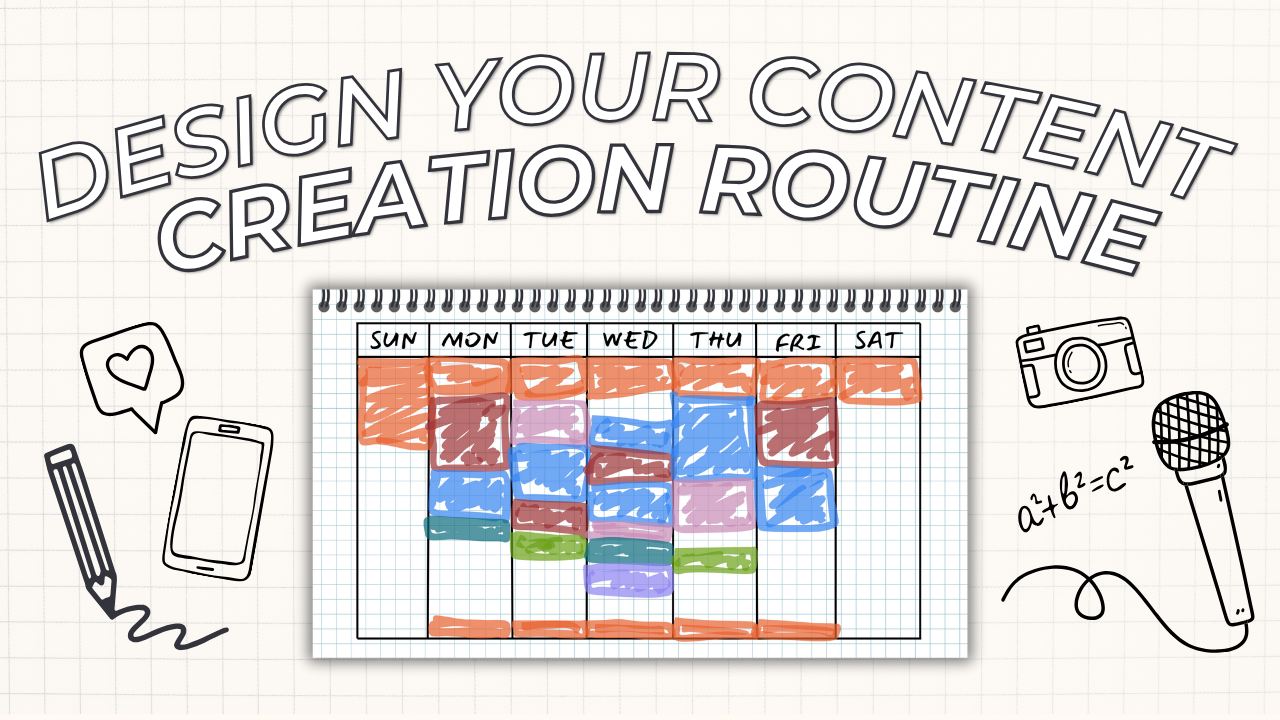
Google calendar, get out a notebook,
and get ready to start thinking about content creation
as your part time job. But, like, a really
fun part time job. So don't stress too
much. Let's dive in.
3. Decide on Your Deliverables : The first step to
posting consistently is actually deciding on what
you're going to be posting. So, let's decide on
your deliverables. First, you got to pick what platform you're going
to be posting on? I recommend beginners start with just one or two
platforms maximum. Often, we feel the pressure to post everywhere all the time. But that's just going to
lead to burnout or at the very least a content
strategy that's spread too thin. Consider choosing just
one evergreen platform such as YouTube, a podcast, or a blog, and one timely platform. Like, Instagram,
TikTok, LinkedIn, or X. This will provide a
good balance between content that's SEO
optimized and we continue to drive traffic
for you and content that's more timely and optimized for
community connection. And trust me, it'll feel a lot less overwhelming if you're
just focused on two. Second, ask yourself, how often do you want
to be posting there? This will, of course,
look different on different platforms. On Instagram, for instance, you might want to commit
to posting three reels per week and one
carousel post per week. Plus a few stories
every other day. On YouTube, it's pretty standard to post
one video per week. And with a podcast, you'll probably want to
post weekly as well. Or you can schedule a
season and intentionally have breaks between posting
series of episodes. As you choose the deliverables
that you're going to be incorporating into
your content calendar, always remember to take
into consideration your current lifestyle and other commitments that
you have going on. One of the biggest factors that leads to creators
burning out and ultimately giving
up on posting is committing to a way to
demanding content schedule. You can always increase
your posting frequency in the future if you feel like you've got it all under control. But it's hard to move through that feeling of
disappointment if you commit to way too much and end up not being able
to deliver on it. For the sake of
our example today, let's say that my
deliverables are going to be one YouTube video per week, and then three Instagram
reels per week Next, we'll dive
into breaking down these deliverables and
developing a routine around all of the separate tasks
required to actually create this content and make sure that it gets
published on time.
4. Breakdown Your Process : The next crucial
step in building your content creation
routine is taking each of those deliverables that
we just decided on and breaking them down
into individual tasks. So we're going to
go through each of the example items that
I mentioned and talk about all of the various steps involved in taking
a YouTube video, for example, from idea to actually published
on your channel. So first, we'll talk
about all the steps involved in creating
a YouTube video, and then all the
steps involved in posting three Instagram
reels per week. And we are going to write down each of those individual steps. So obviously, in order to publish a YouTube
video every week, you need to come
up with an idea. So let's start by adding
that to our list. Next, I'll need to
script the video, actually go ahead and film it. Of course, that I'll
need to edit the video. Every good YouTube
video has a thumb nail. So I'm going to
design the thumbnail. I need to write the description that
will go with my video. And finally, upload and
actually schedule the video. In YouTube studio. So now let's do
that same process, but for my three reels. So obviously, I've got to
come up with three ideas. The next step is
going to be scripting slash planning the
visuals for these reels. Next step, I need
to film or at least gather the clips that I'm
going to use in the reels. And, of course, the
natural next step is to edit the reels. Then I need to write my
captions for each of them. I also like to make specific cover images for my reels so that my feed
looks nice and on brand. And then finally, I need
to schedule those reels, or what I like to
do is upload them as drafts in Instagram so
that I can post them later. Okay, after going through this, you should now have
a complete list of all the individual tasks required to actually get
your content posted. This process might kind of
feel like stating the obvious, but chances are when you sit
down to think about this, you'll realize that
there are actually some steps involved that you might not have been
thinking about. Writing them all
like this helps you to identify exactly
what you need to do on a weekly basis in order to post your
content consistently. And it might even prompt you to reconsider those deliverables
that you decided on if doing this makes
you realize that It's actually maybe more work than you realistically have time for. Overall, this is a
really crucial process because it helps you get
realistic about what your recurring tasks are
going to be when it comes to being consistent with whatever deliverables
you decided on. Now that we know everything
that's required in posting the content that you want to post on a weekly basis, next up, we're going
to address some of the obstacles that you might face in actually
making this happen. This way, we can anticipate
them, prepare for them, and help to mitigate them so that you can keep your
content creation routine, up and running even in less
than ideal circumstances.
5. Identify Obstacles : So let's talk about some of
the things that might come between you and posting
consistently online. That way, we'll be able to schedule around them
and ensure that we craft a content creation routine that's actually compatible
with you and your life. So, our next step is to lay out your typical week on a calendar so that we can figure
out what time blocks are currently unavailable
for content creation. And through this
process of elimination, figure out your ideal times for working on that task list
that we just developed. So obviously, you're going to want to add your
work schedule. But make sure that you add any other life
commitments as well. Like maybe your weekly
workout classes or times that you regularly
hang out with friends. Whatever it might be that
currently fills your life, make sure that you're
realistic about it and you add it all
to your calendar. To be successful
in the long term, it's really important that
you have work life balance. I don't want you to give up all of your hobbies
and social time in order to make room
for content creation in your schedule
because if you do that, you may only last
like two months, and then you'll quickly
be ready to give up on that YouTube channel in
favor of going back to this. Once we have all of our
necessary commitments covered. Next, you want to start to block off any times
that you just know you would dread using for content creation.
Here's the thing. Beginners often get very optimistic about this
and think, Yeah, of course, I'll wake
up at 6:00 A.M. On a Saturday in order to
film my YouTube video. But chances are, this is not something that you can
commit to in the long term. So go ahead and block off those times that you need
for self care or that you just realistically know
you are not going to want to put towards filming
and editing videos. It's so important to
be realistic when you're setting up your
content creation schedule. If you overcommit,
this will just lead to burnout and
probably giving up. Now, in addition to just the general fullness
of your schedule, it's also important
to think about the specific factors that might make content creation
difficult for you. For example, when it comes
to making YouTube videos, it's important to film at
a time when you've got good natural light and when
your surroundings are quiet. So, as a personal
example, for me, I live in a 500 square foot basically studio apartment
with my husband. Also works from home full time, and his job requires a
lot of Zoom meetings. So something that I
take into account with my own content
creation schedule is when he tends to have
the most meetings. Because obviously, if he's
over there talking on Zoom, I can't be sitting
here recording a video 'cause you'll hear him
talking in the background. Therefore, I'm going to go
ahead and block off times on my schedule when I know that he tends to have the
most Zoom meetings. So think about what that
might look like for you. Maybe there's a certain
time of day when your dog is always really
restless and barking a lot. Or there's times maybe
when your kids are busting in the door on
their way home from school, and there's a lot of
chatter in your house. Or if you live on a
busy street, like I do, there's times of
day when there's more traffic and therefore
more traffic noise. Try to avoid these
times if you can, because it'll just
make content creation feel so much easier for you. So consider all of these
things that might not really impact you in
your, day to day living. Like, I don't notice
the traffic noise outside unless I'm
actually filming. So think about all
those small details and consider them when you're
building out your schedule. Now, all the space that is left on your calendar
after this process should be fair game
for scheduling in those content creation tasks that we were just talking about. So, with this in hand
in our next lesson, we're going to finally build out your content creation routine.
6. Lock Down Your Schedule : So now that we know
what you want to post, what tasks are required
in posting that stuff, and what your weekly
schedule looks like, we can put it all
together and build out your own custom content
creation routine. So first, we're going to
want to label each of those tasks that we identified
with a time estimate. How long do you think each of these individual tasks
are going to take you? It's important to figure
this out so that we can put down the correct length of
time block in our calendar. So, for creating
a YouTube video, I think brainstorming an idea will probably take about 1 hour. Scripting will probably
take 1 hour as well. Filming probably 1.5 hours. Editing, including all
of the post production, like doing the thumbnail and
writing the description. All of that usually
takes me about 5 hours. Now, of course, for big tasks
like filming and editing, you can break these down
as much as you'd like. I know, for me, I personally love being in the
creative flow of editing something from start to finish all in one session. So that's why I've blocked it together as one, five hour day. But if you know that's not going to fit into your schedule, you can break that down
into smaller chunks. It's really going to depend on your personal availability
and preference. Now, let's talk about the
reals creative process. Coming up with ideas and scripting can happen at
the same time for me, and I think that'll
probably take about 1 hour. Filming or gathering clips will take another hour and editing, again, including all
the post production, like writing captions and
creating cover images. I think will take about 3 hours. Now that I have this sorted out, let's take our list of
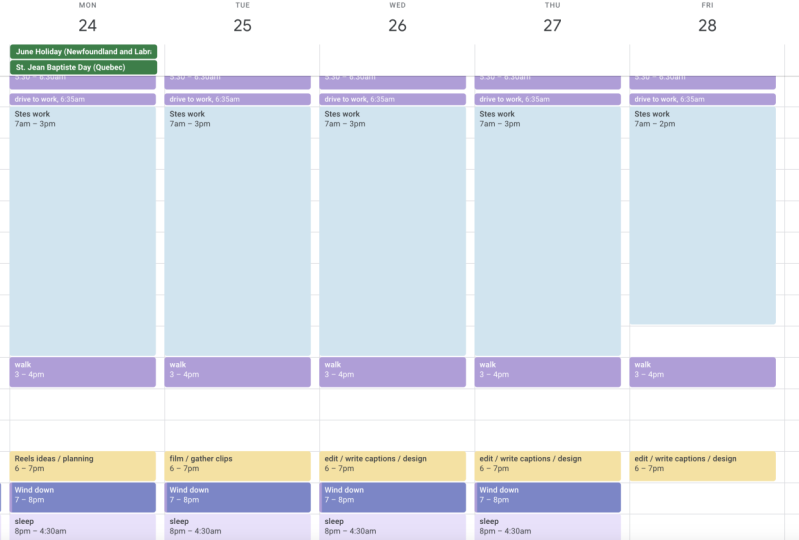
tasks and go through our calendar and start slotting these in where we have time. So, let's add 1 hour for YouTube brainstorming to my calendar on
Tuesday afternoon. 1 hour for scripting the
video on Wednesday morning. I'm going to put 1.5 hours down on Friday morning for filming. And then wrapping around
to the next week, I'm going to put a big chunk of 5 hours of editing and
post production on Monday. Next, we'll fill
in the blanks with our remaining reels
content creation tasks. Idas in scripting can
happen on Tuesday morning. Filming or collecting clips. I'll add that to my calendar
on Wednesday afternoon. And finally, we'll
slot the 3 hours of editing in on
Thursday afternoon. Once you have your weekly
routine sketched out, I highly recommend putting this into something like
a Google calendar. Where you can add
event notifications to each time block so that you don't forget to do your task at the time
that you plan to. And obviously, this
is just an example. Everyone's schedule is
going to look different. This is just what mine
looks like based on my existing commitments
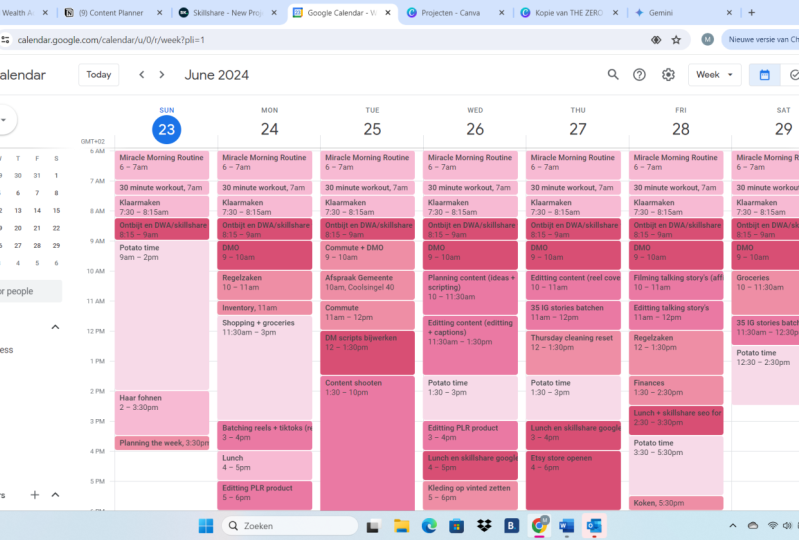
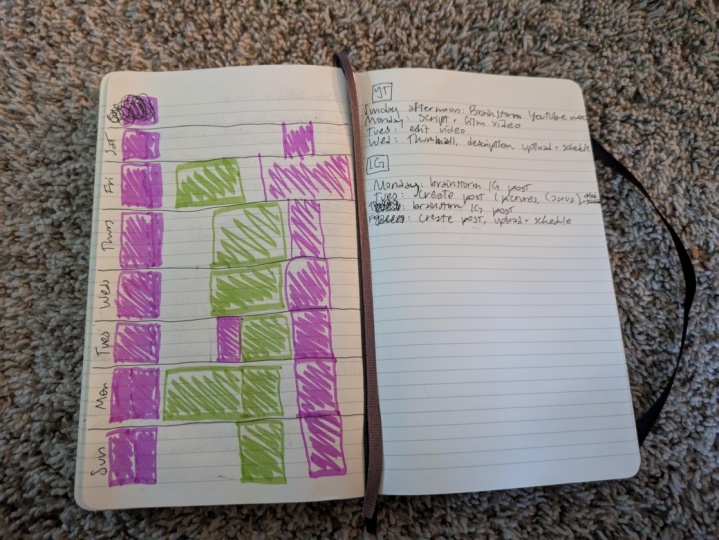
and my life circumstances. But I would love to see what
your schedule looks like. Once you build it out
on Google calendar or even on paper like this, feel free to take a photo or a screenshot and upload it to
the class project section. This will also serve
as inspiration for fellow learners who are looking for examples of what different content creation
routines can look like. I can't wait to check yours out.
7. Final Thoughts : Thank you so much for joining me for my skill share class. It's been an absolute
pleasure sharing my nerdy love for scheduling
and organization with you. And I really hope that
it's been helpful for you in formulating your own
content creation routine. And, of course, congrats to making it to the
end of this class. The most important thing
to remember is that everyone's processes are
going to look different. And you need to design
yours to fit your own life. That is truly the key to
finding consistency with content creation and
eventually seeing real growth. It really needs to be unique and customized to you for it
to work in the long term. And once again,
remember to leave a photo or a screenshot of your new content
creation schedule in the project gallery below so we can all take a look
and get inspired. Thanks again for watching. Bye.
 Katie Steckly, Content Creator & Entrepreneur