Transcription
1. Bienvenue : ): Bonjour. Vous êtes un niveau de café ? La première chose, c'est que j'ai besoin tous les matins de
café et de mon livre. Et en tant qu'amateur de café, j'ai le plaisir de vous
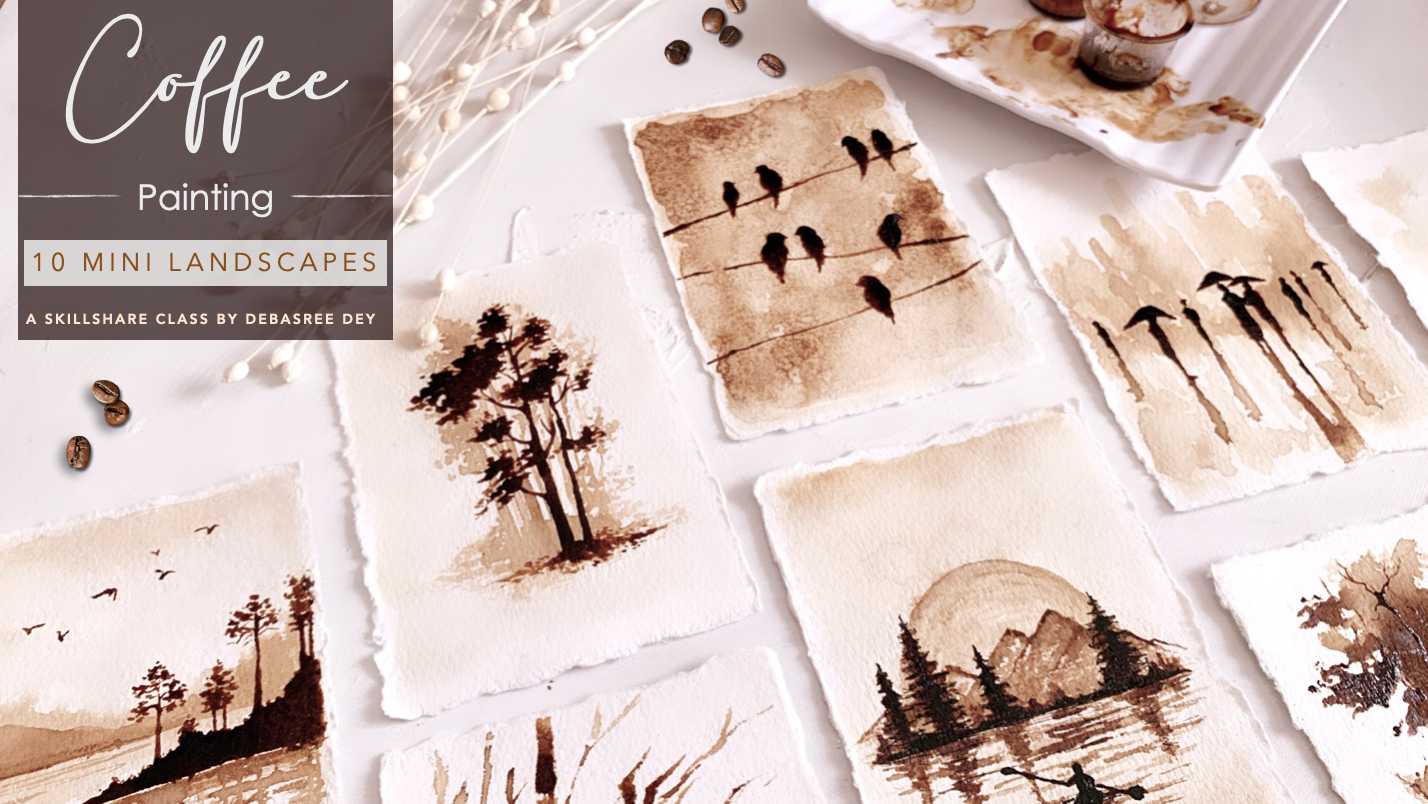
accueillir dans ce cours. Je vais vous apprendre à peindre dix mini
paysages avec du café. Tout ce dont vous avez besoin, c'est un
papier et quelques pinceaux, et bien sûr,
du café. Je suppose que vous
voulez copier cela, mais si ce n'est pas seulement un petit sachet de poudre de café
instantané
et vous êtes prêt à partir. J'ai commencé à faire de la peinture
au
café pendant le confinement de 2020, alors la plupart des gens étaient coincés à maison sans avoir accès
à des matériaux de peinture. Pour qu'ils puissent créer la
magnifique Ottawa, excusez-moi, il suffit de copier. peinture au café a les effets des aquarelles et vous pouvez varier les feuilles simplement en
mélangeant différentes
proportions d'arrosage. Cela ne nous affecte pas beaucoup, contrairement à l'aquarelle ou à l'
acrylique en
ce sens qu'il a créé un
éclat incroyable dans vos peintures. Il suffit d'ajouter une semaine concentrée
de peinture au café. Bonjour, je m'appelle Deepa Street et je suis un artiste
espacé en Inde. J'enseigne l'art
professionnellement depuis 2016 et j'ai enseigné près de 10 000 personnes
dans le cadre d'ateliers physiques. Et j'ai parlé à plus de
20 000 personnes dans le monde entier dans le cadre de
mes cours en ligne. J'ai travaillé en tant que
professionnel de l'informatique pendant plus d'une décennie. Enfin, j'ai décidé de quitter mon emploi en entreprise pour
devenir artiste à temps plein, poursuivre mon intérêt pour l'art et éduquer les autres sur l'art. Si vous voulez en savoir
plus sur moi, visitez mon site Web, le bus rebate.com ou
connectez-vous avec moi sur Instagram. J'ai divisé ce
cours à dix jours. Chaque jour. En passant de
10 à 15 minutes, vous pourrez créer
dix magnifiques paysages. Ou vous pouvez simplement en voir deux et en
créer dix à la fois. C'est à vous de choisir. Je vais commencer par vous apprendre comment créer une bonne peinture pour café. En altitude, les bases des techniques de peinture au
café, l'aide desquelles vous pourrez
peindre, tout ce que vous voulez. Après cela, nous apprendrons à
créer dix mini-paysages. Et enfin, je vais
vous apprendre à préserver toutes vos
peintures de café et à en créer un magnifique
livret de café. J'espère donc que vous êtes ravi de joindre à
moi
dans cette classe. Et je suis tellement excité
de vous voir perspicace.
2. Fournitures de peinture à café: Bonjour. Dans cette vidéo, je vais vous raconter
toutes les fournitures artistiques dont
vous avez besoin pour ce beau cours de peinture au
café. D'abord,
vous avez besoin d'un café
instantané en poudre. D'accord ? C'est donc le, ce sont les deux que j'ai
utilisés dans cette classe. C'est de l'or bleu. J'ai acheté ce paquet de 500 grammes parce que je bois beaucoup de café. C'est l'autre,
je les ai pris dans du café. Vous verrez donc que j'ai fait le mélange avec
les deux cafés, mais j'aime beaucoup mieux le vide
bleu que le vrai colombien en ce qui concerne l'
obscurité de la couleur. Mais vous pouvez également entraîner ce
café est simplement bleu, peu importe ce que vous avez
à la maison et essayez si vous obtenez une couleur sombre et
tranquille. Pour être honnête, dans le passé, j'ai essayé le café Liveness et
nous en étions vraiment bien sortis. Mais cette fois, je ne
voulais rien acheter et je voulais
simplement utiliser
ce que j'avais à la maison. Et j'ai vraiment aimé
l'ancien. OK. Cela signifie donc que
vous avez besoin de contenants comme celui-ci pour créer la couleur du
café et la stocker. Ce sont donc les contenants
que je stocke qui livrés avec la livraison de nourriture, qui sont livrés avec différents types de sources et de
ketchups et autres. Je les stocke donc. Je préfère donc certainement quelque chose avec une couverture
car si vous avez une couverture et que vous gardez la peinture à café
stockée avec du plomb, elle reste telle qu'elle est très longtemps
et elle ne sèche pas. dehors. Vous pouvez donc voir cette couleur. C'est le reste après que j'ai terminé ce cours
et cela fait plusieurs jours et c'est toujours
là et c'est comme pro correctement liquide et
il n'est pas séché. vous
suffit donc de garder le couvercle fermé et la plaque
de rangement pour le ranger
pour mélanger vos couleurs. Ainsi, n'importe quelle assiette est bonne, peu importe ce que vous avez à
la maison et que l'étoile est bonne
à avoir ou vous pouvez utiliser une cuillère pour commencer la peinture au café pendant que
vous la créez. Donc, c'est tout. Ensuite, vous avez besoin d'un papier
aquarelle. Je suggère du
papier aquarelle parce qu'ils ont air vraiment bien lorsque vous peignez sur des
papiers aquarelles comme celui-ci. Mais plus tôt, je l'ai fait sur papier de carnet de croquis
normal et cela a aussi bien fonctionné. Je ne dirais donc pas que c'
est le seul document, mais cela donne vraiment
un très bon effet. Ce sont donc les deux types de papiers
différents, semblaient
en fait un genre de papier. C'est en A6 et c'est en A5. Dans cette classe, j'ai utilisé ces A6 parce que je veux que
vous en créiez un sens. Mais si vous le souhaitez, vous pouvez acheter ces A51 et vous pouvez également
créer des paysages plus grands. Je vais donc les relier tous les deux
ci-dessous. Vous pouvez acheter ce que vous voulez. Et ce sont des papiers absolument
magnifiques. Vous pouvez les utiliser pour peindre pour que
j'
aie cette limite. Ils sont vraiment bons. Donc oui, une sorte de papier et de pinceaux. Donc, pour les pinceaux, je le
recommande. C'est donc un nouveau jeu de
pinceaux que j'ai acheté. Il est livré dans un état
de neuf articles. Ce sont donc les
pinceaux restants. Pour ce cours. Je n'ai utilisé que deux
à trois pinceaux. C'est celui que j'ai utilisé
pour créer l'arrière-plan. C'est un peu
plus épais que vous pouvez le voir, mais vous obtenez
également cette taille dans cet ensemble. Si vous n'avez pas de pinceaux que je dois acheter, je vous recommande d'acheter
cet ensemble de pinceaux, qui est très peu coûteux
et ils ont de très petits
pinceaux comme celui-ci. Regardez celui-là,
c'est 00 et il y en a, je pense qu'il y en a un encore
plus petit. C'est vraiment bien. Regardez ça et
c'est le triple 0. C'est donc un peu plus mince,
même. Je n'ai donc pas utilisé
celui-ci dans cette classe, mais c'est une bonne ségue
à avoir et vous avez toutes les tailles
de poils différentes, donc vous pouvez faire tous les
travaux les plus fins avec ces pinceaux. Et une autre chose dont vous aurez
besoin, c'est un stylo gel. Je ne l'ai pas utilisé
dans tous les tableaux, mais je vous ai montré
comment utiliser un stylo gel dans une peinture au café
afin que vous puissiez utiliser cette astuce que je vous ai enseignée dans le tableau
numéro un du premier jour. Vous pouvez donc regarder cela
pour comprendre comment utiliser un stylo gel
dans la peinture au café. Et j'ai également utilisé ce bloc de papier
aquarelle. Il s'agit d'un chiffon 100% coton et je ne sais pas
comment est le GSM ? Ce n'est pas mentionné ici, je pense que 120 g/m². Oui. C'est ainsi que se passe le journal. J'ai un que je ne l'ai pas acheté, honnêtement, je l'ai eu à la maison. Je m'en sers donc pour
vous montrer toutes les techniques de démo et toutes les techniques
de peinture au café. Mais si vous n'avez pas
quelque chose comme ça, vous pouvez simplement, si vous
achetez cet ensemble de papiers, vous pouvez utiliser l'un d'entre eux pour faire
votre travail d' entraînement
ou vous pouvez le faire sur notre
papier de palette de carnet de croquis en tant que bien. Depuis que j'ai eu celui-là. Je l'ai donc utilisé
pour montrer les techniques. C'est tout ce dont vous avez besoin pour le cours de peinture au café. J'espère que vous avez rassemblé
toutes vos fournitures artistiques. Il n'y a pas grand-chose dont vous avez besoin. Et commençons.
3. Préparation De La Peinture À Café: Dans cette vidéo, nous
allons apprendre les bases de la peinture. Ici, comme vous pouvez le constater, j'ai deux
types de café différents dans ces deux petits pots que j'ai tirés de la nourriture en ligne de nos
rêves. Donc les petits ketchups et les autres, ils sont livrés dans ce
modèle, de jolies bouteilles. J'aime les stocker à ces
fins. Donc, si vous les avez, c'est très bien. Sinon, vous pouvez le mélanger dans
un bol ou un petit verre, quel que soit votre couple. D'accord. La prochaine chose, c'est que j'ai deux types
de café différents ici. Comme vous pouvez le voir. Celui-ci est un grain absolument
fin, qui est de la vraie marque colombienne, et celui-ci est en or bleu. Ce sont les deux types
de café
différents que j'ai pris à la maison. Je n'ai rien acheté
pour ce cours. Quoi que vous ayez chez vous. Essayez-les. Si
vous en avez plusieurs, essayez-les tous si vous n'en avez qu'un,
c'est aussi très bien. La raison pour laquelle je voulais
ces deux coefficients
parce que je veux voir s' il y a une différence entre les deux
types de marques différents, car auparavant je ne l'
ai fait qu'avec le bleu doré coloré en bleu
est ma nouvelle marque préférée. C'est donc celui
que j'ai utilisé pour boire
beaucoup ces jours-ci. Et les odeurs sont tellement
géniales en ce moment. Très bien, alors mélangeons
le café et
préparons la peinture. L'eau que j'
ai comprise d'après mon expérience est
plutôt que de mettre un peu
d'eau chaude à
Goldwater est toujours bonne. J'ai donc mon bétail
électrique maintenant chaud. Je l'ai déjà assez chaud. Et je vais commencer à verser absolument moins d'eau. Ne pas le diluer. D'accord. Je pense que je l'
ai eu un peu trop d'eau et
encore moins d'eau parce que nous voulons absolument la
quantité concentrée de café. Très bien. J'ai donc l'impression que c'est un
peu plus dans celui-ci. Je vais essayer d'ajouter encore
moins d'eau. Si vous avez besoin de plus d'eau, vous
pouvez toujours l'ajouter plus tard. D'accord. Laissez-moi faire celui-là. L'odeur est tellement bonne. Ok, ça semble un
peu plus de tasse de thé. Je vais commencer un
peu plus et m'assurer qu'il s'intègre correctement. On dirait presque une feuille de calcul. La tête. D'accord. Il s'agit du bleu
colombien et de l'or bleu. Et celui-là m'a vraiment l'
air beaucoup plus sombre. Mais je vais l'
essayer ou avant et
voir à quoi ça ressemble. Bon, donc voici
les deux cafés. Et j'ai ici notre journal
aquarelle, comme dans un bloc de papier aquarelle. C'est ce que c'est. Je l'ai eu depuis
très longtemps. Et le papier aquarelle
est bon parce que c' est un peu comme la technique de l'
aquarelle. Et je vais
sortir un des journaux
de ça. D'accord ? Très bien, essayons maintenant. Ici. J'ai un
pinceau acrylique. Je n'ai que des
pinceaux en acrylique parce que je suis artiste. Je n'ai pas de pinceaux à aquarelle. Mais si vous avez des pinceaux à
aquarelle, essayez
par tous les moyens
avec un pinceau aquarelle. Je crois que ce sera le cas. Je veux dire, je ne sais pas comment sont les pinceaux à
aquarelle. Essayez-le définitivement. Bon, tout d'abord, je vais essayer. Lequel 01h00
vais-je essayer en premier ? En quittant le plateau, le
plus léger que je ressens est léger. Ok, donc c'est le vrai
colombien. Et en prenant la quantité absolue
concentrée, j'ajoute plus
concentré parmi. D'accord, voyez-vous, plus les
victoires d'une minute ajoutaient d'autres, c'est devenu tellement concentré. D'accord. Et maintenant, je vais effacer un peu
les gens dans leur
assiette que j'ai. Tu vas bien. Et il suffit de le faire glisser sans
avoir beaucoup d'eau. D'accord. Maintenant, vous pouvez
également y ajouter un
peu d'eau et le faire glisser vers le bas et le
rendre encore plus léger. Voyez à quel point il peut être léger. Nous voulons voir toutes les
propriétés de cela, quel point il est sombre ou à quel point il peut devenir
clair. Je vais donc
ajouter plus de noir sur le côté gauche juste
pour le voir une fois parce que,
vous savez, en ce moment, il est mouillé. Je viens de l'ajouter. Une fois qu'il sera sec, nous saurons à quel point il est sombre ou à
quel point il est encore clair. Pour le moment. Il a l'air très sombre et j'aime beaucoup ça. Mais voyons ce qui
se passe après le séchage. Je lave ma
brosse et je le fais. L'or. Ok, c'
est le froid bleu. Bon, voyons voir. Il avait déjà l'air assez
sombre dans la bouteille elle-même. Et oui, il semble que
là-dessus soit un peu plus sombre d' en ajouter un peu plus. D'accord. La même chose. Je vais
juste essuyer un peu sur l'assiette
et continuer à le faire glisser et à la diluer
et à voir la couleur qu'elle obtient. J'adore ça. Vous voyez ce
qui se passe ici, c'est coule
juste vers la droite. Je veux donc qu'il
revienne à gauche. Je vais juste le repousser
comme ça. Retournez, retournez, revenez en arrière. D'accord. C'est très bien. D'accord. Maintenant, permettez-moi de faire glisser celui-ci un peu plus
et de voir à quel point il peut devenir léger. Très léger. Comme vous pouvez le constater,
j'ai beaucoup aimé la qualité de la couleur bleu
or. Cela devient assez léger, ou peut-être simplement
parce qu'il s'est envolé. Cela pourrait également en être la raison. Ou peut-être que j'ai ajouté un peu
trop d'eau, alors cela peut être tant de
raisons, n'est-ce pas ? Je viens d'ajouter un
peu plus à cela et je vais le laisser sécher et voir ce qui se passe après le séchage.
4. Techniques de peinture à café: Bon, le premier
papier est en train de sécher. Je vais
vous montrer quelques autres choses dans
différents nouveaux papiers. Tout d'abord, voici à quoi ressemble
l'eau en ce moment. Je l'ai regardé quelques fois pendant
la leçon précédente. Et c'est ainsi que se passe l'eau. C'est un peu comme une colonne de
café légère et je vois juste utiliser mes pinceaux absolument
propres. En ce moment. Je vais juste utiliser cette
eau et l'ajouter sur le papier. C'est presque propre, mais vous obtenez un peu de brun
clair. Et voyez le moins de douleur que j'ai
à gauche ici. Je prends juste ça et j'
ajoute une belle nuance de mélange. Essayez donc cela et voyez comment couleur de
votre café et le pinceau fonctionnent avec de
l'eau sur le papier. Laissez-moi commencer par
l'ecchymose, alors j'utilise les deux
et j'aime vraiment celle-ci, alors je pense que je
vais aller avec ça. D'accord ? Il y a donc deux choses. abord, vous appliquerez
la couleur, la couleur du café, puis vous la faites glisser vers le bas et l'arroser et la rendre plus légère au
fur et à mesure qu'elle descend ou monte. Donc, fondamentalement,
vous apprenez simplement à créer différentes nuances en utilisant cette couleur café
claire, sombre à claire. Ce sera donc une chose
très intéressante à faire, car c'est ce que nous allons faire
dans nos paysages que nous allons apprendre à peindre. Et vous pouvez simplement ajouter
un peu ici et là pour créer
de belles choses. Quel que soit le design que vous
essayez de créer, n'est-ce pas ? Il suffit donc de le pratiquer. C'est juste amusant de le faire. Essayez toutes les différentes
choses que vous pouvez faire. La prochaine chose que je veux montrer, c'
est d'abord appliquer beaucoup d'eau. Et puis je prends un
peu de café, mélange dans l'assiette. Et je ne fais que le couper. À certains endroits. Vous voyez comment il se propage sur
l'eau qui s'y trouve. J'ai vraiment aimé la diffusion
des couleurs comme celle-ci. D'accord. Une autre chose, c'est
que je prends un peu
plus de peinture. Et il s'agit
essentiellement d'un brossage à sec. La texture du
papier va donc m'aider
à créer des
techniques de pinceau sec comme celle-ci, où le papier blanc après l'avoir
brossé sur le papier, ainsi que les
luminaires sont visibles. Il peut donc être utile pour
faire des montagnes comme celle-ci. pinceau très sec le caresse sur la partie P et vous obtenez
ces belles textures. Ok, que puis-je vous montrer de plus ? Que puis-je vous montrer de plus ? Ok, alors quand cette laisse sèche, vous pouvez y aller dessus et
ajouter de la peinture sur le dessus si
vous avez besoin d'y esquiver. Cela peut être fait très facilement. Il peut être utilisé pour
créer des arbres comme celui-ci. Comme si vous créez des buissons. Donc, une couche vous permet de faire un
peu de lumière comme celle-ci. Donc, dans cette leçon, je veux vraiment que vous vous
concentriez et que vous
voyiez à quel point vous pouvez faire différentes
choses. J'essaie juste quelques
choses ici et là. Et voir comment la
couleur réagit
au papier aquarelle et ce qu'elle
me permet de faire, n'est-ce pas ? Essayez donc toutes sortes de choses. Découvrez comment votre pinceau réagit
à la couleur, au papier. J'essaie juste des trucs aléatoires. Je n'ai rien de particulier
à l'esprit, juste essayer différentes choses. D'accord. Une autre chose
que je veux vous apprendre est un très bel
effet que vous pouvez obtenir avec la couleur café. Donc, tout ce que je fais, c'est ajouter beaucoup d'eau et de couleur café. D'accord ? Je pense que cela fonctionne
un peu sombre. Il a l'air beaucoup mieux. La technique est donc d'
abord d'ajouter beaucoup de couleurs comme je l'ai ajouté ici. Et puis vous obtenez un peu de sel. J'ai donc un petit
peu de sel ici. C'est Humana et en cours de vente. Et tout ce que je fais, c'est de prendre
juste un peu de sel et de le saupoudrer
par-dessus. Et vous voyez la scie, elle aide à créer de
belles textures. Pouvez-vous le voir ? Ok, laissez-moi faire ça aussi sur
le feu. C'est donc un peu comme
le léger et nous pouvons expérimenter et
découvrir ce qui se passe lorsque nous ajoutons le sel
sur le plus léger ****. Oh, oui. On peut même voir ce qui
se passe ici aussi. Alors à quoi ressemble cette image, vous apprendrez à savoir une fois qu' elle aura complètement
séché et que vous pourrez rincer le sel séché, puis vous verrez
enfin à quoi elle ressemble. D'accord, c'est tout. Il suffit donc de l'essayer. Essayez tous les types
de ce que vous voulez faire, quel que soit le pinceau que vous possédez. Je veux également utiliser l'un de
mes pinceaux à doublure et voir ce que
je peux faire avec une
petite brosse à doublure. Surtout si je
veux peindre un arbre. Agréable et hétéro Adams, écoutez ça et voyez comment, ce qui arrive à cela. D'accord ? C'est donc un peu amusant d'
expérimenter et de voir ce que votre café peut faire
sur du papier aquarelle. Et c'est vraiment amusant à voir. Je pense qu'il y a aussi
des sels ici. Mais c'est bon. Nous verrons ce qui se passe après HIS juste tout seul et
simplement créer des trucs. Alors jetez un coup d'œil et
voyez ce que vous pouvez faire. Amuse-toi juste avec ça. Il suffit de gaspiller une page. En gros, c'est ma page
gaspillée, n'est-ce pas ? Donc, il ne va pas le
garder ou quoi que ce soit. Il suffit donc d'échanger et de voir ce que tout cela peut arriver
une fois que le solide est sec. Je vais vous montrer à
quoi ressemble la texture. Regardez ça avec un
petit pinceau rond. Je peux faire de si belles
textures, n'est-ce pas ? Ok, c'est une fois
qu'il a complètement séché. Je dois donc vous dire qu' il a fallu beaucoup de temps pour le
sécher avec un peu collant quand il était mouillé et j'ai dû aimer le
laisser pendant la nuit. Et aujourd'hui, c'est la prochaine étape que je tourne car
il a fallu beaucoup de temps à sécher. Mais après séchage,
on verrait que c'est le cas, on dirait qu'il est mouillé,
mais ce n'est pas le cas. Il a complètement
séché et je peux le
toucher sans
ressentir cette adhérence. Mais quand il était mouillé, un peu mouillé
aussi, si je le touche,
il serait collant et la couleur
viendrait entre mes mains. Mais en ce moment, il est complètement
séché et voici le sol. Je ne l'ai pas encore pris parce que je voulais vous
le montrer pendant que je fais ça. Alors, jetez un œil à ça. Je fais juste un coup de pouce grossier et j'enlève le sel
complètement collé dessus. En fait, j'aime
qu'il soit aussi comme ici, vous voyez les sombres, ils donnent une bonne texture. Je ne veux donc pas vraiment
enlever tout ça. Ce qui s'en
sort, c'est ce que je vais faire. Débarrasse-toi de ça. Très bien ? Même celui-ci a déjà séché. Regardez donc ça est
magnifique. J'ai vraiment adoré
celui-ci par rapport à celui-ci, ce qui est très évident
parce que la couleur est sombre ou même si vous
regardez de ce côté, la couleur est assez
sombre ici, alors honnêtement
pas énorme. différence, mais c'est juste un choix personnel. Donc je voulais
vous montrer que c'est regarder plus près, n'est-ce pas ? On peut voir que c'est
comme s'il était mouillé, mais ce n'est pas parce que
je peux le toucher très gentiment et vous montrer qu'il n'y a aucune couleur qui en
sort. Mais il a l'air vraiment brillant après séchage et
il a l'air vraiment bien. C'est très épais
ici parce qu'il y avait beaucoup de concentration de
la couleur du café ici. Il a donc l'air très
épais et dense, et j'adore ça. Très bien, maintenant que vous avez compris toutes les bases
de la peinture au café, passons à un seul paysage.
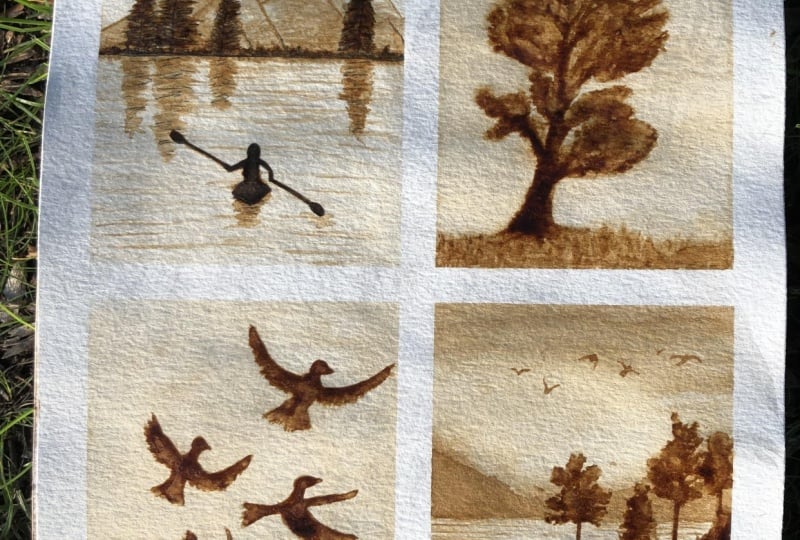
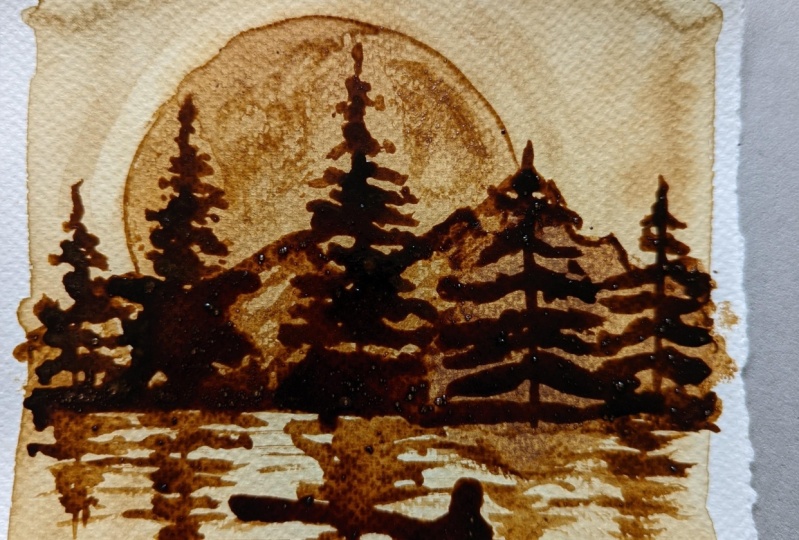
5. Peinture à café - Jour 1: Bonjour, je suis Dave One, nous allons apprendre ce
joli mini paysage d'
arbres de montagne et d'un bateau, homme qui rame un bateau. Très bien, commençons. J'utilise ce
pinceau rond, taille six, et j'applique d'
abord
un peu d'eau pure sur mon papier aquarelle. Le café que j'
ai ici est d'une couleur rose très dense. Et chaque fois que j'ai besoin de
le diluer, on ajoute un peu d'eau et on le
dilue dans l'assiette. Prenez donc absolument
moins de café. Donc, même si vous ramassez la peinture épaisse et dense
de la peinture au café, tapotez-la
simplement sur l'assiette et
utilisez simplement moins de quantité. Pour le moment, ce que
nous faisons, c'est ajouter beaucoup d'eau avec une
petite touche de café. Juste pour créer l'arrière-plan. Enquête, facile. Il suffit d'étaler l'eau et d'
ajouter un très petit peu de café. Assurez-vous simplement de ne pas
ajouter trop de café. Parce que nous ne voulons pas créer un fond
noir très sombre. Nous voulons garder la lumière de
fond. Assurez-vous donc d'ajouter
moins de café. Bon, maintenant je
prends juste un peu de café que j'
avais gardé dans l'assiette, qui est un peu plus sombre. Je ne veux pas que ce
soit un noir absolu. La quantité la plus sombre qui se
trouve dans la peinture au café. Je ne veux pas aussi sombre, mais je veux une teinte un peu plus
foncée
que celle avec laquelle j'ai peint l'arrière-plan. Un peu sombre. Et je viens de créer une ligne horizontale et
je crée le Soleil. Donc, tout ce que je vais faire,
c'est aller dans la direction du soleil et ajouter la couleur. Ce n'est pas la teinte la
plus sombre. Je n'ajoute qu'une
teinte plus foncée que l'arrière-plan pour qu'elle soit bien visible sur
l'arrière-plan. Pourtant, il n'est pas très sombre car les objets de premier plan vont être
encore plus sombres. Bien. Il suffit d'
augmenter progressivement l'obscurité du café à la frontière. Maintenant, j'ai pris
une quantité assez sombre de café et j'ai ajouté
les montagnes. Comme vous pouvez le constater, j' augmente
progressivement
l'intensité de
la peinture au café et j'ajoute
les objets à l'avant. Il suffit de créer n'importe quelle
forme aléatoire de la montagne. Ça n'a pas vraiment d'importance. Ce qui compte, c'est que vous remplissiez la montagne avec un coup de pinceau
très sec que je vous ai appris dans
la vidéo des techniques. Prenez donc absolument
moins de peinture si l'un d'entre vous en
ramasse un peu plus, vous pouvez simplement l'essuyer sur le papier de soie et réduire la quantité de peinture et l'
ajouter à la montagne. Assurez-vous de ne pas
remplir complètement la zone montagneuse. Parce que les espaces que
vous n'allez pas
remplir vont avoir
l'air de la neige, qui est essentiellement la couleur la
plus claire, n'est-ce pas ? Assurez-vous donc de ne pas le recouvrir
complètement avec de la peinture pour café et en utilisant
le coup de pinceau sec, vous laissez un peu de papier à l'
arrière-plan pour être montré. Très bien, maintenant je reprend
presque la même intensité que la peinture
au café et j'ajoute les lignes d'eau dans le
lac à l'avant. Assurez-vous simplement, lorsque vous peignez ces lignes d'eau, que
vous brisez les lignes entre les deux et que vous ne créez pas
une seule ligne horizontale longue, et que vous créez de petites lignes. Il n'est pas nécessaire qu'il s'agisse d'une ligne absolument horizontale qui les rend un peu ondulées parce que c'est de l'eau après tout ce que
vous peignez. Bon, maintenant je vais vous
présenter une technique qui ressemble à une feuille
de triche. Ce que je fais ici, c'est ajouter un peu plus
sombre avec un stylo gel noir. Donc, si vous avez un
stylo gel noir à la maison, vous pouvez le faire. Ce n'est donc pas le cas
dans les autres tableaux. Je le fais juste dans cette fois-ci. Dans la première, vous
comprenez comment améliorer votre peinture en
ajoutant un peu plus sombre. Cela peut être obtenu
en ajoutant une peinture au
café très énorme, forte et concentrée, qui ressemble presque à du noir. Mais je vous apprends comment s'
il y a quelque chose de bien, nous allons peindre les insectes. Si vous avez des difficultés à le
faire
avec le pinceau, vous
pouvez toujours le faire avec un stylo gel noir car
il est fantastique. Je suis donc en train de créer
les buissons lointains. D'abord avec l'épingle. Ensuite, je vais le recouvrir et ajouter la
peinture au café dessus. Avant d'ajouter les plantes, je ne faisais que, vous savez, retoucher un peu de la montagne parce qu'
une fois les arbres montés, je veux qu'il
retourne faire la montagne. Donc, si vous voulez
changer la montagne, c'est le moment de le faire. D'accord. Maintenant, je peins le patinage
plutôt sur l'
arbre avec la douleur. Si vous avez du
mal à le faire, vous pouvez prendre une feuille
de papier rugueuse, le faire avec, euh, avec votre stylo et simplement
voir à quoi elle ressemble. Faites-le quelques fois. En regardant ça, en regardant la façon dont je le fais ici et vous
serez en mesure de l'obtenir. C'est très simple. C'est juste pour donner la
structure des arbres. Et puis je vais y passer
et on a fait avec le café. Ok, maintenant je trempe mon
pinceau dans les grains de café et applique directement
parce qu'en ce moment je ne veux pas le diluer ou, vous savez, tonifier
la couleur du tout. ce moment, je prends
la peinture directement de la tasse à café
et je la peint directement sur les
arbres parce que nous voulons qu'elle soit aussi sombre que possible. C'est vrai ? Il suffit donc de passer en revue vos traces de douleur et de le remplir avec le café. Il reste donc un peu
d'espace, à gauche. Comme vous pouvez le voir, je ne l'ai pas complètement rempli en le
faisant avec le stylo. Ce sont les espaces que nous allons
remplir maintenant avec le café. Excusez-moi . Chaque fois que vous sentez
avoir pris un peu
trop de peinture dans
votre tasse à café, n'
hésitez pas à débiter sur l'assiette
ou le papier de soie. La raison pour laquelle je ne le fais pas sur le
papier de soie,
c'est parce que je ne veux pas gaspiller la peinture
si je la garde sur l'assiette, elle peut toujours être utilisée à
l'avenir en la
mélangeant à de l'eau. C'est pourquoi
je ne fais que taper sur l'assiette et je peux l'utiliser un peu
plus tard, donc il ne sera pas testé. Vous pouvez voir que
les arbres commencent à paraître vraiment sombres et lumineux et
que tout et presque la marque
d'encre du stylo n'est presque pas
visible, ce qui est génial. Mais même s'il est
visible, il est noir. Il va se
mêler à la
bande de café, ce qui est très bien. Bon, il est temps de peindre tous les reflets
des arbres. moment,
assurez-vous de ne pas utiliser la couleur foncée absolue
du café et de le
diluer un peu avec de l'eau. Il obtient donc également cet effet de
réflexion aqueuse. Et ça a l'air bien. Vous diluez également la peinture en ajoutant un peu d'eau. Ok, ça a l'air vraiment bien. Très sombre et lumineux. Et nous pouvons voir toutes
les différentes nuances du café sont très
visibles dans ce tableau. abord l'arrière-plan,
le calque le plus léger, puis le calque solaire,
puis la couche de montagne dans la
couche arborescente. Tout est donc
très bien visible. Et simplement en augmentant l'obscurité de la couleur
café que nous avons, nous avons créé une perspective
également dans le paysage. J'ajoute simplement une bordure
au soleil pour qu'il
ne soit pas très
mélangé avec l'arrière-plan. Et il suffit de créer quelques
images dedans. Vous n'aimez pas
ce que vous venez de faire. Vous pouvez toujours le
tamponner avec un papier de soie. C'est la meilleure partie car c'est presque comme de l'aquarelle. Vous pouvez toujours le
tamponner avec un papier de soie. Bon, il est temps de peindre
le bateau et l'homme du bateau. Encore une fois, je le fais
avec le stylo gel noir. Vous pouvez, si vous n'êtes pas
très confiant de le faire
directement sur le tableau, je vous recommande créer
simplement sur une feuille de papier
graphique. D'abord. Regardez la
façon dont je le fais. Il suffit de le faire sur un papier et vous
aurez la confiance nécessaire pour revenir et
le faire sur votre tableau. Et tout comme les arbres, je vais le peindre
avec le stylo gel noir. Et puis à la
couleur du café dessus. Encore une fois, je ne le fais que dans ce tableau pour que vous
compreniez comment obtenir la couleur foncée en utilisant un stylo gel noir si vous n'êtes pas très confiant
avec le café. Mais dans les neuf prochains tableaux, je ne vais pas le faire
avec le stylo gel noir. Je vais le faire
directement avec le pinceau, mais si vous le souhaitez, vous pouvez
toujours utiliser cette méthode. n'y a rien de mal là-dedans. D'accord ? Maintenant, je ne fais que créer un
peu de réflexion. Eh bien, tu y vas. La peinture est presque terminée. Maintenant. J'ai soulevé pour avoir
essayé pendant quelques minutes. Et comme vous pouvez le constater, les
arbres sont complètement séchés. Et maintenant, ce que je fais, c'est
ajouter une autre couche de café dessus pour le rendre sombre et obtenir ce look de café brillant
dans le tableau final. En raison de cette brillance,
j'ai vraiment adoré l'effet brillant
du café lorsqu' il sèche sur le tableau. Et pour cela, il faut ajouter une autre couche de café
une fois qu'il est séché. Et il semble que, vous savez, vous puissiez donner ce gâteau, café, regarder dans vos tableaux. C'est donc ce que je fais est
exactement la même, la même étape, juste le faire une fois de plus. Eh bien, tu y vas. L'ensemble du tableau est terminé. Pouvez-vous voir à quel point
l'effet brillant
du café est agréable sur
les arbres et le bateau. C'est donc tout pour aujourd'hui.
Je vous verrai demain.
6. Peinture à café - Jour 2: Bonjour, bienvenue au deuxième jour. Pour aujourd'hui, j'ai décidé de vous
enseigner cet arbre solo, qui ne fait pas vraiment partie
de notre paysage, mais c'est un
élément très important d'un paysage. Donc, si vous apprenez à
peindre cet arbre, vous pourrez créer
tout ce que vous voulez créer n'importe quel paysage et y
placer cet arbre. Beaucoup de nouvelles techniques que vous allez
apprendre dans ce bâtiment. C'est vrai ? Commençons donc. Je commence avec mon pinceau à
doublure et je commence
à peindre le tronc de l'arbre. Donc, dans ce cas, je ne peins pas l'arrière-plan parce que je ne veux pas créer
un paysage complet, alors il suffit de peindre l'arbre. J'essaie donc de
créer la forme du morceau avec
la brosse à doublure. J'y vais deux fois parce que le morceau est assez sombre. Je ne vais donc pas vraiment le
diluer avec de l'eau et prendre cette couleur de café sombre
créée dans ma tasse. Maintenant,
augmenter progressivement la largeur
du tronc de l'arbre et ajouter, en commençant à ajouter les branches. Donc, une chose dont vous
devez vous assurer
où vous peignez
les branches que vous
allez de l'intérieur, de l'extérieur. Et vous utilisez un
pinceau à doublure pour
créer des branches vraiment pointues au
fur et à mesure que vous sortez. Donc, si vous peignez, les
arbres sont des branches
pour la première fois, vous pourriez trouver cela un
peu difficile, mais croyez-moi, ce n'est vraiment pas difficile si nous ne le faisons
qu'une seule fois. Essayez-le d'abord sur un papier
brut. Découvrez à quel point vous pouvez créer. Une chose à faire en sorte de
vouloir garder à l'esprit en
essayant de peindre des branches est de
ne pas avoir trop de peinture. Si vous avez moins de peinture et que vous gardez votre pinceau
sec sur le ruban adhésif, vous serez en mesure de
créer des
lignes vraiment fines comme je le fais. Mais si vous avez beaucoup de peinture, cela créera une grosse
goutte d'eau et cela fera ramasser vos
branches, à droite. Alors assurez-vous d'avoir
moins de douleur, non ? Je veux dire, je ne
dirai pas vraiment moins de douleur. Juste la bonne quantité de peinture. Il suffit donc de prendre le pinceau et
parce que le café peint, essayez de créer des lignes sur
notre feuille de papier rugueuse. Il suffit de créer des lignes
horizontales ou verticales ou
diagonales. Et vous verrez à quel point vos pinceaux
répondent bien à vous et à quel point
vous pouvez créer de belles lignes. Ensuite, vous pouvez
revenir ici et commencer à créer toutes
ces branches. C'est donc un processus un peu
fastidieux. Je vais simplement y aller lentement et créer une par une
toutes les branches. Il n'y a ni bien
ni mal ici. Nous pouvons également créer
différents
types de branches. Alors amusez-vous dans le
processus et observez, regardez-moi faire les
branches et les branches. Tout comme je le fais. Tout ce que vous pouvez faire
à votre manière. Bon, maintenant j'
ajoute juste un peu d' eau à la bande de café pour finir de la diluer et de créer
un peu de terre. L'arbre. Juste pour ajouter un peu de
beauté à la peinture. Ok, donc maintenant j'en ai fini avec
les branches et je passe à ma brosse à doublure pour
cette brosse
ronde de taille six plus grande . Et j'ajoute tous les tons de café
sombres
aux endroits des arbres où nous avons pris l'ombre
des arbres, qui sont principalement
vers le fond. J'ajoute la couche la
plus sombre absolue, couleur café
segmentée. Maintenant, j'ajoute un peu d'
eau, je la dilue et je la
prends vers le haut en ne gâchant pas
la tache sombre d'Internet. J'ajoute simplement de l'
eau sur le côté et la
traîne sur les côtés pour
pouvoir créer les
nuances les plus claires du café. Ce que je recommande, c'est que vous pouvez
simplement regarder
un peu la tache des feuilles et ensuite
commencer à peindre. C'est vraiment facile. Il suffit de me regarder une fois
, puis de le mettre en pause et de le faire. Je crée un peu
comme des petites
textures de feuilles sur le côté, plutôt qu'après avoir peint tout
le globe de la peinture, qui est comme les feuilles
condensées de tiques, je ne fais que créer quelques petites
feuilles textures sur les côtés, ce qui ajoute beaucoup de profondeur à
la peinture en ajoutant de
petites feuilles sur les côtés. Je vais très
lentement sur le côté et je crée toutes ces
petites feuilles. Ce qui ajoute beaucoup de beauté aussi. Plutôt que de garder comme
un morceau de feuilles solides. Maintenant, je prends la quantité sombre
absolue de peinture au café
et je n'ajoute que petites nuances foncées
juste au-dessus
des teintes diluées plus claires juste pour créer la lumière et l'
ombre des arbres. Donc, partout où j'ajoute
les formes sombres, c'est là
que les ombres des feuilles sont créées. Je garde donc les
reflets en haut et je crée des ombres vers le bas
des feuilles. Là encore, je crée quelques petites feuilles de nez sur les côtés. Faites-les lentement car elles vont créer
la beauté du tableau. Bon, donc c'est tout
pour cette couche. Je vais le laisser sécher maintenant. Et après quelques minutes, une fois que les nuances sombres
de la copie ont séché, j'ajoute une autre couche
de couleur café sombre et sombre. Ma couleur était également terminée, alors j'ai préparé un peu plus
de peinture pour café. Et maintenant, je ne fais qu'
ajouter cette fois-ci, non pas avec la brosse ronde, mais avec une petite
brosse à doublure parce que je veux avoir une approche contrôlée
tout en ajoutant cela. Je ne veux pas trop en ajouter. Je voulais juste ajouter un
peu ici et là, juste pour créer des
ombres sombres. À certains endroits. Vous pouvez voir à quoi ressemble les gotchas, la couleur du café. Je vais le laisser sécher. Et encore une fois, la couleur
est complètement sèche maintenant. Et maintenant, ce que je
vais faire, c'est ajouter les branches une fois de plus
en haut de la liste. que nous avons ajouté, mais cette fois, je
vais le faire avec une
couleur café foncé très épaisse, presque comme le noir. C'est donc l'endroit où
vous pouvez, si vous le souhaitez, vous pouvez également le faire avec
un stylo gel. Je le fais avec
les couleurs du café pour qu'une fois qu'il sèche, j'aime voir cet
effet brillant de la couleur café. Et c'est pourquoi je ne fais que
souligner les
branches avec la couleur café
foncé. OK. J'adore
peindre des branches. C'est très thérapeutique pour moi. Donc, je vais juste y retourner et ajouter toutes les branches, petites branches aussi. Mais si vous le voulez,
vous pouvez, vous n'avez pas à faire
autant ou vous pouvez simplement le faire avec un stylo. Ou vous pouvez vous amuser
dans le processus. Plutôt que de
chercher le résultat, profitez
simplement du processus et peignez quelques autres
branches ici. Il suffit donc de peindre un peu
du sol de base et
la peinture est terminée. Vous pouvez voir à quel point
les morceaux sont beaux parce que j'ai ajouté
une quantité épaisse de peinture au
café dessus et une fois qu'il sera sec, ça restera comme ça,
ce qui est tellement bon. Très bien. Merci donc
de vous joindre à moi le deuxième jour et je vous verrai demain.
7. Peinture à café - Jour 3: Bonjour, bonjour, bienvenue
au troisième jour. Aujourd'hui, j'ai décidé de
vous enseigner ces jolis bourgeons, qui sont en soi un magnifique paysage
ou un gratte-ciel. Vous allez donc apprendre à peindre ces beaux oiseaux. Et en soi, vous allez
créer une belle peinture. Très bien, commençons. Je commence par le gros pinceau
rond, taille cinq. Et je crée
l'arrière-plan avec une quantité très diluée
de peinture au café. Comme vous
le savez, pour les arrière-plans, nous voulons toujours faire une teinte claire et
pas très sombre. Et ceci, nous
voulons en faire un sombre. Mais pour généralement, pour
tous les arrière-plans il y aura une
nuance très claire de couleur café. Ensuite, nous allons peindre les objets
réels par-dessus. Ici, j'ajoute simplement quelques tons plus
foncés sur les tons plus clairs pour donner
de les tons plus clairs pour donner texture à l'arrière-plan, pas seulement en faire un fond plat
catholique. Et je vais le laisser sécher
pendant quelques minutes. Car à moins qu'il ne soit séché, vous ne pourrez pas peindre
les objets par-dessus. Comme vous pouvez le voir, le
papier a complètement séché et maintenant je vais commencer à
peindre les planches. Ok, donc je le fais directement avec la
brosse à doublure sur le papier. Mais ce que je veux que tu
fasses, c'est de me regarder le faire. Et vous pouvez le faire directement sur votre papier à peinture avec un stylo gel
noir comme
je l'ai fait le premier jour, puis ajouter une
couleur café dessus. Ou si vous vous sentez assez
audacieux, vous pouvez me suivre et peindre directement avec
la brosse à doublure. Et si vous le trouvez, si vous trouvez cela
intimidant aussi, vous pouvez regarder peut faire vous pouvez l'essayer
sur un papier brut. Ce n'est pas la forme des bourgeons. Parce que si vous le faites une seule
fois sur une feuille de papier, vous aurez la confiance
de pouvoir le faire, et vous verrez que ce n'est
pas vraiment très difficile. Tout ce que vous avez à faire, c'est juste regarder mon processus et peindre les planches. n'y a donc pas trop de choses
que je puisse expliquer ici. Tout ce que je vous demande
de regarder le processus, voir comment je vais et de créer la
forme des oiseaux. Et vous serez en
mesure de le faire vous-même. C'est vraiment, vraiment simple. Je veux que vous compreniez que ce n'est pas
compliqué parce qu'
une fois que j'ai appris de mes expériences d'
enseignement passées, j'ai entendu
tellement de fois que mes élèves peindre des
oiseaux est si difficile. Je veux que vous
compreniez que ce
n'est pas si vous
suivez simplement le processus. Si vous voyez comment je
vais pas à pas, vous pourrez le
faire également. Encore une chose à garder à l'esprit pendant que vous
peignez l'oiseau. Ne pas continuer à ne pas le
peindre absolument. La couleur café la plus foncée. Oui, bien sûr, c'
est ce que je fais. Mais aussi, si vous
regardez la queue, je l'ai gardée un
peu diluée d' un
côté parce que vous voulez ajouter un peu de reflets
aux bourgeons, non ? C'est donc le processus, c'est à
peu près le processus, c'est à peu près
la technique. Je veux que vous regardiez
les directions que je prends tout en créant
la forme du bus. Ensuite, il suffit de le faire sur un bout de papier, puis de le
faire sur votre tableau. Je suis sûr que vous serez en mesure de
créer de beaux oiseaux. Très bien, je vais vous laisser regarder et peindre vous-même. Moi. Merci. J'espère que vous voyez
maintenant qu'il n'est vraiment pas difficile de
peindre ces oiseaux. Si vous suivez les étapes
que je fais, vous serez en mesure de créer
tous ces beaux oiseaux. Je suis donc très enthousiaste
à l'idée de voir ce que vous créez. Parce que j'ai toujours entendu que la peinture était
difficile et
je voulais dire que peindre les
oiseaux n'est pas difficile. C'est vraiment facile. D'accord. Alors montrez-moi
ce que vous venez de faire. Très bien, maintenant, nous en avons fini
avec les trois tableaux. Regardez donc ces oiseaux, surtout avec
l'effet café. Ils ont l'air glorieux. Je vous remercie beaucoup être joints à moi aujourd'hui et
je vous verrai demain.
8. Peinture à café - Jour 4: Bonjour et bienvenue
à Day pour aujourd'hui, je vais vous enseigner
ce joli paysage. C'est très facile,
simplement en changeant l'obscurité de la peinture pour café vous allez créer
tant de perspectives. La cassette dans ce paysage, et c'est si facile mais
elle est si belle, tellement excitée de vous enseigner
ce tableau aujourd'hui. Très bien, commençons. Comme toujours, nous commençons par
créer la couleur de base, la couleur d'arrière-plan avec
mon pinceau rond, taille six. Et j'ai entendu dire que ce que j'essaie de
faire est d'ajouter une couleur café sur le dessus et de ne pas
nous ajouter grand-chose au centre du papier. Et puis je vais ajouter
un peu plus d'obscurité
vers le bas. Ici. Eh bien, en créant
l'arrière-plan lui-même. Je crée certaines lignes d'
eau parce que je sais il y aura un lac dans la moitié inférieure
du tableau. Je ne fais que créer certains effets
d'eau déjà en utilisant la direction
de l'eau. OK. Maintenant, je viens de prendre
une teinte un peu plus foncée de la peinture au café et de
créer la ligne d'horizon. Et je crée la montagne
lointaine, comme vous pouvez le voir
depuis que je viens d'ajouter immédiatement après l'
ajout de l'arrière-plan, la couleur se répand en quelque sorte
dans l'arrière-plan. Calque d'arrière-plan parce qu'il ressemble à l'aquarelle, il se fond simplement. C'est un peu comme
mouillé sur mouillé, non. Donc, il se fond l'un dans l'
autre et je voulais ce saignement. C'est la raison pour laquelle je ne me suis pas
arrêté et j'ai immédiatement ajouté la couche plus foncée car une fois que cela sèche, il semble le plus aimé. Cette montagne
de fond est un peu comme s'être mélangée dans le ciel. C'est donc l'effet
que je voulais créer. Je veux donc qu'il saigne un peu les
uns avec les autres. Bon, maintenant, mais maintenant
je vais le laisser sécher avant d'ajouter
l'objet suivant. Je veux que cette couche
sèche pour pouvoir y ajouter la couche de
montagne la plus foncée. OK. Cela fait quelques
minutes et comme vous pouvez le constater, le
fond complet a séché. Et maintenant, j'ajoute la petite couche plus sombre de la montagne devant
cette montagne lointaine. Et j'augmente simplement l'intensité de
la couleur du café un peu plus que
la couche précédente. Et puis ajouter la montagne, la simple ici
du bon côté, bien créer la montagne. Je m'assure également
que le bord est un huit rugueux et
rugueux, ce qui
ressemble presque aux
arbres là-bas. Plutôt que de faire un
bord plat de la montagne, je fais un peu rude. Je suis juste en train d'assombrir un peu le fond
de la montagne et d'ajouter un peu d'
ombre à la montagne. Maintenant, avec un ton plus sombre, j'ajoute que les terres à l'avant sont plutôt du côté
droit du paysage. Et celle-ci va
être encore plus sombre que la
couche de montagne précédente que nous venons de faire. C'est pourquoi
j'ai mis cette couche. Je suis passé de ma brosse ronde, la brosse à doublure
parce que je voulais le
faire avec beaucoup de spécifications
et de détails minuscules. La brosse ronde de cochon
va donc être difficile
à faire. C'est pourquoi je suis passé
à la brosse à doublure. Et je crée la terre de droite avec
la brosse à doublure. Et j'ajoute absolument
la couche la plus sombre de la peinture au café ici. Ok, donc la terre, c'est presque fini. Et maintenant, avant de
peindre les arbres, je vais juste créer une partie du reflet de l'eau
en dessous de cette terre. Et pour cela, je n'utilise pas la
couche sombre absolue et j'ai
juste trouvé la couleur
un peu avec l'eau et en ajoutant
toutes ces lignes d'eau. Commençons maintenant à
peindre les arbres. Pour cela, je prends la couleur directement
de ma tasse à café. Et parce que nous voulons
créer une couleur absolument foncée et
noirâtre G. Donc je ne fais que créer le morceau puis ajouter quelques branches. Et Bill, je vais
ajouter des feuilles en vrac. Je ne veux pas en ajouter trop
car si vous en ajoutez trop, cela devient
trop sans encombrement. J'ajoute donc un peu des
feuilles très lâches. Et c'est le dernier morceau
d'arbre que je fais. Presque tous avec
une technique très similaire. Il suffit de créer une ligne
, puis d'ajouter quelques
feuilles en vrac sur le dessus. Bon, donc maintenant tous
les arbres sont finis. Et maintenant, je vais prendre un peu de peinture diluée et créer les reflets de tous
les arbres. En bas. Pour cela, avoir un
peu plus d'eau aide parce que vous créez
un reflet, n'est-ce pas ? Donc, si vous le peignez avec de
l'eau, c'est joli. On
dirait presque que vous savez, l'eau bouge, est
ce qu'elle est. C'est mes effets d'aquarelle. Promenades. Joli. Bon, maintenant je vais peindre le dernier
élément du paysage, savoir
les petits oiseaux. Maintenant, j'espère que vous êtes déjà un
expert dans la peinture d'oiseaux, mais ici nous n'allons pas
peindre de gros oiseaux. Tout ce que nous allons faire, c'est juste quelques lignes pour
créer les mots. Et l'une des choses à garder à l'esprit lorsque vous créez
ce petit plutôt vous créez une forme en V simplement en
pliant les lignes
plutôt que de les
garder droites en
dépensant simplement les lignes. Donc, les bourgeons sont tous en
forme de V, non ? Je ne fais que changer
les formes ici et là pour certains autobus, pas tous et tous sont absolument ceux-là. Certains d'entre eux sont
presque comme une ligne. Mais en peignant de
petits bourgeons,
j'ai remarqué que le fait de garder à l'esprit vous aide toujours à
créer de beaux oiseaux. Je viens de réaliser
que j'avais oublié de
faire le reflet de
l'arbre le plus haut. Je ne fais
que l'ajouter et j' assombrir les reflets un
peu plus qu'avant. Pas trop sombre de toute façon. OK. Il suffit d'ajouter une autre
couche sombre juste en dessous de la terre. Et nous en avons fini avec
notre magnifique peinture. Regardez cette magnifique couleur de
café dans la terre. Et j'ai vraiment adoré
cet effet brillant du golf que vous peignez
à la fin pour faire des choses. Merci beaucoup de vous être
joints à moi aujourd'hui et
je vous verrai demain.
9. Peinture à café - Jour 5: Bonjour et bienvenue. Aujourd'hui, le cinquième jour, je vais vous enseigner
ce magnifique tableau. D'accord ? C'est donc le contexte. J'ai essayé de créer un
petit effet orageux. Et cet oiseau est assis
sur une route à l'extérieur. Et j'ai également essayé
de donner un effet. Comme vous pouvez le voir, les bourgeons ont l'
air un peu imprégnés, un peu mouillés parce que c'est peu comme
s'ils étaient mouillés sous la pluie. C'est donc comme un effet de jour de pluie que j'avais essayé de
créer dans ce tableau. Très bien, alors commençons. Je commence par mon
gros pinceau rond et crée un fond plus sombre
cette fois parce que vous savez, nous allons créer
un arrière-plan orageux. Ensuite, ajouter un calque d'
arrière-plan
plus léger sur l'ajout
d'un fond sombre. Et comme vous pouvez le voir, j'essaie de créer un effet aussi en arrière-plan, non ? Ce n'est donc pas comme un fond de mélange
lisse. J'ajoute juste un
peu, des petites couleurs sombres quelque part et des
nuances plus claires à certains endroits. Maintenant, je vais le laisser
sécher, puis ajouter une autre couche d'
arrière-plans sombres. Donc, cette fois, j'ajoute beaucoup de couleur café foncé
en arrière-plan. Parce que je vais ajouter le domaine du sac de stomie
et l'effet en utilisant du sel. J'ajoute donc, en ajoutant la couleur foncée du
café avec un, avec beaucoup d'eau parce que
vous avez probablement
déjà vu dans la vidéo des techniques que même si j'ajoute le sel, il
faut avoir un
peu de poids. arrière-plan. Sinon, le sel ne
pourra pas réagir à l'arrière-plan
s'il s'agit d'un essai. Voici donc mon âme et j' ajoute juste un
peu de saupoudrer ici et là. Ainsi, là où
il n'y a pas beaucoup d'eau, le sel ne réagira pas. J'ajoute donc un peu plus d'
eau et j'ajoute plus de sel. D'accord, c'est tout. Maintenant.
Je vais le laisser sécher. Je vais le
garder sous le soleil
et le laisser sécher parce qu'à
moins qu' il ne soit séché, vous ne pourrez
pas débarrasser de tout le sol. Donnez-lui un peu de
temps, laissez-le sécher. Regardez à quel point les
textures sont déjà
belles en saupoudrant le
sel sur le papier. Le papier est complètement séché. Je l'ai gardé au soleil pendant un certain temps et maintenant il est temps
de se débarrasser de tout le sel. Comme vous pouvez le voir, je frotte simplement sur
le papier et je me débarrasse de tout le sel pour
que le papier soit nouveau suffisamment
lisse pour que je puisse peindre tous les
bourgeons dessus. Il suffit donc
de déposer votre main
ou votre doigt sur le papier et
vous pourrez facilement vous débarrasser de tout
le solide des gens. Bon, tout mon nettoyage
du sel est terminé. Et maintenant, commençons à battre
toutes les balles par-dessus. Ok, donc j'utilise
ma brosse à doublure maintenant et juste créer les cordes sont les
tiges sur les trois lignes en premier. Et maintenant, je commence à
peindre les bateaux. Comme je l'ai dit, j'essaie de créer un peu d'
oiseaux de poids ici, non ? Parce qu'ils sont assis
dehors par temps orageux. Donc, tout ce que je fais, c'est seul. Je ne veux pas créer un bord net sur la
bordure des bourgeons. J'utilise donc
un peu plus d'eau sur le côté et je leur donne un
aspect mouillé sur le bord. C'est donc la beauté de la peinture
avec effet aquarelle. Vous pouvez ajouter cet effet
aqueux sur le côté en ajoutant
un peu plus d'eau. C'est donc l'effet que
j'essaie d'obtenir. Et je les fais s'asseoir dans directions
différentes pour que vous puissiez placer vos bourgeons dans
la direction que vous voulez. Vous pouvez juste peindre quelques-uns
d'entre eux en suivant mon exemple. Et vous comprendrez
que, vous savez, à
quel point il est facile de peindre un
oiseau, c'est simplement faire
un corps, une tête et une
queue. C'est ça. Ce sont les trois
objets que vous possédez, trois sections que vous possédez
lors de la création du tableau. Et vous pouvez faire le bec dans la direction
dans laquelle
vous voulez faire croire que
le bourgeon a l'air de
regarder dans cette direction. C'est à peu près tout. Il n'y a aucune technique critique que je puisse vous enseigner
ici, mais vous pouvez simplement la regarder
et la peindre. Une fois encore. Si vous avez du
mal à faire avec un pinceau, vous pouvez toujours le faire d'abord
avec un stylo gel noir. Vous pouvez, et en plus de cela, vous pouvez ajouter
la couleur du café. Mais la beauté de ce
tableau va être d'
avoir l'
effet brillant du café sur les bourgeons. Quand il sèche, les bourgeons
vont beaucoup apparaître sur le tableau,
lui donnant un
aspect 3D du tableau, qui est la beauté de la peinture au
café, n'est-ce pas ? J'obtiens ce look brillant. Cela va donc paraître très prudent lorsque vous peignez
avec du café sur le dessus. Ok, maintenant que tous les
oiseaux ont été peints, ce que je vais faire, c'est de
repartir avec une bonne quantité de couleur café foncé et d'
ajouter un peu comme si vous n'ajoutez pas, comme, simplement une tache de couleur café foncé sur
le plateau pour leur donner
la couleur foncée absolue. Et cette fois, vous pouvez voir
que j'ajoute juste un peu d'effet dilué
également sur le côté. Pendant que j'ajoute le
café noir au centre. Eh bien, tu y vas. L'ensemble du tableau
a été réalisé. Regardez l'
effet brillant des bourgeons, quel point ils sont beaux. J'espère que vous avez injecté
ce tableau. Merci beaucoup de vous être joint
et je vous verrai demain.
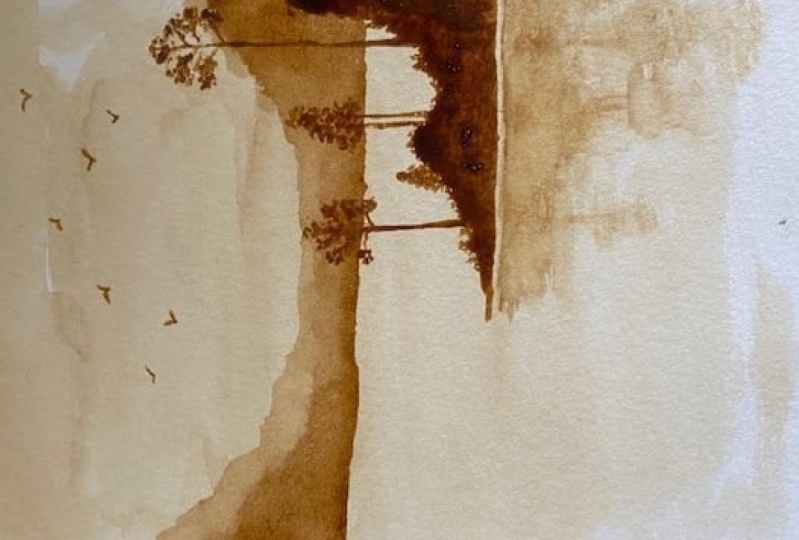
10. Peinture à café - Jour 6: Bonjour et bienvenue au sixième jour. Aujourd'hui, nous allons apprendre ces magnifiques pins brumeux, que nous allons apprendre
à créer en couches. Puis créez
des branches d'arbres et des bourgeons pour finir un
magnifique paysage. Cette fois encore, il n'
y a pas de contexte. Je vais donc commencer par
peindre les pins brumeux. J'utilise un pinceau très sec
pour créer les textures de la terre sur laquelle se trouvent les
pins. Stan. Et je commence par faire abord
les
pins les plus distincts, ce qui signifie que
je vais d'
abord créer des binaires de
couleur
absolument claire binaires de
couleur
absolument claire, puis ajouter
les binaires sombres. Donc, à ce stade, je n'
ai pas beaucoup d'eau dans ma brosse et je
fais des traits à peu près secs pour créer ces structures
ressemblant à des arbres. Et au fond, j'ajoute
juste un peu d'eau juste pour le
fondre dans le fond. Maintenant, je commence à peindre tous les arbres sur
le terrain que je viens de créer. Encore une fois, c'est une couleur
très, très fine et diluée. Ce n'est pas très important. Et une fois qu'il sera sec deviendra encore
plus léger
pour que nous
puissions mettre fin à la couche sombre
d'arbres devant elle. Ok, donc j'en ai presque
fini avec toute ma rangée
de pins et je ne fais que
créer quelques branches. Et maintenant, je vais
laisser sécher cette couche. Rappelez-vous, à moins que
cette couche ne sèche si je vais
dessus, elle va saigner dedans,
donc je dois la laisser sécher. Maintenant, le papier est
complètement séché et j'y ajoute une couche plus
foncée. Et la technique de création
des arbres est exactement la même. Vous allez dans la direction exacte
de haut en bas. Et vous créez ces
magnifiques pins. Maintenant, après avoir peint les
pins en bas, je vais simplement les
fondre dans la couche inférieure comme s'il semble
y avoir des nuages qui flottent entre les deux couches
des pins. Et nous n'allons pas
peindre les nuages. C'est pourquoi nous
diluons le fond des arbres et
le mélangeons à
l'arrière-plan. Bon, maintenant je vais commencer
à peindre les bourgeons que vous avez
déjà appris. À l'heure actuelle. Vous devez essayer de
le créer en forme de V, puis de rendre
les lignes un peu sinueuses. C'est ainsi que vous créez les oiseaux. Certains d'entre eux que vous créez dans une structure un
peu différente, mais plus ou moins, ce
sont tous les bourgeons sont à peu près toutes
les mêmes techniques. Continuez donc à créer certains d'entre eux plus en ligne droite. Certains d'entre eux vivent
dans la direction V. Et de cette façon, vous pouvez simplement me suivre et
créer tous les bourgeons. Maintenant le dernier élément
de la peinture, nous allons peindre
une partie de l'
arbre, des branches d'arbres qui sortent du
coin inférieur droit du tableau. Vous avez donc probablement
appris à peindre trois
branches. Il suffit donc d'utiliser votre talent
et de peindre quelques branches. Il n'est pas nécessaire que
ce soit exactement comme je vais. Et vous pouvez créer certaines
branches à votre manière. Mais cela ne fait qu'ajouter un peu plus d'
élément à notre peinture. Très bien, c'est tout. Et nous avons fini ce
magnifique paysage. Encore une fois, est-ce facile ? Ne pensez-vous pas que c'est une peinture
si facile ? Si vite, vous pouvez créer
quelque chose de si magnifique. Dites-moi ce que vous avez créé. Montrez-le moi en postant ci-dessous. Merci beaucoup de vous
être joints à moi aujourd'hui. Je vous verrai demain.
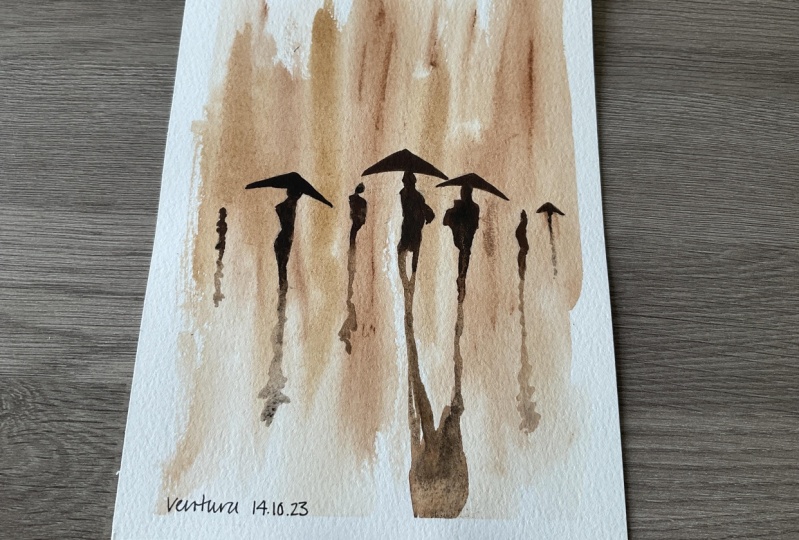
11. Peinture à café - Jour 7: Bonjour et bienvenue au Jour Seven. Je pense que c'est l'un de
mes tableaux préférés. Peindre un jour de pluie vu avec un paysage urbain
en arrière-plan. Un peu comme, vous savez, sous l'
effet brumeux de la pluie. Encore une fois, je crée
avec mon pinceau rond épais, peu dilué le
grain de café, un peu plus léger. Et avec cela, je commencerai peindre les paysages urbains de
fond. J'essaie de peindre
bloc par bloc les bâtiments comme
on le voit dans un paysage urbain. Et je les garde couleurs
absolument claires parce que je ne
veux pas qu'elles soient trop visibles parce que nous allons
aller en arrière-plan
et devons-nous avoir l' air brumeux à
la fin du tableau ? Maintenant, après avoir créé presque tous
les bâtiments et fait glisser toute l'
épingle vers le bas et l'
avoir mélangée en arrière-plan. Maintenant, je crée la forme des bâtiments en bonne place
pour quelques-uns d'entre eux, essayant en
quelque sorte de créer une région rectangulaire
délimitée aux blocs. Non, je suis en train de créer
le fond du paysage urbain et de
le mélanger à l'arrière-plan. Ce sera donc la voie aqueuse
de ce tableau. Je ne vais donc pas
le créer en douceur. J'essaie de créer
des textures en ajoutant petites couleurs sombres quelque part et des couleurs claires à certains endroits. Non, j'ai juste fait un peu
moins flatteur sur le tableau pour créer une partie du reflet des gens que je vais
peindre plus tard pour cela, et aussi pour les villes. Tous les bâtiments qui
regardent l'arrière-plan. Je crée certaines des réflexions sur
la route
en créant des lignes verticales. Maintenant, je suis en train de créer une autre
couche
de bâtiments plus sombre devant
le plus léger. Parce que, juste pour montrer
la perspective, encore une fois, ce petit front est
un peu plus
sombre qui crée une autre couche de diabète. Ok, avec ça, le fond est presque
entièrement terminé. Maintenant, je devais le laisser sécher
car à moins qu'il ne soit séché, je ne serais pas
capable de peindre l'obscurité. Le café coloré sont des
êtres humains sur le dessus. Bon, maintenant, le papier est sec. Je l'ai gardé à l'écart quatre
bonnes, cinq minutes. Et maintenant, avec la brosse à doublure
et la bande de café directe, je vais créer les parapluies, les gens
et le corps humain. Maintenant, si vous n'avez jamais peint de corps humain
dans des paysages, cela pourrait vous
paraître un peu difficile. Mais si vous regardez juste mes pas. La façon dont je progresse dans
la création de ce tableau, chacun des corps humains. Si vous le regardez et que vous le
faites une fois sur une feuille rugueuse, vous obtiendrez bien les choses. Ou si vous vous sentez assez
audacieux, vous pouvez l'essayer directement sur
votre tableau et je suis sûr que vous pourrez le
faire tout aussi bien. Merci. Rappelez-vous simplement que pour montrer le paysage lorsque vous
peignez des moyens humains plus petits, cela signifie
qu'ils sont à distance pour montrer
qu'ils sont distincts, faut peindre
un corps plus petit, les chiffres et les premiers
vont être plus grands. C'est ainsi que vous montrez la
profondeur d'un paysage. Bon, maintenant, tous les corps
humains que j'ai faits, c'était le dernier. Et maintenant, je vais
épingler la couleur et créer le reflet
comme nous avons fait les reflets des
arbres dans l'eau. Exactement la même
technique d'étiquetage pour créer le reflet de
tous ces corps humains. Donc, ce ne sera pas
avec une couleur absolument foncée, mais une couleur un peu plus claire
et avec beaucoup d'eau. Et c'est tout. Nous avons
fini notre peinture. N'est-ce pas une peinture si facile et
amusante à créer ? J'ai vraiment adoré ça
après l'avoir créé. Et regardez ces corps humains
brillants, n'est-ce pas si étonnant ? J'espère que vous vous êtes amusé à créer
ce tableau avec moi. Merci beaucoup de vous être joint
à moi dans ce cours et je vous
verrai demain.
12. Peinture à café - Jour 8: Bonjour et bienvenue à la journée. Aujourd'hui, j'ai décidé de
vous enseigner un arbre très simple, qui est un
élément très important de tout paysage. Et comment créer la bande du
paysage dans les arbres en changeant la couleur du café en la
diluant avec de l'eau. Cela peut donc être utilisé pour
créer un paysage forestier. Très bien, alors commençons. Je commence donc par peindre un fond très clair sur
l' ensemble du tableau
avec beaucoup d'eau. Et plutôt que d'en
faire une solide, j'essaie de créer des
textures lumineuses en
augmentant la couleur à
certains endroits et en la gardant
légère dans certains cas. Moi, donc maintenant je vais
le laisser sécher. Et une fois qu'il sera complètement sec, j'ajouterai les arbres. Le papier a séché. Ça fait cinq minutes. Et maintenant, je vais commencer par peindre la section lumineuse de l'arbre, qui ressemble d'abord à la couleur de
fond, car nous passons toujours
de plus en plus clair à plus foncé. Je mélange donc la couleur, la couleur du café dans mon assiette, ai
mélangée avec de l'eau et je l'ai diluée. Il est plus sombre que le
fond, bien sûr, mais ce n'est pas une couleur de café sombre très
absolue, vous avez probablement
commencé à comprendre maintenant, à partir de
laquelle nous grandissons progressivement, à partir d'une teinte claire et plus claire du café jusqu'à
la teinte plus foncée. J'essaie donc de peindre le tronc de l'arbre
avec une couleur plus claire. En peignant les troncs de l'arbre, je peins
aussi un
peu de feuilles, avec la couleur
plus claire qui va aller en
arrière-plan. J'y vais peu à peu et je
peins à
la fois les branches et les feuilles. Ajouter quelques
branches supplémentaires et les feuilles. Si vous remarquez qu'ils ne sont pas tous
de la même couleur, même s'ils sont
plus clairs que la couleur café sombre. Je modifie la densité de
la couleur dans chaque branche. Ils ne sont pas absolument identiques, certains sont plus légers,
d'autres un peu plus sombres. La raison pour laquelle j'aime le
faire, c'est
en changeant la couleur
du café. Vous êtes plus adepte
de votre peinture. Bon, alors gardez ça à l'esprit. N'essayez pas de
tout garder la même couleur. C'était plus ou moins d' eau pour changer les nuances
de la couleur du café. Donc, à peu près ma
couche d'arrière-plan des arbres est terminée. Cela
ressemble donc à un tableau qui pas
d'accord pour aller
tout en arrière-plan. Et une fois qu'il sera sec, je vais ajouter la
couche d'arbres plus foncée à l'avant. Maintenant, je vais le laisser
sécher pendant environ cinq minutes. Bon, donc le papier
a séché maintenant et je commence par la couleur café
foncé. Notez donc que je ne
mélange pas beaucoup de peinture,
beaucoup d' eau cette fois-ci avec
la couleur café et que je n'utilise la peinture directement de la tasse à
café sur le papier. Maintenant, maintenant, je vais
répéter les mêmes étapes que
dans la précédente, mais cette fois seulement
avec une couleur plus foncée. Je vais donc y aller lentement, créer les morceaux, les branches et quelques feuilles. J'adore l'endroit où
créer les feuilles. Mais tout en créant
les feuilles aussi,
j' aime bien le faire plutôt que les
garder toutes les mêmes feuilles, j'aime les faire
diluer un peu plus léger dans certains endroits pour montrer des reflets
dans les feuilles et pas une seule couleur unie. donc
très important de créer les tons clairs est donc
très important de créer les tons clairs
et les ombres, modifie les valeurs des
objets que vous peignez. Dans certaines pièces. Si vous remarquez que les feuilles sont un
peu plus légères quand je
n'ajouterai pas absolument. La nuance sombre du café. Excusez-moi . D'accord. Le tableau
est presque terminé. Maintenant, juste avant de
finir, ce que j'aime faire, c'est juste donner
cet effet brillant du café, j'aime
ramasser directement une grande quantité de peinture pour café. Comme si je tombais
sur les zones les plus sombres parce que beaucoup d'essais donnent la peinture cet effet brillant. Donc, c'est là. Vous pouvez déjà voir la
partie brillante des arbres. J'espère que
ça vous a plu et créé un magnifique tableau et
je vous verrai demain.
13. Peinture à café - Jour 9: Bonjour et bienvenue sur D9. Aujourd'hui, j'ai décidé de peindre ce magnifique
pin brumeux sur la montagne. Et en gros,
beaucoup de gens sont des nuages qui
flottent entre les montagnes. Et comme si les montagnes n' étaient visibles qu'un peu à travers les
nuages. C'est donc un très beau paysage
magnifique, un
mini paysage. Et je suis ravi de vous
apprendre cela. Puisque la majeure partie ce tableau
sera constituée de nuages blancs. Je ne vais donc pas peindre
tout un fond et commencer directement par
peindre les montagnes. D'accord. Je commence donc par peindre une couleur
de montagne très claire à l'arrière. Et c'est parce que,
pourquoi est-il léger ? Parce qu'il y a beaucoup de
nuages qui flottent en France, il ne fera
donc pas très sombre. J'ajoute donc d'abord le calque
plus léger ,
puis je vais ajouter
un peu plus sombre plus tard. D'accord. Encore une fois, j'ajoute la
couche plus légère sur le côté gauche du tableau où
les sombres montagnes vont entrer en face. Et ce sont les montagnes
lointaines dont les montagnes sont une sorte de lumière à
cause des nuages, flottent
encore une fois dessus. Allons-y. Non, ce ne sont pas
seulement des montagnes, mais il y a aussi des
arbres par-dessus. Alors, tout en faisant la
partie plus légère du paysage, j'essaie également de créer toute la couleur plus claire
des arbres qui se trouvent au sommet
de cette montagne. Comme vous pouvez le constater, je
commence progressivement à augmenter un peu la couleur, l'
obscurité de la
couleur. Il n'est donc pas absolument léger. C'est un peu comme un noir moyen. Maintenant, je vais sur le
ton le plus sombre de la couleur café
et j'ajoute
celui qui est absolument devant. Donc, en ce moment, je
peins la montagne et ensuite je vais être
dans les arbres au-dessus de celle-ci. N'oubliez pas de garder
non seulement une couleur unie mais aussi un mélange de sombre et de
lumière, comme je guérissais. Et maintenant, j'ajoute le ton plus sombre sur
la montagne lointaine. Une fois encore. Cela va juste
ajouter un peu pour noter toute
la montagne,
car une partie est légère et certaines sont les ombres. J'ai commencé à peindre les pins
brumeux au sommet des montagnes. C'est ma partie préférée. Je pense que j'adore peindre ces
pins sur les montagnes. Continuez donc à les peindre
un par un en zigzag. Vous avez déjà appris à
peindre des pins. Nous avons peint un
peu de peinture sur les pins de cette classe. Continuez donc à
les peindre et allez-y lentement. Si vous n'êtes pas très à l'aise
avec la peinture de pins, vous pouvez simplement
le pratiquer un peu sur vos feuilles de papier et vous
obtiendrez juste les choses. Excusez-moi . Eh bien, c'est là.
La quasi-totalité de la peinture est terminée. Et maintenant encore une fois, j'ai
ramassé la peinture, le papier et j'ai ajouté la couche de café
plus foncée. Une fois encore. J'aime bien le faire
parce qu'une fois qu'il sèche, cet effet brillant
du grain de café reste. Avant, juste avant de
terminer le tableau, là où je veux la couche la
plus sombre du café, j'aime le déposer sur
le papier comme ça. Regardez-moi ça. La peinture est réalisée en regardant l'effet brillant
de la montagne, quel point elle est belle. Et j'espère que vous avez aimé
peindre ça avec moi, et je vous verrai demain.
14. Peinture à café - Jour 10: Bonjour et bienvenue
au dixième jour, dernier jour de notre
voyage de peinture au café. Pour le dernier jour, j'ai conservé mon tableau préféré et cela s'est avéré être meilleur que ce que j'imaginais réellement. C'est un tableau si simple,
mais il y a tellement de mup dedans. Je veux dire, j'ai
adoré regarder ce tableau de ce bambou, bambou avec des
pousses et des trucs. Commençons. Et je suis
sûr que vous êtes devenu un maître de la peinture au café après avoir peint ces
neuf magnifiques paysages. Donc, pour celui-ci, je ne vais pas
vous donner beaucoup d'instruction. Je veux que vous suiviez
et que vous fassiez ce tableau
avec moi. Parce que pour être honnête avec vous, je ne peux vraiment pas vous
dire grand-chose ici. n'existe aucune technique en tant que telle, sauf les techniques de base que vous avez déjà comprises. Compris maintenant que vous
passez par une couche plus claire à la couche plus foncée et augmentez progressivement la
couleur du café. C'est donc exactement la technique que je veux suivre ici. Et oui, alors
regardez-le et amusez-vous bien, regardez le tutoriel et continuez à
peindre avec moi. Et je suis ravi de
voir ce que vous créez. Bonjour. Oui. Excusez-moi . C'est donc ça. La
peinture d'avion est terminée. J'espère que vous avez suivi
avec moi et créé ce magnifique
mini-paysage. Attendez de voir ce que vous avez
fait et j'espère que vous vous êtes amusé à vous joindre à
moi dans cette classe, créant tous ces
magnifiques mini-paysages.
15. Protéger vos peintures à café: Bonjour, bonjour.
J'espère que si vous êtes perturbée
jusqu'ici dans la vidéo, vous avez déjà créé votre magnifique collection
de peintures au café. Et je suis sûr que tu l'aimes, que aimes l'odeur. Donc, chaque fois que je
regarde ces tableaux, l'odeur m'
attire tellement. Avant de terminer ce cours, je voulais vous dire
une chose rapide sur préservation de votre
café, ce qui est très important. Pourquoi est-il important de voir ces épaisses couches de café que nous avons
mises sur le papier. Et ce qui se passe, c'est une fois, moment, c'est l'été. Donc je vous le dis, d'après mon
expérience de l'année dernière, j'ai créé toutes les peintures au
café pendant l'été et je les ai
gardées telles quelles, comme allongées dans une boîte. Et quand la mousson est arrivée, ce qui s'est passé, c'est que toutes les
peintures ont commencé à fondre. Toute la couche épaisse
de café étudiée par
la fusion parce qu'elle est entrée en contact avec l'
humidité de l'air. Nous devons protéger nos
peintures contre
l'humidité de l'air. C'est pourquoi j'ai
eu cette idée de
ces enveloppements en plastique. Il est très facile de le mettre en ligne. Je lierai le produit ci-dessous. Donnez-lui donc un
crabe en plastique et vous les mettez à l'intérieur des
enveloppes en plastique et vous collez pour qu'il
n' entre pas en contact avec l'air contenant l'humidité. C'est donc très simple. J'en ai mis un d'un côté et un autre de l'autre. C'est comme
ça que je l'ai fait. Si vous pouvez trouver une façon
créative et créative de le faire, s'il vous plaît
par tous les moyens, faites-le. Assurez-vous simplement de le
garder à l'intérieur d'une sorte d'enveloppe et qu'il n'est pas
directement en contact avec l'air. Ok, maintenant, laissez-moi rapidement
faire ce truc et
vous montrer ce qui se passe après les
avoir tous placés
dans des graphiques dysplasiques. Bon, maintenant, toutes les
peintures ont été placées dans une
goutte transparente en plastique, comme vous pouvez le voir ici. Et maintenant, je vais
tous les assembler et simplement les plier derrière avec un
gros dossier avec tous. Et cette table sur le toboggan. C'est aussi simple que ça. Et pourquoi votre livre de
peinture au café est prêt. Il donne sa protection
en vertu des lois requises. C'est en train de créer un si
beau carnet de café. Je suis sûr que vous allez tellement vous amuser
à montrer ce petit
livret à
vos amis et à votre famille
une fois que vous l'aurez créé. Alors, s'il vous plaît, faites-le et
montrez-moi ce que vous avez fait. J'attends avec impatience de
voir ce que vous créez. Merci beaucoup de vous
être joints à moi dans cette classe.
 Debasree Dey, Acrylic Artist & Educator