I AM Creative: A 3-step Method to Reconnect with your Inner Creator | Sushil G. | Skillshare

Playback Speed


1.0x


  • 0.5x
  • 0.75x
  • 1x (Normal)
  • 1.25x
  • 1.5x
  • 1.75x
  • 2x

I AM Creative: A 3-step Method to Reconnect with your Inner Creator

teacher avatar Sushil G., Podcaster | Artist | Comedian | Writer

Watch this class and thousands more

Get unlimited access to every class
Taught by industry leaders & working professionals
Topics include illustration, design, photography, and more

Watch this class and thousands more

Get unlimited access to every class
Taught by industry leaders & working professionals
Topics include illustration, design, photography, and more

Lessons in This Class

    • 1.

      Intro: You are Creative by Default

      2:35

    • 2.

      Project: What You Will Be Creating

      2:06

    • 3.

      Art Supplies

      1:37

    • 4.

      Intention: Tune the Creator's Compass

      4:31

    • 5.

      Attention: Turining Inwards

      10:12

    • 6.

      Manifestation: Bringing Art to Life

      14:37

    • 7.

      My story: How 'I AM Creative' Healed Me

      2:38

    • 8.

      Congratulations and Thank You!

      0:45

  • --
  • Beginner level
  • Intermediate level
  • Advanced level
  • All levels

Community Generated

The level is determined by a majority opinion of students who have reviewed this class. The teacher's recommendation is shown until at least 5 student responses are collected.

157

Students

1

Projects

About This Class

Class Overview

Do you ever look at your creative friends and think to yourself, "I could never do that" or "I wish I were creative" or "I don't have a single creative bone in my body"?

Then you, my friend, are in the right place.

Welcome to I AM Creative: A 3-step Method to Reconnect with your Inner Creator. It is a class where you would go on a self-exploration journey through art and reconnect with your inner creator. This class would super-charge your artistic self-care routine and turn your current state of mind into meaningful art along the way.

By the end of the class, you will say with confidence, "I AM Creative!"

What Would You Be Learning

  • Setting an intention for creating art.
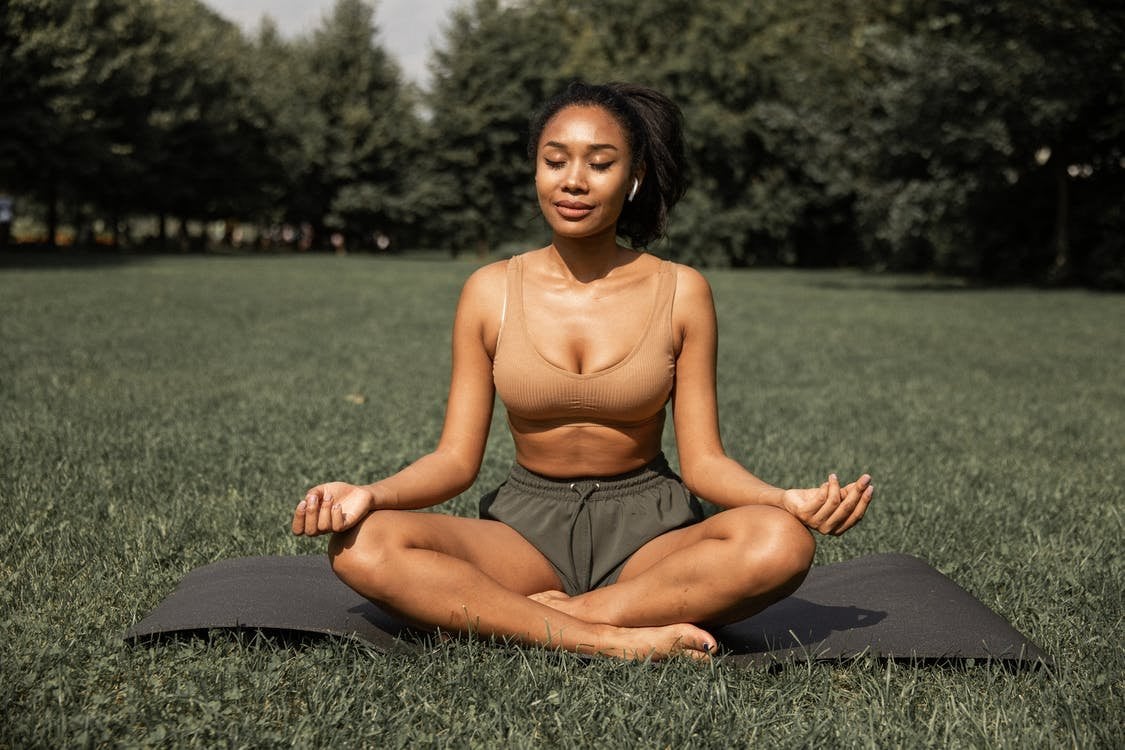
  • Connecting with your next artwork through meditation and self-reflection.
  • Turning emotions into art. 
  • Applying mindfulness to art.
  • Using your present state of mind as an infinite idea generator. 
  • Using art as therapy


Why You Should Take This Class

As an abstract artist, I often get asked questions like, “How do you get ideas for your paintings?” “How do you get past artist’s block”, and “How do you express yourself in an authentic way?”. 

The trick is quite simple. I don’t go looking for these ideas. 

I just show up to the canvas with curiosity and observe my current state of mind. Each of us has a unique perspective to offer which often comes from the summation of our past experiences, our present state of being, our goals, and our aspirations. But we often let our state of mind keep us from embracing our amazing selves. 

This class welcomes your uniqueness. It welcomes you as you are to express yourself freely through a medium of your choosing. 

What primary skill would this class provide?

This class would provide a 3-step technique to create art that is inspired by your higher self. This technique can be used to generate infinite ideas in any art-form

How are the skills useful to your students?

  • Self-care: The skills outlined in this class are a great form of self-care. From personal experience, this technique has been immensely beneficial in releasing excess emotional baggage.
  • Ideation: Doing this technique would enable students to generate countless ideas. And this ideation through the artistic process would bring creative problem solving to multiple areas in their lives. 
  • Consciousness exploration: This class is a powerful gateway into consciousness exploration for those who are interested in knowing more about who they are.

Why should I learn from You?

I won't be exaggerating if I said this process changed my life and I want to share it with as many people as I can.

Over the last several years I have been navigating through severe anxiety and depression. 

In 2019 while I was in Lupus recovery, I was recommended painting as a way to unwind. Soon this seemingly pointless self-care routine became a type of therapy for me. I would contemplate what I was feeling in the present moment and use that feeling to guide my artwork. If fear came up I painted fear, if depression came up, I painted depression. 

Soon I started noticing that painting my thoughts and emotions became a great way to letting go. It also helped me work with complex limiting beliefs that kept me trapped. 

This was one of the paintings that I created on this journey. It features rich textures made with cardboard, modeling paste, and metallic shades. It is called, 'The Inner Prison'. It helped me face the prison of the mind that kept me from living my best life. That voice that says, "You can't do this". 

If you would like to know more about how reconnecting with my inner artist and healer changed my life, I talk about it in my weekly Podcast and Newsletter 

My intention for these lessons is that they assist in uncovering and working with whatever comes up in the present moment and also for you to experience the pure bliss of creating without expectations. 

Who This Class is For

This class is for 

  • Curious humans who are ready for a playful exploration of their inner selves and to enhance their creative process.
  • Someone who is looking for creative ways to process emotions & feelings
  • Artists and creators who are stuck and unable to generate fresh and original ideas.

There is no skill requirement to take this class. All I ask of you is to show up with an open mind and surrender to the process. Good luck!

Materials 

There is no fixed requirement for art supplies in this class. I welcome you to explore a medium that you are most comfortable with. You can experience this process with just a pencil and a piece of paper. 

Here are the materials I would be using:

  • Journal to take notes
  • 16 x 20 black canvas
  • Acrylic paints
  • Paintbrushes
  • Palette knives
  • Paint pen (for writing intentions)
  • 1 pencil (for outlines)

That’s all you need for now. Feel free to experiment and remember to have tons of fun along the way! Let’s jump in!

Meet Your Teacher

Teacher Profile Image

Sushil G.

Podcaster | Artist | Comedian | Writer

Teacher

Hello, I'm Sushil. I am a podcaster, an abstract artist, a comedian, a writer, and a lifelong learner. I hoping to learn on skillshare and teach techniques that have served me well in my self-exploration journey. 


I am currently working on:

1. My first ever Skillshare class called the IAM Creative method which is a 3 step technique that helps people reconnect with their inner creator

2. My weekly mental-health podcast 'Heal with Sushil'. Here I interview healers and mental health practitioners the world over and share my learnings.

3. My weekly newsletter where I share my writing and the stories behind my abstract paintings.


I'm always looking forward to meeting new people and I can be reached on Twitter @sushilgan... See full profile

Level: Beginner

Class Ratings

Expectations Met?
    Exceeded!
  • 0%
  • Yes
  • 0%
  • Somewhat
  • 0%
  • Not really
  • 0%

Why Join Skillshare?

Take award-winning Skillshare Original Classes

Each class has short lessons, hands-on projects

Your membership supports Skillshare teachers

Learn From Anywhere

Take classes on the go with the Skillshare app. Stream or download to watch on the plane, the subway, or wherever you learn best.

Transcripts

1. Intro: You are Creative by Default: People often tell me, I wish I could do what you do, but I'm not creative. Or here's my favorite, but I don't have a single creative bone in my body. I have news for you. I don't either. Creativity isn't a skill that is possessed by a gifted few of us. It's not switch that we can turn on and off. State of being. It is your default setting as a human be, let me paint you a picture. You just woke up. You still feeling groggy. And you think of a cup of coffee. Then you go to your kitchen. You press a few buttons. Congratulations, you just created a cup of coffee. You will possess the ability to create things that are not there in the present moment. And that is what creativity really is. Welcome to the I am creative method, a three-step technique which will help you connect with your inner creative. I'm, I am an artist, a podcaster and recovering over thinker. I love painting with rich colors and textures that reflect my current emotional state. I also love incorporating recycled materials in my artwork. Because someone wants told me, most artists garbage got me thinking, maybe most garbage can be art. Now as a visual artist, I often get asked the question, how did you come up with ideas? How do you express yourself in an authentic way? How do you get past artist's block? And this got me thinking about my own process. I realized that I follow the same technique whenever I'm creating a new painting, I follow the steps of intention, attention, and manifestation, which is the same technique we will be covering in this course. In the intention phase, be capturing what you intend to do with this current piece of art. In the attention phase, you'll turn your attention inward and listen to the creator. And in the manifestation phase, this is the fun phase. You'll be creating a meaningful piece of art based of the information gathered in phase 12. I would love it if you capture your progress in each of these three phases, it'll help you engage with the community and also give you a concrete evidence of how this technique is helping you reconnect with the inner creative. Also most importantly, have a lot of fun in this process. I am creative and soy you. Let's get started. 2. Project: What You Will Be Creating: In this class we have a project which would be completed in three phases. The intention phase, this is phase one, is where we'll create an intention. For the current piece of art. What we'll do is we'll show up at the canvas and capture what we're thinking in the present moment. This will allow you to unload whatever is in your mind and put it on your paper or canvas. This could be the thoughts that you're thinking, what you're feeling, what is your motivation for creating this piece of art? Feel free to explore whatever comes up when you show up in your Canvas and don't forget to document it. After the intention fields will be covering the canvas with a layer of paint so that the intention is set within the Canvas. Then comes the attention fees. This is the phase where you will be turning your attention inwards. I'll walk you through a guided meditation. This will help you explore what colors come up, what teams come up? What direction do we want to take when you create this piece of art? It is a good idea to write down whatever comes up after this meditation as you use this information in step three, the manifestation phase. Here is where you create the piece of art that you have envisioned through step 12. And this is a phase where I would suggest experiment with what comes up. There's no right way of doing the manifestation fields. It's about freeing yourself and exploring what comes up when you come to the Canvas. This is how you generate infinite ideas. I would recommend that you capture your progress in each phase and post it in your project. You can create a project by clicking on the Projects tab. Not only will this allow you to engage with the community, but it will also help you get data points on how this process evolved from the intention to the attention, and to the creation of this artwork. Alright, so let's get started. I'll see you in the next lesson. 3. Art Supplies: This cluster of fun exploration of connecting with your inner creator. There are no rules when it goes to art supplies. The simplest thing you could use is a pencil and a piece of paper. But if you want to follow along with my process, then you can use these art supplies. I'll be using 16 by 20 black canvas. You can buy any of these art supplies in your local art store. I bought most of these microbes. I'll be using paint brushes that I've acquired over the last few years. And you're using a paint pen to capture my intention on the Canvas. These go well when you are trying to write something on the canvas, again, you can find a set of 12, well, not supply store using some colored pencils for doing an outline on the canvas. The paints that I'm using are water-soluble paint. These would be acrylics that will be used on the canvas. Again, I got these at my local art supply store. It would be nice to have the palette. But you can always use maybe a paper plate or do a DIY palette before you have at home. And I'll be applying some finishing touches to the painting with a few palette knife. Again, there's no strict requirement on these art supplies. I wouldn't want you to go out there and spend hundreds of dollars trying to get set up. Make do with what you have. You can use crayons, you can use craft supplies, anything that feels right. Most importantly, have this curiosity and this explorative mindset to just surrender to the process and see what comes up. I wish you the very best, and I'll see you in the next lesson. 4. Intention: Tune the Creator's Compass: Okay, let's get started. This is where we set an intention for this piece of art. I love this phase because what it does is it allows me to capture what my current state of mind is. On paper. All the thoughts, the emotions, whatever is happening in my mind in the present moment. I can put it on the canvas and let go of it. This is what we'll be doing in this phase. As you can see, I have a black canvas and I have my paint pen, I'm ready to go. So as I mentioned in this phase, I'm going to work with what my current state of mind is as I'm creating this painting, the emotion that comes up right now, is that a fear? So I am going to work with this really asked this fear, what is coming up. Really understand what I'm trying to express through the sphere. So this is what I want to do in this phase. Ask yourself what is coming up as you are beginning to create this piece of art. As you come to the canvas or paper surface, what comes up? For me? I'm gonna write whatever's coming up with my fear. Today, I would like to work with my fear. Once I write this intention, what I've usually noticed is that the direction for the painting is set. I'm creating my first ever Skillshare class. And I have so many questions that come up. So many things that I want to work with that come up. I will this class be successful? Really? Be able to publish this class? Will I finish recording while I finish editing? Will watch this. Would I be judged? Lot of teams come up, nervousness, fear of judgment, everything from my mind. I want to take it, download it and put it on the canvas. So that's the idea. With this phase. I feel vulnerable. I have no idea where this is going. So this is what I want you to do as well. Be open-minded. Explore the themes that come up and capture them. On your surface. There are no right answers. The main idea here is to just let go of anything that comes up, let go of judgment, and just go with the flow. Let's speed this up and see what the end result looks like. Once I'm done writing the intention, what I'll do is I will paint over this intention. When I do this, I feel the Canvas has captured the energy which I'm putting into this painting. And no matter what I do after this, it would be guided by the intention which is underlying. I started off applying shade of black. And actually this process is meditative in itself. It just feels like I'm slowly laying down the brushstrokes and it gets me really calm and in the flow state for creating this painting. If you've never painted in your life, you'll understand what I mean by how meditated this processes when you detach yourself from the result and just want to express yourself with paint. It took me a long time. We get there earlier. I used to be very attached to the process and very attached to the end result. But when I started thinking that it doesn't matter what comes up, it doesn't matter what direction the painting takes. I started enjoying the process a lot more and I'm sure you will as well. I'm going to speed this up a little bit right about now. And I'll see you in the next class. For the attention phase. 5. Attention: Turining Inwards: Now we'll jump into the attention phase, which is the guided meditation. Remember there are no wrong answers. Whatever comes up, comes up. Welcome to this guided meditation. It's now time to reconnect with your inner creator. By turning your attention inwards. Find a quiet place where you will not be disturbed for the next ten minutes. Please sit comfortably with your back and neck straight. You can use a cushion to support your back. We will begin this practice by taking three deep breaths. Hold the breath at the top, and then exhale as if they are saying, first round, inhale, really deep breath at the top. Let go. Next trial. Inhale deep hole. Let go. One more. Inhale deep. Hold. Relax. Let your breathing return to normal. Notice your breath as it goes in. Coolant away in warm on the V-out. The next minute or so we'll just observe our breath. Notice any thoughts coming up. Gently, let them go and bring your attention back to your breath. Now I want you to really welcome yourself to your practice. You're welcoming a long-lost friend. We will use this meditation to meet your inner artist and take inspiration from what they have to say. Imagine yourself facing a beautiful door, door to enter creator. Excited to see what lies beyond, gently opened his door and go in. You now see a spiral staircase leading you deeper into your creativity. I want you to walk slowly down the staircase, one step at a time. Slowly descending, one step at a time. When you get to the bottom, you see a beautiful illuminated, that bright lights. This hallway leads you to your inner artist and you are super excited to meet them. Slowly choose to walk down to solving one step at a time. Many reach the other end of the hallway. You'll find yourself in a huge room covered with various paintings. And this is where you meet your inner artist. Welcome your inner artist. Listen to what they have to say. Ask your inner artist for guidance. Be playful as you're going down this exploration part. Reflect on your intention from lesson one. Make a note of whatever you see right now. What teams come up? What colors come up? How would you like to express yourself? In this piece of art? There are no wrong answers. Your inner artists will show you what you need to see right now. Thank them for their time. Sit in meditation. The next few minutes. It's time now to return from this expanded state of awareness. Come back to the present moment. I want you to express immense gratitude to an artist for showing you what you needed to see in this moment. We now turn back and head back from the holiday that we came from. One step at a time. You see the spiral staircase again, and we decided to go upstairs one step at a time. Back the magic doorway that let us do our inner artist. And when we walk past this door, will be completely back in our body. Welcome back. I want you to note whatever came up during this practice, you can draw a sketch, use your creativity to capture the teams that came up. As I said, there are no wrong answers. Take a picture of the notes that you've taken and posted near project. I'll see you in the next lesson. 6. Manifestation: Bringing Art to Life: The manifestation phase is where your artwork comes to life. You'll be coming to the canvas with the inputs you have from phase 12. I encourage you to be experimental. I encourage you to be playful and let go of attachment to the outcome. When you are going through this process, you'll be surprised at what comes up when you get to the canvas without having any predetermined outcome in mind. As I mentioned several times, fear was the predominant emotion that came up. While I was setting the intention and meditating. I'm going to start off by creating an outline of what I saw. The vision that I saw was me screaming into the void. This would be a self-portrait. I would encourage you to experiment with what comes up for you in this process. Now I'm just creating an outline of a face. It doesn't have to be perfect. As I said, I'm going to be creating an abstract version of me screaming into the void. So I'm just starting off by doing an outline of the face, the lineup there would be for the eyeline. And I'll do an outline of my eyes. I'll build on this. I will be starting off with just the outline and slowly move towards creating the artwork. So when I was meditating, I saw a lot of blues. I associate the color blue with fear. I thought of myself with my hands on my face screaming. Now I'm ready to get into painting. I'll be gathering a lot of blues. I have Prussian blue, I have Aqua marine blue, and that's the wrong shade of blue. I'll be using white for the eyes and giving several other shades of blue. I don't know exactly what this would look like right out of the bat. And I don't have a clear cut picture. That's the best part about this process is that the painting slowly reveals itself. As I go through the process. This could look completely different for you. I mean, some people are told me before that they didn't see anything during the meditation. I told them. Okay, So if you didn't see anything, then paint black. Maybe that's what you want to paint right now. Paint black and a few shades of red, whatever comes up. As I mentioned, there are no right answers here. There are no wrong answers. I'm going to start off by painting the eyes. So I've mixed a little bit of Prussian blue, very small bit of Prussian blue with white to give the eyes a bluish tinge as well. As this painting is motivated by fear. Everything will have a bluish tinge, which is the color for the best part of the black canvas is that I don't have to actually shade the blacks in there already on the canvas so I can paint around the blacks. As you can see, even my brushstrokes are not perfect over here. I'm just giving an outline of the eyes. You can already see that the one I, that I've painted, it looks very afraid. That's my favorite part of this process is that a lot of times I don't have to put too much effort towards the motion which was captured to come out on the canvas. It's almost like it's magic. It's about listening to what comes up within listening to the canvas to go with the flow. Okay, so it's somewhat uneven, but it's it's okay. I will be making adjustments as I go. I believe I have been able to capture the fear within the AIS itself. Just straightening it out a little bit and making the eyes slightly bigger. I think I'm ready to start adding more blues to the painting. I have a shade of Windsor blue by Winsor Newton. And this gives a much darker effect. Some of the parts of the face usually have more light than the other. So that's the idea. The cheeks, the cheekbones, they have lighter shades. I start off by just giving an outline. My way of painting. I like painting a lot faster. Then attention to detail. I like to keep it a little. Rob and I'm doing my paintings. That's predominantly my style. Lot of people take a lot of time when they're doing it and give a lot more attention to detail. More realistic teams. But I'm more of an artist who prefers to do like a quick capture. So as you can see, I'm using the Winsor blue and the shades of white to give a lighter outline to the cheekbones and the tip of the nose. And it's better to make it make the shades a little bit more vet so that they don't dry too soon. The paint that I'm having would have pretty thick consistency. But when I'm picking up some paint with my paintbrush, I make sure to dip it in water. It won't be drying as fast. The area under the noses place region where there'll be a lot of shadows so it will be darker than the other parts of the face. You can see that this really scared phases unfolding. And I'm actually shading more of the cheek region with the elevated cheekbones. Imagine yourself with an open mouth and you're screaming. Writing more shades of white to make it lighter. I really enjoy this process because I'm always surprised by the results, never what I expected. But that's the beauty of this particular class. And this particular process is that we want to be more detached and let the inner create a speak for itself as opposed to forcing something to be part of the outcome. Painting. The underside of the eyes, which will be slightly darker. Because I'm creating someone who is scared, probably looked like crap. So you would want a lot of dark circles. You'd want a lot of tired expressions to come out. Now I'm just giving a shade to the forehead. It's a self-portrait and I'm trying to capture my own features here. This is the region of the face furthers the line coming out from the back of the nose. I'm trying to create an outline for that. Getting more shades of blue now, the region under the eyebrows will be slightly darker. Cast a shadow. More dark shades over here. I'm going to speed up the video a little bit. Walked through it as it unfolds. Now I'm going a little bit more. It broke with the process. I'm drawing an outline of my hand, which is covering my face. There's a vision of me with both my hands on my face and I'm screaming into the void. I will be providing the second handout line. This is what it looked like to me. More shades of white to the areas of the face which are lighter. At the same time. I'm using black to provide a little darker shades. I'm finding my way as I go. I use black to give an outline for the eyebrows. Now I'm working on the darker shades. I won't be giving too many details to my my mouth as if it's an actual human mouth. It looked like a void to me when I was creating it. I will leave it like a void. Now I'm finishing up some more shades. Giving more shadows. Going to be giving a spiral pattern for the mouth. Feels like a void to me. I'll finish off by doing an abstract pattern with palette knives. I take all the shades of white and blue and black, mix them in all around the face. I enjoy doing this as it gives a very abstract touch to the painting. I'm gonna be giving some finishing touches, scraping off some of the paint every now and then, giving shades of black and dark blue. As I go along. There you have it. The final piece of art, you're painting would be completely unique and different based on your inexperience and that's the beauty of this process. There is no right way of doing it. There is no wrong way of doing it. It's an authentic way of expressing ourselves. Look forward to seeing what you come up with as you go through this process. Thank you. 7. My story: How 'I AM Creative' Healed Me: This is an optional video, but I taught, I share my motivation, my own personal experience with this process. In 2019, I was reintroduced to painting as a way of self-care. I was recovering from lupus and I was in a program for lupus recovery and the person who was running the program suggested that I do this just to explore what comes up and explore themes that come up when I go through this process. It was immensely helpful. I realized that I had not been done in 17 years. I stopped painting in high school because I flunked in a standardized test for our drawing. After 17 years, I started painting again. I wasn't creating masterpieces are amazing artworks. It was a process that was just for healing. Just as a way to find what is coming up through. This process has been immensely beneficial. I was able to capture whatever my inner state was on a Canvas. During this painting phase or the last two years, I've been using this technique. Anytime I feel scared or if my inner critic comes up, any heavy themes come up. I've been using this process to let go of that package. It's been great to just download whatever my current state of being is onto the canvas. And this has been incredibly helpful with my lupus recovery, with my mental health and with my healing journey. Or the last two years, I've created roughly 50 or 60 paintings. And as you will see, not all of them were perfect. Not all of them were masterpieces, but they all helped me find my inner create, helped me with my process and help me with my journey. Which is why I was motivated to share this technique with you. It's not about perfection. It's not about selling million prints of a painting you just created. It's more about discovering what that inner create a sounds like. I hope this process would be as beneficial to you as it has been for me. Thank you for your support and for listening. 8. Congratulations and Thank You!: Congratulations on finishing the class by doing this three-step technique, you're reconnected with your inner creator, unlocked a framework to create infinite pieces of our n, walked away with a meaningful piece of art. Please leave a review or comment on what you thought about this class. I would love to know what was your key takeaway from this class or even this, I could improve the content that I create. You'd like to stay in touch. I produce a weekly podcast called Healing with Sushi. I also write a weekly newsletter where I share tips and tricks to reconnect with our inner selves and live our best slides. And you can check it out by going on hills with associated.com. I look forward to hearing from you and I'll see you next time in creative. And so are you. Thank you.