Transcription
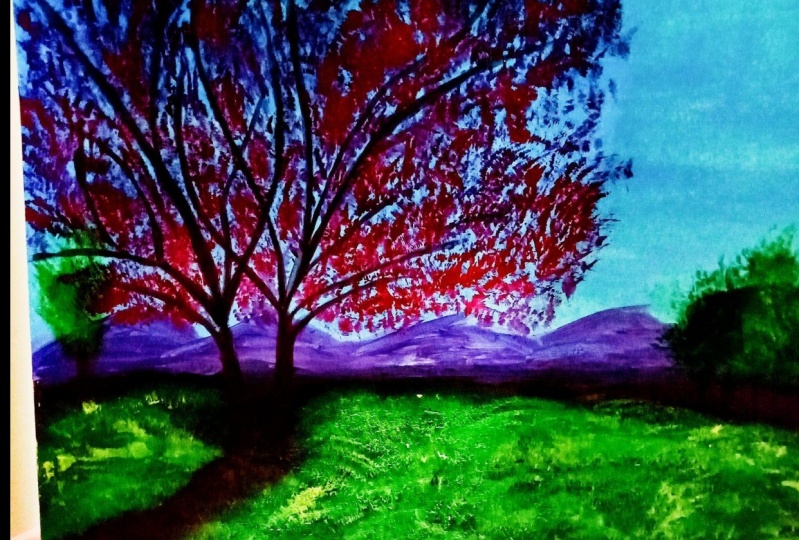
1. Bienvenue dans le cours: Salut, Mon nom est George, et dans les partitions d'aujourd'hui, vous apprendrez comment faire cette magnifique peinture de paysage en utilisant des couleurs acryliques. C' est un cours très simple et facile à suivre. Vous serez encouragés tout au long du chemin avec des encouragements étape par étape , par
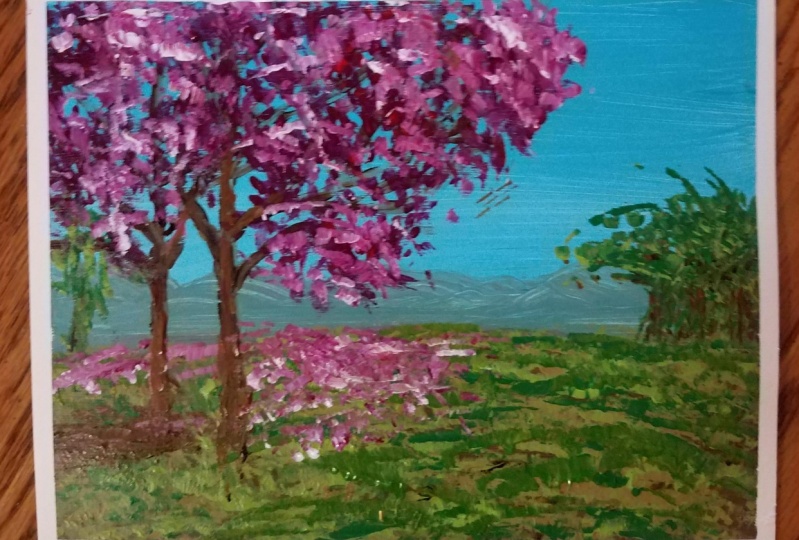
exemple, vous apprendrez à utiliser le pinceau du ventilateur pour créer l'illusion du détail afin que vous n'ayez pas à peindre soigneusement chaque feuille. Vous n'aurez qu'à utiliser le pinceau du ventilateur pour créer plusieurs feuilles en même temps. Ne vous sentez pas intimidé par la complexité de la peinture. C' est très, très simple à faire. Vous verrez que tout ce qui semblait très complexe deviendra facilement très simple. C' est un très bon cours pour les débutants et les personnes qui ont peint avant d'affiner leurs compétences qu'ils ont acquises dans d'autres cours. En tant que débutant, vous apprendrez à mélanger les couleurs, à les garder propres et à mélanger des couleurs très vibrantes et luxueuses. Quelle que soit la taille de la toile, vous pouvez créer cette peinture spécifique sur n'importe quel type de toile. Si c'est un rectangle et même si c'est un carré, vous pouvez simplement presser un peu l'image. Par exemple, déplacer cet arbre ici pourrait laisser suffisamment d'espace pour faire les opérations bancaires spécifiques sur un carré. Au cas où vous ne me trouvez pas sur le rose, vous pouvez également utiliser un rose normal en combinant blanc et rouge qui donnera presque le même effet. Si vous ne trouvez pas de rose fluo, vous pouvez toujours faire votre propre rose, combinant rouge et blanc. La différence sera Onley dans l'intensité du rose, le rose fluo étant un pigment
très, très intense et donnant beaucoup de couleur à la peinture tout au long du chemin. Si vous avez des questions, vous composez le commentaire sur la vidéo. C' est très simple à faire, et avec cela dit, Bienvenue au cours.
2. Matériaux: Pour ce cours, vous aurez besoin, bien
sûr, d'une toile à peindre. Vous pouvez également utiliser une planche de campus, une toile tendue. Ce campus est d'environ 30 centimètres de cette façon et 40 de cette façon. C' est une toile de 30 sur 40 centimètres. Vous pouvez utiliser un plus grand ou plus petit, selon le type de toile que vous avez pour les pinceaux. Vous aurez besoin d'une grande brosse plate, d'
une brosse à ventilateur, d'une brosse bande préférée de
tous et d'une brosse à doublure. C' est toutes les brosses dont vous avez besoin. Vous allez avoir besoin d'une plaque de mélange. La céramique est très bonne parce que vous pouvez réutiliser, recycler et réutiliser pour les couleurs. Bien sûr, la première couleur est toujours blanche. C' est de la peinture acrylique Amsterdam, 500 millilitres. Assez grand. Vous pouvez faire beaucoup de peinture avec cette taille de,
ah, ah, pot de peinture et ne pas vous inquiéter de la finition trop tôt. Nous avons brun jaune, tour
bleu, Coy's, Redd's et Neon Pink. Vous n'allez pas utiliser cette quantité abondante de peinture, mais c'est très bon d'avoir. Si c'est votre passe-temps et que vous voulez peindre plus, la suggestion est d'acheter de grosses cruches de peinture de qualité parce que c'est moins cher que même la quantité de pièces bon marché et
moins grande quantité. C' est beaucoup moins cher que les peintures moins qualitatives en raison de la taille, bien sûr, et vous aurez également besoin de belles serviettes en papier pour nettoyer les pinceaux et probablement un peu d'eau. Si vous en aviez besoin à ce moment-là, sont tous les matériaux dont vous avez besoin pour ce projet.
3. Première couche acrylique pour le ciel: Ok, Bienvenue dans le cours réel. Nous allons commencer par un peu de turquoise et juste plus bas que le milieu. On va créer ça. Vous allez à l'équipage et juste descendu au milieu. Vous allez créer cette belle ligne d'horizon comme ça, allant avec le grand pinceau de l'horloge d'un côté à l'autre, étaler la peinture peut prendre un peu d'eau ainsi, et simplement étaler cette peinture autour de rapidement et facile à faire. Juste de gauche à droite, essayant d'aplatir toute la peinture pour qu'elle n'ait pas ces essayant d'aplatir toute la peinture pour qu'elle n'ait pas cestraces de
pinceaux,
comme vous pourriez les appeler,
ainsi que des arrêts au milieu où nous avons commencé à brosser, traces de
pinceaux, comme vous pourriez les appeler, ainsi que des arrêts au milieu où nous avons commencé à brosser, vous pouvez les voir et ensuite vous pouvez. Et juste comme ça, mettons des blancs dans notre assiette. Oui, du grand tube blanc. C' est absolument merveilleux. C' est juste des blancs de titane des peintures d'Amsterdam, et nous allons rendre le fond du ciel un peu plus blanc et le mélanger d'un
côté à l'autre. Peut-être ajouter un peu d'eau aussi. Si ce n'est pas assez mélanger pour aller est de créer ce Grady int pour créer cette couleur Grady int pour le ciel. Il est plus léger sur le fond, puis il devient presque pur. Eh bien, en fait pure turquoise comme ça. Et puis vous pouvez aussi et plus de mélange et mawr blanc. Tout comme vous pouvez le voir, il crée ce bel effet cette belle Grady int. Plus vous sortez de la gauche, vous n'avez pas à en faire trop. Et voilà. Juste comme ça. Cette étape est faite Merveilleuse.
4. Brève foncée pour la terre: Ok, donc pour la prochaine étape, tu vas devoir utiliser un peu de brun et un peu de bleu. C' est un bleu différent de la turquoise est un bleu ian surréaliste. Et juste comme ça, nous allons faire un beau, merveilleux bleu foncé dis bleu sera appliqué au fond du ciel, juste indiquant un sol brun foncé juste s'appliquant de gauche à droite, couvrant toute la toile et aussi en gardant à l'esprit, aussi. Couvrir tout et rendre la peinture assez épaisse pour que le campus ne montre pas vrai après que
nous avons appliqué cette couche est juste pour avoir un sol où mettre notre herbe à l' avenir avec la belle brosse ventilateur. Comme il peut le voir, ça va assez vite. Vous pouvez simplement vous détendre et peindre lentement et facilement, cette couche de peinture sur et d'autres coups et c'est presque fait comme ça, se
débarrasser des marques que laisse le pinceau lorsque vous le déplacez de gauche à droite. Et là, vous allez avec cette étape aussi
5. Violette pour les montagnes: ce sera aussi une couche très rapide et facile. Tu vas juste avoir besoin de prendre un peu de cette turquoise et un peu de rouge et peut-être une petite partie de brun et faire des montagnes. Ces montagnes n'ont pas besoin d'être des triangles. Essayez de les faire un peu comme des vagues et un peu comme des triangles. Faites-les presque plats, comme vous pouvez le voir, juste aller et faire quelques marques descendre et monter avec un peu de pinceau et briser cette ligne, les
rendant différents les uns des autres. Comme vous pouvez le voir, ces montagnes commencent à prendre forme et ont l'air merveilleuse. Ajoutons un peu plus grand sur le côté droit, et vous pouvez voir que chacun d'entre eux est différent de l'autre. Qu' il est très important de donner le sens du réalisme, et cette couche est également faite
6. Lignes fines avec la pinceau de linen: Ok, tourner la toile autour, nous allons vous donner beaucoup plus de contrôle sur les branches que vous allez faire avec le
pinceau de doublure mélangeant un brun avec du rouge. Vous allez obtenir cette belle couleur marron plus vers le côté rouge. Ok, vous devriez commencer sur le côté droit de la toile, avec une branche qui descend et puis la courbe vers la droite comme ça. Faisons trois autres juste à gauche de ce 1er 1 et cette fois la courbe est un
peu plus basse, commence un peu plus bas. Et maintenant ajoutons une autre belle branche juste comme ça, et continuons sa plus longue. Il est très important d'ajouter des branches, mais gardez également à l'esprit que vous devez commencer les branches de différents côtés à différents points sur Ah, l'autre côté, si vous le faites sur le même point exact de l'autre côté qu'il ressemblera à une fourchette, pas à trois. C' est donc un conseil utile. Comme vous pouvez le voir quand vous le mettez plus bas ou plus haut que la branche de l'autre côté, vous pouvez simplement le regarder et voir que ce n'est pas Ah, fourchette et ensuite continuer les branches, les
rendant plus épais que vous allez et en ajoutant même mawr juste comme ça sur le côté gauche et continuant plus bas sur la toile que vous allez le long. Juste faire cette très belle branche en ajoutant un autre et un autre et un autre un et un
autre un et un autre mord la poussière. Ouais, ok,
ça n'a pas d'importance s'ils se chevauchent, c'est bon. Et si vous faites une erreur, ne inquiétez
pas à ce sujet. Une fois que nous avons mis dans le feuillage les feuilles, vous pouvez cacher ces erreurs. C' est normal de ne pas une branche parfaite ou quelque chose comme ça. Oui, ce qui rend les trois droits un peu plus épais et continue sur la branche pour le rendre plus épais . Les branches ne deviennent pas seulement très minces très vite. Vous devez continuer comme un flux. Considérez ça comme des routes. Considérez ça comme des branches. Ils deviennent plus minces que vous ne le pensez, donc il est très important de garder cette épaisseur presque. Vous allez le juger par elle-même et voir comment alors ou penser qu'il est, et vous devez le faire et puis ne pas juste brusquement et l'épaisseur de la branche très agréable. Il suffit d'en ajouter un autre. Comme vous pouvez le voir, il y a un point là. Qu' est-ce qu'ils se chevauchaient ? Trop, ça va être caché une fois qu'on aura ajouté les feuilles et le feuillage. Donc, pas de soucis à ce sujet. Juste un autre. Encore une fois comme un rappel. Ne les faites pas en même temps au même point sur la branche que les branches de l'autre côté , parce que cela leur donnera l'impression qu'ils sont des fourchettes. C' est très Ah, très facile de faire cette erreur. Mais ah, maintenant tu sais mieux. Oui, ne vous inquiétez pas si ça double, c'est comme ça qui continue. N' aie pas peur, Teoh. Sortez de la toile avec les branches parce que ces trois sont assez gros. Ces deux arbres sont en fait assez gros, et ils doivent sortir de la nouvelle toile. Cela fait une meilleure composition. On dirait que la peinture est plus grande qu'elle ne l'est. Il a de la place pour respirer, et ajoutons une autre branche plus bas. Et juste comme ça, travaillons sur l'épaisseur de la branche. Cela le poursuivra plus longtemps. Bien sûr, vos arbres auront l'air un peu différents. Continuez simplement à ajouter un peu plus. Ne partez pas à la mer avec les branches. Faites-les leur laisser de la place pour se reproduire aussi, parce qu'ils en ont besoin. Comme vous pouvez le voir, ils sont très, très faciles à faire. Prends juste ton pinceau. Non. Tenez votre pinceau trop à la pointe. Tenez-le par la poignée plus loin vers l'arrière afin d'avoir plus de contrôle pour faire des lignes plus longues. Vous pouvez voir que les lignes sont plus longues. Ils ne sont pas comme griffonner des lignes de dessin parce que et la façon dont vous le faites est de tenir le pinceau plus haut sur la poignée, et vous pouvez faire plus longtemps. Et aussi vous pouvez vous concentrer sur la pointe de la brosse. De cette façon, il est très facile de se concentrer sur la pointe de la brosse afin que vous puissiez simplement créer de belles
branches longues , pas griffonner des branches. Oui, et nous avons presque fini. Une branche de plus que cette couche est également faite. Merveilleux. Ok, merveilleux. Alors ajoutons quelques beaux arbres plus petits cette fois à droite et à gauche de la toile à droite. Avoir un arbre plus grand aidera avec la variété et sur la gauche. Faisons de beaux petits arbres regroupés ensemble. Et voilà. Cette étape est terminée
7. Grosse avec la pinceau de Grass: Commençons par la brosse de ventilateur qui fait un beau vert avec le bleu, pas la turquoise. Nous allons ajouter la turquoise plus tard pour faire un vert très intéressant, plus intense. Avec la brosse de ventilateur, vous pouvez commencer à ajouter de l'herbe sur le brun, allant de gauche à droite. Essayez de rendre l'herbe un peu différente et aussi essayer de garder le brun un peu plus en essayant de garder ce brun intact. Ne couvrez pas tout cela parce qu'il donne plus de variété plus d'intensité au vert, en fait, parce qu'avoir des pièces plus foncées et plus claires lui donne un contraste, ce contraste est très important et la peinture. Donc tu dois garder ce brun. Vous pouvez passer sur les arbres juste pour qu'il soit plus facile de faire la moitié des continuités entre eux. Vous savez, où vous sortez que vous aurez une chance de mettre ce Brownback là-bas. À un certain moment près de la fin, nous avons presque fini avec la première couleur, et puis plus va faire un autre, vert
plus intense et le mettre là. Laisser une petite portion où la viande tweeze en brun pour l'ombre. C' est presque une ligne droite. Vous pouvez le voir, et je, euh, je l'ai laissé là, mais je vais le revoir. Ne vous inquiétez pas si vous si ce n'est pas parfait, vous pouvez revisiter une fois que nous avons fait l'écorce aussi. Les écorces d'arbre. Vous pouvez revisiter cette zone alors, mais gardez à l'esprit de la laisser là comme une ligne. C' est juste la belle ligne sur le côté gauche, mais il a un peu de textures qu'ils vont faire juste une ligne droite et a de l'herbe . C' est une ombre. Aller à gauche avec cet érudit est terminé. Maintenant, nous devons mélanger pas un peu de jaune, ce qui rend ce vert un peu plus intense comme ça, et l'ajouter directement au milieu du paysage près de la ligne d'horizon. Juste avec de petits petits tampons, vous pouvez obtenir cette belle texture de petite herbe et ensuite travailler votre chemin vers le bas. Vous pouvez voir qu'il commence à avoir un effet superposé sur l'herbe, et au fur et à mesure que nous avançons, il devient plus comme de l'herbe se déplaçant juste sur le côté gauche, près des arbres, en
gardant à l'esprit de laisser cette partie de l'ombre là-bas intacte. Caïn. Allons dans le coin droit, vous pouvez l'ajouter. Comme vous pouvez le voir, le brun apparaît encore un peu qu'il est assez important d'avoir un contraste dans toute
la peinture. Et puis vous pouvez voir à quel point ça va merveilleux sur le côté gauche, gardant cette ombre en main, sachant pour le coin, en prenant un peu plus de couleur, et puis encore plus de couleur à mettre sur le côté gauche, coin supérieur et entre les arbres bien au-dessus d'eux. Oui, cette herbe herbeuse semble merveilleuse. Ok, juste là. Mettons-le là-bas. Oui, un peu plus jaune, comme vous pouvez le voir et merveilleusement mettre poignarder autour et essayer de le rendre aussi abstrait que possible. Ainsi, la texture est variée dans les différents domaines des peintures. Ce n'est pas juste la même marque de pinceau tout le temps. Ok, cette couche est faite aussi. Laissez-le sécher, et nous y reviendrons avec une couleur plus claire avec un vert plus clair
8. Les hauts en sélecteurs de l'herbe avec la pinceau à la fan.: Maintenant que la première couche d'herbe a séché,
vous pouvez prendre un peu de cette tournée,
Coy et un peu de jaune et faire de cette reine très intense. Maintenant que la première couche d'herbe a séché, vous pouvez prendre un peu de cette tournée, Il est plus intense et plus léger que le vert avec vous avez posé sur les avions comme vous pouvez le voir tout de suite beaucoup, beaucoup plus intense et de couleur claire. Très beau vert et juste tamponner avec une touche de peinture, ce qui les rend différents. Vous pouvez créer cette texture même mawr effets texturés sur juste comme ça. Donnez cette impression de distance en faisant le que vous allez plus bas sur la toile, vous pouvez rendre le lee l'herbe un peu plus grand. Donc, il semble que ça arrive. Il vient vers vous. Donc, il semble que vous avez une certaine Donc distance car cela va dans une perspective, juste comme ça, laissant
aussi un peu plus d'espace entre les marques de pinceau afin que vous ayez, euh, comme vous descendez pour que vous ayez aussi cet effet de perspective. Avec la distance entre le pinceau marque non seulement les marques de pinceau plus grandes ou le plus grand pas herbe, mais aussi la distance entre les deux lorsque vous allez dans le coin gauche. Et n'oubliez pas de laisser cette ombre aussi. Donc, si vous ajoutez juste plus d'eau que
vous pouvez, vous pouvez avoir la peinture un peu plus fluide et avoir plus de texture. Facilement, plus facile à poser, prendre un peu plus de couleur maintenant pour continuer avec l'herbe, juste essayer d'avoir différentes marques de pinceau. Pensez à chaque brin d'herbe comme sa propre personne. Ils sont tous différents et merveilleux, donc relaxant pour faire cette herbe, et c'est assez facile aussi. Vous pouvez voir qu'on a couvert beaucoup d'espace. Quel peu de temps. Une telle peinture facile à faire Il semble si complexe, mais ayant cela à l'esprit pour varier la texture très pas de couleurs et de couleurs de couche sur le dessus de l'
autre peut donner un look très complexe à la peinture que nous mettons. Nous avons mis un peu plus de jaune et rendu la couleur un peu plus jaune, et maintenant Letterman plus vers la turquoise. Comme vous pouvez le voir, vous pouvez également essayer de le mélanger un peu plus, juste un peu. Ne faites pas trop avec le site du pinceau à gauche des droits, où vous pensez qu'il a trop de texture. Qui sait ? C' est un processus
très, très intéressant. Oui, il y a toujours le sentiment que vous devriez trop travailler sur la zone, mais ne vous sentez pas comme ça. Essayez de le laisser aussi clairsemé que possible. Et maintenant, vous pouvez prendre un peu de jaune et un peu de turquoise puis un
peu de blanc pour créer un vert encore plus léger et plus intense. Vous verrez à quel point cela devient léger et intense. Oh, voici un grain de blanc du moment où le blanc a été mis sur les assiettes. Oui, vous pouvez déjà commencer à voir que ce vert est vous et plus intense et léger. Et ça va très loin parce que les pinceaux pleins d'espoir de peinture semblent que je n'ai pas trop bien mélangé la couleur, mais ça n'a pas d'importance. Les accidents heureux se produisent pour une raison et juste aller sur lui texturant encore plus, aller assez vite année. Tu n'as pas à aller aussi vite. Vous pouvez aller à votre propre rythme, et vous pouvez simplement faire cette couche comme vous le souhaitez juste aller plus loin. Nous avons donc créé tant de couleurs différentes de vert avec seulement trois ou quatre couleurs. Oui, bleu, jaune, vert, turquoise et blanc. C' est pour Yeah. Ok, alors prenons un peu de bleu et un peu de brun. Peut-être un peu de jaune. Une houle ? Oui, fais ce beau vert
foncé. Comme vous pouvez le voir, mettre un peu de brun le rend encore plus intense et sombre. Et avec le coin de la brosse de ventilateur, vous pouvez commencer à travailler sur les arbres. Ne vous connectez pas, et ne les connectez pas à l'avion à la ligne d'horizon, car les arbres ont un peu de hauteur à partir de la ligne d'horizon tout le temps. Sauf que si tu es un oiseau, alors tu regardes vers le bas. Et ne mettez pas beaucoup de couleur en essayant de laisser un peu d'espace pour que les oiseaux viennent à travers le feuillage, il est
donc très important de ne pas les faire ce tour. Puffy, nuageux trois. Maintenant, nettoyez vos pinceaux comme vous le pouvez afin que vous puissiez faire un peu de vert en utilisant un peu de jaune et un peu de turquoise. Ne vous inquiétez pas trop. Si vos brosses pas propre ou quoi que ce soit, puis avec le coin de la brosse, vous pouvez commencer à l'appliquer sur le côté droit des arbres, et le côté supérieur a essayé d'éviter l'inconvénient gauche parce que c'est là que l'ombre est si mentale. Coin gauche, haut. Plus difficile à expliquer, mais vous voyez ce que je veux dire. Oui, si bien que tu as aussi de la vidéo. Donc, sur le grand arbre aussi, vous pouvez aller sur le côté droit parce que c'est beaucoup plus facile étant un arbre plus grand, il est juste sur le côté droit. Aller vers le milieu un peu serait une couleur plus claire. Vous pouvez mettre juste un peu plus de feuillage sur le coin droit de l'arbre et sur le
côté droit du solitaire. Vous pouvez commencer à voir combien de texture vous pouvez construire avec seulement Onley trois couleurs en raison
du contraste, ayant ce vert
foncé au début et maintenant mettre un ton plus clair. Il apporte ce contraste, et il le fait paraître plus de texture, plus coloré. On dirait qu'il a une partie claire, une partie sombre. Utilisez ce pinceau de coin dans le coin du pinceau du ventilateur. Pour ce faire, vous pouvez également utiliser vos doigts une houle et juste comme ça, vous pouvez voir la texture et la complexité que vous avez créé en utilisant cette incroyable brosse ventilateur et les couleurs. Oui, vous pouvez également ajouter un peu plus d'herbe sur la partie inférieure comme ça. Ça ne fait jamais mal d'avoir un peu plus d'herbe dans ta vie. Nettoyer la poubelle que vous pouvez maintenant, et un lit de lettres marron comme ça. Il peut également utiliser la brosse de doublure pour cela. Un homme gonflé. Oui. Travailler sur cette branche a promis sur ces trois questions que nous avons abordées plus tôt. Vous pouvez voir sur l'ombre où j'ai oublié de le faire. Oui, cerceaux. C' est beaucoup de ronde où ça n'a pas à être sans soucis. Nous pouvons nettoyer notre brosse mieux et au vert une fois de plus juste faire un peu mineur Oh, il semble encore mieux avec plus de vert avec plus de jaune. Oui, oui, comme ça, en prenant un peu la nuance plus foncée que nous avons créée plus tôt. Comme vous pouvez le voir maintenant, c'est plus ancré, mais cette ombre, elle couronne les arbres et ça les rend très, très beaux. Et là, vous allez avec l'étape aussi
9. Feuilles avec l'angle du pinceau Des fan: avoir un peu de loyer et un peu de bleu sur la plaque de mélange. Vous pouvez maintenant rendre ce violet foncé plus vers le rouge et l'appliquer avec le pinceau du ventilateur, cette fois en faisant tourner la brosse et en utilisant presque la pointe et un peu de côté . Il est donc très important de faire pivoter et de faire différents types de marques sur le campus. Ne surpeuplez pas l'arbre avec l'érudit. Laissez beaucoup d'espace pour que l'air passe par la fin. En outre, un peu d'espace est pour les oiseaux de voler. Vous avez fait un très bon travail sur ces branches. Vous ne voulez pas les couvrir tous, et il est très important que vous réalisiez que nous allons mélanger beaucoup plus de couleurs en plus de cela, alors utilisez-le très légèrement, je dirais. Même ce que vous voyez sur la vidéo, c'est trop. Il devrait être un peu moins maintenant, continuant avec une autre couleur. Il suffit d'ajouter un peu plus de rouge et de le mettre, essayez de le mettre sur le dessus de l'obscurité sur le dessus vers la droite, sorte que c'est de là que vient la lumière, donc vous avez à chaque patch que vous avez créé. Vous devez maintenant le mettre sur le côté. Cette nouvellecouleur
plus claire, couleur
plus claire, vous devez le mettre sur le côté exactement comme vous l'avez fait pour le petit à faciliter. C' est un très bon exemple. Les petits arbres où vous avez mis fondamentalement les petits arbres sont juste une parcelle, une plus petite parcelle du plus grand arbre. C' est très facile à comprendre. Il suffit de le mettre en haut et à droite des patchs que vous avez créés autour de la couverture de l'arbre. Certaines branches ne fonctionnent pas seulement autour des branches parce que les feuilles sont également sur la branche . Pas juste autour ont semble, et j'ai vu des gens juste à colorier autour d'eux. Ok, et maintenant, en prenant du blanc et du rouge, vous pouvez juste faire ce beau rose, juste comme pas et ajouté exactement la même chose sur le côté droit. En haut de chaque patch, vous venez de le créer a essayé d'avoir beaucoup de texture. Essayez d'avoir l'espace entre chaque marque, donc ce n'est pas seulement un gros blob de peinture. Essayez de savoir, Ne faites pas seulement chaque congé individuel, mais essayez de penser à eux un
peu, tout comme les feuilles individuelles et vous voyez que vous avez quelques espaces que vous avez. Certains ne les regroupent pas trop. Laisse-les être. Laissez-les, avoir leur propre vie et aller vers la gauche vers la droite. Un peu plus en dehors des formes, comme vous pouvez le voir. Et n'oubliez pas de laisser de la place pour les corps. Laissez de l'espace pour les corps. Très sympa maintenant Ok, oui. Couvrant un peu plus. Rendre ces formes un peu plus connectées aussi. Et maintenant, nous allons mettre le rose néon préféré de tout le monde. Oui. N' utilisez pas de rose fluo droit. C' est trop fort, trop fort. Combinez-le avec un peu de rouge, comme vous pouvez le voir juste pour obtenir un peu de ce collier intense. Tu vois, c'est encore un peu trop intense, mais ça fera l'affaire. Il va se fondre avec la dernière couche que vous venez d'appliquer. Et ne le fais pas comme moi. Utilisez simplement le coin de la brosse. Comme vous pouvez le voir, il y a juste un grand sourire juste là-bas parce que je n'ai pas utilisé le pinceau du coin. Mais vous le ferez mieux. Je suis sûr que oui. Et en continuant. Mettez-les du côté droit. Côté supérieur droit des trois de chaque parcelle de l'arbre. Fondamentalement, le tweet traite chaque lot de feuilles comme sa propre forme fondamentalement non seulement parce que si vous mettez
seulement vous prenez l'arbre dans son ensemble que et mettez sur Lee sur le côté droit ce, um nouveau rose, il ne le fait pas. Ça ne ressemblera pas à la dimension de la rue. Ça aura l'air un peu faux. Alors mettez-les sur le côté droit et essayez, euh, faire la brosse sur le côté pour mettre la brosse sur le côté pour la faire tourner et changer et rendre chaque marque un peu différente. Vous avez probablement beaucoup plus de patients que moi. Oui, en faisant un peu de rouge. Au cas où vous, j'ai l'impression qu'il y a trop de cette nouvelle banque rose, très intense. Vous pouvez toujours ajouter sur le dessus une partie de ce rouge foncé , bien sûr juste ajouté, vous pouvez également l'ajouter entre les deux sur le bas des trois aussi bien. Tout comme ça, c'est absolument merveilleux. Il est très facile de peindre dans ce style maintenant. C' est très important, comme vous avez mis l'herbe que vous allez maintenant, mais fondamentalement couche de feuilles qui sont tombées sur l'herbe juste comme ça. Mais alors, au-dessus du vert des graphiques, oui, comme ça. Malheureusement, j'ai couvert l'ombre. Mais si vous l'avez fait aussi, ne vous inquiétez pas. On va encore rendre l'ombre sombre. Comme pas un peu Adam. Vous devriez probablement ajouter un peu moins de feuilles sur l'herbe que je ne l'ai fait. On dirait que quelqu'un a secoué les trois et le titulaire. Les feuilles sont tombées. Oui. Ok, nous allons faire Malheureusement, vous devriez utiliser un peu plus brun parce que l'utilisation je viens de créer un violet. Ça n'a pas l'air si bon pour l'ombre sur l'écorce de l'arbre. Et vous devriez utiliser un peu plus violet. Oh, revenez à ça et faites-le aussi. Le violet dans la vidéo suivante à l'étape suivante, qui est en fait la dernière
10. Calques de éclairage de feuilles:
11. Les touches de finition. Congrats :): Félicitations. Nous sommes à la dernière couche pour cette couche. On va utiliser la petite brosse en métal. Nous allons prendre un peu de jaune, partie de cette banque noire rose que vous avez créée et un peu de blanc pour rendre cette belle orange jaune. Et avec ça, nous allons commencer à faire du côté droit des branches un point culminant comme ça. Je fais juste quelques lignes. Vous pouvez les remuer un peu, les
faire doubler, et essayer de ne pas trop y penser. Ce n'est qu'un petit détail, aussi, pour donner l'impression que nous avons créé une peinture si belle et complexe. Il s'agit de l'illusion de la complexité. Oui, et, bien
sûr, pour les petites branches aussi. Juste comme ça, oui. Petites attentions ici et là. Faire beaucoup de différence et tout simplement pas un autre. Et maintenant, vous pouvez prendre un peu plus de blanc, le
mélanger avec l'orange, un peu de rouge, rendre ça un peu plus rosâtre. Je veux juste avoir demandé rosâtre sur. Et comme vous pouvez le voir, c'est très, très intense. Si vous mettez trop de cette nouvelle couleur, vous pouvez simplement mettre un peu plus d'orange et un peu plus de brun. Bien sûr, le brun sera nécessaire pour l'ombre aussi,
parce que, parce que, comme il l'a concédé, ce violet que je viens de mettre est , trop intense, et il se tient
trop que vous pouvez voir un peu plus jaune. Un peu plus d'orange sur l'écorce a, oui, parfait. Ensuite, bien
sûr, encore plus de cette couleur plus claire que vous avez créée et la mettre sur l'écorce, tout comme vous pouvez voir à quel point il a commencé intéressant. Le look avec quelques touches sur quelques lignes. Bien sûr. N' oublie pas ceux qui se trouvent entre le feuillage. Vous ne devriez pas faire trop attention à eux parce qu'ils sont fondamentalement dans l'ombre parce qu'ils sont entourés de feuilles, mais ils ont parfois un peu de lumière attrapant aussi. Et avec le brun exactement comme mentionné précédemment, vous pouvez faire l'ombre si vous avez fait en violet est comme ça. Il peut également utiliser la brosse du ventilateur. J' ai utilisé exactement ce que j'avais dans ma main, ce qui n'était pas très intelligent de ma part. Mais est-ce que vous auto très à votre façon, façon, beaucoup mieux à cela. Bien sûr, il est toujours facile de regarder en arrière et de voir toutes les erreurs mixtes que nous avons commises et de nous juger nous-mêmes , mais nous ne devrions pas. Donc, il est très, très bon de juste faire un beau vert maintenant pour faire un peu d'herbe entre les feuilles sur l'herbe ainsi que vous pouvez le voir. Il suffit de remuer cette brosse. , Bien
sûr, si vous utilisez le pinceau du ventilateur, ce sera beaucoup plus facile de le faire. Non, pas comme moi. Je me complique, d' accord ? Et vous pouvez aussi remettre un peu de ce rose à nouveau. Il suffit de le superposer, ce qui le rend très agréable et beau. Et, bien
sûr, en prenant encore plus de rose intense. Juste une banque plus intense et mettre un peu plus de rose sur ce terrain. Comme vous pouvez le voir, toute
la peinture est absolument magnifique, et je suis sûr que la vôtre est encore mieux. Et bien sûr, si vous êtes assez gracieux, vous publierez une photo de votre création, laissez une belle critique sur la page d'examen et consultez les cours complets avec des acryliques
avec de l'eau de couleur et de procréer. Merci beaucoup d'être aboyer de cette communauté et de participer à ce cours. J' espère que tu t'es bien amusé. Et aussi vous avez aimé peindre et créer quelque chose de très, très agréable.
 George-Daniel Tudorache, Together we will create amazing things.